



Login
Get Instant Pricing On 23,000+ Aircraft

>
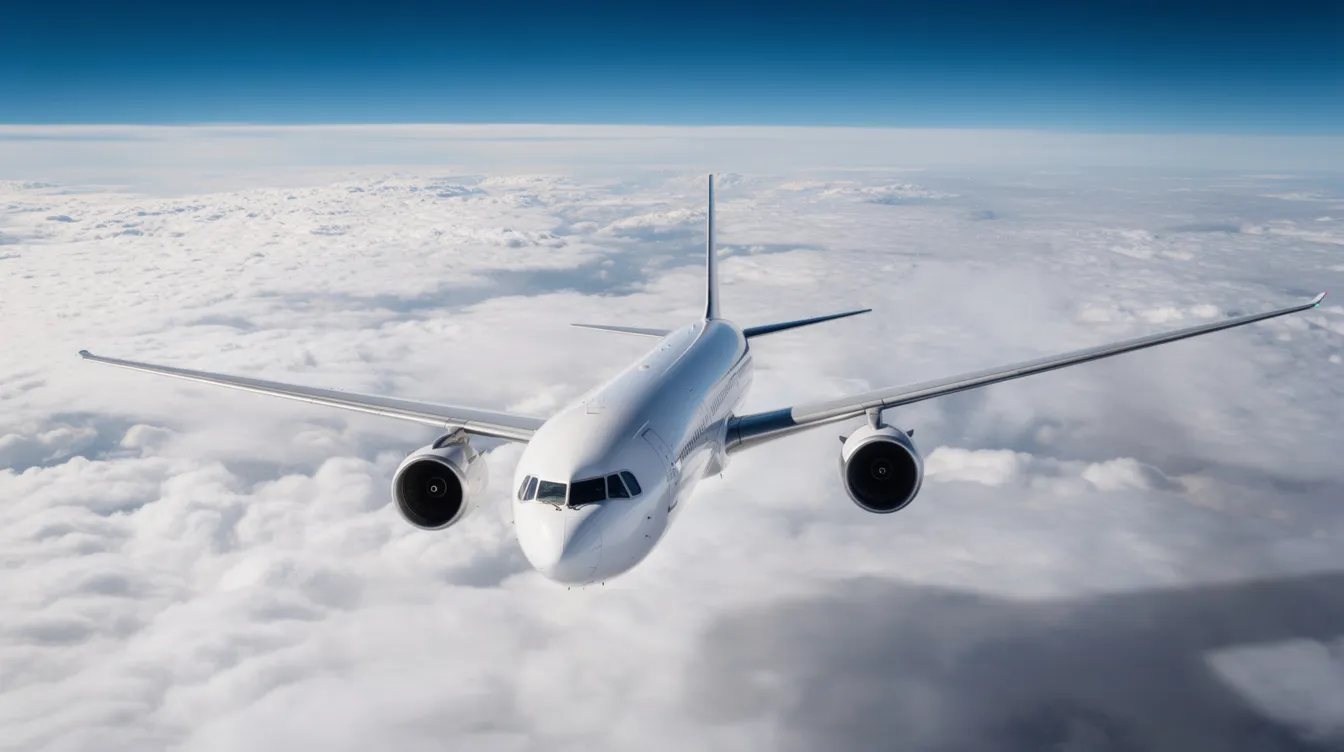
The Boeing 777 is one of the most recognizable long-haul aircraft in commercial aviation. But how high does it actually fly? The answer to "777 cruise altitude" is more nuanced than a single number. Most 777 flights settle into a cruise band between 30,000 and 39,000 feet-well below the airplane's certified ceiling of roughly 43,100 feet. Aircraft weight, fuel burn, wind patterns, and air traffic control all play a role in determining where a 777 spends most of its time aloft.
This article breaks down exactly how cruise altitude works for the Boeing 777 family, what drives altitude choices on real routes, and why those choices matter to both airline operations and charter travelers evaluating long-range options.
Most Boeing 777 and 777-300ER flights cruise between FL300 and FL390 (30,000–39,000 ft), not at the certified service ceiling of approximately 43,100 feet.
Aircraft weight, fuel burn, and step climbs are the primary factors that determine practical cruise altitude and overall fuel efficiency on long-range routes.
Typical real-world cruise profiles for the 777-200ER, 777-200LR, and 777-300ER vary by variant, with heavier aircraft starting lower and climbing as fuel burns off on long-haul sectors like London–Dubai or Los Angeles–Dubai.
Cruise altitude choices directly affect passenger comfort, cabin pressure, and operating costs for airlines and charter clients alike.
Understanding these trade-offs helps travelers-especially those comparing commercial flights with private charter-choose the right aircraft for intercontinental missions. Jettly's platform can help match trip requirements to the best long-range aircraft available.
Cruise altitude refers to the flight level at which an aircraft spends most of its en route time, after the initial climb and before descent. For the Boeing 777, this is the altitude where weight, engine performance, air density, and winds are balanced for the most efficient operation over long distances.
Flight levels are expressed in hundreds of feet using standard pressure settings. FL300 means 30,000 feet, FL350 means 35,000 feet, and FL390 means 39,000 feet. The maximum service ceiling for many Boeing 777 variants is approximately 43,100 feet (FL431), but the aircraft rarely operates anywhere near that altitude during normal airline service. The typical cruising altitude for a Boeing 777 during long-haul flights is 30,000 to 39,000 feet, where the plane achieves the best balance of fuel burn, range, and ride comfort.
Cruise altitude affects nearly every aspect of a long flight. Higher altitudes reduce drag because air density is lower, which generally improves fuel efficiency. But flying too high when the aircraft is heavy can push engines to their limits and reduce safety margins. Cabin pressurization must also compensate for external pressure at altitude, which influences passenger comfort on flights lasting 10 hours or more.
The Boeing 777 program launched on October 29, 1990, marking Boeing's commitment to building a clean-sheet design widebody twin-engine aircraft for the long-haul market. The first 777 was rolled out on April 9, 1994, and the type quickly became a cornerstone of international aviation.
Several variants followed the baseline model, each tailored to different mission profiles:
777-200: The original variant, designed for medium- to long-range operations.
777-200ER (extended range): Carries more fuel for longer sectors. The first 777-200ER flew on October 7, 1996, and Boeing delivered 422 777-200ER aircraft to over 30 customers worldwide.
777-200LR (long range): Built for ultra-long-range transoceanic routes, with increased fuel capacity and a higher MTOW.
777-200F: A dedicated freighter variant optimized for cargo.
777-300: A stretched fuselage length version for higher passenger capacity on long-haul routes.
777-300ER: Combines the stretched fuselage with extended range capability, making it one of the most popular aircraft in global aviation.
All variants are twin-engine widebodies sharing a similar cruise speed of around Mach 0.84. The fuselage cross-section accommodates wide cabins, and depending on configuration, the 777-200ER can carry approximately 305 passengers in a three-class layout. Its maximum takeoff weight is 297,550 kg (656,000 lb), and it has a maximum range of 7,725 nautical miles.
The production process for the 777 was notable as a landmark in aircraft manufacturers' use of digital design. The airplane was originally developed with extensive computer-aided design, a departure from earlier Boeing programs.
The 777-200ER is powered by engines rated between 90,000 and 94,000 pounds of unit thrust, with three engine options available across the family: General Electric GE90, Pratt & Whitney PW4000, and Rolls-Royce Trent 800 series. The 777-300ER uses the more powerful engine variant, the GE90-115B, which remains the most powerful engine ever fitted to a commercial aircraft.
Certified service ceilings hover around 43,100 feet (FL431) for most 777 models. But practical ceilings for airline use are significantly lower, constrained by weight, temperature, and operating parameters that airlines must respect for safety and efficiency.
In everyday airline service, most 777s spend the bulk of a long flight between FL300 and FL380. Aircraft often cruise in a range of 30,000 to 40,000 feet, with variations based on conditions like weight, wind, and air traffic control instructions.
Here are some concrete examples of what that looks like on real routes:
British Airways 777-200ER, London Heathrow–New York JFK: This transatlantic sector of roughly 3,000–3,500 nautical miles typically sees cruise altitudes filed between FL320 and FL340 early in the flight, stepping to FL360 or higher later as fuel burns off.
United Airlines 777-300ER, San Francisco–Tokyo Narita: On transpacific routes covering roughly 4,500 nautical miles, the aircraft often starts around FL320–FL340, moving to FL360 during the latter half of the flight. Prevailing jet stream winds heavily influence which altitude makes economic sense.
Cathay Pacific 777-300ER, Hong Kong–London: A long-haul sector of about 5,200 nautical miles. Early cruise levels around FL310–FL330 are common when the plane is near maximum gross weight, with step climbs to FL350–FL370 over the course of the 12-hour flight.
Air France 777-200ER, Paris–Johannesburg: Similar patterns appear, with initial levels around FL330 and later climbing to FL360 or FL370 as the aircraft lightens, and widebody types like the Boeing 767-300ER show comparable long-haul cruise behavior tailored to their own weight and range profiles.
Many airlines publishing fleet data confirm that both the 777-200ER and 777-300ER typically cruise around FL370 under average mid-flight conditions, but starting altitudes are almost always lower when the plane is heavy; the ultra-long-range Boeing 777-200LR follows similar patterns with even greater fuel capacity influencing its early cruise levels.
The service ceiling of approximately 43,100 feet is a theoretical maximum-the altitude above which the aircraft can no longer maintain a minimum climb rate. But flying near the ceiling is impractical for several reasons.
First, climb performance declines sharply as the aircraft approaches its ceiling. The margin between the cruising speed and stall speed narrows, a phenomenon pilots refer to as reduced buffet margin. This leaves less room for maneuvering in turbulence or responding to speed changes. Airlines prefer a healthy buffer above stall speed and below the maximum operating Mach number, and that buffer shrinks at high altitude.
Second, cruising altitudes can vary based on flight direction due to established air traffic rules. On many corridors, eastbound flights use even flight levels (FL340, FL360) while westbound flights use odd levels (FL330, FL350). Air traffic control plays a significant role in determining cruising altitudes for aircraft, especially on congested routes like the North Atlantic tracks or busy Asian corridors.
Third, atmospheric conditions such as temperature affect aircraft performance and cruising altitude. When outside air temperature is warmer than the International Standard Atmosphere (ISA), engine thrust and climb performance are reduced. This can lower the maximum practical altitude by several thousand feet on a given day.
The same logic applies to most long-haul jets, not just the 777. The gap between certified ceiling and practical operating altitude is a feature of all modern airliners.
Weight is a major factor in determining the cruising altitude of the Boeing 777. Aircraft weight impacts the maximum altitude a Boeing 777 can reach after takeoff, and this is the single most important variable in altitude planning for any long-haul flight.
A fully loaded 777-300ER departing on an ultra-long-range flight might carry close to its higher MTOW, which for some variants approaches 775,000 pounds. At that weight, the aircraft simply cannot climb to FL370 or FL380 without exceeding engine limits or eroding safety margins. The initial level-off might be around FL300 to FL320.
As fuel burns off during the flight, the aircraft becomes lighter and can climb to higher altitudes. This is the fundamental principle behind step climb operations. Consider this simplified example:
At 90% gross weight (early in a long flight): The 777-300ER may be limited to FL310 or FL320. The engines are working near their sustained thrust limits to maintain altitude and speed.
At 60% gross weight (mid-flight, after significant fuel burn): Optimum altitude rises to roughly FL340–FL350. The airplane can climb without excessive fuel cost.
At 40% gross weight (late in a long sector): The aircraft might comfortably cruise at FL370 or even approach FL380. The Boeing 777 family generally prefers cruising below FL360 when heavy, but lighter weights open up higher options.
For the 777-200ER, with its maximum takeoff weight of 297,550 kg, similar patterns apply but with slightly different numbers depending on payload and fuel load. The increased gross weight of the ER variant compared to the baseline model was enabled by structural reinforcements and increased fuel capacity, both of which support longer flights but push initial cruise altitudes lower.
The link between cruise altitude and fuel burn is straightforward in principle: higher altitude means lower air density, which means less drag. Jet engines are optimized for operation in thinner air at higher altitudes for improved fuel efficiency. But the relationship has limits.
At too high an altitude for the current weight, the aircraft must fly at a higher angle of attack to generate sufficient lift. Engines must produce more thrust relative to their capacity, and the aircraft operates closer to its Mach and buffet limits. Cruising above FL380 incurs significant fuel penalties for 777 models, particularly when the airplane is still heavy.
The fuel capacity of the 777-200ER is 171,170 liters (45,220 US gallons), stored in fuel tanks within the wings and, on some variants, auxiliary tanks. The 777-200LR features increased fuel capacity through additional fuel tanks in the rear cargo hold, enabling its exceptional range. All that extra fuel adds weight early in the flight, which is precisely why initial cruise altitudes are lower.
Indicative fuel burn figures for a 777-300ER illustrate the dynamic:
|
Flight Phase |
Approximate Fuel Burn |
Typical Cruise Altitude |
|---|---|---|
|
Early cruise (heavy) |
~8,550 kg/hr (~18,860 lb/hr) |
FL310–FL330 |
|
Mid-flight |
~8,100 kg/hr (~17,870 lb/hr) |
FL340–FL360 |
|
Late cruise (light) |
~7,500–7,800 kg/hr |
FL370–FL380 |
Airlines use a cost index-a numerical ratio balancing time costs against fuel costs-to decide how aggressively to climb and at what Mach to cruise. A high cost index favors faster speeds and earlier step climbs. A low cost index favors conservative altitudes and slower Mach numbers to save fuel.
Similar fuel burn logic applies when comparing private jet types for long-haul charters, and tools like Jettly's private jet charter cost estimator help quantify how these performance differences translate into actual trip pricing. Smaller aircraft have different drag profiles and fuel efficiencies at altitude, but the core trade-off between weight, altitude, and fuel remains the same.
A step climb is the practice of starting at a lower cruise level and climbing in discrete increments as weight decreases during a long flight. Pilots execute step climbs to maintain fuel efficiency during flight, and these altitude changes are a normal and expected part of any extended sector.
As a Boeing 777 burns fuel, it becomes lighter and can climb to higher altitudes. The Boeing 777 typically uses a flight management computer to optimize cruising altitude considering various factors including current weight, winds aloft, temperature, and cost index. The FMC displays a recommended altitude, a maximum available altitude, and the current optimum. Pilot inputs confirm each step climb request, which is then coordinated with air traffic control.
Typical step climb intervals on a 777 are 2,000 feet, following RVSM (Reduced Vertical Separation Minimum) standards that allow 1,000-foot increments above FL290. A realistic step climb profile for a 777-300ER on a long flight might look like this:
Example: 777-300ER, Tokyo (NRT) to Paris (CDG), approximately 5,200 nm, ~12 hours
Departure to 1.5 hours: Climb to initial cruise altitude FL320 at near-maximum weight.
After ~3 hours (~15–20% fuel burned): Step climb to FL340. FMC indicates optimum altitude has risen.
After ~6 hours (~35–40% fuel burned): Step climb to FL360. Drag reduction at this lighter weight makes the climb worthwhile.
After ~9 hours (~55% fuel burned): Step climb to FL370 or FL380 for the final cruise segment before descent preparation.
Each step climb saves fuel over the remaining distance by reducing drag. But the climb itself costs fuel-the aircraft must increase thrust temporarily to gain altitude. The FMC calculates when the net savings justify the climb cost. On extended range sectors where the flight lasts 14–17 hours, three or four step climbs are common.
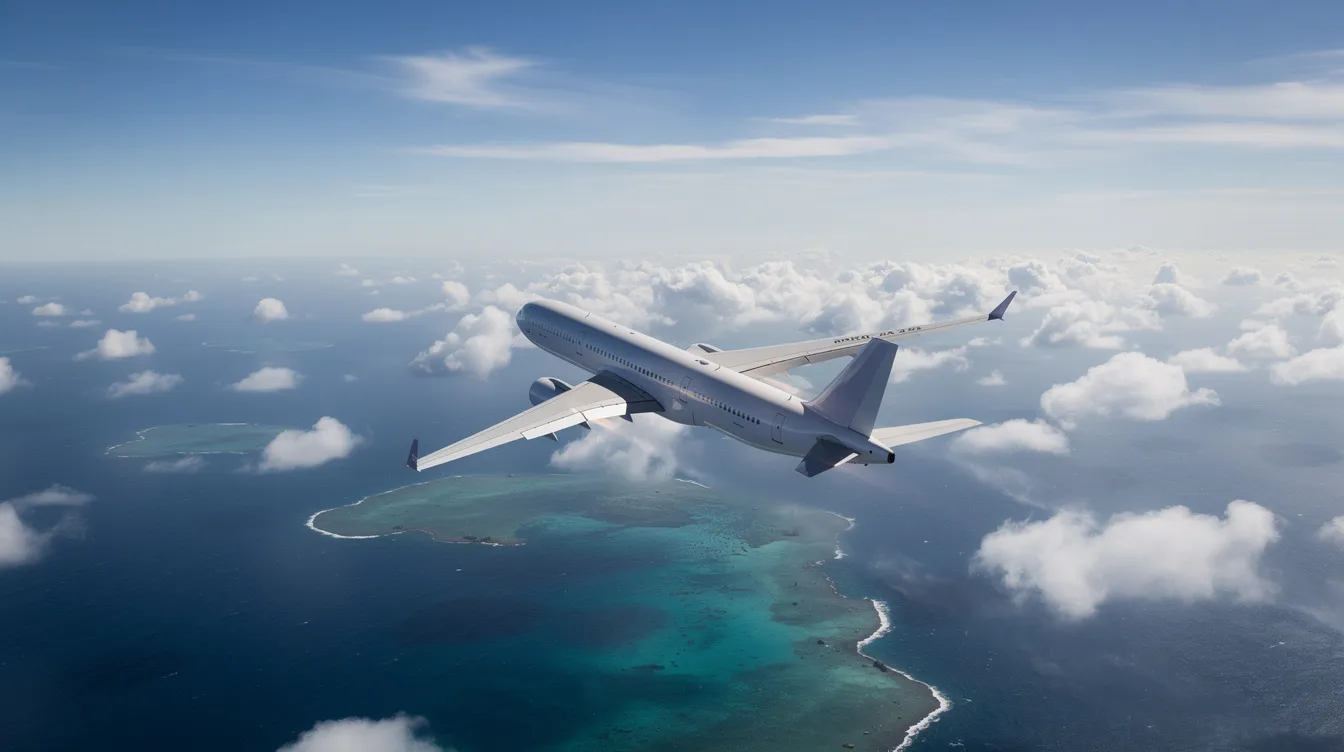
Each major long-range variant of the 777 tends to operate at slightly different cruise altitudes, driven by differences in weight, fuel capacity, and mission design.
777-200ER: This workhorse of medium- to long-haul operations typically cruises between FL310 and FL370 on 7–12 hour routes. When lightly loaded-say at 30% of its maximum load-the 777-200ER's optimal cruise altitude is FL340. On shorter sectors with less fuel, it can reach FL370 or occasionally FL390 earlier in the flight. Its maximum range of 7,725 nautical miles gives it ample capability for transatlantic and many transpacific routes, though it's often deployed on sectors well within that envelope. Many airlines around the world operate the type on a huge variety of routes.
777-200LR (Long Range): Designed for ultra-long-range missions, the 777-200LR typically cruises at FL310 to FL370 depending on load. Its extra fuel tanks and raked wingtips-a distinguishing feature of the newer 777 variants-give it the range to connect city pairs like Doha–Los Angeles nonstop. Because of its enormous fuel capacity, the 777-200LR is often very heavy at departure, keeping initial cruise altitudes around FL310. But as fuel burns off on a 16-hour flight, it can push to FL370 or higher. Nippon Airways and other carriers have used the LR on some of the world's longest scheduled routes.
777-300ER: The 777-300ER's cruise altitude ranges from FL300 to FL380. With a longer fuselage accommodating more passengers and cargo, combined with very high fuel loads for long-haul operations, the 300ER is frequently the heaviest 777 variant at departure. Initial cruise levels of FL300–FL330 are routine, with step climbs progressing through FL340, FL360, and sometimes FL380 as the flight continues. The more powerful engine on the 300ER-the GE90-115B-provides the thrust needed to maintain performance at altitude even with high weights, but physics still dictates a gradual climb profile.
Consider a realistic flight profile for a 777-300ER operating Los Angeles (KLAX) to Dubai (OMDB)-a distance of approximately 7,200–7,500 nautical miles with a flight time around 15–16 hours, depending on routing and winds.
Departure and climb: The aircraft departs near its maximum takeoff weight, loaded with passengers, cargo, and enough fuel for the 16-hour crossing plus reserves. After takeoff, the 777-300ER climbs steadily for roughly 25–30 minutes, leveling off at an initial cruise altitude of FL310. At this weight, FL310 provides adequate buffet margin and keeps engine performance well within limits.
Hours 1–4 (FL310): Fuel burn is at its highest-around 8,500 kg/hr. The FMC continuously recalculates optimum altitude as weight decreases. By hour 3–4, with roughly 15–20% of fuel burned, the FMC suggests a step climb.
Hours 4–5 (step to FL340): The crew coordinates with ATC and climbs 2,000–4,000 feet to FL340. Fuel burn drops modestly as the aircraft benefits from lower air density.
Hours 7–8 (step to FL360): Another step climb as weight continues to decrease. At this point, the airplane is substantially lighter, and FL360 offers good efficiency. Winds en route-possibly a headwind over Central Asia-factor into whether FL360 or FL340 is actually more efficient.
Hours 11–13 (step to FL370 or FL380): Late in the flight, with fuel reserves approaching the minimum needed for arrival and diversions, the aircraft may climb one more time. If conditions are favorable, FL380 is achievable. If headwinds are strong at higher levels, the crew may stay at FL370.
Hours 14–16 (descent): The aircraft begins its descent into Dubai, gradually reducing altitude and speed for approach.
This profile illustrates that a new aircraft like the 777-300ER doesn't simply pick one altitude and hold it for 16 hours. Altitude management is an active, ongoing process throughout a long flight.
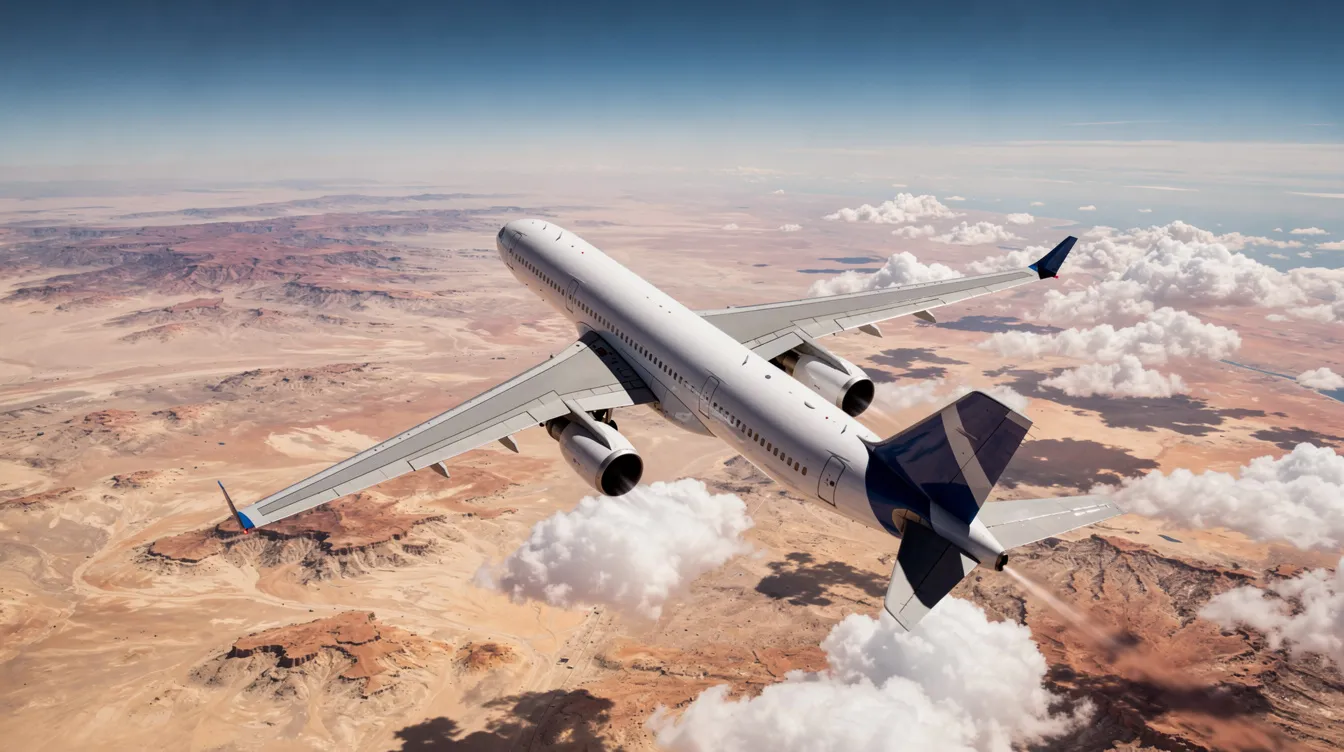
British Airways has long been one of the most prominent operators of the 777-200ER. The 777-200ER entered service with British Airways on February 9, 1997, making BA a launch operator of the extended-range variant. The airline was also a launch customer for the type, playing a key role in shaping the aircraft's development and certification.
London Heathrow–New York JFK: This classic transatlantic route covers roughly 3,000–3,500 nautical miles with a flight time of 7–8 hours. A BA 777-200ER on this sector typically files initial cruise altitudes between FL320 and FL340. Westbound flights often contend with jet stream headwinds, which may keep the aircraft at lower levels where winds are less fierce. Eastbound, strong tailwinds at higher altitudes can make climbing to FL360 or FL380 attractive for fuel savings and shorter flight times.
London–Cape Town: A longer sector of approximately 5,300–5,600 nautical miles and 11–12 hours flight time. The aircraft departs heavier with more fuel. Early cruise levels may sit around FL310–FL330, with step climbs to FL350 and possibly FL360 as the 777-200ER lightens over the course of the flight. BA's cost and fuel efficiency targets steer dispatchers toward cruise altitudes that minimize fuel burn while keeping the schedule on track.
London–São Paulo or London–Tokyo: On these ultra-long routes- pushing toward the airplane's maximum range-the production process of flight planning becomes even more critical. Step climbs play a bigger role, and the crew may execute three or four altitude changes over a 12–14 hour crossing. BA's flight planning systems balance payload, fuel, winds, and time costs to select the most economical profile.
The 777-200ER has proven remarkably reliable in service. The Boeing 777-200ER has a fatal accident rate of 0.12 per million departures, and as of May 2024, the 777 family has 31 accidents and incidents across all variants and operators. For context, the 777 family has a dispatch reliability rate above 99 percent, underscoring the type's dependability across millions of flight hours.
Most Boeing 777 variants cruise near Mach 0.84, which translates to roughly 480–510 knots true airspeed depending on altitude and temperature. Mach number is a ratio of the aircraft's speed to the local speed of sound, which decreases as temperature drops at higher altitudes. This means that as the 777 climbs, maintaining the same Mach number results in a lower true airspeed.
Mach 0.84 represents a sweet spot-a compromise between time efficiency and fuel burn. Airlines sometimes adjust slightly:
Mach 0.82–0.83: Used when fuel savings are prioritized (low cost index). Common on routes where schedule pressure is low.
Mach 0.85–0.87: Used when time matters more than fuel (high cost index). Saves 10–20 minutes on a transatlantic crossing but increases fuel burn noticeably.
Flying faster at the same altitude generally increases fuel burn because drag rises sharply as the aircraft approaches its maximum operating Mach number. Going too slow, conversely, might conflict with traffic flow constraints on busy airways where ATC expects aircraft to maintain specific speeds.
The fly-by-wire controls on the 777 help maintain precise speed management at altitude. The aircraft's flight control systems translate pilot inputs into smooth, efficient adjustments, helping keep the airplane at its target Mach throughout cruise.
While a 777 may cruise at 35,000–38,000 feet, the cabin is typically pressurized to the equivalent of about 6,000–8,000 feet above sea level. This means passengers experience air pressure similar to being at a mountain resort, not at the actual flight altitude. The cabin pressurization system manages this differential throughout the flight.
On very long-range flights lasting 14–17 hours, this cabin altitude can contribute to fatigue, dehydration, and mild hypoxia symptoms in sensitive individuals. The effects are subtle but cumulative-dry air, lower oxygen partial pressure, and reduced atmospheric pressure all take a toll on passengers over time.
Newer aircraft like the Boeing 787 Dreamliner maintain a lower cabin altitude (often around 6,000 feet or less) thanks to composite fuselage construction that tolerates higher pressure differentials. The 777, built with an aluminum fuselage, operates at slightly higher cabin altitudes-still within safe and regulated limits, but noticeable on the longest sectors.
Higher cruise altitudes mean greater pressure differentials that the fuselage must safely withstand. The 777's hydraulic systems and structural design are certified to maintain cabin integrity across its entire cruise envelope, and the aircraft has demonstrated safe pressurization performance throughout decades of service.
The 777's landing gear is among the most robust in commercial aviation. The main gear features six-wheel bogies that spread the aircraft's enormous weight during takeoff and landing, enabling operations from a wide variety of airports worldwide. While landing gear is primarily critical for ground operations, the structural strength that supports it extends to the entire airframe.
The wing design is central to the 777's high altitude capability. Boeing engineers used supercritical airfoils-wing shapes optimized for efficient transonic flight-that reduce drag at cruise Mach numbers. The large wing area reduces wing loading, which helps climb performance, especially early in long flights when the aircraft is heavy. The raked wingtips found on later variants like the 777-200LR and 777-300ER further improve aerodynamic efficiency at altitude.
The fuselage structure must resist the pressure differential between the pressurized cabin and the thin atmosphere at high altitude. At FL380, external pressure is roughly one-quarter of sea-level pressure, meaning the fuselage acts as a pressure vessel under significant stress. Certification accounts for this through rigorous fatigue testing and structural margins.
Efficient structures enable the 777 to fly at high altitude with heavy loads-but airlines avoid constant near-ceiling operations to reduce structural fatigue and maintain long service lives for their fleets.
ETOPS-Extended-range Twin-engine Operational Performance Standards-governs how far twin-engine aircraft can fly from the nearest suitable diversion airport. The 777-200ER, 777-200LR, and 777-300ER are all approved for long oceanic routes under ETOPS rules, and they sit alongside a broader ecosystem of charter airlines and private operators that apply similar planning principles to long-range missions.
The 777-200ER was certified for 180-minute ETOPS from entry into service on February 9, 1997. This meant the aircraft could operate up to 180 minutes from the nearest alternate airport, opening vast stretches of ocean and remote territory to twin-engine operations. Later, some 777 variants received ETOPS-240 and even ETOPS-330 approvals, enabling flights over the most remote portions of the Pacific and Indian Oceans.
ETOPS planning directly affects cruise altitude choices. On transoceanic routes, the crew must ensure sufficient fuel to divert to an alternate airport at any point, plus reserves for holding and weather. Carrying that extra fuel adds weight, which pushes initial cruise altitudes lower. A 777-200LR flying Doha to Los Angeles-one of the world's longest commercial flights-must balance range, reserves, cargo, passengers, and diversion fuel. The result is an initial cruise altitude that might be several thousand feet below what the aircraft could theoretically achieve.
Cruise altitude also affects engine-out performance. If one engine fails, the aircraft must be able to maintain altitude or descend safely to a single-engine cruise level while routing toward an alternate. This single-engine ceiling is always lower than the two-engine optimum, and ETOPS planning must account for it.
For charter travelers arranging ultra-long-range private flights over water, similar planning logic applies. Even smaller aircraft on intercontinental private jet missions must comply with fuel reserve rules and diversion planning that influence cruise altitude.
Commercial 777 cruise altitudes typically fall between FL300 and FL390. Many long-range business jets, by contrast, operate closer to FL400–FL450-significantly higher.
The reason is straightforward: private jets are lighter. A Gulfstream G700 or Bombardier Global 7500 has a maximum takeoff weight in the range of 100,000–110,000 pounds, compared to 600,000–775,000 pounds for a loaded 777. Lower weight and wing loading allow private jets to climb higher earlier, escaping commercial traffic, avoiding weather, and cruising in smoother, thinner air.
For Jettly users considering heavy jets or ultra-long-range business jets from Jettly's broader private charter aircraft inventory, the altitude advantage translates into tangible benefits:
Smoother ride: Less turbulence at FL450 compared to FL350.
More direct routing: Fewer airspace constraints at higher altitudes.
Faster ground speed: True airspeed at FL450 can exceed 500 knots.
Flexible scheduling: Depart when the trip demands, not when the airline schedule dictates.
While 777s focus on seat-mile efficiency-moving hundreds of passengers across oceans at the lowest cost per seat-private jets prioritize flexibility, higher cruise altitudes, and tailored cabin comfort for smaller groups. Each model serves a different mission, and the altitude profile is one of the clearest differences; platforms positioned as a NetJets alternative highlight how on-demand charter and memberships can deliver these benefits without fractional ownership.
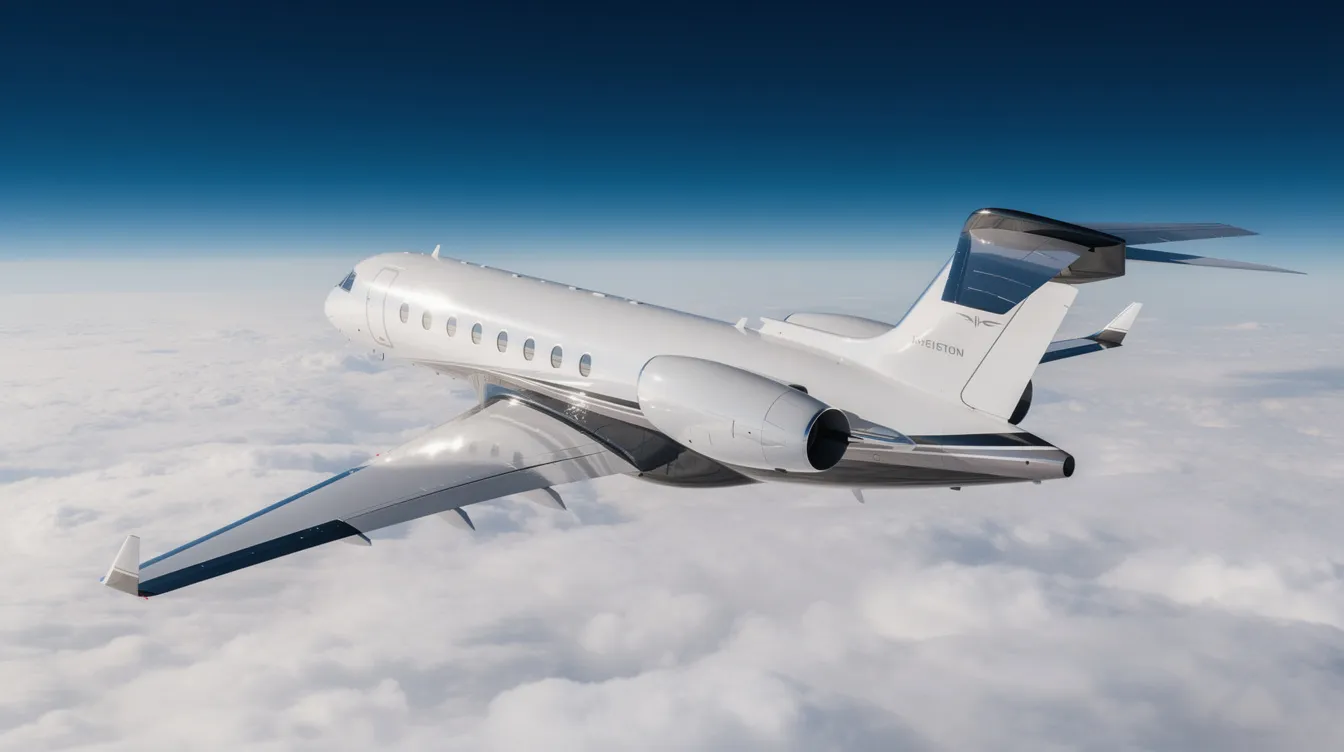
Cruise altitude is a financial decision as much as a technical one. Airline dispatchers and flight planning systems optimize altitude for every 777 flight based on weather, winds, payload, and fuel price.
The cost index is the key tool. It assigns a numerical value that represents the ratio of time cost (crew wages, aircraft lease rates, schedule commitments) to fuel cost. When fuel is expensive, the cost index drops, and dispatchers plan for:
Slightly lower cruise speeds (Mach 0.82–0.83)
More conservative initial cruise altitudes
Fewer or later step climbs
When time pressure is high-say, a flight that must meet a tight connecting bank-the cost index rises. Pilots may request higher altitudes sooner and cruise at Mach 0.85 to save minutes.
Over a fleet of dozens of 777s, even small improvements in fuel burn from altitude optimization compound into significant savings. If optimizing step climb timing saves 1–2% of fuel on a single long haul flight, and a major airline operates 50–100 such flights daily, the annual savings run into millions of dollars.
Wind direction and speed can influence the most economical cruising altitude for a flight, and dispatchers run multiple scenarios before each departure to find the optimal combination of altitude, speed, and routing.
Cruise altitude is not static. It is actively managed based on real-time weather, wind forecasts, and ATC constraints that can change multiple times during a single long-haul flight.
Jet streams are the most significant weather factor. These high-altitude wind bands can exceed 150 knots. A 777-300ER routing eastbound from North America to Europe might accept FL340 to ride a strong tailwind, even if FL360 would normally be more fuel-efficient in still air. Conversely, a westbound flight facing a 100-knot headwind at FL360 might drop to FL320 where winds are lighter, saving both fuel and time.
Temperature deviations from standard atmosphere conditions can affect aircraft lift and efficiency. On an unusually warm day at altitude (ISA+10 or ISA+15), engine thrust decreases, and climb performance suffers. The maximum practical cruise altitude may drop by 2,000–4,000 feet compared to a standard day.
Turbulence forecasts also influence altitude choices. If a broad area of clear-air turbulence is reported at FL350–FL370, the crew may request FL330 to give passengers a smoother ride, even if it costs slightly more fuel.
On busy corridors like the North Atlantic organized track system, altitude options may be limited by traffic density. Aircraft are assigned specific tracks and flight levels, and deviations require ATC approval. This can force compromises that affect both fuel burn and comfort, whereas point-to-point private flights-such as private jet charters in Houston, Texas-often have more flexibility to optimize routing and altitude around congestion.
Fuel burn drives CO₂ emissions directly-every kilogram of jet fuel burned produces approximately 3.16 kilograms of CO₂. Since cruise altitude and flight planning influence total fuel consumption, they also shape the environmental footprint of every 777 flight.
Emissions at typical 777 cruise altitudes (30,000–38,000 feet) interact with the atmosphere differently than emissions at lower altitudes. NOₓ compounds produced by engines at high altitude can catalyze ozone formation in the upper troposphere, contributing to greenhouse warming. The specific impact depends on altitude, latitude, and atmospheric conditions, and it can vary widely for different aircraft types-from heavy long-haul jets down to versatile utility models like the Cessna 207 that cruise much lower in the atmosphere.
Contrail formation is another altitude-dependent factor. Persistent contrails form when aircraft fly through ice-supersaturated regions of the atmosphere, and research suggests these can have a warming effect comparable to or exceeding the CO₂ impact of the flight itself. Adjusting cruise altitude by even 2,000 feet can sometimes avoid contrail-forming layers, though this must be balanced against fuel burn and operational constraints.
Efficient altitude and route planning can reduce total fuel burn for both airlines and charter operations. The growing interest among charter clients in carbon offsetting and efficient aircraft selection reflects a broader shift in how travelers think about the environmental cost of long-range flying, influencing choices on everything from aircraft type to departure points like private jet charter in Kolkata, West Bengal.
For passengers on a commercial 777 flight, cruise altitude affects the experience in several ways. Higher cruise altitudes generally mean smoother rides above most weather. Step climbs, while occasionally noticeable, are routine and typically brief. Cabin pressure management maintains comfortable conditions regardless of whether the aircraft is at FL320 or FL370.
Most passengers see only the final cruise level on in-flight maps or tracking apps. Behind the scenes, multiple step climbs and altitude adjustments occur as the crew and FMC manage the flight's evolving operating parameters-weight, wind, temperature, and traffic.
For those evaluating travel options beyond scheduled airline service, the comparison becomes more nuanced. A 777 offers economy of scale-moving 300+ passengers across an ocean at relatively low cost per seat. But travelers who value direct, flexible long-haul trips with tailored departure times might consider long-range private jets and Jettly's various private jet memberships over scheduled 777 services.
Private jets can fly higher, depart on demand, use smaller airports closer to final destinations, configure the cabin precisely to the traveler's needs, and even support crowdsourced and shared-seat private flights that lower the cost per traveler on select routes. For groups of 8–16 passengers on intercontinental trips, the per-person cost gap between commercial first class and private charter continues to narrow, especially when travelers leverage guidance on affordable private jet charter to manage aircraft choice, routing, and scheduling.
Jettly is a digital private aviation platform offering access to over 20,000 aircraft worldwide, from light jets for short hops to long-range business jets and VIP airliners capable of transoceanic missions. While Jettly does not operate scheduled Boeing 777 services, understanding 777 cruise altitude and range helps frame long-haul performance expectations for travelers comparing their options.
The platform's instant pricing and global inventory allow users to compare aircraft capable of similar long-range missions. Whether the trip calls for a 14-hour nonstop crossing of the Pacific or a 7-hour transatlantic flight, Jettly matches the trip length and passenger count to the right aircraft, optimizing fuel, time, and convenience.
Benefits relevant to long-range travel include options like Jettly's jet card programs, which can simplify frequent long-haul charter planning, and more generally:
Access to heavy jets and ultra-long-range aircraft for nonstop intercontinental flights
Transparent pricing without hidden fees
Flexible departure times from thousands of airports, including private terminals
The ability to compare aircraft performance, cabin configurations, and range before booking
The Boeing 777 remains a remarkable airplane-a testament to what aircraft manufacturers can achieve in long-range, high-capacity design. But for travelers who want the flexibility of flying on their own schedule, at higher altitudes, with a cabin configured for their group, private charter offers a compelling alternative.
Learn more about Jettly's charter options at https://www.jettly.com or explore guides like finding the best cross-country plane for your travel journey to better understand how different aircraft match specific mission profiles.
For comparison, some charter clients might consider narrowbody airliners like the Boeing 737-800 or similar types on regional missions, which operate at different typical cruise altitudes due to their size, weight, and route structure.
Most 777-300ER flights cruise between about FL310 and FL380, which corresponds to 31,000–38,000 feet. The exact altitude depends on weight, route length, winds, and air traffic control constraints. Operations above FL390 are possible but usually occur later in the flight when the aircraft is significantly lighter after burning fuel. The certified maximum altitude around 43,100 feet is rarely used in normal airline service-it exists primarily as a certification limit rather than a practical operating target.
Sustained cruise at or near FL430 would require a very light aircraft weight, which is incompatible with most revenue long-haul flights carrying full passenger and cargo loads. The airplane may only briefly approach altitudes near the ceiling, typically toward the end of a very long sector when most of the fuel has been burned. Safety margins and performance considerations-including buffet limits and engine thrust availability-keep normal cruise altitudes well below the certified maximum, a contrast to smaller narrowbodies such as the Boeing 737-800 that routinely operate closer to their optimal cruise bands on shorter routes.
Flying higher generally reduces drag and fuel burn, but only if the aircraft is light enough to maintain efficient engine performance at that altitude. Too high an altitude for the current weight can actually increase fuel burn because engines must work harder and the aircraft flies closer to its aerodynamic limits. Smart use of step climbs lets 777 operators minimize total fuel burn over 8–16 hour flights by gradually increasing altitude as weight decreases. The difference between an optimized altitude profile and a suboptimal one can amount to several percentage points of total fuel consumption.
These changes are usually planned step climbs-or occasionally adjustments to avoid weather, traffic, or unfavorable winds. Each new altitude reflects a recalculated compromise between better fuel efficiency at higher levels, smoother air, and ATC instructions. Pilots and the flight management computer continuously evaluate whether climbing will save fuel given the aircraft's current weight and conditions. Frequent but modest altitude changes are entirely normal in long-haul operations and are a sign of efficient flight management, not a problem, just as thoughtful service planning-including options like in-flight catering for private jets-enhances the overall travel experience beyond the technical flight profile.
Yes. Many long-range business jets cruise at higher flight levels-often FL410 to FL450 (41,000–45,000 feet)-compared to a typical 777 long-haul cruise of FL300–FL390. Their lower weight and wing loading allow them to reach and maintain higher altitudes much earlier in the flight, above most commercial traffic and weather. This translates into smoother rides and sometimes faster ground speeds. Jettly's platform can help travelers compare private jet options and evaluate leading private plane manufacturers for long-range trips where higher cruise altitudes, schedule flexibility, and personalized cabin configurations are priorities.
The Boeing 777 family cruises primarily between 30,000 and 39,000 feet, balancing aircraft weight, fuel burn, air traffic control, and environmental factors to optimize efficiency and safety on long-haul flights. While the certified ceiling is around 43,100 feet, practical cruise altitudes are lower to maintain engine performance and passenger comfort. Step climbs during flight allow the 777 to gradually ascend as it becomes lighter, minimizing fuel consumption and extending range.
For travelers, especially those considering private charter alternatives, understanding the 777's cruise altitude profile provides insight into how commercial airliners manage long-range operations. Private jets often cruise higher due to lower weight, offering benefits like smoother rides and faster ground speeds. Jettly’s platform helps match traveler needs with the right aircraft type, whether a heavy jet like the 777 or a long-range business jet. Learn more about Jettly’s charter options at https://www.jettly.com.
Ready to experience private travel on your terms? Explore flight options or request a quote at https://www.jettly.com.
Share this post:
Jay Franco Serevilla
Nov 2, 2026
|
5
min read
Discover tips and trends in the industry.
5
min read
XO's, Private Jets, and a Different Kind of Life: How Jettly Compares to XO
This guide compares Jettly and XO, two private jet services, highlighting their unique offerings. Jettly provides an on-demand marketplace with access to over 20,000 aircraft, while XO focuses on membership tiers and shared flights. Travelers can choose based on their flying frequency and flexibility needs.
Read More
5
min read
MSP to Key West: How to Get from Minneapolis–St. Paul to Key West (EYW) with Commercial and Private Flights
Traveling from Minneapolis–St. Paul (MSP) to Key West (EYW) requires planning, as there are no year-round nonstop commercial flights. Travelers can choose between connecting flights through major hubs or opt for a private jet charter for a quicker, more direct route. This guide provides insights on flight options, pricing, and tips for a smooth journey to the sunny shores of Key West.
Read MoreStay updated with our latest insights and tips to elevate your journey with us.
MEMBERSHIPS AND ASSOCIATIONS



Disclaimer: Jettly operates as a charter broker, offering access to a global digital jet charter marketplace. Jettly is not a direct air carrier and does not own or operate aircraft. All advertised flights are conducted by third-party air carriers that are fully licensed and hold the appropriate Part 135 or Part 121 certifications issued by the Federal Aviation Administration (FAA) or equivalent regulatory authorities under U.S. or foreign law. Jettly complies fully with the U.S. Department of Transportation's Part 295 and Part 298 Charter Broker regulations. Jettly does not carry additional liability insurance. Passengers are covered by aircraft operator insurance. TICO: 50023770


