


Login
Get Instant Pricing On 23,000+ Aircraft

>
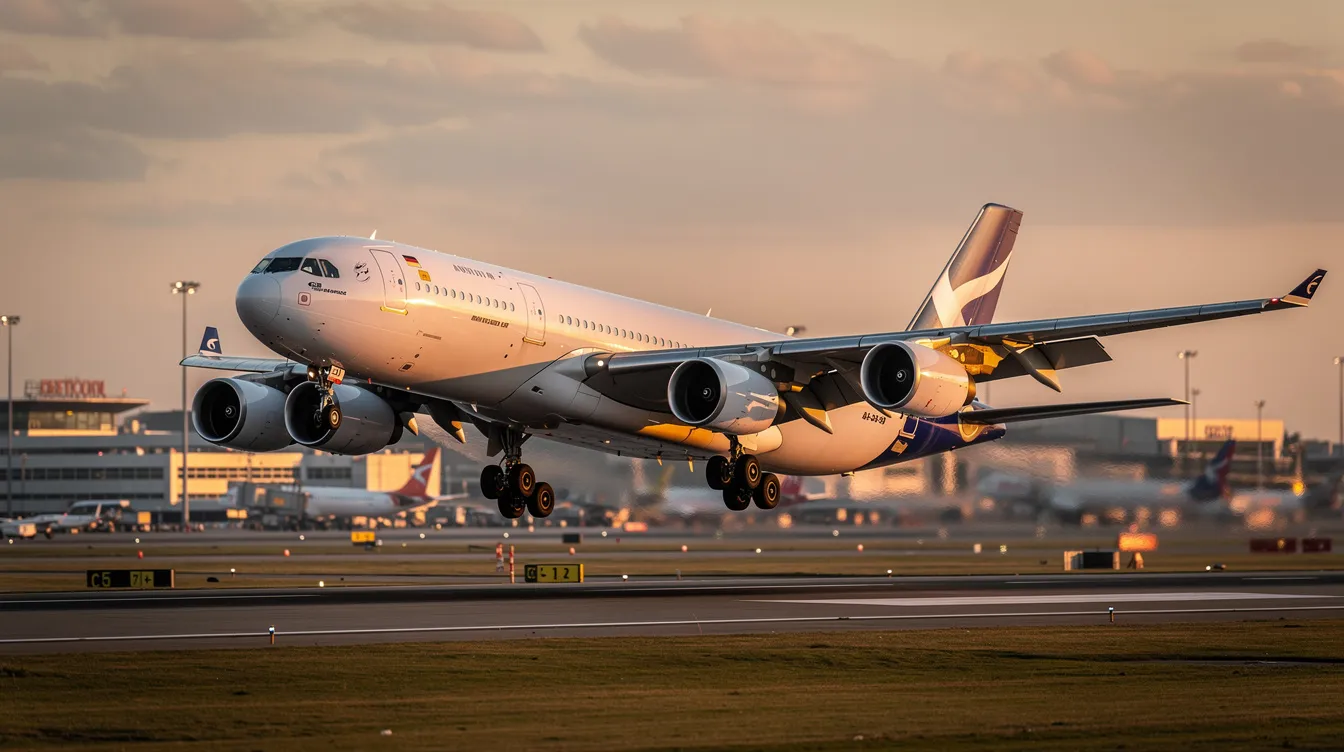
The Airbus A340-600 stretches 75.4 meters (about 247 feet 2 inches) from nose to tail, making it a beast among widebody aircraft. It held the title of the world's longest commercial airliner from its 2002 service entry until the Boeing 747-8 took flight nearly a decade later. This article covers the A340-600 length in detail, compares it to other widebodies, explains how that fuselage affects cabin layout and airport operations, and explores where an aircraft this size fits in the charter world.
The Airbus A340-600 is 75.4 meters long and was the longest commercial airliner in the skies until the Boeing 747-8 entered service.
It is longer than the Airbus A380-800 (about 72.72 m), but the A380's cabin offers nearly 50% more usable floor space thanks to its double deck and wider fuselage.
The aircraft's length creates specific operational demands: longer gates, wider turning radii, and careful tail-strike management during rotation.
Most airlines have retired the type in favour of twin-engine widebodies; the A340-600 is now mostly used for freight transport, VIP configurations, and ad-hoc charter.
For large group charter missions carrying 200+ passengers on a single non-stop intercontinental flight, Jettly's platform can help source A340-600s or comparable widebodies. Learn more at jettly.com.
The Airbus A340-600 is a long-range, four-engine widebody built as the largest member of the Airbus A340 family. Airbus designed it for ultra-long-range missions and long-haul routes in commercial aviation.
It is powered by four Rolls-Royce Trent 500 engines, each producing around 249 kN of thrust. Here are the core dimensions:
|
Dimension |
Value |
|---|---|
|
Overall length |
75.4 m (247 ft 2 in) |
|
Wingspan |
63.45 m (208 ft 2 in) |
|
Fuselage external width |
~5.64 m |
|
Tail height |
~17.3 m |
|
Range (three-class) |
14,450 km (7,800 nm) |
The A340-600's length allows for a considerable cabin capacity while maintaining a sleek profile, comparable to other private charter aircraft used on high-demand routes. Manufacturers positioned it as a direct competitor to the Boeing 747-400 on high-capacity, long-haul sectors.
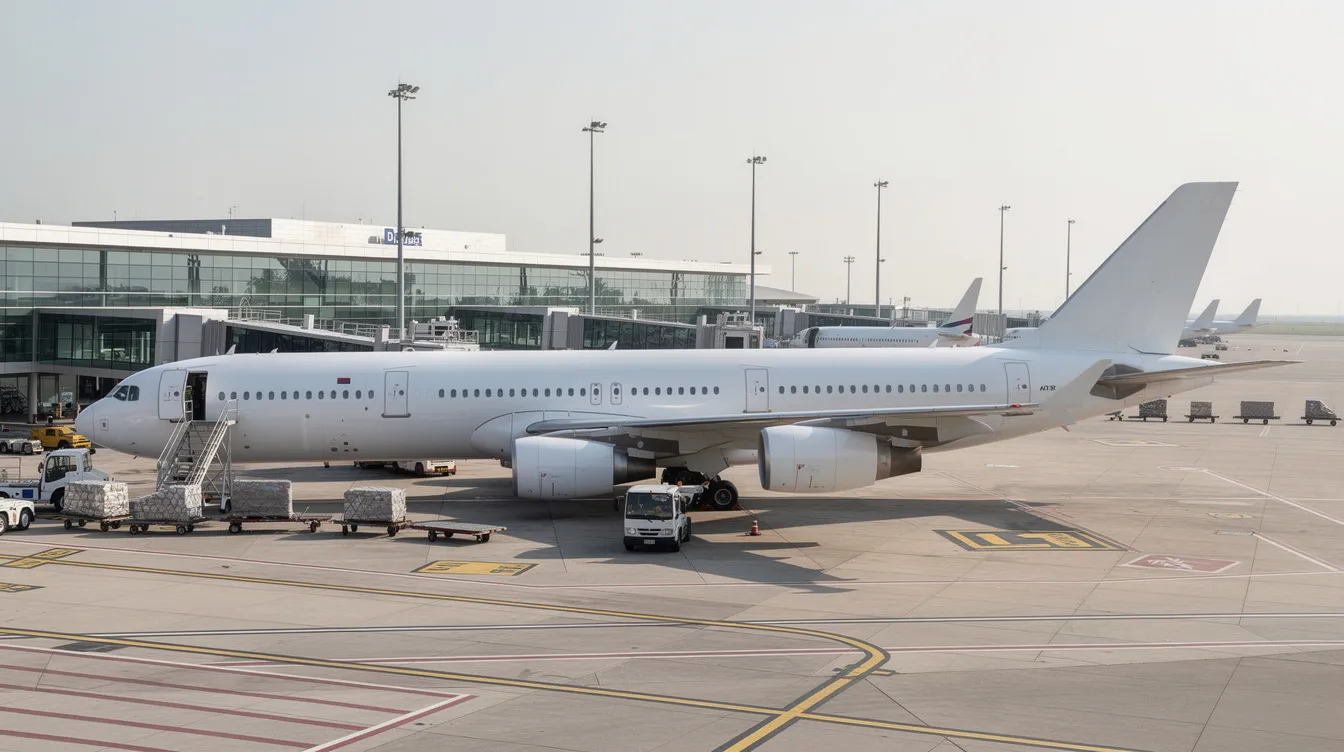
Compared to the A380-800, the A340-600 is about 2.7 meters longer in pure fuselage length, a point that often surprises readers. The A380, with a wingspan of approximately 79.7 meters and a double-deck layout seating up to 853 passengers in all-economy configuration, is the bulkier aircraft. But it is shorter nose-to-tail at 72.72 m.
Here is how the A340-600 stacks up against other aircraft of this type:
|
Aircraft |
Length |
Difference vs. A340-600 |
|---|---|---|
|
Airbus A340-500 |
~67.9 m |
7.5 m shorter |
|
Boeing 747-400 |
~70.67 m |
4.7 m shorter |
|
A380-800 |
~72.72 m |
2.7 m shorter |
|
Airbus A350-1000 |
~73.79 m |
~1.6 m shorter |
|
Boeing 777-300ER |
~73.9 m |
~1.5 m shorter |
|
Airbus A340-600 |
75.4 m |
Reference |
|
Boeing 747-8 |
~76.25 m |
~0.95 m longer |
|
Boeing 777-9 |
~76.7 m |
~1.36 m longer |
The Boeing 747-8 Intercontinental surpasses the Airbus A340-600 by approximately 0.95 meters, and the Boeing 777-9 is longer by about 1.36 meters. The Airbus A350-1000 is slightly shorter than the Airbus A340-600 by about 1.6 meters. Among these peers, the A340-600 flew for years as the search result for "longest airliner" before the 747-8 took that spot.
The Airbus A340-600 length translates into a long single-deck cabin with 8-abreast seating in economy and room for separated business and first-class zones. Lufthansa, one of the last scheduled operators, configured its A340-600s with 297 to 320 seats in a three- or four-class layout (8 first, 56 business, 28 premium economy, 189 economy in some versions).
The maximum passenger capacity can reach up to 475 in high-density layouts, though no major airline flew it that way in practice. Seat count depends on how operators divide the cabin.
The A380's cabin offers nearly 50% more usable floor space than the A340-600, which is why the shorter A380 carries far more passengers. For context on how cabin size scales down in business aviation, you can compare how many passengers a private jet can carry across different categories. The A340-600's narrower cross-section (about 5.64 m external) limits options for lounges or social spaces that the A380 could accommodate. What the long fuselage does provide is clear zone separation: quieter forward and mid-cabin areas away from the engines, with enough distance between classes to create a smooth transition from first to economy along the cabin.
At over 75 meters, the A340-600 requires specific airport infrastructure. Gate stands must accommodate fuselage overhang, taxi routing needs to account for a wide turning radius, and ground crews must marshal the aircraft carefully to avoid tail swing at the end of each manoeuvre.
Pilots must manage tail-strike margins during takeoff rotation because of the long aft section behind the main gear. On hot-and-high departures with full fuel and payload, the aircraft demands runways of 3,000 meters or more, similar to other long-haul twins like the Airbus A330-300 that also operate intercontinental sectors.
The Airbus A340-600 had its maiden flight in April 2001 and began commercial service with Virgin Atlantic in August 2002. It served routes like Bangkok to Los Angeles (Thai Airways), Madrid to Mexico City (Iberia), and Frankfurt to New York (Lufthansa). Its range of approximately 14,450 km made these non-stop sectors possible and helped shape the network strategies of many charter airlines and private operators that fly similar long-haul missions. But as ETOPS rules expanded and twins like the A350 and 787 proved more fuel-efficient, airlines retired the type steadily. Lufthansa plans to end its last A340-600 scheduled flight on October 25, 2026, from Riyadh to Frankfurt. By that time, only a handful of operators will keep the type in any form of revenue service.
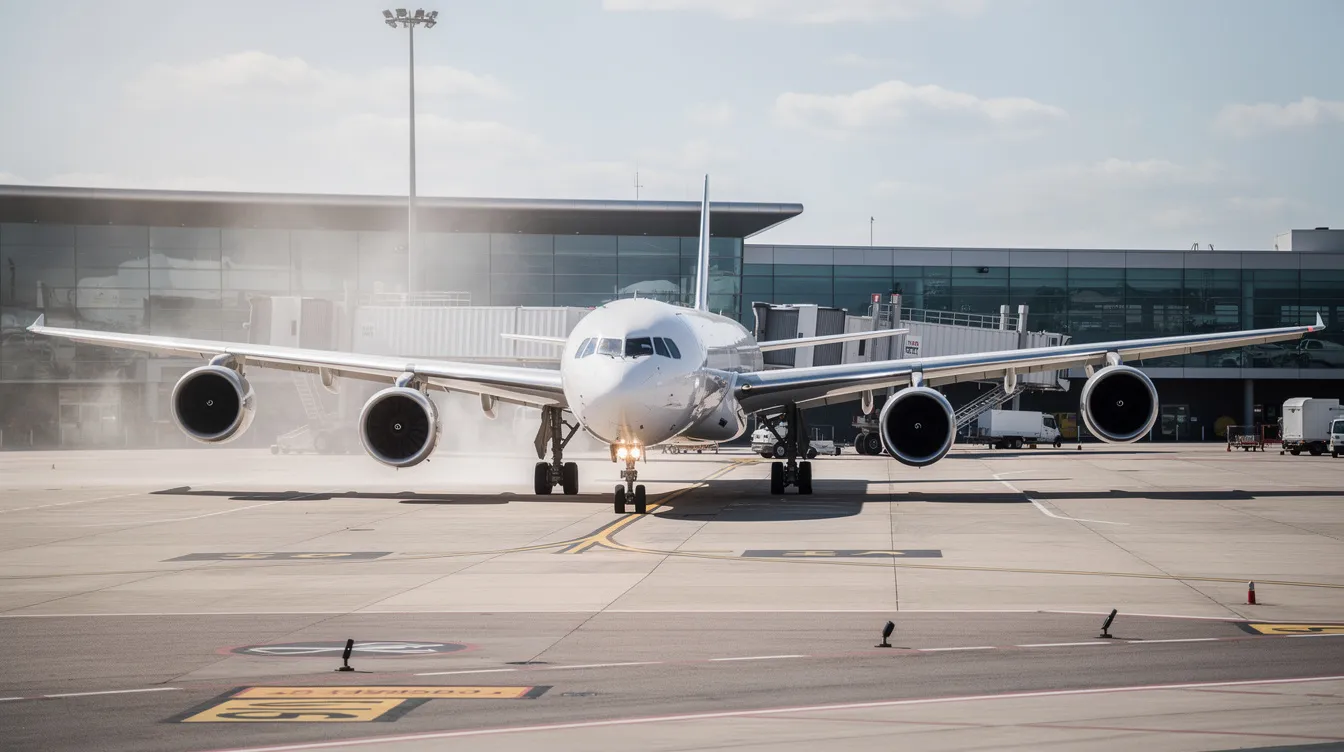
An aircraft this size makes sense for large group charters: sports teams, music tours, corporate shuttles, or government movements needing 200+ passengers on a single airframe. Several ex-airline A340-600s have been reconfigured with upgraded business-class interiors or mixed-class layouts for the charter market, much like widebody VIP aircraft such as the Boeing 767-300ER for private charter.
The main advantage is non-stop intercontinental range. A group of 250 people travelling from London to Johannesburg or New York to Buenos Aires can do so on one aircraft with dedicated branding and tailored in-flight catering; no connections, no splitting across multiple flights.
For groups under 18, a traditional heavy private jet is more economical. Once headcount rises past 50 or 100, widebodies become the practical choice. Jettly's platform offers digital quoting, transparent pricing, and tools like a private jet charter cost estimator, plus access to a global inventory that includes widebodies alongside light, midsize, and heavy jets. Read more about how air charter works or request a quote at jettly.com.
Four-engine aircraft like the Airbus A340-600 burn more fuel per trip than modern twins. The Airbus A350-1000 and Boeing 777X cover similar or longer ranges with two engines, lower operating costs, and newer data systems for route optimisation. That economic gap is why the A340-600 is now mostly used for freight transport, VIP configurations, and occasional charter work rather than daily scheduled service, and why many travellers look for affordable private jet charter options when they don’t need this much capacity.
For charter clients, this means A340-600 availability is limited and can be seasonal. Jettly helps clients evaluate whether a large widebody, a smaller 30-seat aircraft, or multiple private jets best match their mission, route, and schedule, much as you would when finding the best cross-country plane for your travel based on range and passenger needs. The A340-600 still has a chance to serve when the mission calls for it: a single non-stop leg with hundreds of passengers and no better alternative in the hangar.
These questions address common topics about the A340-600 and its length not fully covered above.
Yes. The Airbus A340-600 measures 75.4 meters nose to tail, while the standard Airbus A380-800 is about 72.72 meters long. The A380 is larger in overall volume, cabin space, and maximum passenger capacity (up to 853 in all-economy), but in pure fuselage length, the A340-600 holds the advantage by roughly 2.7 meters. Never miss a post about this topic; bookmark or print this page for reference.
Many A340-600s have left scheduled airline service and have been retired or stored, but some remain available through specialised operators. Platforms like Jettly can source these aircraft for large group charters, subject to route, season, and aircraft positioning. Availability varies; a profile picture of the exact airframe and interior configuration is typically provided during the quoting process.
Length alone does not determine comfort. Cabin width, seat pitch, and interior design matter more. The A340-600's long fuselage does allow operators to separate quiet zones, premium cabins, and group areas effectively. Love for the type among aviation enthusiasts often centers on that cabin separation rather than raw dimensions.
Most private jets available through Jettly (light to heavy) are 15 to 30 meters long and carry 4 to 18 passengers. The A340 600 is over 75 meters long and designed to carry a few hundred passengers. It fills a different point in the market: very large groups rather than small private parties. For more comments on aircraft sizing, search Jettly's aircraft guide.
The Airbus A340-600 fits long non-stop sectors where a single large group needs to travel together: transatlantic flights, Europe to Latin America, or Middle East to Asia-Pacific. Corporate events, sports tournaments, and tour operations are typical use cases. Jettly can help evaluate whether this or another aircraft type is the better fit. Explore flight options or request a quote at jettly.com.
The Airbus A340-600's impressive length of 75.4 meters makes it a standout in the world of long-haul widebody aircraft. While it is longer than the Airbus A380-800, its narrower fuselage limits cabin space compared to the double-deck A380. The A340-600's design supports long-range missions and large passenger or cargo loads, making it ideal for group charters requiring non-stop intercontinental travel. Although largely retired from commercial service in favor of more fuel-efficient twinjets, the A340-600 remains relevant in freight, VIP, and specialized charter markets.
For travelers or organizations needing to move large groups efficiently over long distances, the A340-600 offers unique advantages. Jettly’s platform provides access to this aircraft type and other widebodies, offering transparent pricing, instant digital booking, and tailored services for private and group charters. Explore flight options or request a quote at jettly.com to experience private travel on your terms.
Share this post:
Jay Franco Serevilla
Oct 4, 2026
|
5
min read
Discover tips and trends in the industry.
5
min read
NetJets US: Fractional Ownership, Fleet, and How It Compares to On‑Demand Charter
NetJets US, a Berkshire Hathaway company, offers fractional ownership and jet card programs for private aviation, operating over 800 aircraft. This article compares NetJets' structured offerings with flexible on-demand charter options like Jettly, helping travelers make informed decisions based on their needs and preferences.
Read More
5
min read
Best Time to Buy Flights to Europe: Complete Timing Guide for 2026
This comprehensive guide reveals the best times to buy flights to Europe in 2026, highlighting key booking windows and seasonal trends. By understanding fare patterns and utilizing strategic airport choices, travelers can save significantly on their tickets. Additionally, it discusses when private charters through Jettly may offer better value compared to commercial flights.
Read MoreStay updated with our latest insights and tips to elevate your journey with us.
MEMBERSHIPS AND ASSOCIATIONS



Disclaimer: Jettly operates as a charter broker, offering access to a global digital jet charter marketplace. Jettly is not a direct air carrier and does not own or operate aircraft. All advertised flights are conducted by third-party air carriers that are fully licensed and hold the appropriate Part 135 or Part 121 certifications issued by the Federal Aviation Administration (FAA) or equivalent regulatory authorities under U.S. or foreign law. Jettly complies fully with the U.S. Department of Transportation's Part 295 and Part 298 Charter Broker regulations. Jettly does not carry additional liability insurance. Passengers are covered by aircraft operator insurance. TICO: 50023770


