



Login
Get Instant Pricing On 23,000+ Aircraft

>
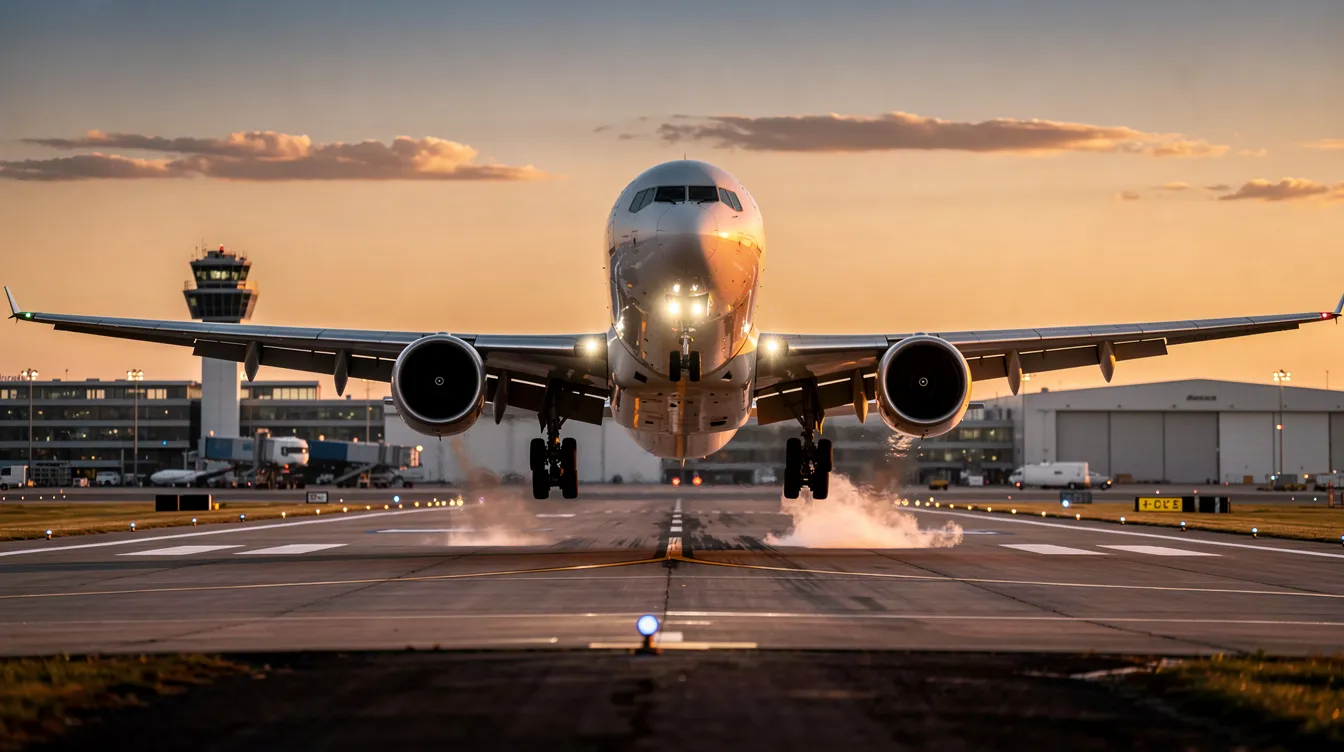
The size of planes—whether commercial giants or private jets—shapes nearly every aspect of air travel. For travelers, aviation enthusiasts, and private jet customers, understanding the size of planes is crucial: it determines how many passengers can fly, which airports are accessible, the level of comfort onboard, ticket pricing, and even the environmental impact of your journey. Whether you're considering a 500-seat double-deck superjumbo or a 6-passenger light jet, knowing about aircraft size helps you make informed decisions for your next flight.
This comprehensive guide is designed for anyone interested in air travel—be it frequent flyers, those curious about aviation technology, or private jet customers exploring options on platforms like Jettly. We’ll break down how commercial and private aircraft are classified, compare the world’s largest passenger aircraft to nimble private jets, and explain what these differences mean for your travel experience.
To help you quickly understand the landscape, here’s a summary of the main aircraft size categories and their typical passenger capacities:
Regional Jets: 50–100 passengers
Narrow-Body: up to 200–240 passengers
Wide-Body: 250–400+ passengers
Jumbo Jets: 400–850 passengers
Very Light Jets: 4–7 passengers
Light Jets: 5–8 passengers
Ultra-Long-Range Jets: up to 19 passengers
Aircraft size is measured by length, wingspan, fuselage width, and maximum takeoff weight. These dimensions directly determine passenger capacity, range, fuel burn, and which airports a plane can use.
The Airbus A380 holds the title of world's largest passenger airliner, certified for up to 853 passengers. Meanwhile, the Boeing 777, Boeing 787, and Airbus A350 dominate modern long-haul flying with better fuel efficiency per seat than older four-engine designs.
Private jets on Jettly's platform carry between 4 and 19 passengers, but they compensate with schedule flexibility, access to thousands of smaller airports, and a level of privacy and passenger comfort that commercial cabins can't replicate.
Newer widebody aircraft like the Boeing 787 Dreamliner and Airbus A350 use composite structures and more fuel-efficient engines to cut emissions by roughly 20–25% versus the planes they replace.
Choosing the right aircraft size comes down to mission profile: route length, passenger count, luggage requirements, and how much schedule control you need.
Aircraft size—measured by length, wingspan, and cabin width—directly influences comfort, cost, and airport access for every passenger on every flight. A plane's dimension directly aligns with its Maximum Takeoff Weight, which in turn dictates how far it can fly, how much cargo it can carry, and what runway infrastructure it needs.
Aircraft dimensions are determined by route demand, flight distance, and engine technology. A high-demand transatlantic route between New York and London justifies a wide-body airliner seating 300+ passengers. A 90-minute domestic hop from Dallas to Houston works perfectly on a narrow-body aircraft carrying around 180 people. Aircraft must fit within existing runway lengths, taxiway widths, and gate areas—so an airline can't simply deploy its biggest jet anywhere it wants.
For private travelers, the equation shifts. Private jets available through Jettly trade raw seat count for flexibility. A midsize charter jet seats 8–10 passengers but can depart from thousands of smaller executive airports, cutting ground time dramatically, especially when you use tools like Jettly's airport locator to identify the most convenient departure and arrival fields. This matters on routes like New York–Miami or Toronto–Vancouver, where commercial airports mean longer security lines, fixed schedules, and crowded terminals.
Aircraft size also connects directly to fuel burn per hour and environmental impact per passenger. Bigger planes burn more fuel total, but can be remarkably efficient when full. Smaller aircraft offer flexibility but carry higher per-seat emissions when lightly loaded. Understanding this tradeoff helps travelers make informed decisions.
Transition: Now that you know why aircraft size matters, let’s explore how planes are classified by size, weight, and cabin layout.
Commercial airplanes are categorized into Regional Jets, Narrow-Body, Wide-Body, and Jumbo jets. Aircraft are also classified into regional, narrow-body, and wide-body types. These categories help airlines and travelers understand the capabilities and limitations of each aircraft type.
Dimension directly aligns with Maximum Takeoff Weight for aircraft. This means that as the physical size of an aircraft increases, so does its maximum allowable weight at takeoff, which impacts range, payload, and airport compatibility.
Here’s how each body aircraft type breaks down:
Commuter and Regional Aircraft: Commuter aircraft are limited to 19 passengers and under 19,000 pounds. Regional jets typically seat 50 to 100 passengers and serve shorter routes feeding into larger hubs.
Narrow-Body Aircraft: Single-aisle planes like the Boeing 737 and Airbus A320 families. Narrow-body aircraft typically have a capacity of 100 to 230 passengers, though some stretch variants push toward 240 seats. They handle the bulk of domestic and short-to-medium-haul flying worldwide.
Definition: Narrow-body aircraft are single-aisle planes designed for short to medium-haul routes, typically seating up to 200–240 passengers.
Wide-Body Aircraft: Aircraft with twin aisles and wider fuselages, designed for long-haul and intercontinental flights. Wide-body aircraft can carry 250 to over 400 passengers depending on configuration. Examples include the Boeing 777, Boeing 787, Airbus A330, Airbus A340, Airbus A350, and Airbus A380.
Definition: Wide-body aircraft are twin-aisle planes built for long-haul flights, with typical capacities ranging from 250 to 400+ passengers.
Jumbo Jets: The largest passenger aircraft in service. Jumbo jets can seat 400 to 850 passengers. The A380 and Boeing 747 define this category.
Definition: Jumbo jets are the largest class of commercial aircraft, capable of seating 400 to 850 passengers, and are used primarily on high-density, long-haul routes.
Airport infrastructure influences aircraft size primarily through wingspan classification. All current wide-body aircraft are classified as "heavy" or "super" by air traffic control systems, meaning aircraft must suffix their call sign with "heavy" or "super" during radio communications. Super- and heavy-category aircraft require greater separation from following traffic because wake turbulence is stronger from larger aircraft like the A380. This greater separation affects runway throughput and scheduling at busy airports.
Transition: Next, let's look at how these classifications translate into real-world passenger capacities.
Understanding how many passengers each aircraft type can carry helps travelers grasp the scale differences across commercial aviation and private charter. Seating capacity varies by airline layout, but typical bands are consistent.
Below is a table summarizing typical passenger capacities and examples for each aircraft category:
|
Aircraft Category |
Typical Passenger Capacity |
Examples |
Typical Role |
|---|---|---|---|
|
Commuter & Regional |
Up to 19 (Commuter), 50–100 (Regional) |
Beechcraft 1900 (Commuter), Embraer E175 (Regional) |
Short routes, feeder flights |
|
Narrow-Body |
100–240 |
Boeing 737, Airbus A320 |
Domestic and medium-haul routes |
|
Wide-Body |
250–400+ |
Boeing 777, Airbus A350 |
Long-haul international flights |
|
Jumbo Jets |
400–850 |
Airbus A380, Boeing 747 |
High-density, long-haul routes |
|
Very Light Jets |
4–7 |
Cirrus Vision Jet, Eclipse 500 |
Short hops, private travel |
|
Light Jets |
5–8 |
Cessna Citation CJ3, Embraer Phenom 300 |
Mid-range business travel |
|
Midsize / Super-Midsize Jets |
8–10 |
Hawker 800XP, Citation XLS |
Medium to long-range private travel |
|
Large Cabin / Ultra-Long-Range Jets |
12–19 |
Bombardier Global 7500, Gulfstream G700 |
Long-range intercontinental travel |
Transition: With a clear understanding of aircraft classifications and capacities, let’s dive into what these differences mean for your onboard experience.
The cabin experience between a single-aisle narrow-body and a twin-aisle widebody is significant, even if both flights cover similar distances.
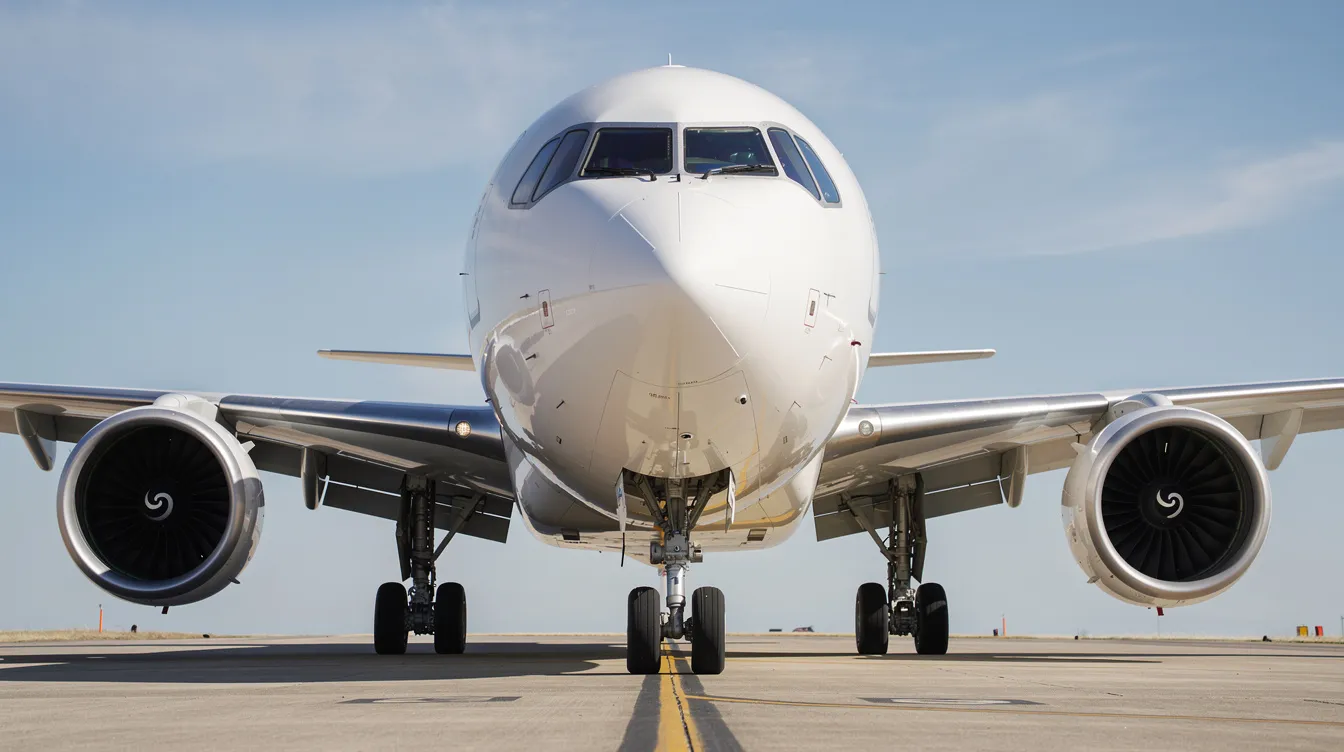
Narrow-body jets are commonly used on domestic and short-to-medium-haul routes. Aircraft like the Boeing 737-800 or Airbus A320neo typically seat passengers in a 3-3 economy configuration, with limited space for premium cabins, galleys, and lavatories. Cabin widths run around 3.5–4 meters. These planes are workhorses for carriers like Delta Air Lines, American Airlines, and Air Canada on routes under five or six hours.
Widebody aircraft like the Boeing 777, Boeing 787 Dreamliner, Airbus A330, and Airbus A350 change the equation. Twin aisles mean easier boarding and movement. Wider cabins (5.5–6.5 meters internally) allow more seats per row, larger premium sections, and improved cabin comfort. The Boeing 787 in particular lowers cabin altitude to approximately 6,000 feet and increases humidity, reducing passenger fatigue on long-range flights.
Ultra-long-range narrow-body variants like the Airbus A321XLR can now cross the Atlantic, giving many airlines a way to serve thinner transatlantic routes. However, the fuselage width remains narrow—passengers still sit in a single aisle configuration on flights that can stretch past eight hours.
For small groups, high-end private jets available through Jettly can deliver widebody-style comfort—lie-flat seating, meeting areas, and even onboard showers on some large cabin models—without sharing the cabin with hundreds of other travelers.
Transition: Now, let’s examine the world’s largest commercial aircraft and their impressive dimensions.
A handful of large aircraft dominate the top of the aircraft size rankings by length, wingspan, and passenger capacity.
Airbus A380
The Airbus A380 is the world's largest passenger aircraft and the only full double-deck superjumbo jet ever built for commercial service. Its first flight took place in April 2005, and the A380 entered service on October 25, 2007, with Singapore Airlines serving as the launch customer. The aircraft spans approximately 79.8 meters in wingspan and stretches about 72.7 meters in length. In a single-class high-density layout, the A380 can accommodate a maximum of 853 passengers, though most airlines configure it for 500–615 seats across multiple classes. Production of the A380 ended in 2021 with 251 delivered. Emirates remains the largest operator, flying over 100 A380s. Qatar Airways, Air France, and other global carriers have also operated the type on high-density hub-to-hub routes.
Boeing 747
The Boeing 747 defined the jumbo jet category for over five decades. The 747-400, with its iconic semi-double deck hump, carried most airlines' flagship long-haul services for decades. Its successor, the Boeing 747-8—the extended version of the 747 family—has a maximum capacity of 660 passengers and holds the title of the longest passenger aircraft ever built at roughly 76.3 meters. The final 747 was delivered in 2023. Beyond passenger service, the 747 airframe serves as the basis for specialized variants like the Boeing Dreamlifter (a modified 747-400 used to transport aircraft components) and military airborne command posts.
Modern Replacements
High-capacity, efficient twin-engine aircraft like the Boeing 777-300ER and the upcoming 777X, along with the Airbus A350-1000, now provide the long-range capability of older four-engine designs with substantially lower fuel burn per seat. These planes allow airlines to retire aging four-engine fleets while still serving intercontinental routes.
Transition: Next, let’s explore how widebody aircraft shape long-haul travel and airline networks.
Widebody aircraft size shapes long-haul network design across every major airline alliance, from transatlantic crossings to ultra-long links between distant hubs.
Boeing 777 Family
The Boeing 777 remains one of the most important widebody aircraft in commercial aviation. The original variant, the 777-200, entered service in 1995. The 777-300ER—the most popular current model—measures approximately 73.9 meters in length with a cabin width of about 5.87 meters (source). Boeing 777-300 can accommodate 550 passengers in a single-class layout, though most airlines configure it for 350–400 seats in two or three classes. Its typical range exceeds 7,300 nautical miles, making it a backbone for carriers like United Airlines, Turkish Airlines, and Qatar Airways on long-range flights. The upcoming 777X promises even more seats, more fuel-efficient engines with high-bypass turbofan engines, and advanced technology borrowed from the 787 program.
Boeing 787 Dreamliner
The Boeing 787 is a composite-rich, fuel-efficient widebody designed to open new point-to-point routes. The 787-9 has a range of 7,635 nautical miles—enough for ultra-long routes like Perth to London. The Boeing 787-10, the largest variant, can carry up to 440 passengers in high-density layouts, though most airlines seat 300–330. Modern widebody aircraft use advanced engines to improve efficiency, and the 787's GEnx and Rolls-Royce Trent 1000 powerplants deliver roughly 20% better fuel efficiency than the engines on the planes it replaced. Learn more about planes with the longest range.
Airbus A350 and A330
The Airbus A350 uses carbon-fiber-reinforced polymer for much of its fuselage, cutting weight and improving fuel burn. The Airbus A350-1000 can carry up to 480 passengers in maximum capacity configurations, with a longest range exceeding 8,700 nautical miles. The A330, an older but still widely used wide-body, seats approximately 250–440 passengers depending on variant. Many airlines like Air Canada and Turkish Airlines operate both types on overlapping route networks.
Airbus A340
The Airbus A340 was a long-range four-engine widebody that served airlines for decades. The A340-600 stretched to about 75.4 meters, making it one of the longest fuselage commercial aircraft ever. However, its four-engine design made it less fuel efficient than modern twins, and most airlines have now retired or are phasing out the type in favor of more efficient alternatives.
Transition: Now, let’s see how aircraft size and technology impact fuel burn and environmental sustainability.
Larger aircraft burn more fuel per hour, but a full commercial airliner is efficient per seat. This per-seat efficiency is exactly why high-density hub-to-hub routes utilize wide-body or jumbo jets—spreading fuel costs across hundreds of passengers drives down the environmental impact per traveler.
Bigger aircraft typically improve operational economics on long-haul flights. However, newer widebody aircraft have pushed fuel efficiency significantly further. The Boeing 787, Airbus A350, and latest Boeing 777 variants use advanced composite structures, aerodynamic refinements, and fuel-efficient engines to cut fuel burn by roughly 20–25% compared to older models like early 747s and A340s. These more fuel-efficient engines—particularly the latest generation of high-bypass turbofan engines—extract more thrust from each kilogram of aviation fuel burned.
Very large aircraft like the A380 and Boeing 747 shine on dense routes where load factors stay high, just as private flyers can improve seat utilization and reduce costs by using Jettly's platform to crowdsource and share private jet flights. When demand drops, their fuel burn per seat becomes less competitive, which is one reason many airlines have shifted toward slightly smaller widebodies that can match capacity to demand more precisely.
On the sustainability front, sustainable aviation fuel, carbon offset programs, and operational efficiency measures are gaining traction across both commercial airlines and private charter operators. Jettly can help environmentally aware travelers by providing information on aircraft type, efficiency, and carbon offset options, letting passengers align their aircraft choice with their sustainability priorities while browsing a wide range of private charter aircraft types.
Transition: Next, let’s compare private jets and commercial aircraft sizes, and what Jettly customers should know when choosing.
Private jets are much smaller than commercial airliners, but they're optimized for convenience, privacy, and time savings rather than maximum seating capacity. Understanding private jet sizes helps travelers pick the right aircraft for their mission.
Private Jet Size Categories on Jettly:
Very Light Jets (VLJs): 4–7 passengers, range around 1,000–1,500 nautical miles. Best for short hops under two hours.
Light Jets: 5–8 passengers, range around 1,500–2,500 nautical miles. Suitable for mid-range business travel.
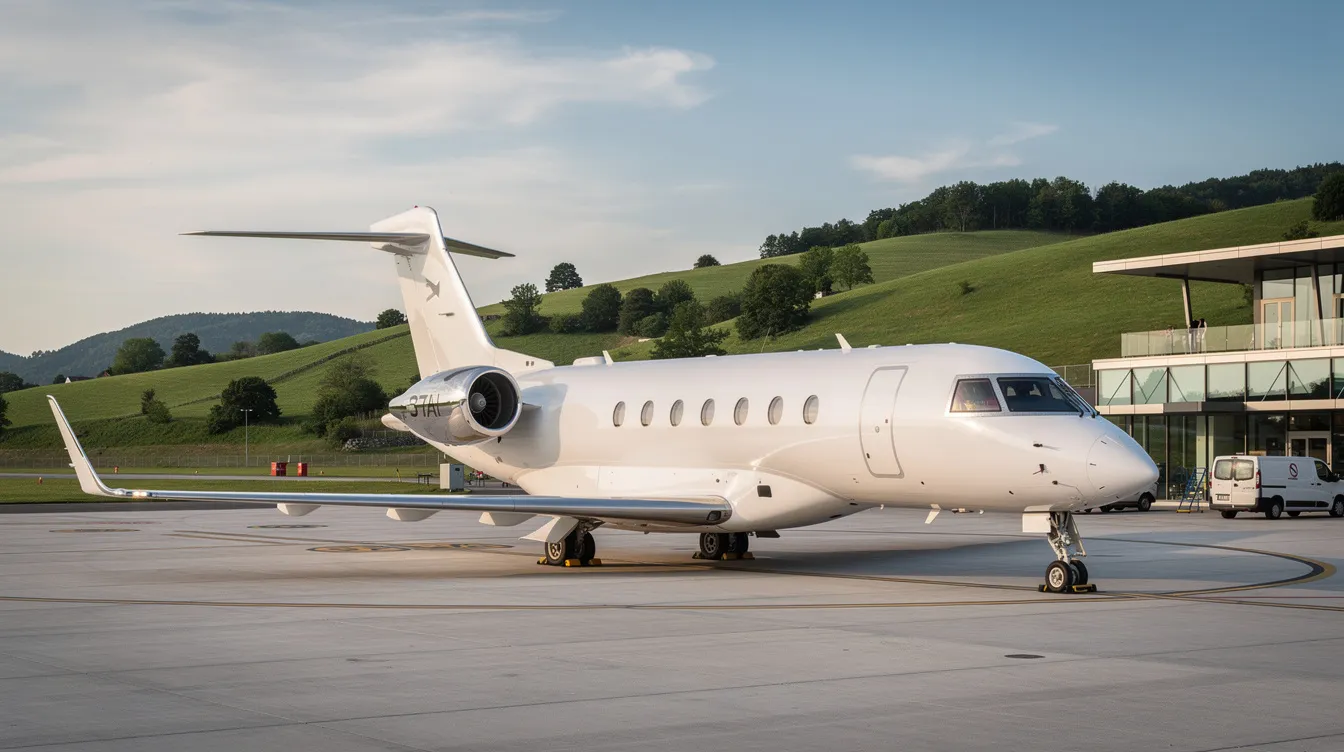
Midsize / Super-Midsize Jets: 8–10 passengers, stand-up cabins, full lavatories, range up to 4,500 nautical miles.
Large Cabin / Ultra-Long-Range Jets: 12–19 passengers, multiple cabin zones, full galleys, and ranges exceeding 7,000 nautical miles on models like the Bombardier Global 7500 or Gulfstream G700.
A typical large cabin private jet interior compares favorably to a small section of a commercial widebody like a Boeing 787 or Airbus A350—but every seat belongs to your group. Passenger comfort is tailored, the cabin is quieter, and inflight services are personalized. Safety depends on maintenance, not simply aircraft size, and all operators on Jettly's platform must meet strict regulatory standards under FAR Part 135 or equivalent.
The operational advantages tied to size are significant. Private jets can use shorter runways and operate from secondary airports closer to city centers, cutting ground travel time. Departures happen on the traveler's schedule, not a fixed airline timetable, and Jettly highlights options for affordable private jet charter so travelers can balance flexibility with budget. On routes like New York–Miami, London–Geneva, or Toronto–Vancouver, a direct private charter can save hours compared to a commercial wide-body flight out of a congested hub.
Transition: Now, let’s discuss how to choose the right aircraft size for your trip with Jettly.
The "right" aircraft size depends on passenger count, distance, luggage volume, runway length at your destination, and the onboard amenities you need.
Small groups (up to 4–6 travelers): Very light or light jets handle short hops efficiently. Charter costs are lower, and these aircraft access smaller airports that large aircraft simply can't reach—think Teterboro near Manhattan instead of JFK, or Centennial Airport near Denver instead of DIA.
Medium groups or longer routes (6–10 travelers): Midsize or super-midsize jets work well for coast-to-coast flights within North America or medium-haul international trips. Stand-up cabins, larger baggage holds, and onboard refreshment areas make 4–5 hour flights comfortable. For more on choosing the right jet type, Jettly offers detailed comparisons.
Large groups or intercontinental flights (10–19 travelers): Large cabin and ultra-long-range jets deliver nonstop range comparable to Boeing 777 or Airbus A350 commercial routes—but with a private cabin. A Gulfstream G700 or Bombardier Global 7500 can fly New York to Dubai or Los Angeles to Tokyo without stopping.
Jettly's digital platform features instant pricing through a private jet charter cost estimator, access to over 20,000 aircraft globally, and the ability for customers to compare multiple aircraft sizes side by side before booking. No jet card commitments, no fractional ownership contracts—just transparent charter access, alongside tools like Jettly's jet card flight cost estimator for travelers comparing different ways to pay for private flights.
Transition: To answer common questions, let’s move on to the FAQs about aircraft size and private jet charter.
Smaller aircraft need shorter runways and lighter pavement strength, giving them access to hundreds of regional and executive airports that large commercial aircraft like the Boeing 777 or Airbus A380 can't use. For example, a light jet can operate from Teterboro Airport (TEB) in New Jersey—just minutes from Midtown Manhattan—while any widebody would need Newark or JFK. This airport flexibility is one of the biggest time-saving advantages of private charter. Jettly's platform and support team match airport options to the chosen widebody aircraft size or private jet category during the quoting process, so travelers always know their ground transportation picture before booking, and frequent flyers can streamline this with private jet memberships that simplify access and pricing.
Yes. Certain large cabin business jets like the Bombardier Global 7500 and Gulfstream G800 can fly 7,000–8,000 nautical miles nonstop—comparable to the longest range commercial routes served by the Boeing 787-9 or Airbus A350-1000. Payload, weather conditions, and routing can reduce practical range, but most business itineraries fall comfortably within these limits. Jettly's charter specialists recommend aircraft with sufficient range to fly nonstop for each specific mission, and you can explore options in the longest-range private jets guide as well as a detailed breakdown of how much a private jet costs to own or charter.
Not necessarily. While large aircraft offer more raw space, cabin comfort depends on cabin design, seating layout, and how many people share the cabin. For 4–10 travelers, a well-appointed midsize or large cabin private jet typically feels more comfortable and personalized than occupying a few rows within a 300-seat commercial passenger aircraft. Jettly provides cabin photos, layouts, and configuration details so travelers can balance size, comfort, and cost before committing. Air travel on a private jet is fundamentally different from commercial flying, regardless of the fuselage width.
Larger aircraft have higher hourly rates because of greater fuel burn, crew costs, insurance, and maintenance. A very light jet might cost a fraction of a large cabin ultra-long-range jet per flight hour. However, when more passengers share the cost, larger jets can become cost-effective per person. Jettly's instant pricing tools let users compare different aircraft sizes side by side for a given route, making the cost-versus-comfort tradeoff transparent and helping determine whether a flexible jet card program is the right fit for their flying pattern. For more detail, see Jettly's guide on private jet operating costs.
Right-sizing your aircraft—not flying a much larger jet than your group needs—is one of the most practical ways to reduce emissions per passenger. Newer, fuel-efficient aircraft types with more fuel-efficient engines produce fewer emissions per nautical mile. Some operators in Jettly's network support sustainable aviation fuel or carbon offset programs, which travelers can ask about during the quoting stage. Consider flight distance, load factor, and aircraft technology when evaluating options. Jettly's platform displays aircraft operations details, including aircraft model, helping environmentally conscious travelers make informed choices.
Aircraft size affects everything—from how many passengers can fly and how far they can travel, to cabin comfort, fuel burn, and environmental impact. The world's largest passenger aircraft like the A380 and Boeing 747 were built to move hundreds of people across continents. Modern widebodies like the Boeing 787 and Airbus A350 do the same job with lower fuel burn and better passenger comfort. And private jets, while carrying far fewer people, deliver unmatched flexibility, privacy, and access to airports that no commercial flight can reach.
Jettly's digital marketplace lets travelers filter and compare aircraft sizes to match their priorities—whether that's schedule control, airport access, cabin comfort, or sustainability. Instead of settling for a fixed airline schedule on a crowded commercial aircraft, Jettly puts the choice in the traveler's hands.
Ready to find the right aircraft for your next trip? Explore flight options or request a personalized quote at https://www.jettly.com.
Share this post:
Jay Franco Serevilla
Jun 29, 2026
|
5
min read
Discover tips and trends in the industry.

5
min read
Havasu Falls Helicopter Price: Costs, Schedule, and How to Book in 2026
Planning a trip to Havasu Falls in 2026? The helicopter service offers a quick alternative to the challenging hike, costing approximately $300 one-way. Flights operate on select days and are first-come, first-served, so early arrival is essential. Remember, a valid permit is required for all visitors to access the falls.
Read More
5
min read
How Long Does It Take to Get a Helicopter License? Timeline, Training, and Costs
Becoming a helicopter pilot can take anywhere from 2 months to 2 years, depending on the type of license and training frequency. A private pilot license typically requires 40 flight hours, while a commercial license demands 150 hours. Factors such as training intensity, weather conditions, and flight school choice significantly influence the timeline and costs involved.
Read MoreStay updated with our latest insights and tips to elevate your journey with us.
MEMBERSHIPS AND ASSOCIATIONS



Disclaimer: Jettly operates as a charter broker, offering access to a global digital jet charter marketplace. Jettly is not a direct air carrier and does not own or operate aircraft. All advertised flights are conducted by third-party air carriers that are fully licensed and hold the appropriate Part 135 or Part 121 certifications issued by the Federal Aviation Administration (FAA) or equivalent regulatory authorities under U.S. or foreign law. Jettly complies fully with the U.S. Department of Transportation's Part 295 and Part 298 Charter Broker regulations. Jettly does not carry additional liability insurance. Passengers are covered by aircraft operator insurance. TICO: 50023770


