


Login
Get Instant Pricing On 23,000+ Aircraft

>
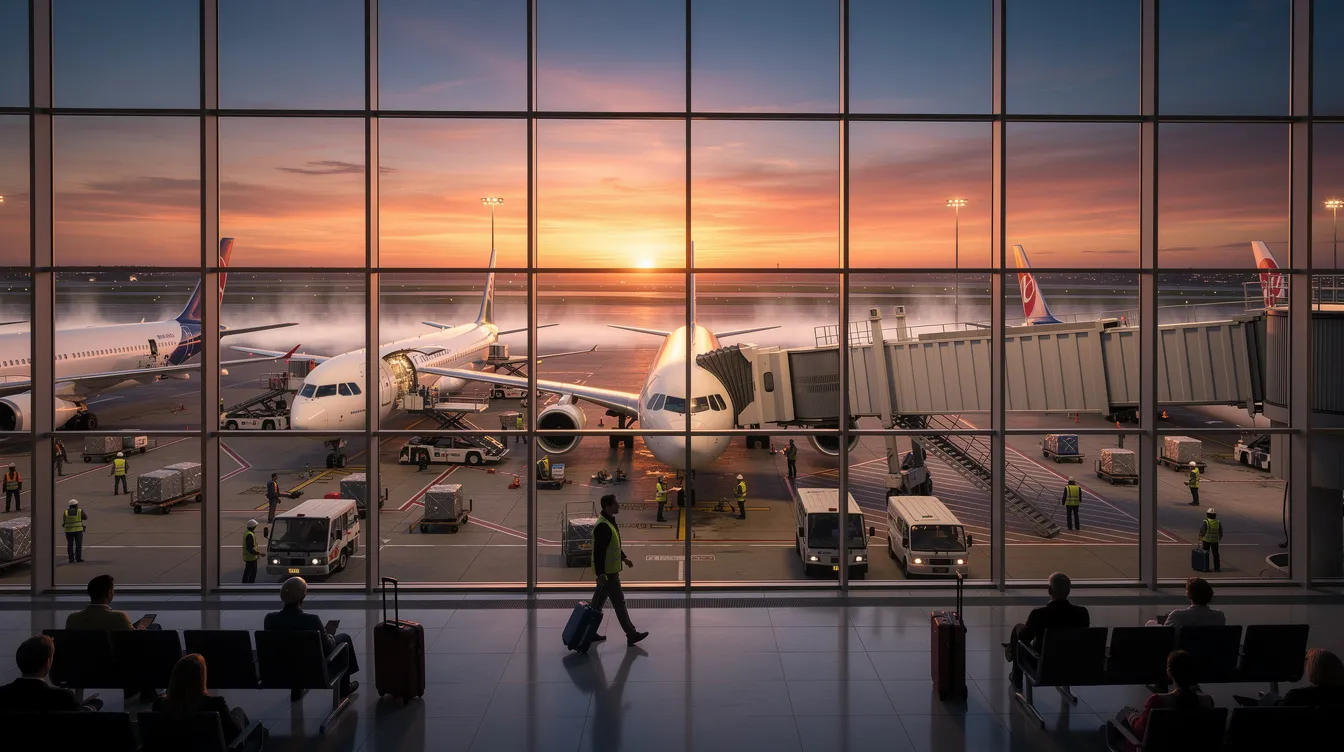
The term "air companies" covers a broad spectrum of aviation operators, from the largest scheduled carriers hauling millions of passengers each year to nimble private charter platforms offering on-demand flights for a handful of travelers at a time. This guide is designed for travelers comparing airline options and private jet charter, as well as anyone interested in how the aviation industry works. Understanding how these different types of air companies work—and where their strengths and limitations lie—matters because it empowers you to make informed travel decisions and optimize your journey, whether your priorities are cost, convenience, flexibility, or access to unique destinations.
This guide breaks down the major U.S. airlines by business model, explains how they operate and compete, and explores how private jet charter fits into the bigger picture for people who value flexibility, time savings, and access to airports that commercial carriers simply don't serve.
The airline industry includes legacy carriers like American Airlines and Delta, low-cost airlines such as Southwest Airlines and Frontier Airlines, and niche players like Hawaiian Airlines and Allegiant Travel Company-each serving distinct traveler segments.
Airlines are divided into Legacy/Network Carriers, Low-Cost Carriers, and Ultra-Low-Cost Carriers, with 19 carriers classified as major airlines in FY2025.
Commercial air companies focus on high-volume scheduled routes using hub-and-spoke or point-to-point networks, while private jet charter platforms offer on-demand, point-to-point travel with access to thousands of smaller airports.
Travelers increasingly combine commercial flights with private jet charter for complex itineraries, last-minute changes, or routes underserved by major airlines.
Readers interested in private charter alternatives can learn more about Jettly's global private jet marketplace at https://www.jettly.com.
Air companies are organizations that operate aircraft to transport passengers or cargo. They range from scheduled commercial airlines and regional carriers to private aviation operators offering on-demand charter, fractional ownership, or membership-based access. In the USA, these operations fall under different regulatory frameworks managed by the Federal Aviation Administration, with Part 121 governing scheduled airlines and Part 135 covering on-demand charter.
The modern airline industry took shape after the Airline Deregulation Act of 1978 removed federal controls over fares, routes, and market entry in the United States. That single policy shift created the competitive landscape we see today-legacy carriers competing alongside low-cost and ultra-low-cost airlines for the same passengers. Since deregulation, airlines have reduced fares by almost 50%, making air travel accessible to far more people than in previous decades.
The U.S. Department of Transportation classifies "major airlines" (Group III) as carriers generating more than $1 billion in annual operating revenue. In FY2025, 19 carriers met that threshold, though Spirit Airlines ceased operations in May 2026, reducing the active count; note that this total is time-sensitive. This list is updated periodically as the industry evolves.
Air companies operate within a tightly regulated environment. Beyond the Federal Aviation Administration domestically, international standards from ICAO and IATA further govern safety, maintenance, and operational procedures. Private charter platforms like Jettly sit alongside commercial air companies in this ecosystem, using on-demand models rather than fixed schedules to serve travelers who need flexibility. For a primer on how charter aviation works, see Charter Flights 101.
This section profiles well-known U.S. air companies, grouped by model: legacy carriers, low-cost, ultra-low-cost, and niche/region-focused airlines. Major airlines provide global connectivity through distinct business models, and understanding those models helps travelers choose the right carrier-or the right combination of carriers and private charter-for any trip.
Collectively, major U.S. airlines carry hundreds of millions of passengers per year across domestic and international routes. Many participate in global alliances like Oneworld, SkyTeam, and Star Alliance to extend reach, coordinate schedules, and connect cities around the world. Delta Airlines employs more than 10,000 people, United Airlines serves 210 domestic destinations and 120 international stations, and JetBlue operates over 1,000 daily flights to 90 locations. SkyWest Airlines, a critical regional partner, operates over 2,400 flights daily across North America.
Below are compact profiles of six carriers that illustrate the range of business models in U.S. commercial aviation.
American Airlines traces its origins back to 1926 and is headquartered in Fort Worth, Texas. It is the largest airline employer in the U.S. and one of the world's largest airlines by fleet size, operating approximately 1,017 mainline aircraft as of mid-2026. American Airlines serves over 350 destinations in 60 countries.
As a founding carrier of the Oneworld Alliance, American runs a hub-and-spoke system centered on airports including Dallas/Fort Worth (DFW), Charlotte (CLT), Chicago O'Hare, Miami (MIA), Phoenix (PHX), Los Angeles, and Washington National (DCA). These hubs feed both domestic traffic and long-haul international flights to Europe, South America, and Asia.
Legacy airlines offer multiple cabin classes and international partner alliances. American's cabin products range from basic economy through Main Cabin, Premium Economy, and Flagship First/Business. Its fleet mixes narrow-body aircraft (Airbus A320 family, Boeing 737) for domestic routes with wide-bodies like the Boeing 777 and 787 for transoceanic service. Seat pitch and legroom vary widely among airlines, and American's range across cabin classes reflects that reality.
American has set a target of net-zero greenhouse gas emissions by 2050, with an intermediate goal to reduce emissions intensity by roughly 45% by 2035 relative to a 2019 baseline.
For travelers, American is a reference point on busy routes. But high load factors and constrained schedules can make private charter an appealing alternative when time is critical or when smaller airports are the final destination.
Southwest Airlines, founded in 1967 and headquartered in Dallas, pioneered the low-cost carrier model in the United States. It operates an all-Boeing 737 fleet-a single-type strategy that keeps maintenance and training costs low-and Southwest Airlines operates the most domestic passenger flights in the U.S.
The airline serves over 120 airports, primarily in the domestic market, plus select international leisure destinations in Mexico, Central America, and the Caribbean. Low-cost airlines typically operate point-to-point flights rather than using hubs, and Southwest's network reflects that approach, reducing dependence on a single congested airport and improving aircraft utilization.
Historically, Southwest was famous for two free checked bags, no standard change fees, and open seating. However, as of May 2025, the "bags fly free" policy ended for most customers, with standard fares now incurring checked-bag fees. Free bags are retained for Rapid Rewards A-List Preferred and Business Select fare holders. The airline has also moved toward assigned seating and more segmented fare classes.
Travelers may pair Southwest flights for main trunk routes with private charter segments for access to smaller regional airports not served by the carrier. This hybrid approach is increasingly common for people who need to reach destinations left off the scheduled network.
Alaska Airlines was founded in 1932 and is headquartered near Seattle–Tacoma International Airport (SEA). With a strong West Coast and Pacific corridor presence, the airline serves more than 140 destinations across roughly 16 countries and territories, including the continental U.S., Alaska, Hawaii, Canada, Mexico, Belize, and Costa Rica.
Alaska joined the Oneworld Alliance in 2021, enabling codeshares, frequent-flyer reciprocity, and shared lounges that extend its reach well beyond its own route map. It partners with regional operators like Horizon Air and SkyWest to connect smaller communities across the Pacific Northwest and beyond.
The carrier has a longstanding reputation for customer satisfaction and operational reliability in challenging northern and mountainous environments. Recent fleet modernization efforts include an order for 110 new Boeing aircraft.
For remote locations in Alaska or the Pacific Northwest not covered by mainline service, travelers often rely on charter operators and private aviation to bridge the last leg. Jettly's network of over 20,000 private charter aircraft can fill that gap for destinations where scheduled service simply doesn't exist.
Hawaiian Airlines, founded in 1929 and headquartered in Honolulu, is the primary inter-island and Hawaii–mainland U.S. carrier with a strong leisure travel focus. It operates routes between the Hawaiian Islands and cities such as Los Angeles, San Francisco, Seattle, Vancouver, Tokyo, Sydney, and Auckland.
The airline has a notable safety record, with no fatal passenger accidents in the jet age, and a reputation for reliable baggage handling and low cancellation rates. Reliability and reputation factors include airline safety records, and Hawaiian's track record is a point of pride.
Hawaiian uses narrow-body aircraft for inter-island service and wide-bodies like the Airbus A330 for long-haul flights. Comprehensive passenger amenities include complimentary meals on international flights-a standard that many legacy carriers have moved away from on domestic routes.
Island-hopping travelers sometimes turn to private charters or helicopters for direct access to smaller airports and resorts beyond the scheduled network. A family arriving in Honolulu on a Hawaiian Airlines flight from the mainland, for example, might use a private charter for a direct hop to a resort airstrip on a neighboring island.
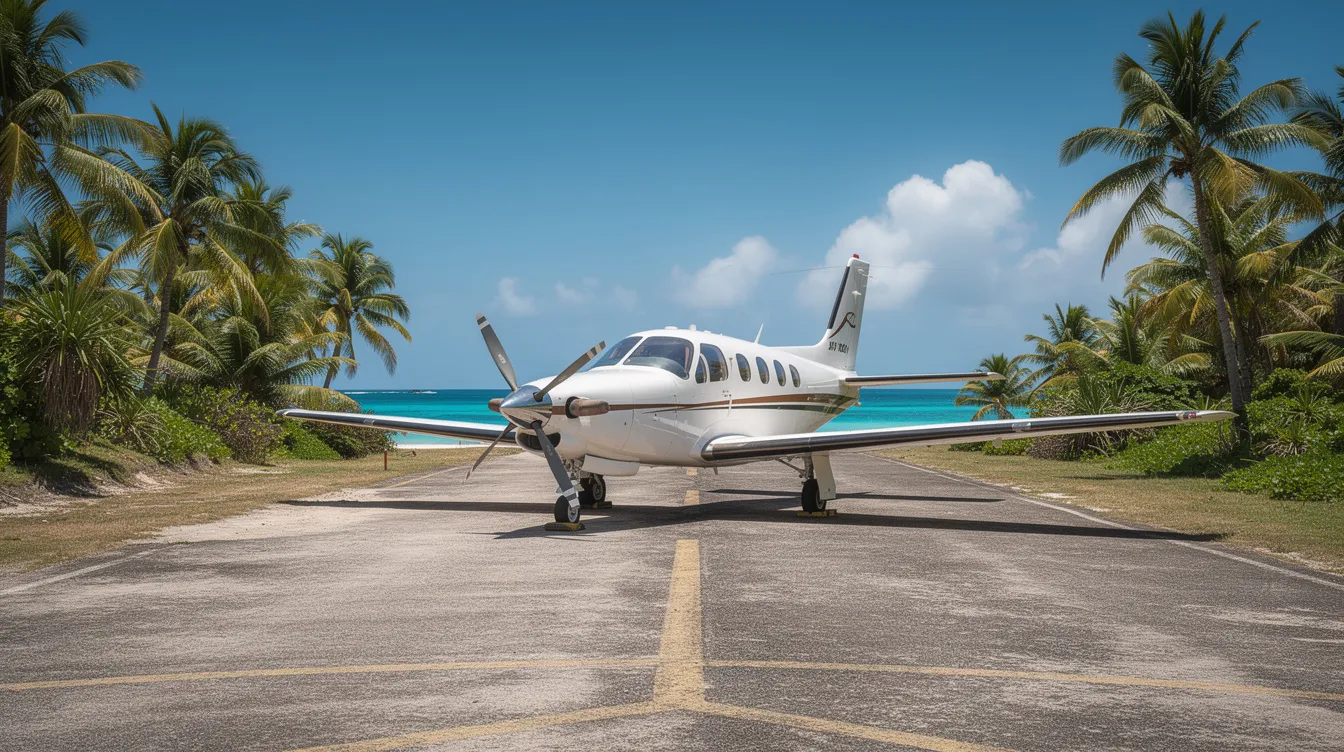
Frontier Airlines was founded in 1994 and is headquartered in Denver. It operates as an ultra-low-cost carrier with an all-Airbus narrow-body fleet, serving more than 100 U.S. cities and additional destinations in Mexico, the Caribbean, and Central America.
Budget carriers focus on offering competitive base fares by unbundling services. Frontier follows this model closely: base fares are low, but travelers pay extra for carry-on bags, seat assignments, priority boarding, and other add-ons. Key services of low-cost airlines may include à la carte pricing, and Frontier's revenue model depends heavily on these ancillary fees.
Frontier often uses secondary airports to keep costs down, which can be attractive for price-sensitive travelers but may lengthen overall journey times. For travelers who prioritize time savings and route flexibility over ultra-low fares, private charter serves a different need entirely-one focused on efficiency rather than ticket price alone.
Allegiant Travel Company was established in 1997 and is based in Las Vegas. It operates as a leisure-focused ultra-low-cost carrier, serving more than 120 smaller and mid-size U.S. airports with less-than-daily frequencies-often just 2 to 4 flights per week on individual routes.
Allegiant targets vacation travelers rather than business commuters, and its network connects underserved regional airports directly to popular leisure destinations like Orlando, Las Vegas, and Florida beach cities. It also bundles offerings including hotel stays, rental cars, and vacation packages, positioning itself as a travel company rather than solely an airline.
Allegiant is a good example of how air companies specialize. High-volume leisure routes are its strength, while platforms like Jettly serve bespoke or last-minute itineraries that fall outside any scheduled carrier's network.
Air companies design their operations around three core decisions: network structure, fleet composition, and alliance partnerships. Each choice balances cost, capacity, and geographic coverage.
Legacy carriers operate expansive global hub-and-spoke networks to connect cities. American Airlines, Delta, and United Airlines each funnel passengers through central hubs, enabling more origin-destination combinations but increasing vulnerability to congestion and cascading delays. Point-to-point models, used by Southwest Airlines and many low-cost carriers, connect city pairs directly. This reduces layover time but requires sufficient demand on each route to fill aircraft.
Fleet strategy matters just as much. Southwest's all-Boeing 737 approach and Frontier's all-Airbus strategy both reduce crew training, maintenance complexity, and parts inventory. Mixed fleets, like those at American or United, support flexibility across route lengths and passenger loads but at higher operational cost.
Airline alliances offer seamless international travel options and shared lounges. Through partnerships within Oneworld, SkyTeam, and Star Alliance, carriers connect travelers to cities like London, Tokyo, and Copenhagen without operating every route themselves. Joint ventures on transatlantic and transpacific corridors allow airlines to share revenue and coordinate schedules.
|
Model |
Typical Passenger |
Airport Types |
Flexibility |
|---|---|---|---|
|
Legacy hub-and-spoke |
Business and leisure, all budgets |
Major hubs, some regionals |
Fixed schedule, connections |
|
Low-cost point-to-point |
Budget-conscious leisure and business |
Medium hubs, some secondary |
Fixed schedule, fewer connections |
|
Ultra-low-cost |
Price-sensitive leisure |
Secondary and smaller airports |
Infrequent schedules (2–4x/week) |
|
Private charter / on-demand |
Time-sensitive, group, last-minute |
5,000+ airports incl. private fields |
Full schedule control |
Air companies rely on a mix of ticket revenue, ancillary fees, cargo, and loyalty programs to stay profitable in a low-margin industry. Ultra-low-cost carriers like Frontier and Allegiant may derive over 40% of revenue from ancillary items-checked bags, seat selection, early boarding, onboard food, Wi-Fi, and change fees.
Revenue management systems adjust fares dynamically based on demand, booking patterns, and competition on specific routes. A seat that costs $89 three months out might cost $400 the day before departure.
Frequent flyer programs help maximize miles and leverage elite status benefits. Co-branded credit cards with carriers like American Airlines or Alaska Airlines generate significant financial value through mileage sales to banks and partners. For the airlines, these programs are often more profitable than the flights themselves.
Private jet charter pricing works differently. Platforms like Jettly present transparent, all-in charter quotes for an entire aircraft rather than per-seat tickets plus add-on fees, and tools such as Jettly's jet card flight cost estimator help travelers understand approximate pricing for common routes. There are no surprise ancillary charges. For a detailed look at how charter pricing breaks down, visit the Private Jet Charter Costs page.
Commercial air companies are optimized for cost-effective mass transport on high-demand routes. Private jet charter prioritizes time savings, privacy, and schedule control. Both serve legitimate needs, and the best choice depends on the trip.
|
Factor |
Commercial Airlines |
Private Jet Charter |
|---|---|---|
|
Booking window |
Weeks to months in advance for best fares |
Hours to weeks; same-day possible |
|
Airport options |
~500 commercial airports in the U.S. |
5,000+ airports incl. private fields |
|
Security & boarding |
TSA screening, 60–90 min recommended |
15 min or less at FBO terminals |
|
Cabin privacy |
Shared cabin, assigned seat |
Entire aircraft for your group |
|
Pricing structure |
Per seat + ancillary fees |
Per aircraft, all-in quote |
|
Schedule flexibility |
Fixed departure times |
Depart when you're ready |
Major airlines like Southwest Airlines, Frontier Airlines, and Allegiant Travel Company offer the lowest fares on popular routes but require travelers to adapt to fixed timetables and crowded hubs. For a same-day New York–Miami business roundtrip, a commercial itinerary might consume 12+ hours including airport time, connections, and ground transport. A private charter could cut that to 6 hours door-to-door by flying direct from a nearby regional airport.
Multi-city trips highlight the gap even further. A West Coast investor roadshow visiting San Francisco, Portland, and Boise in a single day is nearly impossible on scheduled flights but straightforward with a private jet, especially when you understand the range of private and charter airlines available to connect smaller markets efficiently.

Jettly operates a digital private jet charter marketplace, giving travelers access to over 20,000 aircraft globally for on-demand flights. It is not a replacement for commercial aviation-it is a complement.
Frequent flyers might use major airlines like American Airlines or Alaska Airlines for long-haul segments, then switch to Jettly for short-haul hops to smaller cities or last-mile airports. This hybrid approach is especially practical for people whose final destination is left off scheduled route maps.
Key Jettly features include instant charter pricing, online booking, optional jet card memberships, and transparent cost structures. Unlike traditional jet cards or fractional ownership, there is no long-term commitment required. Learn more about how to book a private jet through Jettly's platform.
Jettly also integrates empty leg flights, which provide discounted access to private aircraft during repositioning, and supports crowdsourced private jet flights and shared empty seats to further reduce costs for flexible travelers. Empty leg discounts typically range from 30% to 75% off standard charter rates, making private aviation accessible to a broader segment of travelers. The private jet charter market is projected to exceed $25 billion by 2031, and empty-leg platforms alone are expected to grow from roughly $514 million in 2025 to $1.24 billion by 2034.
Ready to see how commercial and private travel can work together? Explore charter options at https://www.jettly.com.
Both commercial airlines and reputable private jet operators function under strict safety regulations, though the specific frameworks differ by operation type and country.
In the United States, the FAA enforces Part 121 regulations for scheduled airlines and Part 135 for on-demand charter. Both frameworks govern crew training, maintenance schedules, and operational standards. International operations must also meet ICAO standards.
Major airlines like Hawaiian Airlines and Alaska Airlines often highlight strong safety records and third-party ratings as part of their brand identity. Private charter platforms such as Jettly work exclusively with licensed operators and audited aircraft, relying on third-party safety organizations like ARG/US and Wyvern to help clients evaluate options.
When evaluating any air company-commercial or private-travelers should check key factors highlighted in leading guides to the best private jet charter companies, including:
Operator certification (FAA Part 121 or Part 135)
Pilot experience and minimum flight hours
Aircraft maintenance history and inspection records
Third-party safety audit status (ARG/US, Wyvern, or equivalent)
These steps protect passengers regardless of whether they're boarding a 737 or a light jet.
The airline industry invests heavily in coordination with air traffic control to minimize delays, yet commercial airlines remain vulnerable to congestion at major hubs and cascading schedule disruptions. Historical on-time performance statistics help minimize delays when choosing carriers and routes, but no scheduled airline can guarantee immunity from weather or system-wide slowdowns.
When a large hub such as Chicago O'Hare, Atlanta, or Dallas/Fort Worth experiences storms, hundreds of flights from carriers like American Airlines or Southwest Airlines may be delayed or canceled. A single weather event can ripple across the entire network for a day or more.
Private jets can sometimes reroute through less congested airports or adjust departure times more freely, improving odds of keeping time-critical trips on schedule. Consider a corporate team needing to reach three Midwest cities during a winter weather system. A multi-connection commercial itinerary might collapse entirely if one hub closes. A flexible private charter can divert to alternate airports, adjust timing, and still complete the trip in a single day.
All aircraft are subject to safety-driven weather restrictions-private jets included. But flexibility and alternate airport access are distinct advantages. If a commercial flight is canceled and you need to find an alternative quickly, platforms like Jettly can show available aircraft across many operators. For more on this scenario, see Missed Flight Private Jet Charter.
Aviation contributes roughly 2–3% of global CO₂ emissions, with expectations of growth as passenger demand rises. U.S. airlines are committed to reducing environmental impact, and airlines are identifying sustainable solutions against climate change across the industry.
Major carriers are investing in newer, more fuel-efficient aircraft, sustainable aviation fuel (SAF), and operational efficiencies such as single-engine taxiing and optimized flight planning. American Airlines has committed to net-zero emissions by 2050. United Airlines has set a goal to reduce well-to-wake greenhouse gas emissions by 50% by 2035 relative to its 2019 baseline. IATA members industry-wide have resolved to achieve "Fly Net Zero" by 2050.
SAF remains a small percentage of total fuel use-well under 1% for most carriers-but production is growing. Government funding and private investment in SAF production capacity are critical to scaling supply and reducing cost.
Private aviation stakeholders, including platforms like Jettly, can support environmental goals through carbon offset programs, efficient aircraft selection, and route optimization, especially when positioned as a flexible NetJets alternative for flying private. Promoting empty leg utilization also improves the overall efficiency of private aviation by reducing the number of flights that operate with zero passengers aboard.
Emerging trends point to electric or hybrid-electric regional aircraft projects, advanced air mobility concepts for urban trips, and digital platforms that improve load factors by matching demand to available aircraft.
Air companies are increasingly digital. Mobile boarding passes, biometrics at gates, dynamic rebooking tools, and real-time flight notifications have become standard for commercial carriers. These tools save customers time and reduce friction during disruptions.
Private charter platforms like Jettly extend this digitalization by enabling search, instant pricing, and booking of private flights online-similar in experience to booking a commercial ticket, but for an entire aircraft-and tools such as an airport locator for private jet flights make it easy to identify convenient departure and arrival fields. Travelers can visit the Jettly page, enter their route details, and receive quotes in minutes. For those who prefer ongoing access, private jet memberships offer additional benefits, and there are many other ways to get a seat on a private jet through options like empty legs, group bookings, and flight-sharing platforms.
The shift toward personalized experiences is accelerating across the industry. Tailored in-flight service, data-driven loyalty offers, and customized itineraries for corporate travel managers are making both commercial and private aviation more responsive to individual needs.
Integrations such as ground transportation coordination, catering requests, and preferred airport handling can now be managed through a single digital interface in modern private aviation. The boundary between traditional air companies and digital platforms will continue to blur as marketplaces and airlines collaborate more closely.
Choosing between a commercial airline and a private charter isn't always an either-or decision. Often the smartest approach is a hybrid, using each mode where it performs best.
Here's a simple framework:
Define priorities. Is the trip driven by price, time, privacy, or some combination? Budget-first travelers will lean commercial. Time-sensitive or multi-stop trips favor charter.
Analyze route options. Check nonstop availability on major airlines. If the route requires multiple connections or the destination airport is small, private charter may be faster overall.
Compare total door-to-door time. Flight duration is only part of the equation. Add airport arrival time, security, boarding, layovers, baggage claim, and ground transport on both ends. Private charter frequently cuts total travel time by 30–50% on complex itineraries.
For straightforward, advance-planned trips on busy routes, airlines like American Airlines or Southwest Airlines typically offer the best value. For multi-city itineraries, same-day round-trips, small-airport access, or situations where schedule control is essential, private jet charter through Jettly is often the more practical solution.
Travelers can obtain instant private charter quotes through Jettly's cost calculator, then cross-check those options against commercial schedules to build a hybrid travel plan.
CEO city tour. A chief executive needs to visit Atlanta, Nashville, and Raleigh in a single day for board meetings. On commercial flights, this itinerary requires at least two overnight stays and three separate booking confirmations. By private charter, all three cities can be covered in one day with departures timed around the meeting schedule.
Hawaii island hopping. A family flies Hawaiian Airlines from Los Angeles to Honolulu. From there, they need to reach a resort on Lana'i. Scheduled inter-island options are limited. A private charter from Honolulu gets the family to Lana'i in under 30 minutes, with no connections and no waiting.
Midwest factory visits. An investment team needs to inspect manufacturing facilities in three small cities across Ohio and Indiana-none served by Frontier Airlines or Allegiant Travel Company or comparable scheduled options to regions like Kolkata, West Bengal private jet charter. A private charter eliminates the need for rental cars and multi-hour drives between commercial airports, cutting travel days from three to one.
In each case, choosing the right mix of air companies and private aviation aligns travel mode with purpose, schedule, and budget.

This FAQ addresses practical questions about air companies and private jet charter that supplement the topics covered above. Each answer is kept brief for quick reference.
Commercial airlines charge per seat, so solo travelers or pairs will almost always pay less on carriers like American Airlines or Southwest Airlines. Private jets are priced per aircraft, which means the per-person cost drops as group size increases. For groups of 4–8 travelers on routes poorly served by airlines, private charter can become cost-competitive when factoring in time savings, avoided hotel stays, and productivity gains.
Typical light-jet charter rates range from roughly $3,200 to $5,000 per flying hour. Empty legs can reduce that by 30–75%. Jettly provides instant online quotes so travelers can compare options trip by trip-visit the Private Jet Charter Costs page for current ranges.
Yes. Many travelers use major carriers for long-haul legs and private charter for short-haul or last-mile segments into smaller regional airports. For example, you might fly Hawaiian Airlines from San Francisco to Honolulu, then transfer to a private charter for a direct hop to a smaller island airport. Jettly can help align departure times and airport choices around existing commercial tickets to minimize connection stress.
Commercial tickets on major airlines typically reward early booking with lower fares, especially during peak periods and holidays. Private jets can sometimes be booked within hours of departure, though more notice generally improves aircraft choice and pricing. Jettly's on-demand model and instant search tools allow travelers to check short-notice availability in real time-useful for urgent trips or changing schedules.
Safety depends on the operator, not simply whether a flight is commercial or private. Both sectors are regulated under specific FAA rules-Part 121 for scheduled airlines, Part 135 for charter. Reputable charter operators meet strict maintenance and pilot training standards, and many undergo third-party audits from organizations like ARG/US and Wyvern. Using a platform such as Jettly helps ensure flights are arranged only with properly certified, vetted operators.
Travelers sometimes turn to private charter as a backup when severe disruptions at large hubs threaten critical meetings or connections. Same-day solutions depend on aircraft availability, weather, and airport access, but a platform like Jettly-with visibility across thousands of aircraft and many operators-can surface options quickly. In disruption scenarios where speed and flexibility matter most, having a private charter alternative can rescue an itinerary that would otherwise require an overnight stay or a missed event.
Air companies, from major commercial airlines to private jet charter platforms like Jettly, each serve unique roles in modern air travel. Legacy and low-cost carriers excel at transporting large numbers of passengers on established routes with competitive pricing. Meanwhile, private jet charters offer unmatched flexibility, convenience, and access to a wider range of airports, making them ideal for time-sensitive, multi-stop, or underserved destinations. Understanding these differences empowers travelers to choose the best option—or combination—for their specific needs. As digital platforms continue to innovate, the integration of commercial and private aviation will create more seamless, efficient travel experiences. For those seeking greater control over their journey, exploring private jet charter options through Jettly provides a transparent, flexible, and convenient way to fly on your terms.
Ready to experience private travel on your terms? Explore flight options or request a quote at https://www.jettly.com.
Share this post:
Jay Franco Serevilla
Jun 29, 2026
|
5
min read
Discover tips and trends in the industry.

5
min read
Jettly Launches Special Missions, Expanding On-Demand Access to Helicopters, Group Charter, Cargo, Medevac and VIP Airliners
Jettly has launched "Special Missions," integrating complex charter categories—including helicopters, group charter (18–200 seats), cargo freighters, medevac flights, and VIP airliners—into its instant-pricing digital marketplace. Supported by a network of over 23,000 aircraft and 24/7 flight operations, the feature replaces slow, offline sourcing with transparent digital access for high-stakes, specialized flying.
Read More
5
min read
Tom Brady's Aviation Habits After His Retirement From Pro Football
Tom Brady’s post-NFL career has transformed his travel needs from those of a professional athlete into those of a broadcaster, investor, and business executive. While he has long been associated with the Gulfstream G550, the economics of private aviation suggest that flexible access can be more efficient than whole-aircraft ownership for travelers flying fewer than several hundred hours per year. His evolving schedule illustrates why depreciation, fixed operating costs, productivity, and fleet flexibility increasingly shape how ultra-high-net-worth travelers approach private aviation.
Read MoreStay updated with our latest insights and tips to elevate your journey with us.
MEMBERSHIPS AND ASSOCIATIONS



Disclaimer: Jettly operates as a charter broker, offering access to a global digital jet charter marketplace. Jettly is not a direct air carrier and does not own or operate aircraft. All advertised flights are conducted by third-party air carriers that are fully licensed and hold the appropriate Part 135 or Part 121 certifications issued by the Federal Aviation Administration (FAA) or equivalent regulatory authorities under U.S. or foreign law. Jettly complies fully with the U.S. Department of Transportation's Part 295 and Part 298 Charter Broker regulations. Jettly does not carry additional liability insurance. Passengers are covered by aircraft operator insurance. TICO: 50023770


