



Login
Get Instant Pricing On 23,000+ Aircraft

>

Every private jet trip starts with a simple question: how long will it take? The answer depends on far more than the distance between two airports. Aircraft time is the foundation of trip planning, pricing, crew scheduling, and safety compliance in private aviation-and understanding it gives you a real edge when booking your next flight.
Aircraft time, often referred to as flight time, typically runs from when the airplane first moves under its own power until it comes to rest at the destination airport, though some operators bill only airborne time (wheels-up to wheels-down).
Platforms like Jettly use a flight calculator to estimate flight time, flight route, fuel needs, and costs across 20,000+ aircraft worldwide, drawing on over 500 aircraft records for accuracy.
Precise flight time matters because it drives pilot duty limits, charter pricing, aircraft type selection, and planning for long-haul flights that may require fuel stops or crew changes.
Flight time is defined differently in the US and Europe-the FAA includes taxi and de-icing, while European regulations often exclude taxi time from calculations.
You can use Jettly's digital tools and dedicated concierge team to compare routes, aircraft, and schedules for both business and leisure trips.
Aircraft time is simply how long an aircraft is in operation during a trip. For passengers, it's the clock that determines when you depart and when you arrive. For operators, it's the number that shapes everything from fuel planning to invoicing.
Several related terms come up frequently, and they mean slightly different things:
|
Term |
What It Measures |
|---|---|
|
Block time |
Total time from when the aircraft begins to move under its own power until it stops at the destination |
|
Airborne time |
Actual duration the aircraft is in the air, from takeoff to landing |
|
Flight time (FAA) |
Includes taxi, de-icing, and all ground movement for the purpose of flight |
|
Flight time (EASA) |
Often excludes taxi time, counting only from first movement for takeoff |
For instance, a flight from New York Teterboro to Miami Opa-Locka might have an airborne time of about 2 hours 40 minutes, but block time could be 2 hours 55 minutes or more once you account for taxi and runway queuing. Aviation relies on a standardized framework of time measurement for safety and navigation, and regulators like the FAA and EASA care deeply about these numbers for pilot licensing, currency, and crew duty limits. Digital platforms such as Jettly rely on precise aircraft time calculations to quote accurate travel durations and prices-so what happens behind the scenes directly affects the trip you experience.
Pilots maintain a logbook as a legal document, recording every segment they fly for certificates, ratings, and airline job applications. US pilots must log flight time to the nearest minute, making accuracy non-negotiable.
Under FAA rules (14 CFR §1.1), flight time begins when the aircraft moves under its own power for the purpose of flight and ends when it comes to rest after landing. This means time spent de-icing is counted as flight time in the US, as is taxiing and holding on the surface. FAA regulations impose complex flight time limits for airlines and charter operators, and all this information feeds into crew scheduling and safety compliance.
In Europe, flight time excludes taxi time. Under EASA's ORO.FTL subpart, the clock starts at first movement for the purpose of takeoff-not general ground maneuvering. This distinction matters because it changes how hours are accumulated against regulatory limits across different regions.
Modern aircraft use Hobbs meters, airswitches, and electronic flight bags to measure and record time automatically. For charter customers, the billing definition may differ again-many operators charge from wheels-up to wheels-down. Jettly clearly discloses what is included in any quote so there are no surprises at the end of your trip.
A flight calculator is a digital tool that instantly estimates flight time, distance, and indicative cost for a chosen route. Flight calculators provide instant flight time estimates, letting you plan with confidence before you ever contact an operator.
On Jettly's platform, you enter a departure airport, destination airport, date and time, passenger count, luggage requirements, and preferred aircraft category. The calculator then maps a flight route based on great-circle distance adjusted by a routing factor (typically 1.03–1.05×) to account for typical airways and known waypoints-not a straight line on a flat earth map.
Over 500 aircraft records ensure accurate flight time calculations, calibrated against thousands of real-world operations. Flight time calculators factor in weather conditions for accuracy, adjusting for seasonal winds and known jet stream patterns. Advanced options let you build multi-leg itineraries-say, Toronto to Chicago to Aspen-with overnight waits and positioning flights, so your schedule reflects reality rather than a theoretical minimum.
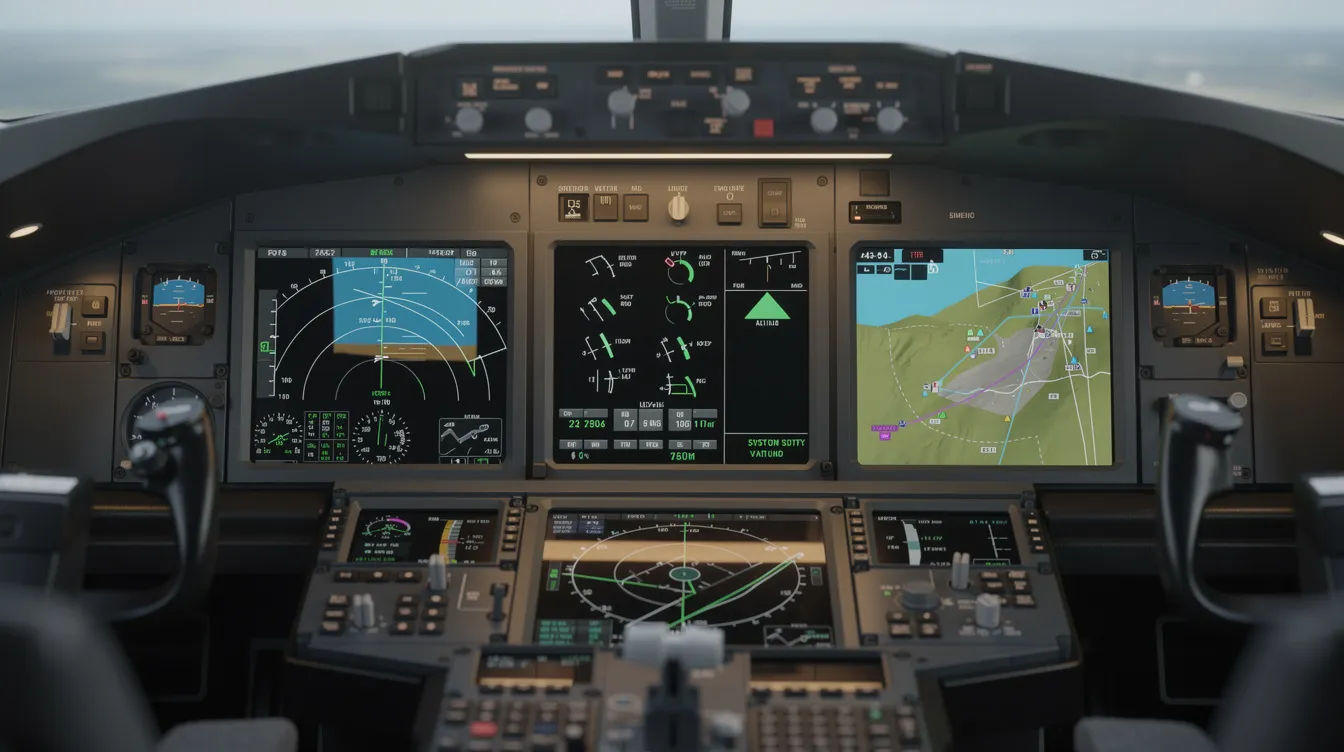
Route choice and airport selection can change flight time by tens of minutes and sometimes hours. Air traffic control instructions, weather systems like jet streams and storms, and restricted airspace all shape the actual flight route beyond the simple great-circle path.
Consider the difference between choosing Teterboro (KTEB) versus JFK (KJFK) when departing New York. Teterboro offers shorter taxi time, quicker ground handling, and a faster departure from the moment you arrive at the FBO. The same logic applies to Van Nuys (KVNY) versus LAX in Los Angeles. A slightly longer airborne segment to a smaller airport closer to your meeting point or villa can shorten your total travel day.
Coordinated Universal Time (UTC) is the universal time standard in aviation, and the industry uses a 24-hour clock format to avoid confusion with AM and PM. UTC ensures clarity in scheduling and operational planning for international flights, while Air Traffic Control communications require precision and synchronization within one second of UTC. Converting local time to UTC avoids confusion in flight operations across multiple time zones, and time zone standardization helps prevent miscommunications when aircraft cross local time boundaries-something every passenger on a multi-country itinerary should appreciate.
Jettly helps customers pick an optimal destination airport or alternate by attending to details like ground transfer distance, runway length, FBO amenities, and access to an airport locator tool that surfaces convenient options worldwide.
Aircraft type strongly affects cruise speed, fuel burn, and how long you actually fly. A very light jet, a turboprop, and an ultra-long-range airplane each deliver a fundamentally different experience on the same route.
The basic relationship is straightforward: distance flown equals speed multiplied by time. A midsize jet cruising at around 450 knots covers roughly 520 miles per hour. On a 2,500-nautical-mile route like New York to Los Angeles, that translates to about 5.5 hours of airborne time, depending on winds. Fuel load, burn rate, and engine efficiency (specific fuel consumption) determine maximum range-heavier fuel loads increase takeoff weight, which burns more fuel on climb, creating a cascading effect on calculations.
A light jet is ideal for a 500-mile business hop, while a long-range jet handles nonstop transatlantic segments like New York to London, and Jettly’s private charter aircraft inventory spans everything from turboprops to ultra-long-range jets to match your mission profile. Aircraft maintenance schedules depend on metrics like flight hours and total cycles to ensure airworthiness, which means the airplane's accumulated time in the air also affects its availability and cost. Jettly's flight calculator can compare aircraft categories for the same route, showing estimated flight length, fuel implications, and whether a fuel stop is likely.
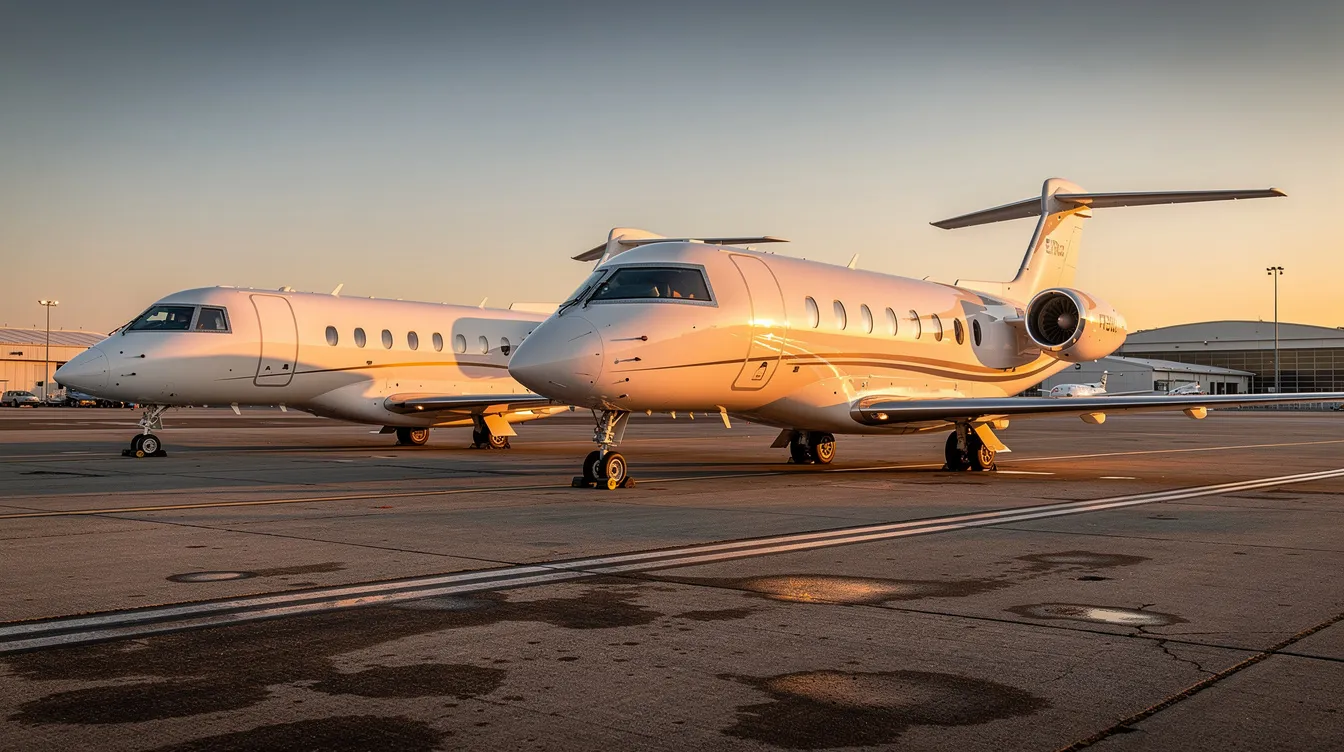
Regulations cap how long pilots can fly or be on duty in a day, and these rules become especially strict for overnight or long-haul flights. In the U.S., flight time limits vary by air carrier operations-under Part 135, pilots face limits such as 34 flight hours in any 7 consecutive days and 1,200 hours per calendar year. Aviation authorities enforce strict operational caps on flight time and duty time within a 24-hour period.
Duty time mandates rest periods for pilots based on flight hours. Duty and rest time tracking monitors a crew member's working hours and required rest intervals, ensuring no one is flying fatigued. Regulatory limits govern how many hours a pilot can fly or remain on duty in a given period, and flight time limitations help manage pilot fatigue and ensure operational safety across every country where private aviation operates.
On ultra-long-haul missions-for instance, a 12-hour sector like Los Angeles to Tokyo-operators use augmented crews with bunk rest and shared duties. Technical stops may be determined by both fuel range and crew scheduling law, not just one or the other. Jettly coordinates with regulated operators to ensure proposed itineraries meet all applicable rules, even for complex multi-continent trips, drawing on a broad network of private charter aircraft positioned around the world.
For charter clients, aircraft time translates directly into money. Every hour of flight time drives fuel costs, crew pay, maintenance accrual, and insurance exposure, all of which are broken down in detail in our guide to private jet operating costs. Understanding the hourly rate for private jets by category gives you control over your budget:
|
Aircraft Category |
Typical Hourly Rate (USD, 2026) |
|---|---|
|
Turboprop |
$2,000–$3,000 |
|
Light Jet |
$3,000–$5,500 |
|
Midsize Jet |
$4,500–$7,500 |
|
Super Midsize |
$5,500–$9,500 |
|
Heavy / Ultra Long Range |
$8,000–$17,500+ |
Many operators require a minimum daily billing of 2 hours, so a 40-minute hop on a heavy jet may still cost you 2 hours at the rate card. Repositioning legs, overnight fees, and waiting time also add up, and understanding one private jet flight cost in detail helps put those line items into context. A slightly faster jet with a higher hourly rate can sometimes save you money on longer routes by cutting total flight hours and eliminating a fuel stop, which is why understanding jet card costs and pricing is so important when you’re comparing ways to pay for flight time.
Jettly provides transparent, instant pricing so you can see exactly how different routes, airports, and aircraft change total trip cost and schedule-no hidden fees, no guesswork, and full access to a private jet rental and charter platform built around flexibility and control.
Jettly is a tech-forward NetJets alternative for flying private, offering flexible on-demand access to over 20,000 aircraft worldwide. The typical user journey is simple: enter your route and dates, review flight time estimates for different aircraft, compare pricing, then confirm booking online or through a dedicated concierge.
Value-add features include empty leg flights at discounted rates, crowdsourced and shared private jet flights that help fill empty seats, route suggestions that minimize total travel time, and the ability to align your flight with ground transportation and hotel check-in. Every flight is operated by a licensed, audited operator who complies with flight time and duty rules-an opportunity for safety-conscious travelers to fly with confidence.
Ready to see it in action? Try building a sample itinerary-a weekend trip from London to Nice or a same-day business shuttle between Toronto and Chicago-using Jettly's flight planner tools or exploring our flexible private jet memberships, and contact the team with any questions.

Modern flight calculators typically predict cruise segments within a few minutes of actual performance. They draw on real-time data from hundreds of recorded operations by aircraft type, so estimates reflect realistic conditions rather than a theoretical best case. That said, headwinds, ATC rerouting, and ground delays on the day of departure can shift your arrival by 10–20 minutes on a 2-hour regional hop or up to 30 minutes on an 8-hour intercontinental sector. Jettly's estimates are designed as a reliable planning window, not a guaranteed-to-the-second schedule.
Unlike commercial airline travel, most private departures only require you to arrive 15–30 minutes before scheduled wheels-up. Security screening and boarding are handled quickly at private terminals, so the long check-in and boarding queues that eat into your day simply don't exist. If you're flying private for the first time and wondering how the process works from quote to touchdown, a primer on how renting a plane works can make the experience feel even more straightforward-this is one of the biggest differences you'll notice-your total door-to-door journey shrinks considerably.
Winds aloft, temperature, runway assignment, and air traffic congestion all cause a given sector- say, New York to Miami or London to Geneva-to take slightly more or less time on different days, and understanding where private jets can land broadens your options to airports that may offer shorter taxi times and quicker turns. Aircraft type and chosen altitude also matter: a faster jet cruising higher can overtake slower traffic and avoid some turbulence, trimming minutes off the schedule. Even the same airplane on the same route can log different block times from one month to the next, and knowing your options for affordable aeroplane rental helps you choose aircraft and providers that balance price with schedule reliability.
When range, weather, or duty limits make nonstop flight impractical, Part 135 charter companies plan one or more technical stops for fuel and crew changes, often in well-equipped hubs like Reykjavik, Shannon, or Anchorage. Jettly's team can show you options such as one-stop versus nonstop on routes like New York to Dubai, highlighting differences in total travel time, cost, and the number of hours each crew member is on duty, and tools like our jet card flight cost estimator make it easy to compare scenarios in advance.
Private operations enjoy more flexibility than airlines, but they still follow air traffic control instructions and safety rules, and programs like our jet cards with fixed hourly rates help smooth out the budgeting impact of weather or ATC-related changes. Bad weather can lead to ground holds or reroutes. Jettly and its partner operators monitor conditions in real time on the day of flight, adjust departure times or routings when needed, and keep passengers updated with revised aircraft time and arrival estimates-so you always know where you stand, including coordinating services such as in-flight catering for private jets around any schedule changes.
Understanding aircraft time is crucial for anyone involved in private aviation, from passengers to operators and pilots. It impacts everything from flight planning and pricing to regulatory compliance and safety. With platforms like Jettly offering advanced flight calculators and a vast global aircraft inventory, travelers gain unprecedented control and transparency over their flight experience.
Whether you are booking a short regional hop or a complex long-haul itinerary, knowing how flight time is calculated, recorded, and regulated ensures you can make informed decisions that save time, reduce costs, and enhance comfort.
Embracing digital tools and expert support from services like Jettly empowers you to optimize every aspect of your private jet journey, making luxury air travel more accessible and efficient than ever before. Learn more about Jettly's charter options and request a quote at https://www.jettly.com.
Share this post:
Jay Franco Serevilla
Oct 27, 2026
|
5
min read
Discover tips and trends in the industry.

5
min read
Honda Jet Charter Cost: Pricing, Budgeting, and How Jettly Helps You Save
Chartering a HondaJet offers a cost-effective solution for regional travel without the burdens of ownership. With hourly rates ranging from $2,000 to $5,304, Jettly's platform provides transparent pricing and access to over 20,000 aircraft. This guide details the costs, specifications, and benefits of choosing a HondaJet for your travel needs.
Read More
5
min read
How Many Boeing 737 MAX Aircraft Are In Service In 2026?
As of late 2026, approximately 2,300 to 2,400 Boeing 737 MAX aircraft are actively serving airlines worldwide, out of 2,483 delivered. The fleet includes four main variants, with the MAX 8 and MAX 9 being the most prevalent. Despite a troubled history, the 737 MAX has become a key player in short-haul aviation, with ongoing deliveries and regulatory oversight shaping its future.
Read MoreStay updated with our latest insights and tips to elevate your journey with us.
MEMBERSHIPS AND ASSOCIATIONS



Disclaimer: Jettly operates as a charter broker, offering access to a global digital jet charter marketplace. Jettly is not a direct air carrier and does not own or operate aircraft. All advertised flights are conducted by third-party air carriers that are fully licensed and hold the appropriate Part 135 or Part 121 certifications issued by the Federal Aviation Administration (FAA) or equivalent regulatory authorities under U.S. or foreign law. Jettly complies fully with the U.S. Department of Transportation's Part 295 and Part 298 Charter Broker regulations. Jettly does not carry additional liability insurance. Passengers are covered by aircraft operator insurance. TICO: 50023770


