


Login
Get Instant Pricing On 23,000+ Aircraft

>

Whether someone is thinking about buying a Cessna 172 or a Gulfstream G650, the first question is almost always the same: what will it actually cost? An airplane cost calculator takes the guesswork out of that question by modeling fuel, maintenance, crew, insurance, financing, and dozens of other variables into a single estimate. But calculators are only half the picture. Comparing those numbers against real charter pricing - through a platform like Jettly - is what turns rough estimates into confident decisions.
This guide breaks down how aircraft cost calculators work, what numbers to plug in, what the results really mean, and how to compare ownership costs against flexible charter options.
An aircraft cost calculator estimates the total cost of aircraft ownership by combining operating costs (fuel, maintenance, crew) with capital costs (depreciation, financing, insurance) into annual and per-hour figures.
Jettly's digital platform functions as a real-world cost calculator alternative: it shows instant trip pricing for on-demand charter flights across 20,000+ aircraft, with no long-term commitment required.
By modeling different scenarios - such as 50 versus 150 flight hours per year, financing versus cash purchase, or turboprop versus midsize jet - users can quickly identify the most cost-efficient access model.
For many travelers flying under 100–200 hours annually, charter through a marketplace often proves more economical than full ownership once fixed costs and depreciation are factored in.
The sections below compare ownership, fractional, jet card, and charter models and explain how to use cost calculators to make better financial decisions, especially when weighing on‑demand platforms like Jettly as a NetJets alternative for flying private.
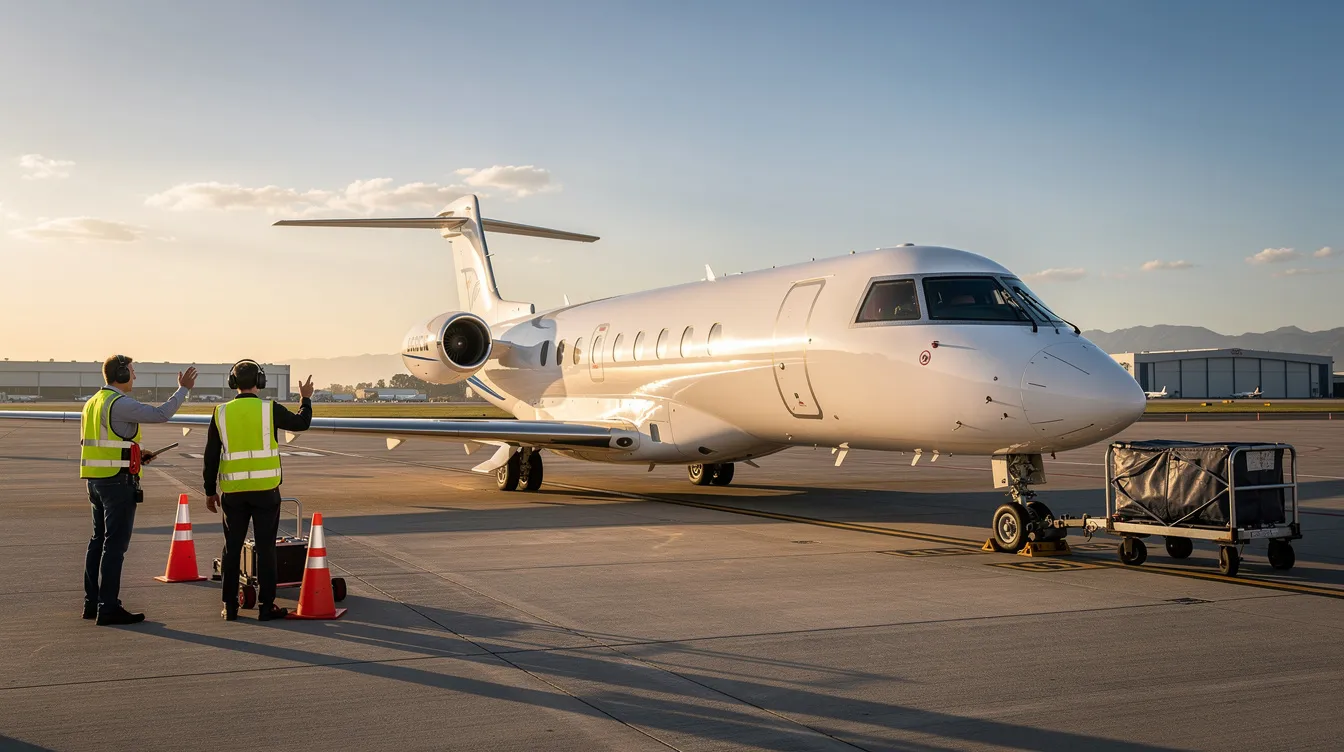
An airplane cost calculator is a web-based modeling tool that lets prospective owners and operators estimate what it truly costs to own, operate, or access a private aircraft. In 2026, cost transparency matters more than ever. Fuel prices fluctuate, crew costs have risen, and resale values shift with market demand. A reliable calculator helps cut through that uncertainty in minutes rather than weeks of manual research.
At its core, the tool asks users to enter a set of parameters and then produces estimated annual costs, monthly costs, and cost per flight hour.
There are two main types of calculators:
Ownership cost calculators focus on the ongoing expenses of owning a specific aircraft - fixed costs like hangar and insurance, variable costs like fuel and maintenance, plus capital components such as depreciation and loan payments.
Comparison tools go a step further by contrasting ownership against fractional programs, jet card memberships, and on-demand charter - enabling side-by-side analysis so users can see which model fits their usage and budget.
Common user inputs include:
Aircraft category (turboprop, light jet, midsize, heavy jet)
Purchase price or charter hourly rate
Expected annual utilization (e.g., 50–300 hours per year)
Fuel price per gallon
Hangar or tie-down costs
Crew salaries or contract pilot fees
Insurance premiums
Good calculators are fully editable. Users can adjust interest rates, residual value assumptions, charter revenue projections, and fuel escalation to reflect their actual flying patterns. The aircraft cost calculator estimates total costs based on actual usage, so the more accurate the inputs, the more useful the output.
Personal aircraft operating cost calculators are available online for everything from single-engine pistons to ultra-long-range jets. Airlines and charter services also use detailed cost calculators to estimate expenses and price their offerings, especially when managing diverse fleets of private charter aircraft.
Most tools produce both annual and per-hour figures, making it straightforward to compare a specific ownership scenario against chartering through a marketplace like Jettly.
One important caveat: calculators are directional planning tools, not binding quotes. Real-world costs depend on aircraft condition, regional pricing, and regulatory environment. The smartest approach is to use a calculator for initial modeling, then validate results with actual charter quotes and operator estimates.
Operating costs are only part of what it costs to own an aircraft. The total cost also includes the purchase capital, financing charges, depreciation, and the opportunity cost of tying up funds. Here is how each component breaks down - and how a calculator handles them.
Fixed costs are expenses paid regardless of flight time. Whether the aircraft flies 10 hours or 300 hours in a given year, these bills arrive on schedule.
Hangar or tie-down fees: For a single-engine piston in North America, expect roughly $5,000–$12,000 per year. Monthly hangar costs average around $500, though larger jets at premium airports can cost $100,000+ annually.
Insurance: Hull and liability coverage typically runs 0.5–1.5% of aircraft value per year. Hull insurance typically costs 0.8% of the aircraft's value as a common baseline. Examples of fixed costs include insurance and hangar fees - they don't change based on how often the plane flies.
Subscriptions and services: Navigation databases, weather services, satellite connectivity, avionics updates, and any aircraft management fees all fall into this category.
Annual inspections: These are a mandatory expense for aircraft, required by regulation regardless of utilization.
Variable costs for aircraft include fuel, oil, and maintenance reserves. These scale directly with flight hours - fly more, pay more.
Fuel burn: A small piston burns roughly 8–12 gallons per hour of avgas, while a heavy jet can consume 200+ gallons per hour of Jet A. Fuel costs approximately $6 per gallon for many Jet A operations, though 100LL avgas runs higher - fuel costs approximately $7.24 per gallon for 100LL. For a piston flying 100 hours, fuel costs approximately $5,100 annually.
Maintenance reserves: Reserves must be established for major engine overhauls, and hourly maintenance programs for jets often charge $800–$1,000+ per hour depending on engine age and type.
Landing and handling fees: Per-trip charges at FBOs vary by airport, aircraft size, and services requested.
Operating costs of airplanes include both fixed costs and variable costs. Total operating cost can be calculated by summing fixed costs and variable costs per flight hour, then multiplying by expected annual utilization.
For a deeper breakdown of each line item, Jettly's guide to plane operating costs covers the specifics across aircraft categories.
Purchase price is the starting point. A typical down payment for aircraft financing is 15–25%, with loan terms commonly spanning 10–20 years. A cost calculator converts these into monthly and annual payment estimates. Loan payments should be manageable without depleting savings - an aircraft price ceiling is typically based on monthly budget and total costs the buyer can sustain.
Total monthly ownership costs can exceed $3,900 for some aircraft once loan payments, insurance, and hangar fees are combined. For certain models, monthly ownership costs can total around $3,904.
Calculators often assume a straight-line depreciation - perhaps 5–7% per year for a mid-to-large aircraft over a 5-year holding period. The true cost of ownership only becomes clear when the expected resale value is factored in. Market demand, maintenance status, and interior condition all affect residual value, and broader analyses of how much a private jet costs can provide additional context for these long‑term ownership expenses.
Some owners offset costs by placing their aircraft on charter through a management company. A calculator can model, for example, 200 owner-hours plus 150 charter hours per year and estimate the revenue that reduces net annual cost.
Consider a 2024-built light jet valued at $4–6 million flying 150 hours per year. Variable costs (fuel, maintenance reserves) might total around $2,500 per hour. Fixed costs could run $600,000 annually. Add depreciation and financing, and the total annual bill might reach $1.2–$1.5 million - or $8,000+ per flight hour.
Compare that to private jet operating cost data for chartering a similar light jet: many routes come in at $5,000–$7,000 per hour through digital marketplaces.
For many travelers flying under 100–150 hours per year, a total cost calculator often reveals that on-demand charter through platforms like Jettly can be more cost-effective than full ownership.
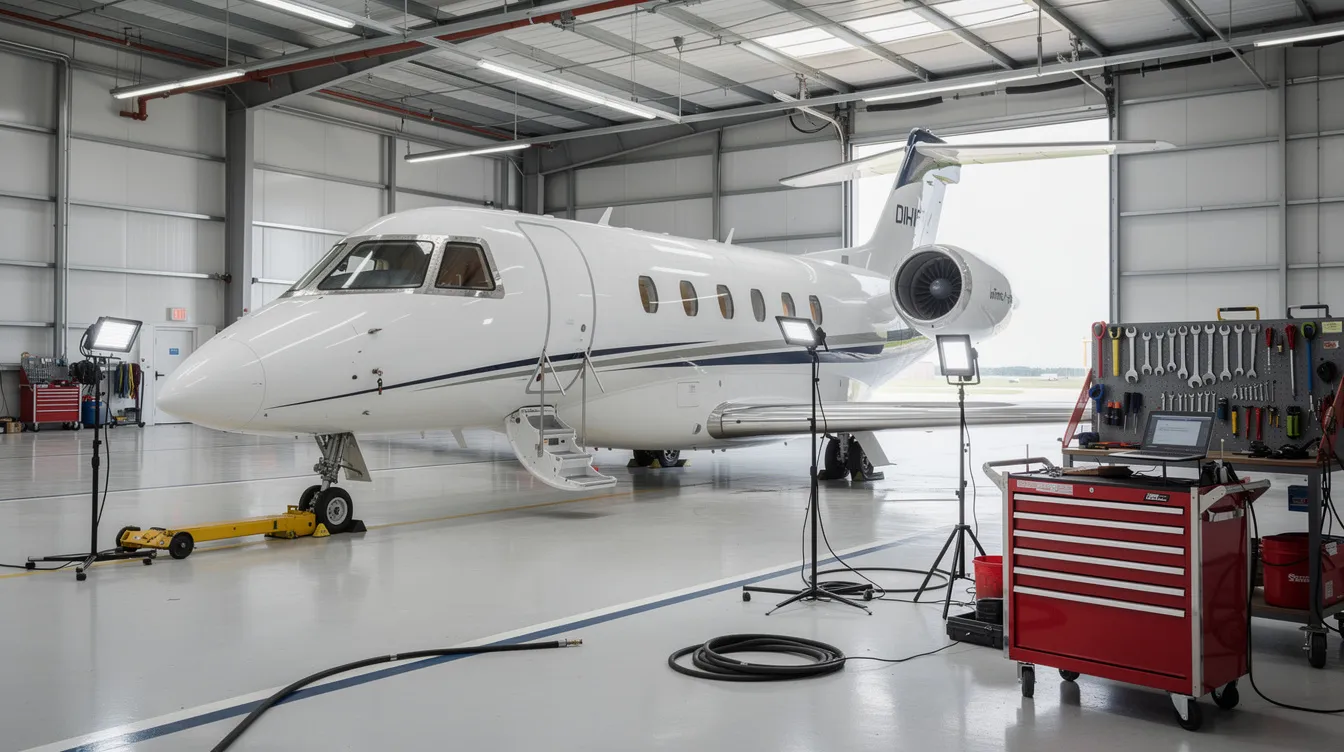
Before running any airplane cost calculator, have these numbers ready. More accurate inputs produce more realistic cost-per-hour estimates - and better comparisons with charter pricing.
Annual flight hours: The single most important input. At 50 hours per year, fixed costs dominate and per-hour cost balloons. At 200–300+ hours, those same fixed costs spread thin. This number changes the entire result.
Aircraft category and model: Piston, turboprop, light jet, midsize, super midsize, heavy - each has different fuel burn, crew requirements, and maintenance complexity. Jettly's guide to choosing the right private jet can help narrow this down.
Average stage length: Short hops increase landing fees and per-hour costs due to takeoff/landing cycles. Cross-country flights spread trip fees over more hours.
Home base airport and location: Hangar, labor, fuel, and insurance costs vary dramatically by region.
Current fuel price: Jet A spot prices hovered near $3.43 per gallon on the U.S. Gulf Coast in mid-2026, but FBO retail prices run higher. Avgas defaults are typically around $7.24 per gallon for 100LL.
Crew salaries or contract rates: Two-pilot jets require captain and first officer salaries, benefits, training, and overnight expenses.
Hangar cost quotes: Get a real number from the home airport rather than relying on national averages.
Insurance estimates: Request quotes based on aircraft value, usage type, and pilot experience.
Optional advanced inputs some calculators support include expected charter utilization, annual fuel price inflation, maintenance cost escalation, and projected resale date. The more you add, the tighter the comparison against live charter pricing on Jettly's platform.
These are approximate 2025–2026 ranges based on industry reports. Use them as context when reviewing outputs from any aircraft cost calculator or when comparing to instant charter pricing.
Single-engine piston (e.g., Cessna 172): Purchase price around $150,000–$400,000. At 100 hours per year, a calculator might show annual operating costs can reach $26,310, covering fuel, maintenance, insurance, and hangar. For some models, annual operating costs can total around $46,843 when financing and capital reserves are included. That translates to roughly $250–$470 per flight hour depending on inputs.
Turboprop (e.g., King Air class): Flying 150–200 hours per year, hourly operating costs easily exceed $1,000–$1,500 per flight hour when fuel, crew, maintenance, and insurance are included. Annual bills push into the hundreds of thousands.
Light jet and midsize jet: Used for regional business trips like New York–Miami or Toronto–Chicago, total ownership cost per hour - including capital and fixed costs - often lands at several thousand dollars. A private jet comparison shows that pure charter rates for similar missions are frequently lower when annual hours are modest (under 150–200 hours).
Super midsize and heavy jets: Industry data shows a super midsize jet flying 150 hours per year can carry total annual costs near $1,432,000 - roughly $9,547 per hour all-in. Heavy and ultra-long-range aircraft at 300 hours per year can still run $11,000+ per hour.
These numbers explain why many prospective owners start with a cost calculator and end up exploring charter.
Most aviation decisions come down to choosing the right access model. Full ownership, fractional shares, jet card memberships, and on-demand charter each carry different cost structures. A robust aircraft cost calculator can compare these side by side - but the comparison only becomes real when paired with actual market data.
Ownership cost models add up fixed, variable, and financing expenses to produce an annual cost and cost per hour. The key insight: flying more hours brings the per-hour figure down dramatically. One industry model showed that going from 50 hours per year to 600 hours per year reduced cost per hour by nearly 4x. For most private owners flying 100–200 hours, that dilution never fully kicks in.
Fractional ownership means buying a share - commonly 1/16 or 1/8 - of an aircraft, often through one of the best fractional jet ownership companies. A 1/16 share typically offers around 37.5 flight hours per year. Owners pay a monthly management fee plus an occupied hourly rate. Fixed costs are shared, but capital is still tied up, and resale liquidity can be limited. For a deeper dive into the numbers, a detailed breakdown of fractional jet ownership costs can help you input realistic assumptions into a comparison tool.
What a jet card is, how it works, and what it costs are central questions for travelers comparing these programs to ownership and on‑demand charter.
Jet cards offer pre-purchased hours at fixed hourly rates, sometimes with initiation or membership fees, and many buyers compare these to major providers’ offerings by reviewing NetJets card costs and options. They reduce the capital burden compared to ownership but cost more per hour than charter for infrequent flyers. Comparisons of the best jet card programs today and detailed guides to overall jet card costs can clarify where these products sit on the cost curve versus ownership and on‑demand charter. Jettly's overview of its jet card program explains the tier structure and billing model. A cost calculator can project effective cost per trip for popular routes like Los Angeles–Las Vegas or London–Nice.
For travelers focused purely on renting instead of owning, a dedicated guide to how much it costs to rent a private jet can complement calculator outputs with real‑world pricing ranges.
On-demand charter eliminates ownership risk. There is no capital outlay, no monthly fixed cost burden, and no depreciation exposure. Travelers pay per trip, and platforms like Jettly show the total trip cost up front - including fuel surcharges, positioning, and fees- helping you understand the cost of a single private jet flight in practical terms.
Jettly's charter cost estimator functions as a real-time cost calculator, displaying instant pricing across aircraft types and cabin sizes for any route. This makes it straightforward to compare a specific trip quote against modeled ownership costs and complements broader advice on affordable private jet charter.
A traveler flying 40–80 hours per year can plug that utilization into an aviation cost comparison tool and often find that flexible charter through a digital platform is more economical than owning or committing to large prepaid programs, particularly when leveraging affordable private jet charter options available in the market. Even at 100–150 hours, the gap can be narrow - and charter comes with zero capital risk, especially when applying tips for booking the cheapest private jet flights to real‑world itineraries.
Choosing smaller, more efficient aircraft and secondary airports can lower both emissions and cost, echoing many of the tips for booking the cheapest private jet flights.
Efficient aircraft selection and direct routing reduce fuel burn and emissions. Some calculators capture fuel burn by route, and Jettly's route planning can help identify more efficient aircraft options for a given mission, especially when paired with an airport locator tool to optimize departure and arrival points.
Use both tools: a high-level aircraft cost calculator to understand theoretical ownership and program costs, and live Jettly quotes to see what real charter prices look like for specific travel patterns. The gap between the two numbers is where smart decisions get made.

Here is how a real comparison might play out.
A business traveler based in New York flies to Miami twice per month for meetings, plus a handful of family trips each year - roughly 80–100 private flight hours total, with occasional international trips to markets like Kolkata via private jet charter. They run the numbers through an airplane cost calculator for a light jet with a purchase price around $5 million, comparing it against chartering comparable private charter aircraft on a trip‑by‑trip basis.
The calculator shows:
Fixed costs (crew, insurance, hangar): ~ $700,000 per year
Variable costs: ~ $2,500 per flight hour
Financing and depreciation: ~ $500,000+ per year
Total annual cost at 100 hours: ~ $1.4 million, or ~ $14,000 per hour
The per-hour number is eye-opening, especially when contrasted with broader benchmarks for how much private jets cost overall. So the traveler checks Jettly for instant prices on the New York–Miami route across light jets and midsize jets, referencing typical ranges from guides on how much it costs to rent a private jet. The private flight cost for each round trip comes in significantly below the modeled ownership cost per hour.
After adding up 24 one-way business segments plus family trips, the total annual charter spend lands around $800,000–$1.1 million - with no financing risk, no hangar lease, and no crew payroll, and with the flexibility to buy a single seat on a private jet for select routes when that structure is more cost‑efficient.
The result is clear: for this usage level, chartering through Jettly offers similar convenience at a lower total annual spend without capital exposure.
The following questions address common topics not fully covered in the sections above.
Calculators offer estimates based on typical assumptions - average fuel prices, standard maintenance schedules, generic insurance rates. They are excellent for initial budgeting and narrowing down aircraft categories, but they should not replace real quotes. Before committing, get firm numbers from lenders, maintenance providers, insurance brokers, and management companies. For charter comparison, Jettly's live trip pricing provides actual market rates rather than modeled averages.
The tipping point often falls somewhere around 150–300 hours per year, depending on aircraft size, financing terms, and location. A light jet owner in a low-cost region flying 250+ hours annually may break even against charter. But a midsize jet owner in a high-cost metro flying 100 hours almost certainly pays more than chartering. Run multiple scenarios in a cost calculator and compare the outputs to charter pricing for the clearest picture.
Yes. Many tools still help by estimating effective cost per hour at different utilization levels, giving context to charter quotes. That said, Jettly's real-time trip pricing is usually a more practical cost calculator for purely charter-focused travelers - it shows what a specific route and aircraft will actually cost rather than relying on generalized averages.
Some calculators include generic tax assumptions, while others explicitly exclude VAT, import duty, customs, and regulatory certification costs. Always check the tool's documentation. Charter quotes from platforms like Jettly typically display applicable taxes and fees in the final price, reducing the risk of hidden costs.
Take the hourly or annual costs generated by any aircraft cost calculator and hold them against instant charter quotes for common routes. Visit Jettly's platform to explore flights, compare aircraft options and cabin sizes, and request a quote for specific itineraries at https://www.jettly.com, or consider how private jet memberships might align with your projected utilization. The side-by-side comparison often reveals which access model - ownership or charter - delivers better value for a given travel pattern.
Ready to see what private travel costs for your specific routes? Explore flight options or request a quote at https://www.jettly.com.
|
Aircraft Type |
Purchase Price Range |
Annual Flight Hours |
Estimated Annual Operating Cost |
Estimated Cost Per Flight Hour |
|---|---|---|---|---|
|
Single-Engine Piston |
$150,000 - $400,000 |
100 |
$26,310 - $46,843 |
$250 - $470 |
|
Turboprop |
$2M - $5M |
150 - 200 |
$150,000 - $300,000 |
$1,000 - $1,500 |
|
Light Jet |
$4M - $8M |
100 - 150 |
$600,000 - $900,000 |
$4,000 - $6,000 |
|
Midsize Jet |
$6M - $12M |
150 |
$900,000 - $1,200,000 |
$6,000 - $8,000 |
|
Super Midsize Jet |
$10M - $20M |
150 |
$1,400,000 - $1,600,000 |
$9,000 - $10,000 |
|
Heavy Jet |
$15M - $70M |
300 |
$3,000,000 - $4,000,000 |
$10,000 - $13,000 |
An airplane cost calculator is an essential tool for anyone considering private aircraft ownership or charter. It provides a clear, data-driven picture of the total costs involved, from fixed expenses like insurance and hangar fees to variable costs such as fuel and maintenance. However, ownership is not the only path to private air travel. Platforms like Jettly offer a compelling alternative by providing instant, transparent pricing on a vast network of aircraft with no long-term commitments. This flexibility often results in significant cost savings and eliminates the risks associated with ownership.
Whether you are evaluating ownership, fractional shares, jet cards, or on-demand charter, using an airplane cost calculator alongside real-world pricing from Jettly can help you make well-informed decisions tailored to your travel needs and budget. Learn more about Jettly’s charter options at https://www.jettly.com.
Explore detailed insights on private jet operating costs to understand the expenses involved in ownership.
Discover how to choose the right aircraft for your needs with Jettly's guide to choosing the right private jet.
Ready to experience private travel on your terms? Explore flight options or request a quote at https://www.jettly.com.
Share this post:
Jay Franco Serevilla
Oct 4, 2026
|
5
min read
Discover tips and trends in the industry.
5
min read
Is Eurowings Discover a Good Airline? (2026 Guide)
Eurowings Discover, the Lufthansa Group's leisure airline, offers affordable long-haul travel from Germany to various holiday destinations. While it provides a decent experience with competitive fares and lie-flat Business Class, it lacks the premium service and flexibility of higher-end carriers. This guide evaluates its pros and cons to help you decide if it's the right choice for your next trip.
Read More
5
min read
Saudi Jet: Military Tensions, Regional Security, and What It Means for Modern Air Travel
The term 'Saudi jet' often refers to military aircraft incidents involving the Royal Saudi Air Force, particularly in the context of regional tensions with Iran and Yemen. These incidents impact not only military operations but also civilian aviation, as airspace management is crucial for ensuring safety. Despite the risks, private and commercial flights operate under strict regulations to navigate around conflict zones effectively.
Read MoreStay updated with our latest insights and tips to elevate your journey with us.
MEMBERSHIPS AND ASSOCIATIONS



Disclaimer: Jettly operates as a charter broker, offering access to a global digital jet charter marketplace. Jettly is not a direct air carrier and does not own or operate aircraft. All advertised flights are conducted by third-party air carriers that are fully licensed and hold the appropriate Part 135 or Part 121 certifications issued by the Federal Aviation Administration (FAA) or equivalent regulatory authorities under U.S. or foreign law. Jettly complies fully with the U.S. Department of Transportation's Part 295 and Part 298 Charter Broker regulations. Jettly does not carry additional liability insurance. Passengers are covered by aircraft operator insurance. TICO: 50023770


