


Login
Get Instant Pricing On 23,000+ Aircraft

>
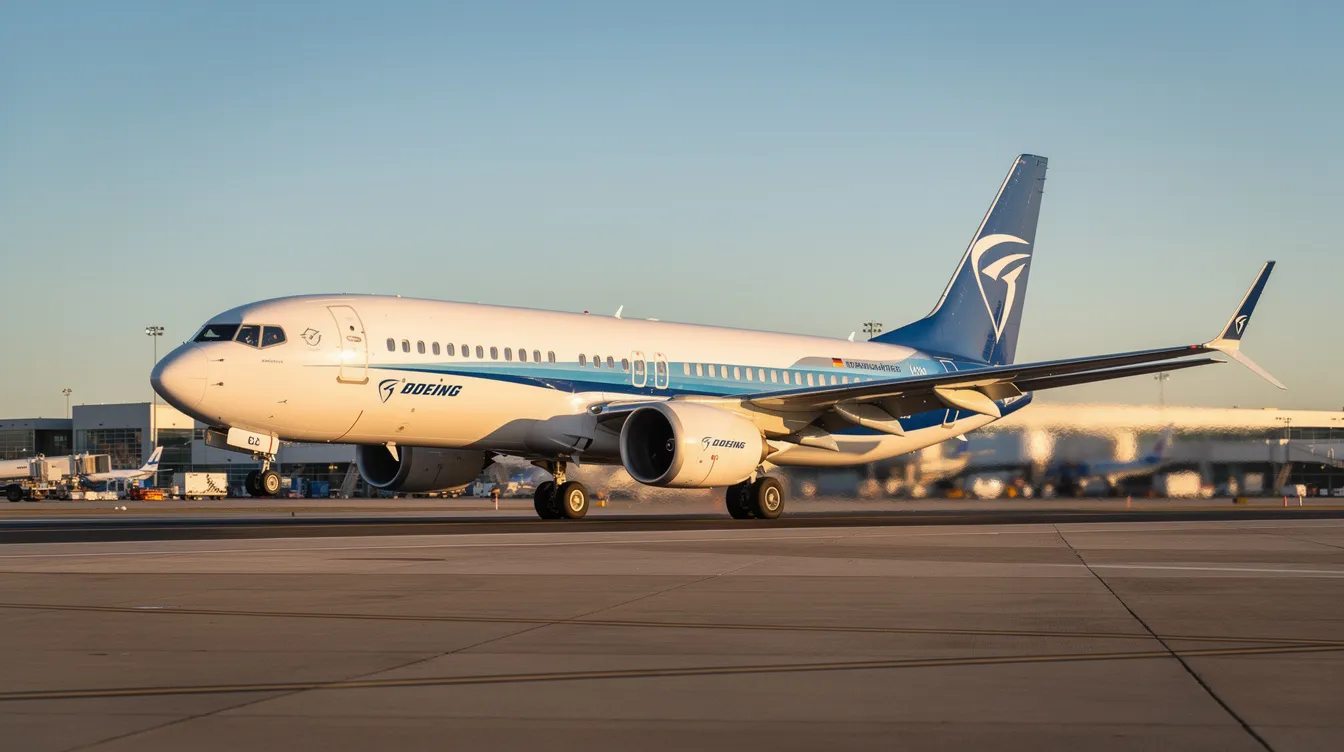
Boeing commercial airplanes have shaped how the world flies for more than a century. From the 707 that launched the jet age to the 787 Dreamliner and 737 MAX serving airlines today, every Boeing aircraft family fills a specific role in global aviation. This guide covers all Boeing planes currently in production or development, retired legacy models, and the Boeing Business Jets that turn commercial airframes into private flying palaces.
The Boeing company builds narrow-body and wide-body commercial aircraft, military derivatives, cargo freighters, and VIP-configured Boeing Business Jets used by governments and private charter clients.
Boeing aircraft models include the 707, 737, 757, 767, 777, and 787 families, each designed to fulfill specific market roles and operational demands.
Boeing Business Jets offer customized private versions of airliners like the 737, 777, and 787, with configurations that can include master bedrooms and lounges.
Boeing's commercial aviation history spans over a century, and its aircraft lineup supports various missions from passenger transport to cargo services.
Jettly's platform can arrange charters on Boeing aircraft for large groups while also offering smaller private jets as a more flexible alternative for most travelers.
Boeing's influence on aviation dates back to 1916, but the real transformation began in 1958 when the Boeing 707 entered service with Pan American World Airways. That single model launched the jet age, cutting transatlantic flight times in half and making air travel accessible to millions. Every major commercial airplane family that followed—737, 747, 767, 777, 787—built on that foundation with gains in efficiency, range, and capacity.
Boeing commercial airplanes carry hundreds of passengers on scheduled routes operated by carriers like Japan Airlines and dozens of others worldwide. Boeing Business Jets, by contrast, are VIP-configured versions of those same airframes, serving corporate executives, heads of state, and royal families. Military and special-mission variants handle aerial refueling, cargo, and surveillance.
Private jet platforms like Jettly complement these large fleets by giving travelers on-demand access to a wide range of private charter aircraft for point-to-point trips and last-mile legs that commercial airplanes simply can't serve.
Boeing's naming convention starts and ends with "7." The system began with the 707 in 1958 and continues through the 787 Dreamliner and the upcoming 777X. Boeing's commercial products feature a range of capacities and configurations, and the company's commercial aircraft are often identified by model numbers that indicate size and capacity. For example, the 787 Dreamliner designation is already noted here.
Base families-Boeing 737, Boeing 747, Boeing 777, and 787 Dreamliner—use dashes to denote variants and sizes. Common suffixes include:
ER – Extended Range (e.g., 777-300ER)
LR – Long Range (e.g., 777-200LR)
F – Freighter (e.g., 747-8F, 767-300F)
MAX – Re-engined narrow-body generation (e.g., 737 MAX 8)
Customer codes – Historic identifiers like 737-7H4, which pinpointed the launch airline
These variants are often listed by family and role for easy reference.
The same base model often exists in three roles: commercial airplanes for airlines, freighters for cargo operators, and Boeing Business Jets for VIP or state use, serving different customers.
Modern Boeing commercial aircraft families in production or close to service entry include the 737 MAX, 767, 777, 777X, 787, and the 747-8 (passenger production ended, freighter active). Boeing commercial aircraft are divided into narrow-body and wide-body families, each family designed to meet specific demand profiles.
Narrow-body models like the Boeing 737 target short- to medium-haul domestic and regional routes. Wide-body models handle long-haul, high-capacity, and intercontinental operations. These aircraft underpin airline networks, but they can also be chartered by corporations, sports teams, and tour groups through brokers and platforms like Jettly, including options such as the Boeing 737-800 for private charter. The table below shows each family with its first flight, capacity, and range, with first flight marking a key milestone year for each family.
|
Family |
First Flight |
Typical Two-Class Capacity |
Approximate Range |
|---|---|---|---|
|
737 MAX |
2017 |
160–210 |
3,500–3,800 nmi |
|
767 |
1981 |
200–270 |
~5,980 nmi (300ER) |
|
777 |
1994 |
300–396 |
Up to ~8,700 nmi |
|
787 Dreamliner |
2009 |
242–330 |
6,300–7,565 nmi |
|
777X |
2020 |
384–426 |
7,285–8,730 nmi |
|
747-8 |
- |
410–467 |
~7,730 nmi |
The Boeing 737 family serves short- to medium-haul routes, with preliminary design work beginning in February 1965 before its first flight in April 1967, and it has been Boeing's most-produced jetliner ever since. Its evolution spans three generations:
Original / Classic (100, 200, 300, 400, 500) – early narrow-body designs
Next Generation (600, 700, 800, 900) – improved wings, avionics, range up to ~2,900 nmi
737 MAX (MAX 7, 8, 9, 10) – LEAP-1B engines, redesigned winglets, and the 737 MAX 10 stretching to 43.8 m in length
All variants share a single-aisle layout with six-abreast seating and a cabin width around 11 ft 7 in (148 in). Capacity ranges from about 130 passengers on the smallest models to over 200 on the MAX 10, with the different MAX sizes helping airlines match seats to route demand and customers' needs. The 737 MAX's LEAP-1B engines reduce fuel consumption by 14% compared to previous-generation powerplants.
The 737 MAX series was grounded globally in January 2019 after two fatal accidents. Recertification followed in phases through 2020–2021. The 737 MAX series has a hull loss rate of 1.48 per million departures, and the broader Boeing 737 family has accumulated 529 aviation accidents since 1968.
These airframes also form the base for Boeing Business Jets (BBJ1, BBJ2, BBJ MAX variants), popular as VIP aircraft for heads of state and corporate shuttles. For groups needing a full 737 charter, Jettly's marketplace can coordinate access, though smaller business jets typically represent better value for groups under 30.
Boeing's twin-aisle commercial airplanes are built for long-haul travel, heavy cargo, and higher passenger capacity than any narrow-body can achieve.
The Boeing 747—known as the "Queen of the Skies" — revolutionized global air travel when it entered service in 1970. The 747-8 is the longest passenger aircraft ever built at 76.3 m, and the 747-8 can carry 410–467 passengers depending on configuration. The Boeing 747 production officially ended in 2023, though 747-8F freighters continue to fly cargo operations worldwide.
The Boeing 767 is a versatile wide-body launched in the early 1980s. Its 2-3-2 economy seating accommodates 200–300 passengers. The Boeing 767 is often used for cargo operations, long-range 767-300ER VIP charters, and military tanker derivatives like the KC-46. Commercial passenger deliveries are expected to end by 2027.
The Boeing 777 is a large twin-engine jet primarily used for long-haul flights. The 777-300ER has a wingspan of 64.8 m and carries 300–396 passengers in typical layouts. Entry into service came in 1995, and variants like the 777-200LR offer longer range for ultra-long-haul missions.
The 777X program (777-8 and 777-9) is under development with projected service entry in 2027. Boeing 777X features folding wingtips to fit into existing airport gates without requiring terminal modifications. The Boeing 777-9 is 76.7 m long, powered by GE9X engines, and targets a capacity of ~426 in two-class configuration with a range of ~7,285 nmi. The 777-8 trades some capacity for even longer range at ~8,730 nmi.
Boeing 747 and 777 airframes also underpin some of the world's most spacious Boeing Business Jets and VIP transports, configured with bedrooms, conference rooms, and offices for government heads.
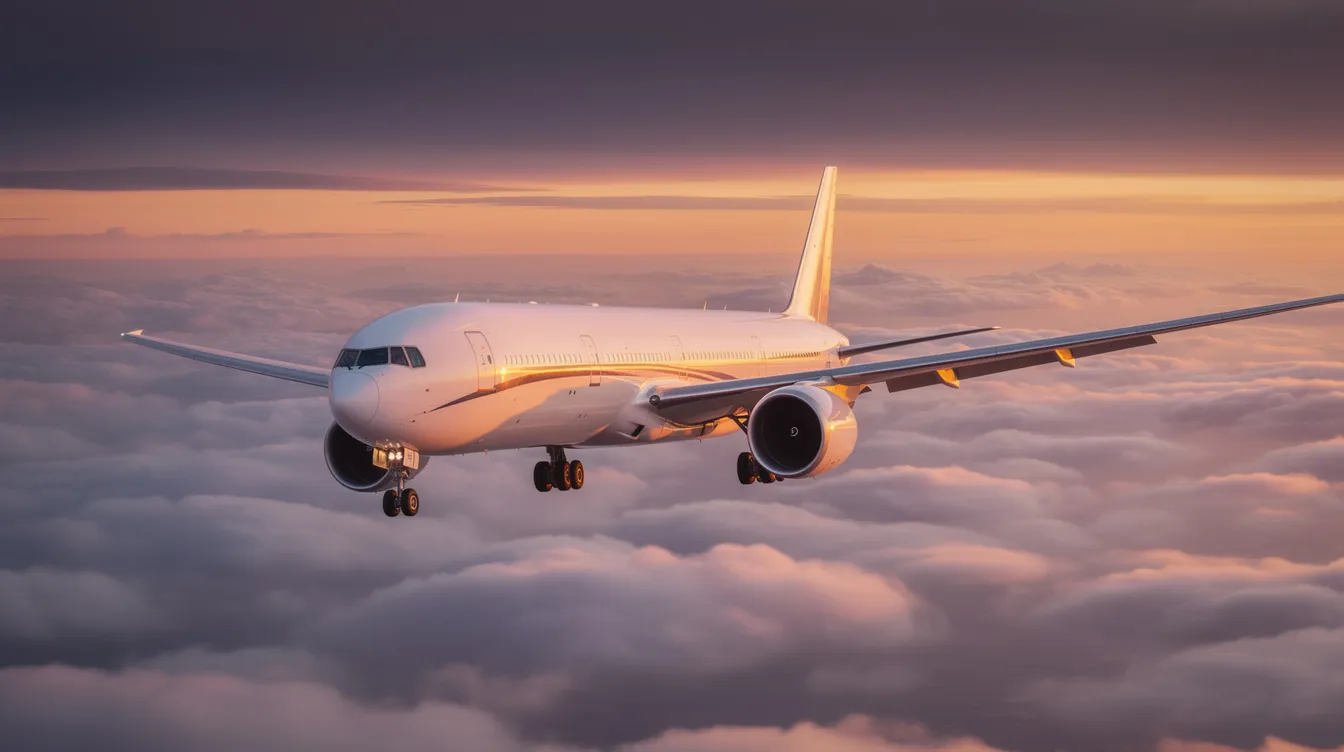
The 787 Dreamliner family represents Boeing's step into composite-intensive design. The 787 Dreamliner's composite construction cuts emissions significantly compared to aluminum predecessors while improving passenger comfort with higher cabin humidity, lower cabin altitude, and larger windows.
787-8 – base model, ~242 seats in two-class, range ~7,305 nmi, with a wingspan of 60.1 m
787-9 – most popular, ~260–300 seats, range ~7,565 nmi
787-10 – longest fuselage, typical capacity of 318–330 passengers, range ~6,300 nmi
First revenue service launched in 2011. Airlines use 787s on routes like London–Perth and New York–Tokyo. While the cabin experience on a Dreamliner is a step up from older wide-body Boeing aircraft, private jets still offer more personal space per traveler, and travelers can choose among the best private jet charter companies when comparing alternatives to scheduled airline service.
787-based Boeing Business Jets can be configured for 25–50 passengers with expansive lounges and suites, targeted at governments and ultra-long-range VIP missions. The 747-8 also fits this modern era as a platform for select VIP and head-of-state aircraft, including the future U.S. presidential fleet.
Older Boeing aircraft models include the 707, 727, and 757, which are now out of production but still shape modern aircraft design and engineering standards.
Boeing 707 – entered service in 1958 as Boeing's first successful jet airliner, ushering in the jet age and influencing later wing and fuselage designs
Boeing 727 – first flight in 1963, a tri-jet with a T-tail and rear airstairs tailored for shorter runways; ~1,832 built before production ended in 1984
Boeing 757 – first flight in 1982; the Boeing 757 is known for its high performance on short and long routes without needing a wide-body aircraft, making it prized on constrained-airport routes and thin transatlantic services
Boeing 717 – originally the MD-95, a short-haul jet seating roughly 100–120 passengers used by carriers like Delta on domestic regional routes
While these legacy types rarely appear in premium private charters today, understanding their capacity and range helps compare them to both modern business jets and current Boeing commercial airplanes, as well as the broader landscape of private and charter airlines worldwide.
Boeing Business Jets are customized versions of standard Boeing airliners fitted with low-density, high-luxury interiors for private, corporate, and governmental use. BBJ aircraft leverage commercial aircraft size for ultra-luxury use.
The core BBJ line includes:
BBJ (based on 737-700), BBJ2 (737-800), BBJ3 (737-900)
BBJ MAX variants – offering more range and lower fuel burn, with certification for the BBJ MAX 7 expected in August 2026
A 737-based BBJ typically accommodates 15–25 passengers comfortably, with private bedrooms, showers, boardrooms, and secure communications. Ranges can reach 6,000+ nmi with auxiliary fuel tanks, enabling nonstop intercontinental flight, and derivatives like the Boeing 737-800 further demonstrate the platform's efficiency for short- and medium-haul missions.
Wide-body BBJ variants based on the 747-8, 777, and 787 can provide thousands of square feet of floor area. These rare aircraft serve heads of state and royal families who need maximum space, comfort, and security.
While full BBJ charters involve higher operating costs and large-airport operations, Jettly's marketplace can help source them for special events or large VIP groups, complete with tailored services such as in-flight catering through Jettly Eats. For most business travel, super-midsize or large-cabin private jets offer better flexibility and value.
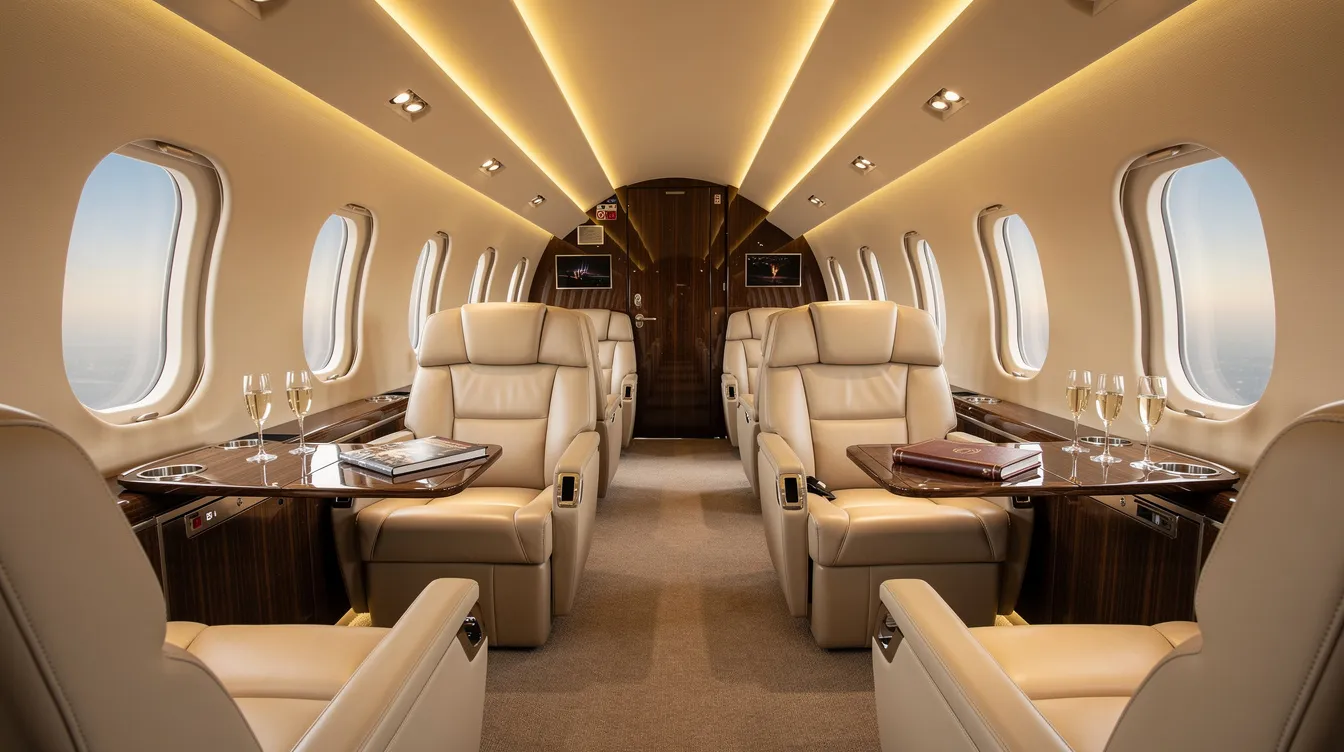
Boeing commercial airplanes win on seat capacity and per-seat cost for large missions. Private jets excel in privacy, flexibility, and total time savings for small groups, and tools like Jettly's private jet charter cost estimator help clarify those trade-offs. The differences go beyond cabin layout.
Key distinctions:
Capacity – a 737 or 787 can carry 160–330 passengers; a large-cabin business jet seats 12–19
Airport access – private jets operate from thousands of smaller airfields; Boeing aircraft need longer runways and full-service terminals
Cost structure – per-seat cost drops sharply on Boeing charters with 80–200+ passengers; for groups under 20, business jets typically deliver better total value, and a jet card flight cost estimator can provide an additional benchmark
Sustainability – Boeing aims for a 50% reduction in carbon emissions by 2050; sustainable aviation fuel can reduce lifecycle emissions by 80%; Boeing's ecoDemonstrator program tests sustainable aviation technologies on both commercial and smaller platforms, while shared private flights that crowdsource and fill empty seats can help improve overall utilization; larger aircraft support multiple evacuation exits for safety, and Boeing aircraft feature advanced fire suppression systems
A commercial airline charter makes sense for sports teams, music tours, and incentive trips. Smaller groups save time and money with private jets that skip crowded hubs entirely, especially when they understand how private jet charter pricing works.
Travelers often face a choice between scheduled Boeing commercial airplanes, chartered airliners, and smaller private jets. The right answer depends on group size, route, and budget.
Jettly enables users to search a global inventory of more than 20,000 aircraft, view instant pricing, and compare options from turboprops and light jets to large-cabin jets and, when required, Boeing airliners configured for charter. Typical use cases include:
Corporate roadshows using a BBJ-style charter, often supported by flexible private jet memberships
Music tours requiring a Boeing 737 or 757 charter, where aircraft like the Boeing 737-800 in charter configuration are well suited
Families or executives preferring super-midsize or heavy jets for privacy and time savings, sometimes looking for a flexible NetJets alternative in Jettly
Jettly emphasizes transparent pricing, on-demand booking without long-term jet card commitments, and access to regulated, safety-vetted operators. Boeing designs must meet strict regulatory standards from the FAA, and Jettly works only with operators that meet those same standards.
Ready to explore flight options or request a quote? Use tools like Jettly's airport locator and booking platform, or visit https://www.jettly.com.
Travelers focused on specific regions can also review dedicated guides such as private jet charter in Houston, Texas, or private jet charter in Kolkata, West Bengal, while those comparing operators may consider platforms like Dexter Air Taxi and other private jet partners.
Those interested in earning commissions from referring new flyers can join Jettly's ULTRA high-ticket affiliate program.
Yes. Entire Boeing commercial airplanes like the 737 or 777 can be chartered, typically by corporations, sports teams, or tour groups needing 80–200+ seats. Platforms like Jettly can help coordinate such group charters through certified operators, handling everything from aircraft selection to ground logistics, and some frequent flyers may benefit from structured jet card membership programs.
Boeing Business Jets are based on large airliner airframes with far more cabin space and range than most business jets. A BBJ based on a 737 offers a cabin large enough for boardrooms and bedrooms, while a typical heavy jet seats 12–16 in a much smaller fuselage. BBJs require larger airports and higher budgets, whereas traditional private jets fly from thousands of smaller airfields, and travelers planning long domestic routes may instead look for the best cross-country plane for their journey.
Both Boeing commercial aircraft and modern private jets operate under strict regulatory frameworks from agencies like the FAA and EASA. Airlines and charter operators are subject to rigorous maintenance schedules, crew training standards, and recurring certification requirements. Larger aircraft support multiple evacuation exits and advanced fire suppression systems, but well-maintained private jets meet equally demanding safety benchmarks.
Large Boeing aircraft are most cost-effective for big groups and scheduled routes. When 50–400+ passengers travel together on a fixed itinerary, per-seat costs on a chartered Boeing plane drop well below comparable private jet pricing. Private jets provide better value for small groups that need flexible schedules, direct access to smaller airports, and reduced total travel time.
Jettly's digital platform lets users request quotes and compare different aircraft categories side by side in one section of the booking workflow—from light jets to large Boeing airliners. By entering route details, group size, and budget, travelers can see which option delivers the best match. Explore options at https://www.jettly.com.
Boeing planes remain a cornerstone of global aviation, offering a diverse range of aircraft from the compact 737 MAX to the expansive 747-8 and innovative 787 Dreamliner. Whether serving commercial airlines, cargo operators, or VIP clients through Boeing Business Jets, these aircraft provide unmatched reliability, capacity, and technological advancement
For travelers and groups seeking private charter options, Jettly bridges the gap between large Boeing airliners and smaller private jets, delivering flexibility, transparency, and convenience. Understanding the unique benefits and roles of each Boeing model helps travelers make informed decisions tailored to their mission, whether it’s a large group charter or an intimate, time-saving private flight.
Ready to experience private travel on your terms? Explore flight options or request a quote at https://www.jettly.com.
Share this post:
Jay Franco Serevilla
Oct 11, 2026
|
5
min read
Discover tips and trends in the industry.
5
min read
Most Expensive Day to Fly: How to Avoid Peak Prices and Book Smarter
Understanding the most expensive day to fly can help travelers save money on flights. Sundays are typically the priciest for commercial airlines, while private jet pricing varies based on demand and events. This guide offers insights on when to fly, how airlines price tickets, and strategies to avoid peak prices.
Read More
5
min read
Hourly Rate for Private Jet: 2026 Pricing Guide by Aircraft Type
In 2026, private jet hourly rates range from $2,300 for turboprops to $23,000 for VIP airliners. This guide details the factors influencing these rates, including aircraft type, route complexity, and additional fees. Understanding these elements can help travelers budget effectively and find the best options for their needs.
Read MoreStay updated with our latest insights and tips to elevate your journey with us.
MEMBERSHIPS AND ASSOCIATIONS



Disclaimer: Jettly operates as a charter broker, offering access to a global digital jet charter marketplace. Jettly is not a direct air carrier and does not own or operate aircraft. All advertised flights are conducted by third-party air carriers that are fully licensed and hold the appropriate Part 135 or Part 121 certifications issued by the Federal Aviation Administration (FAA) or equivalent regulatory authorities under U.S. or foreign law. Jettly complies fully with the U.S. Department of Transportation's Part 295 and Part 298 Charter Broker regulations. Jettly does not carry additional liability insurance. Passengers are covered by aircraft operator insurance. TICO: 50023770


