


Login
Get Instant Pricing On 23,000+ Aircraft

>
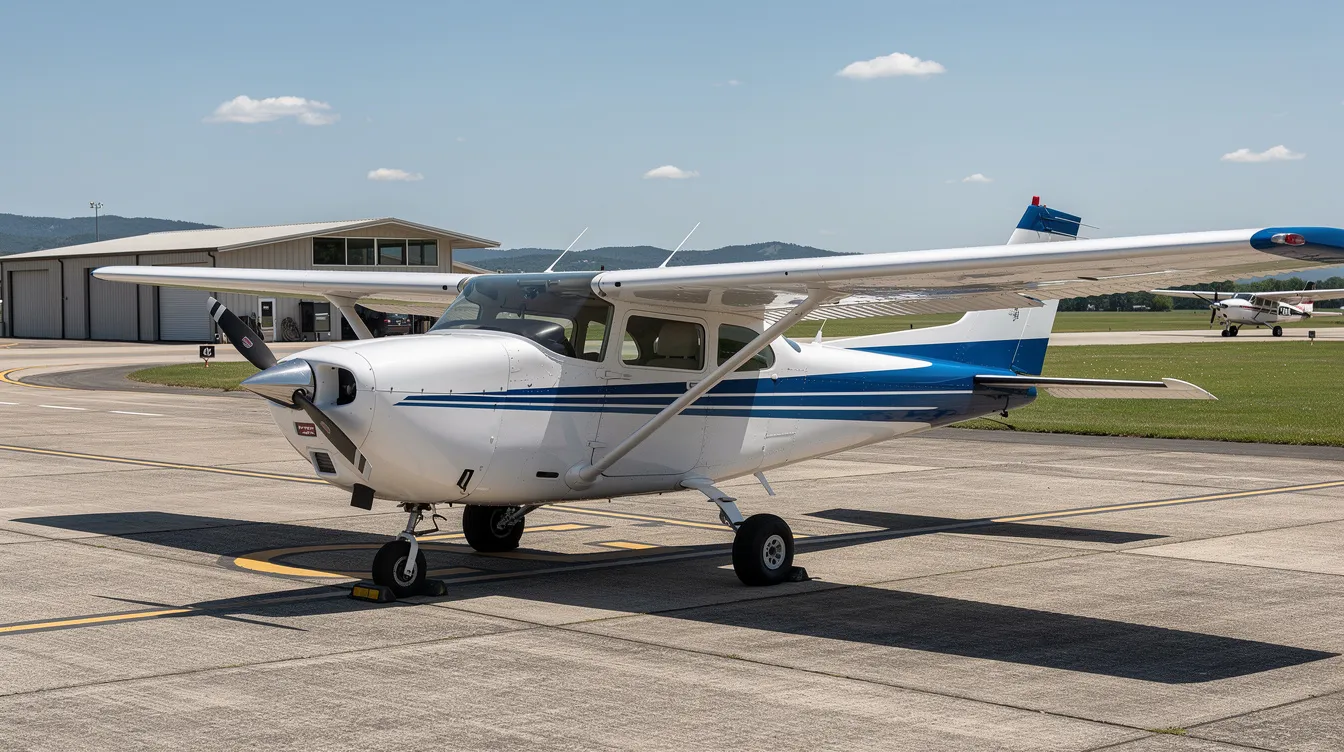
Four-seat airplanes are popular in general aviation for good reason: they hit a sweet spot between capability, cost, and versatility. But finding the best 4-seater plane for the money means looking beyond sticker price to total ownership economics, mission fit, and long-term value. This guide breaks down the top contenders for 2026 and when chartering might be the smarter financial move.
The best value four-seater planes balance low operating costs and proven reliability. For 2026, standouts include:
Cessna 172S and Piper PA-28 series: Budget-friendly all-round flying
Cessna 182 Skylane: Ideal for family travelers
Mooney M20: Best for speed-focused owners
Diamond DA40: Modern efficiency and safety
Budget Trainer Class:
Older Cessna 172 variants and Piper Warriors
Price range: $70,000–$200,000 (used)
Family Traveler / Step-Up:
Cessna 182 and Diamond DA40
Price range: $120,000–$450,000+ (depending on age and avionics)
Speed-Focused Performance:
Mooney M20 series
Price range: $120,000–$300,000 (used)
Key Considerations:
"Best value" shifts depending on mission: flight training, family travel, or step-up performance within general aviation and private aviation.
Many private flyers today skip ownership entirely and use private jet charter platforms like Jettly once they routinely fly beyond 400–600 NM or need more than four seats.
Ownership Costs:
Annual fixed expenses (hangar/tie-down, insurance, inspections): $3,000–$8,500
Insurance for small planes: at least $1,000/year (used Cessna insurance: $400–$800/year)
Operating costs for single-engine piston airplanes: $190–$275 per flight hour (fuel, maintenance, overhaul reserves)
Fuel consumption: $50–$70 per hour (varies by fuel type and aircraft)
Alternative Access Models:
Flying club or leasing (planes priced $40,000–$80,000) can be more cost-effective for low-hour pilots
Flying clubs: lower hourly rates than traditional rentals
Fractional ownership: share costs, reduce financial burden
Affordable aeroplane rental costs and options guide available
The rest of this article breaks down the economics, pros, and cons of key 4-seat piston aircraft models—and when chartering may be a smarter financial move.
"Best" combines purchase price, operating cost, safety, performance, and mission fit rather than just the lowest sticker price. The best cost-effective options in the four-seat market often deliver strong resale value, predictable maintenance, and low operating costs for budget-conscious aviators.
Cost and Performance Dimensions That Matter:
Acquisition: Used vs. new pricing, condition, avionics generation, engine time since overhaul
Operating Costs: Fuel burn (GPH), insurance, hangar/tie-down fees, scheduled/unscheduled maintenance, overhaul reserve funds
Performance Metrics: Useful load, cruise speed (true airspeed), range with reserves, climb rate, runway requirements for remote strips
Safety and Equipment: Modern avionics (Garmin G1000), autopilot, de-icing options, parachute systems (as on Cirrus SR20/SR22), and their impact on safety and resale
Mission Profiles: Local flight training, weekend family trips (200–400 NM), regular business hops, light backcountry operations—each shifts the "best value" choice
For pilots who fly occasionally or whose mission needs vary widely, using a private aviation charter marketplace like Jettly can eliminate the fixed costs of ownership entirely.
The Cessna 172S Skyhawk is the most common "first real" 4-seat airplane used in flight training and as a personal aircraft worldwide. The Cessna 172 has been popular for over 50 years.
Fixed-gear, high-wing design
180 hp engine for better performance compared to basic models
Typical cruise speed: ~120 knots
Useful load: ~800–900 lb
Base price (new): $301,500
Used models (early 2000s–mid-2010s): $220,000–$400,000
Older 172 variants: often under $150,000
The Piper PA-28 Warrior/Archer is a low-wing alternative with a solid reputation.
160–180 hp Lycoming engines
Forgiving handling
Piper Warrior III: Piper's least expensive certified airplane
Piper Archer: Known for reliability and accessible operating costs
Common in training fleets
Fuel burns: 8–10 GPH
Annual fixed costs: $3,000–$8,500
Simple systems keep unscheduled maintenance minimal
Insurance: at least $1,000 per year
Huge global support network
Plentiful parts
Many qualified mechanics
High liquidity in the used market
Easy insurance for low-time pilots
Tip: Pilots who only need four seats occasionally can access similar piston aircraft on-demand through a charter platform like Jettly, instead of tying up capital in a trainer-class plane.
The Cessna 182 Skylane is often seen as the best-value step-up from a 172 for owners needing more speed, useful load, and backcountry ability while staying in fixed gear.
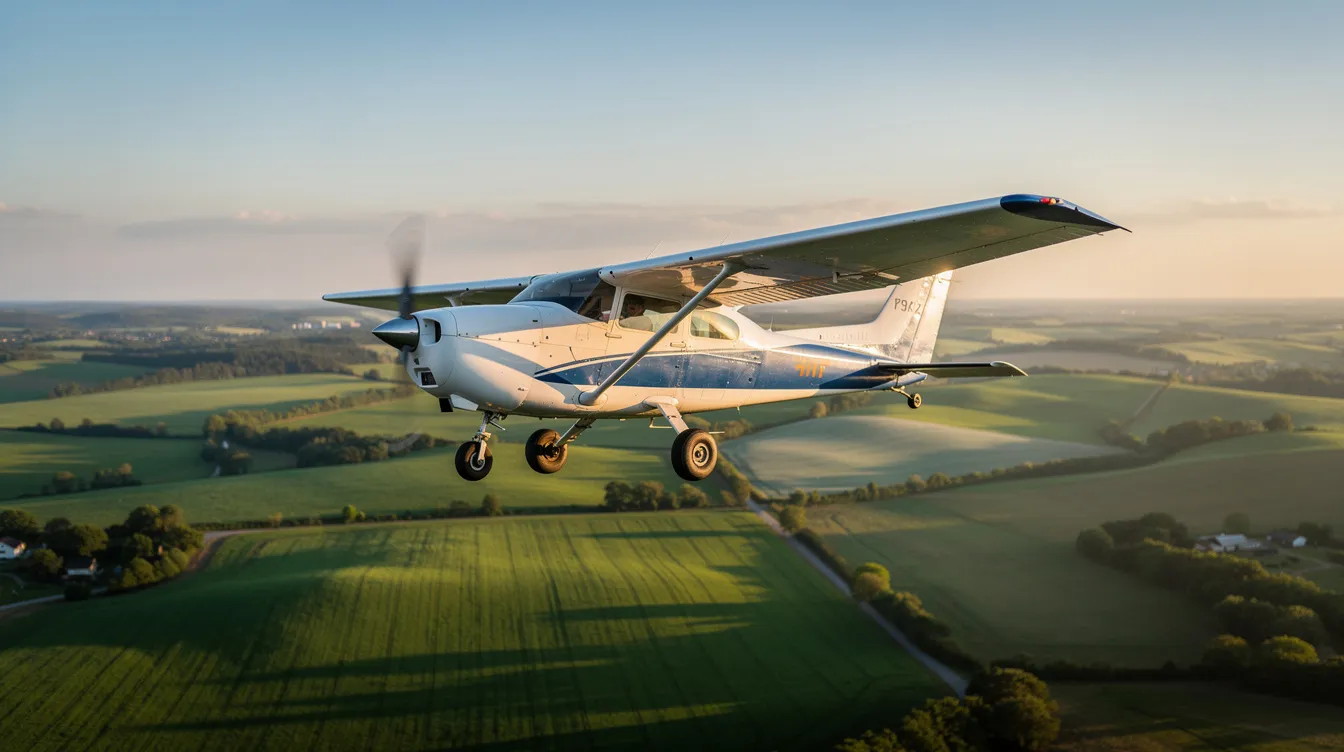
230 hp engine
Cruise speed: ~145 knots
Useful load: commonly exceeds 1,000 lb
Good short-field performance (high-lift wings, robust fixed gear)
Turbo Skylane: flies between 10,000–20,000 feet
Older 182s (1960s–1980s): $120,000–$250,000
Late 1990s and newer: $350,000+ (depending on avionics and condition)
Typical fuel burn: 13–15 GPH
Fuel cost: $50–$70 per hour
Insurance and maintenance: slightly higher than a 172, but justified by improved payload and speed
Introduced in 2000
Aerodynamic efficiency, low fuel burn (180 hp engine)
Composite construction
Modern diesel-powered variants for superior fuel economy
Families flying cross-country several times per year
Pilots based near short or unpaved strips
Business owners commuting within a single region
Tip: For travelers frequently flying with more than four passengers or longer non-stop legs, stepping up to a chartered turboprop via Jettly can be more time-efficient than stretching a 4-seat piston aircraft to its limits.
Mooney M20 variants like the M20J "201" and M20K "231" are some of the fastest and most fuel-efficient piston aircraft on the used market.
Cruise speed: 170 knots on just 9–12 GPH
Retractable gear and sleek airframe for aerodynamic efficiency
Mooney Acclaim S: max cruise speed of 242 knots
Narrower cabins, tighter rear seats
Best for two adults plus occasional rear-seat passengers
Not ideal for four large adults on long trips
Most M20 variants: $120,000–$250,000
Later/turbocharged aircraft: higher, but still under many comparable high-end Cirrus models
Near-light-jet cruise speeds on short regional routes at piston-aircraft fuel costs
Higher insurance for complex/retractable gear aircraft
Need for Mooney-experienced mechanics
Thorough pre-purchase inspections essential (landing gear, corrosion)
High-maintenance costs for older, high-performance aircraft
Pre-Purchase Inspection costs: typically 10–20% of purchase price
Tip: For a single pilot plus one passenger on frequent regional missions, Mooney ownership can be compelling. For irregular multi-passenger or international trips, on-demand jets through Jettly offer more flexibility.
The Rockwell Commander 114 appeals to pilots who prioritize room and ramp presence over raw speed.
Roomy four-seat cabin with wide doors
Tall trailing-link landing gear
Cruciform tail
Stylish shape that turns heads
Passengers can fill the cabin without feeling cramped
Cruise speeds: 130–140 knots
Wide fuselage adds drag compared with a Cessna 182 (traded for comfort)
Commander 114s (2020s market): $150,000–$260,000 (depending on avionics and engine time)
Piper PA-32 Cherokee Six derivatives (configured with six seats or four seats with generous baggage room)
Carry more, fit taller passengers, share Piper's accessible parts network
Families prioritizing comfort on 1–3 hour legs
Owners flying with non-pilot spouses
Anyone valuing ease of entry and space over maximum speed
Tip: Those wanting true stand-up cabins and lie-flat comfort usually shift to chartering midsize or super-midsize jets through Jettly.
For many owners, "best for the money" includes access to modern avionics, automation, and safety systems like the Cirrus Airframe Parachute System (CAPS).

Composite airframes, side-stick controls
Advanced glass cockpits (Cirrus Perspective by Garmin)
Cruise speeds: ~150 knots (SR20), ~180+ knots (SR22/SR22T)
Cirrus SR22: world's most popular general aviation single
Parachute system has improved survival statistics in emergency deployments
Directly boosts resale value
Many pilots/families won't fly without it
Pre-owned SR20s: $220,000–$400,000
SR22/SR22T: $400,000–$900,000+ (depending on year and equipment)
Safety-focused, excellent crashworthiness
Panoramic visibility, efficient fuel burn
Introduced in 2000, features a back door for easier rear-seat access
Often used in advanced flight training fleets
Lower accident rates
Powerful IFR platforms with integrated autopilots
Fun to fly, strong owner communities
Hold value well in the market
Tip: Just as Cirrus and Diamond modernized piston aircraft, Jettly modernizes access to jets and turboprops with instant pricing, digital booking, and transparent charter options.
At what annual flying hours does owning a piston aircraft become more economical than chartering? And when is on-demand private jet charter via Jettly the better value? The answer depends on honest math.
Hangar or tie-down, insurance, annual inspection, subscriptions, and unexpected maintenance
Realistically: $8,000–$18,000+ per year (depending on aircraft and location)
Simple types: $3,000–$8,500 per year
Annual ownership expenses: inspections, insurance, fuel (do not go away in low-flying years)
Operating costs for single-engine piston airplanes: $190–$275 per flight hour (fuel, oil, engine overhaul reserves, unscheduled maintenance)
Fuel burn varies by model: 8–10 GPH (172 or DA40), 13–15 GPH (182)
|
Cost Type |
Low-End Estimate |
High-End Estimate |
|---|---|---|
|
Annual Fixed |
$3,000 |
$18,000+ |
|
Variable (per hr) |
$190 |
$275 |
|
Fuel (per hr) |
$50 |
$70 |
|
Insurance (annual) |
$1,000 |
$8,500 |
Flying 50 hours/year vs. 200 hours/year dramatically changes cost per flight hour
At 50 hours, fixed costs alone can push effective hourly rate above $300
At 200 hours, the math begins to respect the ownership decision
A short 300-mile family trip in a chartered piston or turboprop through Jettly might cost less than one month's hangar and insurance bill for a low-utilization owner
Best fractional jet ownership companies and programs illustrate how sharing a larger aircraft can spread fixed costs
Fractional private jet ownership pros and cons show why on-demand charter still appeals to many who want zero capital commitment
Scheduling freedom of ownership is real
Convenience of professional crews, no maintenance headaches, ability to upsize/downsize per trip on a digital marketplace
When chartering instead of owning, buyers often compare the best private jet charter companies and their service models to balance safety, cost, and flexibility
Tip: Run realistic mission and hour projections, then compare with Jettly's instant charter quotes to find the personal break-even point.
Many pilots begin in 4-seat trainers like the Cessna 172 and Piper Archer
Cessna 150 prices: $25,000–$40,000 (budget entry point, seats only two)
Training in the plane a pilot plans to own can sometimes save money on transition time later
Light Sport Aircraft: $50,000–$200,000
Ultralights: $8,000–$15,000 new (not true four-seaters)
Simple fixed-gear trainers: lowest premiums
Retractable-gear Mooneys and high-performance Cirrus models: higher insurance costs
Pilot time-in-type and instrument ratings can improve pricing
Insurance for small planes: at least $1,000/year minimum
Loan terms for 4-seat pistons: commonly 10–20 years
Leasing options: available for aircraft priced $40K–$80K (lower end)
Flying club or leasing: more cost-effective for low-hour flyers
Flying clubs: lower hourly rates than traditional rentals
Affordable private jet charter pricing and cost drivers help pilots compare ownership against occasional charter
Some pilots own a budget-friendly piston for local flying and hour-building
Rely on Jettly's on-demand fleet or structured options like jet card programs with fixed hourly rates when schedule, distance, or passenger count demands more capability
Single-engine personal jet
Seats up to five adults plus two children (compared to four seats of piston siblings)
Cruises around 300 knots
Trades in the low-to-mid seven figures on the used market
Owning a Vision Jet or small turboprop: dramatically increases fixed costs, maintenance complexity, and insurance
Some flyers use private jet membership plans for flexible access
Others stick with fully on-demand private charter aircraft across multiple categories instead of taking on ownership risk
Private jet charter through Jettly: access to light jets, midsize jets, and turboprops globally without long-term commitments
Former 4-seat owners can scale up only on trips that truly require more aircraft
Often a compelling NetJets alternative for flying private at lower commitment
Occasional international trips
Variable group sizes
Corporate travel with multiple legs in a single day
When passengers expect stand-up cabins and full in-flight service
For many private aviation users, the best 4 seater plane for the money may actually mean owning no aircraft at all—using a combination of flight training rentals and Jettly charters to explore the world without the burden of ownership.
Below are answers to common questions not fully covered above.
Realistically, annual costs for a typical 4-seat single run $12,000–$30,000+ (including hangar, insurance, maintenance, and overhaul reserves)
High-utilization pilots (150+ hours/year): lower cost per hour
Low-utilization owners (under 75 hours): often pay more per flight hour than chartering via Jettly would cost
Yes. Many students learn in 4-seat trainers like the Cessna 172 and Piper Archer (stability, wide availability, ability to carry instructor plus observer)
Lower-cost 2-seat trainers like the Cessna 150 remain common and can save money during early training
With full fuel and four passengers: most 4-seat pistons realistically cover 350–600 NM with IFR reserves (depends on model, load, winds)
Many pilots prefer planning fuel stops on longer trips for comfort and safety
Safety depends on maintenance, pilot proficiency, weather decisions, and equipment
Models like the Cirrus SR series and Diamond DA40: advanced safety features, reduced fatal accident rates
Some families use professional crews and chartered aircraft through Jettly for added peace of mind
Scenarios: bad weather, long non-stop legs beyond 600 NM, more than four passengers, business trips with tight schedules, or when time savings/productivity justify the cost
Chartered turboprop or jet via Jettly: covers in half the time what a piston single takes, without pilot fatigue
The best 4 seater plane for the money depends on whether the priority is low purchase cost (older 172 or PA-28), performance (Mooney M20), comfort (Commander 114), or modern safety tech (Cirrus SR series, Diamond DA40).
Buyers should map their missions, annual flight hours, and complete ownership budget—including training and maintenance—before deciding which 4-seat aircraft class offers the best value.
Pilots and travelers who only occasionally need a 4-seat aircraft, or who sometimes need far more capability than any piston single can offer, may get better overall value using Jettly's global private jet and turboprop inventory on demand, especially when leveraging crowdsourced and shared private jet flights to reduce costs.
Before committing to ownership, compare real ownership costs against instant charter quotes. The numbers often surprise first-time buyers.
Ready to explore flexible private aviation options beyond 4-seat piston aircraft? Explore flight options or request a quote at https://www.jettly.com.
Share this post:
Jay Franco Serevilla
Jul 29, 2026
|
5
min read
Discover tips and trends in the industry.
5
min read
Plane Flying Height in km: How High Different Aircraft Fly and Why It Matters
Most commercial planes fly between 9 to 12 km, while private jets can reach up to 15.5 km. The chosen altitude balances fuel efficiency, safety, and passenger comfort. Understanding these heights helps travelers appreciate the dynamics of air travel and optimize their flight experience.
Read More
5
min read
Travel Insurance Airfare: How Flight Insurance Works for Private and Commercial Air Travel
Travel insurance for airfare is crucial for protecting your investment in non-refundable tickets against cancellations and delays. Whether you're flying commercially or chartering a private jet, understanding the nuances of flight insurance can save you from significant financial loss. This guide covers what flight insurance entails, its benefits, and when it's worth purchasing.
Read MoreStay updated with our latest insights and tips to elevate your journey with us.
MEMBERSHIPS AND ASSOCIATIONS



Disclaimer: Jettly operates as a charter broker, offering access to a global digital jet charter marketplace. Jettly is not a direct air carrier and does not own or operate aircraft. All advertised flights are conducted by third-party air carriers that are fully licensed and hold the appropriate Part 135 or Part 121 certifications issued by the Federal Aviation Administration (FAA) or equivalent regulatory authorities under U.S. or foreign law. Jettly complies fully with the U.S. Department of Transportation's Part 295 and Part 298 Charter Broker regulations. Jettly does not carry additional liability insurance. Passengers are covered by aircraft operator insurance. TICO: 50023770


