



Login
Get Instant Pricing On 23,000+ Aircraft

>
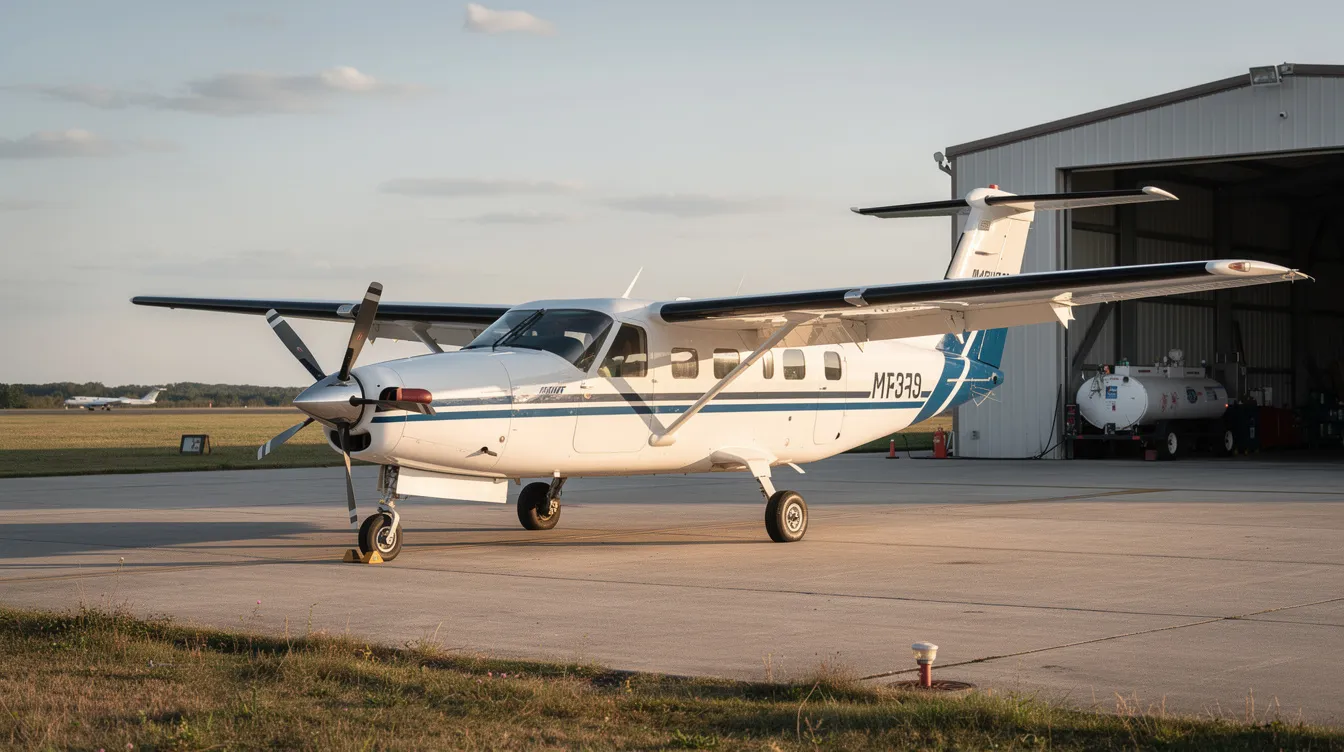
Finding the cheapest turboprop in 2026 is less about sorting by price on a classifieds site and more about understanding what "cheap" actually means once engines, maintenance, and fuel enter the equation. This guide is for private buyers, cost-conscious travelers, and aviation enthusiasts seeking to understand the real costs and considerations behind finding the most affordable turboprop aircraft in 2026. Whether a buyer is shopping for a budget airplane or weighing ownership against charter, the real cost story is in the details. Understanding the true cost of turboprop ownership is crucial for these groups, as it helps avoid unexpected expenses and ensures that the chosen aircraft truly fits their needs and budget.
The cheapest turboprop options on the used market today are older single-engine models from the 1970s–1990s and legacy King Air variants, but most airworthy examples still start well above $500,000.
Buyers hunting in the $250,000–$300,000 range will mostly find high-time turboprop aircraft needing careful pre-purchase inspections, engine time analysis, and potentially six-figure overhauls.
Turboprops can be more cost-effective per mile than many light jets on short routes, but acquisition price alone does not determine the cheapest option - engine overhauls, maintenance reserves, and fuel burn drive the real calculation.
Operating costs for turboprop aircraft can be 30-50% lower than those of light jets, making them attractive for regional trips.
For travelers who fly only 50–150 hours per year, chartering a turboprop through Jettly's on-demand platform is frequently cheaper than owning even a low-priced single-engine turboprop.
Smart shopping means comparing the total cost of ownership, not just the sticker price, and testing aircraft types via charter before committing capital.
Buyers seeking the most affordable turboprops usually focus on pre-owned single-engine or older twin-engine models, as these represent the lowest entry points into turbine-powered aircraft. Pre-owned turboprop prices generally range from $150,000 to $650,000, with the most affordable options including vintage twin-engine models and utility aircraft. These aircraft offer a practical way to assess turbine reliability and performance without the high acquisition costs of new models.
The phrase "cheapest turboprop" can mean three different things: the lowest purchase price, the lowest hourly operating cost, or the best total value across a few years of ownership. Each metric points to a different aircraft, and confusing them is one of the most common mistakes buyers make.
What is a turboprop? Turboprops are favored for their reliability and short-field performance. Turboprop engines provide the reliability and safety expected from turbine engines. These aircraft use a turbine engine to drive a propeller, combining the efficiency of propeller-driven flight with the power and dependability of turbine technology. This makes them especially popular for regional travel, operations from shorter runways, and missions where versatility and cost efficiency are priorities.
Here are the typical price bands for used turboprop aircraft in 2026:
Sub-$500,000: Very few certified turbine airplanes exist at this point that are truly airworthy. Most are 1970s–1980s twin turboprops with high engine times or outdated avionics.
$500,000–$1,000,000: A more populated band, including older Cessna 425 Conquest models, early Piper Meridians, and well-used King Air C90A aircraft with engines approaching overhaul.
$1,000,000–$2,000,000: Stronger examples appear here - mid-2000s Pilatus PC-12s, well-maintained twins with modern cockpit avionics, and some TBM 700 variants.
Genuinely airworthy turboprops under about $400,000 usually date to the 1970s–1980s and may arrive with engine times close to TBO, incomplete logbooks, and upcoming hot section inspections that can cost $80,000–$150,000 each.
Single-engine turboprop designs like the early Pilatus PC-12 or Piper Meridian often have lower fuel burn and simpler maintenance than twin turboprops, though acquisition costs for good-condition examples remain higher than many buyers expect. Guides to affordable planes and budget-friendly aircraft choices can help set realistic expectations before stepping into turbine territory. For private travelers who fly fewer than 150 hours a year, the cheapest solution may not involve ownership at all - on-demand charter through a digital platform like Jettly can eliminate hangar, insurance, and crew costs entirely.
Is there a decent used single-engine turboprop for $250,000–$300,000? It is basically the most frequently asked question on every aviation forum, and the honest answer is: choices are extremely limited.
Concrete models that sometimes appear in the $250,000–$400,000 band include several highlighted among the cheapest private aircraft options:
Early Piper PA-46 turboprops (2001–2005 Meridian): These occasionally edge toward the high $300,000–$400,000 range, but market data shows that early Meridians in decent condition typically trade between $600,000 and $900,000. A 2005 example with only 883 hours was recently listed near $989,000.
Older Socata TBM 700 examples: High-time TBM 700s with engines nearing overhaul start around $600,000–$700,000, not truly $300,000, but a useful benchmark. The TBM 940 has a maximum speed of 330 knots, which gives context for the performance these turbine airplanes deliver even in older variants.
Experimental or kit-built turboprops (e.g., Lancair Evolution): These are cheaper per performance unit but carry different certification, insurance, and resale considerations. A pilot shopping in this bracket needs to weigh those trade-offs carefully.
Truly airworthy, pressurized, certified single-engine turboprops at $250,000–$300,000 are rare. Buyers at that budget often end up in higher-end pistons, small twins, or even cheapest single-pilot jets for budget-conscious buyers instead.
Due diligence is non-negotiable at this price point. Pre-purchase inspections, logbook review, engine trend monitoring, and verifying upcoming hot section or major overhauls - which can exceed $200,000 for a PT6A - are essential before signing anything.
|
Model |
Cruise Speed |
Range |
Fuel Burn |
Typical 2026 Asking Price |
|---|---|---|---|---|
|
Early Piper Meridian |
~260 ktas |
~1,000–1,200 nm |
~25–30 GPH |
$600,000–$900,000 |
|
Older TBM 700 |
~300 ktas |
~1,200–1,400 nm |
~40–50 GPH |
$600,000–$800,000 |
|
Lancair Evolution (experimental) |
~270 ktas |
~1,200 nm |
~30 GPH |
$300,000–$500,000 |
Many buyers start their search dreaming of a cheap twin turboprop - often a King Air - before realizing what two engines, more complex systems, and double the overhaul costs actually mean on the ground. That said, twins have a real place in certain mission profiles, and understanding how much a private jet costs overall can provide useful context when comparing turboprops to light jets.
The Beechcraft King Air C90A is the most common "entry-level" twin turboprop. In 2026, market prices run approximately $800,000–$1,400,000 depending on avionics, engine times, and cabin condition. It flies on twin Pratt & Whitney PT6A-21 engines with a cruise speed of around 200–220 ktas, and the Beechcraft King Air C90A takes off in 2,275 ft. Total operating cost falls in the range of $1,500–$2,400 per hour, depending on annual utilization.
Other relatively inexpensive twins include the Cessna 425 Conquest I and early Cessna 441 Conquest II, with 2026 asking prices roughly between $800,000 and $1,500,000; the 441 was designed to replace earlier piston-powered Cessna cabin-class aircraft in the lineup. These carry 6–8 seats and offer capable performance for air ambulance, cargo, or night IFR roles where engine redundancy matters.
Twin turboprops appeal to operators who need redundancy over terrain or water, but they are rarely the absolute cheapest option to operate. For many private travelers, chartering a King Air through Jettly for a handful of trips per year can be significantly more cost-effective than buying and maintaining an aging airframe, while others may compare that path against fractional jet ownership companies for higher annual utilization.
The cheapest turboprop on paper can become the most expensive airplane in the hangar if fuel burn, maintenance, and engine overhauls are ignored. Purchase price is half the story - operating cost per hour is the other half, and it matters more over the life of ownership.
Main cost components include:
Fuel and oil: Single-engine turboprops burn roughly 25–60 GPH of Jet-A, depending on model and power setting. Twins burn significantly more, sometimes 70–100+ GPH combined.
Engine reserves and overhauls: PT6A major overhauls often run $200,000–$400,000+ per engine, depending on model and hot section condition. For twins, that cost doubles.
Scheduled and unscheduled maintenance, avionics upgrades, and hangar/insurance: These fixed costs add up quickly at low utilization rates and drag the hourly figure higher when an airplane sits idle.
Here are high-level hourly operating cost ranges for popular turboprop models in 2026, which fit into the broader picture of private jet operating cost breakdowns:
|
Aircraft |
Hourly Operating Cost |
Type |
|---|---|---|
|
Daher Kodiak 100 |
$720.93 per hour |
Single engine |
|
Pilatus PC-12 |
$1,204.78 per hour |
Single engine |
|
Cessna 441 Conquest II |
$1,232 per hour |
Twin |
|
Daher TBM 940 |
$1,272 per hour |
Single engine |
|
Beechcraft King Air 350i |
$1,611 per hour |
Twin |
|
Beechcraft King Air 250 |
$1,653.87 per hour |
Twin |
Avionics modernization—such as Garmin G600/1000 NXi, ADS-B compliance, and upgraded weather radar—can increase acquisition cost by $100,000–$200,000. However, modern avionics improve safety, dispatch reliability, and resale value, making them a net positive for most operators. Aircraft equipped with current glass cockpit systems and enrolled in engine protection programs consistently trade at premiums.
Instead of comparing sticker prices, compare cost per mile flown or cost per seat-mile. These metrics reveal the true business case and help a buyer or charter client make smarter decisions.
The number of flight hours per year usually decides whether buying the cheapest turboprop is smarter than chartering. For many private travelers, the math points clearly in one direction—and it is not necessarily toward ownership.
A typical break-even consideration looks like this:
Under ~100–150 flight hours per year: On-demand charter via a platform like Jettly is often more cost-effective than owning and maintaining even a low-priced turboprop. Fixed costs (insurance, hangar, crew training, engine reserves) simply cannot be spread thin enough.
Over ~200–250 hours per year: Owning or co-owning can start to make financial sense, provided the buyer has budgeted for overhauls and unscheduled maintenance and has evaluated alternatives like fractional jet ownership.
Jettly's marketplace offers access to more than 20,000 aircraft globally, including popular turboprop aircraft like King Airs, Pilatus PC-12, and Cessna Caravans. Travelers get instant pricing and digital booking without long-term jet card or fractional ownership commitments using the private jet charter cost estimator.
Key value points for cost-focused readers, especially those exploring affordable private jet charter:
Pay only for the hours flown—no hangar, crew salary, insurance, or engine reserve responsibilities, while still benefiting from many of the same affordable private jet charter strategies used on the jet side of the market.
Ability to switch between aircraft types (single-engine turboprop for short hops, light jet for longer business routes) instead of being locked into one airframe by accessing Jettly's broad private charter aircraft network.
Real-world examples: A business owner flying Toronto–Chicago 10 times a year using chartered King Airs through Jettly avoids the year-round fixed cost of ownership while still getting twin-engine reliability on every flight. A family using a Pilatus PC-12 for holiday trips to mountain airports benefits from the aircraft's short-field climb performance and range without the planning involved in maintaining a private airplane 52 weeks a year.
While some of these turboprop aircraft cost seven figures to purchase, they can still be remarkably cost-effective to charter on a per-trip basis. Here are a few key types commonly available through Jettly, which can also be paired with services like Jettly Eats in-flight catering for a more complete charter experience:
Pilatus PC-12: single-engine, 6–9 seats, excellent short-field capability, and the PC-12 can reach a maximum cruise speed of 322 mph. Ideal for regional business trips with easy operation from smaller airports.
Beechcraft King Air 200/250/350 series: Versatile twin turboprops used for corporate travel, medical flights, and group charters. The King Air 350 remains one of the most popular turboprops in the world for charter operators.
Cessna 208B Grand Caravan: A rugged single engine turboprop that carries up to 3,100 lb of cargo, ideal for short routes, island hops, and mixed-use flying. The Daher Kodiak 100 requires only 934 ft for takeoff, making it another strong option for remote airports and short strips.
Piaggio Avanti EVO: A unique pusher-configuration turboprop with a climb rate of 2,770 feet per minute, offering jet-like speed with turboprop fuel efficiency.
Turboprop hourly charter rates often start lower than comparable light jet rates on similar short sectors. Lower fuel burn and the ability to use smaller regional airports—often closer to a traveler's final destination—reduce total trip cost and ground time, especially when booked through modern charter airlines and private flight platforms.
Explore available turboprop inventory and real-time pricing through Jettly, a NetJets alternative for flying private for less. Learn more at https://www.jettly.com.
Smart buyers focus on total cost of ownership and mission fit, not just the lowest listing price. The airplane that looks like a deal on a trade-a-plane listing can turn into a fire sale of your budget once the engine comes apart for inspection, which is why broader guides to affordable planes and ownership choices are worth reviewing early.
Practical search and evaluation tips:
Use reputable listing platforms and brokers. Filter by engine times, maintenance status, and avionics—not price alone.
Prioritize aircraft with clear, complete logbooks and recent inspections. A fresh annual and up-to-date maintenance program signals responsible ownership.
Mandatory steps before purchase, regardless of which private plane manufacturer built the aircraft:
Independent pre-purchase inspection by a shop experienced with that turboprop model.
Title and lien check, plus a thorough review of damage and incident history.
Before committing, compare "buy vs charter" using a simple checklist: average annual flight hours, typical stage length, passenger count, and tolerance for downtime or unexpected costs. If any of those factors raise uncertainty, it may be worth testing the waters via Jettly's on-demand charter or exploring other affordable airplane rental options before putting capital into even the cheapest turboprop aircraft.
Many owners and charter clients now weigh environmental impact alongside price and performance when selecting an aircraft, making a clear understanding of private jet operating costs and fuel burn even more important.
Turboprop aircraft are often more fuel efficient than comparable light jets on short sectors under 500–600 nm, leading to lower fuel burn and emissions per mile. Of course, operational choices also matter:
Fly at optimized cruise altitudes and speeds instead of pushing for max speed all the time. Winds, payload, and route planning all factor into real-world efficiency.
Minimize repositioning and empty-leg flights through careful planning.
Some charter operators now offer carbon offset and sustainability programs. Cost-conscious travelers can choose efficient turboprop types and responsible operators when booking through platforms like Jettly or leverage flexible private jet memberships, aligning budget goals with more efficient flying practices.
Ownership usually starts to make financial sense around 200–300 flight hours per year compared to on-demand charter, though the exact break-even point depends on financing terms, hangar costs, and the specific aircraft type. Below roughly 100–150 hours annually, most private travelers will find chartering via a platform like Jettly or exploring a jet card flight cost estimator more cost-effective than buying even the cheapest turboprop.
Modern certified single-engine turboprop aircraft such as the Pilatus PC-12 or Piper M600 use highly reliable turbine engines and are approved for IFR and known-ice operations, with strong safety records when flown by trained crews. Twins like the King Air provide engine redundancy, which some operators prefer for overwater or mountainous routes, but safety in both categories depends heavily on pilot training, maintenance quality, and operating standards.
Common surprises include upcoming engine overhauls (often $200,000–$400,000), propeller overhauls ($25,000–$40,000+), avionics upgrades to meet current regulations, hangar or tie-down fees, and higher-than-expected insurance premiums for low-time owners. Those uncomfortable with these variables might explore charter through Jettly or review detailed guides to jet card costs and pricing to access turboprop performance without long-term maintenance and capital risks.
Many prospective owners charter specific turboprop models—such as a Pilatus PC-12 or King Air 250—for several trips to understand real-world performance, comfort, and costs before committing. Jettly's platform can be used to book different turboprop aircraft on various routes, effectively letting buyers test-drive types before making a purchase decision or complement ownership with flexible jet card programs.
On short to medium routes, turboprops generally burn less fuel and can use smaller airports, which may reduce total trip cost despite slightly longer flight times. Travelers focused on cost efficiency often select turboprop aircraft for regional trips and switch to jets on longer legs—a flexibility that charter platforms like Jettly and other charter airlines and private flight providers are designed to support.
The absolute cheapest turboprop to buy is usually an older, higher-time airframe—but the most cost-effective turboprop aircraft for a given mission depends on hours flown, stage lengths, and risk tolerance. A low purchase price means nothing if the engine fails inspection and the overhaul bill exceeds half the airplane's value.
For many private travelers flying only a few dozen hours per year, chartering modern turboprops such as the Pilatus PC-12 or King Air through Jettly is often cheaper and far less stressful than ownership, especially when viewed against the broader backdrop of private jet costs. There is no hangar to rent, no crew to board, and no maintenance surprises.
Ready to compare turboprop charter options to ownership? Explore flights or request a quote at https://www.jettly.com.
Share this post:
Jay Franco Serevilla
Jul 1, 2026
|
5
min read
Discover tips and trends in the industry.
5
min read
Aircraft Charter Guide: How to Choose, Book, and Fly with Confidence
This comprehensive aircraft charter guide provides essential insights on how to choose, book, and fly with confidence using Jettly's digital platform. It covers various jet categories, the charter process, and highlights the benefits of private aviation for both personal and business travel. With access to over 20,000 aircraft and transparent pricing, Jettly simplifies the charter experience for travelers.
Read More
5
min read
Who Owns a Jet? A Guide to Private Jet Owners, Boeing BBJ Operators, and Smarter Ways to Fly
This guide explores the landscape of private jet ownership, highlighting famous owners like Oprah Winfrey and Prince Al Waleed bin Talal. It also discusses the advantages of private jet charter services, such as Jettly, which provide flexible access to a wide range of aircraft without the burdens of ownership. Understanding the different models of private jet access can help travelers make informed decisions about their flying needs.
Read MoreStay updated with our latest insights and tips to elevate your journey with us.
MEMBERSHIPS AND ASSOCIATIONS



Disclaimer: Jettly operates as a charter broker, offering access to a global digital jet charter marketplace. Jettly is not a direct air carrier and does not own or operate aircraft. All advertised flights are conducted by third-party air carriers that are fully licensed and hold the appropriate Part 135 or Part 121 certifications issued by the Federal Aviation Administration (FAA) or equivalent regulatory authorities under U.S. or foreign law. Jettly complies fully with the U.S. Department of Transportation's Part 295 and Part 298 Charter Broker regulations. Jettly does not carry additional liability insurance. Passengers are covered by aircraft operator insurance. TICO: 50023770


