


Login
Get Instant Pricing On 23,000+ Aircraft

>
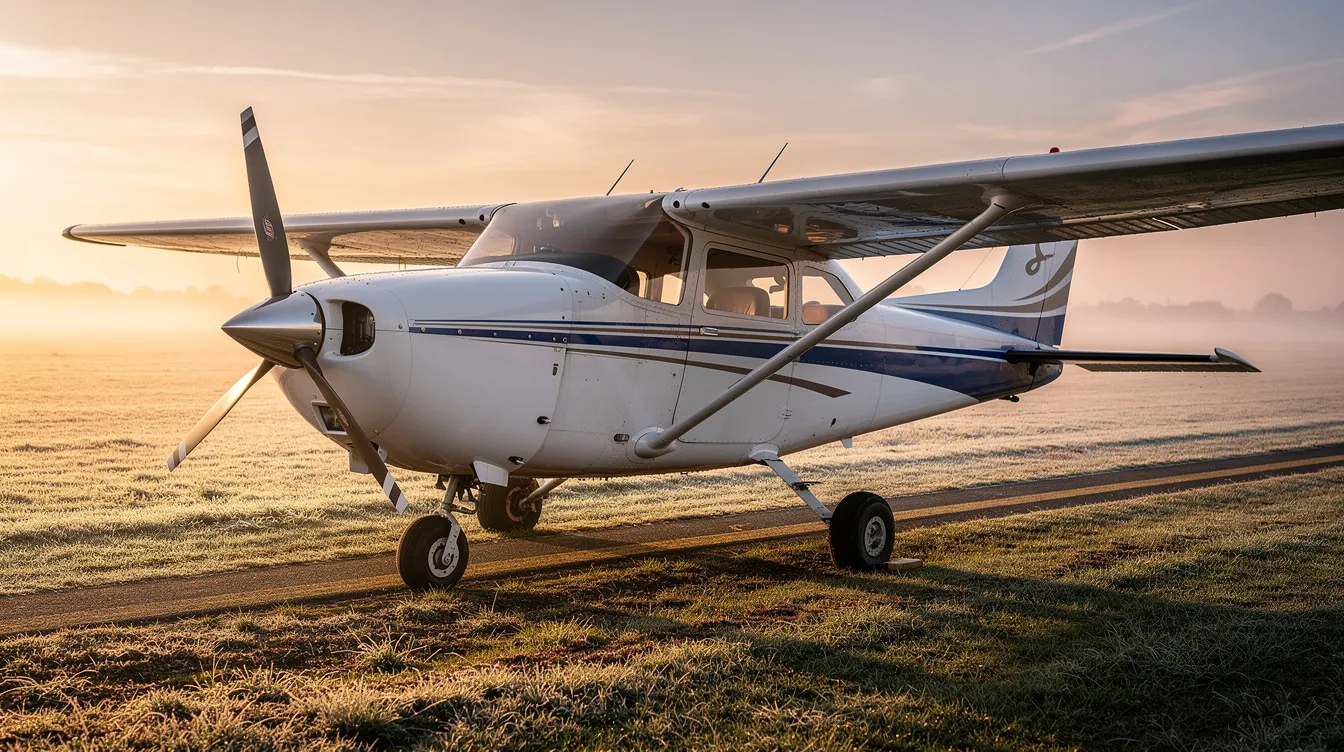
The term "Cessna motor" is one of the most common searches from travelers and aviation enthusiasts trying to understand what powers Cessna aircraft. Cessna aircraft use horizontally opposed piston engines, turboprops, and turbofans, and each engine family shapes a different flying experience. This guide breaks down every engine type across the Cessna lineup, from the trainer-friendly Cessna 172 to the Citation business jets, and explains how engine choice affects charter pricing, performance, and airport access through Jettly's platform.
A Cessna motor can be a four-cylinder piston engine burning avgas, a PT6A turboprop burning Jet-A, or a high-bypass turbofan powering a Citation jet. The term "motor" is informal; aviation professionals say "engine."
Engine type determines gross weight, range, cruise speed, and which runways a Cessna aircraft can use, all of which Jettly factors into charter pricing and aircraft selection.
The Cessna 172 Skyhawk relies on proven Lycoming piston engines (up to 180 hp), the Caravan runs a PT6A turboprop rated at 675 shp, and Citation jets use Williams FJ44 or Pratt & Whitney PW306 turbofans producing thousands of pounds of thrust.
Travelers gain faster trips, access to shorter runways, and greater scheduling flexibility when they match the right engine type to their route through Jettly's digital charter platform.
Sections below cover engine comparisons, maintenance intervals, upgrade paths, and how to pick the right Cessna powerplant for a Jettly flight.
"Cessna motor" is informal slang for the range of engines powering Cessna aircraft, from classic single-engine pistons to modern turbofan business jets. In aviation, the correct term is "engine," but "motor" persists as a common search term among prospective charter customers and student pilots.
Three engine families cover the full Cessna models lineup:
Piston engines (avgas): four- or six-cylinder, air-cooled, horizontally opposed. Found in trainers and light touring aircraft.
Turboprop engines (Jet-A): gas turbine cores driving propellers. Used in utility and commuter aircraft like the Caravan.
Turbofan jet engines (Jet-A): high-bypass designs producing thrust for speed. Installed in Citation business jets.
Engine choice directly shapes the customer experience on Jettly: a training-style scenic hop in a Cessna 172 feels different from a regional shuttle in a Caravan or a time-saving transcontinental run in a Citation. Later sections cover each engine family, what it means for noise, speed, fuel burn, and operating cost.
Piston engines are the backbone of general aviation and power some of the most popular aircraft ever built, including the Cessna 172 Skyhawk, 182 Skylane, and 206 Stationair.
Core characteristics of these engines:
Air-cooled, horizontally opposed cylinders
Cessna piston engines generally feature a four-stroke internal combustion cycle
Piston engines typically run on 100-octane low-lead aviation gasoline (100LL avgas)
On many legacy piston models, the fuel induction system uses a carburetor
Dual independent magneto ignition systems are used for reliability in Cessna engines
Manufacturers: Lycoming and Continental
Four- or six-cylinder configurations depending on model
Performance sits in moderate ranges: cruise speeds of 100 to 140 knots, service ceilings around 13,000 to 18,000 feet, and gross weight limits suitable for two to six occupants plus baggage. Pilots and aircraft owners favor these engines for flight training, short personal trips, aerial photography, and light charter missions to smaller airports with easy access.
For charter customers, piston Cessnas carry the lowest hourly cost but cruise slower than turboprops and jets. They work well for short regional flights where time savings over airline travel still matter, but speed is secondary to price.
The Cessna 172, developed by a company founded by Clyde Cessna, is the best-selling aircraft in history, with more than 44,000 built since its first flight on June 12, 1955. Engine evolution is central to its longevity. The Cessna 172 uses Continental or Lycoming piston engines, and the specific variant defines the aircraft's capability in each generation.
Early Cessna 172s had a Continental O-300 engine, a six-cylinder unit rated at 145 hp. Over 1,400 Cessna 172s were built in 1956, the model's first full production year. The Cessna 172D introduced the "Omni-Vision" rear window in 1963, but the engine stayed Continental until the late 1960s. In 1959, the Cessna 172 set a world record for flight endurance, staying aloft for over 64 days.
Later models use Lycoming O-320 or IO-360 engines. The shift to Lycoming brought four-cylinder powerplants with 150 to 160 hp, improving climb rate and allowing higher gross weight. The 172R model features a fuel-injected Lycoming IO-360 engine, and the Cessna 172S was introduced in 1998 with 180 horsepower. The 172S model produces 180 horsepower with a Lycoming engine, pushing maximum takeoff weight to 2,550 lb.
Key specs of the current Cessna 172S Skyhawk:
The Cessna Skyhawk has a maximum takeoff weight of 2,550 lb
Its optimal cruise speed is 122 knots (140 mph); it has a cruise speed of 124 knots at higher power settings
The climb rate is 900 feet per minute
The service ceiling is 17,000 feet
The Cessna 172 has a range of 640 nautical miles
It features Garmin G1000 NXi integrated cockpit avionics as standard equipment
The Skyhawk is known for its slow landing speed, making it forgiving for students
The aircraft is designed for flight training and personal use, while larger single-engine models like the Cessna 207 with higher seating capacity serve sightseeing and utility roles. Production of the Cessna 172 halted in 1986 and resumed in 1996, reflecting broader industry shifts. Experimental Jet-A compression-ignition conversions attracted interest in Europe, where avgas is expensive, though some programs were later discontinued.
For charter context, a Jettly customer might encounter a Skyhawk for scenic flights, instructor-accompanied training packages, or short hops where a simple single-engine aircraft with four seats is ideal.
The Cessna 182 Skylane and 206 Stationair use larger six-cylinder piston engines to carry more passengers and baggage to new heights of versatility, sitting alongside cabin-class twins such as the Cessna 340 for higher-speed travel.
Cessna 182 Skylane: Earlier aircraft used Continental O-470 engines (around 230 hp). Later models adopted Lycoming IO-540 or turbocharged variants, supporting higher gross weight (up to about 3,100 lb) and better climb at elevation.
Cessna 206 Stationair: This workhorse runs Continental IO-520/IO-550 or Lycoming IO/TIO-540 series engines, producing 285 to 310 hp. That power enables operations from short, rough strips with a full family and gear aboard, with a useful load well over 1,000 lb.
Compared to a 172, these models cruise faster (130 to 150 knots), haul more load, and perform better in high-density-altitude conditions popular with adventure or backcountry travelers. They consume more fuel per hour and cost more to maintain, but for small groups headed to ski trips, fishing lodges, or properties lacking long paved runways, they offer private access at a reasonable price, especially when travelers use shared private flights to fill empty seats and spread costs across more passengers.
Turboprop engines bridge piston power and jets, occupying a sweet spot in overall private jet and aircraft cost considerations for travelers balancing speed and budget. They burn Jet-A fuel and deliver reliability that keeps utility and commuter operators flying high-cycle schedules.
Turboprop engines use a jet turbine core to spin a propeller, and the Cessna Caravan relies on Pratt & Whitney Canada PT6A series engines for this purpose. The standard Caravan uses a PT6A-114A rated at 675 shp, while the Grand Caravan EX runs a PT6A-140 at 867 shp. Cessna's turboprop engines are rated around 600 to 867 shaft horsepower across these variants.
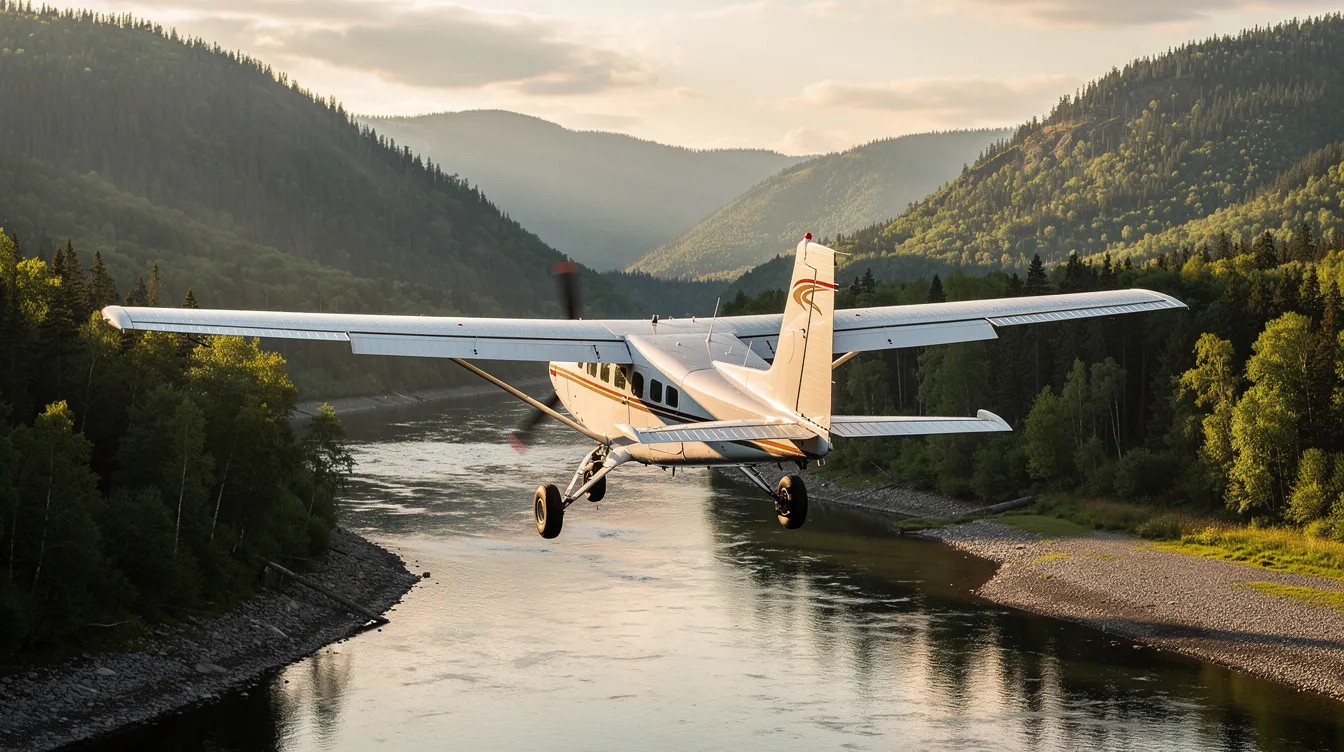
How do these turboprop engines affect capability:
Gross weight over 8,000 lb on the standard Caravan
Seating to accommodate up to 14 occupants depending on configuration
Cruise around 186 knots true airspeed
Range of roughly 1,070 nautical miles
Takeoff ground roll around 1,160 feet; operations from gravel or grass strips
The Cessna SkyCourier, a twin-engine turboprop launched in the 2020s, uses PT6A-65SC engines optimized for 19 passengers or cargo (three LD3 containers) in high-frequency operations, complementing many of the best private jets in the world in mixed fleets that cover both regional and long-range missions. It is equipped for high-frequency passenger or cargo operations and represents the latest technology in regional turboprop design from the Cessna Aircraft Company, now part of Textron Aviation alongside Beechcraft.
Jettly use cases include regional shuttle services, corporate teams traveling to secondary airports, and group leisure travel where single-engine economy meets safety expectations, supported by a broad private charter aircraft network spanning multiple categories and capacities.
Citation business jets represent the top end of Cessna aircraft performance. Luxury jets typically utilize turbofan engines for high-speed, long-range flights, and Citations are no exception. Turbofan engines produce jet thrust optimized for high-speed operation, replacing propellers with ducted fan stages and exhaust.
Key engine families across the Citation lineup:
|
Citation Model |
Engine |
Thrust per Engine |
Cruise Speed |
Range |
|---|---|---|---|---|
|
M2 |
Williams FJ44-1AP-21 |
~1,965 lbf |
~404 ktas |
~1,550 nm |
|
CJ3+ / CJ4 |
Williams FJ44 variants |
~2,400-3,600 lbf |
~415-451 ktas |
~2,000+ nm |
|
PW306D1 |
~5,907 lbf |
~446 ktas |
~2,700 nm |
|
|
Longitude |
Honeywell HTF7700L |
~7,665 lbf |
~483 ktas |
~3,500 nm |
These engines give passengers quieter cabins, lower cabin altitude, faster climb to smooth air, and the benefit of upgrading to newer avionics and instrumentation across modern Citation variants, reducing block times compared with turboprops—similar to what you’ll find on many celebrity private jets and other luxury aircraft. A Citation M2 covers a 400 nm leg in under an hour; a Caravan needs over two hours for the same route.
For Jettly, jet engines are the primary choice for executives and high-net-worth travelers seeking speed, privacy, and flexible departure times, all bookable on demand through the platform with affordable private jet charter pricing that reflects aircraft type and route length.
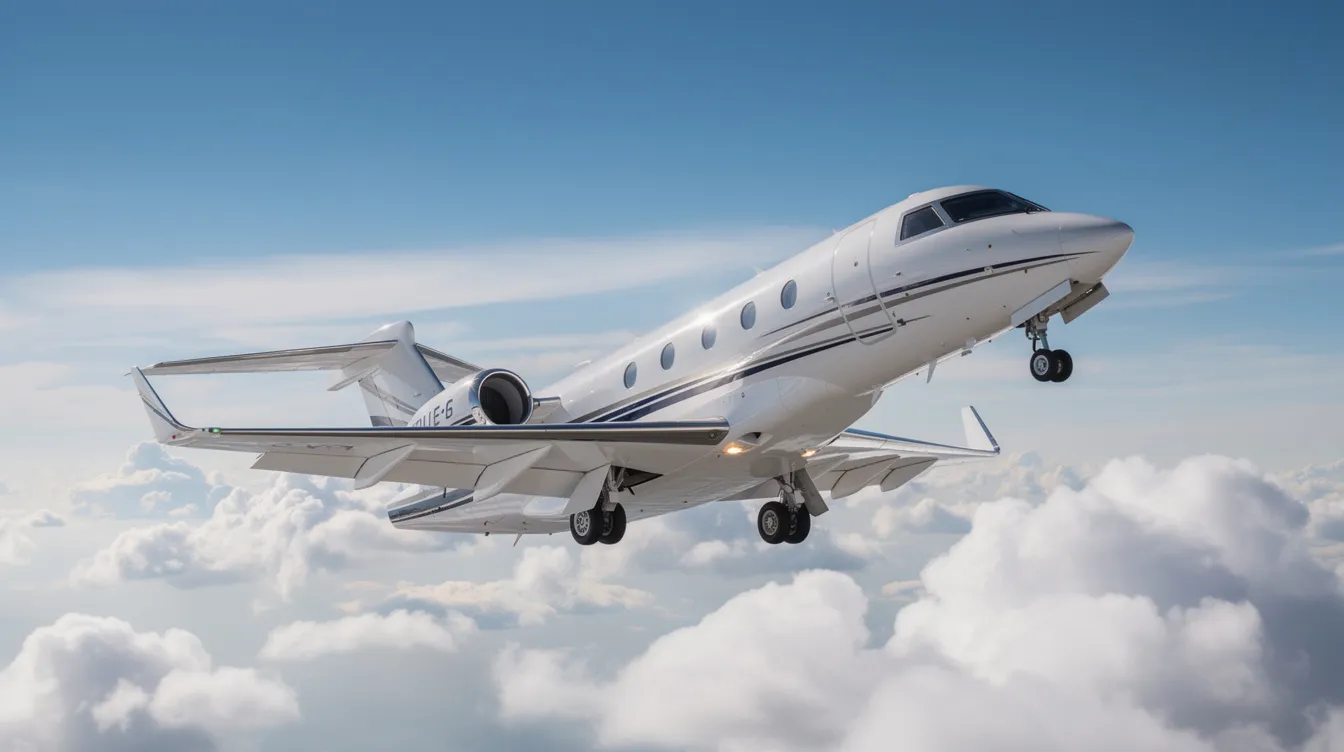
A Cessna engine typically provides the power needed for takeoff, climb, and cruise. Engine performance directly affects takeoff performance and climb capability, and power and performance can vary among different Cessna models based on the installed powerplant.
Consider how power changes mission profiles. Moving from 145 hp to 180 hp in a Cessna 172 raises the maximum gross weight from about 2,200 lb to 2,550 lb, improves the climb rate, and extends the service ceiling. Turboprop and jet engines push these numbers far higher, supporting more passengers, fuel, and baggage.
Example scenario: Toronto to Montreal (~265 nm)
|
Factor |
Cessna 172S |
Caravan (PT6A-114A) |
Citation CJ3+ |
|---|---|---|---|
|
Cruise speed |
~124 kt |
~186 kt |
~415 kt |
|
Approximate flight time |
~2.1 hrs |
~1.4 hrs |
~0.6 hrs |
|
Passengers |
2-3 |
Up to 9-14 |
Up to 7-9 |
|
Fuel type |
Avgas |
Jet-A |
Jet-A |
|
Relative hourly cost |
Lowest |
Mid-range |
Highest |
Higher-powered and jet engines consume more fuel per hour but can reduce total trip cost per passenger when carrying larger groups or when schedule pressure makes speed the priority. Jettly's platform uses these trade-offs when proposing aircraft options for a route; the charter cost estimator and dedicated jet card flight cost estimator help travelers compare scenarios directly.
Supplemental Type Certificates (STCs) allow aircraft owners to create upgrade paths on legacy airframes by upgrading engines. A common example: converting an older 150 hp Cessna 172 to a 180 hp IO-360 derivative with a constant-speed propeller, with the original engine replaced as part of the conversion. The modified airframe gains improved climb at high density altitude, a higher allowable gross weight, and better short-field capability.
Upgrade packages may also include:
New propellers matched to the engine for efficiency
Improved baffling for better cooling under higher power settings
Modern electronic ignition replacing or supplementing traditional magneto systems
Firewall-forward kit components engineered to FAA or EASA standards, including installation hardware for a more complete package
These modifications can also deliver performance or cooling improvements on some aircraft.
For charter customers, upgraded aircraft may offer better payload or shorter field performance on specific routes, which can pair well with jet card programs offering fixed hourly rates for frequent flyers. All Cessna engine modifications used for charter must comply with local aviation authority regulations and be documented in maintenance records; operators in Jettly's network verify this before listing any modified aircraft in their inventory.
Engine reliability is central to safe Cessna operations, whether the aircraft is a simple single-engine trainer or a long-range jet, and is equally critical for third-party operators like Dexter Air Taxi’s private jet services available through Jettly’s brokered network. Routine maintenance follows strict schedules built around Time Between Overhaul (TBO), scheduled inspection intervals, and mandatory service bulletins.
Typical TBO ranges by engine type:
Piston engines (Lycoming, Continental): 1,800 to 2,400 hours
PT6A turboprops: Often 3,600 hours, with hot-section inspections around 1,800 hours
Jet engines (FJ44, PW-series): On-condition monitoring with trend analysis; overhaul intervals vary by manufacturer bulletin
Professional charter operators in Jettly's network must adhere to Part 135 (or regional equivalents) maintenance regulations, contributing to a safe share of the global fleet of private jets operating worldwide. This includes engine monitoring systems, chip detectors, and conservative dispatch criteria to maintain safety and dispatch reliability.
Modern avionics like Garmin G1000 NXi or Collins Pro Line 21 integrate engine data into the cockpit display, helping pilots spot anomalies early. This supports predictive maintenance strategies that reduce unscheduled downtime and keep aircraft available for Jettly bookings.
Matching the engine type to the mission is the fastest way to get the right balance of cost, speed, and comfort.
Piston singles (Cessna 172, 182): Best for short scenic or local flights with two to three passengers. Lowest hourly cost. Limited by speed and weather capability.
Turboprops (Caravan, Grand Caravan EX): Ideal for regional routes, group trips, and airfields with short or unpaved runways. Mid-range cost with the ability to fly up to 14 passengers.
Citation jets: The choice for speed, range, and schedule-critical missions. Higher hourly cost, but block times drop by half or more compared with propeller aircraft.
Key decision factors include distance, number of passengers, baggage needs, runway length and surface at both ends, budget per hour, and tolerance for flight time versus price, all of which can be matched to tailored private jet membership plans for recurring travelers. Jettly's digital platform presents these trade-offs with instant pricing, aircraft photos, and performance summaries so customers can align engine type with their mission profile, positioning the service as a compelling NetJets alternative for flying private at a lower cost.
Ready to compare options? Explore real-time Cessna charter availability and pricing at jettly.com.
Engine choice affects fuel burn, emissions, and noise footprint, and can even influence available amenities such as in-flight catering for private jets on longer turbine-powered legs. Modern piston, turboprop, and jet engines have improved efficiency over older generations through better combustion, digital engine controls (FADEC on turbines), and lighter materials.
Turboprops like the Caravan are particularly efficient on short- to medium-stage lengths, offering single-engine economy while moving up to 14 passengers on routes including busy regional corridors such as private jet charter services in Kolkata, West Bengal. Business jets, while higher in per-hour fuel burn, can reduce total emissions per trip for larger groups by cutting block time and avoiding positioning flights or inefficient hub connections.
Some operators accessible through Jettly's ecosystem offer carbon offset programs or use approved blends of Sustainable Aviation Fuel (SAF) for turbine engines, a small but growing share of the overall global fleet of private jets. Piston engines still rely on avgas, though unleaded alternatives are under development and in limited deployment as of 2026. Travelers developing a preference for lower-impact options can ask about these programs when booking.
Below are answers to common questions not fully covered in the sections above, including practical considerations for getting a seat on a private jet easily through modern booking options.
Four-cylinder Lycoming and six-cylinder Lycoming/Continental piston engines remain the most numerous in service. They power thousands of Cessna 172, 182, and 206 aircraft around the world, sold to flight schools, private owners, and charter operators alike.
In commercial and charter operations, PT6A turboprops and FJ44/PW-series jet engines are also widespread. Their reliability and global support network make them the standard for revenue-generating Cessna aircraft.
Piston singles are usually the least expensive per-hour option. Turboprops sit in the middle. Citation jets cost more per hour but reduce total travel time, which can offset the higher rate on longer legs.
Jettly's instant pricing shows how an engine's fuel burn, maintenance cost, and seating capacity translate into different price points for the same route. A 300 nm leg might cost a fraction of a 172 compared with a Citation, but the jet finishes in 45 minutes instead of 2.5 hours.
Single-engine Cessna aircraft used for charter must meet the same regulatory and maintenance standards as multi-engine aircraft under local aviation authority rules (FAA Part 135 in the United States, for example).
Engine reliability, conservative dispatch criteria, and careful route planning around terrain and weather are central to safe single-engine operations. Operators on Jettly's platform maintain strict compliance before listing any aircraft.
Most legacy piston Cessna aircraft still rely on 100LL avgas. Unleaded avgas alternatives are under development, and limited supplies reached the market in the mid-2020s, but widespread adoption remains pending full certification.
Turboprops and jets can sometimes use approved blends of Sustainable Aviation Fuel (SAF) mixed with Jet-A, subject to engine and airframe manufacturer approvals. Travelers can ask Jettly or the operating carrier about SAF availability for a specific flight.
Customers can review aircraft specifications in Jettly's listing, where the make, model, and typical engine type are shown for each Cessna aircraft offered. Listings also include interior photos, seat count, and performance summaries.
For exact engine model details (e.g., PT6A-140 vs PT6A-114A, or specific Lycoming/Continental variants), travelers can contact Jettly support or the operating carrier directly before confirming the booking.
Understanding the Cessna motor—the engines powering Cessna aircraft—is key to selecting the right aircraft for any private flight. Whether it’s the reliable piston engines in the Cessna 172 Skyhawk, the rugged turboprops in the Caravan, or the high-performance turbofan jets in the Citation family, each engine type offers distinct advantages in speed, range, capacity, and operating cost. Jettly’s platform leverages this knowledge to provide transparent pricing and instant booking options that match travelers with the ideal Cessna aircraft for their mission.
From training flights and scenic hops to regional shuttles and transcontinental business trips, the right Cessna motor ensures safety, efficiency, and convenience. Travelers benefit from tailored options that consider runway access, fuel type, and performance, helping them save time and travel smarter. Explore Jettly’s extensive fleet and experience private aviation on your terms.
Ready to experience private travel on your terms? Explore flight options or request a quote at https://www.jettly.com.
Share this post:
Jay Franco Serevilla
Aug 15, 2026
|
5
min read
Discover tips and trends in the industry.

5
min read
Jettly Launches Special Missions, Expanding On-Demand Access to Helicopters, Group Charter, Cargo, Medevac and VIP Airliners
Jettly has launched "Special Missions," integrating complex charter categories—including helicopters, group charter (18–200 seats), cargo freighters, medevac flights, and VIP airliners—into its instant-pricing digital marketplace. Supported by a network of over 23,000 aircraft and 24/7 flight operations, the feature replaces slow, offline sourcing with transparent digital access for high-stakes, specialized flying.
Read More
5
min read
Tom Brady's Aviation Habits After His Retirement From Pro Football
Tom Brady’s post-NFL career has transformed his travel needs from those of a professional athlete into those of a broadcaster, investor, and business executive. While he has long been associated with the Gulfstream G550, the economics of private aviation suggest that flexible access can be more efficient than whole-aircraft ownership for travelers flying fewer than several hundred hours per year. His evolving schedule illustrates why depreciation, fixed operating costs, productivity, and fleet flexibility increasingly shape how ultra-high-net-worth travelers approach private aviation.
Read MoreStay updated with our latest insights and tips to elevate your journey with us.
MEMBERSHIPS AND ASSOCIATIONS



Disclaimer: Jettly operates as a charter broker, offering access to a global digital jet charter marketplace. Jettly is not a direct air carrier and does not own or operate aircraft. All advertised flights are conducted by third-party air carriers that are fully licensed and hold the appropriate Part 135 or Part 121 certifications issued by the Federal Aviation Administration (FAA) or equivalent regulatory authorities under U.S. or foreign law. Jettly complies fully with the U.S. Department of Transportation's Part 295 and Part 298 Charter Broker regulations. Jettly does not carry additional liability insurance. Passengers are covered by aircraft operator insurance. TICO: 50023770


