



Login
Get Instant Pricing On 23,000+ Aircraft

>
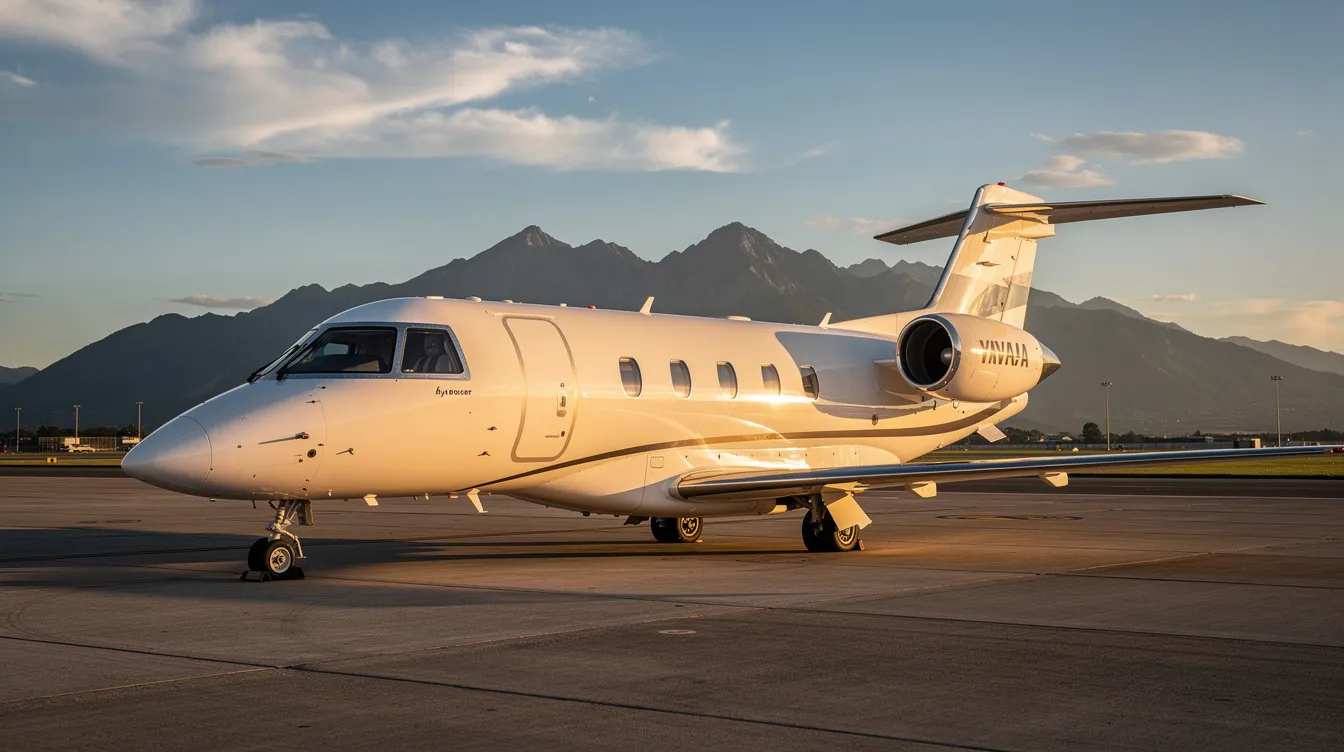
The Cirrus Vision Jet changed what it means to own and fly a personal jet. As the world's first certified single-engine jet in serial production, it brought jet aircraft performance to a segment of pilots and travelers who previously had few options between high-end pistons and expensive twin-engine business jets. But ownership isn't the only path to this kind of travel. Platforms like Jettly give travelers access to similar very light jets on demand, without the capital commitment.
The Cirrus Vision Jet is a single-engine jet powered by a Williams FJ33-5A turbofan, with a maximum cruise speed of 311 knots, a range near 1,200 nautical miles, and seating for up to seven occupants—making it well suited for regional routes like New York–Miami or Los Angeles–Denver.
Cirrus Aircraft built two signature safety systems into the plane: the Cirrus Airframe Parachute System (CAPS) and the Garmin Safe Return autoland, giving non-professional pilots and families an additional layer of protection.
The Vision Jet has evolved across four generations—G1, G2, G2+, and G3 Vision Jet—with each adding improved speed, higher altitude capability, better cabin design, Wi-Fi, and an upgraded flight deck.
For many travelers, chartering a comparable very light jet or light jet through a digital platform like Jettly provides Vision Jet–style convenience and flexibility without ownership costs, pilot training, or maintenance obligations.
Over 800 Vision Jets had been delivered globally by the end of 2025, making it one of the most-delivered business jet aircraft in its class.
The Cirrus Vision Jet (SF50) is the world's first single-engine personal jet to reach serial production. Produced by Cirrus Aircraft, it was designed to bridge the gap between high-performance piston aircraft and traditional light business jets. It earned FAA type certification in October 2016, with the first customer delivery following in December of that year.
The aircraft fills a defined niche in the market:
Most Vision Jets are owner-flown, intended for regional business trips and family missions.
It serves as an accessible step into jet aircraft performance for pilots moving up from the Cirrus SR-series.
The Vision Jet is categorized as a Very Light Jet (VLJ), targeted towards high-net-worth individuals seeking private air travel. It is designed to make private jet ownership more approachable for owner-pilots.
While most Vision Jets are owner-operated, charter clients using Jettly typically fly in comparable light or very light jets for similar routes, gaining the same travel benefits without owning an aircraft. By the mid-2020s, the Vision Jet had become one of general aviation's best-selling jet aircraft, with over 800 units delivered globally.
The Vision Jet stands out on any ramp. Its distinctive V-tail design, high-mounted single engine on top of the fuselage, and large cabin windows create a profile unlike any conventional twin-engine business jet. These design choices aren't just aesthetic—they contribute to aerodynamic efficiency and reduced ground noise for occupants.
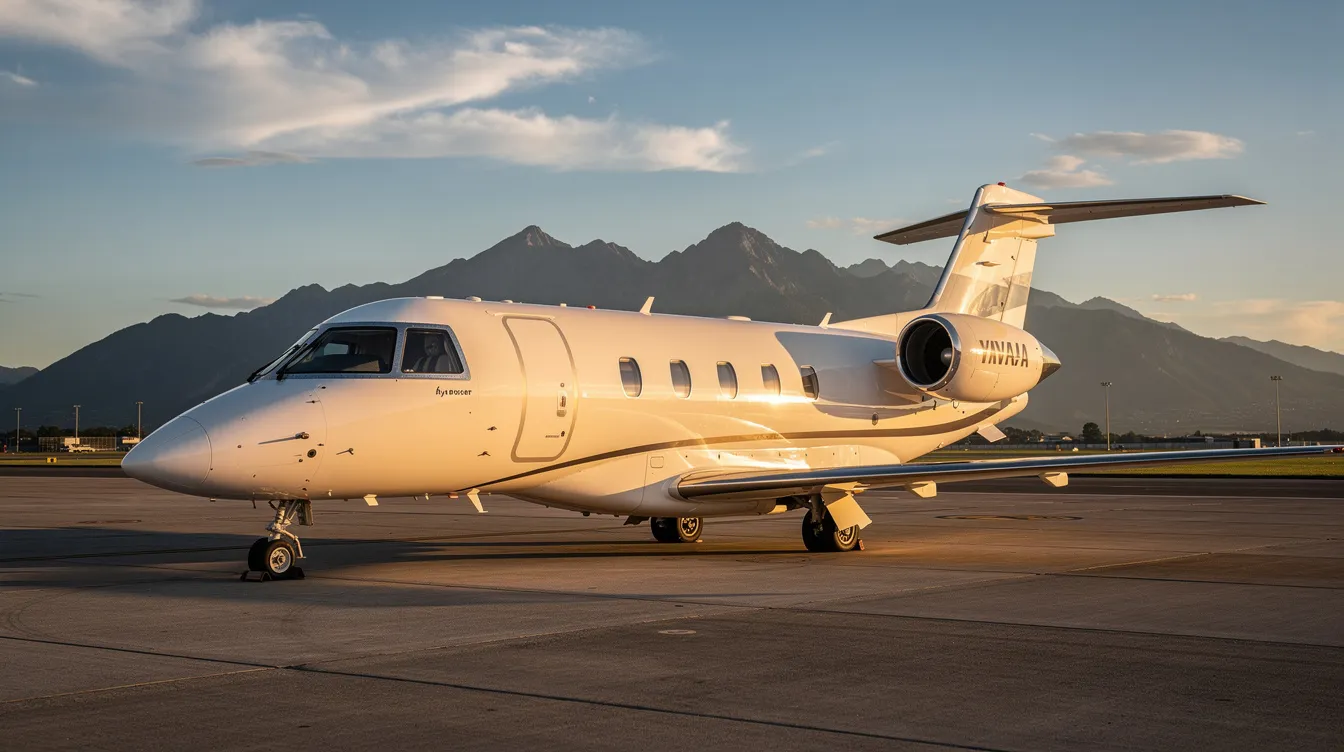
The aircraft is built with a carbon-fiber monocoque structure, which keeps weight low while maintaining structural strength and corrosion resistance. That composite construction also results in smoother aerodynamic lines suited for personal aviation.
Inside, the cabin layout starts with a front cockpit offering side-by-side seating for two, followed by a flexible cabin that can seat up to seven occupants in some configurations. The useful load for the Vision Jet is approximately 2,446 lbs, and the maximum takeoff weight comes in at 6,000 lbs. Baggage access through the rear cargo door makes loading straightforward, though luggage capacity tightens when flying with full fuel and maximum passengers.
The cabin width of about 5.1 feet, combined with those large windows and lower operating altitudes compared to heavy jets, creates a scenic, connected flying experience. That appeals to owners and charter customers alike.
The Vision Jet is powered by a Williams FJ33-5A turbofan engine producing roughly 1,846 lbs of thrust. The innovative single-engine design was chosen for efficiency, simplicity, and lower maintenance costs compared to twin-engine alternatives.
Key performance figures for a G2/G2+ model:
Maximum cruise speed: approximately 311 knots (around 358 mph)
Maximum operating altitude: 31,000 feet (FL310 in later variants)
Maximum range: approximately 1,200 nautical miles under standard conditions
Takeoff distance: approximately 1,910 feet (ground roll)
The aircraft operates using Jet-A fuel, with cruise fuel burn around 56 gallons per hour
These numbers enable nonstop flights on popular city pairs—New York to Miami, Chicago to Dallas, or Los Angeles to Denver—with comfortable reserves. The design features allow for easier operation in lower and less demanding airports, opening access to runways that larger jets cannot use. The aircraft is also capable of flying in known icing conditions with proper equipment.
For travelers exploring fast VLJ options, the Vision Jet's combination of improved speed and fuel efficiency on shorter hops makes it a strong contender in its class.
The Vision Jet's cabin is built around comfort for a small group rather than sheer size. Think of it as closer to a premium SUV interior than a corporate boardroom—functional, well-designed, and focused on the essentials.
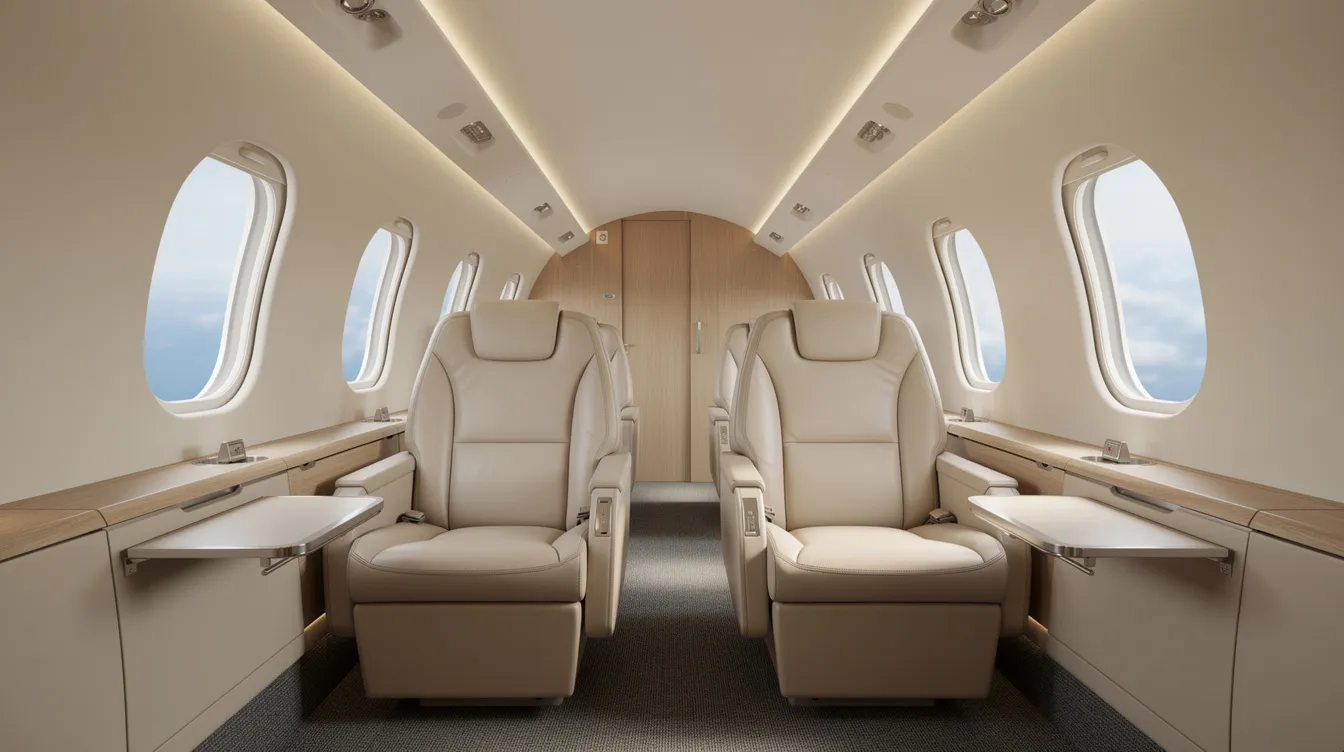
The G3 Vision Jet cabin seats six adults and one child, with a redesigned interior that improved legroom and ergonomics over earlier models. The Vision Jet offers customizable seating arrangements for passengers, including club seating options and configurable seat tracks.
Notable comfort features across recent generations:
The cabin features large panoramic windows for excellent visibility
The cabin is pressurized and climate-controlled for comfort at altitude
The G2 model includes an upgraded soundproofing system, reducing engine noise
Inflight Wi-Fi (Gogo) became available starting with the G2+
USB power at each seat and adjustable lighting round out the amenities
For charter passengers booking through Jettly, a Vision Jet–class aircraft typically offers comfortable seating for four to six, focused on short regional legs with easy boarding and direct access via smaller airports.
The Vision Jet features Garmin Perspective Touch+ avionics—a highly integrated glass cockpit designed to lower pilot workload. For pilots transitioning from advanced piston aircraft, the flight deck feels intuitive while delivering capabilities closer to larger business jets.
Core avionics features include:
Large touchscreen displays with synthetic vision
Integrated flight management system and digital autopilot
The Vision Jet has an electronic stability protection system that helps keep the aircraft within safe operating parameters
Auto throttle and auto radar capabilities for reduced workload
The avionics support single-pilot operations with ease
The G3 Vision Jet pushed the flight deck further. It includes automatic database updates via the Cirrus IQ Pro app, ATC Datalink (CPDLC) for text-based communication with air traffic control, and alerts-linked electronic checklists for pilots. These upgrades bring data connectivity and automation features that were previously limited to larger, more expensive jet aircraft.
When customers charter modern light jets through Jettly, they benefit from similar next-generation avionics behind the scenes—supporting reliable on-time operations, better weather routing, and overall safety.
Cirrus Aircraft has built its reputation on safety innovation, and the Vision Jet takes that further than any aircraft in its class.
The Vision Jet features a whole-aircraft ballistic parachute system—the Cirrus Airframe Parachute System, or CAPS. In a life-threatening emergency, a rocket-deployed parachute lowers the entire plane to the ground. CAPS has been deployed successfully in the Vision Jet fleet; a 2022 incident near Kissimmee, Florida resulted in two occupants uninjured and a third with non-life-threatening injuries.

The Safe Return autoland system, also known as Garmin Safe Return, is included for emergencies where the pilot becomes incapacitated. The Vision Jet is the first jet with a certified autoland system. A passenger can press a single button, and the aircraft can automatically land at the nearest safe airport, managing navigation, ATC communication, flaps, gear, and speed autonomously.
These systems matter most for:
Family flights where only one pilot is on board
Business travel where non-pilot occupants need a last-resort option
Single-pilot operations where redundancy is critical
Jettly's charter platform prioritizes safety by working with certified operators and aircraft that meet commercial regulatory standards.
The Vision Jet's journey spans nearly two decades. The proof-of-concept prototype completed its first flight in July 2008, when the base price was $1 million. By 2011, the equipped price had risen to $1.25 million. Development faced challenges during the 2009 recession before FAA certification arrived in October 2016. Each subsequent generation added meaningful upgrades.
G2 (circa 2019): Higher cruise speed (up to about 311 knots), RVSM approval for FL310 operations, and refined avionics and interior options.
G2+ (announced 2021): Enhanced takeoff performance in hot-and-high conditions, in-flight Wi-Fi, and the addition of Garmin Safe Return autoland on many units. The company also noted improved range under certain loading conditions.
G3 Vision Jet (introduced 2026): A reimagined cabin seating six adults comfortably, upgraded Cirrus Spectra wingtips and exterior lighting (approximately 2.7× brighter landing lights), ATC Datalink, and automatic database updates. Over 30 refinements in total.
|
Feature |
G2 |
G2+ |
G3 |
|---|---|---|---|
|
Max Cruise Speed |
~311 KTAS |
~311 KTAS |
~317 KTAS |
|
Service Ceiling |
FL310 |
FL310 |
FL310 |
|
Cabin Seating (adults) |
4–5 comfortably |
5–6 |
6 adults + 1 child |
|
Wi-Fi |
No |
Yes (Gogo) |
Yes |
|
Safe Return Autoland |
No |
Yes |
Yes |
|
ATC Datalink (CPDLC) |
No |
No |
Yes |
The Vision Jet is notable for its owner-focused training program. Pilots transitioning to the Vision Jet require a structured type rating program, and Cirrus provides training centers and simulators to build proficiency.
Owning a Vision Jet involves high but predictable costs. Annual operating cost for the Vision Jet runs approximately $145,753 for owners flying around 100–150 flight hours per year. The Vision Jet G2 has an hourly operating cost of $1,458.
Cost categories break down into:
Fixed costs: Hangar, insurance, pilot training, avionics subscriptions—typically $90,000–$140,000 per year
Variable costs: Fuel, maintaining the engine and airframe, landing and handling fees
The 2024 Cirrus Vision Jet G2+ is priced at $3,360,000, with pre-owned G1 and G2 models trading in the $1.8–$3.2 million range.
For travelers who fly fewer than 150 hours per year, chartering delivers better economics. Charter clients avoid acquisition costs, ongoing maintenance, and pilot training. Typical hourly rates for very light jets in North America range from $2,400 to $3,200 per hour. A New York–Miami trip might cost $11,900–$17,800 one-way, while Los Angeles–Aspen could run $9,000–$14,000.
Jettly's charter cost estimator can provide specific quotes for any route.
The typical Vision Jet mission profile involves regional trips of 300–800 nautical miles with two to four passengers and luggage, under schedules where avoiding airline connections saves half a day or more.
Common owner-pilot profiles include entrepreneurs commuting between regional offices, physicians reaching multiple clinics, and families flying to vacation properties. These same missions translate directly to charter:
Business teams flying from secondary cities without nonstop airline service
Families heading to island or mountain destinations
Urgent last-minute trips where commercial schedules don't fit
A Vision Jet–class aircraft works best over turboprops when faster cruise, higher altitude, and a smoother ride above weather matter. For longer routes, larger groups, or more luggage, a midsize or heavy jet is the better call.
Example scenario: A same-day New York–Boston–Washington, D.C. tri-city business itinerary. A very light jet handles all three legs efficiently, with ground time at smaller airports measured in minutes rather than hours. Jettly's platform can match the route with the right aircraft class.
Jettly is a digital private jet charter marketplace connecting travelers to a global network of over 20,000 aircraft. The platform delivers instant pricing, routing options, and on-demand booking without long-term contracts or fractional ownership.
While not every operator in the marketplace offers the Cirrus Vision Jet itself, customers can choose from a range of very light jets, light jets, and turboprops that carry similar passenger counts on comparable routes. Jettly's on-demand model gives travelers flexibility to choose aircraft size, cabin style, and price point per trip—rather than committing capital to a single airframe.
The booking process is straightforward: search routes online, receive instant or rapid quotes, compare aircraft options, confirm the charter, and add extras like catering or ground transportation.
Ready to experience private travel on your terms? Explore flight options or request a quote at jettly.com.
Below are common questions about the Cirrus Vision Jet and related charter options not fully covered above.
Most Vision Jets are privately owned and often flown by their owners. A smaller number operate commercially under Part 135 charter certificates in certain regions. When a Vision Jet isn't available on a given route, Jettly typically recommends functionally similar aircraft—such as other very light jets or modern turboprops—with comparable range and passenger capacity.
The Vision Jet's cruise speed of roughly 311 knots and range around 1,200 nautical miles is slightly lower than some twin-engine light jets, which may cruise closer to 430–450 knots with longer ranges. For regional trips of 500–800 nautical miles, the real-world time difference is modest—especially when factoring in shorter boarding times and access to smaller airports.
Yes. Pilots transitioning to the Vision Jet require a type rating and specialized training through Cirrus-provided programs. Travelers using Jettly's platform do not need any pilot qualifications—all flights are crewed by professional, appropriately rated pilots employed by licensed operators.
The Vision Jet was certified under rigorous FAA standards. Its airframe parachute system, Safe Return autoland, electronic stability protection, and redundant avionics support a high safety margin. Safety ultimately depends on pilot training, maintaining the aircraft properly, and regulatory oversight. Jettly's charter partners operate under commercial safety regulations with regular inspections and recurrent training.
Vision Jet–class or very light jet aircraft are ideal for two to five passengers on regional routes up to about 1,200 nautical miles with light-to-moderate luggage. Choose a midsize or large-cabin jet when you need longer nonstop legs, space for 8–14 passengers, stand-up cabins, or extensive baggage capacity. Jettly's platform can display and compare both categories side by side.
The Cirrus Vision Jet represents a milestone in personal aviation, combining efficient single-engine technology with innovative safety features like the CAPS parachute system and Garmin Safe Return autoland. Its design and performance make it an accessible and practical choice for owner-pilots and regional travelers seeking a versatile, comfortable jet. For those who prefer not to own, platforms like Jettly offer convenient charter access to Vision Jet–class aircraft and similar very light jets, providing flexibility, transparency, and time-saving benefits without the costs and responsibilities of ownership. Whether flying for business or leisure, the Vision Jet and comparable charters deliver a new level of convenience and confidence in private air travel.
Ready to experience private travel on your terms? Explore flight options or request a quote at https://www.jettly.com.
Share this post:
Jay Franco Serevilla
Oct 27, 2026
|
5
min read
Discover tips and trends in the industry.

5
min read
Flying Delta Airlines: How It Compares to Flying Private with Jettly
Flying Delta Airlines in 2026 offers a structured experience with various fare classes and loyalty perks, making it a solid choice for many travelers. However, for those prioritizing flexibility, privacy, and time savings, private jet charter with Jettly presents a compelling alternative. This guide compares both options, helping travelers decide which fits their needs best.
Read More
5
min read
Boeing 777-200: Cabin Layout, Seat Maps, and How It Compares to Private Charter
The Boeing 777-200 is a long-haul, wide-body aircraft known for its efficiency and passenger capacity, serving major airlines worldwide. This guide compares the commercial flying experience on the 777-200 with private charter options, highlighting cabin layouts, seat maps, and the benefits of choosing private travel for flexibility and comfort.
Read MoreStay updated with our latest insights and tips to elevate your journey with us.
MEMBERSHIPS AND ASSOCIATIONS



Disclaimer: Jettly operates as a charter broker, offering access to a global digital jet charter marketplace. Jettly is not a direct air carrier and does not own or operate aircraft. All advertised flights are conducted by third-party air carriers that are fully licensed and hold the appropriate Part 135 or Part 121 certifications issued by the Federal Aviation Administration (FAA) or equivalent regulatory authorities under U.S. or foreign law. Jettly complies fully with the U.S. Department of Transportation's Part 295 and Part 298 Charter Broker regulations. Jettly does not carry additional liability insurance. Passengers are covered by aircraft operator insurance. TICO: 50023770


