


Login
Get Instant Pricing On 23,000+ Aircraft

>
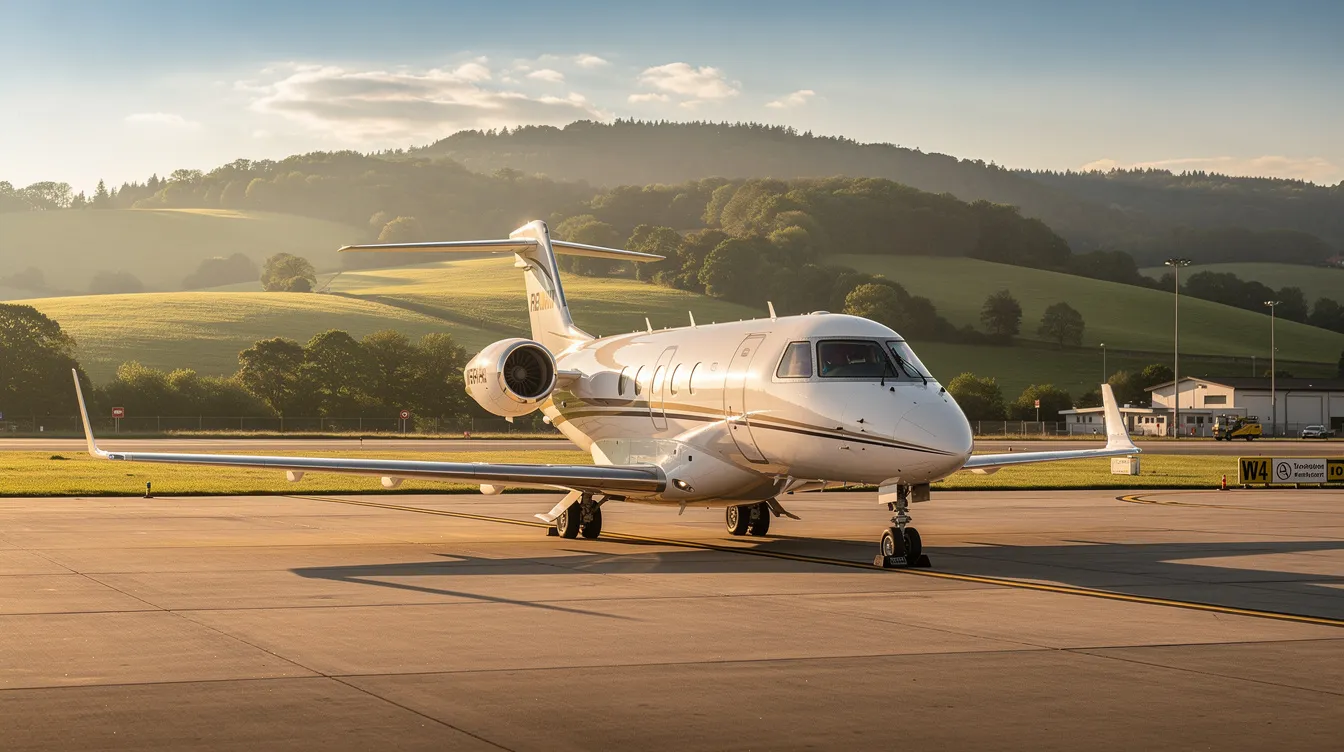
The Cirrus Vision Jet has a maximum range of about 1,275 nautical miles, while real-world nonstop charter trips are more often in the 600 to 900 nautical mile range depending on passenger load, weather, and routing. For charter travelers comparing aircraft for regional private flights—whether corporate executives, high-net-worth individuals, or families—the key question is whether the Vision Jet can handle a specific mission without a fuel stop and without pushing them into a larger jet category.
This article breaks down the Cirrus Vision Jet’s range across different models, practical charter use cases, performance numbers, safety features, operating costs, environmental considerations, and how it compares with other private jets. It also shows how Jettly uses range data to match travelers with the right aircraft, because understanding Cirrus Vision range is what helps you judge nonstop reach, trip efficiency, total cost, and whether this jet is the right fit for your private charter aircraft needs.
This article covers the Cirrus Vision Jet range across every generation of the Cirrus Vision SF50, from the original G1 through the G2+ and G3 Vision Jet. The focus is on what these range numbers actually mean for travelers booking through charter platforms like Jettly, not just what the brochure says.
The Vision Jet has a maximum range of 1,275 nautical miles. Typical range sits around 1,200 nautical miles under light-load conditions. In real charter operations, "mission-ready" range with passengers and reserves falls closer to 800–1,000 nautical miles.
As a very light jet, the Cirrus Vision Jet is most efficient on 300–800 nautical mile regional trips. Fuel consumption and operating costs run significantly lower than most twin-engine light jets on these sectors.
Safety features like the Cirrus Airframe Parachute System (CAPS), Garmin Safe Return autoland, and modern avionics including auto radar, ATC datalink, and automatic database updates give charter passengers added confidence on longer legs.
Jettly can instantly compare the Vision Jet to other light jets, turboprops, and midsize options, helping travelers find the right private charter aircraft and range profile for every trip.
When people search for Cirrus Vision range, they are asking two related questions. First, what is the technical maximum range of the aircraft? Second, how far can it realistically carry passengers on a charter flight? Both answers matter.
Definition of Range:
Range is defined as the maximum distance the aircraft can fly under specific conditions, typically assuming optimal cruise speed, minimal payload, and standard fuel reserves. The actual flight distance can vary based on the number of passengers and cargo carried. This means that while the brochure may state a maximum range, the real-world range will often be less when the aircraft is loaded with passengers and baggage.
The Cirrus Vision Jet is a single-engine jet built by Cirrus Aircraft, powered by a Williams International FJ33 turbofan mounted on the rear fuselage. It is a low-wing, composite-construction personal jet designed to bridge the gap between high-end piston aircraft and traditional light jets for regional personal aviation.
The aircraft's first flight took place on July 3, 2008, capping a ten-year development process that included extensive flight testing. The Federal Aviation Administration granted the Vision SF50 its type certificate on October 28, 2016. Cirrus delivered the first customer Vision SF50 on December 19, 2016. The design earned the Collier Trophy for the greatest achievement in aeronautics.
Since then, Cirrus Aircraft has released several variants: the original G1, the G2 (announced January 8, 2019), the G2+ (2021), and the upcoming G3 Vision Jet targeting deliveries around 2026. Each generation refined range, avionics, and cabin comfort.
In the charter market, Jettly treats the Vision Jet as an efficient option for sub-1,000-mile missions where time savings, cost transparency, and access to smaller aircraft-friendly airports via its airport locator tool matter more than raw speed.
The headline maximum range for the Cirrus Vision Jet is about 1,200 nautical miles for earlier models and up to roughly 1,275 nautical miles for the G2 and G2+ under ideal conditions. The G3 is expected to maintain a similar ceiling while improving payload-range flexibility for heavier passenger loads.
Here is how each generation's range profile breaks down:
|
Model |
Maximum Range (nautical miles) |
Service Ceiling (feet) |
Notable Features |
|---|---|---|---|
|
G1 Vision Jet |
1,100–1,200 |
FL280 |
Original model, basic avionics |
|
G2 Vision Jet |
1,200–1,275 |
FL310 |
Improved aerodynamics, engine management |
|
G2+ Vision Jet |
~1,275 |
FL310 |
Enhanced takeoff performance, in-flight Wi-Fi |
|
G3 Vision Jet |
~1,275 (expected) |
FL310 |
Redesigned cabin, Cirrus Spectra wingtips, improved efficiency |
These maximum range numbers assume International Standard Atmosphere conditions, long range cruise speed, minimal payload, and only the legally required fuel reserves. Charter operators rarely plan flights at those extremes.
In the sections that follow, this article breaks down realistic nonstop distances for common routes and explains when Jettly may suggest a different light jet or VLJ to meet payload-range needs.
Published Cirrus Vision SF50 range figures are engineering estimates built from three core inputs: cruise speed, fuel capacity, and regulatory fuel reserves. Understanding these inputs helps travelers grasp why real-world range rarely matches the brochure.
The Williams International FJ33-4A-19 turbofan (upgraded to the FJ33-5A in later variants) produces about 1,800–1,846 pounds of thrust from a single engine. It is optimized for efficient cruise at flight levels between FL280 and FL310, which directly shapes fuel flow and range.
Key variables that influence maximum range include:
Cruise profile: Flying at long range cruise speed (roughly 85–90% of max continuous thrust) stretches fuel further than pushing max cruise. The trade-off is roughly 10–15 extra knots versus 50–100 nm of additional range.
Altitude and temperature: Flying at FL310 reduces drag and improves fuel efficiency. Hot-and-high conditions force the engine to work harder, increasing fuel consumption and reducing climb performance. Flying lower at FL280 on early models or in congested airspace increases burn per mile.
Headwinds or tailwinds: Seasonal wind patterns at typical cruise altitudes can shift effective range by 100 nm or more. Westbound winter legs are particularly affected.
IFR reserves and alternate fuel: Charter operations under instrument flight rules require fuel to reach an alternate airport, plus contingency and holding fuel. This can cut usable range by 10–20% from published numbers.
Fuel consumption at FL280 is approximately 60 US gallons per hour. The Vision SF50 carries about 296 US gallons of usable fuel (roughly 2,000 lbs). Against a maximum takeoff weight of about 6,000 lbs, every additional pound of passengers or baggage reduces the fuel that can be carried, shrinking max payload and range proportionally.
Charter planners on Jettly use conservative flight planning assumptions. They prioritize safe reserves and passenger comfort over squeezing every last mile from the brochure, while still focusing on affordable private jet charter options where possible.
Most private travelers rarely use the absolute maximum range on any aircraft. For the cirrus vision jet, typical nonstop legs fall between 300 and 800 nautical miles, which is the band where this single-engine jet is most efficient in both time and cost, especially when compared with other cross-country plane options for similar trips.
The actual flight distance can vary based on the number of passengers and cargo carried. With 4 passengers onboard, the practical flight range is about 600 to 900 nautical miles.
Concrete example routes within those ranges include:
New York–Charlotte (~450 nm)
Toronto–Chicago (~380 nm)
Los Angeles–San Francisco (~300 nm)
Miami–Nassau (~180 nm)
Miami–Turks and Caicos (~450 nm)
Dallas–Santa Fe (~450 nm)
Seattle–Boise (~340 nm)
These routes cover core business, leisure, and regional corporate or family travel with a small group.
For loads of 3–5 adults with light luggage, ranges up to about 800–900 nm are practical nonstop. Flights like New York–Miami (~1,230 nm) or Denver–Houston sit near the upper boundary. With moderate load and favorable winds, some of these are achievable, but operators often recommend building in a brief fuel stop.

Scenarios where Jettly's operators may recommend a fuel stop or a larger aircraft include: full passenger capacity with heavy baggage like golf clubs, skis, or mountain bikes; strong winter headwinds on northbound or westbound legs; and high-elevation departure airports like Aspen or Telluride. A mission that stretches beyond five flight hours in flight time may also prompt a step up.
Jettly's instant pricing engine incorporates these mission-profile realities. The suggested aircraft and route reflect safe, realistic nonstop or one-stop plans rather than theoretical maximums.
Range is tied directly to weight, and weight is driven by how many people and how much baggage are on each flight. The Vision Jet's cabin dimensions and passenger capacity shape what is realistically achievable on any given leg.
The Cirrus Vision Jet cabin measures, and its layout compares well to many other personal plane options in this category:
Cabin height of about 4.1 ft (1.24 m).
Cabin width of about 5.1 ft (1.56 m).
Cabin length of roughly 10.1 ft of usable seating space.
The composite fuselage design maximizes usable interior volume within a compact footprint. While not the most spacious cabin in the very light jet category (some similar aircraft offer a less spacious cabin, others slightly more room), it is well-suited for short-to-medium missions.
Passenger capacity works as follows:
Standard seating accommodates up to 5 adults and 2 children in the G2/G2+ configuration, for a total of 7 occupants including the pilot. The cabin includes four USB ports and air conditioning as standard equipment. The aircraft lacks a fully enclosed lavatory, which is a common trade-off in smaller aircraft of this class.
The G3 Vision Jet's redesigned cabin supports up to six adults plus one child. Modular middle and third-row seating built with premium materials gives charter customers more flexibility.
When all seats are filled and luggage is heavy, the impact on range is real. A full cabin with 6 adults, one child, and standard bags could push a 1,000 nm itinerary into a one-stop mission because available fuel drops to stay under takeoff weight limits. Conversely, 2–3 passengers with light bags can comfortably fly 900+ nm nonstop.
Jettly's booking flow collects passenger count and luggage details upfront. The platform uses that data to filter which Vision Jet missions are viable nonstop and when a different light jet with more payload margin or one of Jettly's private jet memberships is the better fit.
Range is closely tied to speed and cruise altitude. The Cirrus Vision Jet balances a modest maximum cruise speed with good fuel efficiency, making it a strong performer for regional flights rather than long transcontinental legs.
Key performance metrics:
Maximum cruise speed of approximately 300 knots true airspeed (roughly 345 mph). The G2+ achieves a max cruise speed around 311 KTAS at FL310, while the G3 pushes to about 317 KTAS.
Typical cruise altitude up to 31,000 ft (service ceiling FL310 on G2+ and G3 models). The aircraft operates at a maximum altitude of 31,000 feet, above most weather and commercial traffic.
Takeoff distance of approximately 3,500 feet and landing distance around 2,600 feet, enabling use of regional airports with shorter runways. The Vision Jet is also certified for Flight Into Known Ice (FIKI), which broadens its operational envelope in winter.

Pilots may trade speed for range by selecting long-range cruise speed profiles. This shaves roughly 10–15 knots off max cruise but stretches fuel. Conversely, when schedule matters more, max cruise burns fuel faster and trims effective range by 50–100 nm.
Shorter runways and higher field elevations require performance margins that can impact takeoff performance and the allowable fuel load. Higher approach speeds at heavy weights on short runways may force weight compromises. Jettly's platform checks runway lengths, field elevations, and conditions to confirm that the proposed Vision Jet flight is performance-feasible at both departure and arrival airports.
The Vision Jet's safety and avionics suite does more than protect passengers. It enables more confident use of the aircraft's full range envelope, which matters on longer charter legs where diversion options and weather routing become critical.
The Cirrus airframe parachute system (CAPS) is a defining feature:
It is a whole-aircraft ballistic parachute system integrated into the airframe as standard equipment.
CAPS is designed to control descent during emergencies, including structural failure or loss of control, by deploying a ballistic parachute that lowers the entire aircraft under canopy.
Real-world deployments, though rare, have resulted in occupants surviving events that might otherwise be fatal. This is a key differentiator in aviation safety compared to other small planes.
The Vision Jet also includes an autonomous landing system called Safe Return, developed by Garmin. Safe Return can land the aircraft if the pilot is incapacitated. A passenger presses a single button; the system selects the nearest suitable airport, coordinates with air traffic control, avoids terrain and weather, lands, brakes, and shuts down—all autonomously. The FAA certified this system in August 2020, making the Vision Jet the first jet aircraft with Garmin Autoland.
Additional avionics relevant to range and safety include:
Auto radar and real-time weather awareness that help pilots avoid convective weather along 1,000-mile routes.
ATC datalink for digital clearances and reroutes over busy airspace, reducing fuel-wasting diversions.
Automatic database updates that keep navigation data current, critical for unfamiliar diversion airports. The Cirrus Perspective Touch Flight Deck also features a Garmin touch controller, stall warnings, and angle-of-attack indicators.
Cirrus issued a service bulletin on April 16, 2019, for angle of attack (AOA) vane replacement after stall warning incidents, underscoring ongoing aviation safety vigilance. Operators on Jettly pair these onboard systems with recurrent training for professional crews and robust maintenance programs, along with well-practiced emergency procedures, enabling confident use of the Vision Jet at the longer end of its range.
The G3 Vision Jet's brochure maximum range is expected to stay close to earlier variants at roughly 1,275 nm. The real story is how design refinements will improve usability of that range under realistic charter conditions.
Key G3 updates include:
A redesigned cabin supporting six adults plus one child, with more flexible seating, improved ergonomics, and premium materials throughout.
Cirrus Spectra wingtips engineered to reduce drag and improve climb and cruise efficiency, particularly under hot-and-high conditions.
Enhanced avionics integration including automatic database updates, refined atc datalink, and improved flight deck ergonomics.
These aerodynamic gains may not dramatically change the headline maximum range. But they improve fuel efficiency at typical stage lengths of 300–900 nm, which is where most charter missions fall. The additional ~30 lbs of useful load in the G3 gives dispatchers more flexibility in matching passenger loads to mission length without sacrificing comfort or reserves. Cirrus owners upgrading to G3 gain practical range improvements even if the top number stays flat.
By April 4, 2023, 439 Vision Jets were registered in the United States, and the fleet continues to grow. For travelers booking on-demand charter through Jettly, a larger fleet means more availability, more competitive pricing, and more route options.
The Cirrus Vision sits at the entry point of turbine charter performance. It offers slightly less range and speed than many twin-engine light jets, but at lower costs and with unique safety features that other very light jets do not match.
How the Vision Jet's maximum range stacks up:
|
Aircraft |
Maximum Range (nm) |
Typical Cruise Speed (knots) |
Notable Features |
|---|---|---|---|
|
Cirrus Vision Jet |
1,200–1,275 |
~300 |
Single engine, CAPS, Safe Return autoland |
|
HondaJet HA-420 |
~1,437 |
~420 |
Twin-engine, longer range, higher speed |
|
Citation M2 |
~1,300 |
~404 |
Twin-engine, faster cruise, higher operating cost |
|
Phenom 100E |
~1,178 |
~415 |
Twin-engine, larger cabin, higher operating cost |
The single engine design of the Vision Jet enables a lower price point for charter travelers. For missions under 1,000 nm with 2–5 passengers, the cost savings are meaningful without giving up much practical capability. It sits comfortably as an entry-level private jet option and works well alongside Jettly's private jet memberships for travelers who fly regularly.
Trade-offs to consider:
Choose the Vision Jet for short-to-medium hops (300–800 nm), small groups (2–5 passengers), and when value matters. Its less spacious cabin compared to larger light jets is offset by significantly lower per-hour costs.
Choose a different light jet when the route requires nonstop service beyond 1,000 nm, when the group exceeds 5 adults, or when a fully enclosed lavatory or larger baggage hold is needed.
Jettly's aircraft comparison tools work like an aircraft range map. They quickly surface the best fit based on maximum range, fuel consumption, passenger capacity, and mission profile, and can be paired with Jettly's jet card flight cost estimator for budget planning. Explore Jettly's VLJ and light jet options to see how different aircraft compare for your specific route.
For many trips, the Vision Jet's value lies not just in its range, but in how that range combines with lower hourly operating costs and airport flexibility. It is often the most economical jet option for shorter sectors.
Cost context matters:
The base price of the Vision Jet is $1.96 million. The equipped price for the G2+ variant is approximately $3.25 million. Pre-owned Vision SF50 aircraft typically sell for around $1.9 million. These purchase price points are significantly lower than most competing light jets and can be compared to structured solutions like jet card programs for frequent flyers.
Operating costs run approximately $676 per hour, which is significantly lower than competitors in the light jet category. Lower fuel burn from a single engine translates to reduced per-mile cost over 300–800 nm sectors. You can estimate costs for specific routes using Jettly's private jet cost calculator and review how fueling a private jet impacts total cost.
Ideal use cases where the Vision Jet makes the most sense, especially when paired with tailored services like in-flight catering for private jets:
Frequent regional business trips between secondary cities where airline schedules are inefficient and flying commercial means connections, layovers, and wasted hours.
Family travel where 3–5 passengers want direct access to smaller airports close to resorts or vacation homes, avoiding crowded commercial terminals, and may even benefit from sharing empty seats on private jet flights to reduce costs.
Time-sensitive medical or legal teams needing same-day out-and-back missions within a 500–700 nm radius, where alternatives like the Cessna 340 for regional missions might also be considered depending on runway and payload needs.
On very short legs under 150 nm, a turboprop might be more economical. On 1,200+ nm nonstop missions, a larger light or midsize jet is often preferable. Jettly's transparent pricing makes it straightforward to see when the Cirrus Vision Jet is the most cost-effective choice for a given range, and when stepping up to another category saves time overall, especially once you understand private jet operating costs in detail.
Jettly's platform aggregates performance data for every aircraft type in its network, including the Vision Jet. It overlays passenger count, baggage weight, runway constraints, and weather inputs to generate realistic routing and pricing—not theoretical maximums.
Here is how a typical request involving a Cirrus Vision Jet is processed:
The traveler inputs origin, destination, dates, and passenger count.
The system checks stage length against Vision Jet maximum range and ideal mission range for the given load, which can then be compared against results from Jettly's jet card flight cost estimator if you are considering a membership model.
The platform assesses runway lengths and airport elevations to confirm that takeoff performance and landing are feasible at both ends.
Fuel reserve calculations and seasonal wind data determine whether the leg is planned nonstop or with a technical stop.
Based on this flight planning process, Jettly presents options:
Vision Jet where the range and payload fit comfortably, delivering the right aircraft at the lowest cost for that mission.
Alternative light jet or turboprop options when payload-range or comfort requirements exceed what the Vision Jet can offer, or when a nonstop flight on a different aircraft type saves more time than the cost difference.
Customers can also speak with Jettly's aviation advisors to interpret range trade-offs. Sometimes accepting a 20-minute fuel stop on a Vision Jet saves thousands compared to upgrading to a larger jet. Other times, the math favors going bigger once you factor in the broader picture of private jet costs.
Explore live charter options and see actual range-based quotes at https://www.jettly.com, or consider partnering through Jettly's high ticket affiliate program if you regularly refer private travelers.
Range and efficiency also matter from an environmental perspective. The Cirrus Vision Jet's single-engine design delivers inherently lower fuel burn and emissions per mile compared to twin-engine light jets on appropriately sized missions.
Key efficiency factors include:
A composite airframe and optimized aerodynamics contribute to lower empty weight, reducing fuel needed per mile.
A single turbine engine burning less fuel than two engines on comparable missions. The Vision Jet's fuel flow at cruise is roughly half what many twin-engine light jets consume.
Short-field takeoff performance enabling direct access to closer airports, reducing ground travel time and total trip emissions.
Operating the right-sized aircraft for a given range avoids flying half-empty larger jets on short sectors. This is a core principle behind Jettly's matching algorithm. When a 400 nm trip with 3 passengers goes on a Vision Jet instead of a midsize twin, fuel burn drops substantially.
Many charter operators in Jettly's network offer carbon offset programs or flight-efficiency best practices. These can be combined with the Vision Jet's naturally lower fuel burn on 300–800 nm trips. Sustainability-minded travelers can discuss carbon offsetting and aircraft choice with Jettly advisors when planning longer-range itineraries, and can also look at global private jet fleet trends to understand the broader environmental context.
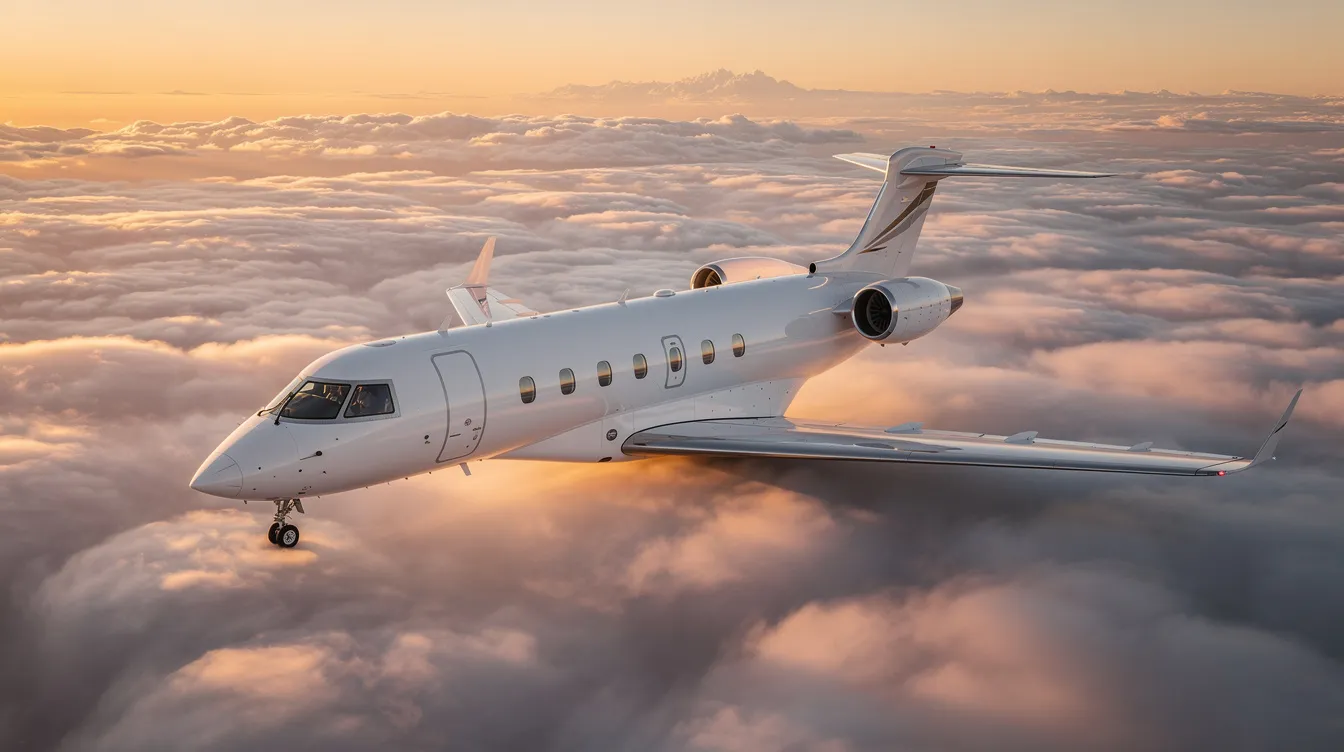
The published maximum range is about 1,275 nautical miles, but most charter operators plan Vision Jet missions in the 600–900 nautical mile band when flying 3–5 adults with standard luggage, which is also where the aircraft shines among the cheapest single-pilot jets from a value perspective.
This conservative approach allows for proper IFR fuel reserves and gives pilots flexibility to reroute around weather without stretching fuel margins. For trips near the upper end of that range, wind forecasts on the day of travel play a significant role in whether a nonstop mission is feasible.
Jettly handles this in two ways. The platform can plan a brief technical stop for fuel mid-route, adding roughly 20–30 minutes to total travel time. Alternatively, it may recommend a different light jet or midsize jet that can complete the route nonstop.
The decision usually depends on passenger preference, schedule sensitivity, and budget. For routes like New York to Los Angeles (~2,150 nm), the Vision Jet is not a nonstop option. Jettly would surface appropriate aircraft from its network of over 20,000 options, including jets with the longest range such as the Boeing 777-200 LR for ultra-long-haul missions.
Yes. Headwinds at cruise altitude can meaningfully reduce effective range, especially on westbound or northbound legs in winter. A 40-knot headwind at FL310 can reduce ground speed enough to cut effective range by 100–150 nm.
Jettly's dispatch planning accounts for seasonal winds. When forecast winds are strong, the platform may recommend a fuel stop or a different aircraft type to keep safety margins intact.
The G2 and G2+ vision sf50 versions gained modest range improvements and takeoff performance refinements compared with earlier aircraft, especially under hot-and-high conditions. Flight training programs for these newer variants reflect the updated performance envelopes.
The G3 Vision Jet focuses more on cabin comfort, drag reduction via cirrus spectra wingtips, and payload flexibility than on dramatic range increases. Travelers may notice better comfort and more consistent payload-range performance, but the headline number stays near 1,275 nm. Note that Cirrus has never had the aircraft faa grounded for range-related issues; the platform remains one of the most reliable in its class.
Pricing on Jettly generally reflects flight hours rather than range alone. Longer legs mean more flying time and higher total cost, but nonstop flights can save on ground transfers, crew positioning, and connection hassles.
Use Jettly's instant quote feature to compare cost differences between a nonstop light jet option and a Vision Jet route that includes a short fuel stop. In many cases, the Vision Jet's lower hourly rate still wins on total cost even with one stop, especially when paired with a jet card flight cost estimator to lock in predictable pricing.
The Cirrus Vision Jet offers a practical nonstop range of roughly 600–900 nautical miles for most charter missions, with a brochure maximum of about 1,275 nautical miles. For regional business travel, family trips, and time-sensitive missions across secondary city pairs, that range covers a wide swath of North America's most popular routes.
Its very light jet profile, advanced safety systems including the Cirrus Airframe Parachute System (CAPS) and Garmin Safe Return autoland, and modern avionics like auto radar, ATC datalink, and automatic database updates make it an efficient and confidence-inspiring choice for private travelers who value both cost and safety, particularly when used as a NetJets alternative through Jettly.
Jettly's digital platform uses this range data to instantly compare aircraft, align missions with the best jet category, and provide transparent pricing across more than 20,000 available aircraft worldwide. Whether the Vision Jet fits perfectly or a different aircraft makes more sense, Jettly's system surfaces the right option for every trip using tools like its airport locator and dynamic pricing engine.
Ready to see how the Cirrus Vision range fits your next itinerary? Explore Cirrus Vision Jet and other light jet charter options, or request a tailored quote at https://www.jettly.com.
Share this post:
Jay Franco Serevilla
Aug 2, 2026
|
5
min read
Discover tips and trends in the industry.
5
min read
Executive Aviation: How Modern Private Flights Work for Business and Leisure
Executive aviation revolutionizes travel by offering private flights tailored to individual schedules and preferences, bypassing the limitations of commercial airlines. With options like on-demand charters and memberships, travelers can enjoy significant time savings, enhanced comfort, and privacy, making it ideal for both business and leisure trips.
Read More
5
min read
Executive Air Transport, Inc.: Private Air Transport with a Modern Digital Alternative
Executive Air Transport, Inc. has been a staple in private aviation since 1959, offering on-demand charter and cargo services from Muskegon County Airport. As the industry evolves, digital platforms like Jettly provide travelers with instant access to a vast array of aircraft and transparent pricing, presenting a modern alternative to traditional operators. This article compares the offerings of Executive Air Transport with digital marketplaces to help travelers choose the best option for their needs.
Read MoreStay updated with our latest insights and tips to elevate your journey with us.
MEMBERSHIPS AND ASSOCIATIONS



Disclaimer: Jettly operates as a charter broker, offering access to a global digital jet charter marketplace. Jettly is not a direct air carrier and does not own or operate aircraft. All advertised flights are conducted by third-party air carriers that are fully licensed and hold the appropriate Part 135 or Part 121 certifications issued by the Federal Aviation Administration (FAA) or equivalent regulatory authorities under U.S. or foreign law. Jettly complies fully with the U.S. Department of Transportation's Part 295 and Part 298 Charter Broker regulations. Jettly does not carry additional liability insurance. Passengers are covered by aircraft operator insurance. TICO: 50023770


