



Login
Get Instant Pricing On 23,000+ Aircraft

>

Every private flight has a price tag shaped by forces most travelers never see. Understanding the direct operating cost of aircraft is the key to making smarter decisions about how, when, and whether to fly private. This guide breaks down what DOC includes, how it varies across aircraft categories, and why it matters for anyone comparing ownership to charter.
Direct operating costs are the per-flight-hour expenses tied directly to flying an aircraft—fuel, maintenance, crew costs, and airport fees distinct from fixed operating costs like hangars, crew salaries, and insurance. A light jet typically runs $1,500 to $2,500 per flight hour in direct costs, while large cabin jets can exceed $5,000 to $8,000 per flight hour.
Aircraft operating costs split into two buckets: direct costs (fuel and oil, airframe and engine maintenance, crew duty pay, navigation and airport fees) and fixed costs (crew salaries, liability insurance, hangar leases, management fees). Both must be considered together for accurate budgeting.
Fuel costs account for 25–35% of total operating costs, making fuel pricing changes capable of instantly altering the largest part of operating budgets. Fixed costs represent 40–60% of total annual ownership costs and are incurred regardless of flight activity.
Changes in fuel prices, annual utilization (flight hours per year), and maintenance reserves can move DOC by thousands of dollars per year for business jets. Annual operating costs for light jets alone range from $700,000 to $1.2 million.
Jettly operates as a charter marketplace that lets travelers pay only for per-trip direct operating costs instead of carrying fixed ownership costs, and also offers an ULTRA high-ticket affiliate program for partners who refer new clients. Explore options at Jettly.
Direct operating cost in aviation is the variable portion of aircraft operating costs that scales with each flight hour. It covers every expense directly related to putting an aircraft in the air and bringing it back safely, with fuel, maintenance, and engine reserves serving as the primary variables within DOC.
In most aircraft economic analyses, DOC includes fuel and oil, flight crew compensation while on duty, maintenance reserves for engines and airframes, landing fees, navigation charges, ground handling, and certain insurance elements directly tied to flying. DOC can be expressed as cost per flight hour or block hour, depending on the operator's accounting method.
Common units include dollars per flight hour, dollars per air mile, and cost per available seat-mile (DOCasm). To convert DOC per mile to DOC per flight hour, multiply by the aircraft's average cruise speed. For example, if DOC is $12 per air mile and cruise speed is 460 mph, the per-flight-hour DOC is roughly $5,520.
DOC is different from total operating cost because it excludes many fixed operating costs and indirect operating expenses, which are tracked separately in airline and business aviation accounting. Fixed costs like insurance may or may not be included in DOC calculations depending on the methodology used.
Core DOC elements at a glance:
Fuel and oil
Engine and airframe maintenance reserves
Flight crew duty pay
Landing and navigation fees
Ground handling and de-icing
Trip-specific regulatory charges
Direct costs are variable; they increase with every flight hour. Fixed operating costs are incurred regardless of utilization, whether the aircraft flies 500 hours or zero hours in a year.
Fixed operating costs include long-term crew salaries, hangar or parking leases, hull and liability insurance, management fees, and subscription services (weather, charts, software). Annual insurance premiums for light jets, for instance, range from $20,000 to $60,000. These expenses remain constant even during months with no flying.
In many business jet ownership models, fixed costs account for 40–60% of total annual aircraft ownership expenses, while the remainder are direct operating costs tied to flight activity.
Typical fixed costs:
Crew salaries (when not per-trip)
Hangar or tie-down lease
Hull and liability insurance
Aircraft management fees
Training (recurring annual)
Typical direct costs:
Fuel and oil
Maintenance reserves
Per-trip crew duty pay
Landing and handling fees
Navigation and overflight charges
Here is a simple example. A midsize jet with DOC of $3,000 per flight hour and annual fixed costs of $800,000 shows dramatically different economics at different utilization levels:
|
Annual Flight Hours |
Fixed Cost per Hour |
DOC per Hour |
Combined Cost per Hour |
|---|---|---|---|
|
200 |
$4,000 |
$3,000 |
$7,000 |
|
400 |
$2,000 |
$3,000 |
$5,000 |
Owners must model both fixed and variable costs. Charter customers, by contrast, primarily face DOC (plus the operator's margin) on a per-trip basis.
DOC for most turbine aircraft breaks down into several predictable categories used by operators and analysts. Here is how each component typically weighs in:
Percentage Breakdown of Main DOC Components:
Fuel and oil: 25–35% of DOC for many business jets at 2025–2026 price levels. The single largest variable expense.
Engine maintenance and engine reserves: roughly 15–25% of DOC. Engine reserves contribute about 22% to direct operating costs per hour on average.
Airframe maintenance and airframe reserves: approximately 15–25%, covering scheduled inspections, heavy checks, avionics, and cabin interior upkeep. Routine maintenance includes both scheduled and unscheduled repairs.
Crew costs: 10–20% of DOC depending on contract structure. Crew costs encompass pilot salaries and benefits when calculated as variable. Crew salaries typically account for 15–25% of total operating budgets across the industry.
Navigation, landing, overflight, and airport fees: 5–15%, varying with trip length and number of stops.
Trip-specific extras (de-icing, catering, repositioning, and premium in-flight catering services like Jettly Eats): a smaller percentage averaged over many trips, but can spike on individual legs.
Fuel and oil are the single largest and most volatile part of direct operating costs. Fuel pricing changes can instantly alter the largest part of operating budgets, driven by global oil markets, regional taxes, and FBO pricing strategies.
As of mid-2025 through early 2026, Jet A prices averaged $6.20–$6.60 per U.S. gallon nationally, with some major airports pushing above $8.00 per gallon. Fuel burn rate is crucial for calculating fuel costs in DOC. Here is how that translates across aircraft categories:
|
Aircraft Type |
Typical Fuel Burn (gal/hr) |
Fuel Cost at $6.50/gal |
|---|---|---|
|
Turboprop (King Air class) |
80–120 |
$520–$780/hr |
|
Light jet |
140–180 |
$910–$1,170/hr |
|
Heavy jet |
350–500 |
$2,275–$3,250/hr |
Operators model fuel cost per flight hour by multiplying typical fuel burn by a conservative fuel price estimate, then adjust quarterly or annually. Oil consumption is smaller but still included, particularly for older aircraft or high-cycle engines where oil usage per flight hour runs higher.

Practical strategies to manage fuel-related DOC include tankering fuel from lower-cost airports, optimizing cruise speed and altitude for the mission profile, and using route planning tools alongside an airport locator tool for planning alternate fields. These approaches can reduce fuel-related DOC by 5–15% on some missions.
Maintenance reserves convert unpredictable large expenses—overhauls, major inspections, component replacements—into a planned cost per flight hour. This is essential in DOC modelling because a single engine overhaul can cost hundreds of thousands of dollars.
Operators calculate engine reserves by estimating overhaul or hot-section event cost, dividing by expected hours to that event, and adding a margin for parts and labor inflation. Maintenance costs can reach $500,000 to $1 million for turbine aircraft over a full flight cycle between overhauls.
Approximate maintenance reserve ranges per flight hour:
Turboprops: $250–$400
Light and midsize business jets: $500–$900
Large-cabin and ultra-long-range aircraft: $800–$1,200+
OEM-backed and third-party engine programs turn maintenance into fixed hourly fees, stabilizing DOC but slightly increasing baseline cost. These programs also influence residual value—buyers often prefer aircraft enrolled in recognized programs.
DOC can change based on an aircraft's age, which affects maintenance needs. Older aircraft require more unscheduled repairs, face parts scarcity, and carry higher reserve rates. Airframe maintenance (A/B/C checks, corrosion inspections, avionics upkeep, cabin repairs) is modelled as a per-flight-hour cost based on fleet experience and five-year averages across diverse private charter aircraft.
Crew costs can be a major part of aircraft operating costs. In DOC analyses, they may appear as variable expenses (per trip or per duty day) even when underlying salaries are fixed.
Flight crew includes pilots and sometimes a flight engineer. Cabin crew—flight attendants—are common on heavy jets and ultra-long-range missions. How each appears in direct and indirect operating expenses depends on the operator's structure.
Typical cost data provided by industry sources:
Contract pilot daily fees (light jets): $800–$1,500 per day
Per diem and overnight hotel costs: $200–$600 per crew member per night
Incremental training costs allocated per flight hour: varies by aircraft type
Other flight-linked costs commonly grouped into DOC include landing fees, ground handling, de-icing, navigation and overflight charges, and repositioning legs. Landing and air-navigation charges are assessed by operation or per flight, and airport and navigation fees vary by region and airport, with shared and crowdsourced private jet flights that sell empty seats helping spread these costs across more passengers. A multistop European itinerary can accumulate $5,000–$10,000 in handling and landing fees alone.
In charter operations, these flight-linked DOC items are generally bundled into an hourly or trip price, while internal cost models break them out line by line.
Indirect operating expenses in aviation cover corporate overhead, reservations and scheduling, sales and marketing, head office payroll, and IT systems. These are not attributable to a specific flight hour.
Airlines and large charter operators treat indirect costs as system operating expenses and allocate them across the network using formulas tied to block hours, available seat-miles, or revenue, as outlined in many guides to private and charter airlines. DOC focuses strictly on costs directly related to operating the aircraft—fuel, maintenance, flight crew, and airport fees.
Many small owner-operators underestimate these indirect costs when evaluating whether to own versus charter:
Compliance and regulatory fees
Accounting, audit, and legal expenses
Scheduling and dispatch overhead
Sales, marketing, and reservation systems
DOC per flight hour varies dramatically by aircraft category due to differences in fuel burn, maintenance complexity, aircraft size, and crew requirements, which also shows up in affordable aeroplane rental cost comparisons. Short-haul flights typically have higher DOC per mile due to takeoff and climb phases, where fuel consumption peaks.
Approximate 2025–2026 DOC ranges per flight hour:
|
Aircraft Category |
DOC per Flight Hour |
Key Cost Drivers |
|---|---|---|
|
Single-engine piston |
$120–$250 |
Low fuel burn, simple maintenance |
|
Turboprop (King Air class) |
$1,200–$2,000 |
Moderate fuel, engine overhaul intervals |
|
Very light/light jet |
$1,500–$2,500 |
Direct operating costs for light jets span this range based on speed and engine type |
|
Midsize jet |
$2,500–$3,500 |
Greater fuel burn, two pilots, more systems |
|
Large/heavy jets |
$5,000–$8,000+ |
Complex engines, larger cabin, longer-range fuel loads |
These ranges assume moderate annual utilization of 200–400 hours and typical North American fuel prices. DOC can be higher in regions with expensive fuel or fees. Some analyses also quote DOC per air mile or per available seat-mile, enabling comparison between different seating capacities—for example, a six-seat light jet versus a fourteen-seat large jet, a perspective that complements comparisons of top private jet charter companies.
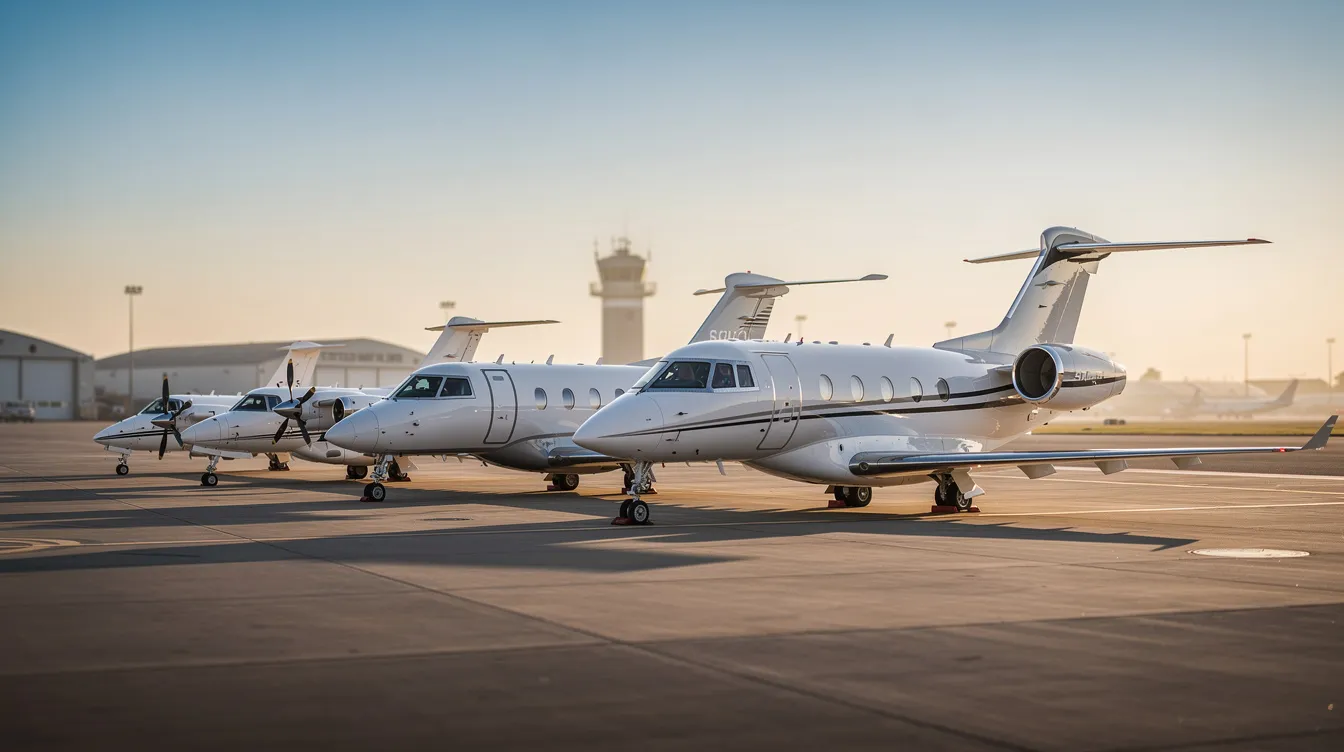
DOC per flight hour is often treated as constant in planning models, but real-world economics depend heavily on how many flight hours an aircraft logs each year. Aircraft utilization affects the fixed cost allocation, lowering the effective cost per hour as more flight hours are logged.
Some DOC components are strictly variable—fuel, oil, hourly maintenance reserves. Others are semi-variable: minimum crew guarantees, minimum monthly engine program hours, and certain calendar-based inspections that accrue whether the aircraft flies or not, all of which feed into broader analyses of how much a private jet really costs.
Consider a midsize jet with DOC of $3,000 per flight hour and annual fixed costs of $800,000:
|
Annual Hours |
Fixed per Hour |
DOC per Hour |
All-In per Hour |
|---|---|---|---|
|
150 |
$5,333 |
$3,000 |
$8,333 |
|
300 |
$2,667 |
$3,000 |
$5,667 |
|
500 |
$1,600 |
$3,000 |
$4,600 |
Owners often overestimate planned utilization. Flying less than expected increases total cost per flight hour significantly, influencing the ownership vs. charter decision and aligning with guidance on how much it costs to rent a private jet. Private flyers who expect under 150–200 hours per year may find on-demand charter through platforms like Jettly economically preferable because they pay only for actual costs—the direct operating costs of each trip.
Aircraft designers, regulators, and researchers use DOC to compare propulsion technologies (kerosene vs. sustainable aviation fuel vs. hydrogen), airframe concepts, and operational strategies. These analyses shape which aircraft models reach the market.
DOC per available seat-mile (DOCasm) is used in early design studies to compare aircraft of different sizes and seating layouts. Formulas tie DOC to fuel price, crew costs, maintenance, and landing and navigation charges. Historical work by associations like the Air Transport Association and national regulators developed standard DOC calculation methods that continue to be updated.
Sensitivity analyses often vary fuel price, carbon taxes, and maintenance cost assumptions to see how DOC changes for different aircraft types. Airlines use these to estimate route profitability and set ticket pricing, while regulators and travelers also consider the compliance and safety standards of Part 135 charter companies. For private aviation, these conclusions influence which aircraft models are available and what DOC operators and charter customers ultimately face.
Understanding DOC helps business leaders and high-net-worth travelers evaluate private jet operating costs when deciding whether to purchase an aircraft, enter fractional ownership, or rely on on-demand charter.
A prospective owner might build a simple pro forma: estimate direct operating costs per flight hour, estimate annual fixed costs, project annual flight hours, and compare all-in cost per hour with current charter quotes on similar aircraft or with the true cost of private jet leasing. Capital costs—purchase price, lease payments, depreciation, and interest—are not part of DOC but can be comparable in size to total operating costs. The true cost of ownership is substantially more than DOC alone.
Compare a company flying 120 hours per year on a light jet:
|
Cost Element |
Ownership (120 hrs/yr) |
Charter (120 hrs/yr) |
|---|---|---|
|
DOC |
$2,200 × 120 = $264,000 |
Embedded in rate |
|
Fixed costs |
~$500,000 |
$0 |
|
Capital costs |
~$300,000 |
$0 |
|
Estimated total |
~$1,064,000 |
~$420,000–$540,000 |
Charter customers effectively pay a price that embeds the operator's DOC, fixed costs, and margin—but avoid carrying those expenses during periods when they are not flying, and can benchmark this against estimates from a jet card flight cost estimator.

Jettly is a global private jet charter marketplace that leverages aircraft operating cost data to provide transparent, trip-based pricing rather than long-term fixed commitments. Travelers access over 20,000 private charter aircraft without managing the underlying cost data themselves.
While operators manage their own direct operating costs and fixed costs, Jettly's platform aggregates aircraft options so customers can see the effective cost per flight hour or per trip across light jets, midsize jets, turboprops, and helicopters, or opt for world-class jet card programs with fixed hourly rates. The platform's instant pricing and digital booking tools allow users to compare different aircraft types on the same route—for example, New York to Miami or Toronto to Vancouver—effectively seeing the impact of DOC differences on final charter prices.
Chartering via Jettly removes the need for travelers to manage fuel price risk, maintenance reserves, crew costs, hangar arrangements, and indirect operating expenses, and Jettly also offers private jet memberships for those who fly more frequently. These are embedded in the charter rate and handled by certificated operators. For passengers seeking cost savings without the complexity of aircraft ownership, the platform offers a practical way to access private aviation with optimized direct operating performance.
Direct operating cost includes only flight-linked expenses: fuel and oil, maintenance, crew on duty, landing and navigation fees, and certain trip-based charges. Total cost per flight hour also includes fixed operating costs (crew salaries, hangar, annual insurance, management fees) and capital costs (depreciation, interest, or lease payments) spread across expected annual flight hours. A light jet with DOC of $2,200 per flight hour might have an all-in ownership cost closer to $3,500–$4,000 per hour once fixed and capital costs are included.
It depends on the operation. For airlines and large operators, flight crew salaries are often treated as direct operating costs. For small corporate flight departments, salaries may be budgeted as fixed operating costs. Contract pilots and cabin crew hired per trip are modelled as direct costs since their fees apply only when the aircraft flies. The classification affects accounting presentation, but what matters for informed decisions is capturing the full annual cost of having qualified crew available.
DOC assumptions should be revisited at least annually, or more frequently during periods of volatile fuel prices or after major maintenance events. Fuel price assumptions are best updated quarterly. Maintenance reserve rates should be revised after major inspections, engine overhauls, or changes to engine program terms, just as savvy travelers periodically reassess jet card costs and pricing structures. Charter travelers using Jettly do not need to maintain these models, since operators and the marketplace update pricing to reflect current conditions.
While indirect operating expenses (corporate overhead, sales, reservations systems) are not part of DOC, they influence the final price quoted by charter operators because those costs must be recovered through revenue. Customers see a single hourly or trip price; behind the scenes, operators apportion both direct operating costs and indirect costs plus margin into that rate, which is why alternatives like flying private with Jettly instead of NetJets emphasize transparent pricing. Comparing multiple quotes through platforms like Jettly helps travelers see how different operators' cost structures translate into end prices.
A simple manual approach: estimate block flight time for the route, multiply by an approximate DOC per flight hour for the aircraft category, and add known one-off fees (de-icing, international handling) if applicable. This produces only a rough estimate because actual costs vary with payload, winds, fuel prices, and airport fees. For an accurate, operator-backed quote that includes real direct operating costs for a requested date, route, and aircraft type, use Jettly's instant pricing tool or its dedicated jet card flight cost estimator.
Direct operating cost is the core variable element of aircraft operating costs, driven by fuel and oil, crew, maintenance reserves, and flight-linked fees. It is usually expressed as a cost per flight hour and serves as the foundation for every charter quote, ownership budget, and fleet comparison.
Understanding DOC alongside fixed operating costs and capital costs is essential for realistic aircraft ownership budgeting and for comparing ownership, leasing, and charter options. For many travelers flying fewer than 150–200 hours per year, paying for DOC only via on-demand charter is often more efficient than carrying year-round fixed operating costs and depreciation.
Ready to see how direct operating costs translate into real charter pricing? Explore flight options or request a personalized quote at https://www.jettly.com, including regional solutions such as private jet charter in Kolkata, West Bengal, and operator partners like Dexter Air Taxi and Zenflight.
Share this post:
Jay Franco Serevilla
Aug 27, 2026
|
5
min read
Discover tips and trends in the industry.
5
min read
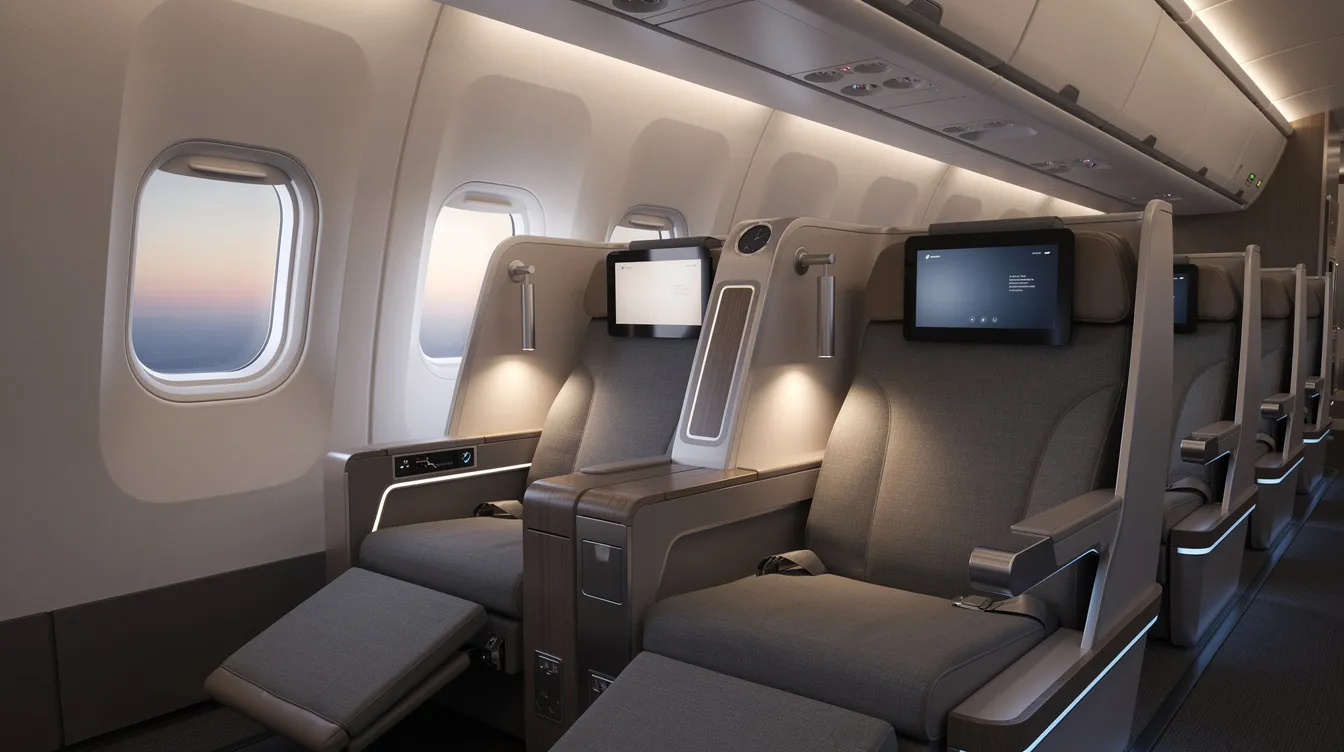
Business Class in Flight: Comfort, Cost, and Private Jet Alternatives with Jettly
Flying business class offers travelers enhanced comfort, priority services, and access to airport lounges, making long-haul flights more enjoyable. However, for those seeking ultimate privacy and flexibility, private jet charters through platforms like Jettly present a compelling alternative. This guide explores the benefits, costs, and comparisons between business class and private jet travel.
Read More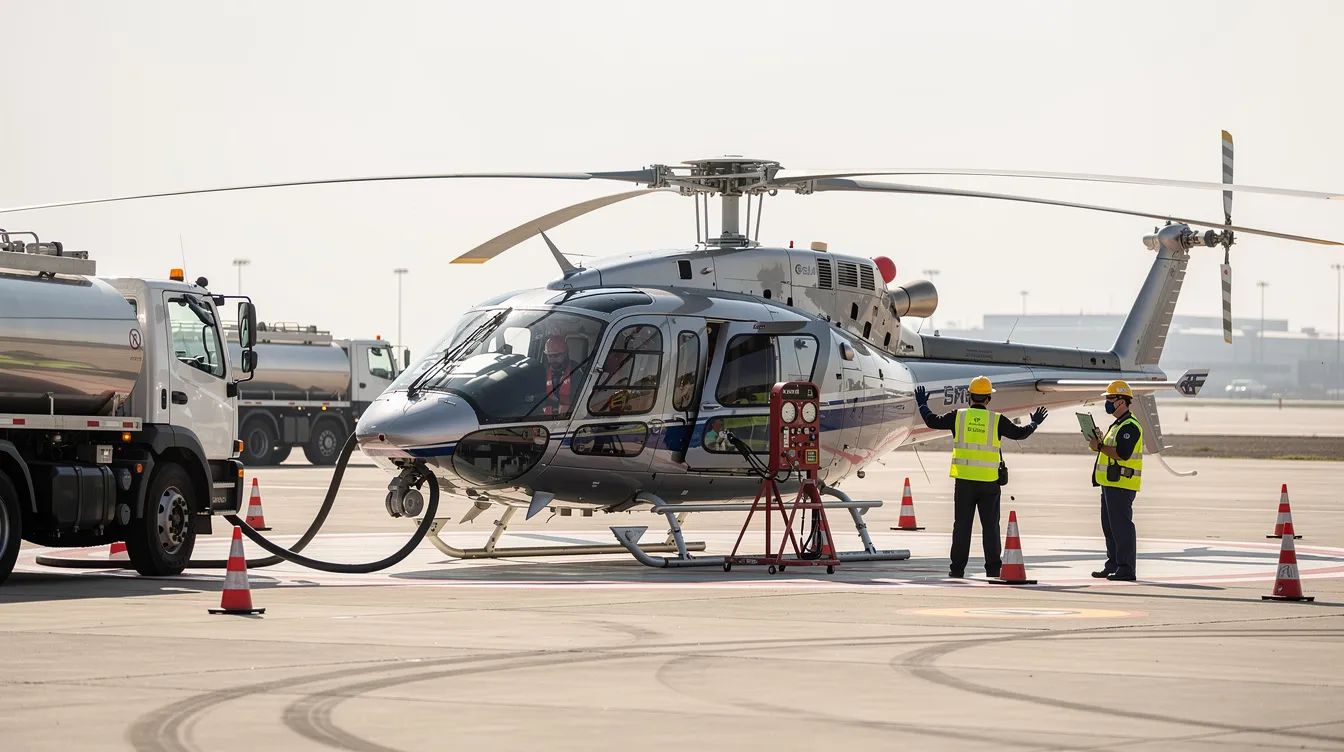
5
min read
Price of Helicopter Fuel: What It Really Costs to Fly
Understanding helicopter fuel prices is essential for charter flight customers, as fuel is the largest variable cost in helicopter operations. This article details current fuel prices, burn rates across various helicopter models, and regional price variations, helping customers make informed decisions. Jettly's transparent pricing model incorporates these factors, ensuring no surprises during booking.
Read MoreStay updated with our latest insights and tips to elevate your journey with us.
MEMBERSHIPS AND ASSOCIATIONS



Disclaimer: Jettly operates as a charter broker, offering access to a global digital jet charter marketplace. Jettly is not a direct air carrier and does not own or operate aircraft. All advertised flights are conducted by third-party air carriers that are fully licensed and hold the appropriate Part 135 or Part 121 certifications issued by the Federal Aviation Administration (FAA) or equivalent regulatory authorities under U.S. or foreign law. Jettly complies fully with the U.S. Department of Transportation's Part 295 and Part 298 Charter Broker regulations. Jettly does not carry additional liability insurance. Passengers are covered by aircraft operator insurance. TICO: 50023770


