



Login
Get Instant Pricing On 23,000+ Aircraft

>
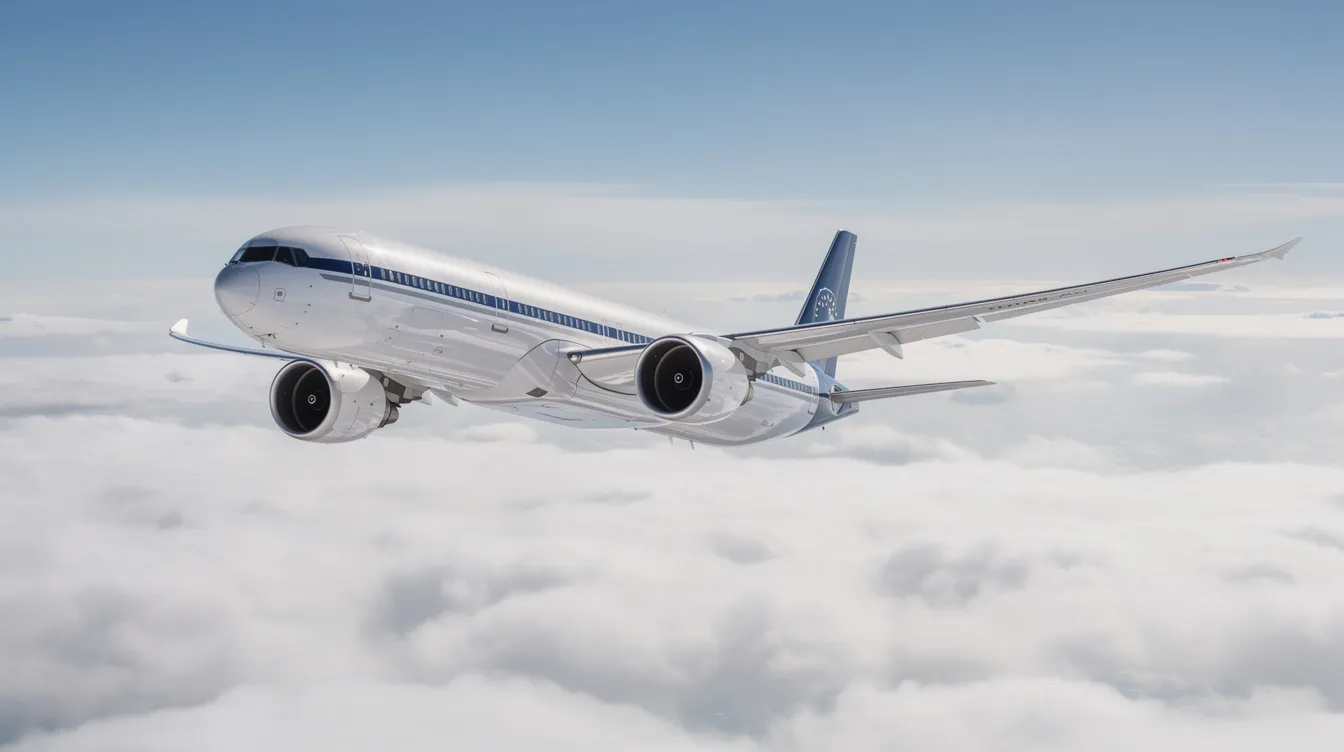
The Boeing 787 Dreamliner is a long-range, fuel-efficient, composite wide-body aircraft that has reshaped point-to-point flying since its first delivery to All Nippon Airways in September 2011. Over 550 new nonstop city pairs have opened because of it.
Passenger comfort improvements include a cabin altitude equivalent to 6,000 feet (versus 8,000 feet on older airliners), higher humidity, the largest windows on any widebody airliner with electronically dimmable windows, and quieter cabin acoustics from noise-reducing engine nacelle chevrons.
Extensive flight testing across six dedicated flight test aircraft, advanced composite structures making up 80% of the airframe by volume, and a bleedless electrical system underpin the 787's performance and safety record.
The 787 achieves 20-22% fuel savings compared to the 767-300ER, using less fuel per seat-kilometer than any previous wide-body in its class.
Travelers who fly the Dreamliner for long-haul segments can pair those flights with private jet charters through platforms like Jettly for last-mile access to smaller cities, remote destinations, and flexible scheduling.
The Boeing 787 Dreamliner is a long-range, midsize wide-body twin-engine airliner that Boeing introduced into commercial service in 2011. It was Boeing's first major airplane built primarily from composite materials, designed from the ground up for high fuel efficiency, passenger comfort, and operational flexibility.
The family includes three variants: the 787-8, 787-9, and 787-10. Together, they cover routes from thin long-haul city pairs to dense trunk sectors, seating between 200 and 375 passengers in a typical two-class layout.
The aircraft transformed airline networks by making nonstop flights between secondary cities economically viable for the first time. Rather than routing passengers through congested hubs, airlines could use the 787's range and efficiency to serve demand directly.
While the Dreamliner Boeing 787 operates on scheduled airlines worldwide, travelers who value flexibility often pair a Dreamliner long-haul leg with a private jet charter segment. Platforms like Jettly allow passengers to book onward flights digitally, covering the last-mile connection that commercial schedules cannot.
Boeing announced the program in 2003 as the "7E7," a response to rising fuel prices and growing airline demand for point-to-point travel over traditional hub-and-spoke routing. The concept prioritized fuel burn reduction, longer range at lower operating cost, and a step-change in passenger comfort.
The program hit several milestones quickly. Boeing renamed the airplane to Boeing 787 Dreamliner in 2005. On July 8, 2007, the company rolled out the first 787-8 at its Everett, Washington facility before thousands of spectators and airline customers.
Then came delays. The distributed global supply chain model, which was originally planned to cut assembly time and cost, created coordination problems. Early airframes came in overweight, and software and electrical integration challenges pushed the schedule back by roughly three and a half years from the original delivery target.
The maiden flight took place on December 15, 2009, when aircraft ZA001 lifted off from Paine Field in Everett for a roughly three-hour flight. An intensive flight testing campaign followed across six flight test aircraft, evaluating performance, handling, systems integration, and environmental certification requirements.
The FAA and EASA granted type certification in late August 2011. The first delivery went to launch customer All Nippon Airways on September 25-26, 2011. ANA operated the first commercial flight on October 26, 2011, flying Narita to Hong Kong; Nippon Airways then expanded 787 service to domestic and international routes within weeks.
Final assembly of the 787 occurs at Boeing's facilities in Everett, Washington, and North Charleston, South Carolina. Large pre-fabricated fuselage sections, wings, and other structural components arrive by air aboard Boeing's custom Dreamlifter cargo aircraft.
The supply chain spans dozens of countries:
Wings: Mitsubishi Heavy Industries in Japan
Fuselage barrels: Alenia Aermacchi (now Leonardo) in Italy and Spirit AeroSystems in the U.S.
Floor beams, landing gear doors, and tail sections: Suppliers across Asia, Europe, and North America
Individual components and subassemblies are designed for modular construction, arriving at final assembly nearly ready for integration. This approach was intended to compress assembly timelines from weeks to days.
Early production exposed problems. Supply chain coordination issues led to incomplete sections arriving at Everett, requiring rework on the assembly line. Overweight structures reduced the fuel efficiency and range margins Boeing had promised. Redesigns of certain joins and brackets added further delays.
Between 2019 and 2025, quality-control problems resurfaced. The FAA flagged improper fuselage shimming, gaps at composite joins, and documentation lapses. Boeing temporarily lost its authority to self-certify airworthiness for new 787s, and deliveries paused multiple times between 2020 and 2022 for inspections and rework.
About 50% of the Boeing 787's primary structure by weight is carbon-fiber reinforced plastic (CFRP) and other composites. By volume, the Boeing 787 is 80% composite, making it the first large commercial airliner where composites dominate the airframe rather than aluminum.
Each 787 contains approximately 32,000 kg of CFRP composites. The composite fuselage is produced as large barrel sections using automated tape laying on rotating mandrels. This process creates a monocoque shell that requires fewer mechanical fasteners than a traditional aluminum structure, cutting both weight and assembly labor.
The benefits are measurable:
CFRP materials have a higher strength-to-weight ratio than aluminum, reducing empty weight
Composites resist corrosion better than aluminum, eliminating the need for many inspections and repairs that aging metal airframes require
Fewer surface joints produce smoother aerodynamic surfaces, reducing parasitic drag
Better fatigue performance over the aircraft's service life
Engineering challenges remain. Lightning strikes require embedded conductive layers in the composite skin to dissipate electrical energy safely. Inspection techniques differ from metal structures; ultrasonic and thermographic methods replace many visual checks. Repair of composite damage is more specialized and time-consuming than patching aluminum.
Future development directions include larger one-piece composite wings, hybrid material approaches blending CFRP with metals in lightweight structures, and thermoplastic composites that could improve recyclability and reduce manufacturing energy compared to current thermoset resins.
The 787 uses advanced aerodynamics to optimize performance at every phase of flight. Its high-aspect-ratio wings are swept and flexible, with raked wingtips that reduce induced drag more effectively than conventional winglets. The wing design improves the lift-to-drag ratio across a wide range of flight conditions.
Two engine families power the 787: the GE GEnx-1B and the Rolls-Royce Trent 1000. Both feature high bypass ratios and advanced materials in their fan blades and turbine sections. The 787's engines reduce noise with serrated chevrons on the nacelle trailing edges, which smooth the mixing of exhaust gases and ambient air. This noise-reducing technology in the engine nacelles brings airport-level noise below 85 decibels, giving the Dreamliner an acoustic footprint smaller than that of previous-generation aircraft. The advanced engines reduce noise and emissions per passenger compared to the powerplants they replaced.
The 787 uses a bleedless electrical system, replacing the traditional pneumatic systems that tap compressed air from engines. By eliminating engine bleed air for cabin pressurization and anti-icing, the 787's engines extract 35% less power, improving fuel efficiency. Electrical compressors and heaters handle those functions instead, with more precise control.
The result: the 787 achieves 20-22% fuel savings compared to the 767-300ER, the aircraft it most directly replaced on long-haul routes. Airlines burning less fuel per seat translates directly to lower per-seat CO2 emissions, a metric that corporate travel planners and environmentally conscious customers track closely.
The 787's fuselage has a constant diameter of about 5.75 meters (roughly 18 feet 10.5 inches), creating a wide and tall cabin cross section that allows flexible layouts. Airlines configure the space differently: high-density economy class seating at nine abreast, premium economy sections, lie-flat business class pods, and even first class suites on select carriers.
The 787's dynamic LED mood lighting helps passengers adjust to time-zone changes and reduces jet lag. Airlines program the lighting to shift through warm and cool tones during boarding, meal service, rest periods, and arrival preparation. The system uses thousands of individual LEDs across the ceiling, creating gradual transitions rather than abrupt on/off switches.
The 787 Dreamliner includes high-capacity overhead bins that hold roughly 50% more luggage than bins on older wide-bodies. The pivot design allows bags to be loaded sideways, freeing aisle height and reducing boarding conflicts.
Some operators take the cabin even further. Boeing Business Jet (BBJ) 787 versions and certain VIP configurations use the cross section for private rooms, lounges, and meeting areas, mirroring some of the privacy found in smaller private jets.
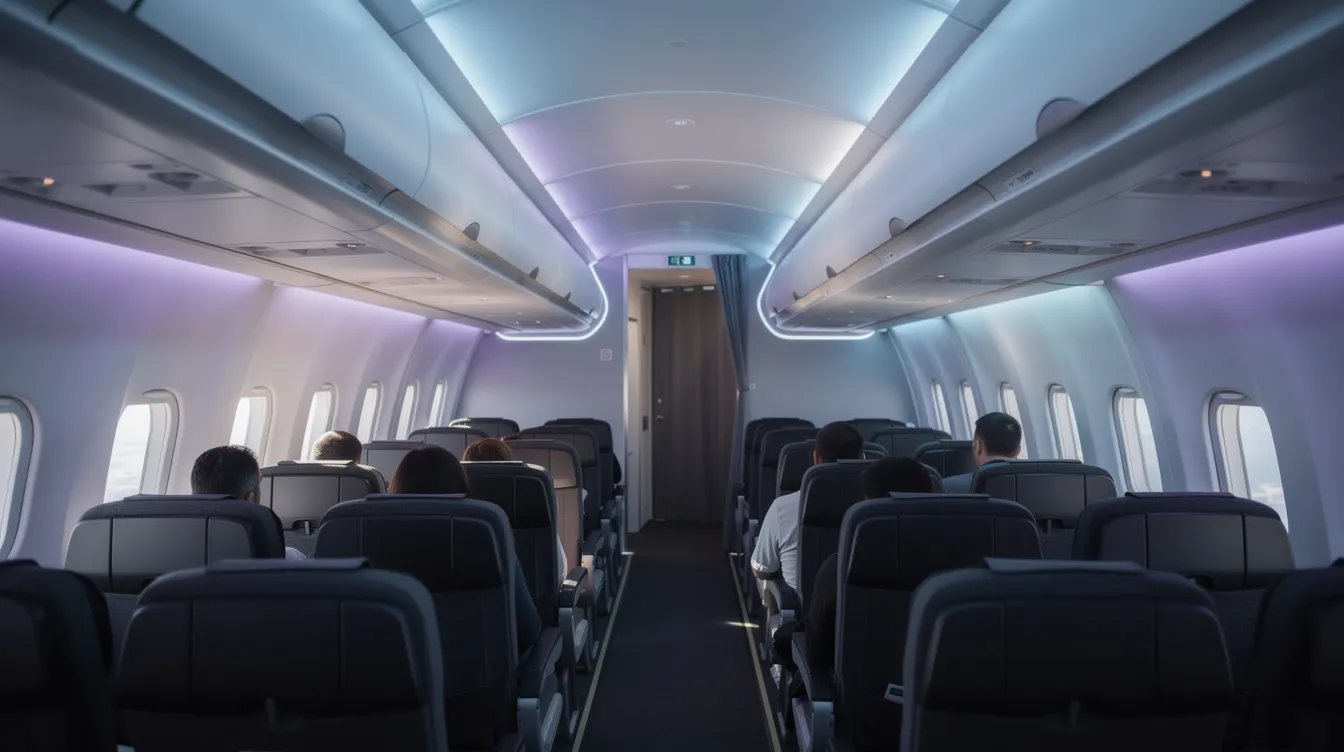
The 787 features the largest windows of any widebody aircraft in commercial service. Each window measures roughly 47 cm (18.4 inches) tall and 28 cm (11 inches) wide, about 65% larger than windows on a 767 or A330.
The passenger cabin of the 787 features electronic dimmable windows that are larger than standard windows, replacing traditional pull-down shades. Passengers press a button to cycle through five tint levels, from clear to near-opaque, using an electrochromic gel layer between panes. Crew can also override individual windows to darken the entire cabin for rest periods on long flights.
The effect on cabin ambience is notable. More natural light enters the cabin at lower tint settings, giving passengers a stronger connection to the outside environment. On daytime flights over water or mountains, the large windows create a panoramic view that leisure travelers and families specifically seek out when choosing seats.
Private jets offer similar or greater control over natural light, with window placement and curtain options tailored to each aircraft type. For charter customers on platforms like Jettly, window size and cabin light control are part of the broader customization that distinguishes private jet travel from scheduled commercial flights.
The composite fuselage of the 787 permits higher cabin humidity without the corrosion risks that limit humidity levels in aluminum airframes. The cabin humidity on the 787 is maintained at higher levels compared to traditional aircraft, typically around 15-16% versus 4-6% on older jets. Passengers notice fewer dry eyes, less skin irritation, and reduced throat discomfort on flights exceeding eight hours.
The 787's cabin pressure is equivalent to 6,000 feet altitude during cruise, about 2,000 feet lower than the 8,000-foot cabin altitude standard on most older wide-bodies. The lower altitude means higher oxygen partial pressure in the cabin air, reducing fatigue, headaches, and the general malaise passengers associate with long flights.
The 787 integrates advanced air filtration systems for better air quality in the cabin. High-efficiency particulate air (HEPA) filters remove 99.97% of airborne particles, and the environmental control system provides more consistent airflow distribution across rows and zones.
Travelers who compare these features with the personalized cabin climate on business jets note that private aircraft often cruise at even lower cabin altitudes (as low as 4,000-5,000 feet on some models) and offer fully adjustable temperature zones. For those who prioritize cabin environment above all else, chartering a private jet or exploring the best private planes for families provides the most control and comfort across different mission types.
Boeing's Smooth Ride technology on the 787 uses accelerometers and sensors to detect turbulence in real time. The fly-by-wire flight control system then commands small, rapid adjustments to the control surfaces to dampen vertical accelerations before passengers feel them.
The fly-by-wire architecture also provides envelope protection, preventing pilots from exceeding structural or aerodynamic limits during manual flying. This system contributes to both safety and ride quality, particularly during approach and landing in gusty conditions.
Passenger feedback on the 787 consistently references a perception of fewer sharp bumps on long oceanic and polar routes. Airlines operating the 787 on turbulence-prone corridors, such as North Atlantic and trans-Pacific tracks, report fewer passenger injury claims related to turbulence events.
Smaller private jets take a different approach to turbulence avoidance. Their lower operating altitudes and ability to route flexibly around weather cells give pilots more options to avoid rough air entirely, rather than dampening its effects. For time-sensitive travelers, this routing flexibility and generally smoother turbulence experience on private jets can be worth exploring through same-day private jet bookings.
Airlines configure the 787 across a wide spectrum of cabin products. A typical economy class layout uses a 3-3-3 seating arrangement with seat widths between 17 and 18 inches and pitch ranging from 31 to 34 inches, depending on the carrier. Some airlines opt for a tighter 2-4-2 layout that gives more passengers an aisle or window seat.
Premium economy occupies a growing share of 787 cabins, with seats offering 38-inch pitch, wider cushions, and dedicated service. These sections generate revenue per square foot that falls between economy and business class, making them attractive for airlines seeking higher yields on competitive routes.
Business class on the 787 varies widely:
|
Airline |
Configuration |
Key Feature |
|---|---|---|
|
Air Canada |
1-2-1 reverse herringbone |
Direct aisle access for all seats |
|
Qatar Airways |
1-2-1 Qsuite |
Doors for privacy; convertible double bed |
|
ANA |
1-2-1 staggered |
Lie-flat with adjustable partition |
|
American Airlines |
1-2-1 Flagship Suite |
Door-equipped suite with 18-inch IFE screen |
USB ports and in-seat power are standard across most 787 cabins, including economy class on newer deliveries.
Inflight entertainment screens run 10 to 18 inches diagonal depending on cabin class.
Travelers who want similar privacy and comfort without fixed airline schedules can control the entire cabin experience by choosing the right private jet for their group size and mission, a decision that parallels the considerations in selecting the best personal plane for individual ownership.
The BBJ 787 is a VIP variant built for heads of state, corporations, and ultra-high-net-worth individuals. It retains the core 787 features: low cabin altitude, large windows, electronic dimming, and Smooth Ride technology. But the cabin is configured for roughly 25 passengers instead of 250+.
Typical BBJ 787 interiors include private suites with full-size beds, dedicated offices, boardroom-style conference rooms, lounges with full-height ceilings, and residential-grade bathrooms. The wide cross section of the plane accommodates hallways, closets, and room-to-room layouts that feel more like a flying home than an airplane.
Range extends to roughly 9,960 nautical miles under a 25-passenger configuration, covering city pairs like New York to Tokyo or London to Sydney nonstop. Fuel consumption at this reduced passenger load is high per seat but acceptable for the mission profile.
For more on how Boeing Business Jets compare with other VIP aviation options, Jettly's guide covers the full BBJ family and highlights the best private plane manufacturers serving different mission profiles and budgets. Most business travelers, however, do not need a dedicated BBJ. On-demand private jet charter via Jettly gives access to a range of aircraft, from light jets to heavy-cabin planes, without the crew, hangar, and maintenance commitments of owning or leasing a widebody, while fixed-rate jet card programs appeal to frequent flyers seeking predictable hourly pricing.
The Boeing 787 is available in three primary variants, each targeting different route profiles and capacity needs.
787-8: The baseline model. Seats about 240 passengers in a two-class layout. Range reaches approximately 8,000 nautical miles (14,820 km), making it suited for thin long-haul routes where demand does not fill a larger aircraft. Maximum takeoff weight: roughly 502,500 lb (227,930 kg).
787-9: A stretched variant, about 20 feet longer than the -8. Seats approximately 280-300 passengers in two-class configurations. Range extends to about 8,300 nautical miles (15,370 km) with a higher MTOW of roughly 571,500 lb (259,220 kg). This is the bestselling variant and the workhorse of most airline 787 fleets.
787-10: The longest fuselage, optimized for high-density medium-to-long routes. Seats around 320-330 passengers. Range is shorter at about 7,500 nautical miles (13,890 km) due to its heavier structure without a proportional fuel capacity increase. MTOW: approximately 574,000 lb (260,360 kg).
Boeing cancelled the proposed 787-3, a short-range variant with clipped wings, before production began, choosing to focus on the three models that matched airline demand. The 787-9 and 787-10 compete primarily with the Airbus A350-900 and A330neo, while the 787-8 fills a niche as a new aircraft for thinner long-haul markets.
Airlines choose variants based on mission. Ultra-long-haul operators like Qantas favor the 787-9. Carriers with dense trunk routes, like Singapore Airlines on regional sectors, use the 787-10. The 787-8 serves airlines that need longer range but operate in markets with moderate demand. For a broader look at how aircraft size affects aviation operations, Jettly covers the spectrum from commercial giants to private jets, including an overview of the cheapest private aircraft options for budget-conscious owners and charter customers.
Before the maiden flight, Boeing conducted extensive ground testing. Composite fuselage barrels underwent pressurization cycles well beyond the expected service life. Wing flex tests demonstrated the 787's wings could bend more than 25 feet upward before failure, far exceeding the loads encountered in normal flight. Engine ground runs validated performance across temperature and altitude conditions.
The multi-aircraft flight testing fleet consisted of six test aircraft, designated ZA001 through ZA006. From December 2009 onward, these airframes logged thousands of hours exploring the 787's aerodynamic envelope, systems integration, emergency procedures, and environmental certification (noise, emissions).
Flight testing uncovered several issues. Overweight prototypes reduced initial performance margins. Software and electrical anomalies required debugging and redesign cycles. Lightning strike testing outcomes led to refinements in the conductive mesh layers embedded in the composite skin. Engine events on early test flights prompted design changes to inlet and fan blade configurations.
The FAA and EASA reviewed flight testing data and granted type certification in August 2011, clearing the path for the first delivery to ANA the following month. Certification covered both engine options (GEnx-1B and Trent 1000) across the 787-8 initially, with subsequent variants certified as they entered testing.
Ongoing test campaigns continue. Boeing's ecoDemonstrator program uses 787 airframes to validate new technologies, including sustainable aviation fuel compatibility, advanced coatings, and noise reduction modifications, before they enter production.
The 787 uses lithium-ion batteries for its auxiliary power unit (APU) and main electrical system. Boeing chose Li-ion over nickel-cadmium for its higher energy density and lower weight, consistent with the program's focus on reducing every possible kilogram.
On January 7, 2013, a battery in a JAL 787 caught fire while parked at Boston Logan Airport. On January 16, 2013, a battery fire occurred on ANA Flight 692, forcing an emergency landing in Takamatsu, Japan. The same day, the FAA grounded all 787s on January 16, 2013, due to battery issues. In 2013, the FAA grounded the 787 fleet for battery modifications; it was the first fleet-wide grounding of a U.S. airliner type since 1979.
Investigations identified internal short circuits and thermal runaway as root causes. Contributing factors included manufacturing defects in battery cells, insufficient thermal management, and inadequate containment to prevent fire propagation.
Boeing's redesigned battery system included:
Steel containment enclosures to contain any single-cell failure
Improved insulation between cells to slow heat transfer
Venting systems to route gases outside the aircraft
Narrower state-of-charge limits to reduce stress on cells
Enhanced charging control software and monitoring
The FAA approved the modifications in April 2013, and 787s returned to service. The episode influenced industry-wide Li-ion safety standards, affecting regulations for batteries in smaller aircraft, portable electronic devices carried on board, and cargo shipments of lithium batteries.
Airlines flying the 787 report real-world fuel burn reductions of around 20-22% compared to the 767-300ER and older 777 variants. High efficiency and long range allow the 787 to serve routes economically without requiring large passenger volumes, a characteristic that opened markets previously considered unviable for wide-body service.
The Boeing 787 enables airlines to profitably operate direct routes between secondary cities. By the early 2020s, more than 550 new nonstop city pairs had launched because of the 787's capability. Routes like Perth to London (Qantas, 787-9), Tokyo-Narita to San Jose (ANA), and Houston to Sydney (United) connected cities that previously required hub transfers and added hours to journeys.
These connections changed how business and leisure travelers plan itineraries. A direct flight between two secondary cities eliminates a layover, saves 3-6 hours, and reduces the chance of missed connections and lost luggage.
For travelers arriving on a Dreamliner at a major hub, private aviation can extend that efficiency. A passenger landing in London on a 787 from Doha can transfer to a private jet for business travel onward to Edinburgh, Manchester, or the Channel Islands, reaching the final destination hours faster than waiting for a domestic connection.
Boeing delivered the first 787 in September 2011. By mid-2026, cumulative deliveries exceeded 1,270 aircraft to airlines across six continents. The order backlog stood at approximately 1,109 undelivered aircraft, making the 787 one of Boeing's largest active production programs.
Major customers include fleets that complement their 787s with narrow-body workhorses such as the Boeing 737-800:
|
Airline |
Region |
Approximate Orders |
|---|---|---|
|
United Airlines |
North America |
221 |
|
All Nippon Airways |
Asia-Pacific |
80+ |
|
Qatar Airways |
Middle East |
60+ |
|
American Airlines |
North America |
47+ |
|
Air Canada |
North America |
37+ |
|
Japan Airlines |
Asia-Pacific |
50+ |
Quality-control reviews between 2019 and 2025 temporarily slowed deliveries. Boeing accumulated undelivered inventory as airframes awaited rework, inspection, or engine and premium seat certification. Supply constraints related to engines and premium cabin seats created additional bottlenecks, with some completed aircraft parked at Boeing facilities for months.
Three early 787-8 test prototypes are now preserved in museums, including ZA001 at Pima Air & Space Museum, reflecting the program's place in aviation history.
The fleet's geographic concentration aligns with major international traffic flows: North America, Asia-Pacific, the Middle East, and Europe account for the vast majority of the in-service fleet.
As of mid-2025, the Boeing 787 Dreamliner has experienced relatively few accidents and incidents compared with its total flight hours and cycles. The fleet has accumulated millions of revenue flight hours since 2011.
Most incidents have involved technical issues rather than catastrophic failures. The 2013 battery events, covered earlier, remain the most publicized. A fire on a parked Ethiopian Airlines 787 occurred on July 12, 2013, at London Heathrow. Investigators traced the cause to a lithium battery in an emergency locator transmitter (ELT) manufactured by Honeywell, not to the 787's main battery system. Regulators subsequently mandated ELT inspections and design changes across multiple aircraft types.
The FAA issued an airworthiness directive on April 22, 2016, after engine damage events involving ice crystal ingestion on GEnx-powered 787s. Boeing and GE developed software and hardware modifications to address fan-ice shedding behavior on long-range types comparable to the Boeing 777-200 LR.
Other directives addressed erroneous airspeed readings, software bugs in flight control computers, and bird strike resistance for cockpit windows. A 2026 AD requires ultrasonic inspections of lower outboard wing skin and splice plate areas on 77 identified aircraft globally.
Commercial aviation safety, including on the 787, operates under continuous regulatory oversight. Private charter operators face comparable scrutiny; platforms like Jettly require safety compliance and operator vetting as prerequisites for listing aircraft on the marketplace.
Quality-control problems at Boeing's North Charleston plant centered on measurable manufacturing defects: gaps between fuselage panels exceeded specified tolerances, shims were improperly installed or missing, and fasteners in certain structural joins did not meet preload force requirements.
Whistleblowers within Boeing and FAA inspectors documented these issues across multiple production lots. The FAA responded by tightening oversight and, at times, revoking Boeing's delegated authority to self-inspect and self-certify certain aspects of 787 production. Every completed 787 required individual FAA review before receiving an airworthiness certificate during the most restrictive period.
The financial impact was substantial. Boeing reported billions of dollars in abnormal costs related to rework, inventory storage, and delayed deliveries. Airlines waiting for new aircraft had to extend leases on older, less fuel-efficient types or defer network expansion plans.
These events drove process improvements: enhanced supplier audits, stricter documentation requirements at every stage of manufacturing, and more robust inspection protocols for composite joins. The lessons extended beyond Boeing to the broader aerospace industry, where composite aircraft production is still maturing, and regulatory expectations continue to tighten.
The 787 Dreamliner's cabin environment represents a measurable improvement over older wide-bodies: lower cabin altitude, higher humidity, larger windows, quieter acoustics, and LED mood lighting. For economy class passengers, these features reduce the physical toll of a 14-hour flight in ways that older aircraft could not.
Commercial 787 travel still involves fixed schedules, large terminals, shared cabins, and the unpredictability of airline operations. A business class seat on a 787 offers lie-flat comfort and curated dining, but the passenger has no control over departure time, routing, or who occupies adjacent seats, whereas shared private options that crowdsource private jet flights and empty seats can add flexibility and reduce per-passenger cost.
Private jets invert those constraints. A corporate group flying 787 business class from London to New York could then transfer to a light or midsize jet for fast access to a secondary U.S. city like Hartford, Raleigh, or Teterboro. Using an airport locator tool simplifies finding nearby business and general aviation airports. The private leg bypasses long security lines, boarding delays, and hub connections.
Time savings are concrete. A commercial connection from JFK to a smaller regional airport might add 3-5 hours, including ground time. A private charter from Teterboro to the same destination could take under 90 minutes gate to gate, and travelers weighing this option can consult a complete guide to private jet rental costs or a deeper analysis of how much a private jet really costs to understand the price trade-offs.
Jettly's digital booking platform provides instant pricing and access to over 20,000 aircraft globally, making it practical to arrange these connecting charters on short notice while also outlining strategies on how to get a seat on a private jet easily through memberships, empty legs, and shared flights.
The 787's fuel-efficient design produces lower CO2 emissions per seat-kilometer than the aircraft types it replaced. A 20-22% reduction in fuel burn, multiplied across the 1,270+ aircraft in service, translates to millions of tons of avoided emissions annually compared to operating older fleets, even as private jet emissions and inequality concerns continue to draw scrutiny across the wider aviation sector.
Airlines increasingly operate 787s on higher blends of sustainable aviation fuel (SAF). SAF can reduce lifecycle carbon emissions by up to 80% compared with conventional jet fuel, depending on feedstock and production method. Several carriers have committed to increasing SAF usage on their 787 fleets as supply grows and pricing becomes more competitive. For a deeper look at aviation fuel developments, Jettly's guide covers both conventional and sustainable options.
Research beyond the current 787 generation includes more electric systems, next-generation battery technology, improved composite recyclability, and early-stage hybrid-electric propulsion concepts for future widebody programs.
Private aviation is also responding. Charter platforms like Jettly enable customers to select efficient aircraft types from a broad private charter aircraft marketplace and support carbon offset programs where available, while educating travelers on variables like private jet fuel costs that influence both pricing and environmental impact. Choosing newer, fuel-efficient charter aircraft and optimizing routing reduces the environmental footprint of private flying, even as the per-passenger impact remains higher than commercial widebody travel.
Typical use cases where travelers combine scheduled Boeing 787 flights with private jet charters include:
Remote resort access: Landing on a 787 in Dubai, then chartering a turboprop to a resort in Oman or a Maldives transfer
Multi-city business roadshows: Flying a 787 from Tokyo to New York, then using light jets for a three-city East Coast tour over two days
Last-mile connectivity: Arriving on a Dreamliner in London Heathrow, then departing from Farnborough or Biggin Hill via private jet to a destination without direct commercial service
Jettly's on-demand marketplace allows passengers arriving at major hubs to book short-notice private flights onward. The platform covers turboprops, light jets, midsize and heavy jets, and helicopters, with transparent cost breakdowns and instant pricing.
Time-sensitive executives can avoid overnight stays and additional commercial connections by pairing a Dreamliner sector with a same-day private departure. A traveler landing at JFK at 7:00 AM on a 787 from Doha can be wheels-up in a private jet from Teterboro by 9:30 AM, reaching a board meeting in Charlotte by noon.
The Boeing 787 Dreamliner handles the long-haul leg with fuel efficiency, comfort, and the ability to connect cities that did not have nonstop service before. Jettly handles what comes next: giving travelers control over the final segment, on their schedule, from the airport that makes sense for their destination, and offering guidance on affordable private jet charter costs for different trip profiles.
Ready to experience private travel on your terms? Explore flight options or request a quote at https://www.jettly.com.
Many passengers find the 787 more comfortable because of its lower cabin altitude (around 6,000 feet versus 8,000 feet on older types), higher humidity, quieter cabin, and large windows with electronic dimming. Comfort also depends on the airline's specific seat design and layout; economy class width and legroom vary by carrier. For travelers who want full control over schedule and cabin privacy, private jets remain the most customizable option and are often used alongside 787 flights for different legs of a journey.
The 2013 lithium-ion battery issues led to a temporary global grounding, after which Boeing and regulators implemented redesigned containment, venting, insulation, and monitoring systems. Since returning to service in April 2013, the 787 has accumulated millions of safe flight hours. Its systems continue to be closely monitored through ongoing airworthiness directives and operator feedback. Both commercial 787 operations and private charter aircraft must meet strict regulatory safety standards before carrying passengers.
A 787 business class cabin offers lie-flat seats, curated dining, and enhanced service, but within a shared cabin and on the airline's fixed schedule. Private jets give passengers control over departure times, routes, and the entire cabin, using smaller airports and often saving 3-5 hours of ground time per trip. Some travelers fly 787s for intercontinental legs, then book a private jet via Jettly for regional hops where flexibility and privacy matter most. For details on costs, Jettly's private jet pricing guide and its breakdown of private jet lease costs explain the trade-offs between ad hoc charter, membership, and longer-term arrangements.
Travelers regularly land on a 787 at a major international hub, then transfer by ground to a nearby FBO (fixed-base operator) or secondary airport for a private jet departure. Jettly's digital platform can be used in advance to schedule private flights timed to typical Dreamliner arrival windows, reducing layover times to under two hours in most cases. This approach is common for executives, families, and groups heading to destinations not directly served by commercial 787 routes, and fits within the broader ecosystem of charter airlines and private flight options now available worldwide.
Jettly's global charter marketplace covers aircraft from turboprops and light jets to heavy-cabin jets and helicopters, with flexible private jet memberships that unlock wholesale rates and added benefits. Travelers can compare aircraft sizes, ranges, and pricing models to find the right fit for post-Dreamliner connections or standalone trips. Ready to experience private travel on your terms? Explore flight options or request a quote at https://www.jettly.com.
The Boeing 787 Dreamliner represents a significant leap forward in commercial aviation technology, combining advanced composite materials, fuel-efficient engines, and passenger-centric design to redefine long-haul travel. Its ability to open new nonstop routes between secondary cities has transformed airline networks and passenger itineraries. Enhanced comfort features like lower cabin altitude, higher humidity, large electronic windows, and smooth ride technology improve the flying experience for all classes.
Despite early challenges with battery safety and manufacturing quality control, the 787 has established a strong safety record and continues to evolve through ongoing testing and technological improvements. Its environmental efficiency, including a 20-22% fuel savings over previous-generation aircraft, supports airline sustainability goals and reduces carbon emissions.
Ready to experience private travel on your terms? Explore flight options or request a quote at https://www.jettly.com.
Share this post:
Jay Franco Serevilla
Oct 27, 2026
|
5
min read
Discover tips and trends in the industry.
5
min read
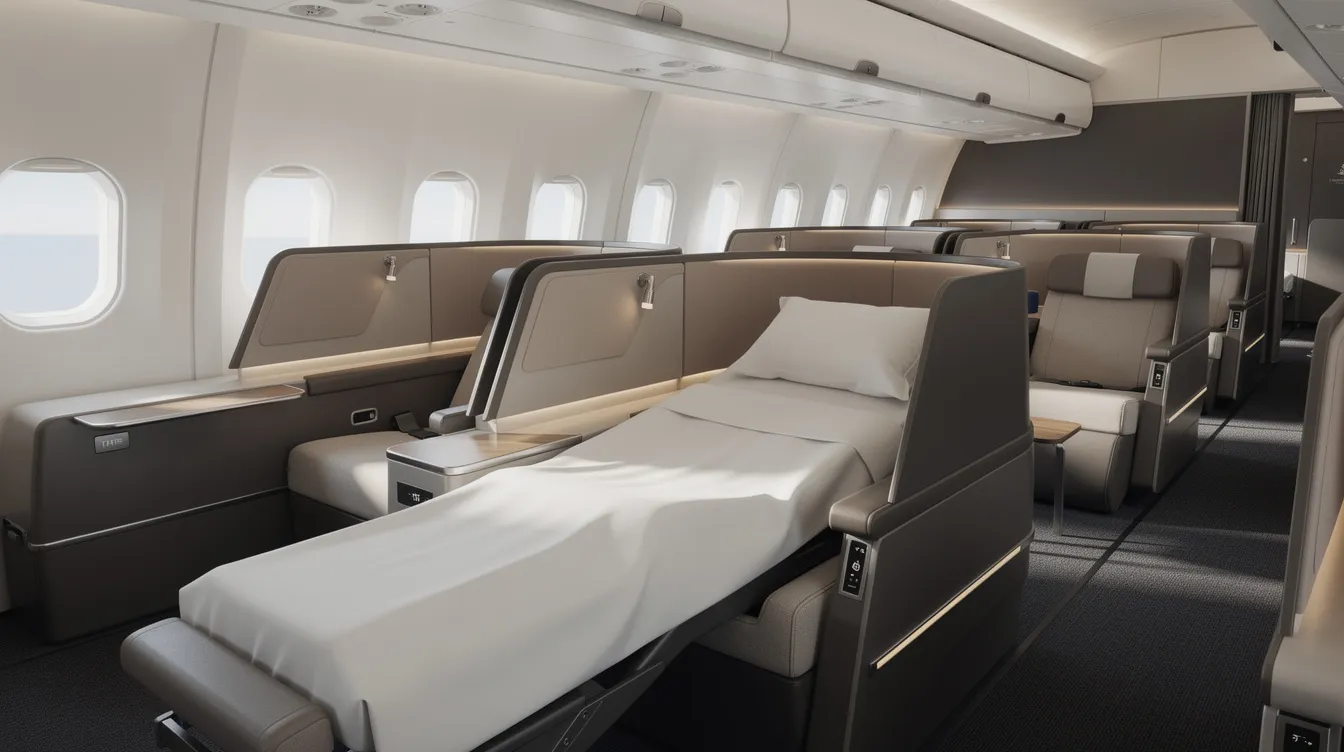
Delta Premium Select vs Delta One: Which Cabin Is Best For Long-Haul Travel?
Choosing between Delta Premium Select and Delta One can significantly impact your long-haul travel experience. Delta Premium Select offers a premium economy experience with wider seats and more comfort, while Delta One provides a full business class experience with lie-flat beds and enhanced privacy. Understanding the differences in amenities, pricing, and comfort can help you make the best choice for your travel needs.
Read More
5
min read
Boeing 757 Top Speed: Performance, Operations, and Charter Use
The Boeing 757 boasts a top speed of Mach 0.86, translating to approximately 568-570 knots at cruise altitude. Known for its impressive climb rates and runway performance, it serves both commercial and cargo operations effectively. With a maximum range of 3,900 nautical miles, the 757 remains a popular choice for charter flights, especially for large groups needing speed and efficiency.
Read MoreStay updated with our latest insights and tips to elevate your journey with us.
MEMBERSHIPS AND ASSOCIATIONS



Disclaimer: Jettly operates as a charter broker, offering access to a global digital jet charter marketplace. Jettly is not a direct air carrier and does not own or operate aircraft. All advertised flights are conducted by third-party air carriers that are fully licensed and hold the appropriate Part 135 or Part 121 certifications issued by the Federal Aviation Administration (FAA) or equivalent regulatory authorities under U.S. or foreign law. Jettly complies fully with the U.S. Department of Transportation's Part 295 and Part 298 Charter Broker regulations. Jettly does not carry additional liability insurance. Passengers are covered by aircraft operator insurance. TICO: 50023770


