


Login
Get Instant Pricing On 23,000+ Aircraft

>
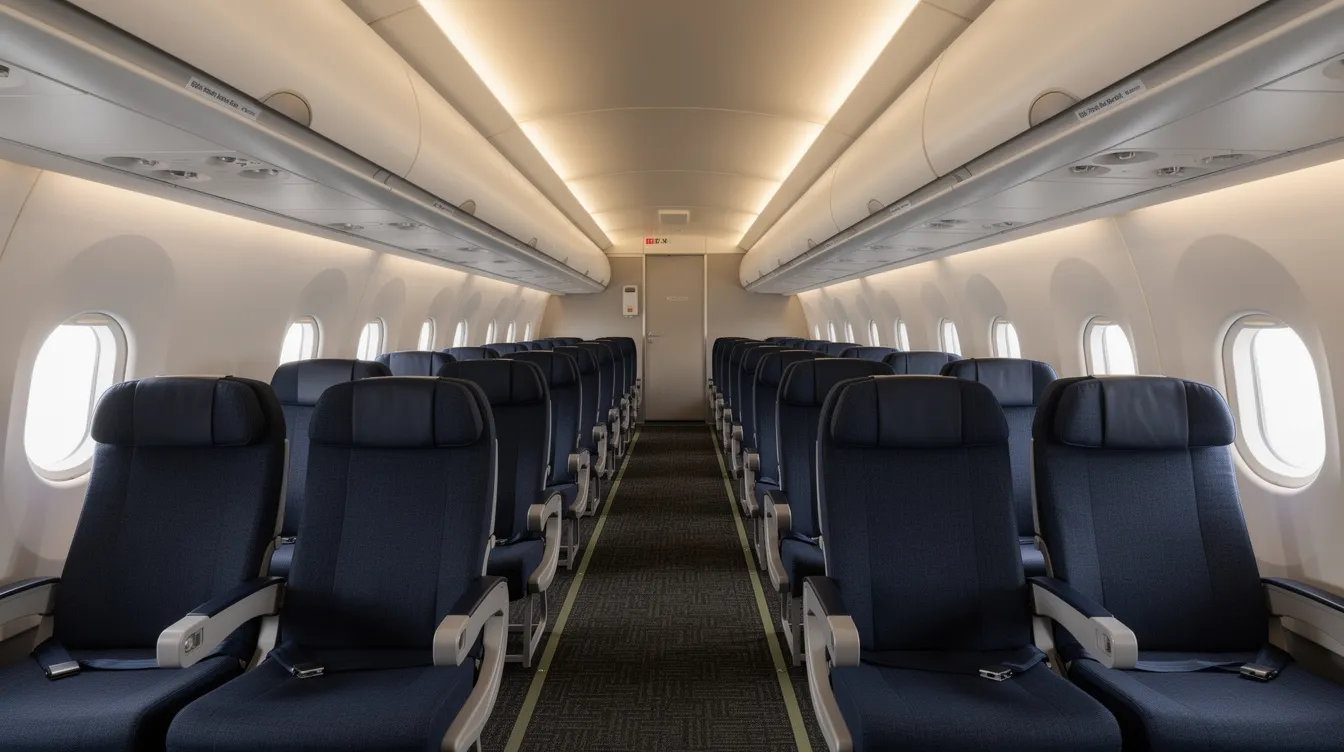
Imagine sitting in a passenger cabin at 35,000 feet, surrounded by hundreds of people in a pressurized metal tube, and someone decides to light a cigarette. This guide is for airline passengers, frequent flyers, and private jet travelers who want to understand the legal and financial risks of smoking or vaping on any flight. In the U.S., the fine for smoking on a plane can reach $4,000 per violation, and it can climb past $40,000 if the incident forces a diversion, with separate penalties possible for tampering with a smoke detector. For airline passengers, frequent flyers, and private jet travelers comparing private charter aircraft options through Jettly or elsewhere, that’s not just a rule to know—it’s a costly safety and legal risk that can disrupt a flight, trigger federal enforcement, and affect everyone on board.
From commercial airline smoking bans to private jet smoking policies, this guide explains what happens if you smoke or vape in flight, why the ban is enforced so aggressively, how penalties are applied in the U.S. and abroad, and what to do if you need to manage nicotine cravings before or during a trip.
Smoking on commercial flights is strictly prohibited worldwide, covering traditional cigarettes, e-cigarettes, cigars, and pipes on both domestic and international flights.
In the U.S., FAA civil penalties for smoking or vaping on a plane can reach up to $4,000 per violation, and penalties can escalate to over $40,000 if the incident causes a flight diversion.
Tampering with a smoke detector in an aircraft lavatory is a separate offense carrying additional fines up to $5,400.
Passengers caught smoking may face arrest upon landing, lifetime airline bans, and even criminal charges if they interfere with crew members.
Private jet smoking rules depend on the operator's discretion, and platforms like Jettly help travelers confirm policies before booking to avoid fines or conflicts.
The modern smoking ban on commercial flights exists for two reasons: fire risk and health concerns. Aircraft are confined spaces with recirculated air, limited emergency response options, and hundreds of passengers sitting within arm's reach of each other. Any open flame or smoldering material in that environment is a critical safety threat. Decades of research on secondhand smoke also showed serious health issues for passengers and flight attendants who spent hours breathing contaminated cabin air.
From boarding to landing, authorities and airlines moved to ban smoking throughout the aircraft, covering every part of the cabin, including the restroom, galleys, and jet bridges. There are no exceptions for short flights, overnight routes, or any airline. Violating smoking regulations is considered a serious federal offense, and smoking can cause significant flight disruptions and delays that affect every person on board. That is exactly why fines for smoking on a plane are designed as aggressive deterrents. Federal aviation regulations treat both traditional smoking and electronic cigarettes the same way, even where e-cigarettes are legal on the ground.
Penalties vary by country and airline, but all major aviation markets impose fines for inflight smoking or vaping. In the United States, the FAA can impose civil penalties for smoking or vaping during flights, with fines reaching up to around $4,000 per incident. The U.S. Department of Transportation enforces strict bans on smoking and vaping on flights, and penalties for smoking can escalate to over $40,000 if the incident causes a flight diversion or involves multiple violations stacked together, especially on private jets flying internationally where additional regulations and local laws apply.
A civil penalty is a fine imposed by a government agency, such as the FAA, for violating regulations. Criminal charges may be brought if the violation involves interference with crew or other serious offenses. Airlines may also impose their own penalties, such as lifetime bans, in addition to government fines.
Passengers caught smoking are often arrested and removed from the aircraft upon landing. On some international flights, travelers may be detained, questioned by local police, and face criminal charges in the destination country. Passengers may face criminal charges for interfering with crew members during a flight, which can carry fines up to $250,000 and up to 20 years in prison under federal law, particularly on Part 135 charter companies where strict safety and regulatory standards govern crew authority. Passengers can also be placed on a lifetime no-fly list by the airline involved.
One extreme example: a British passenger received a nine and a half year prison sentence for smoking, after the incident escalated into crew interference and endangered the aircraft. Repeat offenders, aggression toward crew, or ignoring explicit instructions from flight attendants consistently trigger the maximum penalties.
|
Offense |
Typical Fine (USD) |
Additional Consequences |
|---|---|---|
|
Smoking on commercial flight |
Up to $4,000 |
Arrest, removal from flight, lifetime bans |
|
Flight diversion caused by smoking |
Over $40,000 |
Flight disruption costs, criminal charges |
|
Tampering with smoke detector |
Up to $5,400 |
Removal from flight, additional fines |
|
Interfering with crew members |
Up to $250,000 |
Up to 20 years imprisonment, criminal charges |
Most serious smoking incidents happen in the aircraft restroom, where hidden flames are especially dangerous due to paper products and confined space. Smoking in aircraft lavatories was banned by the FAA in 1973, well before the broader cabin ban, specifically because of fire hazards.
Federal regulations require smoke detectors to be installed in all aircraft lavatories. These detectors are calibrated to pick up both cigarette smoke and vapor from electronic cigarettes, and their alarms are wired directly to the flight deck. In one mid-2010s case, a passenger discarded a lit cigarette butt into a lavatory trash bin, started a small fire, and forced an emergency diversion with large fines and liability for diversion costs.
Tampering with smoke detectors can lead to additional fines up to $5,400 and can also lead to removal from the flight. This offense is punished more harshly than smoking itself. Any passenger caught smoking in the toilet should expect questioning by the flight crew, documentation, and referral to security service and authorities at the destination. Smoking can cause flights to be diverted or land early, adding massive costs that the airline may seek to recover from the responsible person.
The history of the smoking ban stretches back decades. In the early days, smoking sections were common, sometimes only physically separated by a curtain from non-smoking rows. The U.S. began restricting smoking on domestic flights in 1988, banning it on routes of two hours or less. Smoking was banned on U.S. domestic flights under six hours in 1990, and all U.S. commercial flights banned smoking in 2000 under the Wendell H. Ford Aviation Investment and Reform Act.
Internationally, ICAO urged countries and airlines to ban smoking on international flights by 1996, pushing countries to protect passenger health and safety. Canada banned smoking on all flights in 1994. Japan Airlines banned smoking on all domestic flights in 1998. The European Union followed with comprehensive bans on smoking and later electronic cigarettes on all commercial flights operating from or within EU states. Many other countries, including Australia, Brazil, India, and China, gradually extended bans to all domestic and international flights through the early 2000s, reshaping the global charter airlines and private flight market under stricter health and safety rules.
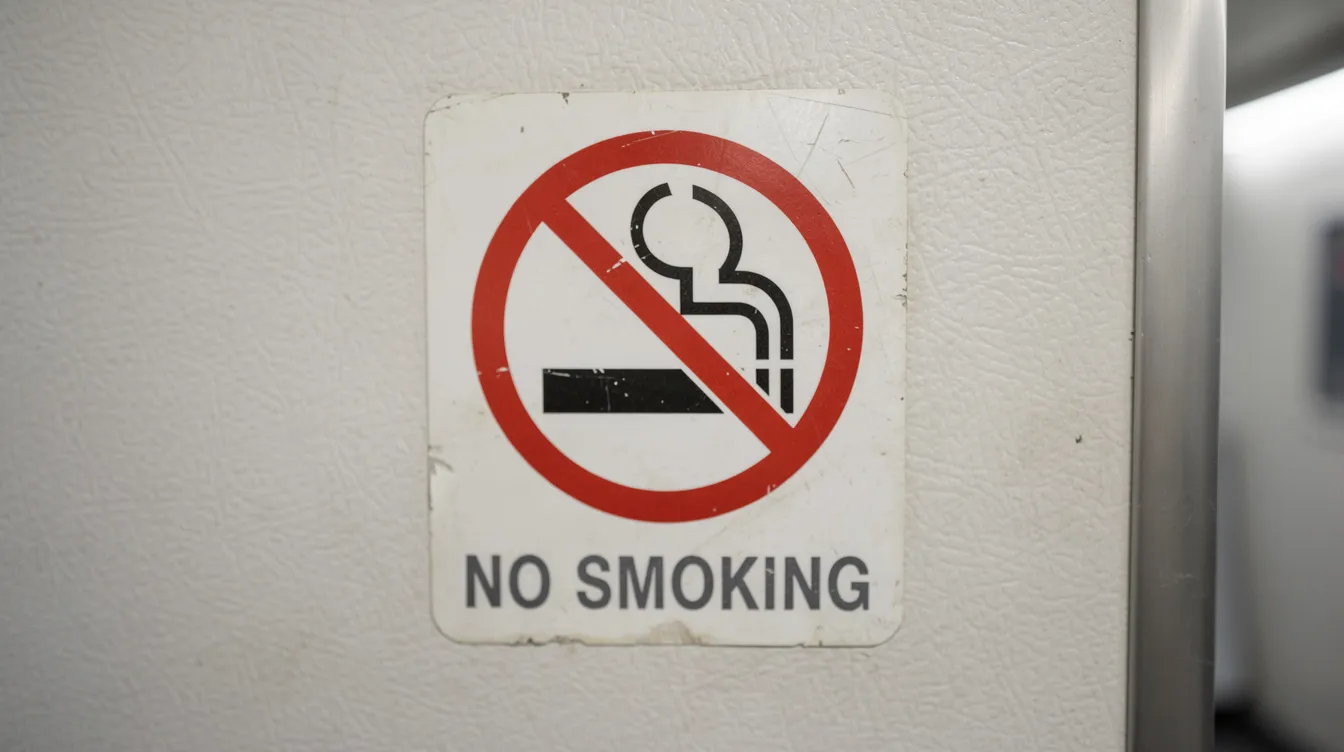
No smoking signs and built-in ashtrays are part of the aircraft safety system, even though smoking is banned. Aviation regulators like the Federal Aviation Administration require illuminated passenger information signs, including the smoking sign, visible from every seat and controllable from the flight deck by the pilot.
Ashtrays remain in lavatory doors as a backup. If someone breaks the rules and lights a cigarette, the safest place to extinguish it is a fixed ashtray, not a trash bin where it could start a fire. The ashtray exists to protect life in the event of a violation, not to permit one.
Cabin crew is trained to respond immediately to smoke alarms, investigate lavatories, and document every incident. Ignoring no smoking signs or crew instructions is treated as interfering with the duties of the crew, carrying additional penalties beyond the smoking fine itself, and even premium operators like NetJets in private aviation enforce these rules rigorously to protect passengers and crew.
Electronic cigarettes and vaporizers are treated identically to traditional cigarettes on virtually all commercial flights. The use of electronic cigarettes and vaping devices is banned on commercial flights under the same federal aviation regulations that cover tobacco, partly because of battery-related fire hazards and private jet fuel and energy safety considerations that influence all modern aircraft operations.
Passengers may carry e-cigarettes in hand luggage but cannot use or charge them on board due to fire risk from lithium batteries and aerosolized vapor near sensors. An inflight vaping incident can set off smoke detectors and trigger fines in the same range as traditional smoking. In one notable 2018 case, e-cigarette misuse in a cockpit contributed to a false smoke alarm and emergency descent, highlighting the risk these devices pose in air travel and why tools like an airport locator for private flights focus heavily on compliant, well-equipped airports.
Hiding vapor in restrooms or under blankets still counts as smoking and is subject to the same penalties, including arrest on international flights. There is no "discreet" way to vape on a plane.
Unlike commercial flights, smoking policies on a private jet depend largely on the aircraft owner, operator, and crew agreement. Smoking is sometimes allowed on private jets, but private jet smoking rules depend on the operator's discretion. Most private jet operators do not allow smoking, primarily to protect cabin condition, residual aircraft value, and crew health, even when they offer extensive fleets of private charter aircraft worldwide.
When smoking is permitted, it is usually limited to tobacco products and must respect safety procedures, including proper disposal and crew oversight. If a crew member complains, smoking must stop immediately. Smoking is prohibited in smaller propeller aircraft cabins due to ventilation limitations and fire hazards. Illegal substances remain prohibited on private jets regardless of local laws at departure or arrival airports, and travelers using any jet card flight cost estimator should still assume a non‑smoking policy unless explicitly confirmed otherwise.
For travelers who want a clear answer before boarding, understanding these rules in advance saves time, money, and frustration. Learn more about how private jet safety standards and Part 135 charter company regulations apply to every charter.
Jettly connects travelers with a global inventory of over 20,000 aircraft, each with its own smoking policies. During the quote and booking process, the platform can filter for non-smoking or smoking-permitted aircraft, reflecting operator rules and crew comfort, while also helping travelers choose convenient departure and arrival points through its airport locator tools.
Clear communication before departure ensures compliance with regulations and eliminates the risk of conflicts, cleaning fees, or damage charges. Jettly focuses on transparent pricing, so any additional costs related to smoking can be discussed before the flight. Travelers can explore how to book a private jet or review a full guide on how to buy a seat on a private jet and confirm policies at the same time.
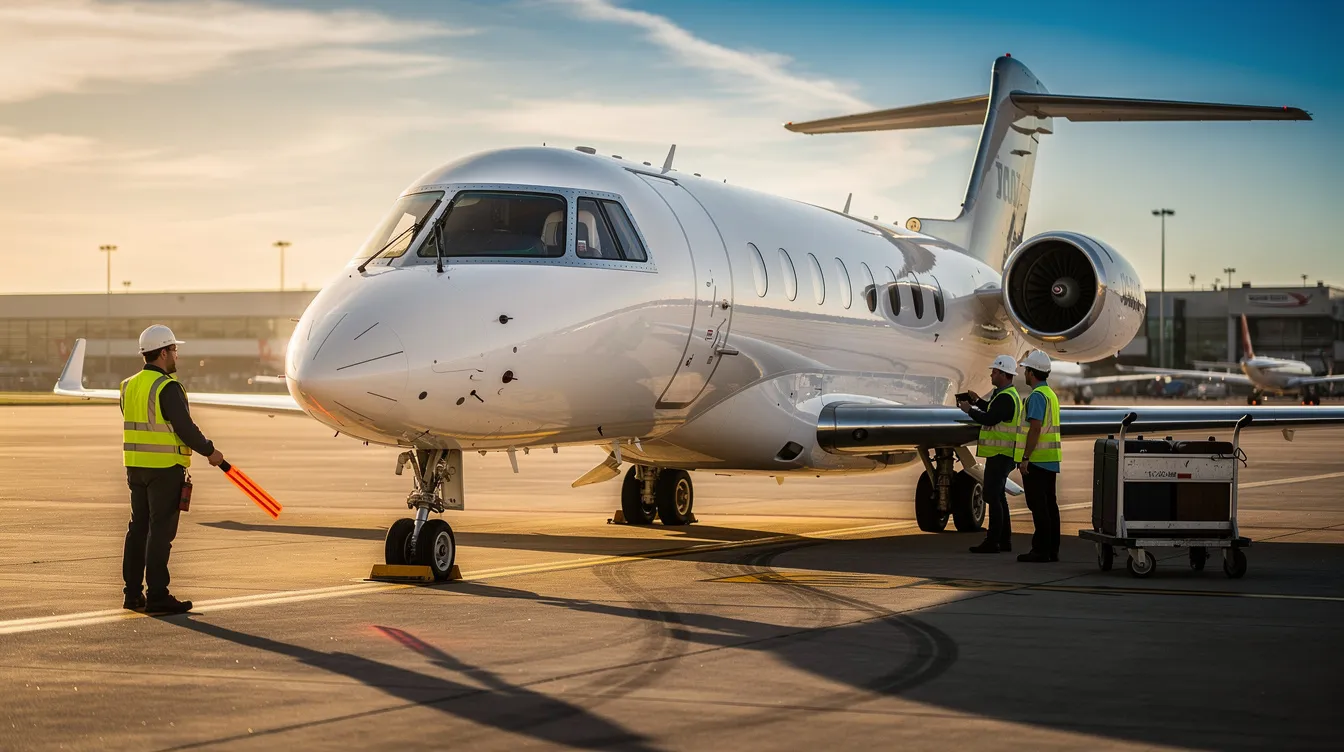
Long international flights can be genuinely challenging for any regular smoker facing several hours under a strict smoking ban. Nicotine withdrawal is real, and planning ahead makes a difference, especially if you’re already using a private jet charter cost estimator to map out realistic routes and schedules.
Non-medical strategies include distractions like films, work, or sleep, staying hydrated, and avoiding alcohol, which tends to increase cravings. Passengers should discuss nicotine replacement options with a doctor before traveling. Nicotine gum, lozenges, and patches all comply with airline rules and can help manage cravings without breaking any laws, and private flyers can also plan ahead with tailored amenities like in‑flight catering for private jets to stay comfortable without lighting up.
On private jets chartered through platforms like Jettly, shorter routes, flexible departure times, and the ability to choose routing with more frequent ground stops can help heavy smokers plan realistic breaks. Consider empty leg flights or crowdsourced shared private jet flights for cost-effective private travel with more scheduling freedom.
In the U.S., FAA civil penalties for inflight smoking or vaping can reach up to $4,000 per incident. If the incident involves tampering with safety equipment or causes a diversion, cumulative fines can exceed $40,000. Some countries add local criminal charges or court-imposed fines on top of aviation penalties, adding to the already high overall cost of private jet travel when disruptions occur.
No. Vaping anywhere on a commercial plane, including the restroom, is prohibited and will likely trigger smoke detectors. Being caught leads to immediate reporting to authorities, potential fines, and removal from the flight. There is no free pass for "discreet" vaping.
No. Regulators and airlines worldwide moved to ban smoking on commercial flights, and all major scheduled airlines now operate under a smoking ban covering cigarettes, cigars, pipes, and electronic cigarettes on both domestic and international flights. Any claim of a smoking-allowed commercial flight should be verified directly with the airline and aviation authority, or considered alongside guides to getting a seat on a private jet if smoke-free commercial options don’t meet your needs.
Some private jets in Jettly's network may allow tobacco smoking, but many airlines and operators enforce strictly non-smoking cabins. Travelers should request their preference during the quote process so Jettly can match them with an appropriate operator and confirm the policy before departure, especially if they’re considering private jet membership programs for frequent travel.
Crew will investigate the source immediately. If the alarm is linked to smoking or vaping, they will document the incident and may involve ground authorities at landing. Even without an actual fire, the responsible passenger can still face fines or enforcement for violating the smoking ban or interfering with safety equipment, and repeat private flyers may find that premium access options like jet card programs become harder to secure.
Smoking on planes, whether commercial or private, carries significant risks and strict penalties. Commercial flights enforce a comprehensive ban on smoking and vaping to protect passenger safety and health, with fines reaching up to $4,000 or more, and potentially escalating if a flight diversion occurs. Private jets may offer more flexibility, but smoking policies vary by operator and require clear communication to avoid fines or conflicts. Passengers should always respect crew instructions and onboard regulations, use nicotine alternatives to manage cravings, and plan ahead to ensure a safe and smooth travel experience. Understanding these rules helps travelers avoid costly penalties and disruptions while enjoying the convenience and flexibility of private air travel.
Ready to fly private on your terms? Explore flight options, confirm smoking policies, and request a quote at https://www.jettly.com.
Share this post:
Jay Franco Serevilla
Jun 29, 2026
|
5
min read
Discover tips and trends in the industry.
5
min read
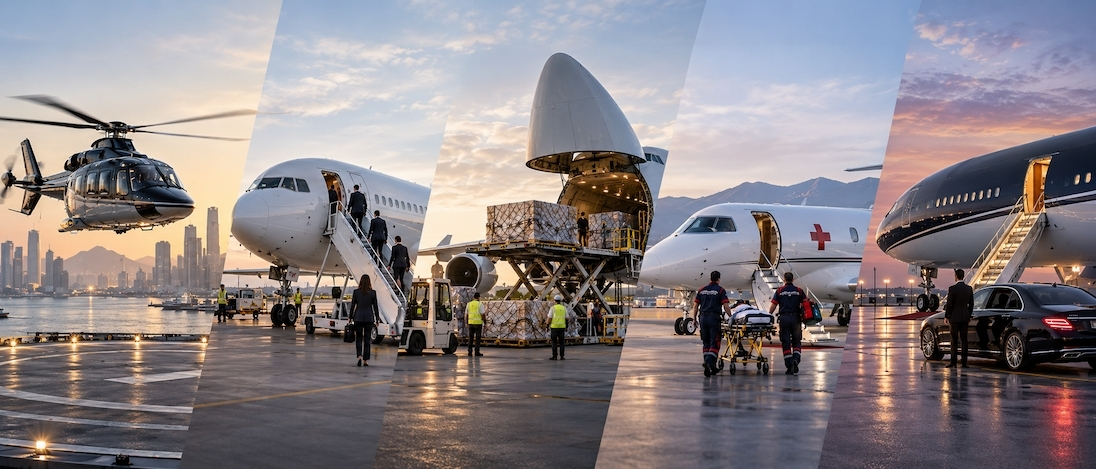
Jettly Launches Special Missions, Expanding On-Demand Access to Helicopters, Group Charter, Cargo, Medevac and VIP Airliners
Jettly has launched "Special Missions," integrating complex charter categories—including helicopters, group charter (18–200 seats), cargo freighters, medevac flights, and VIP airliners—into its instant-pricing digital marketplace. Supported by a network of over 23,000 aircraft and 24/7 flight operations, the feature replaces slow, offline sourcing with transparent digital access for high-stakes, specialized flying.
Read More
5
min read
Tom Brady's Aviation Habits After His Retirement From Pro Football
Tom Brady’s post-NFL career has transformed his travel needs from those of a professional athlete into those of a broadcaster, investor, and business executive. While he has long been associated with the Gulfstream G550, the economics of private aviation suggest that flexible access can be more efficient than whole-aircraft ownership for travelers flying fewer than several hundred hours per year. His evolving schedule illustrates why depreciation, fixed operating costs, productivity, and fleet flexibility increasingly shape how ultra-high-net-worth travelers approach private aviation.
Read MoreStay updated with our latest insights and tips to elevate your journey with us.
MEMBERSHIPS AND ASSOCIATIONS



Disclaimer: Jettly operates as a charter broker, offering access to a global digital jet charter marketplace. Jettly is not a direct air carrier and does not own or operate aircraft. All advertised flights are conducted by third-party air carriers that are fully licensed and hold the appropriate Part 135 or Part 121 certifications issued by the Federal Aviation Administration (FAA) or equivalent regulatory authorities under U.S. or foreign law. Jettly complies fully with the U.S. Department of Transportation's Part 295 and Part 298 Charter Broker regulations. Jettly does not carry additional liability insurance. Passengers are covered by aircraft operator insurance. TICO: 50023770


