



Login
Get Instant Pricing On 23,000+ Aircraft

>
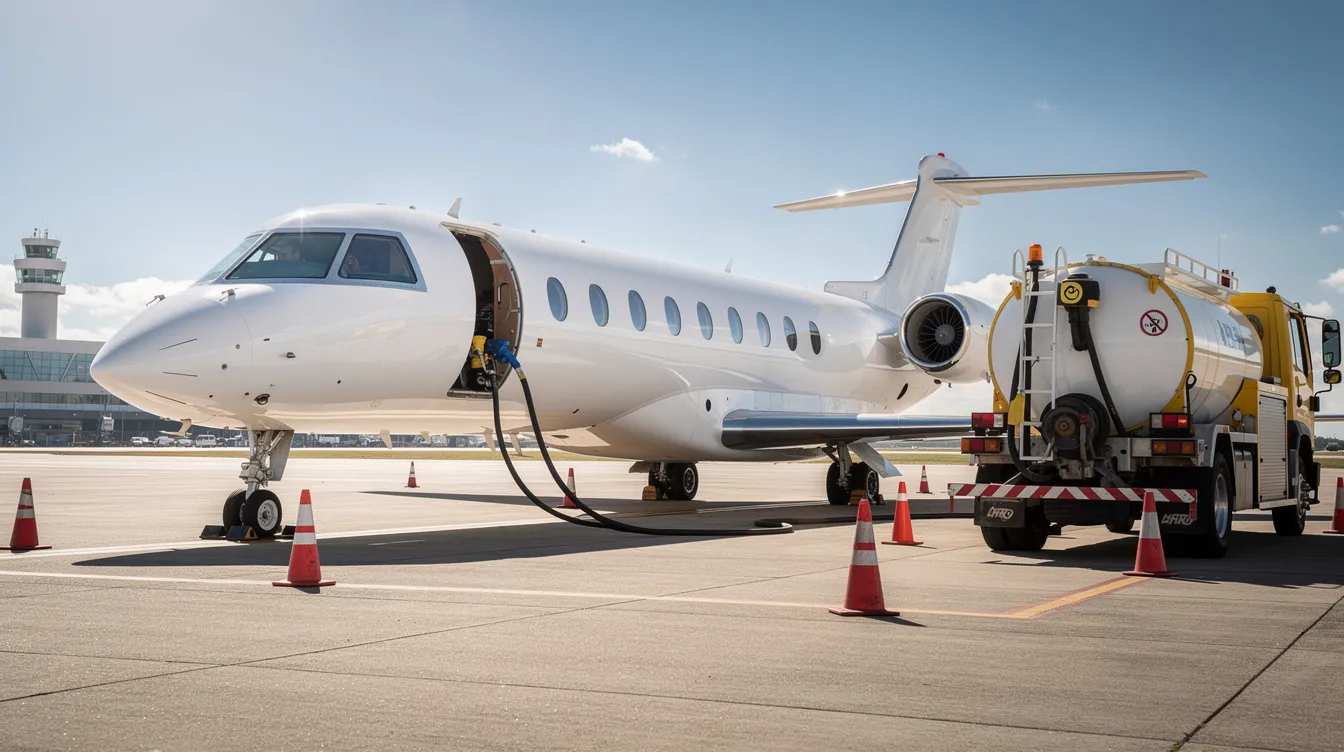
Every flight depends on the right fuel for the plane—whether it's jet fuel or aviation gasoline—from a small Cessna trainer to a long-range Gulfstream crossing an ocean. This guide is for private jet travelers who want to understand how the type and amount of airplane fuel affect their travel experience, costs, and aircraft options. The type, quantity, and cost of aircraft fuel shape everything from route planning to charter pricing. Understanding airplane fuel is essential for private jet travelers because it directly impacts the range of available aircraft, the cost of chartering a flight, and the flexibility of your travel plans. Here's what private jet travelers need to know about the different types of fuel, how much fuel planes carry, and how these factors influence your private jet travel experience.
Most airplanes use kerosene-based jet fuel (such as Jet A and Jet A-1) to power turbine engines, while smaller piston engine aircraft rely on aviation gasoline (avgas) with higher octane ratings to prevent engine knocking.
Airplane fuel capacity and fuel burn vary dramatically - from under 60 gallons in small trainers to more than 60,000 gallons in widebody jets - directly affecting range, operating costs, and trip planning.
Modern aviation fuels and emerging sustainable aviation fuel (SAF) aim to balance engine performance, safety, and environmental impact, with regulatory mandates pushing adoption through 2050.
Fuel planning, reserves, and weight calculations are critical for every flight, including private jet charters arranged through platforms like Jettly.
Read on to learn how different types of aviation fuel influence private jet charter choices, pricing, and the aircraft available for your next trip.
Aviation fuel is a category of specialized fuels engineered to power aircraft engines under conditions that would defeat ordinary gasoline - high altitude, low temperatures, rapid pressure changes, and wide power settings. These fuels must perform reliably from idle taxi to maximum takeoff thrust, and they're refined to stringent requirements set by international standards like ASTM D1655.
The two main families are jet fuel (kerosene-based, for turbine engines) and aviation gasoline, or avgas (for spark ignition piston engines). Both differ significantly from automotive gasoline in volatility, additive packages, and safety margins. Aviation fuels are engineered to withstand extreme temperature ranges and high altitudes, ensuring stable combustion and minimal risk of vapor lock or icing.
Fuel choice depends on engine type, aircraft size, and operational profile. For private jet charter passengers, the fuel type is usually invisible - but it heavily influences fuel costs, range, and the aircraft options available on Jettly's platform.
Airplanes primarily use jet fuel or aviation gasoline depending on their engine type. These two fuel families serve fundamentally different powerplants and are never interchangeable.
Jet fuel is kerosene-based and powers gas turbines in commercial aircraft, most business jets, turboprops, and many helicopters. It offers high energy density and a higher flash point for safer ground handling. Aviation gasoline (avgas) is a highly refined gasoline with a high octane rating, formulated for piston-engine aircraft common in general aviation - think training planes, recreational flyers, and some legacy small aircraft.
Using the wrong fuel type - for example, putting jet fuel in a piston engine - can cause catastrophic engine damage or engine failure. Operators follow strict fueling procedures to keep avgas and jet fuel separate, including color-coded nozzles and labeling, to prevent this.
|
Feature |
Jet Fuel (Jet A/A-1) |
Avgas (100LL) |
|---|---|---|
|
Base composition |
Kerosene-based fuel |
Refined gasoline |
|
Engine type |
Turbine engines, jet engines |
Spark ignition piston engines |
|
Flash point |
Higher flash point (~38°C+) |
Lower flash point |
|
Color |
Clear to straw |
Dyed blue |
|
Lead content |
None |
Contains tetraethyl lead |
|
Typical aircraft |
Jets, turboprops, helicopters |
Trainers, small planes, legacy aircraft |
"Jet fuel" actually covers several grades of kerosene-based fuel, each suited to different regions and weather conditions. Aviation fuel must have low freezing points to prevent solidifying in cold conditions at cruise altitude.
Jet A is the most common jet fuel in the United States. It meets ASTM D1655 with a freezing point of −40°C (−40°F) and works for the vast majority of commercial and business jet aircraft operations.
Jet A-1 is the international standard, with a lower freezing point of −47°C (−53°F) and a minimum flash point of 38 °C (100 °F). It typically includes additional additives like static dissipators. Jet A-1 is the default for long-haul and high-latitude routes.
Jet B is a naphtha-kerosene blend with an even lower freezing point of −60 °C, making it suitable for cold routes in extreme conditions. Its lower flash point increases ground-handling risk, so it's mainly used in cold climates, remote operations, and by some military aircraft.
All three grades are colorless to straw-colored, strictly filtered, and tested to prevent water, particulate contamination, and microbial growth. Most private jets chartered through Jettly use Jet A domestically or Jet A-1 for international legs, depending on the departure region and operator standards, and operators may choose among different types of jet fuel based on climate, mission profile, and regulatory requirements.
Avgas is the primary fuel powering spark ignition piston engines in small aircraft, training planes, and certain legacy private aircraft. Avgas 100LL is a low-lead aviation gasoline used in piston engines. It's rated by octane rating - a measure of resistance to knocking under high-pressure compression.
Aviation gasoline contains tetraethyl lead to prevent engine knock in high-compression engines. The most widely used grade, Avgas 100LL (low lead), carries an effective octane rating of 100 and is commonly dyed blue to distinguish it from other fuels and prevent misfueling.
|
Grade |
Octane Rating |
Lead Content |
Color |
|---|---|---|---|
|
100LL |
100 |
Low lead |
Blue |
|
100/130 |
100/130 |
Higher lead |
Green |
|
80/87 |
80/87 |
Lower lead |
Red |
|
G100UL |
100 |
Unleaded |
Varies |
Older grades like 80/87 (red) and 100/130 (green) have largely been phased out but still appear in manuals. For travelers, understanding how aircraft type, fuel burn, and routing affect costs can make private jet charter pricing much more transparent. Unleaded alternatives like G100UL, first FAA-approved in 2022, aim to replace leaded avgas over the coming decade, addressing both environmental impact and public health concerns while maintaining engine performance.
Fuel capacity ranges from dozens of gallons in trainers to tens of thousands in widebody airliners - and it directly determines how much fuel carried on board translates into range and payload capability.
A small Cessna 172 trainer holds roughly 50–60 gallons of usable fuel.
Many midsize private jets carry 1,000–2,500 gallons.
Large business jets like the Gulfstream G650 hold approximately 6,600 US gallons, enabling a non-stop range of roughly 7,000 nautical miles.
Commercial planes typically hold 5,000–60,000 gallons of fuel. A Boeing 737 carries about 6,000–7,000 gallons, while a Boeing 747-400 holds about 57,000 gallons of fuel.
Widebody airliners can exceed 50,000 gallons of fuel in total capacity.
Fuel capacity affects an aircraft's range and payload. "Usable fuel" is always slightly less than total tank volume due to safety margins and unusable volume near tank walls and in sump areas. The center tank and wing tanks work together to balance weight distribution.
|
Aircraft Category |
Typical Fuel Capacity |
Approximate Non-Stop Range |
|---|---|---|
|
Light single-engine (Cessna 172) |
50–60 gallons |
~600–800 nm |
|
Light jet (Phenom 300E) |
~800 gallons |
~1,800–2,000 nm |
|
Large business jet (G650) |
~6,600 gallons |
~7,000 nm |
|
Commercial airliner (737) |
~6,500 gallons |
~3,000–3,500 nm |
Private jet operators and brokers like Jettly use fuel capacity, expected winds, and reserve requirements to determine whether non-stop legs - such as New York to Los Angeles or London to Dubai - are feasible for a given aircraft, then match each mission with suitable private charter aircraft that balance range, speed, and payload.
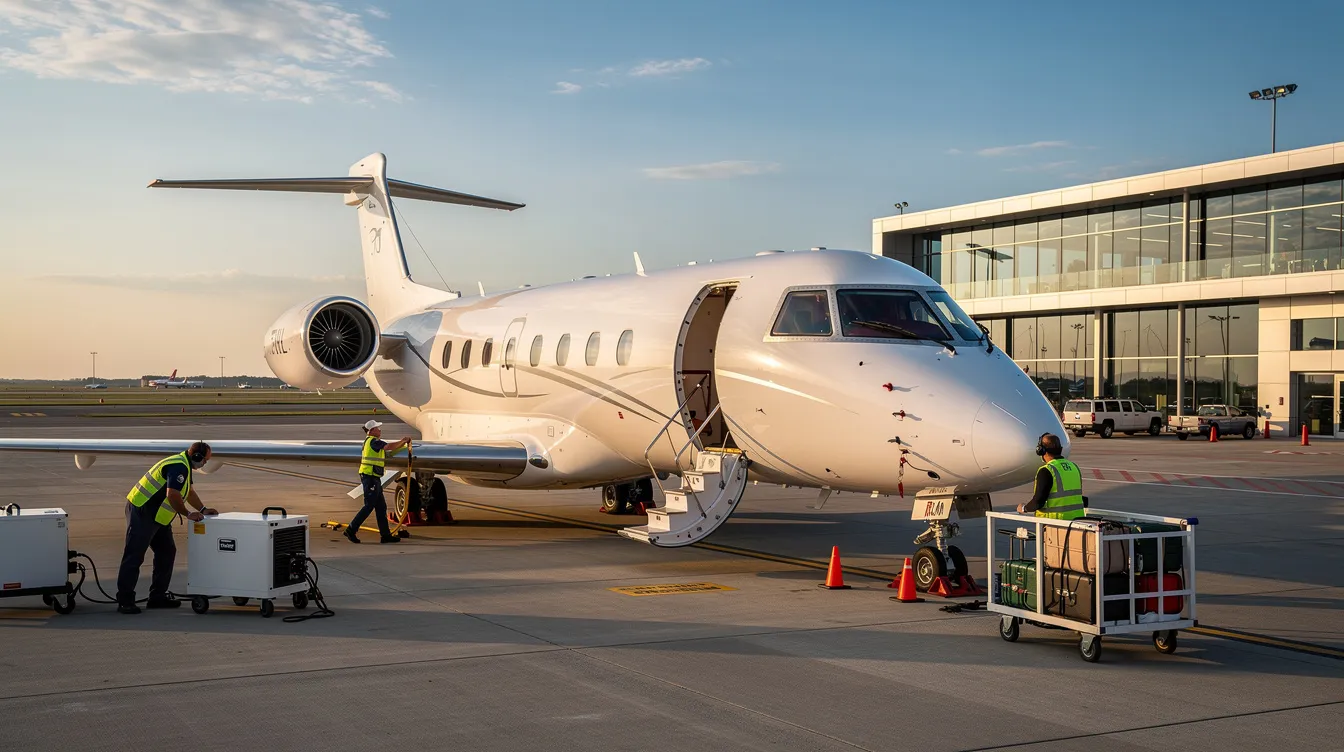
Fuel consumption depends on aircraft weight, altitude, speed, weather conditions, and especially the phase of flight. Takeoff and initial climb are the most fuel-intensive phases, sometimes accounting for 5–10% of total trip fuel on medium-haul flights. Cruise is relatively efficient, and jet fuel consumption improves over long distances during flights as the aircraft burns off weight.
Typical hourly burn rates for different categories:
Turboprop: ~80 gallons/hour
Light jet: ~120–190 gallons/hour
Midsize jet: ~250 gallons/hour
Ultra-long-range jet: ~450–500 gallons/hour
On average, aircraft consume around 3 liters per passenger per 100 kilometers on modern commercial flights. The Airbus A350 is 30–35% more fuel-efficient than older models it replaces, and modern jets achieve 70–100 miles per gallon per passenger when fully loaded.
For private jet customers, total fuel used and current jet fuel prices are key inputs to charter quotes, especially when comparing a fractional model like NetJets with a more flexible NetJets alternative private jet service that prices trips on-demand. A midsize jet burning 250 gallons per hour at roughly $7.80 per gallon translates to about $1,950 per hour in fuel costs alone - a figure that scales significantly on long-haul or repositioning flights.
Kerosene-based jet fuel strikes the right balance between energy density, safety, and performance for turbine engines. Several properties make it the fuel of choice for modern aircraft:
Safety: Jet fuel has a higher flash point than car gasoline, making it less volatile and safer during fueling, taxi, and ground handling. Automotive gasoline would vaporize excessively at altitude, risking vapor lock.
Cold stability: Kerosene remains liquid and pumpable at the low temperatures experienced at cruise altitude (often below −50°C), unlike typical car gasoline that could freeze or behave unpredictably.
Controlled additives: Jet fuels contain tightly managed anti-icing agents, antioxidants, corrosion inhibitors, and static dissipator additives to protect aircraft engines and fuel systems under extreme conditions.
Energy density: Per unit weight, kerosene delivers enough energy to power aircraft over thousands of miles without requiring impossibly heavy fuel loads, supporting the thrust needed for high-speed, high-altitude flight.
These characteristics make kerosene-based fuels ideal for both commercial airlines and private jet operations. Internal combustion engines in piston aircraft use avgas for similar reasons - matched fuel chemistry prevents engine knocking and supports reliable engine performance across power settings.
Aviation fuel combustion produces CO₂, NOx, and contrails, contributing roughly 2% of global CO₂ emissions and about 12% of all transport-related carbon emissions. This reality is driving the aviation industry toward alternative fuels.
Sustainable aviation fuel (SAF) is an umbrella term for jet fuels made from renewable sources - used cooking oil, agricultural residues, and synthetic fuels produced from captured CO₂ and green hydrogen. Sustainable aviation fuel reduces greenhouse gas emissions significantly compared to conventional crude oil-derived jet fuel, with lifecycle reductions of up to 80% depending on the feedstock.
Key facts about SAF:
SAF can be blended with traditional aviation fuels, typically at ratios up to 50%, and is certified under ASTM D7566.
SAF requires few modifications to existing aircraft engines - it's designed as a drop-in replacement.
The U.S., India, and EU invest in SAF research and infrastructure, with the EU's ReFuelEU regulation mandating SAF shares from 2% in 2025 to 70% by 2050.
SAF production faces political and economic barriers: costs remain higher than conventional jet fuel, supply is limited, and infrastructure for blending and distribution is still developing.
Complementary strategies - lighter materials, optimized flight routing, more efficient aircraft, and optional carbon offset programs - work alongside SAF to reduce carbon emissions across aviation operations, including private jet travel.
Precise fuel planning is mandatory for every flight plan and sits at the core of aviation safety. Aviation fuel must meet rigorous safety standards due to the risks associated with engine failure mid-flight, and fuel management is critical for preventing fuel exhaustion and starvation in aircraft.
Pilots and dispatchers calculate required fuel by factoring in:
Route distance, forecast winds, and temperature
Contingency fuel for unexpected conditions
Alternate airport fuel in case of diversion
Final reserve fuel (typically 30 minutes of holding)
Extra fuel at the captain's discretion
Strict quality control standards govern aviation fuel to prevent contamination and ensure safety. Misfueling - loading the wrong fuel type - remains a real risk. FAA regulations emphasize fuel type verification before fueling, and miscommunication is a common cause of misfueling incidents. To reduce this risk, avgas fueling nozzles are 40 mm in diameter while jet fuel nozzles have a rectangular opening larger than 60 mm, making cross-fueling physically difficult. Aircraft must be electrically bonded to fueling apparatus before fueling to prevent static discharge, and fuel spills must be controlled by all fueling vehicles.
Reputable private jet charter providers - such as operators accessible through Jettly - follow certified fueling and safety standards on every flight, with clean tanks, proper labeling, and procedural cross-checks built into standard operations, whether they are serving large hubs or more remote airfields located through an airport locator tool.
Fuel is one of the highest variable costs in aviation. Fuel efficiency impacts operational costs significantly for airlines and charter operators alike, and jet fuel prices fluctuate daily with global oil markets, which is why some frequent flyers prefer predictable-rate jet card membership programs to manage their annual travel budgets. At current U.S. FBO averages near $7.80 per gallon, fuel can represent 15–40% of total operating costs depending on aircraft size.
Charter pricing reflects estimated fuel burn for the planned route, aircraft category, expected winds, and any repositioning segments, and frequent flyers often use private jet memberships to access wholesale rates and reduce the impact of volatile fuel costs on trip pricing. Fuel capacity limits also determine whether an aircraft can fly a given route nonstop - a light jet might need a fuel stop on a coast-to-coast flight, while a heavy jet can power aircraft direct.
Jettly's digital platform factors in fuel-related constraints and current pricing when presenting instant charter quotes, helping travelers compare jet aircraft that balance speed, range, and budget - without needing to calculate fuel burn themselves.
Jettly's digital platform factors in fuel-related constraints and current pricing when presenting instant charter quotes, helping travelers compare jet aircraft that balance speed, range, and budget - without needing to calculate fuel burn themselves.Ready to experience private travel on your terms? Explore flight options or request a quote at jettly.com.
Here are answers to common questions travelers have about jet fuel, avgas, fuel capacity, and private jet charters.
Most commercial airliners, business jets, and many turboprops use kerosene-based jet fuels such as Jet A or Jet A-1 to power turbine engines. Smaller training and recreational aircraft typically use aviation gasoline (avgas) formulated for piston engines with high octane requirements. Hydrogen fuel is being researched as a long-term alternative, but it's not yet commercially viable for passenger flights.
Neither jet fuel nor avgas is appropriate for normal cars. Jet fuel is similar to diesel but can cause engine damage in gasoline vehicles, and avgas's lead content would quickly ruin catalytic converters and emissions equipment. Using aviation fuel in road vehicles is unsafe, illegal for road use due to tax and regulatory restrictions, and not recommended under any circumstances.
On a per-passenger basis, private jets typically burn more fuel than large commercial aircraft because they carry fewer passengers, even though the total fuel burn per hour is often lower. Modern business jets are becoming more efficient, and using right-sized aircraft for each trip can reduce fuel consumption, especially when travelers share empty seats on private jet flights instead of flying alone. Platforms like Jettly help match the right aircraft to each route to minimize waste.
Small jets can often be refueled in 10–20 minutes, while larger long-range business jets may require 20–40 minutes depending on fuel load, equipment, and airport procedures. Fueling is typically coordinated with other ground services - catering, baggage, cabin cleaning - to keep turnaround times short for charter customers.
Charter quotes typically bundle fuel into an hourly or route-based rate that already accounts for expected fuel consumption and current prices. Travelers interested in comparing fuel-efficient aircraft or route options can explore Jettly's online marketplace and instant pricing tools to see how different aircraft classes affect the total cost of their trip, read detailed advice on how to buy a seat on a private jet, and learn practical strategies for getting a seat on a private jet easily while keeping fuel-related costs in check.
Understanding the fuel of a plane—whether avgas or kerosene-based jet fuel—is crucial for private jet travelers aiming to optimize their travel experience. Fuel type and capacity directly impact aircraft range, operational costs, and charter pricing. Platforms like Jettly leverage this knowledge to offer transparent, instant pricing and access to a wide range of aircraft suited to your mission.
As the aviation fuel industry evolves with sustainable aviation fuels and efficiency improvements, private jet travelers can expect more environmentally conscious options without sacrificing convenience or performance.
Ready to experience private travel on your terms? Explore flight options or request a quote at https://www.jettly.com
Share this post:
Jay Franco Serevilla
Nov 2, 2026
|
5
min read
Discover tips and trends in the industry.
5
min read
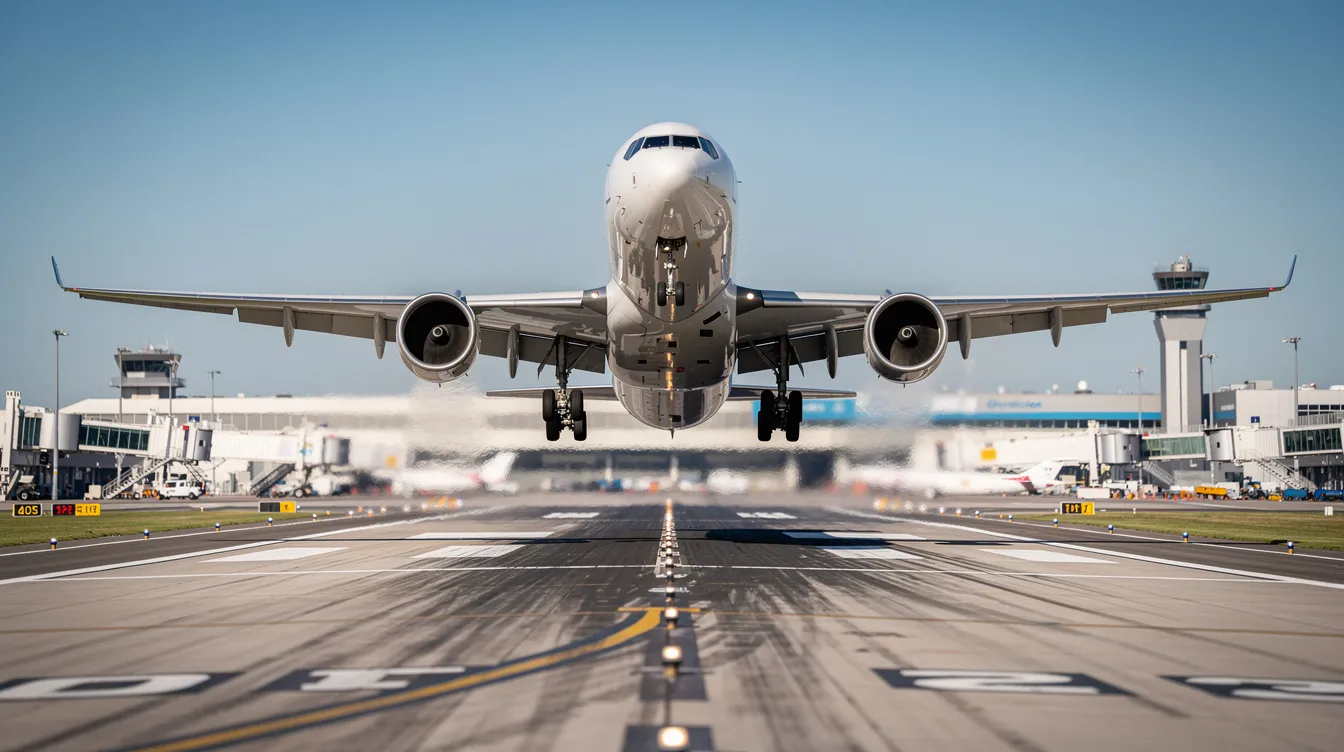
How Long of a Runway Does a 777 Need? (Runway Length, Takeoff and Landing Explained)
The Boeing 777 requires approximately 9,000 to 11,000 feet of runway for takeoff at maximum weight under standard conditions. Landing distances are shorter, typically ranging from 5,500 to 7,000 feet. Factors such as aircraft weight, temperature, and runway conditions significantly influence these requirements.
Read More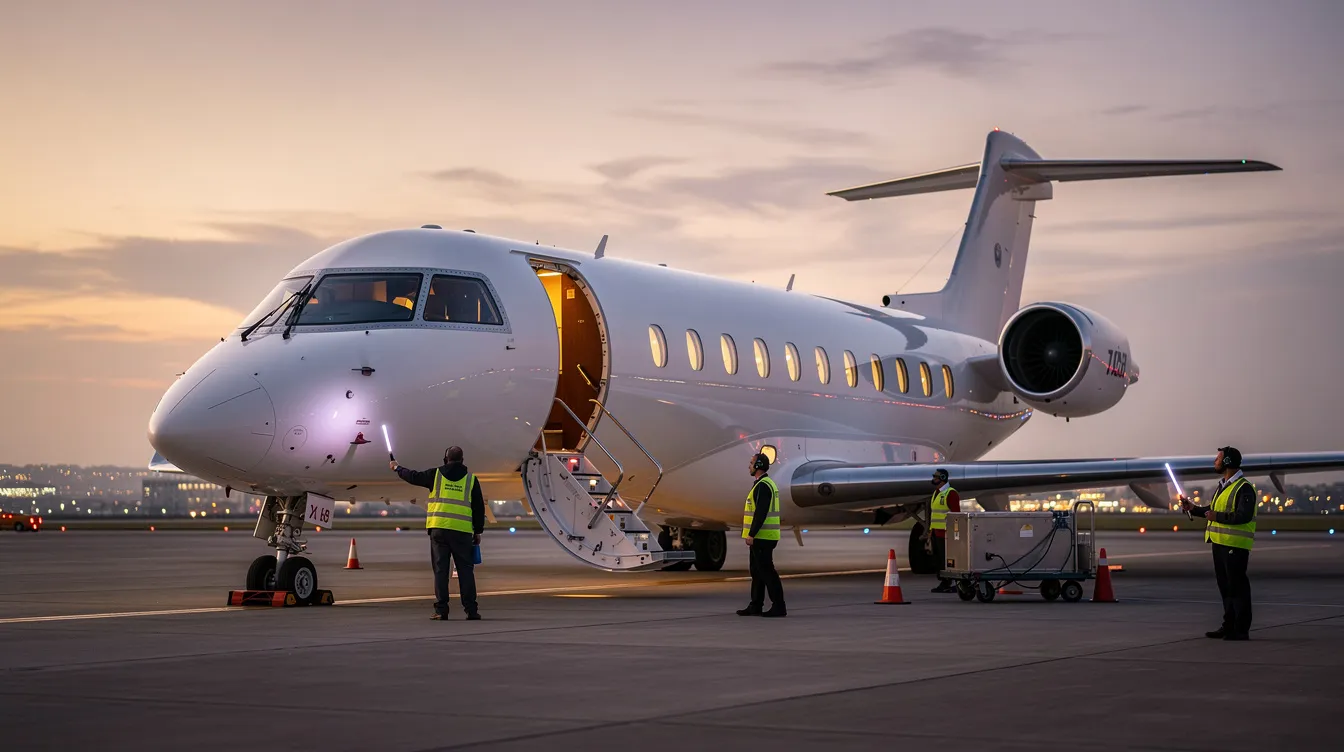
5
min read
Plane Charter Prices in 2026: How Much Does It Cost to Charter a Private Jet?
In 2026, private jet charter prices vary significantly based on aircraft type, with costs ranging from $1,800 to over $20,000 per flight hour. Additional expenses such as taxes, fees, and crew costs can increase the total trip price by 20-40%. This guide provides insights into the factors influencing these prices and offers strategies to reduce costs while maintaining comfort.
Read MoreStay updated with our latest insights and tips to elevate your journey with us.
MEMBERSHIPS AND ASSOCIATIONS



Disclaimer: Jettly operates as a charter broker, offering access to a global digital jet charter marketplace. Jettly is not a direct air carrier and does not own or operate aircraft. All advertised flights are conducted by third-party air carriers that are fully licensed and hold the appropriate Part 135 or Part 121 certifications issued by the Federal Aviation Administration (FAA) or equivalent regulatory authorities under U.S. or foreign law. Jettly complies fully with the U.S. Department of Transportation's Part 295 and Part 298 Charter Broker regulations. Jettly does not carry additional liability insurance. Passengers are covered by aircraft operator insurance. TICO: 50023770


