


Login
Get Instant Pricing On 23,000+ Aircraft

>
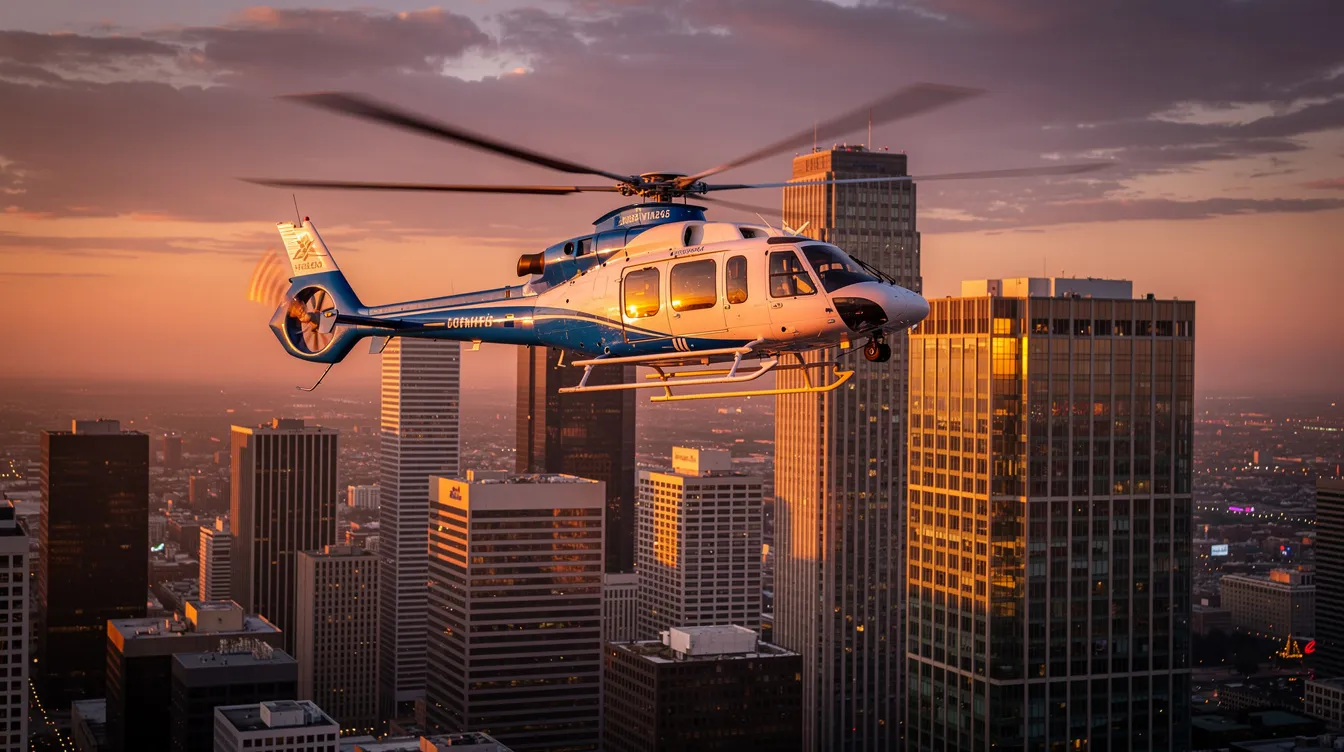
Asking how many helicopters are there in the world leads to a range of answers depending on how you count them, but a practical 2026 estimate is about 50,000 to 55,000 active helicopters worldwide, rising to roughly 60,000 to 65,000 if you also include piston-engine and stored-but-registered rotorcraft. For frequent flyers, corporate executives, and high-net-worth individuals or families comparing flexible private air travel options, those numbers matter because helicopters reach places jets cannot, support critical defense and emergency missions, and increasingly extend private travel into true door-to-door transportation.
This article is intended for frequent flyers, corporate executives, and private aviation enthusiasts seeking a comprehensive overview of the global helicopter fleet, its breakdown by sector, and its relevance to private and commercial travel.
This article breaks down the global fleet by military and civil aircraft, ranks the top countries by helicopter fleet size, profiles the leading manufacturers and key models, and looks at the missions helicopters perform and the market trends shaping the sector. It also shows how helicopter charter fits alongside private jet travel through platforms like Jettly for travelers who want more transparent, convenient access to private aviation.
As of 2026, approximately 50,000 to 55,000 helicopters are expected to operate globally, with wider estimates reaching 60,000 to 65,000 operational units when piston-engine and stored-but-registered aircraft are included. The world has approximately 20,000 military helicopters in service, and about 30,000 helicopters belong to civil or parapublic organizations.
The largest military helicopter fleets belong to the United States (5,567 helicopters, 28% of the world's total military count), Russia, China, India, and South Korea. The U.S. also dominates the civil helicopter market with over 9,000 commercial helicopters as of 2019.
Combat helicopters, such as the AH-64 Apache and Mi-24 Hind, make up only a fraction of total military rotorcraft. Transport, training, law enforcement, EMS, and offshore support aircraft form the bulk of the global fleet.
Helicopters fill roles that fixed-wing aircraft cannot: vertical lift into city centers, mountain landings, offshore platform shuttles, and access to sites with no runway. This is why the global helicopter market is projected to reach over 68 billion USD by 2027.
For private travelers, helicopters complement jets by enabling true door-to-door travel. Platforms like Jettly connect travelers with both jet and helicopter charter options through a single digital marketplace.
For the purposes of this article, "helicopters" refers to airworthy, in-service rotorcraft, excluding those in museums, boneyards, or long-term preservation. There are varying estimates of the global civil helicopter fleet influenced by dataset definitions.
The global active helicopter fleet is estimated at a total number of around 40,000 to 50,000 units, though this number stretches to 60,000 to 65,000 operational units depending on whether piston-engine rotorcraft, government-operated aircraft, and registered-but-infrequently-flown machines are counted. The total estimate for turbine-powered helicopters alone is about 50,000 in service by 2025. There are varying estimates of the global civil helicopter fleet influenced by dataset definitions, source methodology, and how each country categorizes "active" versus "stored."
Breaking this down: around 30,000 helicopters are operated by civil or parapublic organizations and around 20,000 are military, with an exception in some counts where dataset rules include or exclude certain government, reserve, or lightly used aircraft without changing the overall picture. Military rotorcraft inventory is around 20,800 active units across more than 150 nations, per defense directories. Civil registries account for roughly 35,000 to 40,000 helicopters, with civil aviation databases estimating an active civil fleet of roughly 20,000 to 25,000 when counting only turbine-powered commercial and corporate airframes.
"Helicopters in the world" in this article refers to airworthy aircraft in service, not those in museums, boneyards, or long-term preservation. For comparison, fixed-wing aircraft number over 400,000 worldwide. Helicopters are far fewer, but they fill missions no airplane can replicate: hovering over a casualty site, landing on a rooftop, or shuttling crew to an offshore oil rig, while fixed-wing options remain ideal when you are finding the best cross-country plane for longer-range missions.
Global defense directories estimate about 20,000 military helicopters in active service. Military forces globally operate around 20,000 active combat, transport, and training helicopters, spread across armies, navies, air forces, and marine corps in more than 150 countries.
Military helicopters are categorized into transport, attack, and training roles. They are part of the wider military aircraft category, which also includes fixed-wing fighters, bombers, and surveillance platforms. The roughly 20,000 helicopter figure is based on aggregated fleet data from 2025 and 2026 defense directories such as FlightGlobal's World Air Forces and GlobalFirePower.
Combat helicopters, those designed for attack and close air support, form only a subset. The majority of military rotorcraft serve as transports, medevac platforms, maritime patrol aircraft, or trainers. Transparency varies: U.S. and NATO allies publish detailed fleet breakdowns, while countries like Russia and China classify portions of their inventories, making most counts best understood as estimates.
A small group of countries operates the majority of the world's military helicopters. Rankings below reflect total helicopter fleets across all services and roles, not just combat types. Data draws from 2025 and 2026 defense directories.
|
Country |
Military Helicopters |
Percentage of Global Military Fleet |
|---|---|---|
|
United States |
5,567 |
28% |
|
Russia |
1,535 |
7.8% |
|
China |
913 |
4.6% |
|
India |
894 |
4.5% |
|
South Korea |
786 |
4.0% |
|
Japan |
575 |
2.9% |
|
Turkey |
485 |
2.4% |
|
France |
435 |
2.2% |
|
Egypt |
345 |
1.7% |
|
Italy |
345 |
1.7% |
These figures count all military helicopter types. Rankings focused solely on combat helicopters would look different, since some legacy types now take a back seat to newer aircraft and countries like South Korea, Egypt, and Turkey field large utility fleets alongside fewer dedicated attack types.
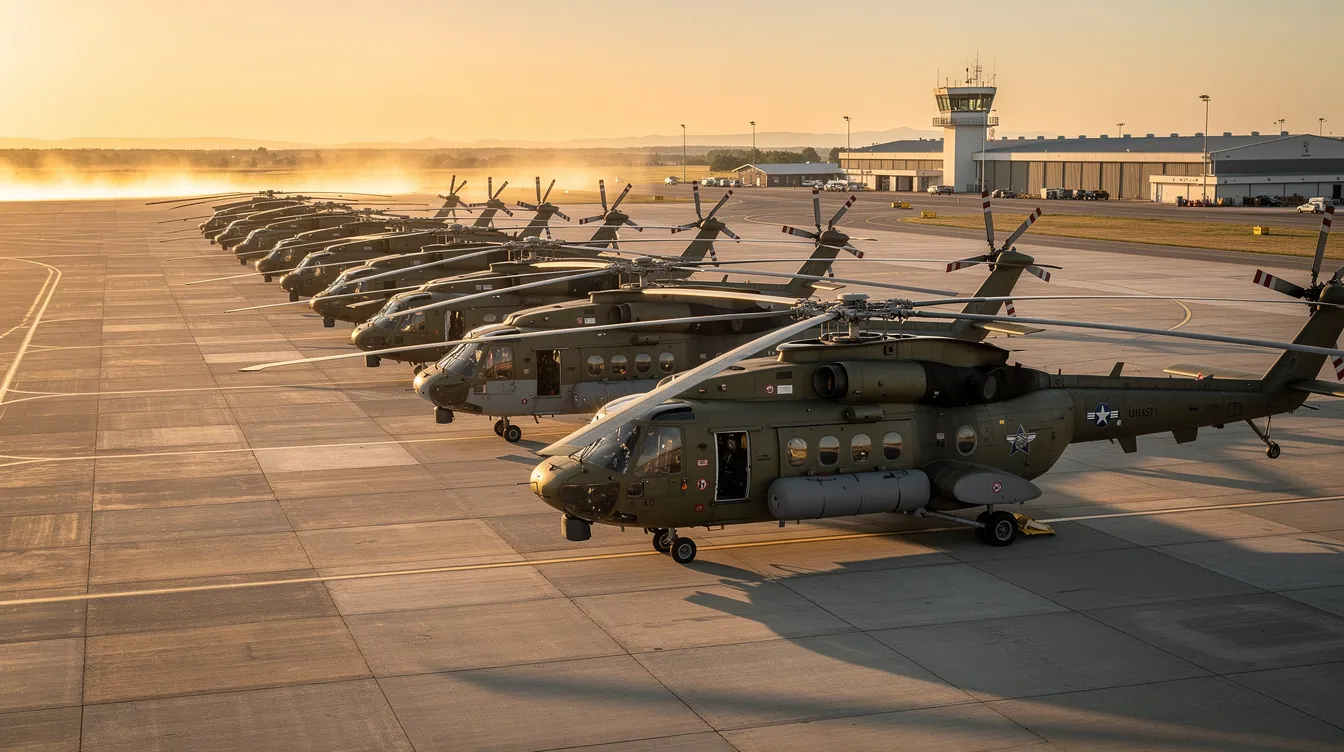
Combat helicopters are aircraft specifically designed or configured for attack, close air support, or armed escort. Examples include the AH-64 Apache, Mi-24 Hind, T129 ATAK, Tiger, and Z-10, all built around a tail rotor or tail section that helps provide stability and yaw control in vertical flight. Out of the approximately 20,000 military helicopters in active duty worldwide, only a minority are pure attack platforms. Most are transport helicopters, utility airframes, trainers, or maritime patrol aircraft that may carry defensive weapons but are not classified as combat helicopters.
Major combat helicopter families and their estimated global in-service numbers:
AH-64 Apache: Around 1,200 in service worldwide, with roughly 838 in the US Army and the rest operated by allies including the UK, Israel, Saudi Arabia, Japan, and others.
Mi-24/Mi-35 Hind: Approximately 890 attack and assault helicopters in global service, operated by Russia, Eastern Europe, parts of Africa, and Asia.
T129 ATAK: Over 100 units delivered or on order for Turkey and export customers.
Z-10/Z-19 family: Several hundred in Chinese service, forming the core of China's modern attack helicopter capability.
Light attack and scout types: AH-1 Cobra variants, MD500/MD530 gunships, and Airbus H145M together total a few thousand units across dozens of countries.
Rankings listing "militaries with the most combat helicopters" count only these combat-oriented aircraft, not the full helicopter fleets discussed in the previous section.
Beyond military fleets, tens of thousands of helicopters support civil, commercial, and governmental missions worldwide. Civil helicopters primarily include multi-mission utility and emergency medical services, alongside law enforcement, offshore energy, corporate transport, and tourism operations. Civil and commercial roles comprise approximately 55% of the helicopter fleet globally.
The global civil helicopter fleet is estimated at approximately 34,254 units. Civil aviation databases estimate an active civil fleet of roughly 20,000 to 25,000 helicopters when counting only turbine-powered, for-hire, and corporate airframes. Adding piston-engine, private, agricultural, and government-operated rotorcraft pushes the total civil count higher. The United States has over 9,000 commercial helicopters as of 2019, and the U.S. alone uses 1,321 helicopters for helicopter ambulance operations.
Fleet composition by weight class:
Light helicopters typically comprise over 50% of commercial deliveries and fleet. Single-engine and light helicopters dominate the numerical segment of civil helicopters because of lower acquisition and operating costs.
Medium helicopters represent roughly 35% of the market and are favored for utility support, offshore crew transport, and EMS.
Heavy helicopters account for about 25% of production and fleet volume, serving offshore oil and gas, construction, and military-adjacent missions.
The military helicopter market is about half the size of the commercial market in dollar terms. In 2019, the commercial helicopter market was over 30 billion USD. Demand is shifting toward multi-role, twin-engine types like the Airbus H145 and Leonardo AW139, which offer better safety margins, greater range, and improved operating economics.
Helicopter concentration varies by country based on geography, economic activity, and regulatory environment.
United States: By far the largest civil and commercial helicopter market. Over 9,000 civil helicopters support EMS, law enforcement, tourism, corporate travel, and offshore energy. The U.S. Gulf Coast is one of the busiest offshore helicopter corridors on the planet.
North Sea region: The UK, Norway, and the Netherlands operate dense helicopter networks serving offshore oil and gas platforms, with large twins like the S-92 and AW139 flying multiple daily rotations.
Latin America: Brazil and Mexico rely on helicopters for remote access, agriculture, and security. São Paulo operates one of the world's busiest urban helicopter shuttle networks because ground traffic can turn a 30-minute trip into a three-hour commute.
Asia-Pacific: South Korea, Japan, and India field large military fleets with growing civil sectors. China's domestic helicopter industry is expanding, but airspace restrictions limit per-capita civil usage compared with the U.S. In India, for example, growing demand spans private jet charter in Chennai, Kolkata, Mumbai, and New Delhi, with helicopters and jets together supporting business and VIP travel.
Middle East: Helicopters serve offshore energy, VIP transport, and security missions across the region. Saudi Arabia, the UAE, and Qatar maintain both military and commercial rotorcraft fleets.
Russia: History shows a deep reliance on helicopters for access to Siberia and the Arctic, where fixed-wing runways are scarce. The Mi-8 family remains the backbone of civilian and military operations in remote areas.
Australia: The civil and general aviation fleet includes about 2,688 helicopters, with an average fleet age of roughly 22 to 23 years.
Urban growth and congestion in megacities encourage helicopter use for high-value, time-critical travel where ground transport is unreliable, and the same dynamics that drive demand for helicopters also create opportunities to find affordable luxury private jet flights by tapping into flexible charter models.
Rotorcraft manufacturing is concentrated among a handful of global OEMs due to high capital requirements, certification hurdles, and complex rotor engineering. The history of helicopter development stretches back over a century: the Breguet Gyroplane No. 1 flew in 1907 with a 45-horsepower engine, the Focke Achgelis Fa 61 set an altitude record of 11,243 feet in 1938, and Igor Sikorsky's VS-300 made successful test flights from 1939 to 1941. The first useful helicopters appeared in the early 1940s. The Alouette II became the first turbine-powered helicopter in 1955, marking a turning point in rotorcraft capability.
Today's major manufacturers and their market positions:
Airbus Helicopters: Airbus Helicopters held 48% of the market in 2020. Key models include the H125, H135, H145, and H225. Airbus Helicopters produced 300 rotorcraft in 2019, down from 451 in 2013, but in-service fleet numbers continue to grow as retirements lag behind deliveries.
Leonardo Helicopters: Leonardo Helicopters had 20% of the global market in 2020, based in Italy. Known for the AW109, AW139, AW169, and AW189 families.
Bell: Producer of the 206/407, 429, and 525, plus historic UH-1 and AH-1 military designs. Bell remains a major supplier to both civil operators and armed forces.
Russian Helicopters (Mil/Kamov): Major supplier of the Mi-8/Mi-17 family and Ka-52, though Western sanctions in the 2020s have limited parts availability and export deliveries.
Sikorsky (Lockheed Martin): Maker of the S-70/UH-60 Black Hawk family and the S-92 used in offshore and VIP operations.
The Mi-8/Mi-17 "Hip" family is the most produced helicopter in history, with 17,000-plus units built and around 2,700 to 2,800 still in active service. The Black Hawk/Seahawk family has roughly 3,960 military units in service globally. The CH-47 Chinook, with around 940 units, remains the primary heavy-lift workhorse for Western allies. The legacy UH-1 "Huey" family still has an estimated 900 to 950 units flying, though many are being retired and replaced.
The mix of turbine versus piston-engine helicopters skews strongly toward turbine in commercial and military use because of reliability and performance in hot-and-high or offshore environments. Piston helicopters remain common for training, aerial photography, and private flying.
Helicopters exist because they perform tasks fixed-wing aircraft cannot: vertical takeoff, hovering, and operating from confined or remote sites. Powered rotors enable access to places where runways do not exist and ground vehicles cannot reach.
Key mission categories:
Combat and military support: Attack, troop transport, special-operations insertion, artillery spotting, and medevac. The AH-64 Apache, Mi-8/17, and CH-47 Chinook are among the most common helicopter types in this category.
Search and rescue and EMS: Types like the H145, AW169, and S-92 operate from hospitals, coast guard bases, and offshore platforms. Rescue helicopters save lives daily in mountain, maritime, and urban emergencies.
Law enforcement and security: Police and border-guard helicopters conduct surveillance, pursuit, and crowd monitoring. Many pilots in this sector fly light single-engine models.
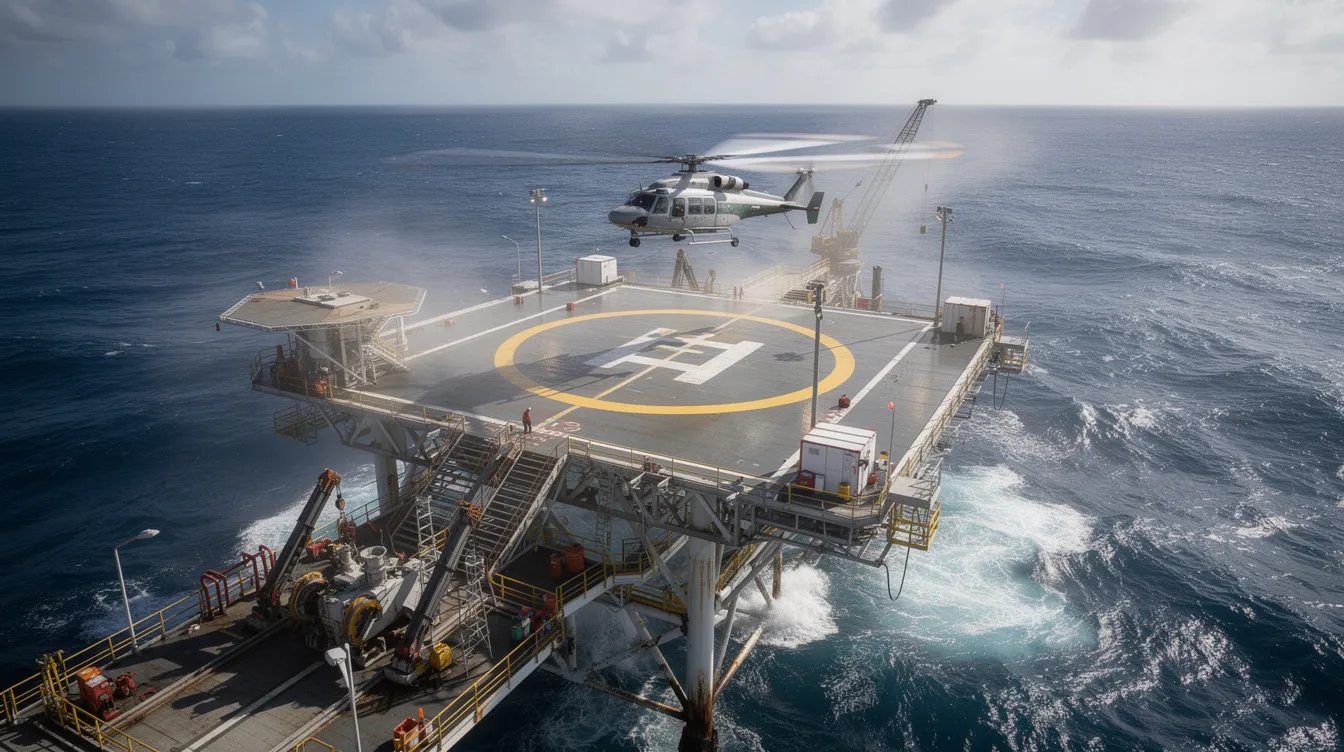
Offshore and utility: Large twins like the AW139, S-92, and H175 shuttle workers to oil and gas platforms or perform heavy-lift construction. Cargo sling operations and external loads are routine.
Corporate, VIP, and private travel: Light and intermediate twins such as the AW109, H130, and Bell 429 operate city-to-airport shuttles or intercity hops. For travelers looking at helicopter ride pricing, this segment offers the most accessible entry point, and understanding helicopter rental costs helps set realistic expectations across different mission types.
Mission diversity explains why helicopter fleets are fragmented across thousands of operators rather than concentrated in a few large airlines. Many helicopters have modular interiors, enabling operators to switch between VIP layout and medevac configuration based on the destination and contract demand.
South Korea is a surprise entry on the list of the world's largest military helicopter operators. With 786 military helicopters in service, South Korea fields one of the densest rotary-wing forces relative to its land area and population. The country's mountainous interior and proximity to North Korea drive this reliance: helicopters enable rapid troop movement, surveillance along the DMZ, and logistics to positions that wheeled vehicles cannot reach efficiently.
Notable fleet features:
South Korea once operated 250-plus MD500/MD530 scout helicopters, representing a large share of all such aircraft worldwide.
The Korean Utility Helicopter KUH-1 Surion, built by Korea Aerospace Industries (KAI), now has around 150 units in service with more on order, marking a transition from imported to domestically developed platforms.
KAI is also developing the Light Armed Helicopter as a replacement for older MD500 gunships, positioning South Korea as both a regional exporter and technology partner.
South Korea's industrial base has shifted the country from a pure importer of helicopters to a manufacturer with export ambitions in the Asia-Pacific region and beyond.
While most helicopters are owned by militaries or specialized operators, a meaningful share supports private and charter travel. For travelers who value time, helicopters solve the "last mile" problem that even private jets cannot address, while charter access offers more flexibility than full ownership: landing in a city center, at a resort with no runway, or directly at a yacht.
How helicopters complement private jets on a point-to-point journey:
Jets handle longer segments (New York to Miami, Toronto to Vancouver).
Helicopters cover city-center to airport transfers or short hops where runways are limited (downtown heliports, island destinations, remote lodges).
Jettly, as a digital private charter aircraft marketplace, focuses primarily on private jets but can also provide access to helicopter charters in many markets through its operator network. Practical use cases for Jettly clients include:
Business travelers connecting from a long-range jet to a helicopter for the final leg into a congested city center.
Families using helicopter transfers to reach ski resorts or coastal villas with no convenient airstrip.
Time-critical trips, such as urgent site visits, where a helicopter can bypass ground traffic and land closer to industrial or construction sites.
Jettly's model, offering instant pricing, transparent cost breakdowns, and access to a large global aircraft inventory, helps travelers compare whether a helicopter segment, a turboprop, or a ground transfer makes the most sense, since these options can be more flexible than aircraft access through ownership for many travelers, especially when you buy a seat on a private jet or explore other ways to get a seat on a private jet easily. Its airport locator tool and private jet charter cost estimator streamline planning and pricing for complex itineraries. For more on how to charter a private jet or arrange multimodal itineraries, the platform's quote tools cover both rotary and fixed-wing options.
Annual helicopter deliveries dipped in the late 2010s and early 2020s, but the market has shown recovery since that downturn, and the global helicopter fleet size is expected to grow in the medium to long term. The global helicopter market is projected to reach over 68 billion USD by 2027, up from a commercial segment worth over 30 billion USD in 2019.
Key structural trends:
Fleet modernization: Replacement of older types (UH-1 Huey, early Mi-8 variants) with more efficient helicopters like the AW139, H145, and UH-60 derivatives. Many retired airframes are being swapped for fewer but more capable models.
Regional growth: Increased demand in Asia-Pacific, Latin America, and parts of Africa for EMS, law enforcement, and offshore support. These regions represent the future growth frontier.
Pilot demand: Industry projections estimate that 60,000-plus new civil helicopter pilots will be needed worldwide over the next 20 years. Training capacity is a constraint.
Technology and sustainability developments:
More efficient engines and advanced avionics reduce fuel burn, noise, and maintenance cost per flight hour.
Development of hybrid-electric VTOL and eVTOL concepts targets short urban hops, potentially augmenting light helicopter missions in certain city-pair markets.
Military procurement cycles remain subject to political pressure and budget constraints, but long-term defense planning still allocates substantial funding to rotary-wing capability for special operations, medevac, and maritime missions. Safer, quieter, and more cost-efficient helicopters make it easier to integrate rotorcraft into premium travel itineraries booked through digital platforms like Jettly.
Below are answers to common questions about global helicopter fleet statistics, safety, and booking options, set against the broader context of the private charter airline market.
The figures in this article (roughly 50,000 to 55,000 as a midpoint estimate for 2026) refer to helicopters in active or readily activatable service used by militaries, governments, and commercial operators. Several thousand additional airframes exist in storage, museums, or as privately owned non-flying aircraft, but these are not counted in operational fleet statistics. Distinctions between "active," "reserve," and "stored" vary by country, which is why most global estimates use rounded figures.
The United States has by far the largest civil helicopter fleet, with more than 9,000 helicopters in commercial, corporate, and private use. This reflects the size of the U.S. economy, its geography, and a regulatory environment that supports helicopter use for EMS, law enforcement, offshore energy, tourism, and private travel, alongside extensive international private jet operations linking major hubs and remote destinations. No other single country comes close, although Europe collectively and Brazil maintain large fleets.
Modern helicopters operated by certified commercial or government operators are subject to the same regulatory oversight frameworks (FAA, EASA) as fixed-wing aircraft, with strict maintenance and pilot training requirements. Accident statistics can appear less favorable for helicopters partly because they operate in more demanding environments: mountains, low altitude, poor weather, confined landing zones. Chartering through vetted platforms and operators is one of the best ways to ensure adherence to high safety standards.
Jettly's platform is optimized for private jet charter but, in many regions, can also help arrange helicopter segments through its global operator partners. Availability varies by region and regulatory environment; urban heliports and high-demand tourist areas tend to offer the most options. Travelers can contact Jettly's support team or use the platform's quote tools, including private jet memberships and a jet card flight cost estimator, to compare helicopters against other short-range options like turboprops or ground transfers.
Electric vertical takeoff and landing aircraft are being developed for urban mobility and short-range trips, and they could complement or replace some light-helicopter missions over time. Certification, infrastructure, and regulatory hurdles mean eVTOLs will scale gradually. Conventional helicopters are expected to remain essential for heavy-lift, long-range, and demanding military missions for decades. Platforms like Jettly will be positioned to integrate eVTOL options alongside helicopters and jets as they become commercially viable.
The global helicopter fleet, estimated at around 50,000 to 55,000 active units in 2026, plays a vital role across military, commercial, and private sectors. Military helicopters form a significant portion of this fleet, with the United States, Russia, China, India, and South Korea leading in numbers. Civil and commercial helicopters dominate in markets like the United States, supporting diverse missions from emergency medical services to offshore energy transport.
For private travelers, helicopters extend the reach of private jets by enabling true door-to-door travel, accessing locations without runways, and bypassing ground traffic congestion. Platforms like Jettly provide convenient, transparent access to both helicopter and private jet charters, making it easier for travelers to integrate rotary-wing segments into their itineraries.
Looking ahead, the helicopter market is poised for growth, driven by fleet modernization, regional demand increases, and technological advances including hybrid and electric vertical takeoff and landing (eVTOL) aircraft. Understanding the size, composition, and capabilities of the global helicopter fleet helps travelers and industry professionals alike appreciate the flexibility and value helicopters bring to modern aviation.
Ready to explore private travel on your terms? Whether you are comparing jet card programs or looking for affordable private jet charter, you can request a quote or browse flight options at https://www.jettly.com.
Share this post:
Jay Franco Serevilla
Aug 19, 2026
|
5
min read
Discover tips and trends in the industry.
5
min read
Freight Runners Express, Inc: Charter Options, Routes, and How Jettly Compares
Freight Runners Express, Inc is a Milwaukee-based charter airline specializing in cargo and passenger services across North America. With a fleet of turboprop aircraft, it offers efficient transport solutions for time-sensitive logistics. Jettly, a digital charter marketplace, provides comparable options, allowing users to access a wider range of aircraft and pricing in real time.
Read More
5
min read
Airplane Cost Calculator: Understand, Plan, and Compare Private Aircraft Costs
An airplane cost calculator simplifies the complex financial aspects of private aircraft ownership by estimating costs related to fuel, maintenance, and financing. By comparing these estimates with real charter pricing from platforms like Jettly, users can make informed decisions about whether to own or charter an aircraft. This guide provides insights into how these calculators work and how to effectively use them for better financial planning.
Read MoreStay updated with our latest insights and tips to elevate your journey with us.
MEMBERSHIPS AND ASSOCIATIONS



Disclaimer: Jettly operates as a charter broker, offering access to a global digital jet charter marketplace. Jettly is not a direct air carrier and does not own or operate aircraft. All advertised flights are conducted by third-party air carriers that are fully licensed and hold the appropriate Part 135 or Part 121 certifications issued by the Federal Aviation Administration (FAA) or equivalent regulatory authorities under U.S. or foreign law. Jettly complies fully with the U.S. Department of Transportation's Part 295 and Part 298 Charter Broker regulations. Jettly does not carry additional liability insurance. Passengers are covered by aircraft operator insurance. TICO: 50023770


