



Login
Get Instant Pricing On 23,000+ Aircraft

>
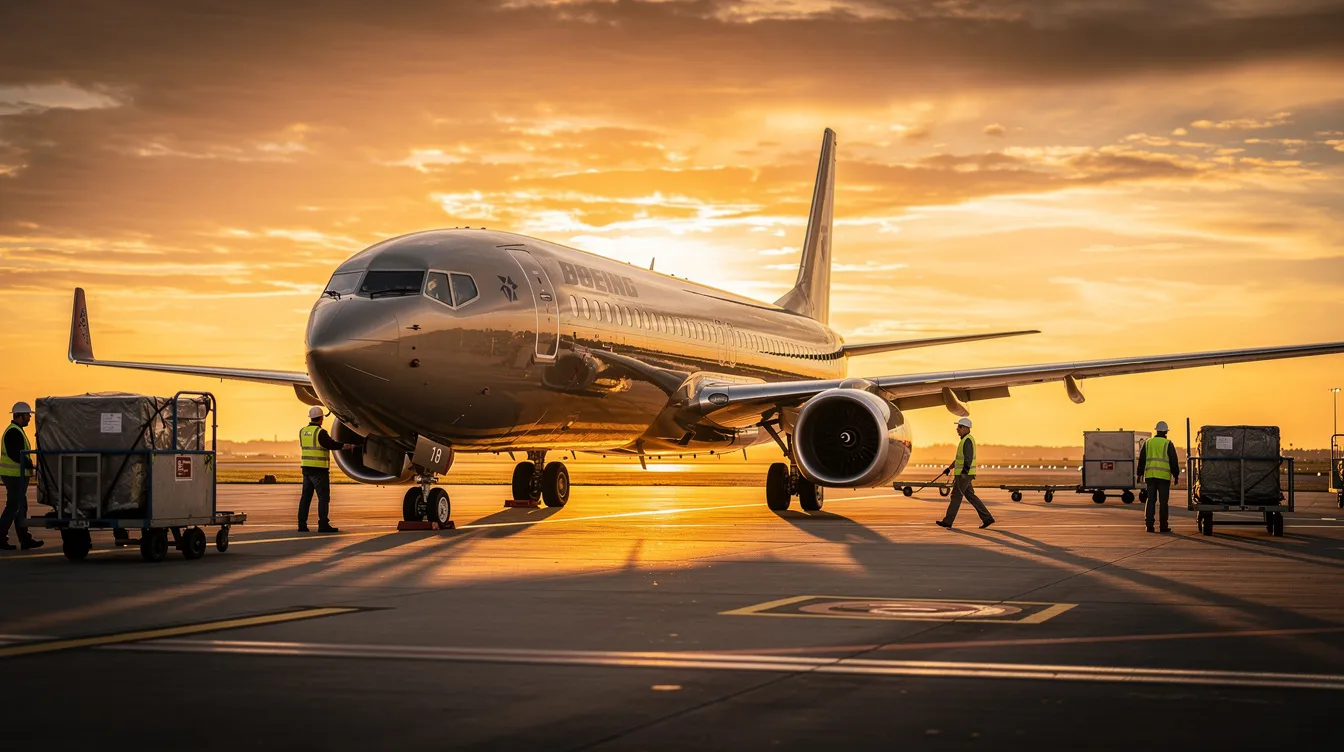
A typical Boeing 737-800 averages around 0.5 to 0.7 miles per gallon for the entire aircraft, which translates to roughly 60 to 110 miles per gallon per passenger when the cabin is full.
The Boeing 737 MAX 8 improves fuel efficiency by about 14–20% over older models, reaching approximately 0.75–0.8 MPG at the aircraft level and 70 to 100 miles per gallon per passenger.
Real-world fuel burn and MPG fluctuate with aircraft weight, route length, winds, and airline operating practices - published figures represent idealized conditions.
A fully loaded 737 can rival or exceed the per-passenger fuel economy of a single-occupancy car on the same distance.
Understanding 737 fuel efficiency helps travelers compare large commercial jets with smaller private aircraft available through charter platforms like Jettly.
Travelers often ask how many miles per gallon a 737 gets, trying to compare air travel efficiency with the familiar MPG sticker on their car. It's a fair question - and the answer is more nuanced than a single number.
Aircraft fuel efficiency is usually measured in fuel burn per hour or per seat mile, not the car-style miles per gallon most people know. But the numbers can be converted, and when they are, the results are surprisingly competitive.
The Boeing 737 is the world's best-selling commercial aircraft family. It's central to how major airlines manage fuel economy across short-haul flights and medium-range routes. Newer Boeing 737 MAX models push those numbers further, making fuel-efficient aircraft a key part of reducing the carbon footprint of commercial aviation.
Jettly, a digital private aviation platform, helps travelers compare aircraft types, fuel efficiency, and private charter aircraft options alongside commercial flights - giving context to these numbers whether someone flies on a 737 or a private jet.
Here's the direct answer. A Boeing 737 typically achieves around 0.5 to 0.7 miles per gallon for the entire aircraft during cruise on medium-haul routes.
The math is straightforward. A 737-800 cruises at roughly 520 mph while burning about 800–850 gallons per hour of jet fuel. Divide speed by fuel flow: 520 ÷ 850 ≈ 0.61 MPG.
That sounds terrible compared to a car. But a 737-800 can carry up to 189 passengers in a single-class layout. When you factor in passenger load, the picture changes dramatically. Passenger fuel efficiency for a Boeing 737 is approximately 60 to 110 miles per gallon, depending on how full the cabin is. A fully loaded 737-800 achieves roughly 75 passenger MPG - a number that rivals or exceeds a single person driving a 30–35 MPG car the same distance.
The Boeing 737 MAX 8 improves these numbers further. Under ideal cruise conditions, it reaches roughly 0.75–0.8 MPG for the aircraft, thanks to more fuel-efficient engines and aerodynamic refinements.
Airlines rarely talk about miles per gallon. Instead, they focus on metrics designed for commercial aviation operations.
Here are the key terms in plain language:
Fuel burn: Total fuel consumption measured in gallons per hour (gal/hr). This covers every flight phase - taxi, climb, cruise, and descent.
Fuel economy (seat mile): How far one seat travels per gallon. This is the standard way to compare commercial aircraft fuel efficiency, typically expressed as passenger-miles per gallon.
CASM (Cost per Available Seat Mile): The cost to move one seat one mile, occupied or not. It connects fuel use to airline economics.
Load factor: The percentage of seats actually filled. This is the single biggest variable in per-passenger fuel efficiency.
Consider a 737-800 on a 1,000-mile flight burning 1,800 gallons total. With 180 passengers, that's about 100 passenger-miles per gallon. With only 90 passengers on the same flight, it drops to around 50. The total fuel consumption doesn't change - only the efficiency per person does.
Commercial aircraft fuel efficiency is usually measured in passenger-miles per gallon for exactly this reason. Regulators, manufacturers, and airlines all use these standardized metrics to compare fuel economy across different aircraft types and track improvements over time.
The Boeing 737 family spans three main eras, each with meaningful efficiency gains.
|
Generation |
Key Variants |
Era |
Fuel Efficiency Trend |
|---|---|---|---|
|
Classic |
737-300, -400, -500 |
1984–1999 |
Baseline |
|
Next Generation (NG) |
737-600, -700, -800, -900ER |
1997–2020 |
~10–20% better than Classic |
|
MAX |
737 MAX 7, 8, 9, 10 |
2017–present |
~14–20% better than NG |
Each generation brought better fuel efficiency through advanced aerodynamics, winglets, lightweight materials, and progressively more fuel-efficient engines. The jump from Classic to NG was driven by the CFM56-7B engine and redesigned wings. The MAX generation introduced LEAP-1B engines and split-tip winglets.
A Boeing 737 typically holds 6,000 to 7,800 gallons of fuel depending on variant. Fuel capacity affects the aircraft's range and payload - newer variants optimize this balance to carry more fuel or more passengers without sacrificing economy.
Airlines phase out older Classic and early NG variants partly because of higher fuel consumption. Replacing them with newer aircraft helps control fuel costs and greenhouse gas emissions across the fleet.
The 737-800 remains one of the most widely flown commercial jets in the world, operated by carriers like Southwest Airlines and United Airlines on hundreds of daily departures.
Common cruise figures for a Boeing 737-800:
Cruising speed: ~520 mph (Mach 0.78–0.79)
Cruising altitude: FL350–FL390 (35,000–39,000 ft)
Fuel burn: A 737-800 burns approximately 750 to 900 gallons per hour during cruise
Fuel capacity: The 737-800 carries about 6,875 gallons of Jet A fuel
Here's a concrete example. Take a 2.5-hour flight covering about 1,300 miles. At roughly 900 gallons per hour (including climb and descent phases), total fuel burned is around 2,250 gallons. That gives an aircraft-level MPG of about 0.58 (1,300 ÷ 2,250).
Now add passengers. With 170 seats filled, per-passenger fuel economy comes to roughly 98 passenger-miles per gallon (1,300 × 170 ÷ 2,250). A fully loaded 737-800 achieves 75 passenger MPG even when accounting for less favorable conditions.
Operational variables like altitude, temperature, routing, and use of winglets can push that real-world figure up or down by around 10–15%. Despite the modest aircraft-level MPG, the combination of high seat counts and frequent utilization makes the 737-800 a fuel-efficient workhorse of short-haul flights and medium-range air travel.
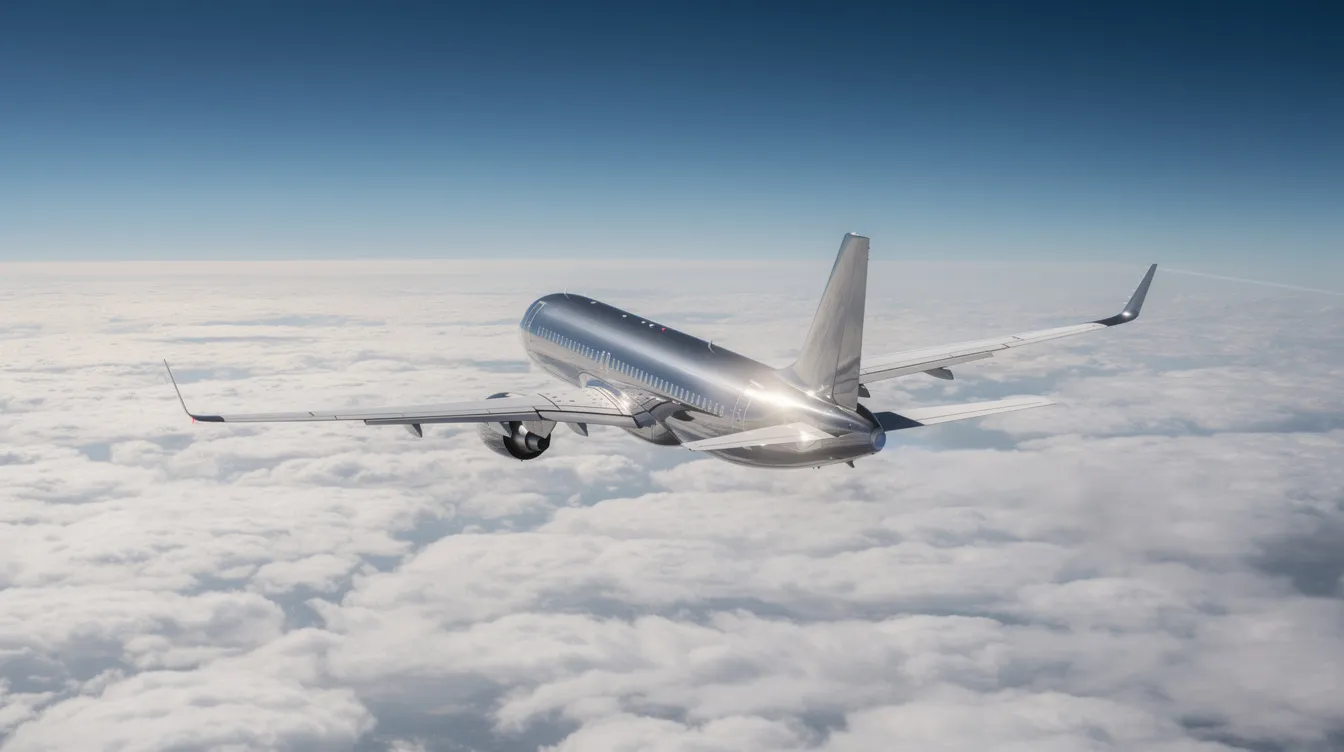
The Boeing 737 MAX 8 represents a meaningful step forward. In steady cruise conditions, the MAX 8 burns about 720 to 750 gallons per hour - roughly 100–150 gallons less fuel per hour than the 737-800 on similar missions.
At a cruising speed near 525 mph with fuel flow around 725 gal/hr, the aircraft-level MPG works out to approximately 0.72 (525 ÷ 725). That's roughly 0.75–0.8 statute miles per gallon under favorable conditions.
The 737 MAX 8 holds around 6,820 gallons of fuel, giving it comparable range to the 737-800 while burning less fuel along the way.
Translate that to passengers: with 170–190 seats filled, the Boeing 737 MAX achieves 70 to 100 miles per gallon per passenger on well-filled flights. Some airline configurations push this even higher on optimized routes.
The 737 MAX achieves 14–20% better fuel efficiency than older models - a figure Boeing highlights as a core selling point. That translates directly to lower fuel costs and a reduced carbon footprint per flight.
These MPG values describe cruise segments of medium-haul flights. Very short hops or irregular operations - diversions, holding patterns, heavy headwinds - yield lower apparent fuel economy.
The efficiency gains come from several reinforcing improvements:
Engine design: The CFM LEAP-1B engines use higher bypass ratios, advanced aerodynamics inside the turbine, and lightweight composite materials in the fan blades. Engine efficiency alone accounts for the majority of the fuel savings.
Aerodynamic refinements: Split-tip winglets reduce aerodynamic drag at the wingtips. Smoother wing surfaces and refined nacelle shapes around the main engines further cut drag during cruise.
Lighter materials: Selective use of lightweight materials in structural components trims aircraft weight without sacrificing strength, improving fuel economy on every flight.
Updated systems: Modern flight control software optimizes fuel use across flight phases, from reduced-thrust takeoffs to more efficient climb profiles.
Combined, these enhancements reduce average fuel burn by roughly 100–150 gallons per hour compared with a similarly configured 737-800. The Boeing 737 MAX burns 850 gallons less than legacy 737s on a typical mission.
Over tens of thousands of flights per year, those savings compound. The aviation industry continues to push for this kind of incremental improvement because even small per-flight reductions add up to massive fleet-wide savings.
The 737 MAX burns 20 to 30% less fuel than older models when compared against Classic-era 737s, making it one of the most fuel-efficient narrowbody commercial aircraft in frontline service.
All four MAX variants share the same engine technology, advanced aerodynamics, and core design philosophy. But they target different markets:
|
Variant |
Typical Seats |
Target Mission |
Per-Seat Efficiency |
|---|---|---|---|
|
MAX 7 |
138–153 |
Thinner routes, smaller markets |
Good MPG, fewer passengers |
|
MAX 8 |
162–189 |
Workhorse, medium-haul |
Baseline efficiency leader |
|
MAX 9 |
178–220 |
Higher capacity, longer range |
Better per-seat economy |
|
MAX 10 |
188–230 |
Maximum density, competitive fares |
Best per-seat fuel economy |
Per-seat fuel economy improves on the longer, higher-capacity versions because more seats spread the fuel burn across a larger passenger load. The MAX 7 has strong aircraft-level MPG on thinner routes, while the MAX 9 and MAX 10 offer better fuel efficiency per passenger kilometer at higher densities.
Airlines select specific Boeing 737 MAX variants to match route demand, optimizing both fuel efficiency and revenue. From a passenger's perspective, choosing flights operated by newer jets like the 737 MAX generally reduces individual fuel-related emissions compared with older 737s on the same route.
Published brochure fuel economy figures represent idealized conditions. Real flights encounter variables that shift performance:
Aircraft weight: More passengers, baggage, and cargo mean more fuel burn per mile. A 737 near maximum takeoff weight burns extra fuel compared to a lightly loaded flight.
Cruising altitude and air density: Higher altitudes mean thinner air, which reduces aerodynamic drag and improves fuel economy. Temperature also plays a role - hot days reduce engine efficiency.
Wind: Strong tailwinds on a 500-mile leg can boost effective MPG significantly. Headwinds on the same route reduce it, even when fuel burn per hour stays similar.
Route length: Very short flights are less fuel-efficient because takeoff and climb phases consume a disproportionate amount of total fuel relative to time spent in cruise. Ultra-long-haul routes benefit from extended cruise segments.
Airline procedures: Continuous descent approaches, optimized cruise speeds (maximum speed is rarely the most efficient), and reduced-thrust takeoffs all help minimize fuel consumption.
Jet fuel efficiency can shift by ±10% to 15% based on atmospheric conditions alone. Fuel efficiency of a Boeing 737 can vary significantly based on passenger load and flight phase. Flight-planning software constantly balances time, fuel burn, and schedule reliability - so real-world MPG rarely matches the textbook number exactly.
How does the Boeing 737 stack up against competitors?
The 737 MAX 8 and Airbus A320neo families have very similar fuel efficiency, with differences often within a few percentage points depending on configuration. The A321neo can outperform both in seats-per-gallon metrics due to its larger cabin and optimized fuel use, according to analysis from Air Insight.
Widebody jets like the Boeing 787 or Airbus A350 burn much more fuel in total, but they can match or exceed 737-level per-passenger fuel efficiency on long-haul flights due to higher seat counts and advanced aerodynamic design.
A quick comparison on a typical mission:
|
Aircraft |
Seats (typical) |
Cruise Fuel Burn |
Per-Passenger MPG (full) |
|---|---|---|---|
|
737-800 |
170 |
~850 gal/hr |
~75–100 |
|
737 MAX 8 |
180 |
~725 gal/hr |
~90–110 |
|
A320neo |
180 |
~700 gal/hr |
~95–115 |
|
787-9 |
290 |
~1,400 gal/hr |
~90–110 |
Airlines choose between narrowbody and widebody aircraft based on mission profile, route demand, aircraft size, and overall fuel economy strategy across the entire aircraft fleet. More fuel-efficient aircraft on the right routes mean lower fuel costs and better competitive fares.
Every gallon of jet fuel burned produces approximately 9.75 kg of CO₂. That's a fixed relationship - burn less fuel, emit less carbon.
For a medium-haul 737-800 flight burning about 2,000 gallons:
Total CO₂: ~19,500 kg
Per passenger (170 passengers): ~115 kg CO₂
A 737 MAX 8 on the same route might burn 1,700 gallons, dropping per-passenger emissions to around 97 kg CO₂. Multiply that improvement across thousands of annual departures, and the reduction in greenhouse gas emissions becomes substantial.
International efforts like the International Civil Aviation Organization's CORSIA program encourage adoption of more fuel-efficient aircraft. Many airlines have committed to fleet renewal programs centered on newer jets like the Boeing 737 MAX and Airbus A320neo family to meet emissions reduction targets.
Sustainable aviation fuels and operational efficiency measures - better routing, lighter landing gear designs, continuous descent approaches - complement the fundamental aircraft MPG improvements. But the biggest single lever remains replacing older aircraft with more fuel-efficient aircraft.
A full Boeing 737 is hard to beat on per-passenger fuel economy. But private aircraft and general aviation serve fundamentally different missions.
A small turboprop or light private jet may burn far less fuel per hour - perhaps 100–200 gallons compared to the 737's 700–900. But it carries fewer passengers, often just 4–8. That means higher per-passenger fuel consumption despite the lower total burn.
Here's a concrete comparison:
|
Aircraft |
Passengers |
Fuel Burn/Hr |
Per-Passenger MPG |
|---|---|---|---|
|
737-800 (full) |
170 |
~850 gal/hr |
~75–100 |
|
Midsize private jet |
7 |
~220 gal/hr |
~15–20 |
|
Turboprop |
6 |
~80 gal/hr |
~35–45 |
The midsize jet burns far less fuel overall but serves fewer passengers. The per-passenger gap is real - yet so are the time savings, schedule flexibility, and access to smaller airports that private aircraft provide.
Raw MPG is only one part of the decision. Platforms like Jettly help customers weigh fuel use, cost, and time savings when using tools like its private jet charter cost estimator to select from thousands of general aviation and private charter aircraft.
Fuel costs account for 20–30% of airline operating expenses, making fuel burn one of the most closely watched metrics in commercial aviation. How much fuel a 737 burns on a given route directly affects the bottom line.
Small improvements matter at scale. A Boeing 737 MAX saves $2,550 on a trip compared to legacy models, based on lower fuel consumption and current Jet A fuel prices. Across hundreds of daily flights, airlines save millions by using newer, fuel-efficient aircraft.
Here's a simplified cost example:
737-800 fuel burn (1,300-mile trip): ~2,250 gallons × $5.50/gal = ~$12,375
737 MAX 8 fuel burn (same trip): ~1,900 gallons × $5.50/gal = ~$10,450
Savings per flight: ~$1,925
Over 1,500 flights per year on a single airframe, that's roughly $2.9 million saved. Fuel efficiency improvements can reduce operational costs significantly - which is why the aviation industry continues investing in more fuel-efficient aircraft and fuel-efficient engines, as well as better route planning tools such as an airport locator tool that can optimize departures and arrivals.
Airlines pass some savings on to customers through competitive fares, especially on routes where they deploy newer jets. For private travelers, charter pricing also incorporates fuel burn and aircraft type. Jettly's platform helps clarify these costs through transparent, instant quotes.

Jettly's marketplace connects travelers with over 20,000 aircraft worldwide. Behind the scenes, performance data like fuel burn, range, and payload factors into which options surface for a given trip.
Understanding fuel consumption and fuel efficiency helps the platform present cost-transparent charter options. Customers can see how aircraft type influences hourly rates and trip pricing - a midsize jet with higher fuel burn per hour costs more than a light jet or turboprop on a short route, and tools like Jettly's jet card flight cost estimator help clarify these differences.
For frequent flyers accustomed to 737-class commercial aircraft, Jettly can highlight comparable or more fuel-efficient turboprops and light jets for short business or leisure routes, including region-specific options such as private jet charter in Kolkata, West Bengal. While private aircraft usually cannot match a full 737's per-passenger MPG, they save time by accessing smaller airports and tailoring schedules to the traveler's needs.
The result: informed decisions based on real data, not guesswork. Learn more about charter options and aircraft comparisons at jettly.com.
These questions cover common topics not fully addressed in the main sections, and readers who want to go deeper into pricing can explore how much a private jet really costs to own or operate.
When a 737-800 or 737 MAX 8 is nearly full, it achieves around 70–110 miles per gallon per passenger. That often beats a single person driving a 30–35 MPG car the same distance. A 737's per-passenger efficiency can often rival or exceed that of a single-occupancy car.
If several people share a car, carpooling can match or exceed the 737's per-passenger efficiency - but at the cost of much longer travel times and limited range. Air travel's main advantage is speed and network reach across thousands of nautical miles.
Yes. Very short legs - under 200–300 miles - are less fuel-efficient because takeoff and climb phases consume a disproportionate amount of fuel. During these phases, the aircraft burns more fuel per mile than during cruise.
On such routes, the effective miles per gallon drops even though per-passenger fuel use may still be reasonable on a full flight. Airlines often prefer highly efficient regional jets or turboprops on short sectors when demand and airport infrastructure allow, a trade-off that mirrors how private jet rental costs can vary dramatically with aircraft size and stage length. Test flights and ferry legs are even less efficient since they carry fewer passengers or none at all.
Additional weight from cargo and baggage increases aircraft weight, requiring more lift. More lift means more aerodynamic drag and higher fuel burn per mile.
The change in aircraft MPG is modest on most flights but becomes important when approaching maximum takeoff weight or operating from hot, high-altitude, or short runways where air density is lower. Airlines balance cargo revenue against the extra fuel required, sometimes limiting payload to preserve range and fuel economy margins.
Smaller private jets and turboprops can be fuel efficient for their aircraft size, but they usually cannot match the per-passenger MPG of a full 737 due to far fewer passengers. A light jet carrying 6 people simply can't spread its fuel burn the way a 737 carrying 170 can.
Some modern turboprops used in general aviation approach commercial-jet-level fuel burn per seat on short routes when fully occupied. But private charters are chosen primarily for schedule flexibility, privacy, and access to smaller airports rather than pure fuel economy. Platforms like Jettly help optimize these trade-offs by matching the right aircraft to the mission through flexible private jet memberships that simplify access and pricing.
Environmentally conscious travelers can look for flights operated by newer, more fuel-efficient aircraft such as the Boeing 737 MAX, Airbus A320neo family, Boeing 787, or Airbus A350. Some booking engines list the operating aircraft type for each leg - it's worth checking, just as broader industry guides to charter airlines and private aviation can help you understand which operators fly which aircraft.
Combining efficient commercial flights with carefully chosen private charters can also reduce unnecessary repositioning flights and optimize routing. Lighter materials, better engine design, and advanced aerodynamics on newer aircraft all contribute to lower per-passenger emissions. Over time, sustainable aviation fuels and regulatory compliance with programs like CORSIA will further reduce the carbon footprint of both commercial and private air travel.
A Boeing 737 typically achieves around 0.5 to 0.7 MPG at the aircraft level for the 737-800, and roughly 0.75–0.8 MPG for the Boeing 737 MAX 8. Those numbers sound low in isolation, but spread across 170+ passengers, they translate into some of the strongest per-passenger fuel efficiency figures in commercial aviation.
Design improvements, better engines, lighter materials, and smart operations have made the 737 family one of the most fuel-efficient narrowbody commercial aircraft lines in service. Understanding how many miles per gallon a 737 gets - and why those numbers shift with load factors, route length, and atmospheric conditions - helps travelers make informed choices between airlines, aircraft types, and even private jet options.
Jettly uses detailed aircraft performance data to give customers transparent pricing and aircraft choices tailored to their route, schedule, and comfort needs - whether that's a light jet for a quick regional hop or a heavy jet for a longer private flight- and offers practical guidance on getting a seat on a private jet without overpaying.
Ready to experience private travel on your terms? You can join Jettly through flexible private jet memberships and jet cards.
Share this post:
Jay Franco Serevilla
Nov 2, 2026
|
5
min read
Discover tips and trends in the industry.
5
min read
Fuel of Plane: Types, Capacity, and How It Affects Private Jet Travel
Understanding airplane fuel is essential for private jet travelers, as it directly impacts aircraft range, operational costs, and charter pricing. This guide covers the types of aviation fuel, their capacities, and how they influence the travel experience. With insights into jet fuel and aviation gasoline, travelers can make informed decisions when chartering flights.
Read More
5
min read
Instant Private Jet Pricing and Availability Explained (Estimate vs. Binding Quote)
Understanding private jet pricing can be challenging for first-time charter buyers. An instant quote is merely an estimate that changes until a binding quote is confirmed by the operator and payment is secured. This guide clarifies the differences between estimates and binding quotes, and how to navigate the booking process effectively.
Read MoreStay updated with our latest insights and tips to elevate your journey with us.
MEMBERSHIPS AND ASSOCIATIONS



Disclaimer: Jettly operates as a charter broker, offering access to a global digital jet charter marketplace. Jettly is not a direct air carrier and does not own or operate aircraft. All advertised flights are conducted by third-party air carriers that are fully licensed and hold the appropriate Part 135 or Part 121 certifications issued by the Federal Aviation Administration (FAA) or equivalent regulatory authorities under U.S. or foreign law. Jettly complies fully with the U.S. Department of Transportation's Part 295 and Part 298 Charter Broker regulations. Jettly does not carry additional liability insurance. Passengers are covered by aircraft operator insurance. TICO: 50023770


