



Login
Get Instant Pricing On 23,000+ Aircraft

>
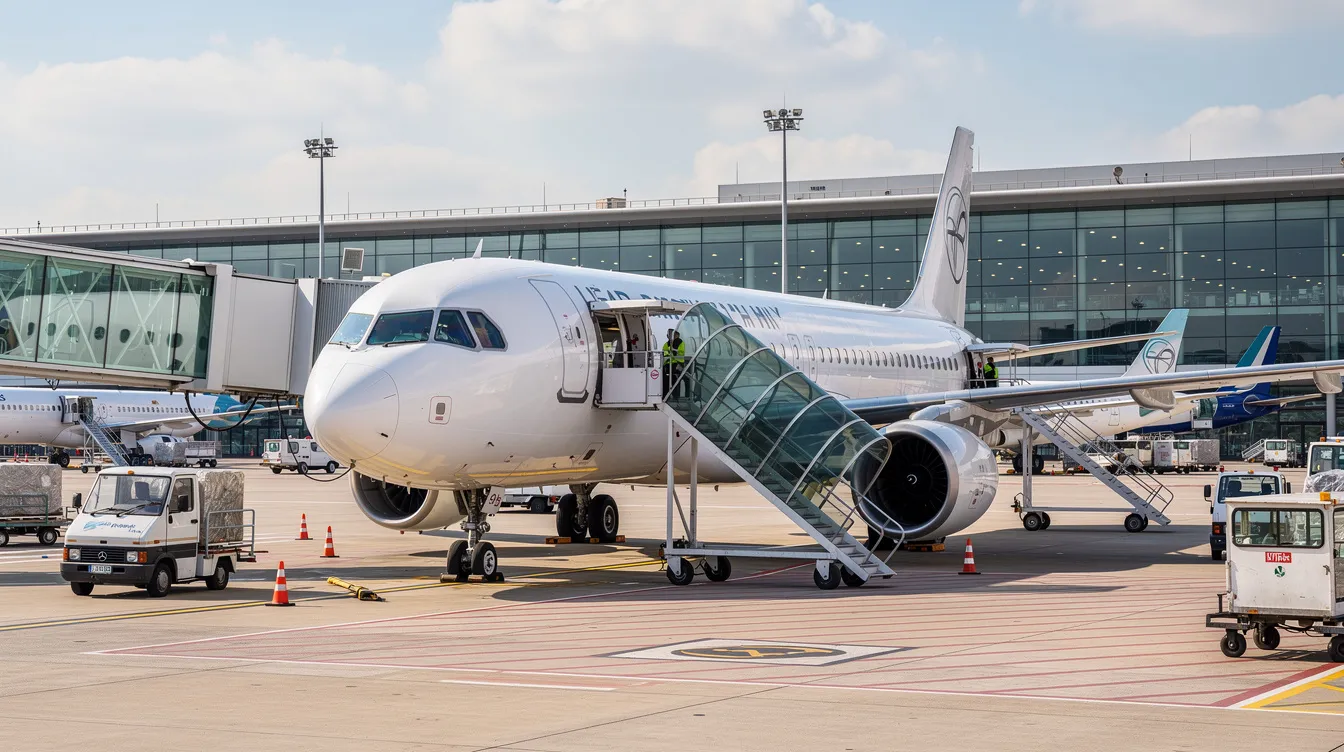
The Boeing 737 is the most-produced commercial jet in aviation history, and how many passengers fit on a 737 depends on the specific variant and cabin layout. Across the four generations of the 737 family, seating capacity ranges from 85 to 230 passengers. Most travelers today encounter Boeing 737- 800 or 737 MAX aircraft carrying between 162 and 200 passengers on short-haul and medium-haul routes worldwide.
This guide breaks down passenger capacity for every 737 generation, explains what drives the differences, and compares 737 capacity with private jet options for travelers who need a different kind of flight.
Boeing 737 seating capacity ranges from 85 to 230 passengers depending on the variant and cabin layout. A Boeing 737 typically carries 130 to 200 passengers on most commercial flights.
The four Boeing 737 generations and their approximate capacity ranges:
Original (737-100/200): 85–130 seats
Classic (737-300/400/500): 108–168 seats
Next Generation (737-600/700/800/900ER): 108–220 seats
737 MAX (MAX 7/8/9/10): 126–230 seats
The Boeing 737 800 typically seats 162 to 189 passengers. The 737 MAX 10 can seat up to 230 passengers in high-density configurations.
Commercial 737 passenger capacity (100–230) dwarfs typical private jet capacity. Private jets usually accommodate 4 to 16 passengers, while VIP Boeing Business Jet layouts seat roughly 19–50.
Jettly helps travelers choose between high-capacity airliners and smaller private jet options based on group size, schedule, and route.
Boeing 737 seating capacity generally ranges from about 85 to 230 passengers depending on model and cabin layout.
Here are the certified capacity ranges by generation:
Original (737-100/200): 85–130 passengers
Classic (737-300/400/500): 108–168 passengers
Boeing 737 Next Generation (737-600/700/800/900ER): 108–220 passengers
737 MAX (MAX 7/8/9/10): 126–230+ in the densest layouts
The exact answer to how many passengers a 737 can carry is driven by two factors: the specific variant (fuselage length and exit door count) and the airline configuration (all-economy versus a two-class layout with business or first-class seats).
Most real-world configurations fall 10–20% below certified maximums. Airlines sacrifice some seats for galleys, lavatories, and premium seating sections. A Boeing 737 with maximum certified capacity of 189 seats may carry only 162–175 in a two-class layout.
For travelers who need flexibility for smaller groups, private jets available through platforms like Jettly typically seat 4–16 passengers for tailored, small-group missions.
Passenger capacities for the Boeing 737 family vary across its four generations: Original, Classic, Next Generation, and MAX. The Boeing 737 family includes the Original, Classic, Next Generation, and MAX generations. Each step increased capacity and fuel efficiency without changing the fundamental cabin cross-section.
All generations share the same 148-inch (3.76 m) fuselage width and 3–3 economy class seating. Passenger count varies primarily because of fuselage length and seat pitch changes, not cabin width.
Here is a summary of capacity ranges by generation and example models:
Original: 737-100 (85–100 seats), 737-200 (97–130 seats)
Classic: 737-300 (128–149), 737-400 (146–168), 737-500 (108–132)
Next Generation: 737-600 (108–132), 737-700 (126–149), 737-800 (162–189), 737-900ER (173–220)
MAX: MAX 7 (138–172), MAX 8 (162–200), MAX 9 (178–220), MAX 10 (188–230)
Newer 737 MAX aircraft pair higher passenger capacity with fuel-efficient engines (the larger CFM LEAP engines, specifically the LEAP-1B) and advanced split-tip winglets for better fuel efficiency per seat.
For smaller groups, Jettly customers usually find light and midsize private jets more appropriate than any 737 variant, given the capacity mismatch between a 4–16 seat private jet and a 130–230 seat airliner.
The Boeing 737 was first introduced in 1968. The first-generation aircraft entered commercial service for short-haul domestic routes, offering around 85–130 seats depending on variant and cabin layout.
The 737-100 was the first variant, with 30 produced. It seated roughly 85–100 passengers in typical configurations. Lufthansa put the 737-100 into passenger service in February 1968.
The 737-200, a stretched version with a longer fuselage, entered service in April 1968 with United Airlines. The 737-200 can accommodate up to 130 passengers in high-density configurations, though most operators used two-class layout setups with fewer passengers.
Both models used Pratt & Whitney JT8D engines, which burned more fuel per seat compared with later CFM-powered variants. That higher fuel consumption, combined with shorter range and higher noise output, made them less competitive as newer generation aircraft arrived.
Most Original models have been retired from mainstream passenger service. They hold an important place in aviation history as the starting point for what became the best-selling narrow-body aircraft family in commercial aviation.
The 737 Classic series was produced from 1984 to 2000. It bridged the gap between early 737s and the Next Generation family with improved engines and extended fuselage options.
Typical capacity ranges by variant:
|
Variant |
Typical Two-Class Seats |
Maximum (All-Economy) |
|---|---|---|
|
737-300 |
128–140 |
~149 |
|
737-400 |
146–160 |
~168 |
|
737-500 |
108–125 |
~132 |
The 737-300 typically seats 149 passengers in single-class layouts. The 737-400 served as the higher passenger capacity option with up to 168 seats, targeting trunk routes with heavier demand.
CFM56-3 engines replaced the older JT8D turbofans, delivering better fuel efficiency and lower noise levels. These engines made the Classics viable on a wider range of short-haul routes and medium-haul routes than their predecessors.
Many low-cost carriers used high-density configurations on Classics with all-economy seating to reduce operating costs per seat. Full-service airlines preferred two-class layout cabins with fewer total seats but higher revenue per passenger.
Rising fuel prices and the arrival of the more efficient Boeing 737 Next Generation and Airbus A320 family aircraft led to widespread Classic retirements by the late 2000s. Some remain in cargo or low-utilization operations, and a few have been adapted for military applications in transport and surveillance roles.
The 737 Next Generation launched in 1997 and quickly became the backbone of many airline fleets worldwide. The Boeing 737 Next Generation improved on every dimension that mattered to operators: range, fuel burn, and passenger count.
Typical seating ranges for the NG family:
737-600: 108–132 passengers
737-700: 126–149 passengers
Boeing 737- 800: 162–189 passengers
737-900/900ER: 173–215, with the Boeing 737-900ER accommodating up to 220 passengers in high-density configurations using additional exit doors
A redesigned wing, larger fuel tanks, and CFM56-7B fuel-efficient engines increased range and reduced fuel consumption compared with Classic models. The CFM56-7 engine is 7% more fuel-efficient than its predecessor, the CFM56-3.
The 737-700C convertible variant adds flexibility by allowing operators to switch between passenger and cargo missions with mixed cabin layouts. This ability to carry cargo alongside passengers makes the -700C useful for military and specialized commercial service operators.
The Boeing 737 Next Generation also includes VIP Boeing Business Jet versions, which replace standard airline seating with spacious corporate cabins for roughly 19–50 passengers, depending on interior configuration.
The Boeing 737- 800 is the best-selling NG variant. Airlines including Southwest Airlines, Ryanair, and American Airlines operate large fleets of this aircraft on short and medium-haul routes.
The 737-800 typically seats 162 to 189 passengers. In a typical two-class layout, most operators configure around 162–175 seats. In all-economy single-class layouts, the airframe supports up to 189 seats, the maximum certified under standard exit door configurations.
The passenger cabin uses single-aisle aircraft geometry: 3–3 seating in economy class with variations in seat pitch (about 28–32 inches depending on carrier). Legacy carriers like American Airlines typically install a small premium cabin at the front with around 12–16 class seats plus approximately 150–160 economy class seats. Ryanair, by contrast, fills the same airframe with 189 economy class seats at tighter seat pitch.
The Boeing Sky Interior, available as a retrofit or standard on later-delivered NG aircraft, uses LED mood lighting, sculpted sidewalls, and larger overhead storage bins to improve the feel of the passenger cabin without changing seat width or aisle dimensions. The upgrade targets passenger comfort perception rather than physical cabin space changes.
These contrasting airline configurations show how the same Boeing 737 800 airframe supports very different passenger counts. The airline configuration choice, not the airframe, determines whether travelers sit in a 162-seat or 189-seat cabin.
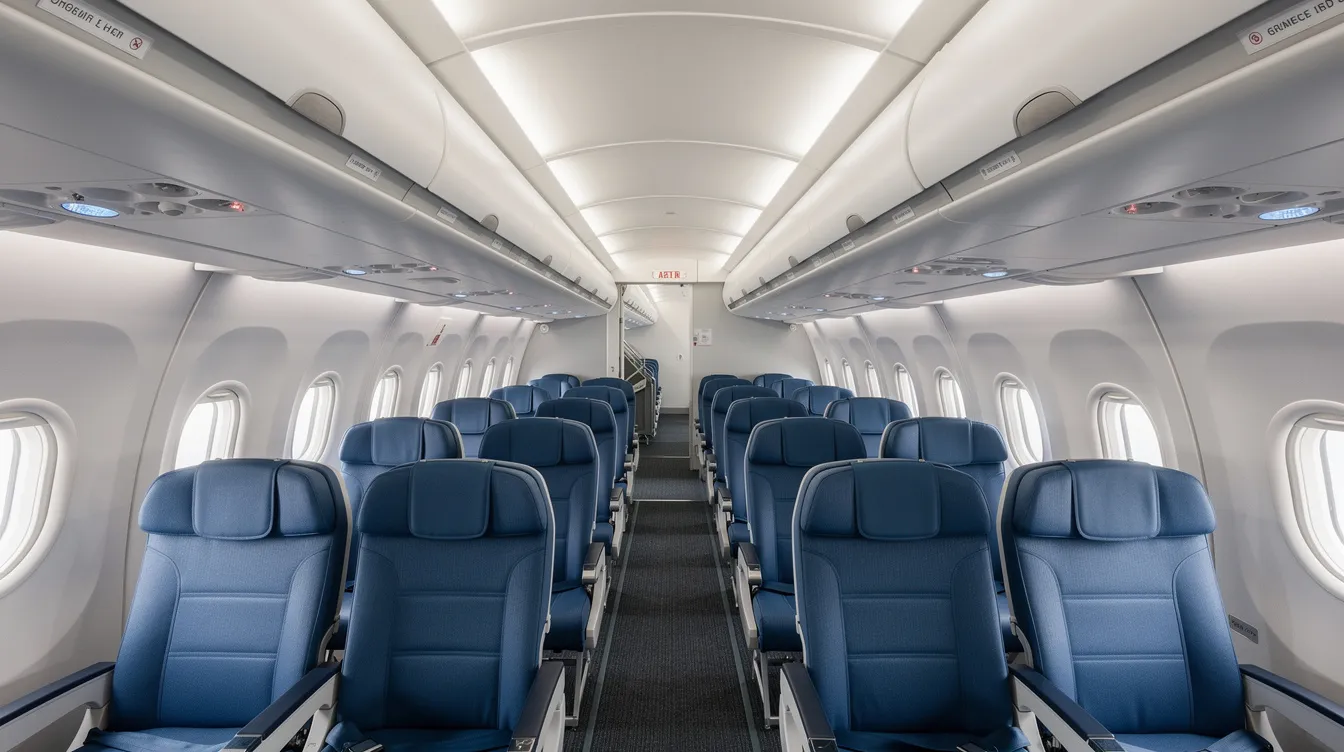
The 737 MAX series was launched in 2011 and first flew in 2016, entering commercial service in 2017. It offers higher seating capacity and better fuel efficiency per seat than the NG family.
Typical seating ranges across the MAX variants:
|
Variant |
Typical Two-Class |
Maximum High-Density |
|---|---|---|
|
MAX 7 |
138–160 |
~172 |
|
MAX 8 |
162–180 |
~200 |
|
MAX 9 |
178–195 |
~220 |
|
MAX 10 |
188–204 |
~230 |
The 737 MAX 10 can seat up to 230 passengers in high-density layouts, making it the highest-capacity member of the 737 family. Ryanair's MAX 8-200 variant, a special high-density version, squeezes up to 200 seats into the MAX 8 frame by adding exit doors and tightening seat pitch.
The larger CFM LEAP engines and advanced split-tip winglets deliver roughly 14–20% better fuel efficiency per seat compared with many Boeing 737- 800 configurations. The 737 MAX engines provide up to a 14% fuel efficiency improvement over the CFM56-7B. The MAX also offers a 20% reduction in fuel use when accounting for aerodynamic improvements and operational optimizations combined.
MAX 8 is the most widely operated variant on short and medium haul routes, often seating around 170–180 passengers in a two-class layout for major airlines.
The MAX program was grounded worldwide from March 2019 to late 2020 following two fatal crashes (Lion Air Flight 610 and Ethiopian Airlines Flight 302). Boeing implemented software updates, pilot training changes, and design modifications before regulators cleared the aircraft for a phased return to commercial service under tighter oversight.
Cabin layout is as important as the 737 variant when predicting actual passenger capacity. The layout choices dictate total capacity and vary between multi-class and high-density configurations. Airline configurations can reduce seating capacity by 20 to 50 seats relative to the certified maximum.
Three common configurations exist across airline fleets:
All-economy (single class layouts): Every seat is economy class. This approach, used by many low-cost carriers, targets maximizing seating capacity and lowering cost per seat.
Two-class (Business/First plus Economy): A forward section of wider, higher-pitch class seats reduces total seats by 15–30 compared with all-economy. Legacy airlines like Alaska Airlines and American Airlines use this format.
High-density layouts: Ultra-low-cost carriers push seat pitch to 28–29 inches and eliminate premium cabins entirely to increase capacity beyond standard economy layouts.
Adding a business or first class cabin to a Boeing 737 800 or 737 MAX 8 can reduce total seats from 189 or 200 down to 160–175. Each premium seat occupies roughly 1.5–2x the floor space of an economy seat.
Seat pitch choices directly affect how many passengers on a 737 an airline can fit. At 28-inch pitch, an operator gains roughly one extra row (six seats) compared with 31-inch pitch across the same fuselage length. Travelers can check airline-specific seat maps before booking to see exact passenger numbers for their flight, since two Boeing 737- 800 aircraft may carry very different passenger counts.
Economy class on a Boeing 737 means 3–3 seating across a single aisle. The 737 family uses a standard 3-3 seating configuration in economy class, with each seat roughly 17–18 inches in seat width.
Seat pitch in economy typically ranges from 29–32 inches on legacy carriers. Low-cost carriers sometimes reduce pitch to 28–29 inches to fit more rows. That difference of 2–3 inches per row adds up across a full fuselage; it can mean 6–12 extra seats on a given airframe.
Modern 737 Next Generation and 737 MAX aircraft offer improved cabin amenities compared with older variants:
LED mood lighting
Larger overhead storage bins (Boeing Sky Interior standard on newer deliveries)
Power outlets and USB ports for personal device charging
Improved air circulation systems
Airlines trade seat density against passenger comfort. More seats mean lower cost per seat but tighter personal space. On flights under two hours, most passengers tolerate tighter pitch. On flights over three hours, the difference between 28-inch and 32-inch pitch becomes more noticeable.
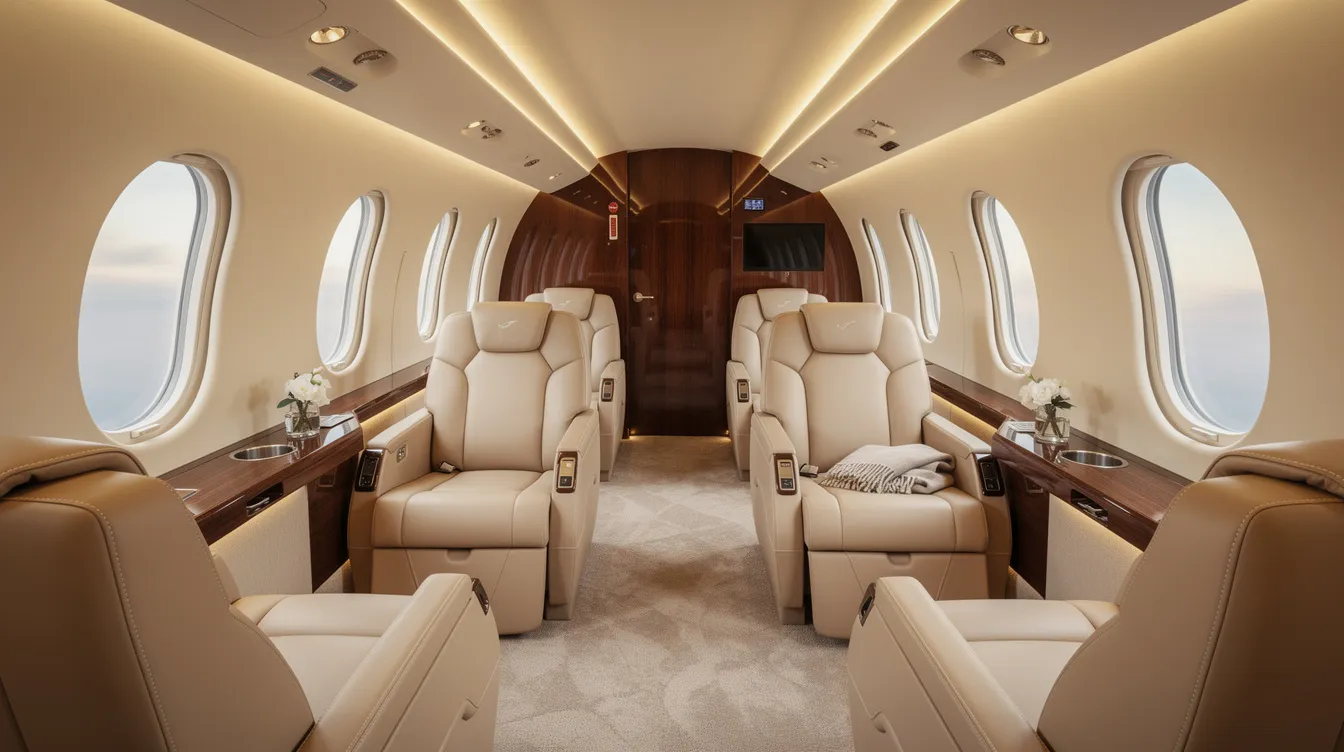
Private jet cabins offer a different experience entirely: club seating, wide reclining seats, and far more legroom for fewer passengers. For travelers weighing that trade-off, private aviation platforms provide access to aircraft where the cabin is designed around 4–16 people rather than 170–200.
Premium cabins on a Boeing 737 reduce total passenger count while increasing per-seat revenue and comfort. The trade-off is straightforward: wider seats and more pitch consume cabin space that could hold additional economy rows.
Business and first class seats on a 737 typically use 2–2 abreast seating instead of the standard 3–3 economy arrangement. Seat width expands to approximately 20–21 inches, and seat pitch stretches to 34–40+ inches, depending on the airline.
Consider a concrete comparison on the Boeing 737- 800:
American Airlines' two-class 737-800: 12 first class seats plus ~160 economy seats (total ~172)
Ryanair's all-economy 737-800: 189 seats, no premium cabin
That is a 17-seat difference on the same airframe, driven entirely by how the airline allocates cabin space.
"Extra-legroom" or "premium economy" rows maintain 3–3 seating but increase pitch to roughly 34–38 inches. These rows cost fewer total seats than a full premium cabin but still reduce the number of passengers on a 737 by 3–6 seats compared with a uniform economy layout.
These cabins are often more attractive to frequent business travelers and high-yield customers. Airlines accept a lower passenger count in exchange for higher revenue per seat from premium fares.
The Boeing Business Jet is a VIP-configured Boeing 737, typically built on a Next Generation (BBJ1/BBJ2/BBJ3) or MAX airframe. It is designed for private and government clients who need long-range, high-comfort air travel for small groups.
Typical passenger counts: roughly 19–50 seats in VIP layouts, far below the 108–220 seats of standard airline Boeing 737 Next Generation versions.
BBJ cabins replace rows of economy class seats with:
Private suites and bedrooms
Lounges with full-height standing room
Conference areas with presentation equipment
Dining spaces and full galleys
The BBJ family benefits from the same fuel-efficient engines and long-range capability as the underlying 737 NG airframes. BBJ MAX variants can fly over 6,400 nautical miles in VIP load, supporting intercontinental missions without refueling stops.
Jettly can help arrange access to airliner-class VIP aircraft, including Boeing 737-800 charters and BBJ-style layouts, for heads of state, sports teams, and corporate roadshows needing more cabin space but fewer passengers than a standard 737 airline configuration.
While the airframe defines maximum capacity and range, actual passenger load and cabin layout influence real-world performance and fuel burn on every flight.
Operating a Boeing 737- 800 or 737 MAX 8 near maximum passenger capacity improves fuel efficiency per seat. More passengers share a similar total fuel burn, pushing per-seat economics in the airline's favor. The 737-800 burns approximately 4.88 US gallons per seat per hour under typical operating conditions, a figure that improves as load factor rises.
Higher passenger loads also add weight, which can require payload-range trade-offs on longer sectors. An airline may need to limit baggage or reduce cargo to stay within performance limits when the aircraft is near maximum seating capacity.
Approximate ranges under standard conditions:
Boeing 737 800: ~3,000–3,400 nautical miles
737 MAX 8: ~3,500 nautical miles
737 MAX 7: up to ~3,800 nautical miles (lighter configurations)
737 MAX 10: ~3,100 nautical miles
Airlines focus on fuel efficiency per seat because it drives ticket pricing. Private aviation operates under different math: per-seat fuel efficiency is lower on a 4–16 passenger jet, but total travel time savings and productivity gains often matter more to private jet travelers who can choose from a broad range of private charter aircraft based on mission profile and group size.
The 737 family's engine history runs from the Pratt & Whitney JT8D (Original) to the CFM56 (Classic and NG) to the LEAP-1B (MAX). Each generation delivered measurable gains in fuel efficiency and lower fuel burn.
Boeing 737 Next Generation models use CFM56-7B engines. The CFM56-7 engine is 7% more fuel-efficient than its predecessor, the CFM56-3 used on Classic variants. This difference translates directly into lower operating costs per flight hour and per seat compared to older generation aircraft.
The 737 MAX aircraft use CFM LEAP-1B fuel-efficient engines, reducing fuel consumption by up to 14% compared with many Boeing 737- 800 operations. The fuel consumption comparison between a MAX 8 and an NG 737-800 on the same route shows a measurable per-seat advantage, which is why airlines are retiring NG aircraft in favor of MAX deliveries.
Winglets also contribute. Blended winglets on NG models improve fuel efficiency by 3–5% by reducing induced drag at the wingtip. The MAX uses advanced split-tip winglets for additional aerodynamic improvements beyond what blended winglets achieved.
These efficiency gains have environmental implications. Airlines use each generation's lower fuel burn to reduce fuel consumption and CO₂ output per passenger-kilometer. In private aviation, operators increasingly adopt fuel-saving procedures, optimized flight planning, and sustainable aviation fuel where available to improve fuel efficiency on smaller aircraft.
Certified maximum seating capacity on any Boeing 737 depends on safety regulations, especially emergency exit and evacuation standards. Emergency exit limitations affect the maximum certified capacity of Boeing 737 variants. The maximum passenger capacity is constrained by emergency exit door configurations.
The FAA and EASA require full aircraft evacuation in 90 seconds or less at maximum capacity. The number and placement of exit doors and overwing exits determine the regulatory seat limit for each variant.
Two examples illustrate this:
The 737-900ER gained additional exit doors compared with the standard 737-900, raising its maximum from ~189 to ~220 passengers. Without those extra exits, the airframe could not legally seat more than 189.
Ryanair's MAX 8-200 added exit doors to the standard MAX 8 frame, enabling up to 200 seats versus the standard MAX 8 maximum of ~189.
Minimum cabin crew numbers also increase as passenger count rises. Airlines need one flight attendant per 50 passengers under most regulatory frameworks, so a 200-seat configuration requires at least four cabin crew instead of three. This adds to operating costs and crew commonality requirements across fleet types.
While marketing materials may quote the theoretical maximum (230 seats on a 737 MAX 10), real airline layouts often stay below that number for operational and comfort reasons.
A typical Boeing 737 on commercial routes seats 130–200+ passengers. Most private jets carry 4–16 travelers. Private jets prioritize comfort over maximum passenger capacity.
Common private jet categories and their typical passenger ranges:
Light jets: 4–7 passengers
Midsize private jet: 6–9 passengers
Super-midsize: 8–10 passengers
Large cabin / heavy jets: 10–16 passengers
Instead of asking how many passengers are on a 737 for every trip, time-sensitive travelers compare whether a smaller aircraft with fewer passengers better fits the mission. A 737 fills a 170-seat cabin in 30–45 minutes of boarding; a private jet boards 8 passengers in under five minutes.
Private jets offer club seating, meeting tables, and wide reclining seats, trading seat count for space, privacy, and productivity. The passenger cabin on a midsize private jet configured for 8 travelers provides more personal space per person than business class on a Boeing 737.
Jettly's digital platform lets users input passenger count and route to see suitable private aircraft options, rather than defaulting to high-capacity airliners, and a built-in private jet charter cost estimator helps approximate pricing for different aircraft sizes and trip profiles.
The Boeing 737 excels at moving large groups on busy routes between major hubs. 737s are designed for high-volume transport on established routes, and airline fleets worldwide rely on the type for scheduled commercial service.
Circumstances where a 737 is the logical choice:
Budget-sensitive travel: Per-seat cost on a 737 is typically a fraction of private jet per-seat cost
Large tour groups: 150+ travelers on a single aircraft
Scheduled trunk routes: New York–Chicago, London–Barcelona, and similar high-frequency segments
Airline loyalty programs: Mileage accrual and status benefits tied to major airlines like Southwest Airlines, Alaska Airlines, or United Airlines
For very large corporate events, sports teams, or incentive trips, chartering an entire Boeing 737- 800 or similar airliner can offer good per-seat economics when compared with running multiple smaller private jets.
Jettly can help compare dedicated airliner charters (including 737-class aircraft) with multiple smaller private jets for complex group movements or coordinated shared flights that use crowdsourced private jet seats to control per-person costs.
Private jets offer three core advantages over flying on a 170–200 seat Boeing 737: time savings, schedule control, and privacy. Private jets offer flexible scheduling and access to smaller airports that 737s cannot serve.
Private jet travelers typically depart from private terminals (FBOs), arriving 15–30 minutes before departure. Compare that with the 60–120 minutes of pre-departure time required for most 737 commercial flights, factoring in security screening, boarding queues, and gate hold procedures.
Private aviation opens access to thousands of smaller airports. In the United States alone, private jets can use over 5,000 airports versus roughly 500 served by Boeing 737 commercial flights. This reduces ground transfers and total door-to-door travel time for regional business trips and leisure getaways.
Private cabins support confidential meetings, uninterrupted work, and quiet rest. A high-density 737 economy cabin with 180+ passengers and a 17-inch seat width cannot match the working environment of a private jet configured for 6–10 people.
Consider a CEO and four executives flying between two secondary cities without direct 737 routes. A commercial itinerary requires a connecting flight through a hub, adding 3–5 hours of total travel time. A midsize private jet booked through Jettly flies direct in 2 hours, with the team working in a private cabin throughout.
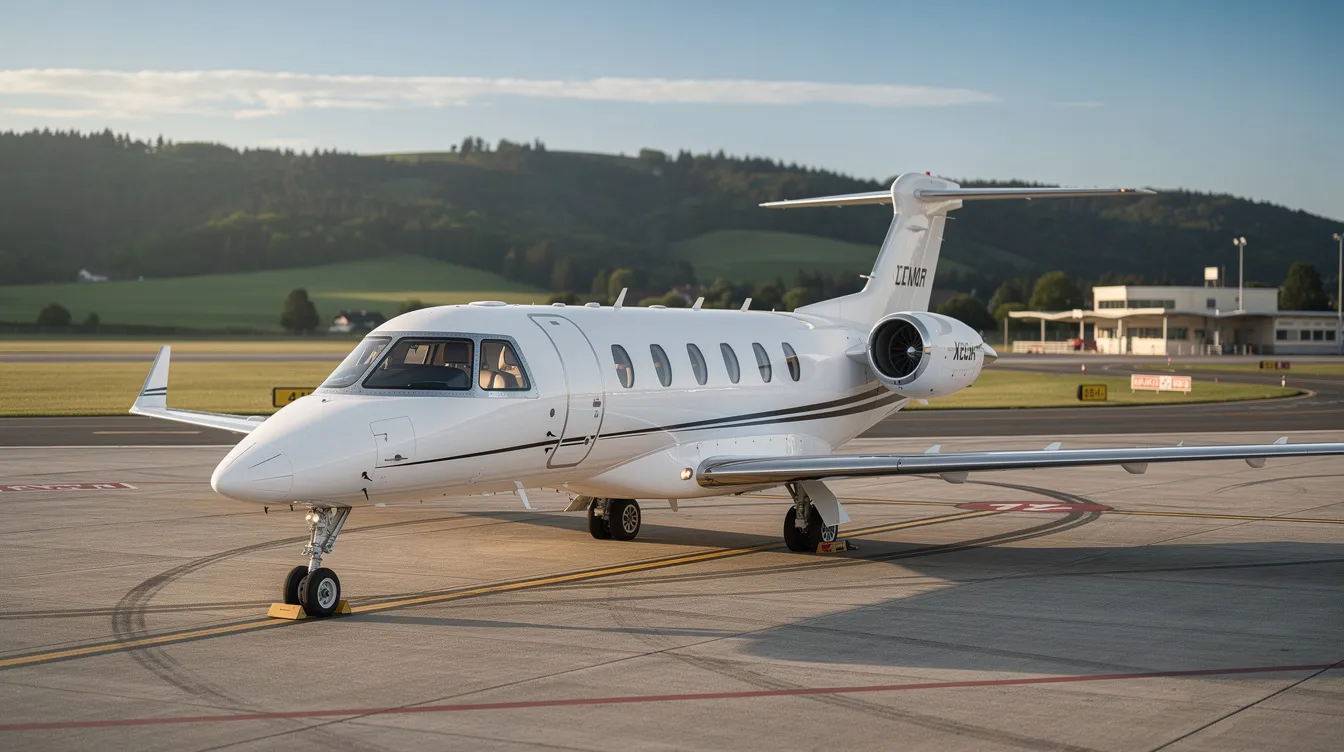
Jettly is a digital private jet charter marketplace connecting travelers to over 20,000 aircraft worldwide. The platform bridges the gap between high-capacity 737 commercial flights and tailored private aviation, functioning as a modern alternative to traditional charter airlines.
Key features for capacity-conscious travelers:
Filter by passenger count, route, and aircraft category to find the right size, from turboprops and light jets up to large jets and airliner-class options
Instant pricing estimates with transparent cost breakdowns, avoiding the long quote processes common in traditional charter brokerage
Coordination of multiple aircraft when groups are too large for a single private jet but do not need a full 180-seat 737
Jettly can arrange VIP-configured airliners, including Boeing Business Jet–style aircraft, when groups of 20–50 need more cabin space than a heavy jet provides but fewer seats than a standard 737 configuration, similar to the premium experiences offered by top private jet charter companies.
Membership and on-demand options let travelers use private jets alongside their usual Boeing 737 commercial flights without long-term ownership commitments. For details on pricing models, Jettly's jet card and membership options and broader private jet memberships offer additional flexibility.
Modern Boeing 737 Next Generation and 737 MAX aircraft achieve high fuel efficiency per seat, but the total emissions per aircraft remain substantial due to aircraft size and flight frequency.
Airlines rely on fuel-efficient engines, advanced winglets, and high load factors (typically 80–90% on popular routes) to reduce fuel consumption per passenger on 737 services. The aerodynamic improvements across NG and MAX variants lower fuel burn per flight hour, which scales across hundreds of daily departures.
Private jets burn more fuel per passenger. A midsize jet carrying 8 passengers uses more fuel per seat compared with a 737-800 carrying 175. But private jets can reduce total travel time, avoid unnecessary connections, and reach closer airports, sometimes lowering overall trip impact for small teams who would otherwise drive or take multiple connecting flights.
Both sectors increasingly use sustainable aviation fuel (SAF), carbon offset programs, and optimized flight planning to reduce environmental footprint, factors that also influence how much a private jet costs overall when comparing aircraft types and trip lengths.
Jettly can connect customers with operators that participate in carbon offset or SAF programs, allowing travelers to factor sustainability into aircraft size and routing decisions while staying informed about global private jet fleet trends and their environmental impact.
Concrete scenarios help travelers understand when full 737 capacity is useful and when smaller aircraft are more practical, and they mirror the trade-offs someone faces when choosing the best personal plane for their needs.
Scenario 1: High-density leisure route. A Boeing 737- 800 operating London to the Canary Islands in a 189-seat all-economy layout. The airline's goal: maximizing seating capacity and keeping fares low. Per-seat cost might run £50–150. The 737's high seating capacity and fuel efficiency per seat make it the right tool for this trunk route.
Scenario 2: Executive team trip. Ten people traveling between two regional business hubs without direct 737 service. A commercial itinerary requires a hub connection, adding half a day of travel. A midsize jet booked through Jettly flies direct in 90 minutes door-to-door, at a per-person cost that competes with last-minute business class fares plus ground transport.
Scenario 3: Sports or entertainment tour. A 45-person delegation needing multiple city stops over a week. A VIP-configured airliner (BBJ-class) or pair of large-cabin jets provides more passenger comfort and scheduling flexibility than booking seats on multiple commercial 737 flights.
Understanding how many passengers on a 737 is the starting point. The real decision is matching aircraft size, route, and trip objectives to the right aircraft type, whether that is an airliner, a heavy jet, or one of the cheapest private aircraft options for budget-conscious travelers.
These FAQs address common follow-up questions about Boeing 737 capacity and how private charter fits into travel planning.
Most active Boeing 737- 800 and 737 MAX 8 aircraft seat about 170–190 passengers, depending on airline and cabin layout. Low-cost carriers frequently use 186–189-seat all-economy 737-800 and up to 197–200-seat MAX 8-200 layouts. Many legacy airlines operate 737-800s with 160–175 seats due to business, first-class seats, and extra-legroom economy rows. While extremes like 85-seat 737-100s and 230-seat MAX 10s exist, the 170–190 range is what most travelers encounter in typical configurations.
Full Boeing 737 charters are available but used primarily for large groups, sports teams, or corporate roadshows. Many private charter clients instead choose smaller airliner-class or regional jets with 30–70 seats, or VIP Boeing Business Jet layouts with around 20–50 seats. Jettly can source and compare these larger aircraft on request, alongside multiple smaller private jets if splitting the group is more efficient. Contact Jettly's support team with your group size, route, and budget for tailored recommendations.
Four factors matter most: group size, schedule flexibility, airport access, and total trip time (door-to-door, not just flight time). For 100+ passengers on a common route, a Boeing 737 commercial or charter flight is usually more cost-effective per seat. For smaller groups of 4–16 with time-sensitive meetings or destinations near smaller airports, a private jet often saves hours and simplifies logistics. Jettly's tools allow users to compare both scenarios to clarify trade-offs in cost, time, and passenger comfort.
A Boeing Business Jet uses the same core airframe as a Boeing 737 Next Generation but with a luxury, low-density interior closer to a large private jet. Typical BBJ seating of 19–50 passengers is much lower than standard 737 airliner layouts but higher than most heavy jets (usually 10–16 seats). BBJs offer long-range performance suitable for intercontinental missions, with some variants covering over 6,400 nautical miles. For most Jettly customers, heavy jets and super-midsize jets deliver a similar onboard experience with lower total capacity and often lower operating costs than a BBJ, especially when sourced from leading private plane manufacturers known for efficient cabin designs.
Higher seating capacity spreads operating costs across more passengers, generally supporting lower fares on commercial airlines using dense 737 layouts. In private charter, the total hourly cost of a 737-class charter is divided by the actual number of people traveling, so per-seat cost rises sharply for groups under 50. This is why many charter clients use large-cabin jets or multiple midsize jets rather than chartering a full 737 for a smaller group. Use Jettly's instant pricing features and guides on affordable private jet charter to see how different aircraft sizes and passenger counts impact per-person cost for a specific trip.
The answer to how many passengers a 737 can carry is roughly 85 to 230 seats. Most modern Boeing 737 800 and 737 MAX 8 flights carry about 170–190 passengers in real-world configurations.
Capacity depends on generation, specific variant, and cabin layout decisions: all-economy versus two-class layout configurations, seat pitch choices, and the presence of premium cabins. Airlines optimize Boeing 737 fleets for fuel efficiency, seat density, and scheduled service on busy short-haul routes and medium-haul routes. Private jets serve a different purpose: smaller groups, flexible schedules, and access to thousands more airports.
Jettly gives travelers a way to right-size aircraft capacity. Whether the need calls for a light jet, midsize jet, heavy jet, or airliner-class option, the platform matches aircraft to route, passenger count, and schedule, and its jet card flight cost estimator helps compare predictable hourly pricing across those categories.
Ready to find the right aircraft for your next trip? Explore flight options or request a quote at https://www.jettly.com.
Share this post:
Jay Franco Serevilla
Oct 14, 2026
|
5
min read
Discover tips and trends in the industry.
5
min read
How Much Does It Cost to Fuel a Small Plane in 2026?
In 2026, fuel costs for small planes vary significantly based on aircraft type and fuel consumption rates. Single-engine pistons typically incur costs of $60–$80 per hour, while turboprops can reach $500–$600 per hour. Understanding these expenses is crucial for budgeting and flight planning for private pilots and aircraft owners.
Read More
5
min read
Private Jet Italy Guide: Routes, Costs, Airports and How Jettly Helps
Flying by private jet to Italy offers unmatched flexibility and speed, making it ideal for both business and leisure travelers. This comprehensive guide covers routes, costs, and how Jettly simplifies the booking process, ensuring a seamless travel experience. Discover the advantages of private aviation and how it can enhance your Italian journey.
Read MoreStay updated with our latest insights and tips to elevate your journey with us.
MEMBERSHIPS AND ASSOCIATIONS



Disclaimer: Jettly operates as a charter broker, offering access to a global digital jet charter marketplace. Jettly is not a direct air carrier and does not own or operate aircraft. All advertised flights are conducted by third-party air carriers that are fully licensed and hold the appropriate Part 135 or Part 121 certifications issued by the Federal Aviation Administration (FAA) or equivalent regulatory authorities under U.S. or foreign law. Jettly complies fully with the U.S. Department of Transportation's Part 295 and Part 298 Charter Broker regulations. Jettly does not carry additional liability insurance. Passengers are covered by aircraft operator insurance. TICO: 50023770


