


Login
Get Instant Pricing On 23,000+ Aircraft

>
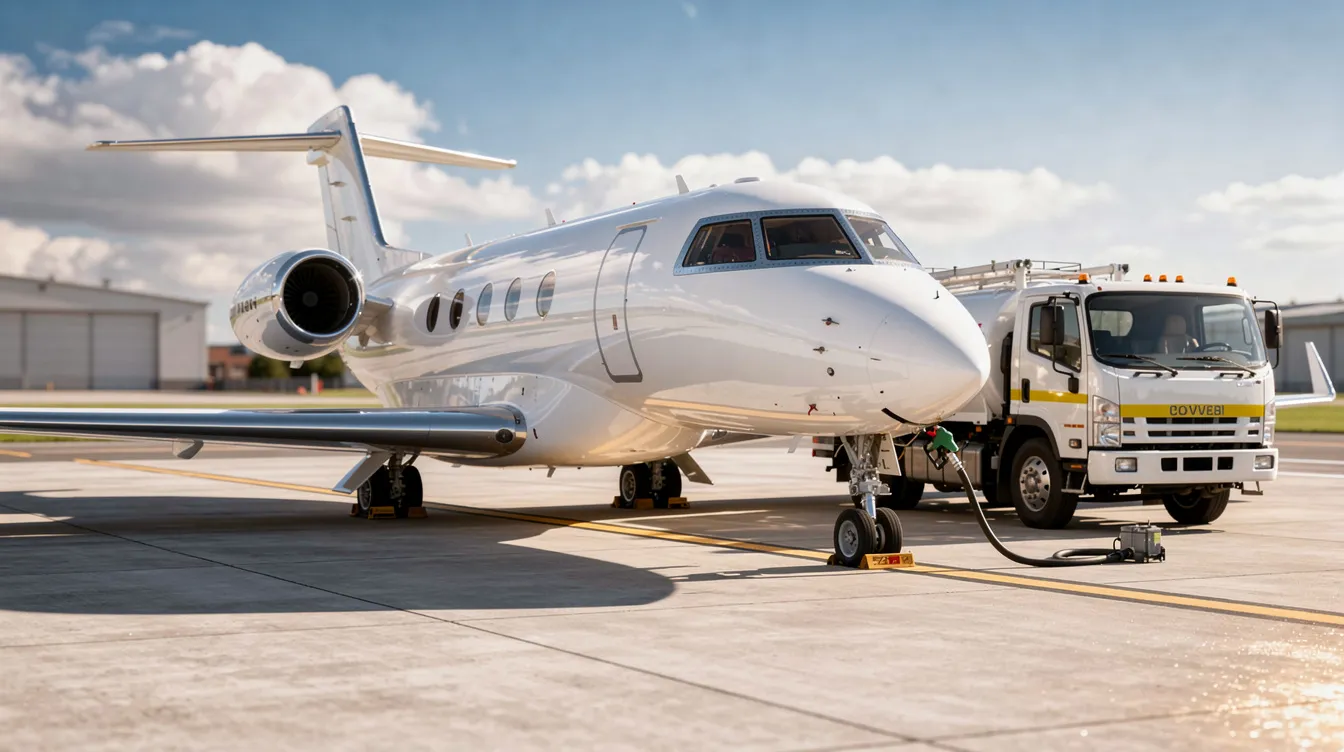
Fuel prices shape every private flight quote. As of May 2026, airplane fuel at U.S. FBOs typically runs about $7.00 to $9.20 per gallon for Jet A, with average retail jet fuel near $7.94 per gallon; 100LL avgas generally ranges from $6.80 to $7.54, and sustainable aviation fuel often falls between $6 and $12 per gallon before incentives.
For frequent flyers booking private jet travel—especially corporate executives and high-net-worth individuals or families—those numbers matter because fuel is a major part of charter cost and directly affects trip budgeting. For a broader view of your total spend, it also helps to understand how much a private jet costs overall, beyond just fuel. Here is what drives the jet fuel price, how fuel types and regional differences change the total, how Jettly builds fuel into transparent charter pricing, and what you can do to better manage fuel-driven costs when booking a private flight.
U.S. airline aviation fuel cost averaged $3.13 per gallon in March 2026-a 56.4% increase from February to March 2026 alone. At the retail level, average fuel prices at FBOs run much higher once transport, taxes, and in-plane fees are added. Key price ranges right now:
Jet A (retail at U.S. FBOs): As of May 11, 2026, Jet A prices averaged $7.94 per gallon; depending on region, full-service prices range from roughly $7.00 to $9.20 per gallon.
100LL Avgas: Around $6.80 (self-service) to $7.54 per gallon (full-service).
Sustainable aviation fuel (SAF): Typically 2–4× conventional jet fuel, often $6–$12 per gallon before incentives.
Global jet fuel spot prices: The global average jet fuel price is $187.34 per barrel, converting to roughly $4.46 per gallon before local adjustments.
For example, a light jet burning 150 gal/hr at $8.00 per gallon costs about $1,200/hr in fuel. A midsize jet at 250 gal/hr runs roughly $2,000/hr. If you want to dive deeper into the variables behind that number, it helps to break down how much it costs to fuel a private jet on a typical trip. On Jettly, these costs are already built into fuel-inclusive, transparent quotes-no separate calculations needed.
Jet fuel spot prices-tracked via indices like Platts and S&P Global-set the wholesale benchmark per barrel. These are different from the retail price per gallon at airports, which layers on logistics, taxes, and FBO margins.
Jet fuel prices are primarily driven by global commodity markets. The Argus US Jet Fuel Index, which uses regional market references including Chicago, reported $4.43 per gallon on Oct 5, 2026. Volatility is real: global jet fuel prices can swing 10% or more within a single week. Airlines and charter operators often use trading formulas like "index + X cents per gallon" tied to jet fuel spot, so fuel surcharges adjust as indices move. Jettly's pricing engine pulls real-time data from these markets, keeping instant quotes current.
Different plane types burn different fuel. Most private jets on Jettly use Jet A or Jet A-1. Piston aircraft use 100LL avgas. For a deeper technical breakdown of jet fuel types, including Jet A and Jet A-1, see how their properties and use cases differ. Aviation fuel also now includes SAF for eco-focused charters. Here is how they compare:
|
Fuel Type |
Typical 2026 Price (U.S.) |
Primary Use |
|---|---|---|
|
Jet A / Jet A-1 |
$7.00–$9.20/gal (FBO retail) |
Turbine-powered jets |
|
100LL Avgas |
$6.80–$7.54/gal |
Piston aircraft |
|
SAF |
$6–$12/gal |
Blended into Jet A for lower emissions |
About 90–95% of aircraft on Jettly burn Jet A (U.S. standard) or Jet A-1 (international, slightly lower freezing point). Heavy jets burning 300–500+ gallons per hour can see thousands of dollars in fuel cost differences on a transcontinental charter from just a small shift in jet fuel price per gallon. Jettly automatically incorporates local Jet A pricing by airport into hourly rates.
100LL powers piston-engine aircraft suited for short regional hops. Its higher fuel price reflects lower production volume, lead-content handling, and fragmented distribution. FAA regions are watching ongoing initiatives to phase out leaded avgas and test unleaded alternatives. For instance, a piston charter via Jettly burning 15 gallons on a 1-hour hop adds roughly $113 in fuel-a modest but visible share of the total cost.
Sustainable aviation fuel is a drop-in replacement made from renewable sources, blended up to 50% with Jet A. SAF can command a price premium of roughly $3.45 per gallon over conventional jet fuel in some markets. U.S. incentives like the 45Z credit (currently $1.00/gal) help offset that gap. A charter opting for a 30% SAF blend may see a 5–15% premium on fuel cost. For context on why cleaner fuels matter, it helps to understand the broader picture of private jet emissions and their impact. SAF availability remains limited, but travelers can explore carbon offsetting on Jettly for any route.
Fuel price fluctuations reflect several layered factors. Jet fuel is one of the largest operating expenses for airlines-a single-cent increase in fuel price adds $40 million in annual airline expenses. Here are the main drivers:
Crude oil: Crude oil prices account for over half of total jet fuel costs. Brent crude has ranged from $70–$100/bbl in 2025–2026, with geopolitical tensions keeping price fluctuations elevated.
Refining margins: The "crack spread" between crude and refined jet fuel can spike during maintenance outages or seasonal demand surges. Demand and consumption trends dictate short-term demand spikes.
Logistics and infrastructure: Logistics and infrastructure costs impact jet fuel prices-pipeline, truck, or barge delivery to remote airports adds dollars per gallon.
Taxes and fees: Federal excise taxes add $0.244 per gallon for non-commercial aviation fuel. State taxes and into-plane fees ($0.10–$0.40/gal) stack on top. Taxes and regulations vary widely, and in some jurisdictions fuel handling requirements also depend on airport permits or operating license rules, influencing regional costs.
Currency: A weaker U.S. dollar raises the effective cost of internationally traded fuel, affecting Jettly customers on transborder routes.
Aviation fuel represents 20%–40% of airline operating costs, and in private aviation, fuel accounts for 20%–40% of charter pricing as well. The math is straightforward: fuel burn per hour × current fuel price = baseline hourly fuel cost. That fuel line then feeds into the broader private jet operating cost breakdown, which also includes maintenance, crew, and other variable and fixed expenses.
|
Aircraft Type |
Burn Rate (gal/hr) |
Fuel Cost/Hr at $8.00/gal |
|---|---|---|
|
Turboprop |
70–90 |
$560–$720 |
|
Light jet |
130–180 |
$1,040–$1,440 |
|
Midsize/super-mid |
220–300 |
$1,760–$2,400 |
During volatility, fuel surcharges can add 10–20% to charter quotes. Jettly uses real-time data in all-inclusive hourly rates, with clear breakdowns so there are no hidden surcharges when you browse its broad range of private charter aircraft options.

Jet fuel prices can diverge drastically by region. Fuel prices can vary 20–50% between different airports due to competition, supply access, and local fees. Regional supply constraints significantly impact aviation fuel prices. Regional pricing varies due to local infrastructure and market access.
Gulf Coast: Jet fuel prices are around $3.10 per gallon-among the cheapest in the U.S. thanks to refinery proximity, with Houston serving as a major refining and distribution hub that helps keep regional prices lower.
Hawaii: Approximately $5.50 per gallon, driven by shipping costs.
Globally: The Middle East typically has the lowest baseline prices for jet fuel, while Africa often has the highest average global jet fuel prices.
A New York–Miami flight and a Los Angeles–Las Vegas hop may show different quotes partly because fuel costs at departure and arrival airports differ. Jettly's platform accounts for these regional differences-and any repositioning flights-in every charter quote, helping travelers understand the broader costs of private jet charter beyond just fuel.
Travelers cannot control global fuel prices, but smarter choices reduce their impact:
Right-size the aircraft: Use fuel-efficient turboprops or light jets for short hops. If you’re comparing aircraft beyond charter and thinking about ownership, a guide to affordable planes and budget-friendly aircraft choices can clarify how aircraft type affects long-term fuel and operating costs. Jettly's search tools compare aircraft categories and fuel efficiency side by side, and a map view can help compare airport-level fuel differences when weighing aircraft or departure options.
Optimize routing: Secondary airports often carry lower fuel prices. Minimizing repositioning legs helps too.
Plan: Booking 7–14 days out gives operators time to secure stable fuel contracts, and using current pricing information can make quotes more predictable.
Consider empty leg flights: Shared charters and empty legs lower effective fuel cost per passenger. Jettly also lets travelers crowdsource private jet flights and share empty seats, and you can apply additional tips for booking the cheapest private jet flights to keep fuel-driven costs in check.
As of 2026, retail prices at U.S. fixed-base operators (FBOs) typically range from $7.00 to $9.20 per gallon for Jet A fuel. Prices vary by region and fuel type, with 100LL avgas costing around $6.80 to $7.54 per gallon and sustainable aviation fuel (SAF) ranging from $6 to $12 per gallon before incentives.
Jet fuel prices are influenced by global crude oil markets, refining margins, logistics, taxes, and regional supply constraints. Prices can swing 10% or more within a single week due to geopolitical events, seasonal demand, and infrastructure issues.
Fuel accounts for 20% to 40% of private jet operating costs and can add 10% to 20% in surcharges during volatile periods. Jettly incorporates real-time fuel prices into transparent, fuel-inclusive charter quotes to avoid surprise fees.
Jet A is the U.S. standard jet fuel with a freeze point of -40°C, while Jet A-1 is the international standard with a lower freeze point of -47°C. Both are kerosene-based fuels used by turbine-powered aircraft but differ slightly in composition and performance.
Yes, SAF is available on select routes and aircraft as a blend with conventional jet fuel. It reduces carbon emissions but typically costs more, adding a 5% to 15% premium on fuel costs. Jettly can provide SAF availability and pricing details upon request.
Travelers can reduce fuel impact by selecting fuel-efficient aircraft, optimizing routes to avoid repositioning flights, booking in advance to allow operators to hedge fuel costs, and considering shared or empty leg flights to spread fuel expenses among more passengers.
Aviation fuel requires higher quality standards, specialized refining, and careful handling to ensure safety at high altitudes and extreme temperatures. Additionally, smaller sales volume, limited distribution, and specific taxes and fees contribute to higher prices.
Fuel prices can change daily on commodity markets, with airport retail prices updating weekly or monthly. Jettly’s platform integrates real-time market data to provide instant, fuel-inclusive quotes that reflect current prices without manual re-quoting.
Learn more about Jettly’s charter options at https://www.jettly.com.
Jet fuel and aviation fuel prices-shaped by jet fuel spot markets, taxes, and regional factors-are central to how much private flights cost in 2026. Note that fuel touches every line item in a charter quote, from the beginning of route planning to final invoicing. Jettly integrates live fuel prices into instant, fuel-inclusive quotes, giving travelers clarity without spreadsheets. Frequent flyers can use tools like Jettly’s jet card flight cost estimator and explore jet card programs or private jet memberships to lock in more predictable hourly rates even as fuel fluctuates. If you prefer to buy by the seat, guides on how to buy a seat on a private jet and ways to get a private jet seat easily explain how fuel costs are spread across passengers in shared models. For those comparing payment structures, a deep dive into jet card costs and pricing and an overview of charter airlines and private flight options can clarify how fuel surcharges appear across providers. Travelers evaluating alternatives to fractional ownership can see how Jettly positions itself as a NetJets alternative with flexible pricing, while understanding Part 135 charter companies and their regulations helps explain why fuel-related fees must be disclosed and billed in specific ways. Finally, on-board services such as Jettly Eats in-flight catering can be layered onto any itinerary without affecting fuel price itself, but still shape your overall trip budget. Use aircraft comparisons, route flexibility, and tools like Jettly's platform to balance budget, time, and environmental impact.
Ready to see how current fuel prices affect your next trip? Explore private jet options or request a quote at https://www.jettly.com.
Share this post:
Jeff Ryan Serevilla
Oct 6, 2026
|
5
min read
Discover tips and trends in the industry.
5
min read
Arrow Jets: How Jettly Makes Private Jet Travel Simple, Fast, and Transparent
Jettly revolutionizes private jet travel by offering a digital platform that simplifies the booking process for over 20,000 aircraft worldwide. With instant pricing and transparent cost breakdowns, travelers can easily access fast, direct flights tailored to their needs. This on-demand model eliminates the complexities of traditional jet ownership, making private aviation more accessible and efficient.
Read More
5
min read
Socata TB Series Guide: TB 20 Trinidad and Related Models
The Socata TB series, particularly the TB 20 Trinidad, is a renowned family of French single-engine aircraft designed for touring and training. With its spacious cabin and retractable landing gear, the TB 20 is favored by private pilots and flight schools for its performance and comfort. This guide explores the TB series' features, variants, and its relevance in modern private aviation.
Read MoreStay updated with our latest insights and tips to elevate your journey with us.
MEMBERSHIPS AND ASSOCIATIONS



Disclaimer: Jettly operates as a charter broker, offering access to a global digital jet charter marketplace. Jettly is not a direct air carrier and does not own or operate aircraft. All advertised flights are conducted by third-party air carriers that are fully licensed and hold the appropriate Part 135 or Part 121 certifications issued by the Federal Aviation Administration (FAA) or equivalent regulatory authorities under U.S. or foreign law. Jettly complies fully with the U.S. Department of Transportation's Part 295 and Part 298 Charter Broker regulations. Jettly does not carry additional liability insurance. Passengers are covered by aircraft operator insurance. TICO: 50023770


