


Login
Get Instant Pricing On 23,000+ Aircraft

>
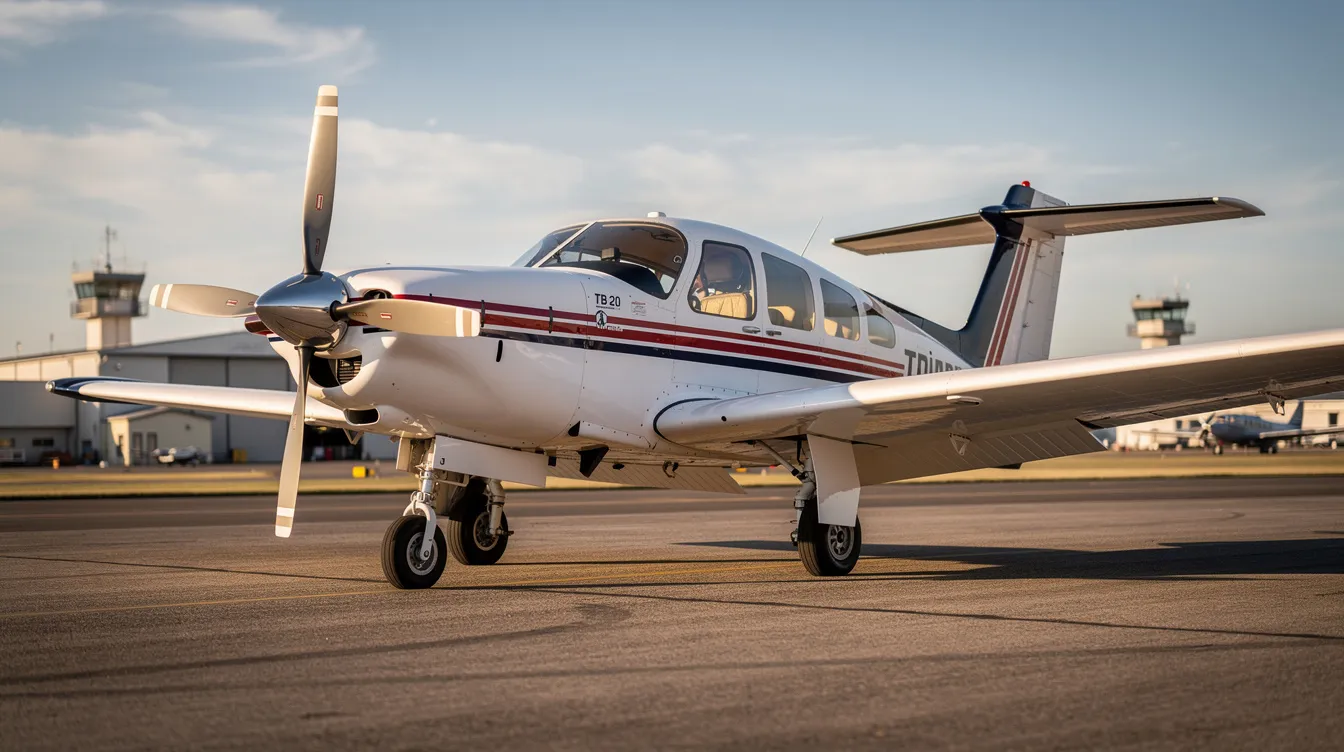
The Socata TB series is a family of French single-engine, light piston aircraft built for touring, training, and private travel. Among them, the TB 20 Trinidad stands out as a popular four-seat, retractable-gear aeroplane that has earned respect from owner-pilots and flight schools across Europe and North America since the mid-1980s. This guide is intended for private pilots, aviation enthusiasts, and travellers interested in the Socata TB series and its role in private and charter aviation. Understanding the TB series helps pilots and travellers make informed decisions about aircraft selection for training, business, or leisure travel. This guide breaks down the real-world use, performance, and charter relevance of the TB 20 and its relatives — including the turbocharged TB-21 and the lesser-known TB-360 Tangara.
The Socata TB 20 Trinidad is a general aviation aircraft with retractable landing gear, a 250 hp engine, and a cabin wide enough for four adults. It remains one of the most practical single-engine pistons for IFR cross-country flying.
This guide focuses on real-world performance, cabin comfort, operating roles, and how the TB series fits into the broader private aviation landscape - not just technical catalog data.
Most Socata TB 20 aircraft operate in private and flight-training roles. They fall into the "single-engine piston" category within Jettly's wider global fleet of over 20,000 aircraft.
The article covers aircraft variants (including the TB-360 Tangara), cockpit experience, typical missions, and how travellers can access similar aircraft through a modern charter platform.
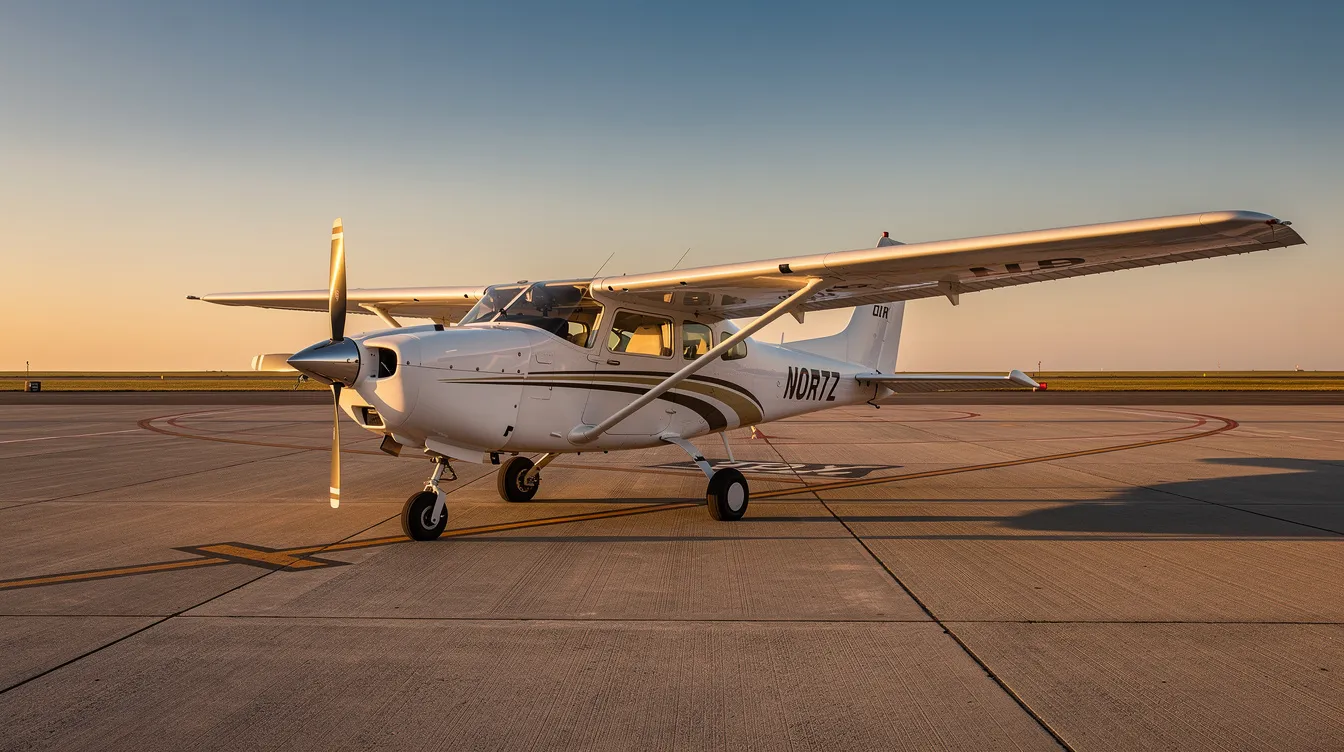
The SOCATA TB series is a family of French single-engine, light piston aircraft, including both fixed-gear and retractable-gear models, all sharing a basic airframe concept with considerable similarities in design. The Socata TB family is a line of French-built light aircraft developed by SOCATA (now part of Daher) starting in the late 1970s. The SOCATA TB series was introduced in the late 1970s as a modern replacement for the earlier Rallye series, bringing updated aerodynamics, wider cabins, and more contemporary designs to the general aviation market. The aircraft in the SOCATA TB series are known as Caribbean Planes due to their island-themed names - Tampico, Tobago, Trinidad - reflecting the warm-weather leisure flying they were built for.
The TB 20 Trinidad sits near the top of the family. It is a four-seat, single-engine, low-wing aircraft with retractable landing gear, positioned above fixed-gear models like the TB 9 Tampico and TB 10 Tobago in both performance and equipment. All TB models share a basic airframe concept with considerable similarities in design, which simplifies parts sourcing and pilot transitions between variants.
Late 1970s–early 1980s: Design and first flights of early TB models, including the fixed-gear TB 9 and TB 10, intended for training and light touring.
1984: Introduction of the TB 20 Trinidad as a higher-performance, IFR-capable touring aircraft with a 250 hp Lycoming IO-540 engine and retractable gear.
1990s–2000s: Refinement of avionics and interior options. Newer versions introduced updated cabin trim, added headroom, and improved styling under labels like "Excellence," "GT," and "Generation Two."
Production of the TB 20 ended around 2002. Today, Daher continues to support the SOCATA TB series with parts and technical documentation, keeping the fleet airworthy for current owners and operators.
Several features define the TB series and set it apart from contemporaries like the Piper PA-28 or Cessna 182:
A wider-than-average cabin for a single-engine piston, emphasising comfort for the pilot and three passengers.
A low-wing layout with large gull-wing doors and good ground visibility. The aircraft in the SOCATA TB series utilise gull-wing doors for easy access to the cabin, which also contributes to the aeroplane's clean, modern look.
An emphasis on modern styling for its era, with automotive-style interiors that felt more refined than many American-built competitors of the same period.
The TB series has robust build quality designed to handle frequent operations and ensure longevity.
Socata TB-20 includes four models: Trinidad, Excellence, TB-20C, and GT. Here is how they differ:
Socata TB 20 Trinidad - the baseline model with retractable gear and a 250 hp Lycoming engine. The TB-20 Trinidad has retractable landing gear and is powered by a 250 hp engine.
TB 20 Trinidad Excellence - an upgraded interior and equipment package targeted at owner-pilots who fly frequently, with better cabin trim and expanded standard avionics.
TB 20C Trinidad - a version with minor configuration and avionics differences, well-suited for IFR training and private travel. Some configurations were edited to meet specific regulatory or operator requirements.
TB 20 Trinidad GT - the "Generation Two" airframe with refined aerodynamics, additional headroom (roughly three extra inches), and cabin and panel updates introduced in the late 1990s.
The TB series includes both fixed-gear and retractable-gear models, accommodating various aviation roles:
TB-9 Tampico: An entry-level fixed-gear trainer powered by a 160 hp engine. The TB-9 and TB-10 models are commonly used in flight schools for primary and IFR training.
TB-10 Tobago: A fixed-gear cross-country tourer featuring a 180 hp engine and constant-speed propeller.
TB-200 Tobago XL: A higher-powered fixed-gear model with a 200 hp engine, bridging the gap between basic trainers and the retractable-gear Trinidad.
TB-21 Trinidad TC: A turbocharged version of the TB-20 designed for high-altitude flying, with a service ceiling around 25,000 feet.
The TB-20 and TB-21 models are favoured for business commuting due to stable flight characteristics and spacious cabins. The TB series features docile flight characteristics suitable for new pilots transitioning to higher-performance aircraft.
The TB 20 is categorised as a single-engine piston, four-seat touring aircraft. It typically cruises around 155–165 knots true airspeed depending on power setting and configuration. It is IFR-capable and often used in instrument training and cross-country flights across Europe and North America. Approximately 175 TB-20 Trinidad aircraft remain active on the U.S. FAA registry, with used market values ranging from about $148,000 to $217,000 depending on condition, year, and avionics.
While TB 20s are commonly privately owned or used by flying schools, comparable single-engine piston aircraft types can be accessed via Jettly's private charter aircraft marketplace for short regional hops, training, or cost-sensitive leisure travel. Jettly's platform primarily focuses on business jets and turboprops but also lists piston aircraft in certain markets for more flexible, budget-conscious private travel.
What is it actually like to fly in - or operate - a TB 20 Trinidad? This section covers the practical details: speed, range, cockpit feel, and the missions this plane handles best.
The TB 20 is powered by a Lycoming IO-540-C4D5D engine producing roughly 250 hp. At 75% power and around 8,000 feet, pilots can expect true airspeeds in the range of 157–163 knots. The TB-20 Trinidad has a maximum cruise speed of 150 knots at standard conditions, though real-world performance often varies with altitude, temperature, and loading.
Range is solid for its class. Depending on fuel load, payload, and power setting, the TB 20 covers roughly 700–1,000 nautical miles with reserves. That makes it suitable for medium-length regional flights — think Paris to Rome (around 540 nm), Miami to Nassau (roughly 200 nm), or London to Geneva (about 330 nm), where tools like an airport locator for private flights help match routes with suitable smaller airfields.
Service ceiling sits at approximately 20,000 feet, though most pilots fly lower for comfort and engine efficiency. Fuel consumption runs about 14–16 U.S. gallons per hour at cruise, with usable fuel capacity around 86 gallons.
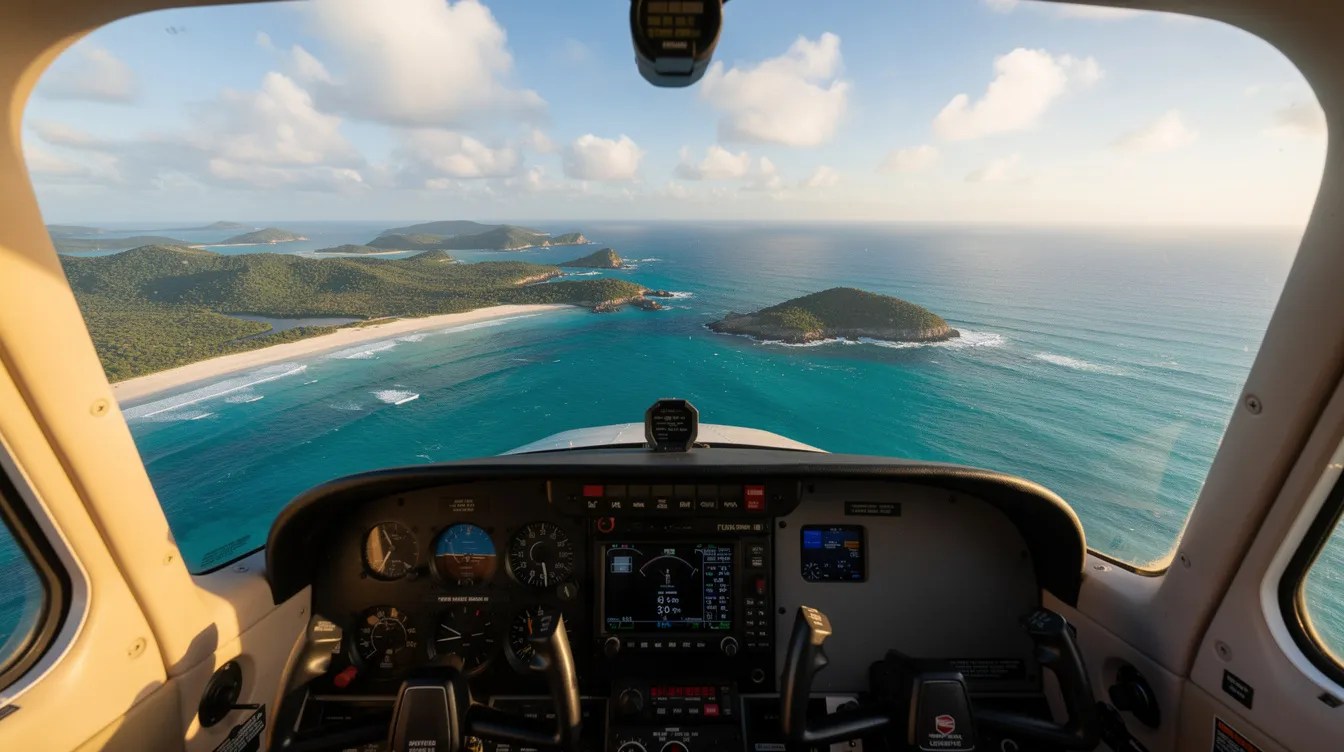
The TB 20 models are known for their spacious cabin design. Four seats are arranged in two rows, with a cabin width of roughly 50 inches — wide for a single-engine piston. Two adults sit comfortably up front, with two more in the rear, on flights of two to four hours.
The TB series aircraft feature a wide cabin, automotive-style interiors, and large visibility-enhancing windows. Those large windows benefit both sightseeing and VFR training by giving the pilot and passengers clear views of terrain and traffic. Baggage capacity is moderate at around 143 pounds — practical for weekend bags or light luggage, but not ideal for a family hauling full vacation loads.
The gull-wing doors are a standout feature. They make getting in and out of the cabin easier than the narrow doors found on many competing small aircraft, and they contribute to the plane's distinctive look on the ramp.
Many TB 20s are equipped with IFR-approved avionics stacks. The original panel configuration featured analogue "six-pack" gauges with VOR, ILS, and ADF navigation instruments. However, a growing number have been retrofitted with glass cockpit solutions - Garmin GNS/GTN units, G500/G600 displays, or Aspen Evolution systems - making them suitable for serious instrument cross-country travel.
These features make the TB 20 a favourite for advanced flight training and for private pilots who frequently fly in varied weather across Europe or North America. About 60% of TB 20s currently listed for sale include an autopilot, and ADS-B compliance upgrades are increasingly common.
The TB 20 fills several real-world roles:
Owner-pilot business travel between secondary cities, using smaller airports closer to final destinations than large commercial hubs. This mirrors a key advantage of flying into small airports.
Leisure touring and weekend trips, such as coastal flights, island hops, or cross-country vacations over a few hours' range.
Flight training at the instrument and commercial level, where retractable gear and higher performance are necessary for syllabus requirements.
It is worth noting the operational realities of single-engine piston flying. In one NTSB-documented incident, a Socata TB-20 was lost from radar at 1927 ET after the flight originated at about 1923 ET from Key West. The aeroplane was presumed destroyed with two fatalities. The U.S. Coast Guard located debris from the aeroplane, and investigators noted that the pilot did not acknowledge transponder reset instructions. Incidents like this underscore why weather, maintenance, and pilot proficiency remain critical in piston aircraft operations.
In many markets, TB 20s are operated either privately or as part of small training outfits. Dedicated TB 20 charters are less common than turboprop or light jet charters. However, operators who offer similar single-engine piston charters can be found through modern digital platforms.
Jettly's inventory includes analogous piston and prop aircraft that deliver similar mission profiles - short-range regional trips, access to smaller airfields - with charter-style booking, instant pricing, and transparent cost breakdowns. Travellers whose mission profile fits what a TB 20 can do (short regional hops with two to three passengers and light luggage) may want to consult a complete guide to private jet rental costs to compare small piston aircraft charters against light turboprops for cost, comfort, and weather flexibility.
The SOCATA TB-360 Tangara represents a less well-known chapter in the TB family story. While the TB 20 Trinidad became the series' flagship single, the Tangara was designed as a light twin-engine IFR-capable training and touring aircraft, conceptually aligned with the TB 20 but optimized for specific training and regional transport roles.
The TB-360 Tangara was derived from the Gulfstream American GA-7 Cougar, a light twin that SOCATA acquired rights to in the mid-1990s. It was designed as a modernised evolution within the TB series, retaining the general low-wing layout and four-seat configuration. Power was expected to come from two Lycoming O-360 engines (180 hp each), with projected cruise speeds around 165 knots and range estimates between 800 and 1,140 nautical miles.
The Tangara was intended for training and touring missions, with performance and handling tailored for flight schools and private owners. However, only prototypes were built, and the type never entered full production or widespread certification. Detailed data is more limited compared with mainstream TB 20 sources, but historical specifications and program information can be found on its Wikipedia page and small plane manufacturer reference databases.
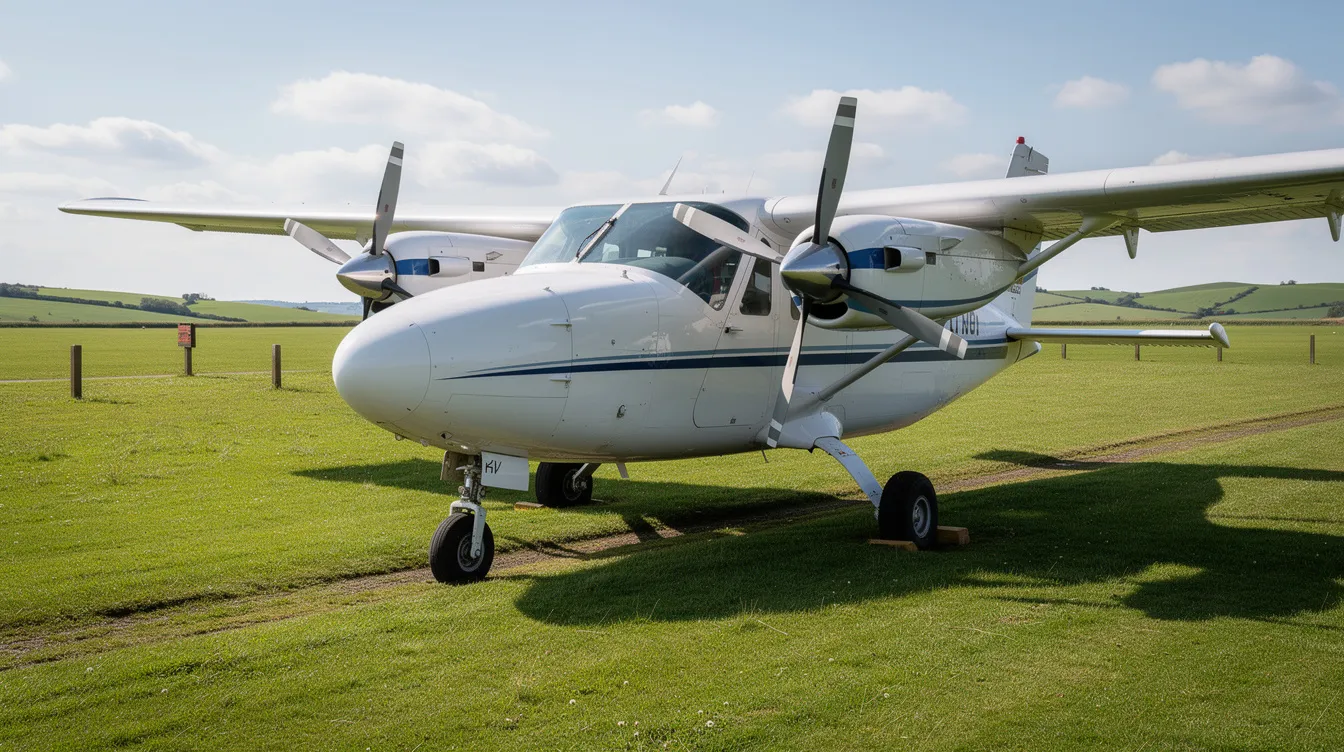
The Tangara shared a similar mission profile with the rest of the TB family: IFR training, advanced pilot development, and personal travel. Its twin-engine configuration would have offered additional safety redundancy for training environments, similar to what makes the best twin-engine planes attractive for flight schools and serious travellers.
Here is a simplified view of where each TB model sits:
TB 9 Tampico: Fixed gear, 1 160 hp engine Primary training
TB 10 Tobago: Fixed gear, 1 180 hp engine Basic touring / IFR training
TB-200 Tobago XL: Fixed gear, 1 200 hp engine Cross-country touring
TB 20 Trinidad: Retractable gear, 1 250 hp engine Advanced touring / IFR
TB-21 Trinidad TC: Retractable gear, 1 250 hp (turbocharged) engine High-altitude touring
TB-360 Tangara: Fixed gear, 2 180 hp engines , twin-engine training (prototype only)
While specific models like the TB-360 Tangara may not be widely available as charter aircraft in any market, the type illustrates the kind of modern single-engine and light twin trainers and tourers that complement Jettly's broader inventory. Readers researching TB-series aircraft for personal interest might also want to understand how modern charters use light pistons and turboprops for similar training and short-haul missions, as outlined in a guide to private and charter airlines.
The TB line's lasting contribution is clear: it showed how comfortable, IFR-capable pistons can sit at the entry level of private flying. Today, digital platforms make higher-performance turboprops and light jets accessible with the same booking ease that the TB family once brought to personal aviation, and some travellers now use Jettly specifically as a cost-effective NetJets alternative. Learn more about Jettly's charter options at https://www.jettly.com.
Below are answers to practical questions not fully covered in the main sections, focusing on costs, availability, and suitability for different types of trips, along with broader context on how much private jets cost to own or charter.
The TB 20 is more often privately owned or operated by flying schools, so dedicated TB 20 charters are less common than charters on turboprops or light jets. Some charter operators and digital platforms list similar single-engine piston aircraft for very short regional trips, training flights, or sightseeing — particularly in Europe and North America, including busy hubs such as Atlanta private jet charter services. Travellers interested in TB 20-style flying should search by aircraft category (single-engine piston) on Jettly or comparable platforms rather than by exact model name and can use a private jet charter cost estimator to get quick ballpark pricing.
The TB 20 is ideal for regional flights of one to four hours with up to three passengers and light luggage. Typical examples include city-to-city business hops, island runs like Miami to Nassau, or weekend getaways such as London to Paris or Madrid to Lisbon, where travellers might also consider easy ways to get a seat on a private jet when they outgrow what a TB 20 can comfortably handle. For longer flights or passengers carrying more baggage, travellers may want to consider a turboprop or light jet, which Jettly's marketplace can help compare quickly, especially when combined with tips for booking the cheapest private jet flights.
A TB 20 cruises significantly slower than even the smallest light jets — roughly 155 knots versus 350+ knots for a typical VLJ. Journey times are longer, but operating costs are substantially lower. The cabin is narrower and simpler than a jet's, with fewer amenities, but offers good visibility and a more hands-on flying feel appreciated by aviation enthusiasts and trainee pilots. Light jets are usually preferred for business-critical, weather-sensitive, or multi-city itineraries, where speed, cabin size, and range matter more than entry-level operating costs, and many travellers compare options using a guide to the best private jet charter companies.
Yes. TB-series aircraft can operate from many smaller regional and local airports with relatively short runways, as long as those runways meet the plane's performance and safety requirements. The TB 20's takeoff distance over a 50-foot obstacle is roughly 2,150 feet, which many secondary airfields can accommodate. This ability to use smaller airports reduces ground travel time — one of the main advantages of private aviation over scheduled commercial flights. For example, a traveller could bypass a busy hub by flying directly into a closer regional field near a business meeting or vacation destination, which is equally valuable on international private jet itineraries where customs and airport choice can significantly affect total travel time.
Users can visit https://www.jettly.com to search by route, date, and aircraft category, then filter results to show smaller aircraft such as single-engine pistons or turboprops for cost-efficient regional travel or even enrol in flexible private jet membership plans. The platform provides instant pricing and aircraft details, helping travellers compare cabin sizes, performance, and total trip cost across different categories, while integrated tools like the airport locator make it easier to target convenient departure and arrival fields.
|
Model |
Engine Power |
Gear Type |
Seats |
Cruise Speed (knots) |
Range (nm) |
Typical Use |
|---|---|---|---|---|---|---|
|
TB-9 Tampico |
160 hp |
Fixed |
4 |
~115 |
~500 |
Primary training |
|
TB-10 Tobago |
180 hp |
Fixed |
4 |
~120 |
~600 |
Basic touring / IFR training |
|
TB-200 Tobago XL |
200 hp |
Fixed |
4 |
~130 |
~700 |
Cross-country touring |
|
TB-20 Trinidad |
250 hp |
Retractable |
4 |
150 |
700-1000 |
Advanced touring / IFR |
|
TB-21 Trinidad TC |
250 hp (Turbocharged) |
Retractable |
4 |
~170 |
~900 |
High-altitude touring |
|
TB-360 Tangara |
2 x 180 hp |
Fixed (Twin) |
4 |
~165 |
800-1140 |
Twin-engine training (prototype) |
The Socata TB series, especially the TB 20 Trinidad, represents a versatile and practical choice for private pilots and flight schools seeking reliable, IFR-capable single-engine piston aircraft. Known for its spacious cabin, solid performance, and ease of access through gull-wing doors, the TB 20 remains relevant for regional touring, training, and business commuting. While dedicated TB 20 charters are less common, travellers can access similar aircraft types and mission profiles through modern digital platforms like Jettly.
Jettly offers a seamless way to explore private aviation options, including piston aircraft and turboprops, with instant pricing, transparent booking, and access to a global fleet. Whether for short regional hops, training flights, or cost-conscious leisure travel, Jettly’s platform simplifies private jet charter and helps travellers find the right aircraft for their needs. Learn more about Jettly’s charter options.
Ready to experience private travel on your terms? Explore flight options or request a quote at https://www.jettly.com. See also our guide to private jet rental costs and a list of charter airlines to compare options. For regional travel, check out our airport locator for private flights to find convenient departure and arrival airports.
Share this post:
Jay Franco Serevilla
Oct 4, 2026
|
5
min read
Discover tips and trends in the industry.
5
min read
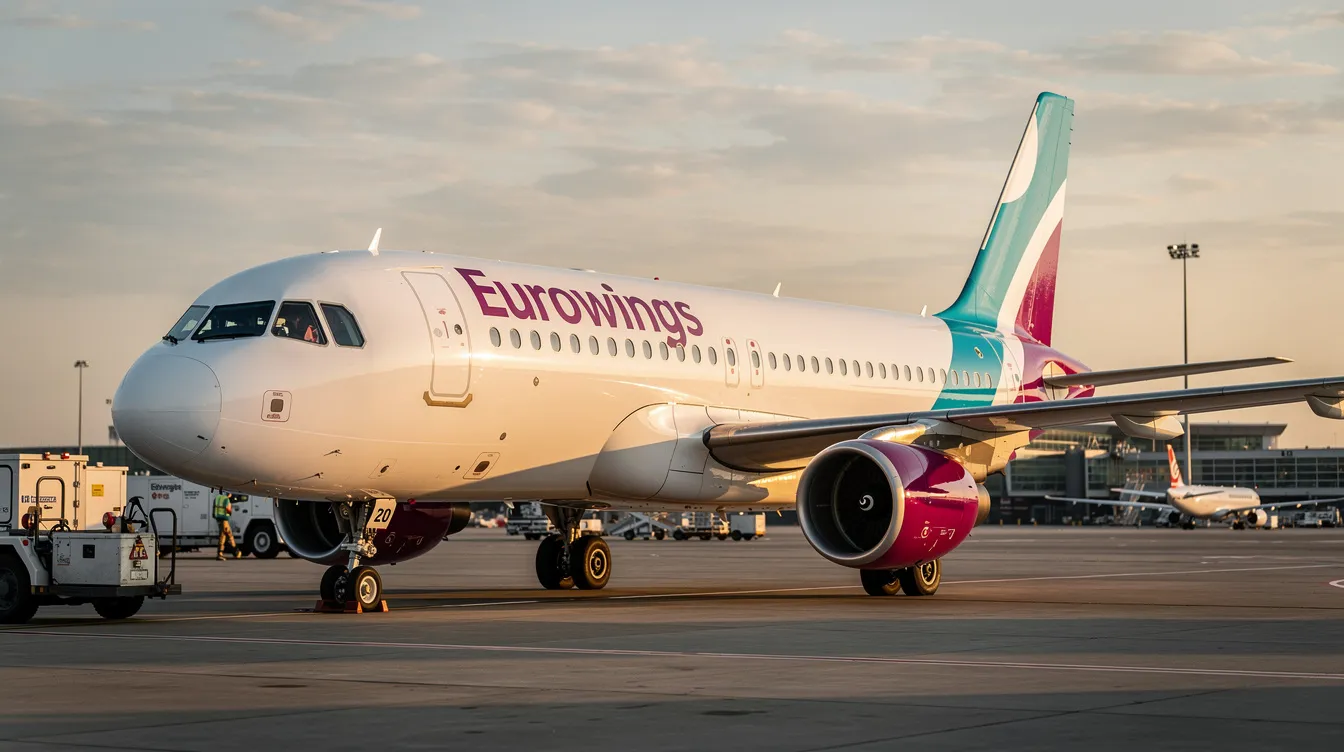
Is Eurowings Discover a Good Airline? (2026 Guide)
Eurowings Discover, the Lufthansa Group's leisure airline, offers affordable long-haul travel from Germany to various holiday destinations. While it provides a decent experience with competitive fares and lie-flat Business Class, it lacks the premium service and flexibility of higher-end carriers. This guide evaluates its pros and cons to help you decide if it's the right choice for your next trip.
Read More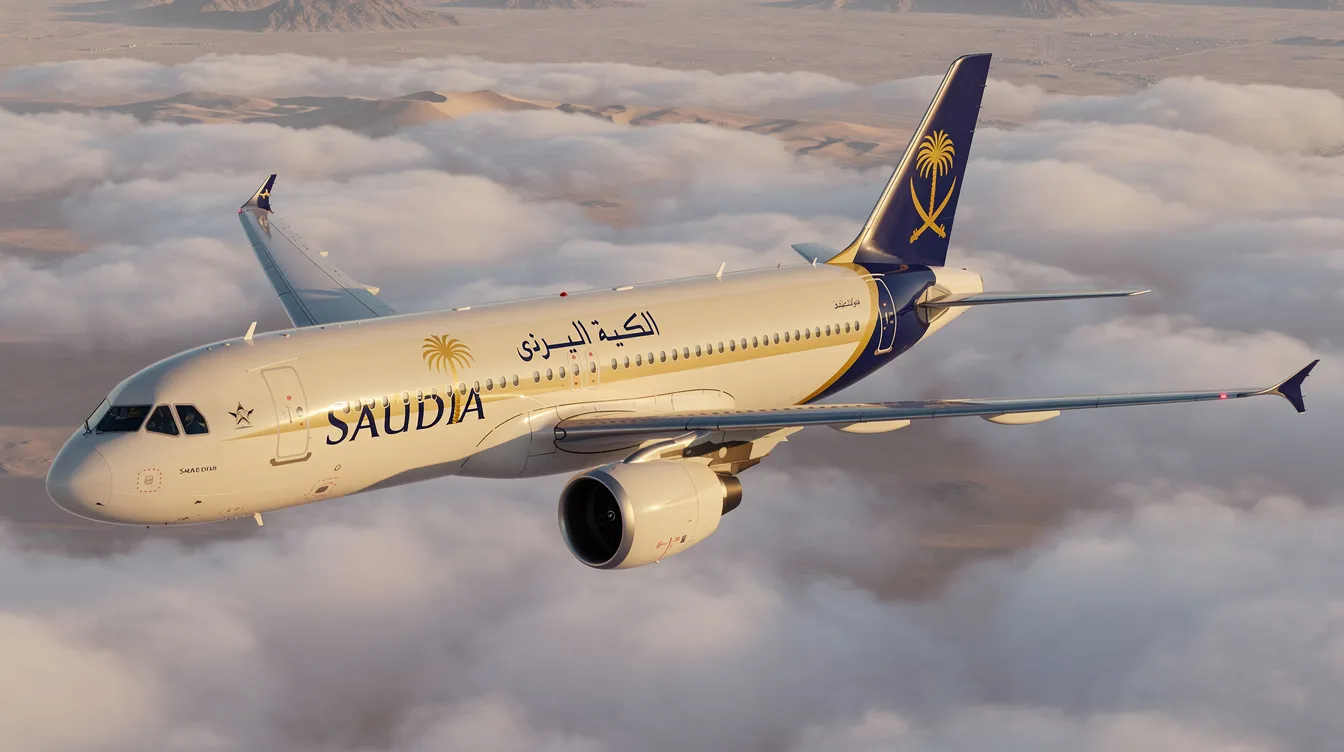
5
min read
Saudi Jet: Military Tensions, Regional Security, and What It Means for Modern Air Travel
The term 'Saudi jet' often refers to military aircraft incidents involving the Royal Saudi Air Force, particularly in the context of regional tensions with Iran and Yemen. These incidents impact not only military operations but also civilian aviation, as airspace management is crucial for ensuring safety. Despite the risks, private and commercial flights operate under strict regulations to navigate around conflict zones effectively.
Read MoreStay updated with our latest insights and tips to elevate your journey with us.
MEMBERSHIPS AND ASSOCIATIONS



Disclaimer: Jettly operates as a charter broker, offering access to a global digital jet charter marketplace. Jettly is not a direct air carrier and does not own or operate aircraft. All advertised flights are conducted by third-party air carriers that are fully licensed and hold the appropriate Part 135 or Part 121 certifications issued by the Federal Aviation Administration (FAA) or equivalent regulatory authorities under U.S. or foreign law. Jettly complies fully with the U.S. Department of Transportation's Part 295 and Part 298 Charter Broker regulations. Jettly does not carry additional liability insurance. Passengers are covered by aircraft operator insurance. TICO: 50023770


