


Login
Get Instant Pricing On 23,000+ Aircraft

>
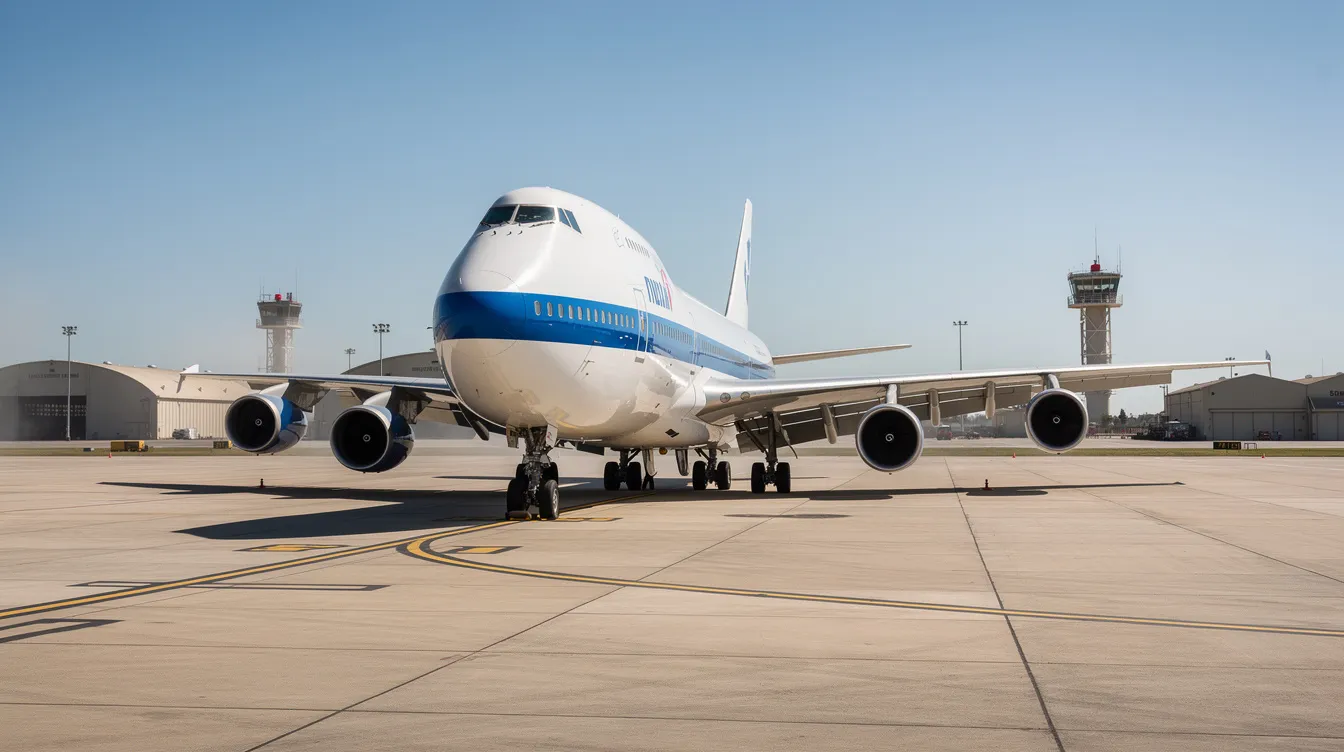
Few aircraft in history carry the weight and recognition of Air Force One. Inside US Air Force One is a heavily modified Boeing 747-200B with about 4,000 square feet of interior space, including a presidential suite, a flying Oval Office, a conference room, a medical bay, staff work areas, and a press cabin — all built to keep the American president secure, connected, and working at 45,000 feet.
For aviation enthusiasts, history buffs, travelers curious about the presidential aircraft, and private jet flyers comparing it with charter options, this article breaks down Air Force One’s history and evolution, technical specifications, communications and security systems, and the interior zones that make nonstop presidential travel possible. It also looks ahead to the next-generation VC-25B and shows why Air Force One remains a useful lens on how aviation technology supports continuous leadership while highlighting points of comparison with private aviation experiences available today.
"Air Force One" is a radio call sign used whenever the US president is aboard any Air Force aircraft, though it most commonly refers to the two customized Boeing 747-200B jets known as the VC-25A.
The current aircraft offers about 4,000 square feet of interior floor space, divided into a presidential suite, a flying oval office, a conference room, medical bay, staff work areas, and a press cabin.
A new Air Force One program based on the Boeing 747-8 (designated VC-25B) is under development at a total cost of roughly $3.9 billion to replace the aging 1990-era jets with more efficient engines and modernized communications and defenses.
The aircraft is designed to provide complete security and connectivity for the president, functioning as a mobile command center capable of surviving even an electromagnetic pulse event.
Readers will also see how the Air Force One experience compares to modern private jet charter options available through platforms like Jettly for business and leisure travelers.
When people search for "inside US Air Force One," they're usually picturing the interior of the iconic VC-25A. But technically, Air Force One is a call sign—not a specific plane. Any United States Air Force aircraft becomes "Air Force One" the moment the president steps aboard. Similarly, "Marine One" applies to Marine Corps helicopters carrying the president, and "Executive One" covers civilian flights.
The first presidential aircraft was a Douglas Dolphin in 1933, marking the beginning of dedicated presidential air travel. Franklin D. Roosevelt was the first president to fly while in office, traveling aboard the Dixie Clipper in 1943 to meet Winston Churchill. The first plane to officially carry the Air Force One call sign was Columbine II in 1953 under President Eisenhower.
Today, "Air Force One" most often refers to two nearly identical wide-body aircraft—VC-25A Boeing 747-200Bs with tail numbers SAM 28000 and SAM 29000. These presidential aircraft are maintained and operated by the Presidential Airlift Group, part of the 89th Airlift Wing at Joint Base Andrews, Maryland. Air Force One can carry up to 76 passengers and 26 crew members, supporting a large presidential entourage.
The evolution of presidential aircraft mirrors the broader arc of aviation technology—from propeller-driven transports to jets to the two wide-body aircraft that serve as the fleet today.
After President Roosevelt's wartime flights, President Truman commissioned the Douglas DC-6 "Independence" in 1947. President Truman's plane, the Independence, was retired in 1965 and is now housed at the National Museum of the United States Air Force in Dayton, Ohio. President Eisenhower flew Lockheed Constellations (Columbine II and III), with Columbine II being the first to officially bear the Air Force One call sign. President Kennedy's VC-137C (SAM 26000) served from 1962 to 1998 and helped cement the Air Force One name in popular culture. Its most dramatic moment came on November 22, 1963, when Lyndon B. Johnson took the oath of office aboard Air Force One after President Kennedy's assassination.
Post-Kennedy, Boeing 707 variants (SAM 26000 and SAM 27000) carried every president from Johnson through President George H. W. Bush. In 1990, the current aircraft entered service: two Boeing 747-200Bs designated VC-25A. Since then, Presidents Clinton, George W. Bush, Obama, Trump, and Biden have all relied on these military aircraft for domestic and international missions, making it a symbol of presidential travel across decades.
Air Force One is not just a famous plane—it is a heavily modified national command-and-control asset built on a proven Boeing airframe to serve the President of the United States.
Core specifications of the VC-25A include:
|
Specification |
VC-25A Detail |
|---|---|
|
Base airframe |
Boeing 747-200B |
|
Length |
~231 feet 10 inches |
|
Wingspan |
~195 feet 8 inches |
|
Engines |
4× General Electric CF6-80C2B1 |
|
Cruising speed |
~Mach 0.92 (~630 mph) |
|
Unrefueled range |
~7,800 statute miles |
|
Max takeoff weight |
~833,000 lb |
|
Interior floor space |
~4,000 square feet |
|
Passenger capacity |
Up to 76 passengers |
Key modifications separate it from any commercial 747-200B: the aircraft is armored and features countermeasures against missiles, hardened wiring, and electromagnetic pulse (EMP) protection. It carries an aerial refueling receptacle, meaning the aircraft can be refueled in-air for extended range—allowing it to remain airborne indefinitely. Air Force One also provides exit access without reliance on airport ground services, using built-in airstairs at both forward and aft positions.
The 4,000 square feet of interior floor space spans three main levels: the upper-level flight deck and communications suite, the main deck housing presidential and staff areas, and a lower deck for cargo, avionics, and support systems. The plane flies with roughly 26 crew members and accommodates up to 76 passengers, including senior staff, Secret Service agents, military aides, medical personnel, and traveling press.

Every inch aboard Air Force One is planned around security, communications, and nonstop work. The general flow from nose to tail moves from the most restricted presidential zones forward to increasingly accessible staff and press areas toward the rear.
Boarding is deliberate. The president, first family, and VIP guests typically enter via the forward airstairs near the nose. Press and support staff board through a rear door. This separation keeps security flows clean.
The roughly 4,000 square feet breaks down into distinct zones:
Forward: Presidential suite and private office (the flying Oval Office)
Mid-cabin: Conference room, senior staff workspaces, and dining room
Aft: General staff seating and the press cabin with airline-style rows
Interior designs reflect a surprisingly understated aesthetic. Air Force One prioritizes functionality, security, and comfort rather than opulence. The color palette leans toward neutrals, blues, and golds, influenced by First Lady Nancy Reagan's 1980s design choices. The aircraft features specialized furniture and decor handcrafted by master carpenters—functional pieces built for durability rather than decoration.
Behind the visible cabin, extensive infrastructure hides from view: secure networks, satellite communications domes, wiring runs, and soundproofing panels that make this wide-body aircraft quieter than most commercial planes. It has areas designated for staff, press, and security personnel, each with specific access restrictions.
The forward presidential complex is the most restricted part of the aircraft. Secret Service agents maintain posts at every access point, controlling who moves toward the nose.
Air Force One includes a suite for the president with a bedroom and private office. The private office space—often called the flying Oval Office—features a large desk facing forward, secure phones, encrypted video links, and room for a small group of advisors. The presidential seal is visible in select locations throughout this area, reinforcing the gravity of the space.
Adjacent to the office, the president's private compartment includes foldable couches that convert to beds, personal wardrobe storage, and a private lavatory and shower. The president's private suite includes a bathroom and foldable couches for rest during long flights. A small dining/meeting table allows for one-on-one conversations or meals with advisors. Air Force One offers private lounges for the president and family and provides separate facilities for the president's guests and staff further aft.
Each administration makes subtle changes—artwork, photos, seating layouts—without reconfiguring the core structure. George W. Bush used this space for secure calls immediately after 9/11. Later presidents, including Obama, Trump, and Biden, conducted critical calls with world leaders aboard Air Force One from the same room.
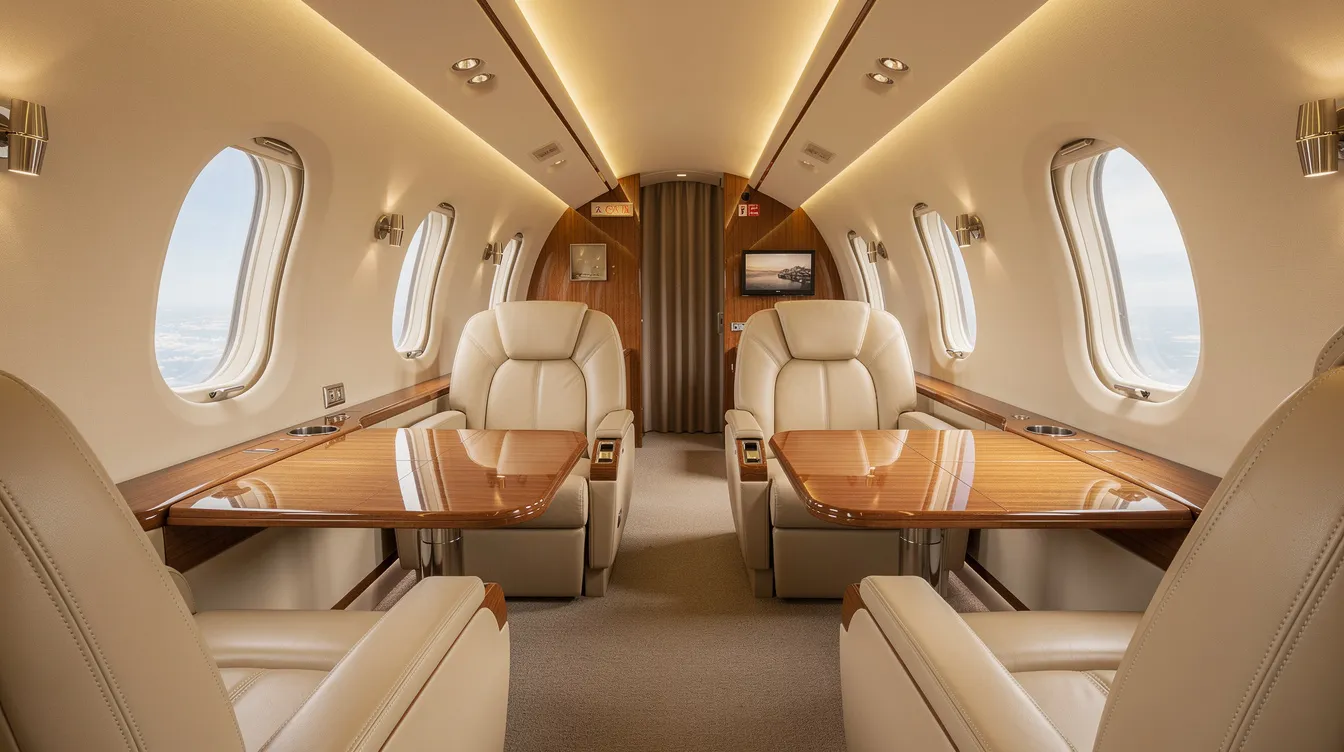
The central portion of the main deck functions as a mobile West Wing. This is where the president's staff, speechwriters, and national security advisors keep the government running at cruising altitude.
The conference room features a long table that doubles as a dining area, wall-mounted screens for secure video conferences, and seating for cabinet-level meetings. Presidents have used this space for everything from policy discussions to briefings en route to international summits.
Immediately adjacent, the senior staff room provides rows of seats with tables, power outlets, and secure phones. Advisors, speechwriters, and press secretaries use this space to finalize speeches, talking points, and logistics for events the moment the plane lands.
Further aft, general staff areas offer airline-style seating optimized for laptops and paperwork. The aircraft features 85 telephones and 19 televisions distributed throughout these work zones, keeping everyone connected to intelligence feeds and real-time news. These sections are deliberately functional—less ornate than the presidential suite—designed so chiefs of staff and key personnel can coordinate complex operations at any hour.
Air Force One must support the president through any contingency, from a medical emergency at 40,000 feet to extended flights with limited ground access.
The aircraft features an operating room and carries a medical doctor onboard at all times when the president flies. The dedicated medical compartment near the president's office includes an examination table that can function as a small operating bed, a defibrillator, oxygen, ventilators, pharmaceuticals, and supplies of the president's blood type for rapid transfusion.
There is a fully equipped kitchen capable of preparing up to 100 meals at once. Two industrial-grade galleys contain ovens, microwaves, refrigeration, and preparation counters. Meals are typically cooked or partially prepared at Joint Base Andrews, vacuum-sealed, and reheated in flight to serve the flight crew, passengers, and press on a set schedule or on short notice.
The aircraft carries six passenger lavatories and crew rest areas. There are multiple passenger lavatories on board, including accessible options. Advanced environmental controls manage cabin pressure and humidity, while backup power systems and additional food and water stores allow the aircraft to remain airborne or divert to remote locations if required.
Air Force One operates as a mobile command center during national emergencies. It is equipped to handle classified communication during flight, keeping the US president connected to the Pentagon, the White House Situation Room, and military commanders worldwide.
The communications suite includes:
Secure and non-secure phone networks
Satellite uplinks and encrypted data links
Classified video conferencing capability
Air Force One includes a secure communications system for encrypted phone and data communications
Around 20 televisions and multiple secure workstations keep the president and senior staff continuously updated on intelligence and real-time news. The aircraft is designed to provide complete security and connectivity for the president regardless of location or situation.
On the security side, the aircraft has advanced security systems, including EMP shielding designed to withstand an electromagnetic pulse—allowing operations to continue even after a nuclear event. Communications equipment, countermeasures, and electronic shielding protect the aircraft from missile threats, though specific procedures remain classified.
The most vivid example of this role came on September 11, 2001, when President George W. Bush coordinated the national security response aboard Air Force One for hours while the situation on the ground remained uncertain. Similar secure communication capabilities have supported surprise visits to conflict zones and rapid-response coordination during international crises.
A typical flight day begins with pre-boarding security sweeps before anyone—including reporters traveling with the president—steps aboard the famous plane.
The VIP guest section near the front of the main passenger cabin offers reserved seating for members of Congress, foreign dignitaries, and invited guests. Movement toward the nose is tightly controlled by Secret Service agents, while travel toward the rear is more flexible.
At the back, the press cabin provides airline-style rows for credentialed journalists. Organizations reimburse the government for their reporters' seats, and dedicated power and communication hookups allow the traveling press to file stories in real time. President Trump and President Obama both held impromptu gaggles in the press area during flights, giving journalists aboard Air Force One direct access to the commander in chief.
Day-to-day life on board mirrors a high-intensity business flight: staff working on laptops, military aides managing the nuclear "football," Secret Service agents rotating posts, and the flight crew coordinating meals and logistics. It is a workspace first and a plane second—a reality that surprises many who picture something closer to a luxury resort.
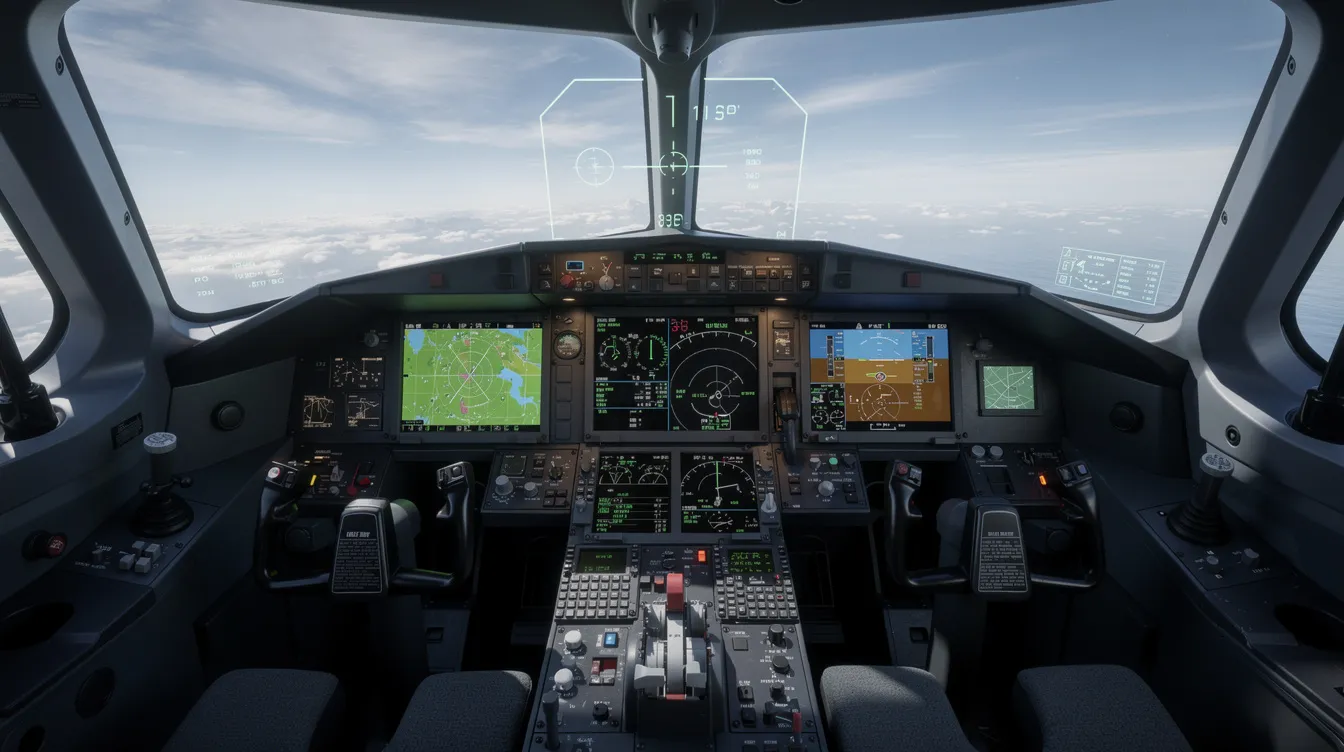
The current aircraft have served since 1990—over 35 years. Rising maintenance costs, parts obsolescence, and outdated systems make replacement essential. The Air Force announced the selection of the Boeing 747-8I platform in 2015 as the basis for the next presidential aircraft, with VC-25B being the presidential aircraft version developed to replace the current jets.
Two new Boeing 747-8 aircraft will be delivered in 2024. The new Air Force One program will cost taxpayers approximately $3.9 billion, covering engineering, manufacturing, and delivery of two wide-body aircraft. Boeing's Air Force One project supports thousands of American jobs across multiple states, including work in North Dakota and other locations.
The first VC-25B is scheduled for delivery in 2027. To bridge the gap before the VC-25B enters service, a Boeing 747-8 from Qatar, valued at $400 million, will be modified for Air Force One use. However, modifications for the Qatari aircraft are expected to take until after 2028 due to the extensive security, communications, and structural upgrades required.
Expected improvements on the VC-25B include more efficient engines, modernized avionics, enhanced self-protection systems, and refreshed interiors—while maintaining core zones like the presidential suite, conference room, and press cabin.
The Air Force’s budget has also funded preliminary development studies into advanced technologies like potential supersonic or low-boom designs. The USAF issued research contracts to evaluate future "flying Oval Office" options, with several firms submitting proposals for concepts that could serve as the next presidential aircraft later this century.
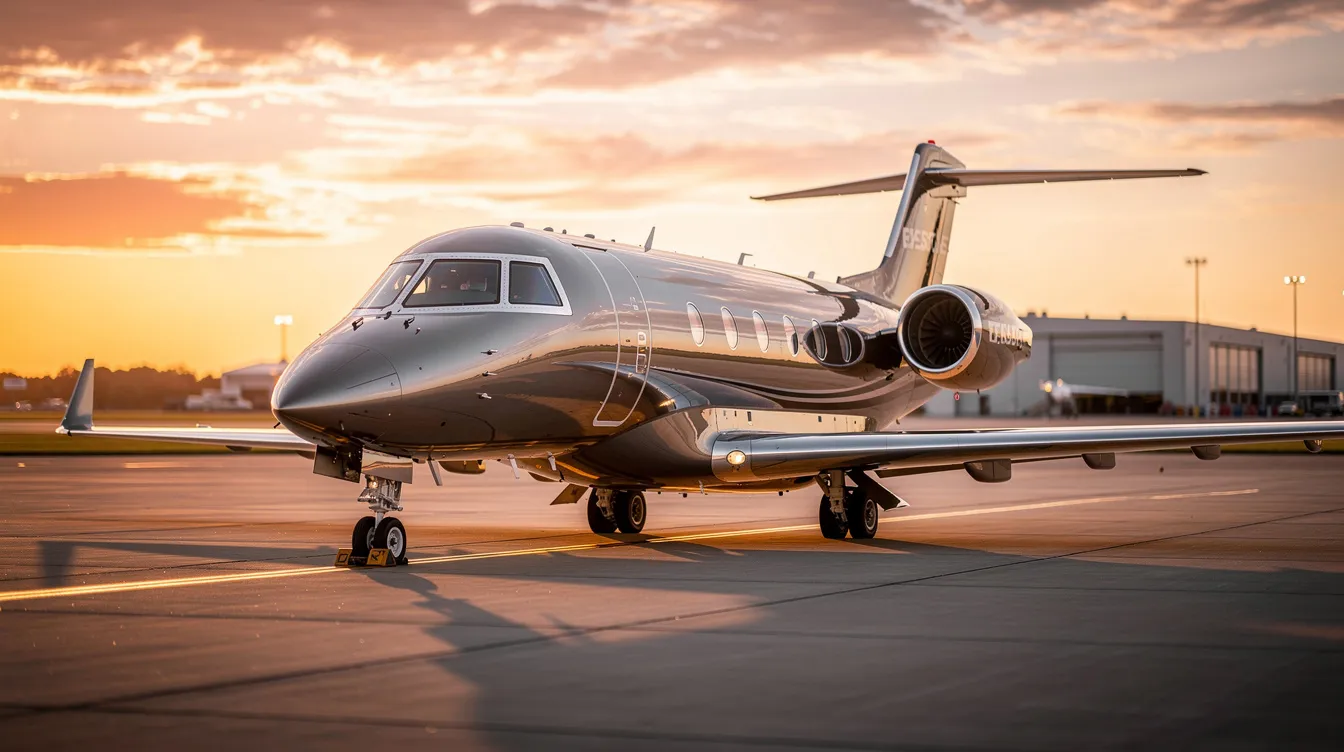
No civilian will ever board Air Force One. But private jet platforms offer a more attainable version of some of the same benefits: schedule control, privacy, productive cabins, and the ability to fly without relying on commercial terminals.
Private jet charters work simply. Customers choose departure times, select aircraft types—from light jets to heavy wide-body options—and fly from convenient airports that bypass crowded hubs. Jettly operates as a comprehensive private aviation platform with access to over 20,000 aircraft worldwide, offering instant pricing and on-demand booking without long-term jet card or fractional-ownership commitments.
Here's how the cabin experiences compare:
|
Feature |
Air Force One (VC-25A) |
Modern Heavy Private Jet |
|---|---|---|
|
Interior space |
~4,000 sq ft |
500–1,200 sq ft |
|
Private office |
Yes (flying Oval Office) |
Meeting tables, Wi-Fi |
|
Sleeping area |
Presidential suite |
Lie-flat seating/beds |
|
In-flight dining |
Galley for 100+ meals |
Custom catering |
|
Connectivity |
Classified + satellite |
High-speed Wi-Fi |
Travelers use platforms like Jettly for "Air Force One–style" efficiency on common routes—New York to Miami, Toronto to Vancouver, Los Angeles to Las Vegas—including same-day returns and multi-city private jet charter schedules. Understanding how private jet charter works is the first step toward reclaiming the schedule control and privacy that make presidential-level travel so effective. For a breakdown of what flights actually cost and how much it costs to rent a private jet, Jettly's private jet charter costs page offers transparent pricing comparisons.
These FAQs address common questions not fully covered in the main sections above.
Only the president, invited guests, staff, military personnel, and credentialed journalists may fly aboard. There is no way for the public to buy a ticket or charter the presidential aircraft. VIP guests—such as foreign leaders or members of Congress—are invited for specific missions and must undergo extensive security vetting by the Secret Service well in advance of any flight.
Publicly available estimates place per-hour operating costs at roughly $177,000 to $200,000+, factoring in fuel, maintenance, staffing, and security equipment. The total cost of a presidential trip far exceeds the flight-hour figure when ground transport, advance teams, and security infrastructure are included. By comparison, large-cabin private jets available through charter typically cost between $5,000 and $15,000 per flight hour—a fraction of government program levels. Resources that explain how individual private flight costs are calculated and Jettly's cost estimator can help travelers compare options.
The Air Force maintains two nearly identical VC-25A aircraft (SAM 28000 and SAM 29000), plus additional aircraft like the C-32A for shorter missions. Only the plane currently carrying the president aboard uses the one call sign "Air Force One." This redundancy ensures one aircraft can be under maintenance while the other remains mission-ready. The future VC-25B fleet will follow the same two-aircraft principle.
Key museums include the National Museum of the United States Air Force in Ohio, where SAM 26000 is on permanent display. SAM 27000 sits at the Ronald Reagan Presidential Library's Air Force One Pavilion in California. Other earlier presidential aircraft—including some from the propeller era—can be found at regional museums and presidential libraries. Visitors can walk through select cabins to see period interior designs and understand how major changes in presidential air travel unfolded over time.
All passengers—even VIPs and journalists—undergo rigorous background checks by the Secret Service well before travel day. On the day of the flight, passengers pass through airport-style physical screening, though exact security equipment and procedures remain classified. Luggage, cargo, food, and drinking water are tightly controlled and inspected to prevent any risk to the president and crew. This multi-layered process is one reason the aircraft is considered one of the safest environments in the world for presidential use.
Air Force One remains the world's most famous plane for good reason. It blends symbolism, security, and nonstop presidential functionality into a single airframe that has served every president aboard since 1990. From the first flight of a US president on a propeller-driven transport to today's VC-25A and the upcoming VC-25B, the aircraft represents one of the most recognizable symbols of the American government.
This article covered the historical progression of presidential aircraft, the technical capabilities behind the current aircraft, detailed interior zones from the presidential suite to the press cabin, and the transition to the new Air Force One. What connects Air Force One and modern private aviation is a shared set of goals: saving time, improving security, and enabling productive work in transit.
For travelers interested in that same flexibility and privacy—without the presidential seal—private jet charter delivers. Whether you're comparing private charter aircraft options, exploring private jet memberships with flexible wholesale pricing, or following strategies for booking the cheapest private jet flights, there are solutions for different budgets and trip profiles. You can research top private jet charter companies, understand how much a private jet really costs, or dive into affordable aeroplane rental options and the cheapest private aircraft across categories. Travelers who prefer to buy just a seat can learn how to buy a seat on a private jet or share empty seats through crowdsourced private jet flights to reduce costs.
For frequent flyers, products like jet card programs supported by tools such as Jettly's jet card flight cost estimator and guides to jet card pricing can help optimize spending. Those comparing providers may look at a NetJets alternative like Jettly or study NetJets card costs in detail. Longer-term planners can evaluate private jet lease costs, ongoing private jet operating costs, and even consult comprehensive guides to charter airlines and private aviation options before deciding how to fly. Explore aircraft options, compare costs, and request instant quotes at Jettly.
Share this post:
Jay Franco Serevilla
Jul 29, 2026
|
5
min read
Discover tips and trends in the industry.
5
min read
Shortest Flights from NYC: Quick Hops & Weekend-Friendly Routes
New York City offers some of the shortest nonstop flights, typically ranging from 40 minutes to 1 hour 15 minutes. Popular destinations include Philadelphia, Boston, and Washington, D.C., making these routes ideal for both business and leisure travelers. Understanding the quickest flight options can significantly enhance travel efficiency for those in the bustling NYC area.
Read More
5
min read
Airble vs. Digital Private Jet Marketplaces: How Tech Is Changing Private Flights
The private aviation landscape is evolving with platforms like Airble and Jettly, which streamline the booking process for travelers. Airble focuses on regional flights in Canada, offering unique experiences and cost-saving options, while Jettly provides global access to a vast fleet of aircraft. This article compares their models to help you choose the best option for your next private flight.
Read MoreStay updated with our latest insights and tips to elevate your journey with us.
MEMBERSHIPS AND ASSOCIATIONS



Disclaimer: Jettly operates as a charter broker, offering access to a global digital jet charter marketplace. Jettly is not a direct air carrier and does not own or operate aircraft. All advertised flights are conducted by third-party air carriers that are fully licensed and hold the appropriate Part 135 or Part 121 certifications issued by the Federal Aviation Administration (FAA) or equivalent regulatory authorities under U.S. or foreign law. Jettly complies fully with the U.S. Department of Transportation's Part 295 and Part 298 Charter Broker regulations. Jettly does not carry additional liability insurance. Passengers are covered by aircraft operator insurance. TICO: 50023770


