



Login
Get Instant Pricing On 23,000+ Aircraft

>
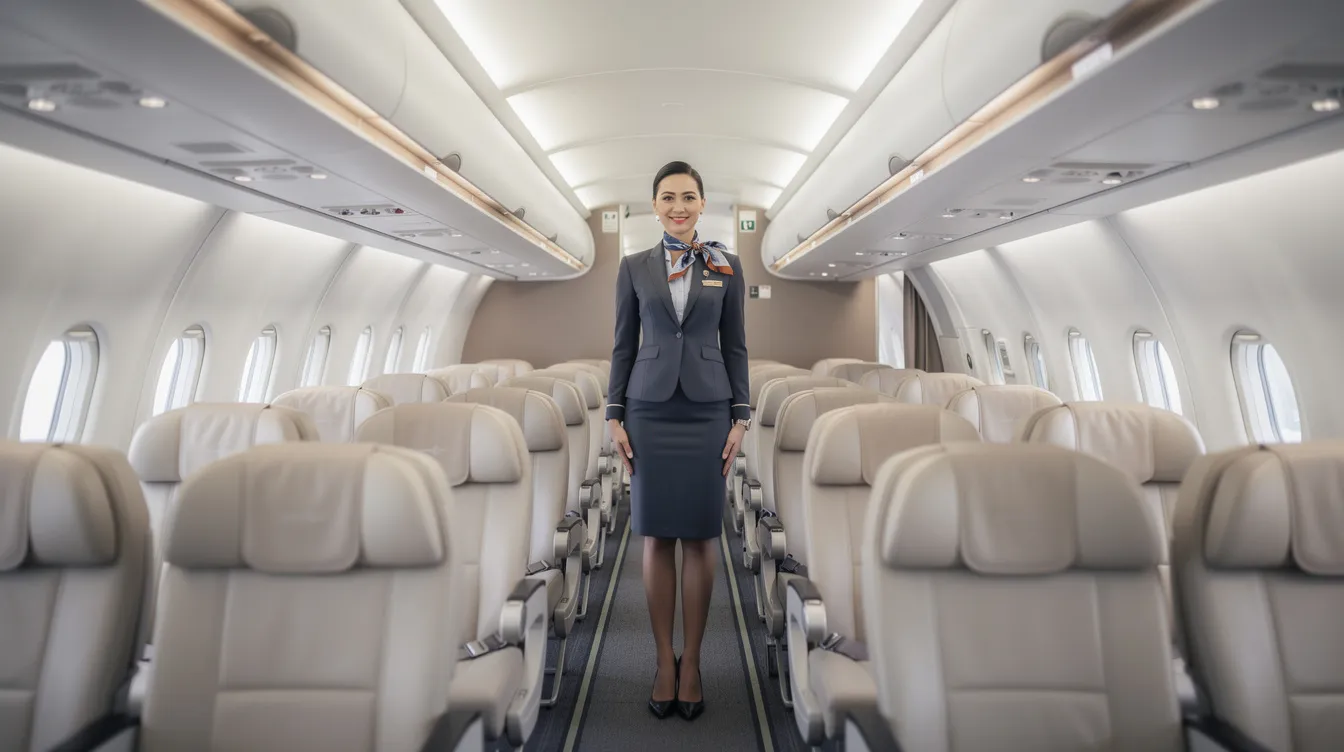
A stewardess was the historic term for a female flight attendant, used mainly from the early days of commercial air travel through the late 20th century, but today it is considered outdated and has largely been replaced by flight attendant or cabin crew. The role behind that word has changed dramatically: today's flight attendant is a safety professional, emergency responder, and hospitality expert rolled into one.
For air travel enthusiasts, frequent commercial and private flyers, aspiring crew members, and private aviation customers comparing service standards, this introduction explains how the job evolved, what modern cabin crew are trained to do, why the terminology changed, and how responsibilities differ between commercial airlines and private aviation. Understanding that shift helps readers see the role beyond old stereotypes and better evaluate the safety, training, and personalized service that shape today’s airline cabins and private jet experiences.
The term "stewardess" was common from the 1930s to the 1970s but is now considered an outdated term, largely replaced by the gender neutral titles "flight attendant" and "cabin crew."
Modern flight attendants are safety professionals first. Their primary job spans emergency response, passenger safety, and in-flight service delivery.
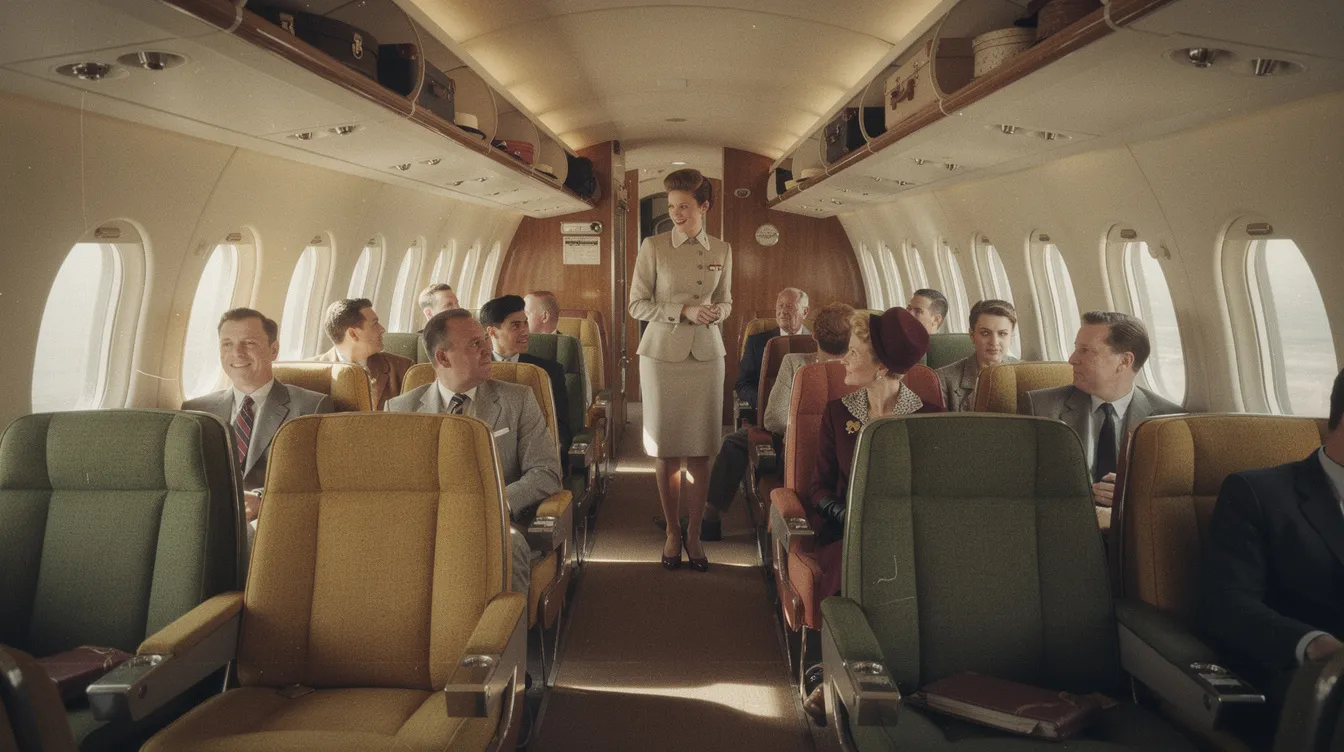
The role evolved from glamorous 1950s stewardesses, bound by strict appearance rules, to today's highly trained crew working across commercial and private jets.
Private aviation platforms like Jettly give travelers more control over aircraft choice, schedule, and in-flight service, including bespoke cabin crew experiences.
This article covers history, duties, training, terminology shifts, and how the role functions differently in commercial vs. private aviation.
Historically, a stewardess was a female flight attendant working on commercial airlines, primarily from the 1930s through the 1980s. The meaning of the word was straightforward: a woman who served passengers aboard a plane. If you looked up the word in a dictionary from that era, it was defined in purely gendered terms.
That usage has shifted. In current aviation, the gendered term has been largely replaced by "flight attendant" and "cabin crew" in job listings, HR policies, and operational manuals. Some people still search for or speak about a stewardess out of habit, nostalgia, or when referencing vintage aviation.
Regardless of the title, the core job has always centered on passenger safety, emergency response, and customer care. Modern job postings across the world, including those from private aviation operators in Jettly's network, almost always use "flight attendant."
Think of this section as a quick language and history snapshot rather than a full linguistic essay.
The word steward traces back to Old English, where it roughly meant "house guardian," a person charged with managing a household or property. The feminine form, stewardess, appeared later, with early known uses in the 17th century. In ocean liner travel, stewardesses attended to passenger cabins. When commercial aviation took off in the 1930s and 1940s, the title carried over from the sky to the cabin of an airplane.
Aviation actually borrowed cabin service roles from even earlier. Heinrich Kubis worked aboard German DELAG airships as early as 1912, performing safety checks and managing service for passengers. The word stewardess became the standard for female flight attendants through much of the 20th century, until shifts in workplace equality and language norms from the 1970s onward drove the push toward gender neutral alternatives.
Picture the stereotypical 1960s stewardess: young, slim, smiling, serving drinks in a stylish uniform. Now contrast that with today's cabin crew conducting evacuations, administering first aid, and managing security threats at 35,000 feet. The gap between those two images tells the story of how this career transformed.
Early airlines had strict rules for stewardesses regarding age and weight. Ellen Church, the first female stewardess in the U.S. (hired by Boeing Air Transport in 1930), was a registered nurse. The hiring criteria she helped establish required women to be 20–26 years old, unmarried, and meet rigid height and weight limits. Marital status restrictions meant women were often forced to resign after marriage. Nurses were preferred because of their medical training.
Regulations, labor law, and social change in the 1970s–1990s dismantled overtly discriminatory criteria and opened roles to all genders and broader age ranges. Ruth Carol Taylor became the first African-American flight attendant on a U.S. scheduled commercial flight in 1958, and Yiri Matyas became the first male flight attendant at American Airlines in 1972. Barbara "Dusty" Roads fought policies requiring women to retire at 32.
These milestones, along with union actions and major safety incidents, shifted public perception from glamour to professionalism. In private aviation, cabin crew roles evolved in parallel, with growing emphasis on personalized service, confidentiality, and attending to business and VIP clients, including coordinating premium in-flight catering for private jets.
The differences between these terms are primarily historical and linguistic, not functional. Here is a clear breakdown:
Stewardess / Steward: The older, gendered terms. A stewardess referred specifically to women; a steward to men. Professional use has declined due to sexist connotations. Today, a person in this role is almost never called a stewardess in official documents.
Flight attendant: The modern, gender neutral job title. It centers on passenger safety, security, and in-flight service. This is the standard across airlines and charter operators worldwide.
Cabin crew: The broader team in the cabin. Cabin crew includes all types of flight attendants, purser, and any onboard chefs or service specialists on larger or long-haul aircraft.
Most airlines and business jet operators now use "cabin crew" in internal manuals and "flight attendant" in customer-facing materials and contracts. Job duties overlap heavily across all three terms. The shift in language reflects evolving workplace norms, not a change in what crew members actually do on board.
Whether called stewardess, flight attendant, or cabin crew, safety is the foundation of the job. Here is what the role involves at each stage of a flight.
Pre-flight duties:
Cabin preparation includes checking safety equipment and catering supplies
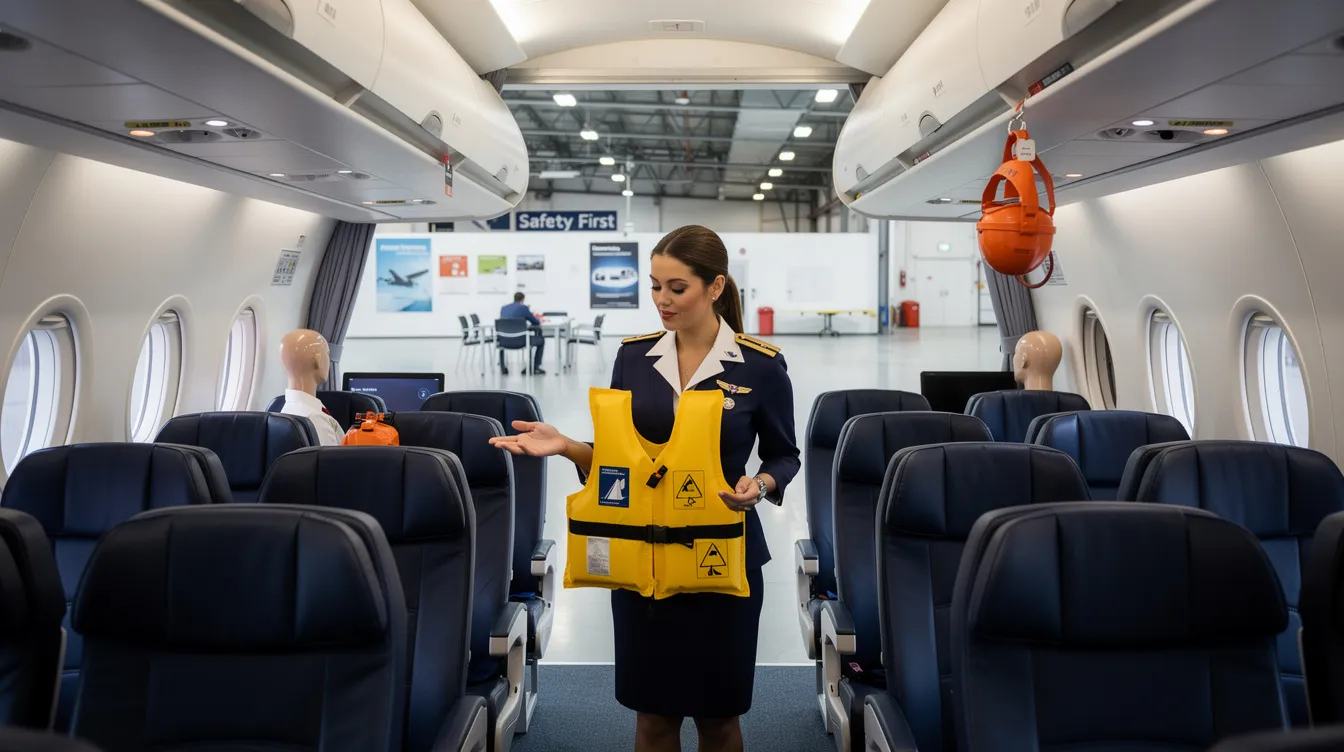
Flight attendants check emergency equipment before flights, including life vests, oxygen masks, fire extinguishers, and exit slides
Coordinating with the flight crew on the flight deck, reviewing the route, and confirming any special passenger needs
Customer service delivery includes greeting travelers and ensuring cabin comfort from the moment they board
During flight:
Flight attendants conduct safety briefings before takeoff and ensure all the passengers are seated with seat belts fastened
They assist passengers with special needs during flights, from mobility assistance to child safety
Service duties include serving food, beverages, and meals, managing special dietary requests, and responding to comfort needs
Security vigilance encompasses monitoring cabin behavior and identifying suspicious activities
They reassure passengers during turbulence or unexpected events, maintaining calm in the cabin
Emergency responsibilities:
Administering first aid, CPR, and using defibrillators
Firefighting in the cabin and coordinating an effort to evacuate passengers if needed
Handling disruptive or intoxicated individuals
Post-flight:
Flight attendants submit reports on safety issues after flights, flagging anything from equipment malfunctions to passenger incidents
On private jets, cabin crew may also plan menus, coordinate with premium caterers, and personalize the experience for a small group of customers. Compared to commercial operations, where duties are divided across a large team, a private jet attendant often handles everything alone, especially on smaller aircraft where private jet passenger capacity is limited.
Mid-century advertising made life as a stewardess look like a nonstop adventure. The reality is more complex.
Scheduling is irregular. Flight attendants work early mornings, overnight shifts, weekends, and holidays. Newer employees often serve reserve or on-call hours, expected to report on short notice. In private aviation, scheduling can be even more volatile, with last-minute trips and changing destinations across a growing network of private and charter airlines.
Pay varies. In the U.S., median annual pay for flight attendants is approximately $63,580, with top earners reaching $136,430 or more. Private jet attendants may receive per-flight bonuses or different compensation structures depending on the operator. For more context on private jet pricing, tools like Jettly's private jet charter cost estimator show how charter costs vary widely by aircraft type.
Perks include discounted or standby air travel, exposure to diverse cultures, and, in private aviation, access to exciting destinations and high-end service environments, especially for crew working on routes popular with travelers who buy individual seats on private jets.
Challenges are real: jet lag, time away from home, physical demands from long hours standing, and the emotional load of managing stressed passengers. Life on the line is demanding, but many crew members find the career deeply rewarding.
Current flight attendant training is formal, regulated, and standardized across commercial airlines. Here is what it involves.
Entry requirements:
Candidates typically must be at least 18 or 21 years old to apply for flight attendant roles
A high school diploma or GED is required for flight attendant positions
Flight attendants must pass background checks and health evaluations and complete those screening steps before training or hiring moves forward
Fluency in English is mandatory for flight attendants; additional languages are a strong advantage for international routes
Qualifications also include medical fitness and meeting entry style requirements set by each airline or operator
Initial training content:
Training for flight attendants includes safety, service delivery, and compliance with FAA regulations
Initial flight attendant training lasts 4 to 8 weeks at airline training centers
Subjects cover aircraft safety systems, emergency procedures, first aid, CPR, fire drills, water landings, and security protocols
Service-oriented modules include hospitality, cultural awareness, conflict de-escalation, and conduct standards
Regulatory bodies such as the FAA, EASA, and Transport Canada set minimum safety training standards and recurrent training intervals. Flight attendants coordinate with the flight crew and communicate safety information as part of every operation.
Corporate and private jet flight attendants often pursue additional specialized hospitality training, wine and beverage knowledge, and VIP etiquette skills to meet the expectations of high-net-worth clients, including families selecting the best planes for a family of four.
The classic stewardess stereotype was a product of mid-century marketing: a glamorous young woman whose responsibilities appeared limited to a smile and serving drinks. Airlines used this image to sell tickets, creating an exciting but misleading picture of the job.
The reality is different. In recent years, the profession has become defined by intensive safety responsibilities, regulatory oversight, and strong situational judgment. A flight attendant may need to handle a medical emergency, manage a disruptive person, or coordinate a cabin evacuation at any moment.
Gendered expectations once shaped uniforms and grooming rules for women in the role. Many airlines have updated these policies, allowing broader self-expression and focusing on professionalism over appearance.
Today's cabin crew reflects broader diversity: wider age ranges, more male employees, and representation from many countries. The world of aviation has moved past the narrow stewardess archetype. In private jet and charter operations, discretion, professionalism, and technical competency matter far more than any legacy image, especially as more travelers turn to leading private jet charter companies that emphasize safety and service standards. The hope is that the profession continues in this direction.
The core safety function of cabin crew is the same whether on a commercial airplane or a private jet. But the experience and expectations differ significantly.
By aircraft size:
Many light jets fly with only a pilot and copilot (the captain and first officer on the flight deck) and no dedicated flight attendant, especially on short routes
Midsize and heavy jets, long-haul flights, and VIP or corporate charters more commonly include one or more professional cabin crew for safety and service
The broader role in private aviation:
Menu planning and liaising with premium caterers
Arranging special items: child-friendly snacks, business-meeting setups, or specific amenities
Managing a tailored in-flight experience for a small group, where each person receives individual attention
On-demand charter platforms like Jettly connect travelers to operators worldwide, where cabin crew standards must align with aviation safety regulations and client expectations, while integrated tools such as an airport locator for private jets simplify planning. For travelers, the benefits are tangible: direct access to cabin crew who know passenger preferences, flexible meal times, privacy, and the ability to hold meetings or rest without standard airline service routines.
For those interested in how cabin crew services vary by aircraft category, Jettly's aircraft charter guide and VIP jet charter overview offer detailed breakdowns. Families can also explore the best private planes for families to find options with dedicated cabin assistance, while cost-conscious travelers may prefer strategies for getting a seat on a private jet easily.
While the word stewardess is still understood, industry professionals now prefer inclusive, accurate titles. The terms "flight attendant" and "cabin crew" avoid assumptions about gender and better reflect the safety-critical nature of the role.
Many airlines and charter operators have updated HR documents, training manuals, and public communications to adopt gender neutral language. Organizations like ICAO and pilot unions such as ALPA have published inclusive language guides to push these standards forward. Using modern terms is a sign of respect and a way to speak the same language as regulators, unions, and aviation organizations.
Travelers booking private flights or speaking with operators, including via Jettly's platform, will usually see and hear "flight attendant" rather than "stewardess." The sky has room for everyone who earns their wings through training and dedication.
Some travelers and older publications still use "stewardess," but most airlines and private operators have shifted to "flight attendant" or "cabin crew" in official materials. Using the modern term is generally recommended in job applications, professional settings, and when speaking with aviation staff. You will rarely find it in a current airline dictionary or employee handbook.
Many very light and light jets fly with only pilots and no dedicated cabin crew, especially on short routes. Midsize and heavy jets, long-haul flights, and VIP or corporate charters more commonly include a professional flight attendant for safety and service. Travelers using Jettly can review each aircraft's cabin crew details or request a flight attendant as part of their charter quote.
All cabin crew must complete safety and emergency training standards set by national aviation regulators. Commercial airline training focuses on standardized procedures for large numbers of passengers and fixed service routines. Private jet flight attendants often add more tailored hospitality training, including fine dining presentation, premium beverage knowledge, and discreet service for business and VIP clients.
Multilingual skills are a strong advantage, especially on international routes and for airlines with global networks. Some positions specifically require fluency in languages aligned with key destinations or customer bases. In private aviation, language skills can be a differentiator for crew working with international business travelers and high-net-worth clients who fly across the world regularly.
On private charters, passengers can typically share preferences in advance: dietary needs, preferred food and meal types, cabin temperature, and privacy expectations. Platforms like Jettly route these preferences to operators so flight attendants can prepare appropriate catering, amenities, and cabin arrangements. Include specific service requests when you request a quote or book a flight.
The stewardess of the 1950s may be a cultural icon, but the job today is more rigorous, inclusive, and technically demanding than early airline advertising ever suggested. The word carries nostalgia, but the profession has moved on. Modern flight attendants are safety experts who attend to every detail, from pre-flight checks to post-flight reports.
Private aviation and digital charter platforms like Jettly take cabin crew service further, letting travelers shape every detail of their flight, whether they choose shared charter flights or full private charters. Whether it is a specific meal, a quiet cabin for rest, or a meeting setup at altitude, the crew adapts to the customer.
Ready to experience private travel on your terms? Whether you're interested in sharing empty seats through crowdsourced private jet flights, locking in fixed hourly rates with a jet card program, or accessing wholesale charter rates via private jet memberships, Jettly offers flexible options. You can compare providers, including established leaders like NetJets and newer NetJets alternatives, estimate trip budgets with resources on affordable private jet charter, or focus on specific regions such as private jet charter in Kolkata and private jet charter in New Delhi. Travelers can also book instantly through partners like Zenflight, a private jet operator marketplace. Explore flight options or request a quote at https://www.jettly.com.
Share this post:
Jay Franco Serevilla
Oct 25, 2026
|
5
min read
Discover tips and trends in the industry.
5
min read
Delta Food Menu: What to Expect on Delta Flights vs. Private Jet Dining
Delta's food menu varies by cabin class, route, and season, offering everything from snacks on short domestic flights to gourmet meals in Delta One. In contrast, private jet dining through Jettly provides fully customized meal options tailored to individual preferences and dietary needs. This guide compares the dining experiences on Delta flights with the flexibility of private jet catering.
Read More
5
min read
Private Jet Manchester: Charter Guide to MAN & Liverpool John Lennon
This guide provides essential information for chartering private jets from Manchester and Liverpool John Lennon airports. It covers airport details, costs, aircraft options, and the convenience of using Jettly's platform for seamless booking. Whether for business or leisure, private jet travel offers unmatched flexibility and luxury.
Read MoreStay updated with our latest insights and tips to elevate your journey with us.
MEMBERSHIPS AND ASSOCIATIONS



Disclaimer: Jettly operates as a charter broker, offering access to a global digital jet charter marketplace. Jettly is not a direct air carrier and does not own or operate aircraft. All advertised flights are conducted by third-party air carriers that are fully licensed and hold the appropriate Part 135 or Part 121 certifications issued by the Federal Aviation Administration (FAA) or equivalent regulatory authorities under U.S. or foreign law. Jettly complies fully with the U.S. Department of Transportation's Part 295 and Part 298 Charter Broker regulations. Jettly does not carry additional liability insurance. Passengers are covered by aircraft operator insurance. TICO: 50023770


