


Login
Get Instant Pricing On 23,000+ Aircraft

>
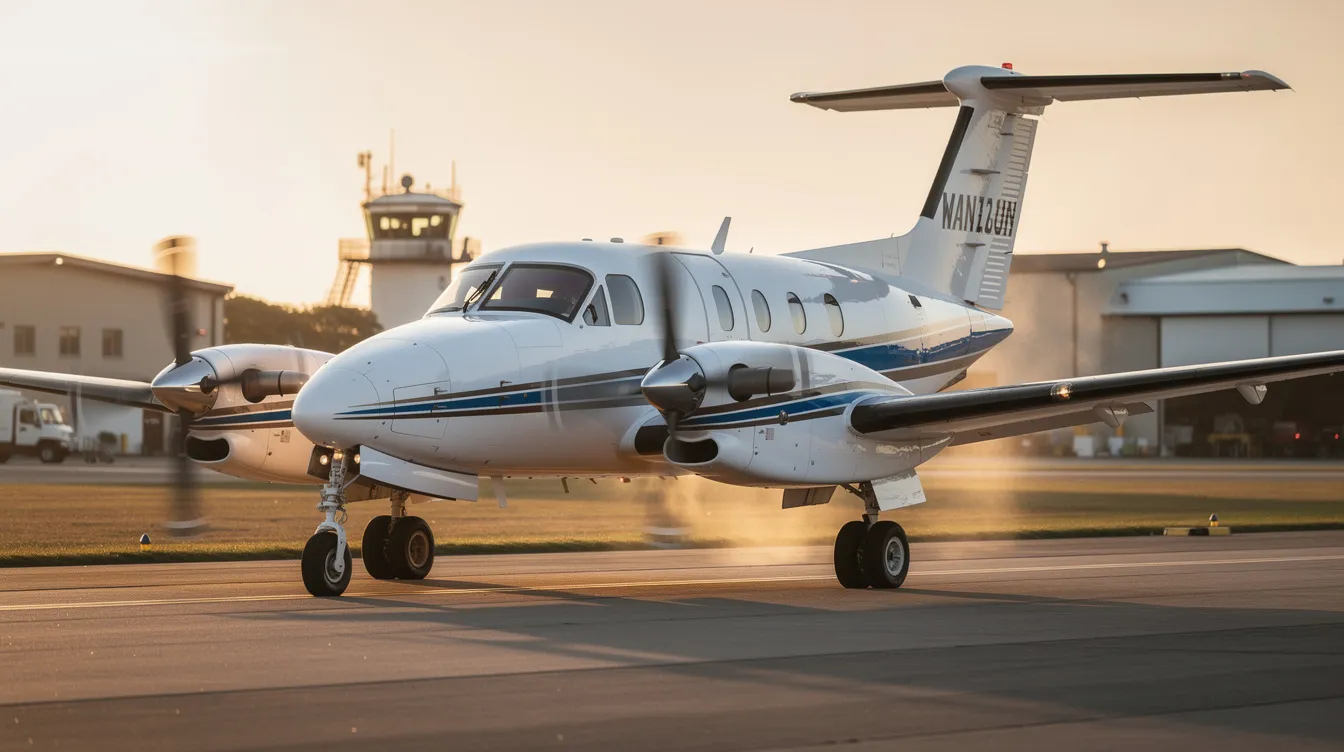
The King Air 100 is the first stretched version of the Beechcraft King Air 90 series, introduced in 1969 with a longer cabin, more seats, and stronger turboprop performance for short regional trips. It holds a unique place in turboprop aviation history and remains a practical charter aircraft for corporate travel, family flights, and medevac missions, especially when access to smaller airports and lower operating costs matter. This guide is intended for private aviation customers, charter brokers, and aviation enthusiasts interested in the King Air 100’s capabilities and market position.
For frequent flyers comparing turboprops with light jets, the King Air 100 offers a flexible, cost-effective option that can save both time and money on regional routes. This guide looks at the aircraft’s history, design, variants, performance, cabin layout, operating costs, typical uses, and charter availability through Jettly’s digital platform, so you can judge where it fits in today’s private travel market.
The Beechcraft King Air 100 was the first stretched King Air, introduced in 1969 with a fuselage four feet longer than the King Air 90 and a higher gross weight for improved payload.
Later, A100 and B100 variants improved fuel capacity, cruise performance, and systems while keeping similar cabin size and mission profiles.
Typical cruise speed sits around 235–250 KTAS (approximately 307 mph), with a range of over 1,325 nautical miles and seating for 6–7 passengers plus crew.
The King Air 100 family remains popular in charter, corporate, and medevac roles due to operating costs far lower than those of light jets on regional sectors.
Travelers can charter a King Air 100 or similar turboprop on-demand through Jettly's digital platform with instant pricing and global availability.
The King Air 100 is a twin-turboprop business aircraft positioned between the smaller King Air 90 family and the later King Air 200 and 300 series. It sits within the broader Beechcraft King Air line, one of the most successful turboprop families developed since the 1960s. The King Air line comprises two families: the 90/100 series and the 200/300 series—divided by airframe size, engine power, and mission capability.
The Model 100 took its first flight on March 17, 1969, and was launched that same year as an enhanced version of the King Air 90. It featured a stretched fuselage, increased wingspan, and higher maximum takeoff weight. The aircraft is considered reliable and economical for regional flights and is commonly used for corporate travel, private charter, air taxi service, cargo transport, and medical evacuation.
Jettly frequently includes King Air 100, A100, and B100 aircraft in its turboprop charter inventory for short to medium regional sectors.
The King Air 100 was the first stretched King Air, extending the 90's cabin and wing to increase both capacity and performance. The cabin is four feet longer than the King Air 90, providing room for additional seats and a more comfortable interior layout.
The airframe features a low wing with two Pratt & Whitney Canada PT6A-28 turboprop engines mounted on the wing leading edge, a pressurized fuselage, conventional tail, and retractable tricycle landing gear. The King Air 100 has a stretched fuselage and an increased wingspan of 45.9 feet (14.0 m), with an overall length of approximately 39.7 feet (12.1 m).
The original model carried a maximum takeoff weight of 10,600 lbs—a higher gross weight than the 90 series—supporting extra passengers, baggage, and fuel. It features a pressurized cabin for comfortable operation at higher altitudes. The aircraft can accommodate a relatively large baggage hold for its size.
The design introduced five cabin windows on each side (versus three on the 90), and it typically seats 6–7 passengers plus a belted lavatory seat. Later variants like the A100 and B100 kept the basic cabin dimensions and external geometry but integrated structural reinforcements and system upgrades.
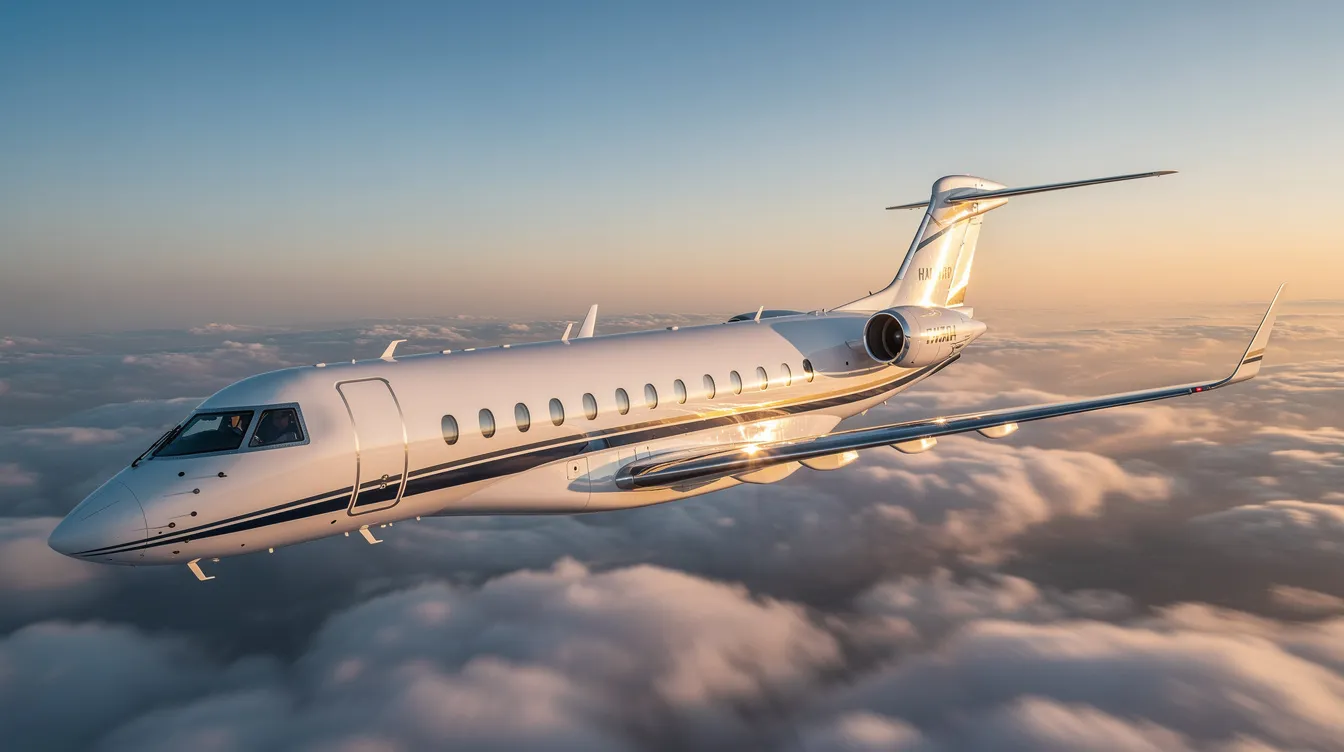
The 100 series is divided into three main variants—the original King Air 100, the Model A100, and the King Air B100—each targeting slightly different performance and operating cost profiles.
The original King Air 100 (1969–early 1970s) was a stretched derivative of the 90, powered by two PT6A-28 engines and equipped with three-blade propellers and early-generation Collins radios as standard equipment. A total of 89 Model 100 aircraft were built before production shifted to the next variant.
The A100 variant replaced the King Air 100 in 1971. The Model A100 added a four-blade propeller configuration, increased fuel capacity by approximately 94 US gallons, and raised maximum takeoff weight to 11,500 lb. Around 157 A100 units were delivered through 1979, making it the most-produced 100-series variant.
The King Air B100 was developed in the mid-1970s and powered by Garrett TPE331-6-252B engines rated at 715 shp—a departure from the Pratt & Whitney Canada PT6A series. This gave the B100 improved climb rate and fuel efficiency in certain regimes, with a maximum takeoff weight of 11,800 lb. About 137 B100S were built before Beechcraft discontinued production of the 100 series in the early 1980s.
In modern charter listings, the 100 series often appears under the ICAO code "BE10," distinguishing it from smaller 90-series aircraft. Many airframes remain active today in charter, utility aircraft roles, and government service.
The King Air 100's value in charter comes from its balance of cruise speed, fuel burn, and runway performance.
Early King Air 100 and A100 models are powered by two Pratt & Whitney Canada PT6A-28 turboprop engines (free-turbine design), each producing approximately 680 shp. The B100 uses Garrett TPE331-6-252B fixed-shaft turboprops with different operating characteristics—including startup procedures and maintenance intervals that pilots and operators must account for.
The King Air 100 can reach speeds of approximately 307 mph (around 235–250 knots true airspeed at mid-altitude flight levels). Cruise performance varies with weight, altitude, and power setting. It has a typical range of over 1,325 nautical miles under optimal conditions, though practical charter range with full passenger load usually falls closer to 800–1,000 nm.
Fuel burn is substantially lower than that of comparable light jets. The B100 consumes roughly 98 gallons per flight hour in cruise, and the PT6A-powered variants are similar or slightly lower. This makes the 100 series attractive in sectors of 300–800 nm where dynamic aviation economics favor turboprops.
The aircraft is certified to altitudes around FL250, though many operators cruise lower (FL210–FL240) for optimal performance. Shorter takeoff and landing distances—sometimes under 2,000 feet—allow access to smaller regional airports that most competing jets cannot use, and tools like Jettly's airport locator further expand routing flexibility for travelers.
The cabin is compact but comfortable for regional flights, configured for around 6–7 passengers in most charter layouts.
The common arrangement includes a four-seat club section opposite two single seats or a divan, with the possibility of a belted lavatory seat. Five round cabin windows per side provide natural light throughout. Overhead storage and small refreshment centers can be tailored by individual operators.
Turboprop engines are generally louder than jet engines, so noise levels and ride quality are not as refined as those of modern large-cabin jets. However, many charter operators have upgraded King Air 100 aircraft with improved soundproofing, leather seating, refreshed cabinetry, and in-flight power outlets. Features vary by operator, so it's worth confirming amenities when booking.
|
Feature |
King Air 90 |
King Air 100 |
Typical Light Jet |
|---|---|---|---|
|
Cabin height |
~4 ft 6 in |
~4 ft 9 in |
~4 ft 9 in |
|
Cabin width |
~4 ft 4 in |
~4 ft 6 in |
~5 ft 0 in |
|
Typical seats |
4–5 |
6–7 |
6–8 |
|
Cabin windows per side |
3 |
5 |
5–7 |
The Beechcraft King Air 100 family serves corporate, private, government, and medevac markets across North America and Europe. It is commonly used for corporate travel and air ambulance services and has been adapted for various roles, including government and military support, as a utility aircraft, fitting neatly into the broader landscape of private and charter airlines.
Popular charter missions include business day trips between city pairs like Los Angeles–San Francisco, Dallas–Houston, Toronto–Montréal, and similar routes under 800 nm, as well as international itineraries to major hubs such as Kolkata via private jet charter. The aircraft's payload and pressurization make it suitable for medical flights, cargo missions, and mixed passenger-cargo configurations. It is utilized for a range of missions including cargo transport and medical evacuation.
The King Air 100's relatively low operating cost makes it attractive for frequent regional travelers who value time savings over commercial airline schedules, especially those researching affordable airplane rental options across different aircraft types. Jettly customers typically use King Air 100 and B100 aircraft for 1–2-hour flights where turboprops provide better economics than small jets. Real-world examples include air ambulance operations, remote community access in northern Canada, corporate shuttle service between secondary airports, and increasingly, crowdsourced private flights with shared empty seats to reduce per-passenger costs.
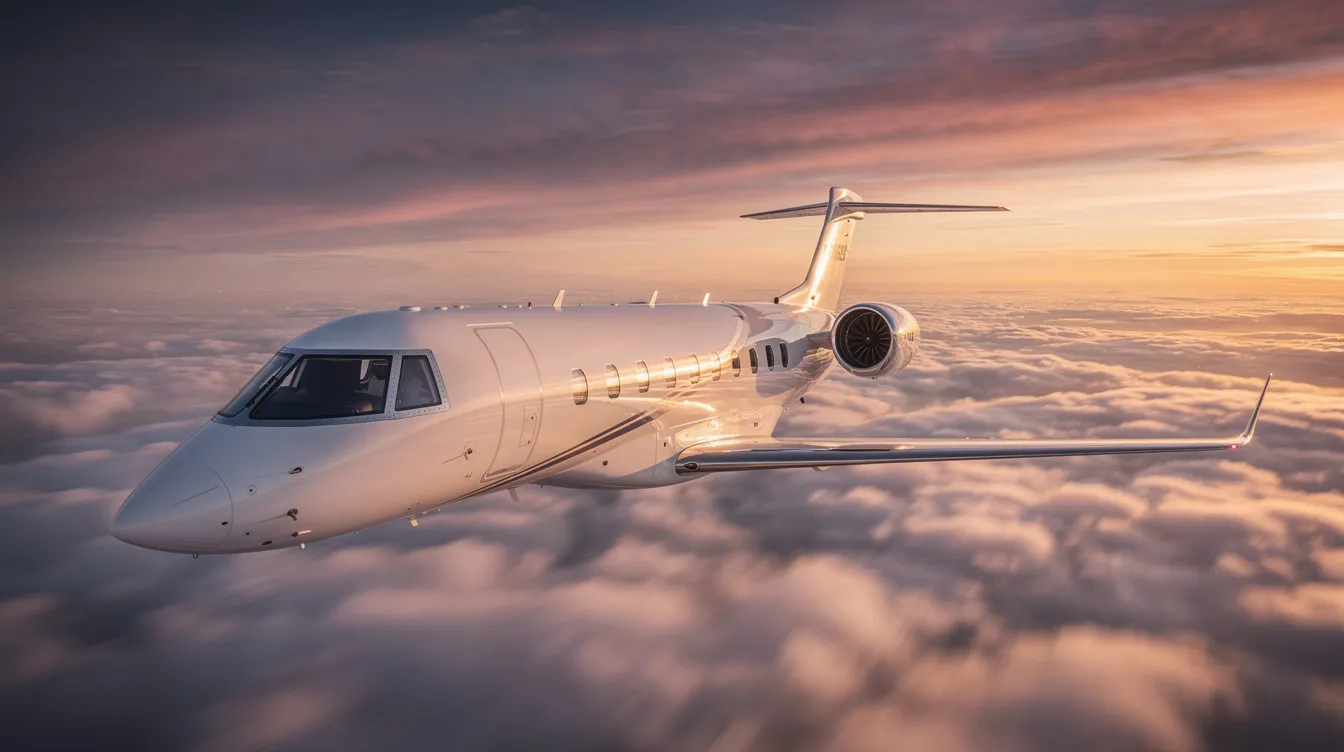
Beech Aircraft Corporation, founded in Wichita, Kansas, built its reputation on rugged, capable aircraft for business and military use, similar to how regional jets like the Canadair CRJ-200 serve short-haul markets today. The King Air family became a flagship product line from the 1960s onward, with continuous development spanning the 90, 100, 200, and 300 series.
Corporate transitions reshaped the brand over decades. Beech became part of Raytheon in the 1980s, and the formation of Hawker Beechcraft around 2006 brought the brand under a joint umbrella with Hawker business jets, much as modern brokers like Dexter Air Taxi powered by Jettly aggregate fleets from multiple operators. Financial challenges led to bankruptcy proceedings by 2012.
After restructuring, the Beechcraft brand was acquired by Textron Aviation in 2014, joining Cessna under a single corporate parent that also supports large airliners such as the long-range Boeing 777-200 LR in VIP charter service. Although the King Air 100 family is no longer in production, Textron Aviation and aftermarket providers continue to support the type with parts, maintenance, and upgraded avionics. This strong support network is a factor in why many King Air 100s remain commercially active and suitable for Jettly-arranged charter operations.
Buyers and charter customers evaluate the King Air 100 and B100 largely on acquisition cost, annual operating expenses, and mission flexibility.
Pre-owned pricing reflects the aircraft's age and market position. A King Air B100 costs up to $600,000 USD depending on avionics, engine time, and condition—well below larger models like the King Air 200, which can cost as much as $2.2 million. Wet lease rates depend on aircraft age and lease term, while charter rates for King Air 100 vary greatly by journey length.
The King Air 100 is known for its cost-effectiveness compared to light jets. Hourly charter rates typically fall between $1,500 and $2,500, versus $2,500–$4,000 or more for light jets with similar passenger counts. On a 500 nm sector, the savings can be substantial—often 30–50% lower than a comparable jet charter.
Jettly's model emphasizes transparent, instant pricing on King Air charters. Users can compare turboprop and jet options side by side using the charter cost estimator and a dedicated jet card flight cost estimator before booking, making it easier to match the right aircraft to each mission and budget.
Jettly is a digital private aviation platform offering access to King Air 100 and a broad range of private charter aircraft worldwide. Users can search routes, view live pricing estimates, and filter for turboprops such as the King Air 100, A100, and B100 directly from a web or mobile interface.
The platform connects travelers with a global fleet of over 20,000 aircraft, positioning Jettly as a flexible NetJets alternative for private flying, including many Beechcraft King Air models equipped for business or leisure trips. Jettly's instant pricing and on-demand access remove the need for jet cards or fractional ownership—useful for customers who only occasionally need a King Air for a specific flight.
Value-added services include arranging ground transportation, coordinating in-flight catering on request, and helping select the right aircraft category for each mission. Whether the trip calls for a turboprop or a light jet, Jettly's platform makes the comparison straightforward and helps travelers understand private jet charter costs and savings.
Ready to fly on your terms? Explore King Air charter options, compare top private jet charter companies, or request a quote at https://www.jettly.com.
The King Air 100 family is operated under commercial regulations by licensed air carriers, with pilots trained to regional authority standards such as FAA, EASA, or Transport Canada requirements. The aircraft has a long safety record, is fully pressurized, and benefits from ongoing inspection and support programs. Jettly only works with vetted operators that comply with applicable safety and maintenance requirements in their jurisdictions.
The King Air 100's cruise speed is slightly lower than that of many light jets, but its fuel burn and hourly charter rate are usually lower as well. The King Air 100 can operate from shorter airfields that many light jets cannot access, which can reduce total travel time when departing closer to the traveler's origin. For routes of 300–800 nm, the door-to-door time difference versus a jet is often small, while the cost difference can be significant.
A typical charter configuration supports several medium bags and small carry-ons, with baggage space distributed across aft compartments and cabin areas. The aircraft can accommodate a relatively large baggage hold for its size, but exact capacity depends on interior layout and passenger count. Travelers should confirm luggage needs with Jettly when requesting a quote—for heavier or bulkier items, alternative aircraft or configurations can be suggested.
Yes. One of the King Air 100's core strengths is its ability to use relatively short runways and less-developed regional airports. This allows direct access to secondary or remote destinations that may not be served by airlines or larger jets. Jettly's platform can help identify nearby suitable airports when customers enter their origin and destination preferences.
Booking as early as possible is recommended during peak seasons, but same-day or next-day King Air charters are often feasible depending on aircraft availability in the market. Jettly's instant pricing and digital booking flow make it practical to secure a King Air 100 on short notice for urgent business or family travel, including last-minute private jet charters to New Delhi. Visit https://www.jettly.com to check real-time availability and secure a flight window that matches your schedule.
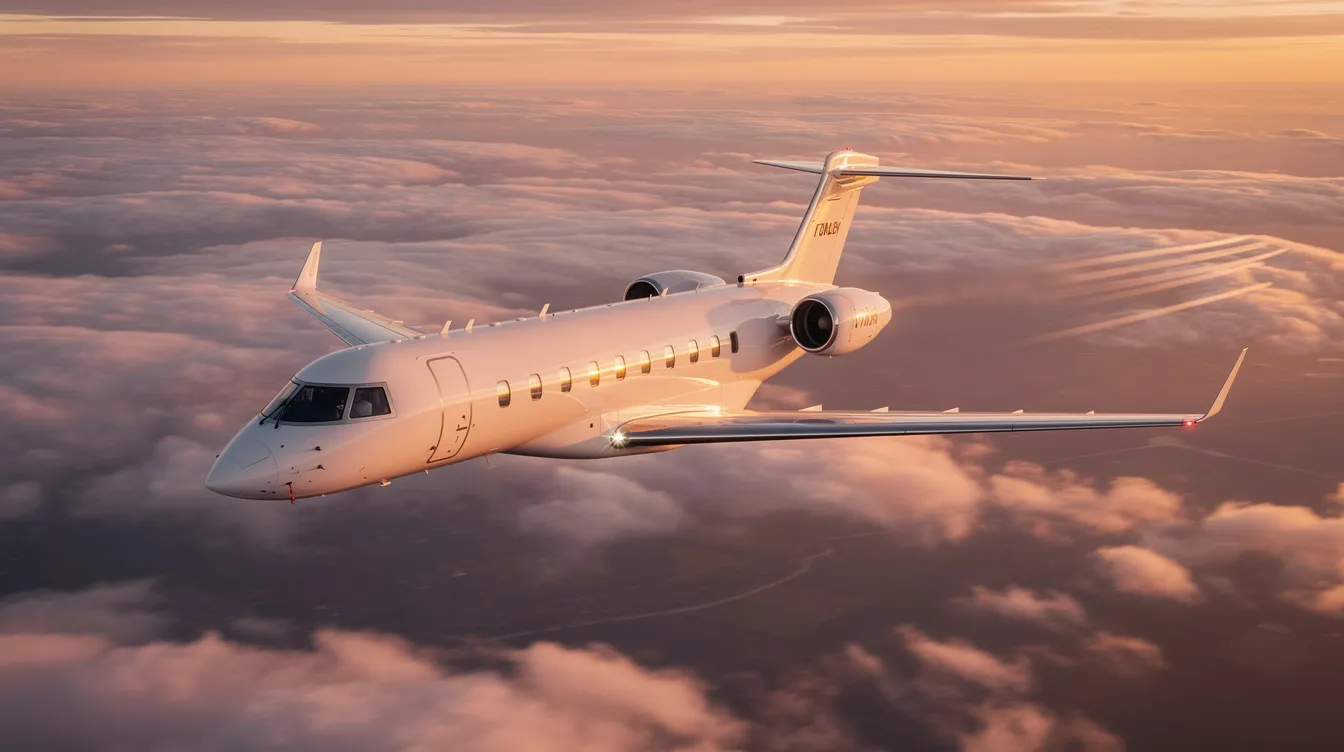
The Beechcraft King Air 100 remains a versatile and cost-effective choice for private charter travelers seeking reliable regional air service. Its combination of efficient turboprop performance, spacious cabin, and ability to operate from smaller airports makes it well suited for business trips, family travel, and specialized missions like medical evacuation. Compared to light jets, the King Air 100 offers significant savings in operating costs while maintaining flexibility and comfort.
Jettly’s digital private jet charter platform provides easy access to King Air 100 aircraft worldwide, with instant pricing and transparent booking options. Whether you need a short-notice flight or want to compare turboprops and jets side by side, Jettly simplifies private aviation to fit your schedule and budget.
Ready to experience private travel on your terms? Explore King Air 100 charter options or request a personalized quote at https://www.jettly.com.
Share this post:
Jay Franco Serevilla
Jul 3, 2026
|
5
min read
Discover tips and trends in the industry.

5
min read
Cheap Time to Fly to Europe: How to Find Cheap Flights, Routes, and Travel Windows
Finding the cheapest time to fly to Europe involves understanding seasonal patterns and booking strategies. January through early March offers the best deals, with midweek flights being more affordable. Utilizing flexible dates and comparing commercial flights with private jet options can significantly reduce travel costs.
Read More
5
min read
Costco Travel: How Vacation Packages Work (and When Private Jets Make Sense)
Costco Travel offers exclusive vacation packages for members, bundling hotels, cruises, and rental cars at competitive prices. While it simplifies trip planning, it lacks stand-alone flight options, making private jet charters a viable alternative for those seeking flexibility and time savings. This article explores how to effectively combine Costco Travel packages with private jet services for an optimized travel experience.
Read MoreStay updated with our latest insights and tips to elevate your journey with us.
MEMBERSHIPS AND ASSOCIATIONS



Disclaimer: Jettly operates as a charter broker, offering access to a global digital jet charter marketplace. Jettly is not a direct air carrier and does not own or operate aircraft. All advertised flights are conducted by third-party air carriers that are fully licensed and hold the appropriate Part 135 or Part 121 certifications issued by the Federal Aviation Administration (FAA) or equivalent regulatory authorities under U.S. or foreign law. Jettly complies fully with the U.S. Department of Transportation's Part 295 and Part 298 Charter Broker regulations. Jettly does not carry additional liability insurance. Passengers are covered by aircraft operator insurance. TICO: 50023770


