


Login
Get Instant Pricing On 23,000+ Aircraft

>
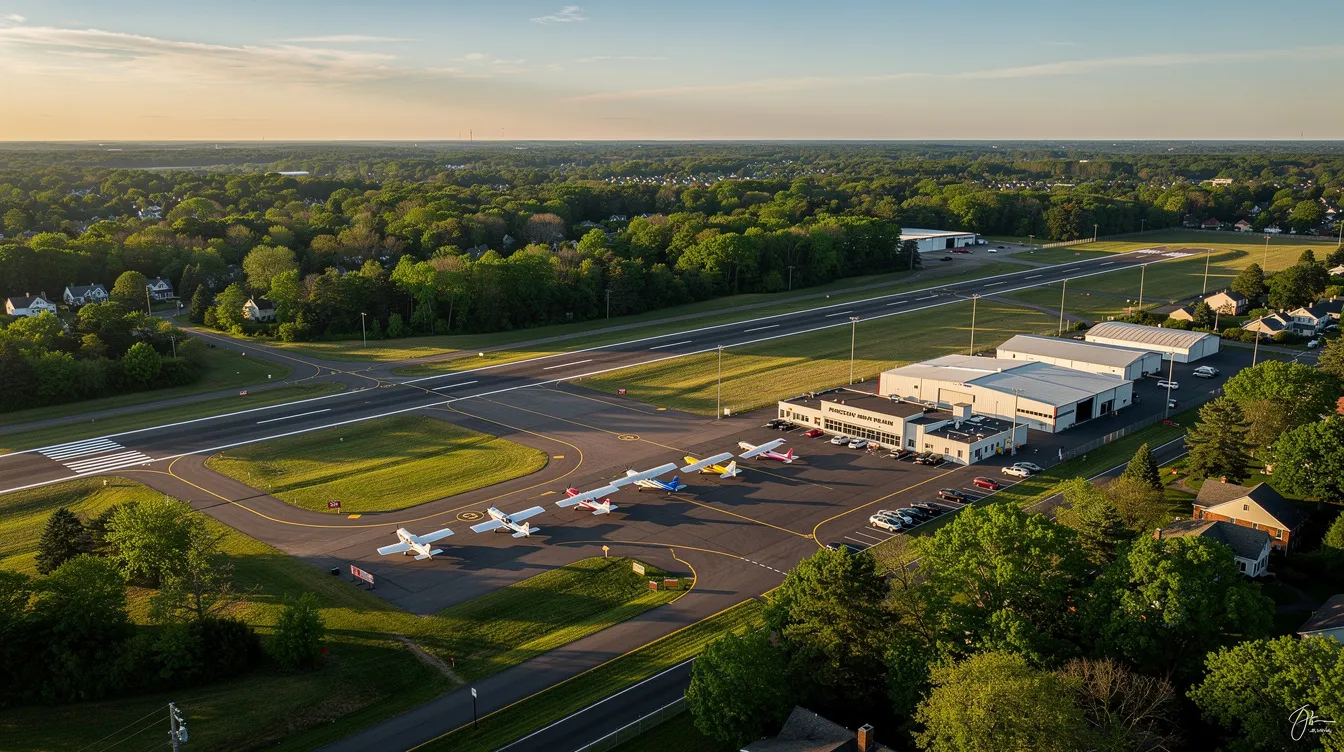
Princeton Airport is a privately owned public-use general aviation airport located just north of downtown Princeton, NJ. As a key gateway for private flyers, business travelers, and aviation enthusiasts, Princeton Airport offers a convenient and efficient alternative to the congestion and delays of larger commercial hubs in central New Jersey. This guide is designed for private flyers, business travelers, and aviation enthusiasts seeking detailed information about private flights, airport access, ground transportation, and the unique advantages of using Princeton Airport (FAA identifier: 39N) for their travel needs.
This article covers everything you need to know about flying into and out of Princeton Airport, including:
The airport’s facilities, services, and operational procedures
How to arrange private jet charters and what types of aircraft are suitable
Ground transportation options and connections to the surrounding region
Frequently asked questions for first-time and returning visitors
It’s important to note that Princeton Airport is a general aviation airport, which means it does not offer scheduled commercial airline service. General aviation refers to all flights other than military and scheduled airline operations, and includes flight training, private charters, and recreational flying. If you are searching for airline options, please be aware that scheduled commercial flights are not available at Princeton Airport.
Whether you’re headed to a board meeting near Route 1, visiting Princeton University, or connecting onward to New York, this guide will help you navigate every aspect of your journey through Princeton Airport (39N), ensuring a smooth and time-saving experience.
Princeton Airport (FAA: 39N) is a privately owned public-use general aviation airport located at 41 Airpark Road, roughly 3 miles north of Princeton, NJ, and about an hour by car from New York City.
The single asphalt runway (10/28) measures approximately 3,500 x 75 feet with MIRL and PAPI, making it suitable for light jets, turboprops, and piston aircraft frequently used in private jet charter.
The airport is an efficient alternative to larger New Jersey hubs like Newark Liberty, especially for travelers bound for Princeton, NJ, central New Jersey, or the western suburbs of New York.
Jettly can arrange on-demand private flights into and out of Princeton Airport, with instant pricing and access to a large aircraft network for business or leisure trips.
Ground access via Route 206, New Jersey Transit rail and bus links, and local taxis makes transfers between Princeton Airport, New York, and nearby commercial airports straightforward.
Airport transportation options include local taxis, rideshares, and rental cars, with Avis Rental Cars available on the airport premises.
There is an on-site pilot shop at Princeton Airport, supporting both flight training and general aviation needs.
The airport can accommodate helicopter services for training and charters, providing versatile aviation options.
Princeton Junction Station is the closest major transit connection for the airport, facilitating regional access.
Princeton Airport is a privately owned public-use general aviation airport located in Mercer County, New Jersey. It serves as a convenient gateway for private flyers, flight training students, and aircraft owners across central Jersey. General aviation refers to all flights other than military and scheduled airline operations, including flight training, private charters, and recreational flying. General aviation airports like Princeton Airport do not offer scheduled commercial airline service but fill an important role as regional access points, especially when paired with charter platforms like Jettly's extensive private charter aircraft network.
The airport sits 3 miles north of downtown Princeton in Montgomery Township, at 41 Airpark Road, Princeton, NJ 08540. It's set just off US Route 206, making it easy to reach from most directions. The field elevation is roughly 128 feet above mean sea level.
Princeton Airport has an FAA identifier of 39N. The airport features a paved runway approximately 3,500 by 75 feet, designated 10/28, with an asphalt surface. Both runway ends are equipped with Medium Intensity Runway Lights (MIRL) and two-light PAPI systems on the left side, providing visual glide slope guidance. Runway 10 also has REIL (Runway End Identifier Lights) for enhanced identification during approaches.
For navigation, multiple instrument approach procedures are published. These include RNAV (GPS) approaches to both runways 10 and 28, a VOR-A procedure, and a published departure procedure called "Princeton One." Pilots communicate on CTAF/UNICOM 122.725, and pilot-controlled lighting is available on 123.05.
Princeton Airport primarily serves general aviation, flight training, and private charters. Approximately 111 aircraft are based at the field, and historical data from New Jersey's aviation records show around 39,662 annual general aviation operations. The airport is included in the National Plan of Integrated Airport Systems (NPIAS) as a local reliever, designed to reduce congestion at major airports and provide better access for general aviation users.
Princeton Airport is open daily, typically from 8:00 AM until dusk. Weekday activity is a mix of flight training pattern work, business traffic, and occasional aircraft rental operations. Travelers curious about arranging their own aircraft access can review a broader guide on how renting a plane works. Weekend flying tends to lean toward recreational and training flights.
While the runway length limits large-cabin jets, the field is well-suited for light jets, turboprops, and piston aircraft—the categories most commonly booked through Jettly for regional travel around New Jersey and New York. The single-wheel gear weight capacity is approximately 15,000 pounds, which accommodates most light jets and turboprops operating at typical loads.
With this operational overview in mind, let's explore the facilities, services, and procedures that make Princeton Airport a practical choice for private flyers.
Princeton Airport offers a full-service environment for general aviation pilots and passengers. From fuel and maintenance to hangar storage and a pilot shop, the facilities cover what private flyers and charter operators need for smooth turnarounds.
The airport provides 100LL aviation gasoline and Jet A fuel. Jet A is typically supplied with Prist additive for turbine engines. Self-service 100LL is available around the clock, while full-service fueling and Jet A are handled during normal FBO hours. Recent pricing has been approximately:
|
Fuel Type |
Full Service |
Self Service |
|---|---|---|
|
100LL Avgas |
~$7.99/gal |
~$6.76/gal |
|
Jet A |
~$7.71/gal |
- |
Charter operators typically coordinate fuel requirements on arrival or prior to departure to minimize ground time, and pilots or owners considering self-flying trips from Princeton can compare these costs with broader affordable aeroplane rental options.
On-site maintenance covers both major and minor airframe and powerplant services. This makes the airport practical for based aircraft that need regular inspections and for transient charter flights that might require a quick technical check before departure.
The airport's facilities include hangars and tie-down storage for aircraft, serving both long-term-based planes and visiting transient traffic. There is an on-site pilot shop at Princeton Airport, along with a terminal area featuring a pilots' lounge, restrooms, and briefing space for weather review and flight planning. Parking for visitors arriving by car is available, with transient aircraft directed to the west ramp.
The airport can accommodate helicopter services for training and charters, with helicopters using designated right traffic patterns on rwy 10/28 to reduce noise in certain sectors.
Noise is a real consideration here. Residents near Rocky Hill and the Cherry Hill Road area are sensitive to jet and turbine noise. Published procedures for runway 28 departures instruct pilots to make no turns until reaching at least 900 feet MSL and passing beyond Cherry Hill Road. These rules exist to minimize overflights of residential neighborhoods.
Turbojet operators are typically asked to contact airport management at 609-921-3100 before operating to coordinate noise abatement, ground handling, and any operational constraints. General guidance includes:
Preferred departure and arrival tracks that avoid residential clusters
Power reduction after takeoff where operationally safe
Advisory quiet periods during early morning and evening hours
Wildlife awareness—deer and birds have been reported on or near the field
Charter flights arranged through Jettly use operators that follow FAA regulations, airport-specific procedures, and local noise guidelines at Princeton Airport. This compliance focus helps maintain good community relations and ensures hassle-free access for travelers, whether flying with a dedicated operator such as Dexter Air Taxi via Jettly or another vetted carrier.
With these facilities and procedures in mind, let's look at how travelers can access Princeton Airport and connect to the surrounding region.
Princeton Airport is easily accessible for private and general aviation flights, and its location makes it a practical starting point for travelers headed to Princeton, NJ, central New Jersey corporate parks, or even parts of the New York metro area.
From downtown Princeton, head north on Route 206. The airport is about a 10- to 15-minute drive from Nassau Street, depending on traffic. For travelers coming from further afield, connections from I-295, US-1, and I-95 provide access from north Jersey, Philadelphia, and the New York area. The address—41 Airpark Road—is easy to find with any GPS navigation system.
Princeton Airport is about 40 minutes from Newark International Airport (EWR) under favorable traffic conditions. Manhattan is roughly 60 to 75 minutes by car, depending on the day and time. Trenton-Mercer Airport (TTN) is only about 10 to 15 miles to the southwest, and Philadelphia International Airport (PHL) is reachable within about an hour heading south, all of which can serve as gateways to longer-range trips for those planning international private jet flights.
For travelers who need to fly commercial into the region before connecting to a private flight, Newark or New York JFK are the most common arrival points. From there, a car service or Jettly-arranged private transfer can bring passengers directly to Princeton Airport for onward regional flights, often after they’ve reviewed broader guidance on how much a private jet costs overall.
New Jersey Transit Bus #605 stops approximately 0.5 miles from the airport on Route 206, providing a public transit link for those who need it. NJ Transit trains run from New York Penn Station or Newark Airport Station to Princeton Junction, which is the closest major transit connection for the airport. From Princeton Junction, passengers can ride the Dinky train into Princeton Borough or take a taxi or ride-share toward the Airpark Road area.
While public transit isn't the typical mode for private jet passengers, it's a useful backup or option for crew members, support staff, or travelers on a budget leg of their journey, especially when combined with tools like Jettly's airport locator platform to plan smooth connections.
Airport transportation options include local taxis, rideshares, and rental cars. Taxis are available on Nassau Street in Princeton, and ride-share services cover the area reliably. Avis Rental Cars are available on the airport premises, with reservations historically available via a local number (609-924-4100).
Practical example: A business traveler flies private into Princeton for morning meetings at Princeton University. After a day of sessions, they pick up a rental car from the airport and drive north to New York for evening appointments—saving hours compared to routing through Newark or JFK.
With access options covered, let's explore how private jet charter works at Princeton Airport and what travelers can expect when booking a flight.
Private jet charter at smaller fields like Princeton Airport works differently than flying out of a major hub. There are no long security lines or terminal waits. Travelers arrive minutes before departure, board, and go, often after consulting Jettly’s guide to affordable private jet charter pricing. The key is matching the right aircraft to the runway's performance limits and scheduling around weather and airspace considerations in the busy New York and New Jersey region. For a full breakdown, see how private jet charter works.
The 3,500-foot runway at Princeton Airport accommodates several categories of charter aircraft:
|
Aircraft Type |
Typical Range |
Best For |
|---|---|---|
|
Single-engine pistons |
<300 miles |
Scenic flights, quick transfers |
|
Turboprops |
300–800 miles |
Princeton to Washington, D.C., longer itineraries |
|
Light jets |
800+ miles (with possible fuel stops) |
Princeton to Boston, Chicago, summer flights to Nantucket/Martha's Vineyard |
Larger midsize and heavy jets are generally performance-limited at this runway length, especially under hot, wet, or high-weight conditions. When a bigger plane is needed, Jettly can arrange flights into nearby longer-runway airports like Trenton-Mercer (TTN) or Newark (EWR), combined with ground transfer to Princeton, drawing on expertise outlined in their guide to the best private jet charter companies.
Digital booking simplifies the private jet charter process. On Jettly's platform, users:
Enter Princeton Airport (39N) as the departure or destination
Compare aircraft types appropriate for the runway and trip distance
Get instant pricing
Confirm an on-demand charter (no jet cards or fractional shares required)
Choose between on-demand access or membership options depending on how often they fly
Travelers can compare charter cost estimates or use Jettly's jet card flight cost estimator for more detailed planning.
Private jet charters offer access to over 20,000 aircraft through Jettly's network. Instant pricing is available for private jet rentals, and private jet charters provide flexibility for business and leisure travel alike. For those new to the process, Jettly's guide on how to book a private jet walks through each step, and travelers considering just a single seat can explore how to buy a seat on a private jet.
Popular private routes from Princeton Airport include:
Princeton to New York – via alternate nearby fields with longer runways, for financial district meetings
Princeton to Washington, D.C. – a quick turboprop or light jet hop for government or policy work
Princeton to Boston – connecting academic and biotech corridors
Seasonal leisure – Martha's Vineyard, Nantucket, or coastal destinations in summer
Family travel – avoiding large airport crowds for vacations to Florida or the Caribbean (may require fuel stops depending on aircraft)
Executives commuting between Princeton-area headquarters and New York financial centers use this route regularly, and some also plan longer itineraries after reviewing what’s involved when private jets fly internationally. Faculty and visiting scholars travel between Princeton University and other academic hubs. Families use private flights to skip the lines at Newark or JFK during peak travel periods.
When aircraft reposition through airports in the Princeton and central New Jersey area, empty leg flights may become available. These offer potential savings for flexible travelers who can adapt to set dates, times, and routes, or who are open to crowdsourcing private jet flights and sharing empty seats. Keeping an eye on empty leg availability near 39N can be a smart way to learn about cheaper private jet charter prices.
With a clear understanding of charter options, let's address some of the most common questions travelers have about Princeton Airport.
These questions address practical details for first-time visitors and private flyers considering Princeton Airport.
Princeton Airport supports year-round operations. Seasonal factors include summer thunderstorms, winter snow and ice requiring runway clearing, and low-visibility conditions common across the New York and New Jersey region. Charter operators using the field plan around these conditions with IFR procedures and aircraft performance calculations. If weather or runway conditions temporarily make operations impractical, operators may suggest alternate airports nearby, such as Trenton-Mercer. For tips on quick-turnaround bookings during weather delays, see Jettly's guide to same-day private jet charter and their broader overview in the ultimate list of charter airlines.
The airport is roughly 3 miles, or about a 10 to 15-minute drive, from Nassau Street and the main Princeton University campus. The route runs north along Route 206 and local roads. Taxis, ride-shares, and pre-arranged car services are common options for campus visitors and business travelers arriving by private flight.
The 3,500-foot runway primarily accommodates light jets, turboprops, and smaller aircraft. Many midsize and large-cabin jets have performance or safety limitations at this length, especially in hot or wet conditions. For larger jets, Jettly can arrange flights into nearby airports with longer runways—Trenton-Mercer (TTN), Newark Liberty (EWR), or other suitable New York-area fields—combined with ground transfer to Princeton, offering an experience comparable to established providers profiled in Jettly’s overview of NetJets and industry-leading private aviation.
Turbojet operators are typically requested to contact airport management in advance at 609-921-3100 to coordinate noise-abatement procedures, operational constraints, and ground handling. Travelers using Jettly don't need to handle this directly—coordination steps are managed between the charter operator, the airport, and dispatch. That said, it's wise for passengers to confirm any special requirements with their flight coordinator, especially for first-time private jet flights or when exploring easy ways to get a private jet seat.
Travelers can use Jettly's online platform to enter Princeton Airport (39N) as the origin or destination, review available aircraft options, obtain instant pricing based on factors like aircraft size and routing as outlined in Jettly's guide to how much to rent a private jet, and confirm an on-demand charter. The process takes minutes and doesn't require long-term commitments.
Princeton Airport offers a convenient, accessible option for private and general aviation travelers seeking efficient access to central New Jersey and the greater New York area. With its well-maintained facilities, versatile runway, and proximity to key destinations, it serves both business and leisure flyers effectively. Jettly’s platform enhances this experience by providing instant pricing, a broad aircraft network, and seamless booking for private jet charters at 39N. Whether you’re flying for work, education, or vacation, Princeton Airport combined with Jettly’s services ensures a smooth, flexible, and time-saving journey.
Experience private travel tailored to your needs. Discover flight options or get a personalized quote at https://www.jettly.com.
Share this post:
Jay Franco Serevilla
Aug 15, 2026
|
5
min read
Discover tips and trends in the industry.
5
min read
Who Flies a Plane: From Private Jet Captains to Celebrity Pilots
Flying a plane requires skilled, licensed pilots who undergo extensive training. This article explores the various types of pilots, their training processes, and the controls they manage during flights. It also highlights the role of private jet charter services like Jettly in connecting travelers with professional pilots and aircraft.
Read More
5
min read
Free Flight Tracker: How to Monitor Commercial and Private Flights in Real Time
Free flight trackers have revolutionized how we monitor aircraft in real-time, providing accessible tools for tracking both commercial and private flights. These platforms aggregate data from various sources to deliver live updates on flight status, routes, and estimated arrivals. While free versions offer essential features, premium options and services like Jettly enhance the experience by enabling booking and detailed trip management.
Read MoreStay updated with our latest insights and tips to elevate your journey with us.
MEMBERSHIPS AND ASSOCIATIONS



Disclaimer: Jettly operates as a charter broker, offering access to a global digital jet charter marketplace. Jettly is not a direct air carrier and does not own or operate aircraft. All advertised flights are conducted by third-party air carriers that are fully licensed and hold the appropriate Part 135 or Part 121 certifications issued by the Federal Aviation Administration (FAA) or equivalent regulatory authorities under U.S. or foreign law. Jettly complies fully with the U.S. Department of Transportation's Part 295 and Part 298 Charter Broker regulations. Jettly does not carry additional liability insurance. Passengers are covered by aircraft operator insurance. TICO: 50023770


