


Login
Get Instant Pricing On 23,000+ Aircraft

>
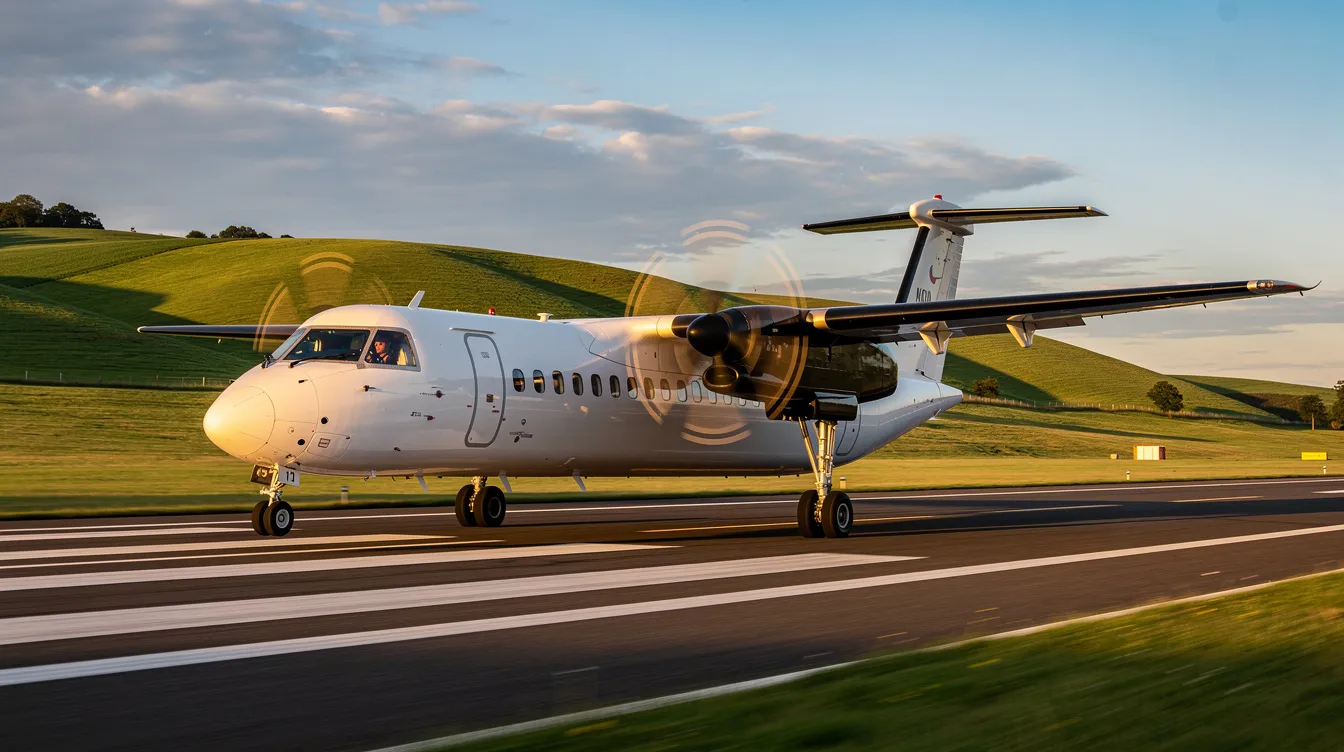
The King Air 200 takeoff distance typically ranges between 2,479 feet and 3,300 feet, with a ground roll as short as 1,942 feet (1,060 meters) under favorable conditions.
Takeoff distance depends on aircraft weight, runway elevation, surface type, temperature, and obstacle clearance requirements.
The original Beechcraft King Air 200, B200, and 200C each publish slightly different figures due to engine and equipment variations.
The King Air 200's short takeoff capability opens access to many smaller regional airports for charter travelers.
Jettly's platform helps match missions - runway length, passenger count, range - with a suitable King Air or alternative aircraft, and its private jet memberships offer flexible access for frequent travelers.
The Beechcraft King Air 200 is a twin-turboprop airplane that has connected business and leisure passengers to shorter runways worldwide since entering production in the 1970s. If you are searching for King Air 200 takeoff distance, the practical range is usually about 2,100 to 3,000 ft, depending on conditions, with ground roll as short as 1,942 ft in favorable standard conditions. For corporate executives, high-net-worth individuals, families, and other charter clients planning flights into regional or remote airfields, those numbers help determine whether a specific airport is a workable option.
This article stays focused on operational planning rather than brochure figures, showing how weight, weather, and elevation change the runway the aircraft actually needs, how the King Air 200 compares with other aircraft, and how that affects charter decisions for short-runway missions. Jettly, a digital private aviation platform, helps travelers choose aircraft like the King Air 200 based on runway and performance requirements while also explaining affordable private jet charter costs for different mission profiles, making it easier to plan safe, efficient flights with more destination flexibility.
The King Air 200 sits between lighter turboprops and light jets in most charter fleet rosters, offering a balance of speed, range, and short-field ability.
Maximum cruise speed: 289 knots
Range: approximately 1,800 nautical miles
Service ceiling: 35,000 feet
Engines: powered by two Pratt & Whitney PT6A-41 turboprops producing roughly 850 shp each
Maximum takeoff weight: 12,500 pounds
Seating: a spacious cabin designed to accommodate up to 14 passengers, though charter layouts typically seat 6–9 for comfort
Fuel capacity: approximately 544 gallons across wing lockers and nacelle tanks
These specs give context for the takeoff and landing distance data below. The King Air series shares the PT6A engine family across models, which contributes to reliability and lower maintenance cost per flight hour, especially when compared with larger airliners like the Boeing 737-800.
Takeoff distance has two key measurements. The ground roll is the length from brake release to liftoff. The distance over a 50 ft obstacle adds the climb segment needed to safely clear obstacles near the runway end. Operators plan with the longer figure.
Certification data comes from test conditions: brand-new aircraft, dry paved runway, standard atmosphere (ISA) at sea level. Real charter operations add safety margins - often 15–30% above published numbers. Balanced Field Length, which accounts for an engine failure during the takeoff roll, is generally around 5,300 feet for the Beechcraft King Air 200 series. Pilots consult the Aircraft Flight Manual for each specific air 200 variant, since installed avionics, mods, and gear configuration can shift performance slightly.
Numbers vary by source and variant, but the pattern is consistent across King Air 200 models:
|
Condition |
Ground Roll (ft) |
Takeoff Distance Over 50 ft Obstacle (ft) |
|---|---|---|
|
Sea level, ISA, medium weight |
1,942 |
2,579 |
|
High gross weight near MTOW |
N/A |
2,400–2,600 |
|
Hot and high (5,000 ft, 30 °C) |
N/A |
~3,800 |
Overall, the takeoff distance for a Beechcraft King 200 typically ranges between 2,479 feet and 3,300 feet, depending on configuration. Some marketing data quotes figures around 1,900–2,000 ft for lightly loaded, cool-weather departures, but charter operators plan more conservatively. The landing distance for the King Air 200 is 1,760 feet (765 meters), demonstrating strong landing capabilities on similarly short strips.
Modern B200 variants show slightly improved numbers but remain in the same order of magnitude.
The same airplane can require hundreds of feet more or less runway from one day to the next. Key factors include:
Aircraft weight: A higher aircraft weight increases the takeoff distance required to achieve lift. More passengers, fuel, or cargo means a longer roll.
Runway elevation: a higher field elevation (e.g., Denver at 5,400 ft) lengthens the takeoff roll. Density altitude reduces engine performance and increases takeoff distance.
Temperature: hot days compound the elevation effect. An August afternoon at a mountain strip can add 500+ ft versus a cool February morning at sea level.
Runway surface and slope: dry paved surfaces provide optimal takeoff performance compared to wet or snow-covered runways. Upslope runways increase the takeoff distance needed.
Wind: headwinds shorten takeoff distance while tailwinds lengthen it. Operators avoid significant tailwinds on short runways.
Anti-ice or bleed air use can slightly reduce available engine power.
Consider a King Air 200 departing near max takeoff weight from a 3,500 ft mountain strip on a summer afternoon - the pilot may need the complete runway length. The same aircraft on a 5,000 ft paved runway at sea level on a cool morning lifts off with room to spare. Performance charts and electronic flight planning tools used by professional operators address these variables on every mission.

The king air series spans several sizes. The King Air 90 (Super King Air C90 and variants) often has similar or slightly shorter takeoff requirements but less range and payload. The King Air 350 generally requires more runway due to its higher weight, though more powerful engines help offset this, placing it in a different category from regional jets like the Canadair CRJ-200. These models sit within a broader landscape of leading private plane manufacturers that design aircraft for specific mission profiles.
For very short or rough airstrips, some operators prefer smaller Beechcraft King Air models, but the 200 remains a preferred choice as an all-rounder. A business trip into a 3,200 ft regional strip where a light jet might be marginal is a scenario where the King Air 200 handles conditions comfortably - provided proper performance planning by the pilot and crew. Its proven track record across decades of operations confirms this versatility.
Charter operators translate takeoff distance data into go/no-go and payload decisions through a structured process:
Confirm destination runway length, surface, and obstacles
Check field elevation, forecast temperature, and wind
Use AFM charts or software to compute the required takeoff distance at the planned weight
Adjust fuel, passenger, or baggage load if required to stay within performance limits
Operators build in safety margins above the theoretical minimum, especially for short or challenging fields. Modern situational awareness tools on the flight deck support real-time climb rate monitoring during departure, and a wide range of charter airlines and private operators now leverage these tools to enhance safety.
Jettly's platform can incorporate runway length and airport characteristics when suggesting aircraft options, and travelers can use its airport locator tool to identify suitable departure and arrival fields. For example, a family charter from Toronto to a lakeside airfield where the King Air 200's short takeoff performance allows a direct arrival saves hours versus flying into a distant major hub. Travelers can map out these routes directly on the platform.
The Beechcraft King Air 200 has a proven track record across corporate, government, medical, and charter fleets. It has been used by military operators worldwide for reconnaissance and transport, and the King Air 200C serves executive transport and cargo roles. The aircraft is also capable of medical evacuation missions through air ambulance services equipped with medevac interiors and can even be used on crowdsourced private flights with shared empty seats when operators list open legs.
Key advantages for charter passengers include:
Ability to operate from short and unimproved runways, expanding airport access
Efficient turboprop fuel burn and lower operating cost versus comparable jets for sub-1,000 nm trips
Passenger comfort suitable for 6–9 seats with pressurization and good noise insulation
Proven reliability of Pratt & Whitney PT6A engines, reducing fleet downtime
These factors, combined with favorable takeoff and landing distances, make the King Air 200 a frequent match for regional business travel and access to secondary airports. Common missions on Jettly include hops like New York to Nantucket or King Air 200 charter flights from Los Angeles to smaller desert airfields where the aircraft's speed and ability to continue operating safely from short strips make sense.
Jettly is a digital charter marketplace with global access to Beechcraft King Air and other private charter aircraft, including turboprops, jets, and helicopters. Travelers can:
Enter departure and destination airports, preferred dates, and passenger count
Instantly compare aircraft options, including King Air 200 and similar turboprops, with transparent pricing via the charter cost estimator or a dedicated jet card flight cost estimator
Filter for aircraft equipped to safely operate from shorter or regional runways
Jettly connects users to a wide network of vetted operators that meet all regulatory performance and safety requirements, including runway length considerations. Whether it's a corporate shuttle or a weekend trip to a remote resort airstrip, the platform can confirm the King Air 200 is a safe, cost-effective fit, and it is frequently listed among the best private jet charter companies for travelers comparing providers.
Fuel efficiency and emissions increasingly factor into private travel decisions. Turboprops like the King Air 200 generally burn less fuel per seat on short sectors compared to similar-size light jets, particularly on legs under 500–700 nm.
Shorter takeoff distances and the ability to use closer airports can reduce overall trip time, taxi time, and sometimes total fuel burn. Some operators accessed through Jettly participate in carbon offset programs - travelers can inquire about greener options when booking, as well as enhanced services like in-flight catering for private jets. Proper performance planning (correct weights, direct routings, optimal cruise levels) contributes to both safety and environmental responsibility.

Under standard conditions (sea level, ISA temperature, moderate weight), a King Air 200 usually needs around 2,100–2,600 ft to clear a 50 ft obstacle. Hotter temperatures, higher elevations, heavier loads, wet runways, and tailwinds can increase this by several hundred feet. Charter operators always use the specific aircraft's flight manual to calculate precise figures for each departure.
Many King Air 200 aircraft are approved for operations from well-maintained grass or gravel strips, depending on operator procedures and local regulations. Performance calculations include additional safety margins for non-paved surfaces, which effectively increase the required usable runway length. Travelers using Jettly should provide exact airfield details so the operator can confirm suitability.
Many light jets need longer runways than a King Air 200 when operating near maximum weight, especially at hot or high-altitude airports. While jets cruise faster, the King Air's shorter takeoff distance lets it access more small airports, which can reduce overall travel time. Jettly can help compare King Air 200 options against light jets on specific routes.
Pricing is usually based on flight time, aircraft type, and positioning rather than runway length itself. Short or remote runways may limit which aircraft can be used, sometimes making turboprops more cost-effective than jets. Use Jettly's instant quote tools or explore its jet card programs to see how aircraft choice and departure airport affect overall cost.
Share the exact airport identifier, approximate luggage weight, passenger count, and preferred dates and times. This allows operators to verify that a King Air 200 can safely meet takeoff and landing performance requirements for that specific field. Travelers can input these details directly into Jettly's booking platform for quick, accurate aircraft recommendations.
The King Air 200 takeoff distance - typically around 2,100–2,600 ft at standard conditions, longer when hot, high, or heavy - translates into real advantages for private charter. Safe use of shorter runways expands destination choice and can significantly cut door-to-door travel time for business and leisure passengers.
Exact performance is always calculated by the operator for the specific aircraft, load, and conditions of the day. No two departures are identical.
Ready to experience private travel on your terms? Explore flight options or request a quote at https://www.jettly.com.
Share this post:
Jay Franco Serevilla
Jul 1, 2026
|
5
min read
Discover tips and trends in the industry.

5
min read
Why So Many Plane Crashes? Causes, Trends, and How Modern Aviation Stays Safe
Plane crashes are often the result of a combination of factors, including human error, mechanical failures, and weather conditions. Despite media coverage suggesting otherwise, air travel remains statistically safe, with improvements in aviation safety over the decades. Understanding the causes and trends can help travelers make informed decisions about their flying options.
Read More
5
min read
Cheap Thanksgiving Flights: How to Find Holiday Flight Deals in 2026
Finding cheap Thanksgiving flights in 2026 is all about timing and flexibility. With Thanksgiving on November 26, booking 30 to 45 days in advance and flying on off-peak days can lead to significant savings. Consider private jet options for added convenience and reduced travel stress, especially during peak holiday travel times.
Read MoreStay updated with our latest insights and tips to elevate your journey with us.
MEMBERSHIPS AND ASSOCIATIONS



Disclaimer: Jettly operates as a charter broker, offering access to a global digital jet charter marketplace. Jettly is not a direct air carrier and does not own or operate aircraft. All advertised flights are conducted by third-party air carriers that are fully licensed and hold the appropriate Part 135 or Part 121 certifications issued by the Federal Aviation Administration (FAA) or equivalent regulatory authorities under U.S. or foreign law. Jettly complies fully with the U.S. Department of Transportation's Part 295 and Part 298 Charter Broker regulations. Jettly does not carry additional liability insurance. Passengers are covered by aircraft operator insurance. TICO: 50023770


