



Login
Get Instant Pricing On 23,000+ Aircraft

>
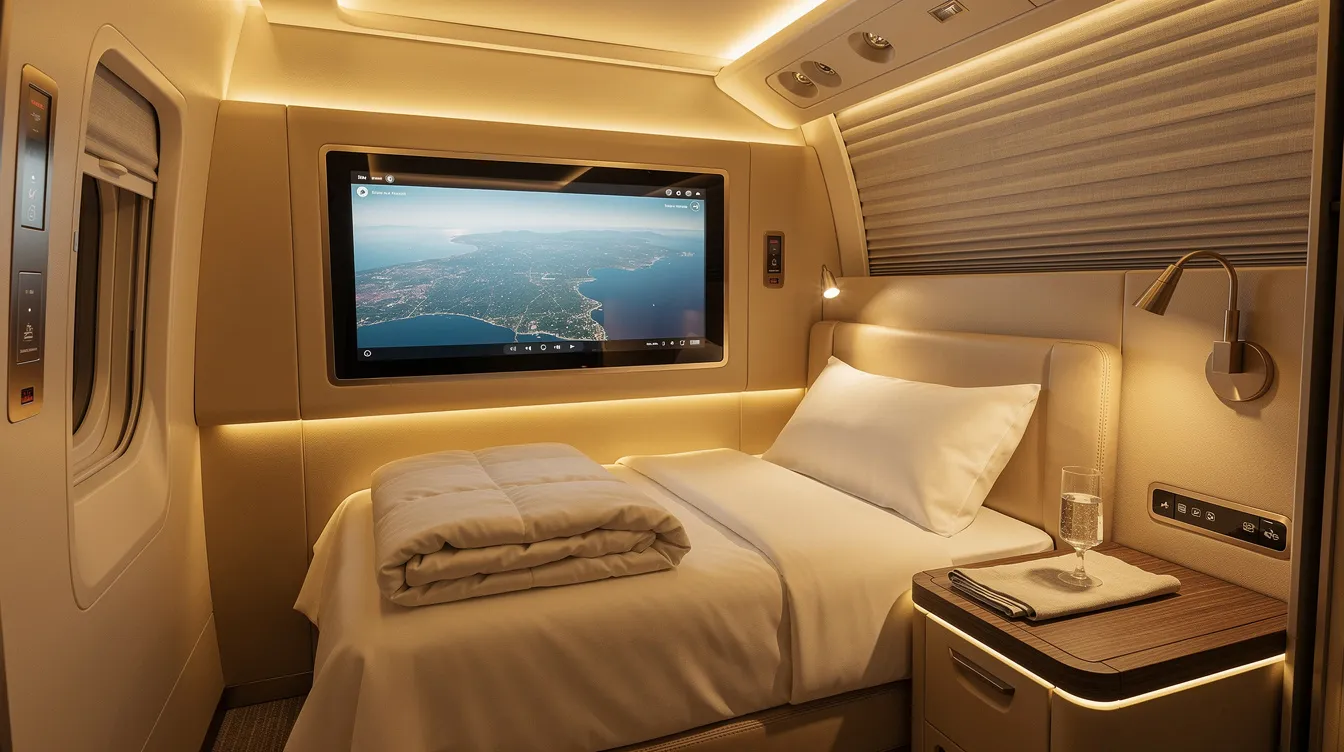
Luxury first class flights in 2026 look nothing like they did a decade ago. Airlines have trimmed first class cabins to a handful of flagship routes, poured investment into fully enclosed suites, and raised the bar on dining, privacy, and ground services. At the same time, private jet charter has moved from niche indulgence to a practical option that competes directly with the best airline first class products-especially for groups, time-sensitive trips, and multi-city itineraries.
This guide breaks down what matters: the airlines, the aircraft, the costs, and the decision points that separate a great first class ticket from a smarter charter booking.
Luxury first class flights in 2026 center on a small number of ultra-private first class suites-think Emirates 777 Game Changer, Air France La Première on the Boeing 777-300ER, ANA "The Suite" on the 777-300ER, and Japan Airlines first class on the A350-1000-alongside high-end business class products like Qatar Qsuite and ANA The Room that now rival traditional first class in comfort and privacy.
Companies within the luxury travel sector emphasize premium service and exclusivity, but for travelers who value privacy, flexibility, and time savings more than airline branding, private jet charter via platforms like Jettly often outperforms even the best first class flights-particularly for groups and multi-city trips.
This article compares first class vs business class vs private jets, reviews flagship first class cabins by airline and aircraft (Airbus A380, Boeing 777-300ER, A350-1000), breaks down ground services, seat types, and costs, and shows when a Jettly charter is the smarter choice.
Luxury first class services aim to provide maximum space and unprecedented levels of luxury, but the "best" option ultimately depends on party size, route, schedule needs, and budget structure.
Since 2019, the landscape of class flying has shifted dramatically. Several major carriers-United, Qantas, and others-either removed or significantly downsized international first class on many routes. The logic was straightforward: business class seats generate strong margins in a more space-efficient layout, while first class cabins serve fewer passengers per square foot.
Premium demand rebounded hard after COVID. But instead of restoring first class broadly, airlines refined a smaller number of ultra-luxury first class cabins. They poured resources into feature lie-flat seats with direct aisle access in business class, and reserved true first class for flagship long-haul aircraft like the A380, 777 300er, and A350-1000.
The result: long-haul first class is rarer and more exclusive than ever. These premium cabins now live on specific routes-Dubai to London, Paris to New York, Tokyo to San Francisco-rather than appearing across an airline's entire fleet. Product research before booking has become essential.
For travelers who want a private cabin without navigating route restrictions and aircraft swaps, Jettly offers a digital private jet charter marketplace with access to over 20,000 aircraft globally. It provides an alternative class experience for those who prioritize schedule control, smaller airports, and on-demand flexibility.
A luxury first class flight in 2026 means more than a wider seat and a hot towel. It means fully enclosed suites or very large semi-private class seats, lie-flat beds, premium dining curated by top chefs, and a high crew-to-passenger ratio that allows for many first class experiences to provide personalized service and individual care.
The concrete criteria: suite doors or floor-to-ceiling doors, 30–50 square feet of personal space, restaurant-style multi-course dining, branded amenity kits, and differentiated ground services such as limousine transfers or dedicated class terminal access. Standard domestic first class-wider recliners on narrow-body jets-doesn't meet this threshold.
Business class has moved sharply upmarket. Products like ANA The Room, Qatar Qsuite, and Iberia's A350 Next deliver suite-like privacy, lie-flat beds, and direct aisle access that exceed older first class cabins in bed size and enclosure. The line between advanced business class and entry-level first class has blurred considerably.
But consider the difference between an Emirates 777 Game Changer first class suite-40 square feet, floor-to-ceiling doors, virtual windows, zero-gravity seating-and a Qsuite business class seat-partial suite walls, smaller footprint, less dedicated staffing. The gap remains real in space, service ratio, and brand positioning.
Private jet cabins start where first class stops. An entire aircraft with no strangers, fully customizable service, and direct FBO access. For travelers crossing certain thresholds of group size or destination constraints, a private jet charter through Jettly becomes part of the same top-tier decision set.
Travelers considering luxury first class flights are typically deciding between three tiers: top-tier business class, flagship first class, and private jet charter.
The differences break down across four axes. Privacy ranges from a shared cabin with curtain dividers (business class) to fully enclosed private suites (first class) to an entire aircraft with no other passengers (private jet). Schedule control is fixed with airlines and fully flexible with charter. Airport process means public terminals and standard security for commercial flights versus FBOs with car-to-aircraft access for private jets. Total door-to-door time can vary by hours depending on airport proximity and boarding logistics.
Business class typically offers lie-flat beds, direct aisle access, and decent dining. First class adds larger first-class suites, better food and wine, more personalized onboard service, and exclusive lounge access with premium amenities. Private jets offer total flexibility and privacy, often using closer airports.
|
Feature |
Business Class |
First Class |
Private Jet (via Jettly) |
|---|---|---|---|
|
Suite/Seat Size |
20–30 sq ft |
30–50 sq ft |
Full cabin (varies by aircraft) |
|
Cabin Privacy |
Partial dividers |
Enclosed suites or high walls |
Entire aircraft |
|
Boarding Experience |
Priority lane |
Dedicated check-in, fast-track |
FBO, 15-min pre-departure |
|
Schedule Flexibility |
Fixed airline schedule |
Fixed airline schedule |
On-demand, any time |
|
Typical Cost (NY–London, per person) |
$4,000–$9,000 |
$10,000–$22,000 |
$9,000–$15,000 (group of 8–10) |
Jettly's value here is instant pricing, global aircraft access, and no long-term ownership commitments-making charter a practical comparison rather than a distant aspiration.
In aviation, "hard product" refers to the physical seat, suite, layout, and in-flight entertainment system. "Soft product" covers food, service, amenities, and crew attention. Luxury first class flights excel in both.
Modern premium cabins feature several seat types: domestic-style recliners (U.S. short-haul), angled lie-flat beds (increasingly rare), fully flat beds (standard in business class), first class suites with doors, and apartment-style or room-style cabins like the Etihad Apartment or Singapore Airlines suites. First class cabins are smaller and more intimate compared to business class, housing as few as four to eight passengers.
Layout patterns on flagship aircraft vary by carrier. Ultra-private first uses 1-1-1 configurations (Emirates 777 Game Changer, JAL A350-1000). Many 777-300ER and A350 first class cabin layouts use 1-2-1 arrangements. The Airbus A380 enables upper-deck 1-1 configurations for Singapore Suites and similar products.
Specific examples bring this to life. The Emirates Boeing 777-300ER Game Changer first class suite features floor-to-ceiling doors and virtual windows in middle seats. ANA First Class "The Suite" on the 777-300ER uses large 4K screens and sliding doors. Japan Airlines' first class has a 43-inch TV screen, the largest in the sky, paired with sofa-style seating on the A350-1000.
Compare an open suite design- Cathay Pacific First Class on the 777-300ER with extremely wide class seats that convert to large beds but no doors-to a fully enclosed option like Air France La Première with floor-to-ceiling curtains, or Emirates 777 with privacy doors. The trade-off is clear: some travelers prefer the open, spacious feel of Cathay's approach, while others prioritize the total enclosure of a private room-style suite.
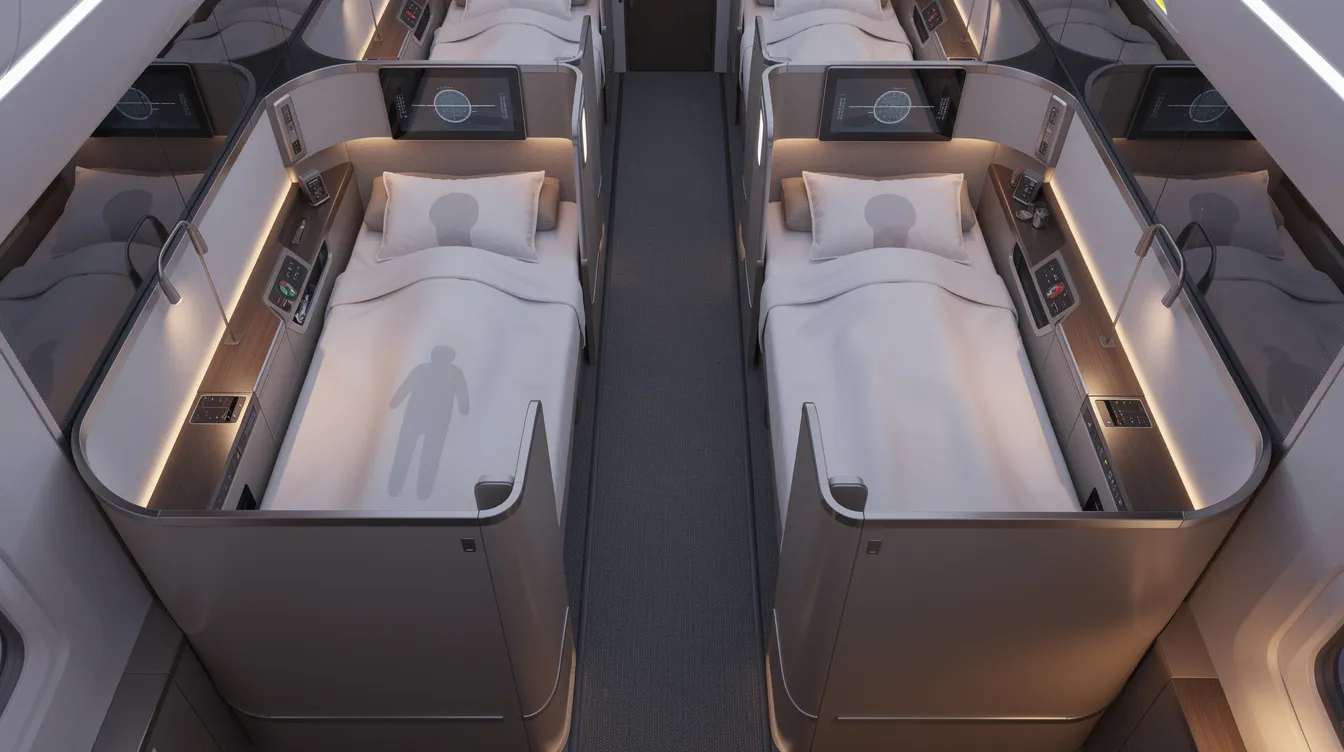
Gulf carriers have driven first class innovation more aggressively than any other region, leveraging the A380 and Boeing 777-300ER as platforms for their most ambitious class suites.
Emirates first class fares range from $8,000 to $25,000+ depending on route and booking class. The airline's A380 first class remains iconic, with an onboard shower spa, lounge bar, and large private suites. But the real headline is the Boeing 777-300ER game changer-Emirates features fully enclosed first class suites on select Boeing 777s, complete with virtual windows in middle suites, zero-gravity seating positions, and a Mercedes-Benz-inspired design language. Typical 2025–2026 routes include Dubai–London, Dubai–Geneva, and Dubai–Chicago.
Etihad's A380 First Apartment offers a separate seat and separate bed in each suite, along with a wardrobe and personal minibar. Etihad's first class includes onboard shower facilities on Airbus A380 flights, matching Emirates in that regard. The three-room suite product-The Residence-goes even further with a living room, bedroom, and private bathroom. Key routes: Abu Dhabi–London and Abu Dhabi–New York. Etihad's first class tickets can reach $11,700 for long haul flights.
Qatar Airways first class on the A380 is solid where still operated, but Qatar's real star is the Qsuite in business class-widely considered "first class in disguise" for its full doors, lie-flat beds, and double-bed configuration for couples. Airways first class debates aside, many travelers choose Qsuite on routes like Doha–London, Doha–Sydney, and several U.S. destinations.
On a route like Dubai–London, chartering a large-cabin private jet via Jettly typically runs $85,000–$110,000 one-way. For a solo traveler, Emirates First Class wins on value. For a group of six to eight, the per-person charter cost drops to $11,000–$18,000-comparable to a first class ticket but with FBO access, zero security lines, and full schedule control.
Asia produces some of the world's most refined luxury first class flights, especially on routes between Tokyo, Hong Kong, Singapore, and major European and U.S. hubs.
Japan Airlines first class on the Airbus A350-1000 features six suites in a 1-1-1 layout. Each suite offers sofa-style seating that converts to a large first class bed, and Japan Airlines' first class has a 43-inch TV-the largest in the sky-with Bluetooth audio and a tailored Japanese menu featuring kaiseki-inspired courses. Typical routes include Tokyo Haneda–New York JFK and Haneda–Paris CDG. Nippon Airways First Class (ANA) takes a different design approach on the Boeing 777-300ER: fully enclosed class suites with sliding doors, 43-inch 4K monitors, minimalist Japanese design, and omotenashi-style fantastic service. Routes include Tokyo Haneda–London Heathrow, Haneda–San Francisco, and Haneda–New York.
ANA First Class and JAL share a commitment to balancing tradition with modern tech. Tea ceremonies, regional Japanese cuisine, and quiet, attentive service sit alongside Wi-Fi, Bluetooth audio, and tail camera feeds-appealing to both leisure and business first-class passengers.
Cathay Pacific first class on the Boeing 777-300ER takes a subtler approach. Cathay Pacific's first class features a 1-1-1 seat configuration with extremely wide seats that become large beds. The focus is on excellent bedding, refined Cantonese-influenced dining, and a calm, understated atmosphere. The trade-off: fewer privacy features compared to enclosed suites, with no doors or high walls. Primary routes include Hong Kong–London and Hong Kong–Los Angeles.
Singapore Airlines deserves mention here too. Singapore Airlines offers 50 square feet per first class suite-among the most generous in the sky. Singapore Airlines offers six first class suites on the A380, and the Singapore Suites class product includes a separate bed that's fully flat and a separate seat for working or dining. Singapore Airlines' first class suites can cost around $17,300 on key routes.
European carriers approach first class with boutique precision. Small cabins, national branding, and strong ground experiences define the region's best first class airline offerings.
Air France La Première on the Boeing 777-300ER offers only four suites per aircraft. Air France's La Première features four suites in a single row, each about 3.5 square meters, with floor-to-ceiling curtains for privacy, a chaise lounge and full first class bed, and Michelin-starred tasting menus. Air France La Première includes limousine transfers at Paris Charles de Gaulle. Air France La Première tickets can cost up to $23,800. Typical routes: Paris–New York, Paris–Los Angeles, Paris–Singapore, Paris–Tokyo.
Lufthansa first class on the Boeing 747-8 features nose-of-the-plane seats with a unique flying experience. The airline's new A350-900 Allegris cabins introduce redesigned enclosed suites, while the signature caviar service and the Frankfurt First Class Terminal-with limousine transfers directly to the aircraft-remain standout class lounge experiences. The class terminal in Frankfurt is widely considered the gold standard for ground services in commercial aviation.
SWISS First Class on the 777-300ER uses a 1-1-1 layout with three oversized suites, including a double center suite, temperature controls, and 4K screens. The upcoming "SWISS Senses" A350 class product promises further refinement. SWISS First Lounges in Zurich feature private day rooms and à la carte dining.
British Airways First-including its refreshed "Prime" product on selected 777 and 787 jets-positions more as a "super business class" compared to the ultra-boutique cabins of Air France or SWISS. BA First still shines on routes like London–New York with solid business class lounge and first class lounge access, including the Concorde Room.
Beyond the major Gulf carriers, several airlines offer notable class flights worth considering. Oman Air first class on the 787-9 pairs modest suite hardware with standout soft product-personal service, regional menus, and high-end amenity kits. Saudi and Kuwait Airways maintain first class on limited markets, providing strong value on routes like Muscat–London or Kuwait–London.
These products often combine a simpler hard product with exceptional personal attention. Butlers, dedicated chefs, and bespoke meal service can make up for a less elaborate suite design. High-end first class airlines in this category focus on privacy, dining, and exceptional class service as differentiators.
Availability is typically limited to a handful of aircraft and routes. Travelers booking luxury first class flights should always verify the specific aircraft type and flight number-not just the airline-before purchasing a first class ticket.
For a solo traveler, these "emerging" first class options can deliver excellent value. But for small groups flying routes like Abu Dhabi–Paris, comparing the total cost of multiple first class fares against a Jettly charter quote often reveals competitive per-person pricing with the added benefit of schedule flexibility.
For luxury first class flights, the aircraft type matters as much as the airline. Premium cabins are optimized for specific airframes, and a cabin swap can mean losing the suite you booked.
The Airbus A380 remains the traditional flagship for ultra-luxury class cabins. Its double-deck layout enables larger suites and onboard social spaces. Singapore Airlines Suites, Emirates A380 first with showers and bar, Etihad Apartments-all live on this platform. Etihad's first class includes onboard showers on Airbus A380 flights, and the aircraft's upper deck provides an exclusive, quieter environment.
The Boeing 777-300ER is arguably the most important aircraft for first class in 2026. Emirates 777 Game Changer, ANA The Suite, Japan Airlines first class, Air France La Première, and SWISS all deploy their flagship first class suites on this workhorse. Typical layouts run 1-1-1 or 1-2-1 with between four and eight suites.
The Airbus A350-1000 and -900 represent the new generation. Japan Airlines' A350-1000 first class, upcoming Qantas ultra-long-haul first on the A350-1000, and SWISS A350 "SWISS Senses" focus on efficiency, quieter cabins, and modern IFE. These aircraft burn less fuel and offer lower cabin noise-tangible comfort benefits.
The Boeing 747-8 is a niche but iconic platform. Lufthansa first class and Korean Air use it for nose-section cabins that offer a unique feeling. Korean Air's Kosmo Suites 2.0 and Lufthansa's upper-deck first class suites both leverage the 747-8's distinctive layout. Limited future availability means these products will likely serve into the early 2030s before retirement.
For many luxury travelers, the ground experience defines the perceived value of a first class ticket as much as the onboard suite. First class travel includes exclusive ground services like private check-in and security screening, and first class experiences often include ground services like chauffeur transportation.
Standout ground products include: the Air France La Première lounge at CDG with private dining, Sisley spa treatments, and chauffeured transfers. The Lufthansa First Class Terminal in Frankfurt with limousine service directly to the aircraft door. Emirates first class lounges in Dubai with à la carte dining and Moët & Chandon bar. Singapore's Private Room at Changi with personalized concierge service. International first class provides luxurious pre-flight lounges featuring à la carte dining across most of these carriers.
Common ground perks across class airlines offering true first class include dedicated check-in areas, fast-track security and immigration, buggy or limousine transfers, à la carte restaurant service, shower suites, and private quiet rooms. First Class offers priority check-in and boarding as a baseline, with the best products layering substantially more on top. First Class passengers enjoy exclusive lounge access with premium meals.
The travel experience in First Class is designed to be seamless and stress-free-but contrast this with private aviation through Jettly. FBOs offer direct car-to-aircraft access, minimal security lines, and 15–30 minute arrival times before departure. No immigration queues, no gate changes, no terminal walks.
Consider a door-to-door comparison: a Paris–New York Air France La Première itinerary involves a limousine to CDG, the La Première lounge, boarding, an 8-hour flight, JFK customs, and a car to Manhattan-roughly 13–14 hours total. A Jettly-arranged private jet from Le Bourget to Teterboro skips customs queues, terminal transit, and boarding delays, landing travelers in Manhattan in roughly 9–10 hours door-to-door.
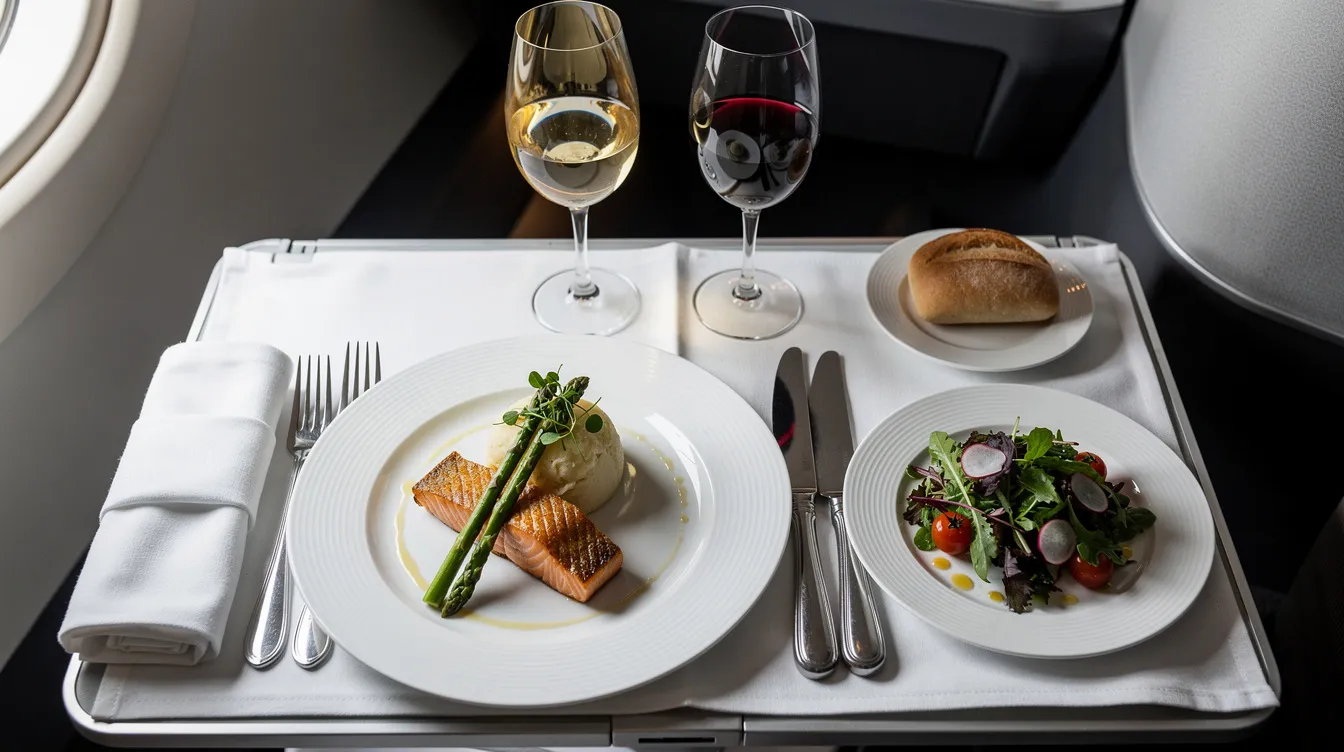
First class flights offer on-demand dining curated by award-winning chefs. Most flagship carriers use a dine-on-demand menu structure, allowing first-class passengers to eat when they want rather than on a fixed schedule. Multi-course menus, caviar courses, and partnerships with Michelin-starred chefs define the standard.
Michelin-level dining is a hallmark of many first-class airline services. Emirates serves Dom Pérignon and caviar across its first-class cabin. Japan Airlines offers kaiseki menus and high-end Japanese whisky. Singapore Airlines' "Book the Cook" program lets passengers pre-select dishes like lobster Thermidor. Air France menus are curated by chefs like Glenn Viel and Daniel Boulud. First Class cabins often include gourmet meals designed by renowned chefs, and fine dining at altitude has become a genuine differentiator between carriers.
First class amenities often include high-quality bedding and designer toiletries. Typical amenity kits feature skincare products from Sisley, Bvlgari, or similar brands. Pajamas come from fashion labels-Jacquemus for Air France, SWISS-branded designers, and bespoke Japanese sleepwear on ANA. High-thread-count bedding, mattress toppers, and turndown service complete the sleep experience.
Unique extras set certain carriers apart: onboard shower spas on Emirates and Etihad A380s, inflight bars and lounges on the Emirates A380, turndown services with mattress toppers, and special touches like roses (Lufthansa) or tea ceremonies on some Asian carriers. Full meal service extends to champagne pairings, cheese courses, and dessert trolleys on carriers like Air France and Singapore Airlines.
Private jets handle dining differently. While airlines may have more elaborate wine lists, private charters via Jettly can pre-arrange bespoke catering from favorite restaurants and specific vintages tailored to the passenger-with fewer service interruptions and complete control over timing.
The term "first class" covers a wide range of products. Domestic first class in the U.S. typically means a wider recliner on a narrow-body jet-no bed, no suite doors, no meaningful privacy. True long-haul first class is a different category entirely.
Angled lie-flat beds were once the norm in premium cabins but are increasingly rare among top-tier carriers. Most class flights marketed as luxury now feature fully flat lie-flat seat configurations. First Class cabins often feature lie-flat seats for comfort as the absolute minimum expectation.
Modern first class suites with doors or curtains represent the current standard for best first class flights. First class cabins often feature fully enclosed private suites with sliding doors-as seen in Emirates 777 Game Changer, ANA The Suite, Air France La Première, and Korean Air Kosmo Suites 2.0. First Class suites provide complete privacy with floor-to-ceiling doors, and these features dramatically improve sleep quality on long-haul flights.
The progression runs from least private (domestic recliner) to moderately private (open suite with high walls) to fully private (enclosed suite with doors or floor-to-ceiling curtains). Luxury first class flights provide unrivaled comfort and privacy at the top end of this spectrum, and first class flights offer private suites that ensure maximum privacy and comfort.
Some travelers still prefer open suites. Cathay Pacific's approach- extremely wide class seats, generous bedding, and a calm atmosphere without doors-delivers a more spacious feel. The open layout avoids any sense of confinement and allows window-seat passengers an unobstructed view. For travelers who don't mind a lower privacy ceiling, this can feel more relaxing than a smaller enclosed box.
Several concrete long-haul routes stand out for luxury first class flights in 2025–2026:
New York–Dubai: Emirates A380 or 777 Game Changer
New York–Abu Dhabi: Etihad A380 First Apartment
Singapore–London: Singapore Airlines A380 Suites
Tokyo–New York: JAL A350-1000, ANA 777-300ER
Paris–New York: Air France La Première 777-300ER
Frankfurt–Los Angeles: Lufthansa 747-8
Zurich–Singapore: SWISS 777-300ER
These routes matter because airlines deploy their best crews, latest catering, and flagship aircraft on high-demand premium corridors. They represent the best first class flights available in commercial aviation.
Availability can be seasonal or schedule-dependent. Not all Dubai–London flights carry the Emirates A380 or Game Changer 777. Always verify aircraft type and flight number before booking.
On busy business routes like New York–Miami, London–Geneva, or Los Angeles–Las Vegas, first class cabins may not exist or may be only domestic-style recliners. These are exactly the routes where a Jettly charter becomes far more appealing-a light or midsize jet delivers genuine privacy and schedule flexibility where airline first class simply doesn't compete.
First class tickets can exceed $10,000 for long-haul flights-and that's often just the starting point. Realistic cash ranges for flagship first class fares in 2025–2026:
Air France La Première Paris–New York: ~$20,000+ round-trip
Emirates A380 first New York–Dubai: ~$15,000–$25,000
Singapore Suites Singapore–London: ~$17,300 one-way
Etihad First Apartment Abu Dhabi–New York: ~$11,700 one-way
Award redemptions offer another path. Limited saver seats, airline-specific restrictions (Air France La Première only for Flying Blue elites on certain routes; Singapore Suites only via KrisFlyer), and the need to transfer points from programs like Amex Membership Rewards or Chase Ultimate Rewards add complexity.
Typical mileage requirements: Etihad First Apartment at 115,000–150,000 miles one-way; Emirates First Class at 136,250–186,000 Skywards miles one-way from the U.S.; Singapore Suites at 125,000–200,000 KrisFlyer miles one-way depending on route. First class fares and award availability both require planning.
Private jet charter pricing works differently. Jettly provides instant pricing by aircraft type and route. Hourly rates span approximately $3,500–$5,500 for light jets up to $11,000–$18,000 for heavy and long-range jets. On some itineraries-a family of six flying New York–Nassau, for example-the per-person cost of a charter can rival multiple first-class tickets while delivering superior flexibility.
First Class cabins typically allow higher baggage allowances without extra fees, which is a practical advantage of commercial first class. But Jettly avoids long-term commitments like fractional ownership or jet cards with large upfront deposits, focusing instead on on-demand charter and optional memberships for frequent flyers.
Even the best first-class cabin still operates within the constraints of commercial aviation: fixed schedules, set routes, limited last-minute flexibility, and exposure to airport disruptions. Class remains bound by airline timetables no matter how luxurious the suite.
Schedule control is where private charter separates itself most clearly. With a private jet via Jettly, travelers can depart closer to meeting times, adjust departures for overruns, and combine multiple city stops in a single day. Commercial first class can't match this.
Privacy differences are equally significant. A first class suite offers privacy from the cabin, but you still share an aircraft with hundreds of other passengers. A private jet means no strangers onboard-confidential meetings can happen freely, travelers can walk around without concern, and pets travel without cabin restrictions.
Consider two scenarios. A CEO needs to visit clients in New York, Chicago, and Dallas in a single day. On a Jettly-arranged light or midsize jet, this is routine-three stops, one aircraft, back home by evening. Replicating this with three separate class flights means layovers, rebooking risk, and at least one overnight hotel. Or take a family traveling from Toronto to a Caribbean island. A Jettly charter uses smaller airports and avoids the overnight connection that commercial routing often requires.
Jettly is a digital private jet charter marketplace with access to over 20,000 aircraft worldwide. The platform offers transparent, instant pricing and online booking without long-term commitments or opaque brokerage fees.
The main use cases where Jettly competes directly with first class: short- and medium-haul trips where first class cabins either don't exist or are just recliners; group trips where buying several first class tickets rivals charter cost; and time-sensitive business travel where schedule control matters more than flagship airline branding.
Aircraft available through Jettly align with first class expectations at every tier. Light jets (e.g., Cessna Citation CJ series) carry 2–4 passengers with club seating and worktables. Midsize jets (e.g., Hawker 800XP) seat 4–8 with more cabin space and baggage capacity. Large-cabin jets for long-haul (e.g., Gulfstream G450, Bombardier Global) offer couch seating, full galleys, and in many cases lie-flat sleeping options.
Compare an Emirates 777-300ER Game Changer suite with chartering a large-cabin jet on Dubai–London. Flight time is similar at roughly seven hours. But the airport process differs radically: FBO access in both cities, no queues, car-to-aircraft boarding, and the ability to shift departure by hours if needed. The private cabin is entirely yours.
Ready to see how charter pricing compares for your route? Explore flight options or get an instant quote at Jettly.com.
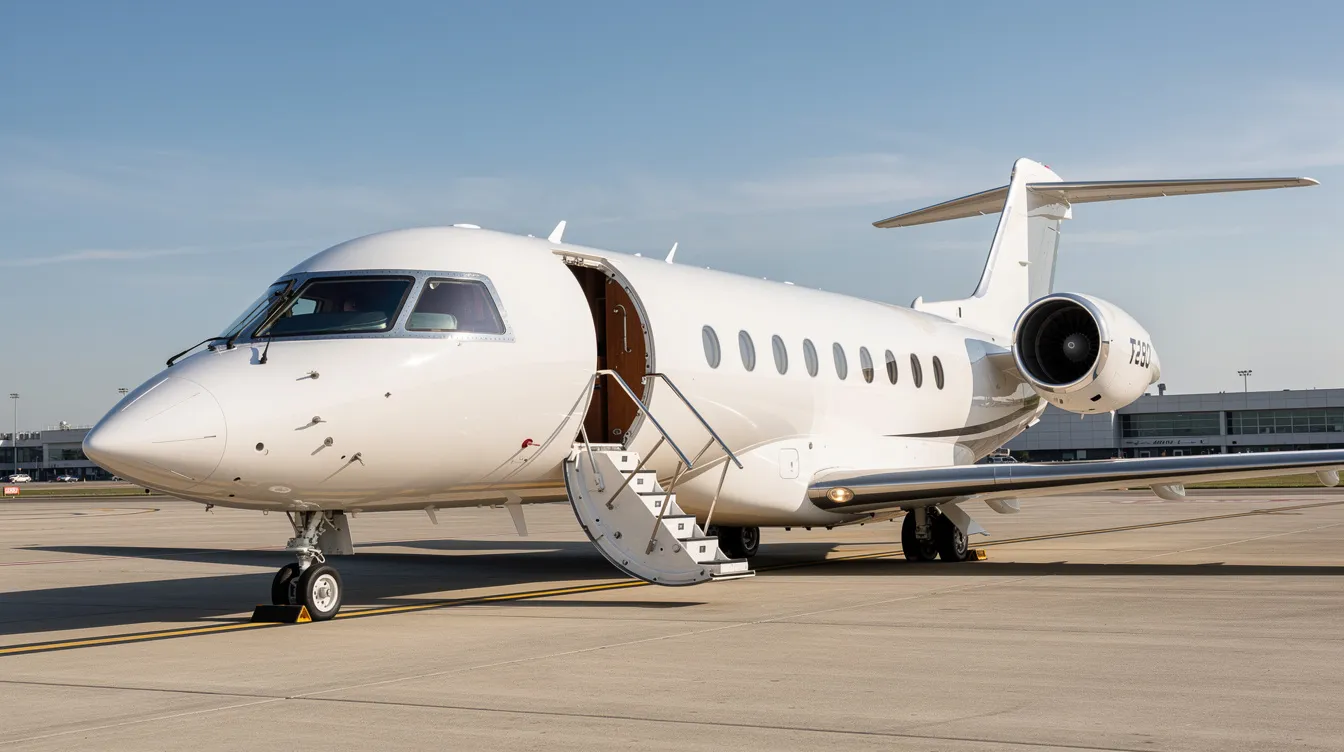
Major airlines offering first class adhere to ICAO, FAA, and EASA regulations, with rigorous maintenance cycles and strong safety records for long-haul widebody fleets like the A380, 777, A350, and 787.
Reputable charter operators in Jettly's network operate under equivalent regulatory standards-FAA Part 135 in the U.S., EASA Air Operator Certificates in Europe-and undergo third-party audits from organizations like ARG/US, Wyvern, and IS-BAO. These layers bring private jet safety in line with commercial standards.
Environmental concerns are legitimate. Private jets typically produce higher per-passenger emissions than commercial first class. But modern fuel-efficient aircraft, optimized routing, use of Sustainable Aviation Fuel where available, and optional carbon offset programs narrow the gap. Jettly promotes operational efficiency by matching aircraft size to trip requirements-avoiding oversized jets when a light jet suffices-and reducing empty legs where possible.
The decision framework is straightforward. Consider number of travelers, route type (hub-to-hub vs secondary cities), schedule flexibility needs, privacy requirements, and budget structure (cash vs points vs corporate policy).
Choose airline first class for iconic long-haul routes when traveling solo or as a couple, especially when redeeming points yields high value. Choose business class when the main goal is a flat bed at a more reasonable price-many business class seat products now deliver excellent sleep quality. Choose Jettly for multi-stop itineraries, short-notice trips, secondary airport access, or groups of 4–10 travelers.
A few use cases to illustrate: A family of five flying London–Malaga for a holiday. No airline first class exists on this route-a Jettly-chartered midsize jet gets them door-to-door in half the time of a business class connection. A law firm team visiting three clients in different U.S. cities in two days-only charter makes this practical. A couple celebrating an anniversary might genuinely enjoy Singapore Suites or Emirates first class for the experience-but could also consider an ultra-long-range private jet for a completely bespoke journey.
These are complementary options, not mutually exclusive. Many Jettly users enjoy airline first class for certain trips and private jets for others.
Start by choosing your route and aircraft type, then verify the actual cabin configuration using airline seat maps and expert seat guides. Not every flight number carries the first class seat you're expecting.
Book 6–12 months in advance for peak-season first class on popular routes like New York–Dubai, London–Singapore, and Tokyo–New York. Last-minute award seats do occasionally appear, particularly with Emirates and some Star Alliance carriers, but don't count on it.
Leverage airline status and credit card programs. Companion certificates, upgrade instruments from business to first, and premium card benefits can grant exclusive lounge access even on arrival or separate from ticket class.
Cross-check total journey time, not just flight time. Layovers, airport transfer times, and potential misconnect risk can add hours. Then compare this against simply booking a Jettly charter that flies non-stop between smaller airports closer to both your home and destination.
Below are answers to common questions not fully covered above, focused on practical considerations for travelers comparing first class and private jets.
On many routes, modern business class-especially on A350 and 787 aircraft-already offers lie-flat beds, direct aisle access, and solid dining. For most travelers, this is more than sufficient.
First class mainly adds privacy, better staffing (first class passengers benefit from a much higher crew-to-passenger ratio), and more personalized ground experiences. This may justify the cost for special occasions, sleep-critical long-haul flights, or those who value prestige and quiet.
If the price difference is large, travelers might be better off choosing a business class seat and allocating budget to hotels or private transfers-or considering a Jettly charter if traveling as a small group.
First class award seats often need to be booked months in advance for popular routes, especially for two or more passengers traveling together. Cash fares are more available but expensive at short notice.
Private jet charters through Jettly can often be arranged with days or even hours' notice, although more flexibility and better pricing come with earlier booking. Corporate travelers often finalize charters 3–7 days before departure, while leisure travelers book 2–4 weeks out.
Most flagship first class cabins now offer large tables, power outlets, and Wi-Fi suitable for email and light VPN use-solid environments for solo work.
Private jets offer more control over noise and confidentiality. Meeting-style seating, no strangers nearby, and the ability to hold discussions or review sensitive documents without concern make charter the preferred choice for executives handling confidential deals or strategy sessions.
Many airlines welcome children in first class, but some cabins are quiet and business-focused, which may feel less relaxed for parents with restless children.
Booking multiple adjoining first class suites-such as Singapore double Suites or combined Qsuite quads-can work well but becomes very expensive. Private jets via Jettly are generally better suited for families, allowing children to move freely, bring more luggage, and travel with pets without worrying about disturbing other passengers.
Define your origin, destination, travel dates, and number of passengers. Check which airlines and aircraft offer true first class or top-tier business class on that route.
Gather sample fares-both cash and points-then visit Jettly.com to obtain instant charter pricing for similar dates and times, adjusting aircraft category to match your party size. Compare not just ticket price but total door-to-door time, airport convenience, and privacy needs before deciding between airline first class, business class, and a Jettly-arranged private jet.
Luxury first class flights in 2026 are more exclusive and concentrated than a decade ago. The best products-Emirates Game Changer, Air France La Première, Singapore Suites, JAL A350-1000-offer extraordinary class suite features and service on select routes. But they're no longer the only pinnacle of premium travel.
Modern business class now rivals older first class in comfort and privacy. Private jet charter platforms like Jettly make fully private, on-demand class flying accessible to a broader audience of executives, families, and frequent travelers-without owning an aircraft.
The "best" option depends on the trip. Iconic airline first class for flagship long-haul experiences. Advanced business class for value. And Jettly-chartered private jets for time-critical, multi-leg, or group journeys where control and privacy matter most.
Ready to experience private travel on your terms? Explore flight options or request a quote at Jettly.com.
Share this post:
Jay Franco Serevilla
Jul 20, 2026
|
5
min read
Discover tips and trends in the industry.
5
min read
KGRK: Robert Gray Army Airfield & Fort Hood Regional Travel Guide
Robert Gray Army Airfield (KGRK) serves as a vital joint-use airfield for Fort Hood and the Killeen area, facilitating both military and commercial aviation. With a 9,997-foot runway and 24-hour operations, it supports a range of aircraft and offers direct access to Central Texas. This travel guide provides essential information for military personnel, families, and business travelers using KGRK.
Read More
5
min read
KLBO – Floyd W. Jones Lebanon Airport Private Jet Charter Guide
Floyd W. Jones Lebanon Airport (KLBO) is a premier general aviation airport in Lebanon, Missouri, catering to private jet travelers. With a 5,000-foot runway and dedicated FBO services, it offers a convenient alternative to larger airports, ensuring faster turnarounds and less congestion for corporate and leisure travelers alike.
Read MoreStay updated with our latest insights and tips to elevate your journey with us.
MEMBERSHIPS AND ASSOCIATIONS



Disclaimer: Jettly operates as a charter broker, offering access to a global digital jet charter marketplace. Jettly is not a direct air carrier and does not own or operate aircraft. All advertised flights are conducted by third-party air carriers that are fully licensed and hold the appropriate Part 135 or Part 121 certifications issued by the Federal Aviation Administration (FAA) or equivalent regulatory authorities under U.S. or foreign law. Jettly complies fully with the U.S. Department of Transportation's Part 295 and Part 298 Charter Broker regulations. Jettly does not carry additional liability insurance. Passengers are covered by aircraft operator insurance. TICO: 50023770


