


Login
Get Instant Pricing On 23,000+ Aircraft

>
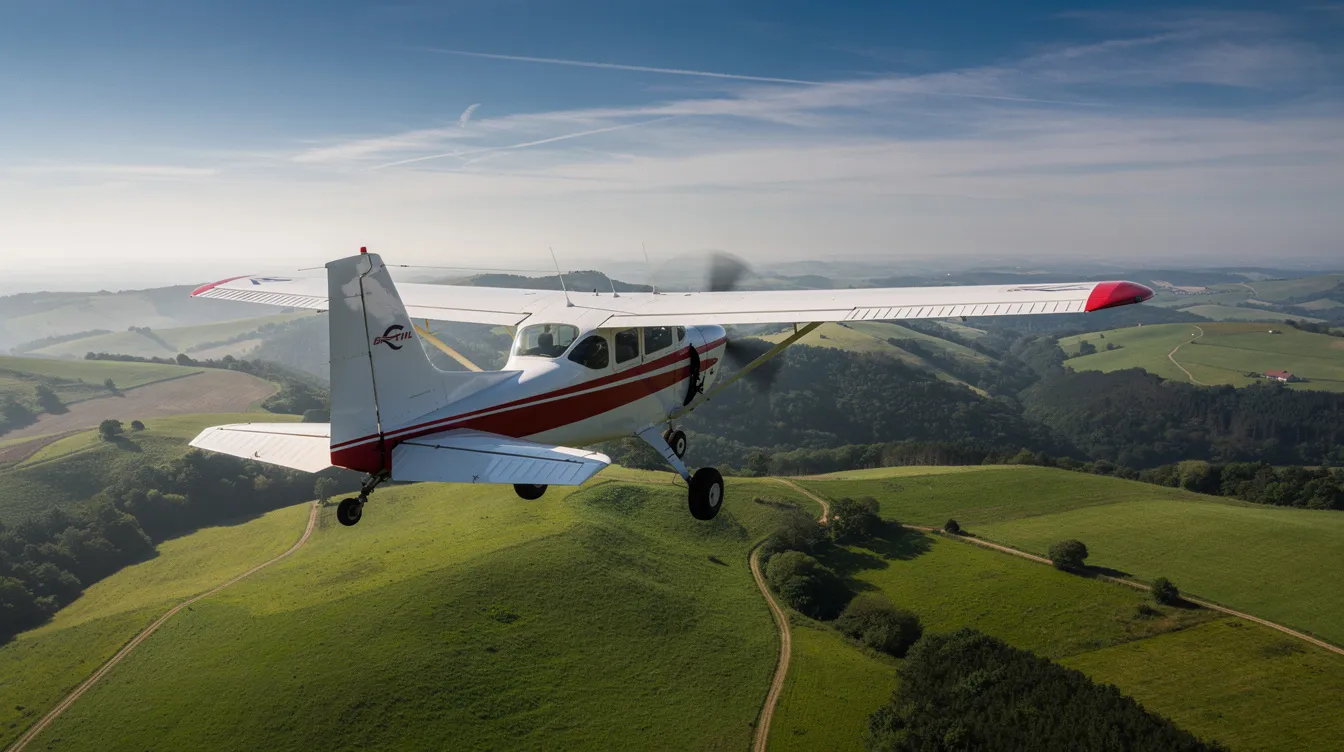
Personal aircraft let travelers skip commercial security lines and fly on their own schedule from smaller regional airports that airlines don't serve. Whether the goal is recreational flying, building hours as a new pilot, or cutting travel time for business, these small planes offer a level of flexibility that commercial aviation simply can't match.
The decision factors haven't changed - passenger capacity, cruising speed, range, and operating cost still drive every choice. What has changed is how people access these aircraft. In 2026, many travelers reach personal and light aircraft through digital charter platforms like Jettly rather than committing to direct ownership.
Personal aircraft range from single-engine pistons to high-performance jets, and this guide covers the best models, key specs, and smarter ways to fly each one.
A personal aircraft is a small plane seating 1–6 people, used for recreational flying, flight training, and business travel - models range from single-engine pistons to high-performance jets.
Passenger capacity and cruising speed are the two specs that shape every aircraft decision: trainers like the Cessna 172 Skyhawk cruise at 124 knots with 4 seats, the Cirrus SR22T pushes 180–213 KTAS for cross-country missions, and the Piper Archer LX offers forgiving flight characteristics ideal for new pilots.
Aircraft ownership is not the only path to private flying; on-demand charter through platforms like Jettly gives travelers access to thousands of light aircraft, turboprops, and light jets without the fixed costs of owning.
Define your mission first - weekend leisure, regular business travel, or backcountry adventure - then match it to the right aircraft class, not the other way around.
Scroll to the conclusion for a direct link to explore Jettly's charter options at jettly.com.
A personal aircraft is a small, privately operated airplane or light aircraft typically seating 1–6 people, used for non-scheduled flying. The FAA recognizes airplanes, gyroplanes, helicopters, gliders, balloons, and airships as different aircraft categories, but most personal aircraft fall into the fixed-wing airplane group.
Passenger capacity brackets break down roughly into three tiers: 2-seat trainers and light sport models, 4-seat family pistons, and 5–6 seat high performance singles or turboprops. Common mission profiles include weekend leisure flights, regional business travel, flight training, and short-haul charter hops. Helicopters provide vertical takeoff and landing and point-to-point travel convenience, but fixed-wing personal aircraft dominate the segment for cost and range.
From a regulatory standpoint, private owners fly under FAA Part 91, while charter operators - the kind Jettly works with - operate under Part 135, which requires stricter pilot qualifications, maintenance programs, and safety oversight.
The term "personal aircraft" covers several technical categories, each with distinct performance envelopes and cost profiles.
Single-engine piston trainers like the Cessna 172 Skyhawk and Piper Archer LX are the workhorses of general aviation. Single-engine piston aircraft are common for training and regional trips, with typical cruising speed in the 90–130 KTAS range. They're affordable to operate and widely available at flight schools, and many pilots compare these benefits with affordable aeroplane rental options before committing to ownership.
High-performance pistons such as the Cirrus SR22T and Beechcraft G36 Bonanza step up to 170–210 KTAS, carry modern avionics and IFR capability, and handle cross-country flying with efficient performance.
Utility and backcountry types - the Cessna 206 Turbo Stationair HD and CubCrafters CarbonCub SS - trade pure speed for payload, cargo flexibility, and rough-field capability.
Modern composite and diesel light aircraft like the Diamond DA40 NG and Diamond DA50 RG emphasize fuel-efficient operation on Jet-A, a composite airframe, and eco-aligned design.
At the upper end, single-engine turboprops (Pilatus PC-12 NGX) and personal jets (Cirrus Vision Jet) blur the line between personal and business aviation. Turboprops are powered by turbine engines and can land on shorter runways, while turboprop planes are often used for long-distance travel. These are frequently accessed via charter rather than ownership through platforms that offer a wide selection of private charter aircraft.
Choosing a first aircraft means prioritizing forgiving flight characteristics, low operating cost, and broad support networks over raw speed. Here are the top picks for pilots early in their flying experience.
Cessna 172 Skyhawk. The most produced aircraft in history, with over 44,000 units built since 1955 and still in continuous production through 2026. The Cessna 172 Skyhawk has a cruising speed of 124 knots, seats four, and offers a range of roughly 500–640 nm depending on fuel capacity and load. It remains the cornerstone trainer and the perfect aircraft for a first-time owner who values reliability and parts availability.
Piper Archer LX. This four-seater single-engine light aircraft cruises at approximately 128 KTAS. The Piper Archer LX has a range of 522 nautical miles and seats four, with stable handling and modern avionics that make it popular for both training and first-time aircraft ownership.
Diamond DA40 NG. A composite airframe equipped with an Austro diesel engine running on Jet-A fuel. The Diamond DA40 NG has a cruising speed of 145–150 KTAS, a range of 940 nautical miles, and burns approximately 5–6 gallons per hour - making it one of the most fuel-efficient four-seat personal aircraft on the market. Its strong safety record adds appeal for instruction and personal travel.
Texas Aircraft Colt and ICON A5. For pilots interested in light sport aircraft, these two aircraft offer lower entry costs and simpler operation. Light sport aircraft are affordable options for beginner pilots, limited to two seats and 1,320 lbs maximum takeoff weight under FAA rules. The ICON A5, a light sport aircraft with amphibious capability, focuses on lifestyle appeal rather than speed. The FAA's current LSA standards reflect changes effective July 24, 2026, which may expand the models available in this category, and prospective owners often pair this with a guide to choosing the best personal plane before buying.
Light-sport aircraft require a lower-tier Sport Pilot license for operation, reducing the barrier for new pilots. And even without owning, pilots can experience these models through flight schools, flying clubs, or one-off discovery flights.

High-performance personal aircraft feature higher horsepower single-engine designs with faster cruising speed, more complex systems, and avionics suites built for instrument flying and long legs.
Cirrus SR22T. The benchmark. Cirrus SR22T has been the best-selling personal aircraft since 2003, with over 8,000 units delivered. It's a turbocharged single-engine airplane with a cruising speed of 180–213 KTAS, 4–5 seats, and the Cirrus airframe parachute system (CAPS) as standard safety equipment. The Cirrus SR22T has a range of 1,000–1,200 nautical miles, with a max range of 1,100 nautical miles in typical configurations. Cirrus aircraft set the standard for what modern personal aviation looks like.
Beechcraft G36 Bonanza. A premium 6-seat small plane for owner-pilots doing frequent business travel, with approximately 174 KTAS cruise and a comfortable cabin. Its reliability and range of roughly 920 nm make it a strong choice for regional executive use.
Diamond DA50 RG. This modern composite single received FAA certification in 2024, entering the U.S. market with a 5-seat layout, Jet-A diesel efficiency, and safety-focused design for family or executive use.
Piper M350. Known for its luxurious long-distance travel capabilities, the Piper M350 offers a pressurized cabin for enhanced comfort - personal jets offer high-speed travel with pressurized comfort for individual owners. The Piper M350 has a max range of 1,400 nautical miles, placing it among the most capable single-engine aircraft in production.
Cessna 182 Skylane. A bridge aircraft offering more performance and payload than trainers but simpler than turbocharged or retractable-gear designs. It's a practical step up for pilots transitioning from a Cessna 172, especially those comparing mid-market models with the cheapest private aircraft options across different categories.
Many business travelers choose to access these high-performance types via charter instead of owning, avoiding the capital costs, maintenance complexity, and variable usage that make ownership difficult to justify below 100 hours per year.
Some personal aircraft trade pure speed for payload, rough-field capability, and the ability to reach places other aircraft can't.
Cessna 206 Turbo Stationair HD. Often called the "SUV of the skies," this aircraft offers 6-seat passenger capacity, a cruising speed of approximately 150–161 KTAS, and strong short-field performance. The Cessna 206 Turbo Stationair HD has a maximum range of 703 nautical miles and a useful load of over 1,400 lbs - enough for passengers, cargo, and gear on remote trips.
CubCrafters CarbonCub SS. A STOL specialist with 2 seats, roughly 110 KTAS cruise, and the ability to operate from strips under 1,000 feet. Its rugged simplicity makes it a favorite for backcountry adventures.
ICON A5. A notable amphibious personal aircraft that lands on water or runways, focusing on low-speed handling, safety systems, and lifestyle appeal rather than utility.
For travelers who want adventure access with more comfort and payload, chartering a rugged turboprop like the Pilatus PC-12 NGX through Jettly delivers pressurized comfort, 1,800 nm range, and the ability to use short strips - all without needing a pilot license, fitting neatly into the broader landscape outlined in the ultimate list of charter airlines.
No single "best" personal aircraft exists. The right choice depends on mission, frequency of use, and budget. Define your mission before selecting a personal aircraft to ensure it meets your needs.
Passenger capacity. Two-seat light sport models suit solo training. Four-seat pistons handle family trips. Six-seat singles or turboprops accommodate small executive teams.
Cruising speed. Trainers cruise 90–120 KTAS; high-performance singles reach 180+ KTAS. Higher speed shortens trip time but raises fuel burn and acquisition cost.
Range and fuel capacity. A 200–300 nm leisure hop works fine in a DA40 NG or Cessna 172. An 800+ nm regional business leg demands an SR22T, Piper M350, or a chartered light jet.
Runway and airport access. Personal aircraft provide flexibility and access to smaller airports not serviced by airlines. Many small planes use runways of 3,000 feet or shorter, opening thousands of regional airports.
Budget. Acquisition prices range from under $100k for older trainers to $1M+ for new high-performance singles. The average operating costs for aircraft ownership often include maintenance and unexpected repairs on top of hangar rent, insurance, and annual inspections, and many buyers benchmark these numbers against the full cost of a private jet before deciding how to fly.
Safety features. Whole-airframe parachutes, synthetic vision, and envelope protection in modern designs from Cirrus Aircraft and Diamond reduce pilot workload and risk.
Weather can severely affect the scheduling of personal aircraft flights - a factor that careful consideration of avionics, pilot proficiency, and IFR capability can help mitigate.
For travelers flying fewer than 75–100 hours per year, on-demand charter or membership access often makes more financial sense than full aircraft ownership.
Pros of owning: Full control of schedule, customization, availability for last-minute flights, and pride of ownership, especially for those comparing different private plane manufacturers for every budget and need.
Drawbacks of owning: Capital tied up in a depreciating asset. Ownership of personal aircraft demands intensive maintenance responsibilities. Ownership costs include hangar rent, insurance, and annual inspections - and regular maintenance adds further ongoing expense. Managing regulatory compliance takes time that many owners underestimate, which is why some travelers instead evaluate top private jet charter companies as an alternative.
Charter as an alternative: On-demand charter via Jettly lets travelers pay per trip, choose from thousands of aircraft globally - including many of the small planes and light jets discussed here - with transparent, instant pricing. Personal jets can be more cost-effective for frequent flying than traditional ownership when fixed costs are removed from the equation, particularly when using providers that focus on affordable private jet charter.
Jettly works with certified operators and professional crews, giving non-pilots access to the personal aircraft flying experience without needing a license. Use cases include occasional business trips, one-off family vacations, or testing a specific type like a Cirrus SR22T or Pilatus PC-12 before considering purchase, making it a compelling NetJets alternative for flying private at lower cost.
Jettly offers a clear comparison of popular personal aircraft models in the table below to help travelers and new pilots understand key specs at a glance.
|
Aircraft Model |
Seats |
Cruising Speed (KTAS) |
Range (Nautical Miles) |
Special Features |
|---|---|---|---|---|
|
Cessna 172 Skyhawk |
4 |
124 |
500–640 |
Most produced aircraft, reliable trainer |
|
Piper Archer LX |
4 |
128 |
522 |
Stable handling, modern avionics |
|
Diamond DA40 NG |
4 |
145–150 |
940 |
Jet-A diesel engine, fuel efficient |
|
Cirrus SR22T |
4–5 |
180–213 |
1,000–1,200 |
CAPS parachute system, turbocharged |
|
Beechcraft G36 Bonanza |
6 |
174 |
920 |
Premium cabin, reliable cross-country |
|
Cessna 206 Turbo Stationair HD |
6 |
150–161 |
703 |
Rugged, short-field capable, "SUV of skies" |
|
Diamond DA50 RG |
5 |
180 |
750–820 |
FAA certified 2024, composite, efficient |
|
Piper M350 |
6 |
200 |
1,400 |
Pressurized cabin, long-range luxury |
Jettly is a digital private aviation platform connecting travelers to a global fleet of over 20,000 aircraft, including many light aircraft, turboprops, and small jets. Users can filter by passenger capacity, range, and category to find options that mirror popular personal aircraft profiles.
Instant pricing and online booking set the platform apart from traditional brokerage models that rely on phone quotes and opaque fees. Integration options - in-flight catering, ground transportation, access to smaller airports closer to final destinations - mirror the convenience of owning a personal aircraft without the overhead, especially when paired with services like Jettly Eats in-flight catering. The platform offers both private jet membership plans and on-demand models, so frequent and occasional flyers can choose the structure that fits their travel pattern and contact Jettly for help narrowing down suitable aircraft options or completing a booking. Use the Private Jet Cost Calculator for a quick estimate before booking.
Safety, avionics technology, and environmental impact have become central considerations in the aviation industry when evaluating personal aircraft.
Key safety technologies include whole-airframe parachutes (standard on the Cirrus SR22T and Vision Jet), envelope protection, and terrain awareness systems. Glass cockpits like the Garmin G1000 NXi and Perspective+ provide synthetic vision, datalink weather, and modern navigation for both owner-pilots and charter crews.
Efficiency improvements in new designs - composites, diesel Jet-A engines, modern turboprops - reduce fuel burn per passenger-mile compared with older small planes. Marine aircraft typically fall under several categories including piston, turboprop, and jet, and similar efficiency gains are appearing across all segments.
In the charter ecosystem, sustainability steps include optimized routing, higher load factors, and growing availability of sustainable aviation fuel (SAF) on selected routes. Booking through Jettly allows travelers to select efficient aircraft types and operators focused on safety audits and modern fleets, similar to those highlighted in comprehensive guides to charter airlines.
300–400 nm weekend trip (e.g., Los Angeles to Lake Tahoe). Owner-pilots might fly a Cessna 172, Piper Archer LX, or Diamond DA40 NG - all comfortable for this distance. Non-pilots can charter a light piston or turboprop via Jettly, using tools like an airport locator for private flights to find convenient departure and arrival points. Personal aviation can bypass commercial security lines and simplify travel, saving 2–3 hours compared with a commercial itinerary involving a major hub.
600–800 nm business day trip (e.g., New York to Chicago). A Cirrus SR22T or Beechcraft G36 Bonanza handles this leg for owner-pilots. Chartering a light jet through Jettly adds higher cruising speed and a more productive cabin, and frequent travelers might lock in predictable pricing through jet card programs. Total door-to-door time can be half of a commercial flight when smaller airports are factored in.
Remote leisure mission (e.g., mountain strips or coastal islands). A CubCrafters CarbonCub SS or Cessna 206 Turbo Stationair HD is the owner-pilot's tool. Charter clients can book a PC-12 or similar turboprop via Jettly for pressurized comfort and greater payload on the same rugged strips, and cost-conscious groups can even use crowdsourced private jet flights to share empty seats.

The following questions address topics not fully covered in the sections above.
Hourly operating costs vary widely. Older two-seat trainers may run USD $120–$180 per flight hour all-in, while new high-performance pistons can reach $300–$500/hour including fuel, maintenance reserves, and engine overhaul accrual. Turboprops like the PC-12 NGX run $1,100–$1,500/hour in variable costs alone. Charter pricing through platforms like Jettly bundles these into a single trip-based rate with no long-term obligation - see how much it costs to charter a small plane and compare it with affordable airplane rental cost breakdowns.
Operating a personal aircraft as pilot in command requires an appropriate pilot certificate and ratings, with flight training that often spans months for new students. Travelers without a license can still enjoy the personal aircraft experience by chartering flights with professional crews via Jettly or by exploring simple ways to get a seat on a private jet without committing to training.
Yes. Many owner-pilots and charter clients use small planes and light aircraft for regular business routes, provided weather, maintenance, and regulatory standards are carefully managed. Charter operators working with Jettly adhere to commercial safety regulations (FAA Part 135 or equivalent) and third-party safety audits, aligning with best practices described in industry overviews of charter airlines, which is important for companies adopting personal aircraft as a business travel tool.
Evaluate distance, passenger count, runway length, and time sensitivity. Single-engine pistons suit shorter hops with 2–4 passengers, while light jets are better for longer legs, tighter schedules, and higher passenger comfort. Jettly's platform lets users compare different aircraft categories and pricing for the same route before booking, and travelers who only need a single seat can follow a guide to buying a seat on a private jet instead of chartering the whole aircraft. Travelers can contact Jettly for help comparing options for a specific trip.
Book a discovery flight with a local flight school in a Cessna 172 or Piper Archer LX for hands-on piloting experience. Alternatively, charter a short private flight through Jettly on a light aircraft or turboprop to experience the cabin environment, airport access, and overall private flying experience from the passenger seat; many new flyers start by using easy ways to get a seat on a private jet before considering ownership.
The best personal aircraft depends on mission profile. Trainers like the Cessna 172 and Piper Archer LX serve new pilots well. High-performance models like the Cirrus SR22T handle fast regional travel. Utility aircraft like the Cessna 206 Turbo Stationair HD deliver capacity and rough-field access. The core selection factors remain passenger capacity, cruising speed, range, safety, and total cost of access - whether through ownership or charter.
For many business and leisure travelers, on-demand private charter through Jettly provides the benefits of personal aircraft without ownership complexity, sale concerns, or fleet management headaches. The world of private aviation is more accessible than ever, and the right upgrade to your travel doesn't have to start with a purchase.
Ready to experience private travel on your terms? Explore flight options, request a quote, or contact jettly.com for more information or help choosing the right aircraft.
Share this post:
Jay Franco Serevilla
Aug 19, 2026
|
5
min read
Discover tips and trends in the industry.
5
min read
McClellan Jet Services: FBO Facilities, Jet Services, and Charter Alternatives
McClellan Jet Services is a premier fixed-base operator (FBO) at McClellan Airport, offering comprehensive ground support and amenities for private jet travelers. With 24/7 operations, it provides fueling, ground handling, and passenger services, while Jettly's digital platform facilitates seamless private jet charter bookings. Together, they enhance the private aviation experience for business and leisure travelers in Northern California.
Read More
5
min read
Arrow Jets: How Jettly Makes Private Jet Travel Simple, Fast, and Transparent
Jettly revolutionizes private jet travel by offering a digital platform that simplifies the booking process for over 20,000 aircraft worldwide. With instant pricing and transparent cost breakdowns, travelers can easily access fast, direct flights tailored to their needs. This on-demand model eliminates the complexities of traditional jet ownership, making private aviation more accessible and efficient.
Read MoreStay updated with our latest insights and tips to elevate your journey with us.
MEMBERSHIPS AND ASSOCIATIONS



Disclaimer: Jettly operates as a charter broker, offering access to a global digital jet charter marketplace. Jettly is not a direct air carrier and does not own or operate aircraft. All advertised flights are conducted by third-party air carriers that are fully licensed and hold the appropriate Part 135 or Part 121 certifications issued by the Federal Aviation Administration (FAA) or equivalent regulatory authorities under U.S. or foreign law. Jettly complies fully with the U.S. Department of Transportation's Part 295 and Part 298 Charter Broker regulations. Jettly does not carry additional liability insurance. Passengers are covered by aircraft operator insurance. TICO: 50023770


