



Login
Get Instant Pricing On 23,000+ Aircraft

>
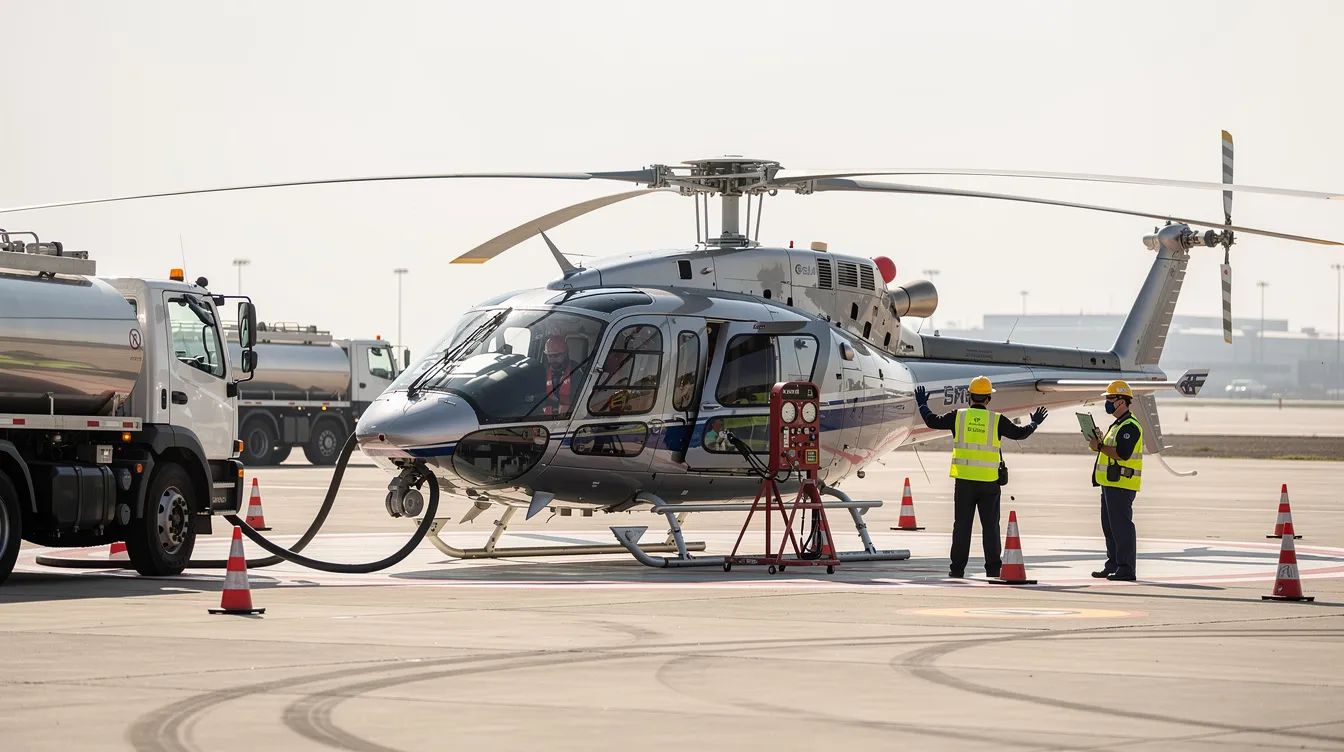
Understanding the price of helicopter fuel is essential for anyone considering a charter flight, whether it's a quick city transfer or a scenic tour over rugged terrain. Fuel is the single largest variable cost in helicopter operations, and it directly shapes the hourly rates charter customers see when booking a flight. This article breaks down exactly what helicopter fuel costs today, how burn rates differ across popular aircraft, and why fuel prices vary so much from one region to the next.
The current national average retail price for Jet A fuel is around $8.35 per gallon in the United States, while the national average for 100LL Avgas is approximately $7.78 per gallon. In the UK, Jet A1 fuel runs about 3.34 per litre at some airfields, and Western European prices range from roughly 1.40 to 1.80 per litre before taxes.
Most modern turbine helicopters burn jet fuel (Jet A or Jet A-1), while smaller piston helicopters use AVGAS 100LL. These two fuels have different pricing structures and cannot be interchanged, so the type of helicopter you charter determines which fuel - and which fuel price - applies.
Fuel burn rates vary dramatically by aircraft size and model. A Robinson R44 piston helicopter burns roughly 16 gallons per hour of AVGAS, costing about $125 in fuel. An Airbus H125 single-engine turbine burns around 44 648 gallons per hour of Jet A, costing $330 6400. A larger twin like the AW139 can consume 120 or more gallons per hour, pushing fuel cost alone past $900.
Charter customers on Jettly see fuel costs reflected in all-in hourly rates rather than as a separate line item. But understanding the price of helicopter fuel helps explain why helicopters - especially heavy twins - can be more expensive per hour than fixed-wing aircraft of comparable passenger capacity.
This article covers fuel types, regional fuel price trends, hourly fuel burn calculations, and how Jettly keeps pricing transparent despite changing fuel prices.
Helicopter fuel typically uses Jet A turbine fuel or 100LL Avgas for piston engines. These are the two main categories, and the distinction matters because each fuel serves a fundamentally different engine design.
Jet A is primarily used in the United States. It's a kerosene-based fuel refined for turbine engines, with a freezing point of -40 to -6 °C and a higher flash point than gasoline, making it safer to handle and store in aviation environments. Jet A-1, the standard fuel type worldwide, is nearly identical but carries a slightly lower freezing point of -47 °C to -6 °C, which matters for operations in extremely cold climates. For most charter passengers, the practical difference between Jet A and Jet A-1 is negligible - both power the turbine helicopters used on virtually all commercial and charter flights.
AVGAS 100LL is the other major fuel type, reserved for piston-engine helicopters like the Robinson R22 and R44 piston variants. It's a high-octane, leaded aviation gasoline with a smaller, more specialized supply chain. AVGAS 100LL is priced separately from Jet A fuel, and Jet A and 100LL fuels have different pricing structures and cannot be interchanged. Because AVGAS is produced in lower volumes and faces tighter environmental regulation - the FAA has a transition plan to phase out leaded 100LL by 2030 - it often carries a fuel price 10 30% higher per litre than local Jet A.
Here's what operators and charter customers face at the pump:
U.S. Jet A retail: Jet A averages about $7.69 per gallon at FBOs, while full-service national averages reach roughly $8.35 per gallon. On October 6, 2026, the spot price was $4.34 per gallon - a reminder that retail prices often differ from wholesale prices due to additional service costs, airport fees, delivery, and margins.
U.S. AVGAS 100LL: The national average sits near $7.78 per gallon, with regional extremes pushing past $11 in Alaska.
UK Jet A-1: Current Jet A1 fuel price is3.34 per litre at some airfields, with many fields posting between 3.45 and3.60 per litre before VAT.
Western Europe: Jet A-1 base prices run1.40 to1.80 per litre depending on the airport and country, before taxes and handling fees.
Fixed-Base Operators (FBOs) manage airport fuel pricing and services. FBOs charge retail prices that include line service fees and other overhead, which explains the gap between the government-published wholesale figures - tracked by agencies like the U.S. Energy Information Administration - and the price an operator actually pays. Self-service fueling can offer discounts compared to full-service options at airports that support it, though most turbine helicopter operators use full-service fueling for safety and insurance reasons.
Fuel prices also shift with global crude oil prices, local taxes (state fuel taxes in the U.S., VAT in the EU, GST in India), and currency exchange rates. Resources like AirNav and GlobalAir provide tools for tracking helicopter fuel prices across regions. For a broader look at how aviation fuel pricing works, Jettly's guide on the cost of aviation fuel covers these dynamics in more detail.
Unlike fixed-wing jets that generate lift from forward airspeed, helicopters rely on rotor power to hover, climb, and maneuver vertically. This means their fuel burn per hour can be surprisingly high even at moderate cruise speeds - and that fuel consumption is a primary driver of cost per hour.
Several variables determine how much fuel a helicopter consumes on any given flight:
Helicopter size and engine type: A small piston helicopter sips fuel compared to a large twin-turbine machine. Single-engine turbines fall in between. Fuel burn rates vary by aircraft size and model.
Take-off weight: More passengers, heavier baggage, or additional equipment like camera rigs and floats increase engine workload and fuel consumption.
Flight profile: Hovering over a filming location or construction site burns significantly more fuel than a straight point-to-point cruise. Sightseeing flights with repeated orbiting also consume more.
Weather and altitude: High, hot conditions - think Denver in summer or Delhi in the pre-monsoon season - thin the air and force engines to work harder, raising burn rates.
Fuel consumption is measured in Gallons Per Hour (GPH). Here are representative burn rates for common charter helicopters:
|
Helicopter Model |
Engine Type |
Fuel Type |
Fuel Burn (GPH) |
Estimated Fuel Cost per Hour (USD) |
|---|---|---|---|---|
|
Robinson R44 |
Piston |
AVGAS |
16 |
$128 |
|
Airbus H125 / AS350 B3e |
Single-engine Turbine |
Jet A |
44-48 |
$300 - $336 |
|
Airbus H135 or H145 |
Twin-engine Turbine |
Jet A |
55-75 |
$423 - $563 |
|
Sikorsky S-76 or AW139 |
Twin-engine Turbine |
Jet A |
120+ |
$900+ |
The formula is straightforward:
Fuel cost per hour Fuel burn (GPH) Fuel price per gallon
Here's what that looks like with realistic 2026 fuel prices:
R44 burning 16 GPH of AVGAS at $8.00/gal is roughly $128 per hour in fuel alone.
H125 burning 48 GPH of Jet A at $7.00/gal is roughly $336 per hour.
AW139 burning 120 GPH of Jet A at $7.50/gal is roughly $900 per hour.
These figures cover only fuel, not total hourly operating cost. A full helicopter rental cost must also account for pilot pay, maintenance reserves, insurance, landing and handling fees, hangar storage, and operator margin.
For charter customers booking through Jettly, these calculations happen in the background. The platform presents an all-in hourly or trip rate, but understanding the underlying fuel burn explains why heavy twin-engine helicopters - used for offshore transfers, VIP shuttles, and medevac missions - cost significantly more per hour than a light single-engine machine.
Prices for helicopter fuel vary significantly by geographic location. A gallon of Jet A at a Manhattan heliport doesn't cost the same as a gallon at a rural Texas airfield. These differences directly affect charter pricing and repositioning costs on popular helicopter routes.
In the United States and Canada, metropolitan heliports and major airports tend to carry higher fuel prices than smaller regional fields. A New York-area heliport might post Jet A at $8.00 6.00 per gallon retail, while a nearby regional airport in New Jersey or Connecticut could list $6.50 7.50 per gallon for the same fuel.
The Central U.S. typically has the lowest aviation fuel prices, with Jet A averaging around $7.59 per gallon and AVGAS near $7.13 per gallon. At the other end of the scale, Alaska consistently reports the highest aviation fuel prices due to logistical challenges - AVGAS can exceed $11 per gallon, and Jet A regularly tops $9.50.
Volume discounts are available for businesses purchasing fuel in bulk, which is why operators running scheduled shuttle routes (like NYC to the Hamptons) often negotiate fuel contracts at anchor airports to manage cost. For travelers interested in point-to-point helicopter shuttles, the helicopter taxi price guide covers typical pricing for common routes.
Jet A-1 fuel prices in Western Europe generally run higher than in North America, driven by fuel taxes, environmental levies, and VAT. Typical prices at European GA airfields fall between 1.50 and 2.20 per litre. In the UK, current Jet A1 fuel price is3.34 per litre at some airfields, though London-area heliports sit at the higher end of the scale - sometimes reaching 3.603.70 per litre inclusive of fees.
Some European countries add navigation charges and SAF (Sustainable Aviation Fuel) mandate compliance fees on top of the fuel price. In the UK, for instance, certain airfields now include a "Mandate Compliance Fee" that adds a few pence per litre specifically to cover SAF blending obligations.
In India, helicopter operators face state-level variations in fuel tax that push Aviation Turbine Fuel (ATF) costs well above global averages. As of early 2026, ATF in India was priced around INR 121 per litre - equivalent to roughly $5.50 per US gallon before adding all duties and delivery charges. For a helicopter like the Bell 407 or Airbus H130, this translates to a fuel cost per hour that can exceed comparable operations in the U.S. by 15 25%.
For remote or offshore operations across Asia-Pacific, fuel may need to be shipped in drums or delivered by barge, adding further cost. Seasonal demand and supply chain disruptions can cause local fuel price fluctuations in these markets.

Even within a single metropolitan area, fuel prices can differ by 15 20% or more between heliports and nearby airports. Helicopters operating from rooftop or city-center heliports may have limited or no refuelling capacity, forcing repositioning flights to an airport with lower fuel prices - adding both time and cost.
Jettly's instant pricing engine factors in local fuel prices, sector length, likely refuelling stops, and recent fuel price trends. This helps customers avoid surprises like sudden "fuel surcharges" mid-contract, since fuel price assumptions are built into the initial charter offer. For a detailed look at what drives helicopter flight cost, Jettly's pricing guide breaks down each component.
While fuel is often the single largest variable cost for helicopters, it's only one piece of the cost structure. Understanding how fuel fits alongside other expenses helps charter customers interpret hourly quotes and trip prices on platforms like Jettly.
A typical charter operation carries two categories of cost:
Variable costs: Fuel, engine and component maintenance reserves (accrued per flight hour), maintenance labour, landing and handling fees, and crew travel during repositioning.
Fixed costs: Aircraft financing or lease payments, insurance, hangar fees, crew salaries, regulatory compliance, and recurrent training.
For more on how these elements combine, Jettly's overview of direct operating cost of aircraft provides a useful framework.
Fuel might represent 25 35% of total direct operating cost for a light single-engine helicopter, and 35 45% for a heavy twin on shorter sectors or hover-intensive missions. That means a 10% fuel price increase significantly affects operating costs - potentially adding hundreds of dollars per hour for larger machines.
To put helicopter fuel cost in perspective with the broader aviation world: filling a Gulfstream G650ER from empty costs about $55,599. That's an extreme comparison, but it illustrates how fuel cost scales dramatically with aircraft size across all of aviation. For fixed-wing fuel economics, see how much is airplane fuel.
Higher fuel prices also magnify the cost penalty of hover-intensive missions. A 30-minute city-to-resort helicopter transfer in an H125 might burn around 24 gallons, costing roughly $180 in fuel at $7.50 per gallon. A 90-minute sightseeing flight in the same aircraft - with multiple orbits and hover segments - could burn 80 or more gallons, pushing fuel cost past $600. Longer flight time and mission profile dominate fuel cost even at the same fuel price per gallon.
Some operators use fuel surcharges or "fuel escalation clauses" in contracts. These kick in when jet fuel prices exceed a reference level published by an energy agency. Crude oil prices influence the baseline cost of helicopter fuel, and geopolitical events - like conflicts in oil-producing regions or trade war escalations at the beginning of a supply disruption - can rapidly inflate aviation fuel costs.
Jettly takes a different approach. Rather than adding ad hoc surcharges, the platform periodically updates base charter rates when fuel prices shift materially, keeping quotes predictable. Taxes and environmental fees vary by region and impact final fuel prices, but the platform absorbs these into transparent pricing so the customer isn't hit with line-item surprises.
Although no one controls the underlying fuel price, charter customers can influence total cost through several smart choices:
Aircraft selection: A modern, efficient light turbine helicopter uses far less jet fuel per hour than an older, heavier twin. Choosing the right helicopter for the mission matters.
Routing: Round-trip bookings rather than two separate one-way flights reduce repositioning legs and dilute effective fuel cost per passenger.
Booking model: Sharing a helicopter on busy routes where capacity allows can spread cost across more passengers.
High fuel prices and growing environmental awareness also encourage operators to invest in newer, more fuel-efficient helicopter models and optimize cruise speeds. Some operators offer carbon offset options for environmentally conscious travelers - a topic explored further in Jettly's guide to green private jet travel.
Jettly's wide fleet access and transparent pricing make it easier to match a helicopter's operating profile to the mission and budget, regardless of where fuel prices stand on any given day.
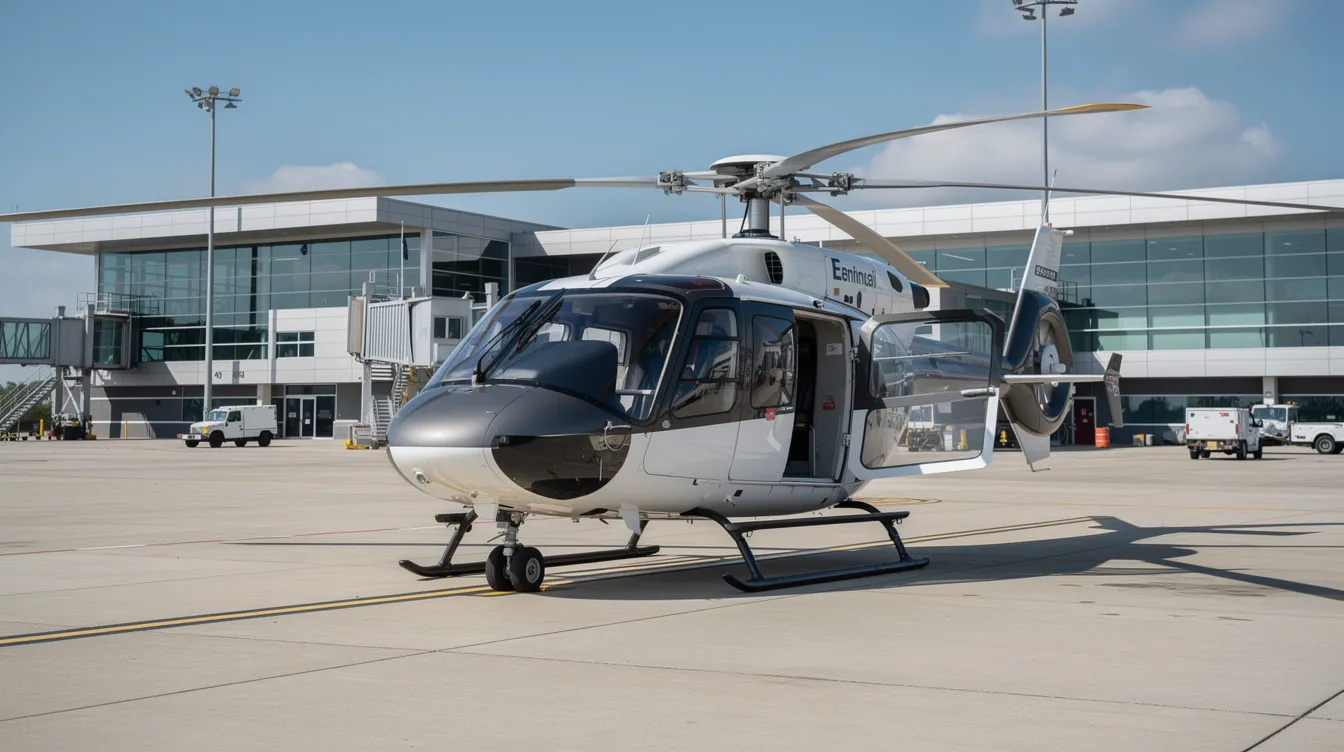
The questions below address common practical concerns about helicopter fuel prices, jet fuel usage, and how fuel affects charter quotes that weren't fully covered in the main sections.
It depends on the helicopter type and local fuel prices. A small piston helicopter like a Robinson R44 uses roughly 16 gallons of AVGAS, costing about $120 160 at common 2026 prices. A single-engine turbine like an H125 burns around 44 48 gallons of jet fuel, running $300 400 in fuel alone. A larger twin like an AW139 can consume 100 120 gallons, pushing fuel cost to $700 1,000 or more per hour. For a broader look at what goes into a helicopter ride price, Jettly's pricing guide covers each component.
Jettly's partners do not usually adjust quotes daily with minor fuel price swings. Instead, the platform and operators periodically update base charter rates when fuel prices move significantly over weeks or months. Once a customer accepts a confirmed quote through Jettly for a specific trip, it typically includes fuel, so the traveler is protected from short-term fuel price volatility for that booking.
Aviation fuels like Jet A-1 and AVGAS must meet stricter quality and handling standards than road fuels. They're produced and distributed in smaller volumes and incur additional storage, filtration, and airport handling costs. Jet fuel has a lower freezing point than regular gasoline and a higher flash point than gasoline, reflecting tighter engineering specifications. In many countries, aviation fuel is subject to different taxes, fees, and infrastructure charges than road fuel, which pushes the posted fuel price higher per litre or per gallon.
Aircraft choice has a major impact on fuel burn and therefore on hourly rates. A modern, efficient light turbine helicopter can use far less jet fuel per hour than an older, heavier twin designed for offshore or VIP missions.
Customers using Jettly can often compare multiple helicopter options on a route - such as a light single versus a medium twin - and see how differences in fuel consumption and capacity translate into different total charter prices. The history of helicopter design shows that newer airframes consistently deliver better fuel efficiency at comparable payload.
Jettly's digital charter marketplace lets travelers view live pricing for helicopters and fixed-wing aircraft across popular routes. Quotes already factor in current fuel prices for the relevant region and aircraft type, removing the guesswork. Ready to see what your next flight will cost? Explore charter options, compare aircraft, and request an instant quote at https://www.jettly.com.
Understanding the price of helicopter fuel is crucial for anyone considering chartering a helicopter. Fuel costs are a significant part of the overall operating expenses and directly influence charter pricing. Variations in fuel type, burn rates, and regional pricing all contribute to the final cost of flying. Jettlys transparent pricing model incorporates current fuel prices, helping customers make informed decisions without surprises.
By selecting the right helicopter and route, travelers can manage fuel costs effectively while enjoying the convenience and flexibility of private helicopter travel.
Ready to experience private travel on your terms? Explore flight options or request a quote at https://www.jettly.com.
Share this post:
Jay Franco Serevilla
Oct 13, 2026
|
5
min read
Discover tips and trends in the industry.
5
min read
Business Class in Flight: Comfort, Cost, and Private Jet Alternatives with Jettly
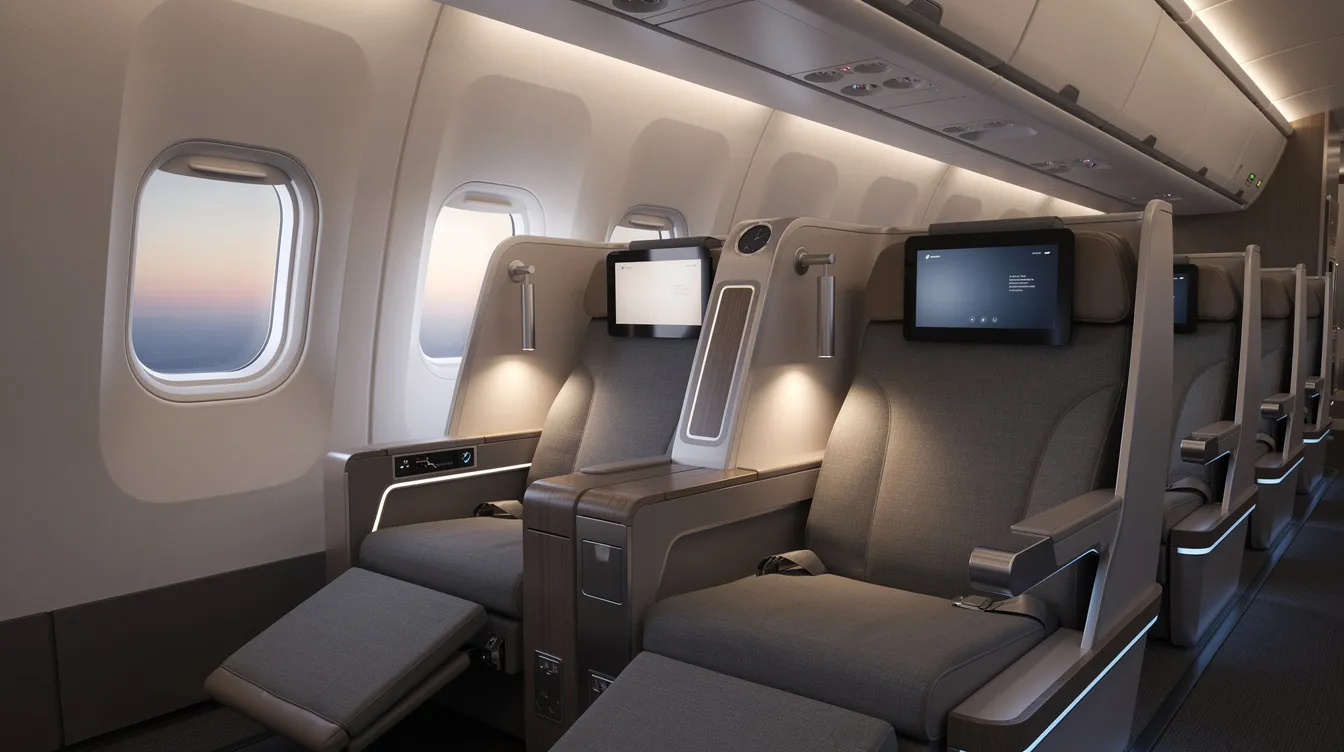
Flying business class offers travelers enhanced comfort, priority services, and access to airport lounges, making long-haul flights more enjoyable. However, for those seeking ultimate privacy and flexibility, private jet charters through platforms like Jettly present a compelling alternative. This guide explores the benefits, costs, and comparisons between business class and private jet travel.
Read More5
min read
Price of Helicopter Fuel: What It Really Costs to Fly
Understanding helicopter fuel prices is essential for charter flight customers, as fuel is the largest variable cost in helicopter operations. This article details current fuel prices, burn rates across various helicopter models, and regional price variations, helping customers make informed decisions. Jettly's transparent pricing model incorporates these factors, ensuring no surprises during booking.
Read MoreStay updated with our latest insights and tips to elevate your journey with us.
MEMBERSHIPS AND ASSOCIATIONS



Disclaimer: Jettly operates as a charter broker, offering access to a global digital jet charter marketplace. Jettly is not a direct air carrier and does not own or operate aircraft. All advertised flights are conducted by third-party air carriers that are fully licensed and hold the appropriate Part 135 or Part 121 certifications issued by the Federal Aviation Administration (FAA) or equivalent regulatory authorities under U.S. or foreign law. Jettly complies fully with the U.S. Department of Transportation's Part 295 and Part 298 Charter Broker regulations. Jettly does not carry additional liability insurance. Passengers are covered by aircraft operator insurance. TICO: 50023770


