



Login
Get Instant Pricing On 23,000+ Aircraft

>
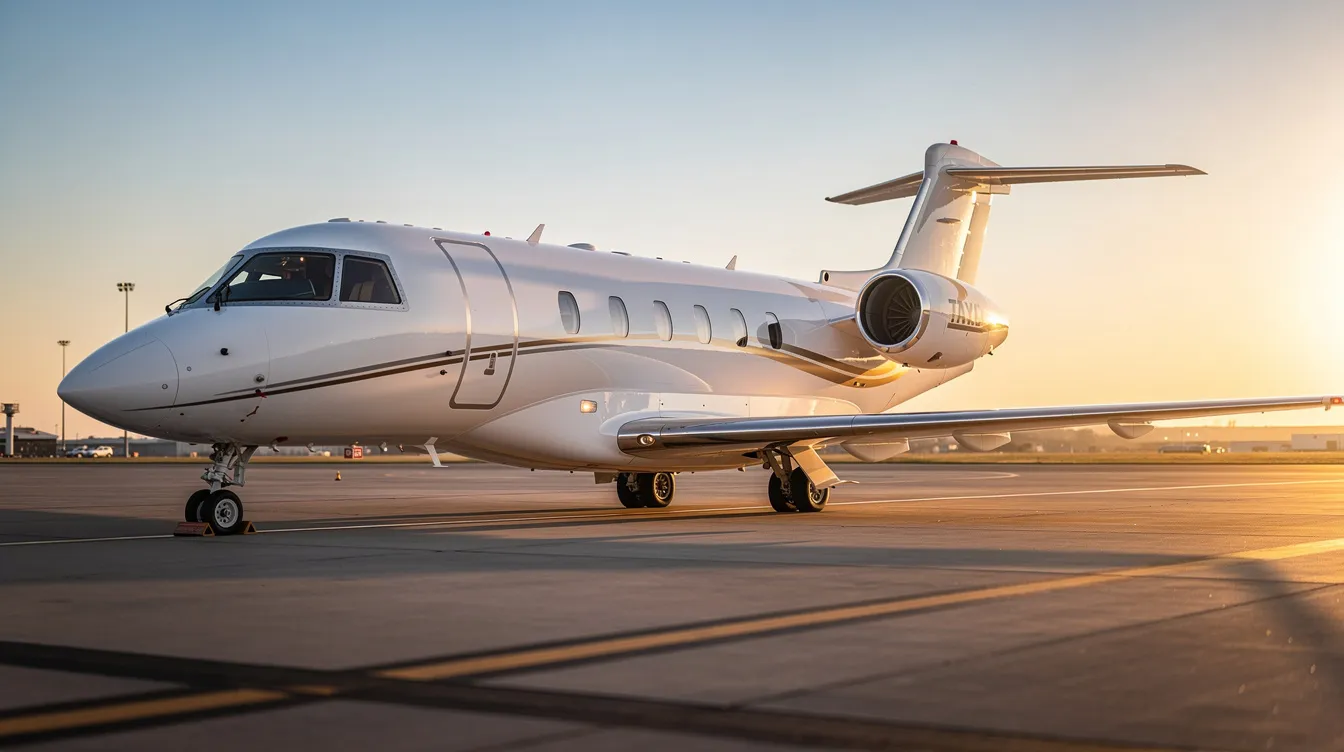
Private jet travel in 2026 looks nothing like it did a decade ago. Digital charter platforms have opened the door for a much wider range of travelers, and Jettly sits at the center of that shift - connecting clients to over 20,000 aircraft worldwide through instant pricing and transparent booking. This guide breaks down costs, aircraft types, safety standards, popular routes, and practical tips so any traveler can decide whether flying private fits their schedule, budget, and travel style.
This guide is designed for both first-time and experienced private jet travelers, as well as anyone considering private aviation for business or leisure.
Private jet travel in 2026 is more accessible than ever. Platforms like Jettly give travelers on-demand access to thousands of private jets and turboprops without ownership or long-term contracts.
Today's private jet traveler uses a mix of on-demand private jet charters, membership programs, and empty leg flights to control cost while keeping flexibility, privacy, and meaningful time savings.
Jettly's instant pricing and global aircraft inventory let travelers compare private flights the same way they already compare airline tickets online - with full fee transparency before booking.
This guide covers hourly rates, aircraft categories, safety checks, popular routes (New York–Miami, Toronto–Vancouver, LA–Las Vegas), and how to decide if flying private makes sense for a given trip.
Explore Jettly's charter options and empty leg flights as you read to see real pricing for your next journey.
A private jet traveler is someone who prioritizes time efficiency, discretion, and personalization when flying, and expects high reliability, personalized service, and proactive problem-solving from their charter provider.
The profile of the private jet traveler has evolved significantly. It once belonged almost exclusively to ultra-high-net-worth aircraft owners. Today, entrepreneurs, executives, families, and small groups regularly charter a plane a few times per year - or even just once for a special occasion- and some opt to buy a single seat on a private jet through shared or semi-private options rather than chartering the whole aircraft. According to WingX data published in mid-2026, global private jet segments were running about 3.9% ahead of the prior year, with North America up 4.7%, reflecting broader growth trends in the global fleet of private jets. That growth reflects a broadening customer base, not just more flights by existing owners.
Consider a few common profiles: C-suite executives flying New York–Chicago for same-day meetings, families booking Toronto–Vancouver for a ski trip, sports teams or bands chartering group flights with equipment, and last-minute medical or emergency travelers who need to move fast. Most of these clients do not own aircraft. They rely on private aviation marketplaces like Jettly on an as-needed basis.
What ties these travelers together are shared priorities. Private jet travelers prioritize time efficiency, discretion, and personalization. Frequent private travelers expect high reliability, personalized service, and proactive problem-solving from their charter providers. First-time flyers often discover the experience on a short, accessible route - Los Angeles–Las Vegas or London–Paris - before signing up for regular use.
Private jet travel is best understood as a productivity tool rather than a luxury indulgence, whether you use on-demand charters, leading fractional providers like NetJets, or digital marketplaces such as Jettly. Time savings are often the primary motivation for choosing private jet travel over commercial flying. A New York–Miami business traveler, for example, can arrive 15–30 minutes before departure at a private terminal, board immediately, and land at a closer airport - private jets often cut trip times by saving 3.5 to 5 hours on average compared to commercial alternatives.
Private aviation provides the ability to bypass commercial airport bottlenecks entirely. No long security queues, no crowded gates, no connecting flights. Control and flexibility mean choosing exact departure times, adjusting itineraries on short notice, and scheduling multi-leg flights in a single day - say, Boston–Washington, D.C.–Detroit–Boston - that would be impossible on commercial airlines.
Private jets often offer uninterrupted productivity with high-quality onboard Wi-Fi and communication tools, allowing travelers to hold confidential calls or work through documents without interruption. Private jets provide privacy for confidential work during flights, which is why corporate teams and executives value them highly. Cabin layouts range from 4-seat light jets to 14+ seat heavy jets, each designed for comfort.
Compared to commercial first class, private flights typically cost more per seat. But when a group of six to ten people travels together and values productivity, many see the added spend as worthwhile money when measured against time savings, privacy, and productivity, with the per-seat cost gap sometimes landing only slightly above business-class fares on the same route.

Digital platforms have reshaped how private jet charters operate. The old process of calling multiple brokers, waiting hours for quotes, and comparing apples to oranges has been replaced by online search and instant pricing.
Here is how a traveler typically uses Jettly:
Enter the route (e.g., Los Angeles–Aspen), date, passenger count, and whether it is a one-way or round-trip flight.
Review instant pricing across multiple aircraft options - from turboprops to heavy jets.
Select the aircraft that fits the trip, then book or hold the flight directly online.
Jettly functions as a charter broker and marketplace, providing access to a vetted network of over 20,000 private jets and turboprops operated by certified carriers. Jettly does not operate aircraft itself. This model gives travelers more options across aircraft types, operators, and prices than any single fleet operator can offer.
There is an important distinction between on-demand private charter (pay per trip, no commitment) and membership models that can lower booking fees, add concierge support, or unlock benefits like capped rates. Private jet travel offers tailored itineraries to fit your schedule regardless of which model a traveler chooses. Flexibility in scheduling allows private jet travelers to book flights on short notice - even with as little as four hours before departure.
Once payment and passenger details are submitted, private charter confirmations are usually issued within hours. Travelers needing multi-leg flights or complex itineraries (like a 3-city European roadshow) can work with Jettly's flight specialists for more tailored planning. Learn more about the process in Jettly's how to charter a private jet guide.
Private jet travel pricing revolves around hourly aircraft rates, and Jettly's cost calculator is designed to remove guesswork. Instant pricing is available for private jet bookings, so travelers see what they will pay before committing.
Here are typical 2025–2026 hourly rate ranges by category:
|
Aircraft Category |
Example Aircraft |
Hourly Rate (USD) |
Ideal Use Case |
|---|---|---|---|
|
Turboprops |
Pilatus PC-12 |
$1,800–$3,500 |
Short regional hops under 1,000 miles |
|
Light Jets |
Citation CJ3 |
$4,500–$7,000 |
Domestic routes like New York–Miami |
|
Midsize & Super-Midsize |
Hawker 800XP, Citation X |
$6,000–$12,500 |
Coast-to-coast, larger groups |
|
Heavy & Ultra Long Range |
Gulfstream G550, Global 6000 |
$11,000–$28,000+ |
Non-stop intercontinental missions |
To put these in context: a one-way New York–Miami flight on a light jet for six passengers runs roughly $12,500–$18,000 all-in. A Toronto–Vancouver midsize charter might land around $20,000–$28,000 depending on aircraft and season. A same-day Los Angeles–Las Vegas round-trip on a turboprop could come in near $7,000–$10,000.
Beyond the base hourly rate, cost factors include repositioning legs, landing and handling fees, de-icing in winter, and optional in-flight catering or ground transportation, many of which are explored in depth in guides on how much a private jet really costs. These extras can add roughly 30% on top of the base rate.
Many modern private jet travelers prefer on-demand platforms like Jettly over jet cards or fractional ownership (NetJets, Flexjet) to avoid large upfront deposits and long-term contracts, and may also compare Jettly as a NetJets alternative when evaluating their options. Sharing the aircraft cost among four to eight travelers can bring the per-seat price surprisingly close to commercial business or first-class fares on the same route, and guides on how much it costs to rent a private jet can help travelers understand when this comparison makes financial sense.
Jettly's platform provides access across every major aircraft category, allowing travelers to match the right plane to the mission, a concept centered on mission profile rather than prestige, rather than defaulting to the largest jet available.
Turboprops (e.g., King Air 350, Pilatus PC-12) seat six to eight passengers and handle ranges around 1,000–1,500 miles efficiently. They are the smart choice for short regional routes like Dallas–Houston or Munich–Geneva, with lower hourly operating costs than jets, and are often highlighted in overviews of the best private airplanes and luxury aircraft for efficient regional travel.
Light jets (e.g., Cessna Citation CJ2, Learjet 45) carry up to seven passengers over 1,200–2,000 miles. Routes like Los Angeles–Denver or London–Ibiza for a weekend trip sit in their sweet spot.
Midsize and super-midsize jets (e.g., Hawker 800XP, Citation X) offer seating for eight to nine passengers with coast-to-coast range. They provide better baggage space for golf or ski gear, enclosed lavatories, and more cabin room. Private jet cabins are designed for comfort and can feature customized configurations for work or relaxation in these larger categories.
Heavy jets and airliners (e.g., Gulfstream G550, Bombardier Global 6000, or a privately configured Airbus A320) handle long-range routes such as New York–London or Dubai–Singapore and can carry 14 to 50+ passengers for group charters. For a deeper comparison, explore Jettly's aircraft class breakdown.
Jettly's platform allows filtering by aircraft size, age, and features - Wi-Fi, sleeping configuration, enclosed lavatory - so travelers discover the right match for every trip.

Empty leg flights are repositioning flights operated without paying passengers. They happen when an aircraft completes a one-way charter and needs to return to base or reposition for its next booking. Operators sometimes resell these leg flights at a significant discount.
In practice, a one-way charter from San Francisco to New York might leave the jet needing to fly back to Los Angeles with no booked passengers. That return leg becomes available at a reduced rate.
Typical savings on empty leg flights range from 25% to 75% off standard charter pricing. These deals appear more frequently on high-demand corridors like Los Angeles–Las Vegas, New York–South Florida, and London–Nice, particularly during peak leisure seasons, making them a practical option for travelers learning how to buy a seat on a private jet.
The trade-offs are real: less flexibility on departure time, fixed routes, higher likelihood of schedule adjustments, and usually non-refundable or more restrictive terms compared to standard private charters. Availability is subject to change because the primary charter customer's needs always take priority.
Jettly lists empty leg flights on its platform and can send alerts to members so that flexible travelers can align their travel plans with available repositioning flights, a strategy often recommended in guides on booking the cheapest private jet flights. Realistic use cases include spontaneous weekend trips, last-minute business visits, or upgrading a special occasion journey - like a flight to Nassau - when timing happens to match. Browse current deals on Jettly's empty leg flights page.
Commercial air travel remains the right fit for many trips. But for certain journeys, flying private delivers advantages that are difficult to replicate on a scheduled airline, as outlined in broader guides to the charter airlines and private aviation landscape.
Time comparison: A 90-minute flight can consume five to six hours commercially when factoring in security lines, boarding, and connection risk. Via private charter, the same door-to-door journey might take 2.5 to 3 hours total. Private jet charters can save time by avoiding lengthy security checks and the general congestion of commercial hubs.
Airport access: Private jets can access over 5,000 U.S. airports, while commercial airlines serve fewer than 500. That means flying into Teterboro instead of JFK, Van Nuys instead of LAX, or London Farnborough instead of Heathrow - cutting ground transfer time dramatically. Access to private terminals offers lower-profile departures away from public areas, which matters to travelers who value discretion.
Experience and privacy: Boarding happens through a private terminal with minimal wait times. Travelers can hold confidential conversations, bring pets more easily, and customize catering. Private jets also allow more luggage than commercial flights, with no standard checked-bag limitations.
Reliability: Private flights are not immune to weather or air traffic restrictions, but they can often adjust departure windows or routing more flexibly than scheduled airline flights, a benefit that becomes even more important on international private jet flights.
Cost perspective: Per-seat costs are higher for private jets. But when eight executives need to reach a destination with no nonstop commercial service, or when a group values the hours saved and the freedom to work in transit, the math shifts. For a detailed side-by-side, see Jettly's commercial airlines vs. private jets comparison.
Reputable private charter operators must comply with strict aviation regulations. In the United States, private jets must comply with FAA Part 135 regulations, which govern crew qualifications, maintenance intervals, and operational standards; performance and runway requirements also affect safe takeoff decisions on different aircraft types. In Europe, EASA rules apply with similar rigor. Private jets undergo rigorous safety audits before flights, and all private jet flights require two highly trained pilots, especially on longer or night missions.
Experienced private jet travelers typically verify several factors before booking: operator certification, aircraft maintenance records, crew experience (total flight hours and type-rating), and safety audit ratings from organizations like ARGUS or Wyvern where applicable.
Jettly works only with vetted operators and highlights relevant safety information, so travelers do not have to research every detail from scratch for each flight. This is part of how the platform supports clients who value both convenience and peace of mind.
Private aviation security checks differ from commercial airlines. Passenger identities are verified before arrival, and baggage is usually screened out of public view at the FBO. Travelers can typically arrive 20–30 minutes before departure. Post-2020 health and hygiene considerations remain relevant: fewer touchpoints, smaller passenger numbers, and the ability to choose cleaning standards with operators all contribute to a smooth experience.
A clear plan around schedules, airports, and passenger needs helps private charter bookings run smoothly. Travel planning for private jets emphasizes personalized logistics and seamless door-to-door coordination, supported by access to a wide range of private charter aircraft that can match each specific mission profile.
Timing matters. For standard leisure or business trips, booking 24 to 72 hours in advance offers the best selection of aircraft and pricing flexibility. That said, private jets can be booked with as little as four hours' notice for urgent trips - Jettly's same-day charter guide explains how this works.
Key decisions to make in advance: preferred departure window, origin and destination airports (private aviation planning often involves selecting airports close to the destination not served by commercial airlines), passenger list, baggage volume, and any special requirements such as pets, medical equipment, or ski gear. Travelers can bring anything not prohibited on private jets, but it is wise to discuss luggage needs with your private flight advisor beforehand. Travelers can also customize their in-flight catering according to personal preferences, drawing on specialized services like Jettly Eats in-flight catering where available.
On travel day: arrive at the FBO, complete a quick check-in, and board directly from the lounge to the aircraft. Baggage handling on private jets is expedited and immediately accessible upon landing - no carousel wait. For international flights, customs agents may clear passengers on-site at the FBO, which keeps the process efficient.
Example itinerary: A midweek Chicago–Dallas business round-trip might look like this: depart at 7:30 a.m., land by 9:15 a.m. local time, attend back-to-back meetings, and return by 6 p.m. - all without setting foot in a commercial terminal.

Private aviation carries a higher carbon footprint per passenger than most commercial flights. Many private jet travelers are increasingly aware of this and are looking for ways to reduce their impact, often combining cost-saving tactics from affordable private jet booking strategies with choices that also lower fuel burn, such as smaller aircraft and optimized routing.
Practical options include choosing newer, more fuel-efficient aircraft, selecting turboprops instead of jets on shorter routes, and grouping travelers to maximize seats filled on each flight. Consolidating multi-city trips into a single, well-planned itinerary rather than booking multiple separate flights also improves both efficiency and cost.
Carbon offset programs and Sustainable Aviation Fuel (SAF) are gaining traction, and improved private jet tracking tools also support better data on emissions and route efficiency. Some operators and platforms, including Jettly's partners where available, support these initiatives on select routes or as an add-on. Additionally, the ICCT estimates that emerging emissions-based levies could increase trip costs by 8–30% depending on aircraft class and route - giving travelers another reason to fly efficiently.
Broader industry moves toward more efficient routing, modern avionics, and lighter materials continue to advance, and emerging aircraft technologies may meaningfully reduce emissions in the coming decade.
Jettly positions itself as a digital private jet charter marketplace offering private jet access through a digital marketplace that connects travelers to aircraft around the world, with both pay-as-you-go bookings and private jet membership options designed for frequent private jet travelers. On-demand access is ideal for occasional travelers or special events, while membership adds value for those flying private multiple times per quarter on busy routes like New York–Miami, Los Angeles–Sun Valley, or London–Geneva.
Membership can provide lower service fees, priority support, curated empty leg flight alerts, and tools for companies managing recurring private flights for executives or teams, especially when combined with platforms that crowdsource private jet flights and share empty seats to reduce costs. For those new to private aviation, Jettly's first-time flying private guide is a useful starting point, alongside resources on how to get a seat on a private jet easily using memberships, empty legs, and flight-sharing options.
Getting started takes three steps:
Visit Jettly's website and run a sample search - enter your next trip to see instant pricing.
Compare aircraft options, review fees, and book directly or hold the flight.
Speak with a flight advisor if you need help comparing aircraft, planning multi-leg flights, or exploring membership benefits.
Ready to experience private travel on your terms? Explore flight options or request a quote at https://www.jettly.com, or consider partnering through Jettly's ULTRA High Ticket Affiliate Program if you regularly refer travelers to private aviation services.
These answers cover questions not fully addressed above, aimed at anyone preparing for their first private flight.
There is no strict dress code on private jets. Business travelers often wear office attire, while leisure travelers choose smart casual. Comfortable clothing and soft-soled shoes work well, especially on longer flights. The focus is on your preferences, not a set of rigid rules.
Many operators in Jettly's network are pet-friendly. Travelers must notify the platform in advance so that the aircraft, cleaning protocols, and any paperwork (particularly for international private jet travel) can be arranged appropriately.
Most private jet travelers arrive 20–30 minutes before departure at the FBO, allowing time for a brief check-in and security verification. This is a significant contrast to the one to two hours typically recommended for commercial flights.
Domestic private flights usually require a government-issued photo ID. International private flights still require a passport and any necessary visas, just as they would on commercial airlines, and these documentation rules apply across the global fleet of private jets and operators.
Tipping is not expected in private jet services. Tipping private jet pilots is appreciated but not mandatory. Ground service providers should also be considered for tipping if they assist with luggage or special requests. Tipping amounts depend on the service provided - there is no fixed standard, and the feasibility of tipping depends on personal discretion.
For specific questions about an upcoming trip, contact Jettly or visit https://www.jettly.com.
Private jet travel in 2026 offers a compelling blend of convenience, flexibility, and personalized service that meets the needs of a diverse range of travelers. Platforms like Jettly have transformed the experience by providing instant access to thousands of aircraft worldwide, transparent pricing, and flexible booking options. Whether for business or leisure, private jets save valuable time, enhance comfort, and provide a level of control unmatched by commercial airlines. For travelers seeking efficiency, discretion, and tailored itineraries, flying private is increasingly accessible and practical. Ready to experience private travel on your terms? Explore flight options or request a quote at https://www.jettly.com.
Share this post:
Jay Franco Serevilla
Jul 20, 2026
|
5
min read
Discover tips and trends in the industry.

5
min read
Jet Method: Modern Approaches to Aircraft Management, Ownership, and Charter
Choosing the right jet method is crucial for optimizing private aviation travel. This guide explores various options, including on-demand charters, memberships, jet cards, fractional ownership, and full ownership, helping travelers find the best fit for their needs.
Read More
5
min read
Dallas Helicopter Ride and Dinner: How to Plan an Unforgettable Night in the Sky
Experience the magic of Dallas from above with a helicopter ride followed by a delightful dinner. This unique package offers breathtaking views of the city skyline, making it perfect for romantic evenings or special celebrations. With options for custom routes and dining experiences, planning an unforgettable night in the sky has never been easier.
Read MoreStay updated with our latest insights and tips to elevate your journey with us.
MEMBERSHIPS AND ASSOCIATIONS



Disclaimer: Jettly operates as a charter broker, offering access to a global digital jet charter marketplace. Jettly is not a direct air carrier and does not own or operate aircraft. All advertised flights are conducted by third-party air carriers that are fully licensed and hold the appropriate Part 135 or Part 121 certifications issued by the Federal Aviation Administration (FAA) or equivalent regulatory authorities under U.S. or foreign law. Jettly complies fully with the U.S. Department of Transportation's Part 295 and Part 298 Charter Broker regulations. Jettly does not carry additional liability insurance. Passengers are covered by aircraft operator insurance. TICO: 50023770


