



Login
Get Instant Pricing On 23,000+ Aircraft

>
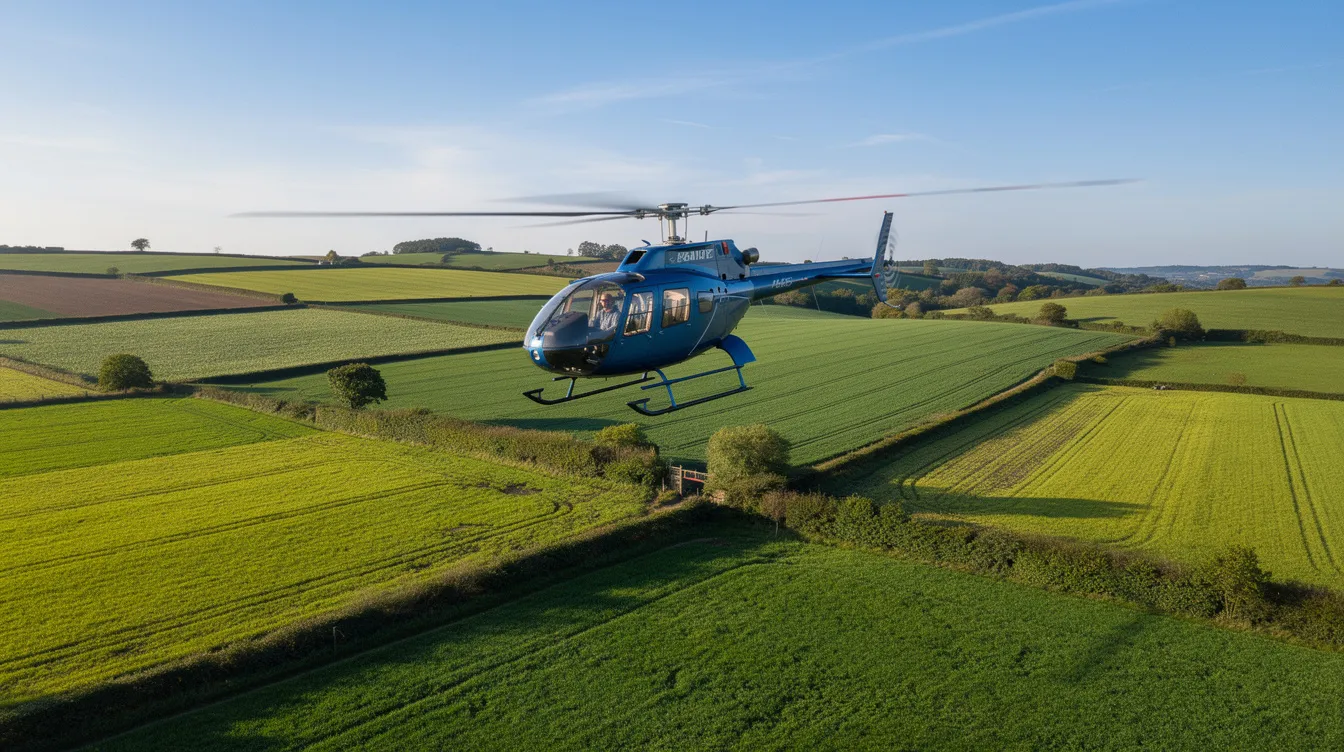
The idea of lifting off your own property in a single-person helicopter is more realistic than most folks think. From ultralight helicopter kits that fit in a standard garage to turbine-powered experimental machines, single-seat rotorcraft have quietly become accessible to aviation enthusiasts around the world. This guide covers what these aircraft are, how regulations shape the market, which models matter, what they cost, and how chartering through a platform like Jettly compares to ownership.
A single-person helicopter is typically a single-seat rotorcraft in the ultralight helicopter or experimental category, designed for solo recreational or personal use rather than everyday passenger transport.
U.S. FAA FAR Part 103 defines what qualifies as an ultralight vehicle: maximum empty weight of 254 pounds, top speed of 55 knots, and fuel capacity capped at 5 gallons. Meeting these limits means no pilot license is required.
Well-known single-seat models include the Composite FX Mosquito XE series, the Mirocopter SCH-2A, and the CH-7 Kompress, each offering different price points and capabilities.
Owning or building a single-person helicopter is a serious commitment; chartering helicopters through Jettly provides rotorcraft access without ownership, maintenance, or licensing burdens.
A single-person helicopter is a rotorcraft engineered for one occupant only. These machines feature compact airframes, simplified systems, and minimal instrumentation compared to two- or four-seat helicopters.
Lack of passenger capacity and limited payload, typically carrying just the pilot, fuel, and perhaps a small bag.
Three broad categories:
Ultralight helicopters under FAR Part 103
Experimental amateur-built designs requiring registration
Rare certified single-occupant training helicopters
Typical cruise speeds: 60 to 90 knots
Typical range: 60 to 200 miles (well below larger light helicopters like the Robinson R22)
True vertical takeoff and landing capabilities, making them practical for sport flying, flight instruction, rural property access, and low-level sightseeing.
Designed mostly for recreation and training rather than everyday transport.
Provide accessibility to recreational aviation enthusiasts who want to fly without buying into the cost of a full-size machine.
While Jettly focuses on chartering multi-seat helicopters and jets rather than selling aircraft, understanding the single-seat market helps readers compare the ownership path versus on-demand charter access.
Understanding U.S. regulations is essential before buying or flying any ultralight aircraft. Here is how Part 103 shapes the market.
Powered ultralight vehicles must have:
Empty weight under 254 pounds
No more than 5 gallons of fuel
Top speed not exceeding 55 knots
Single-seat ultralight helicopters must weigh under 254 pounds to qualify.
FAR Part 103 has not changed since 1982.
No pilot's license required under FAR Part 103.
No medical certificate, aircraft registration, or airworthiness certificate needed.
Operation restrictions:
Daylight hours only (no night flying)
Visual meteorological conditions
Areas away from congested zones
Many popular single-person helicopters exceed the 254-pound limit (e.g., Mosquito XE at 298 pounds empty).
Such models must be registered as experimental amateur-built, requiring at least a private pilot rotorcraft-helicopter certificate.
European rules (EASA and national frameworks) set higher maximum takeoff mass thresholds (often around 600 kg) but still require a ULM pilot license and operational restrictions.
Always check with your local authority before buying or flying.
Chartering helicopters through Jettly bypasses all licensing and regulatory complexity because flights are conducted by certified commercial operators with licensed pilots.
Even the smallest rotorcraft retain the same fundamental controls found in larger trainers. A pilot transitioning from a flight school R22 to a personal machine will find the cockpit layout familiar, though tighter.
Three primary controls:
Cyclic stick (controls pitch and roll by tilting the rotor disk)
Collective lever (changes overall blade pitch to climb or descend)
Anti-torque pedals (manage tail rotor thrust for yaw control)
Most serious single-person helicopters retain this conventional control philosophy.
Example: Composite FX Mosquito XE series uses a traditional cyclic-collective-pedal arrangement with instruments including rotor and engine RPM indicators, airspeed, and temperature gauges.
Some coaxial rotor designs (e.g., Japanese GEN H-4) eliminate the tail rotor, reducing the need for large anti-torque pedal inputs.
Safety features include high inertia rotor systems for autorotation, giving the pilot a critical margin to manage engine failure by converting rotor energy into a controlled descent.
Cockpit in a single-seat machine is narrower and more minimalist than a two-seat trainer, so pilots should expect fewer instruments and less room to move.
Learning the ergonomics during a proper transition is important before solo operation.
The single-seat helicopter market is niche but active, with several model families standing out. Most traditional single-seat helicopters use small piston or turbine engines, and single-seat helicopters often utilize lightweight construction materials such as aluminum and composites.
The flagship brand in this space.
XE piston model weighs roughly 298 pounds empty, cruises around 65 mph, and burns about 6 gallons per hour on a two-cylinder MZ202 engine.
Mosquito XEL weighs approximately 312 pounds with floats, extending its mission to water-based operation.
Turbine-powered XET version uses turbine engines for higher performance.
Mosquito Air kit was priced around $20,000, offering an affordable entry point.
Check the manufacturer website or contact distributors for current availability and sale pricing.
A compact European single-seat design.
Costs around $35,000 to $38,000, placing it in the mid-range for customers looking for a ready-to-fly or near-complete machine.
Composite-cabin design powered by Rotax engines with a reputation for reliability.
Offers performance closer to small two-seat helicopters despite being a single-seat model.
More expensive than basic kits but a step up in comfort and speed—these machines can fly faster than most ultralights.
Ultra-minimalist coaxial design with four small engines for redundancy.
Empty weight around 154 pounds, potentially meeting Part 103 limits.
Production was suspended around 2012, but it remains a notable design study.
Multicopter vehicles rather than traditional helicopters.
Use electric props and fly-by-wire controls for short recreational flights.
All of these aircraft are sold as kits or limited-production machines. Charter helicopters accessed through Jettly, by contrast, are certified, professionally maintained, and flown by commercial pilots.
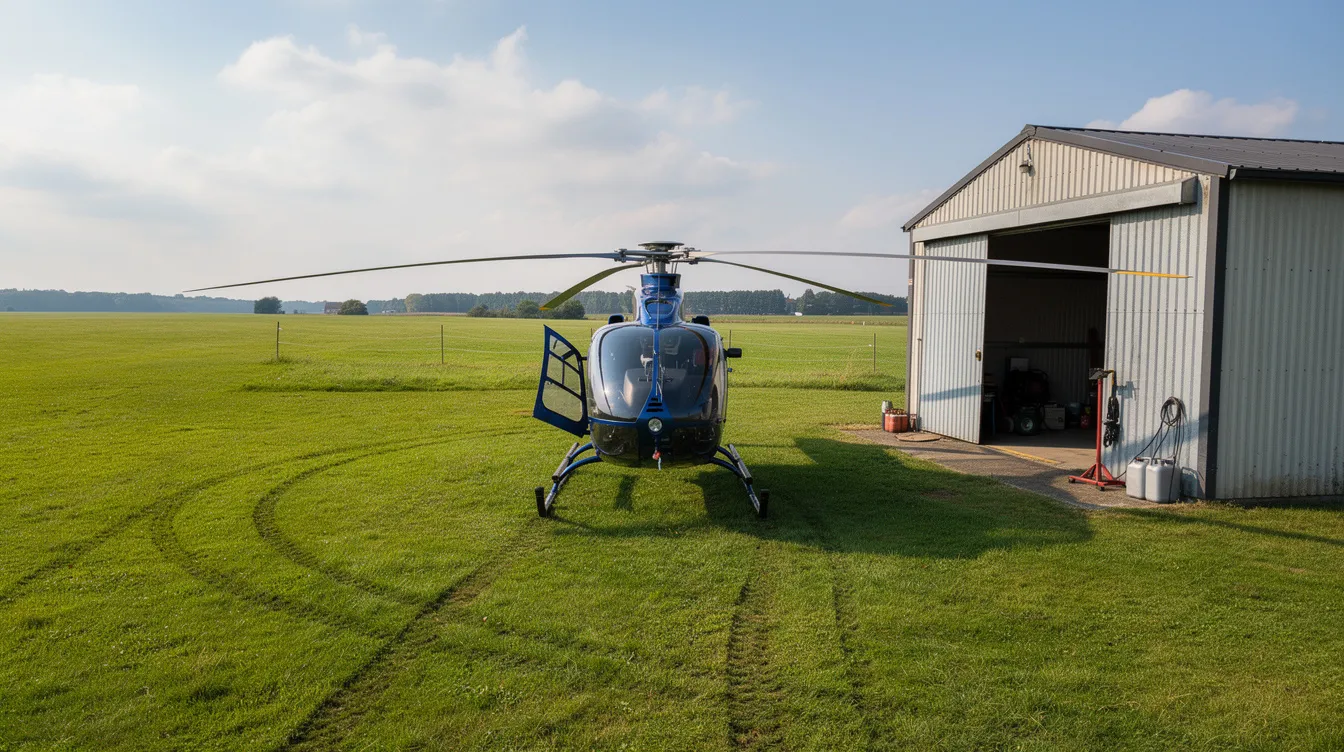
Single-person helicopters are popular among aviation enthusiasts for their simplified building and maintenance. Ultralight helicopters cater mainly to DIY builders and recreational flyers. The choice between kit-building and factory purchase shapes the entire ownership experience.
|
Feature |
Kit-Built (Experimental) |
Factory-Built or Factory-Assist |
|---|---|---|
|
Assembly |
Owner assembles 51%+ of the aircraft |
Factory assembles all or critical components |
|
Build Time |
300 to 1,000+ hours |
Faster time to first flight |
|
Upfront Cost |
Lower |
Higher |
|
Required Skills |
Strong mechanical aptitude, tools, workshop space |
Less technical skill required |
|
Learning Experience |
Deep understanding of every system |
Consistent workmanship |
|
Example Cost |
Mosquito Air kit ~$20,000 |
Factory-built Mosquito XEL ~$52,000-$58,000 |
Kit helicopters can have lower upfront costs but require assembly time, workshop space, specialized tools, and strong mechanical aptitude.
Factory-built options offer faster time to first flight and more consistent workmanship.
Prospective owners should honestly assess their skill level.
Join local builder communities, connect with A&P mechanics, and attend fly-ins before committing.
Travelers who simply want occasional helicopter access—scenic flights, airport transfers, or trips to remote areas—might find chartering through Jettly, using tools like its airport locator for suitable departure and arrival points, far more practical than a multi-year build project.
Highly accessible costs make single-seat helicopters an attractive option for personal flight, but total ownership expenses extend well beyond the purchase price.
Single-seat ultralight helicopters cost between $20,000 and $80,000 depending on the model and engine.
Mirocopter SCH-2A sells for $35,000 to $38,000.
Turbine-powered options like the Mosquito XET can exceed $90,000 by the time they are flying.
Buying used can lower the entry price but requires careful inspection.
Single-seat helicopters generally consume less fuel than larger models, burning 4 to 10 gallons per hour for piston ultralights.
Operating costs are typically lower than larger helicopters, but parts, inspections, and consumables still add up.
Annual maintenance costs for ultralight helicopters are a few thousand dollars even for light personal flying.
Single-seat helicopters can often be stored in standard garages due to their compact size, especially with folding rotor systems.
This eliminates the expensive hangar fees that make traditional helicopter ownership so costly—comparable to parking a car.
Insurance coverage for experimental rotorcraft is less standardized and often more expensive relative to the aircraft's value.
A short helicopter ride booked through Jettly can cost less than the annual fixed costs of personal ownership, especially when the expense is split across multiple passengers.
Guides to helicopter rental costs and pricing factors can help you benchmark realistic charter rates.
For someone flying only 30 to 50 hours per year, chartering may be the smarter financial move.
Estimate your annual flying hours and mission types.
Calculate total ownership costs (acquisition, maintenance, storage, insurance).
Compare with charter rates for similar missions.
Consider flexibility, convenience, and regulatory requirements.
Make a decision based on usage, budget, and personal preference.
Encourage yourself to run realistic usage scenarios, much like comparing the full cost structure of private jet ownership versus charter. Frequent backcountry access or regular training flights could justify ownership, but irregular weekend fun flying usually does not.
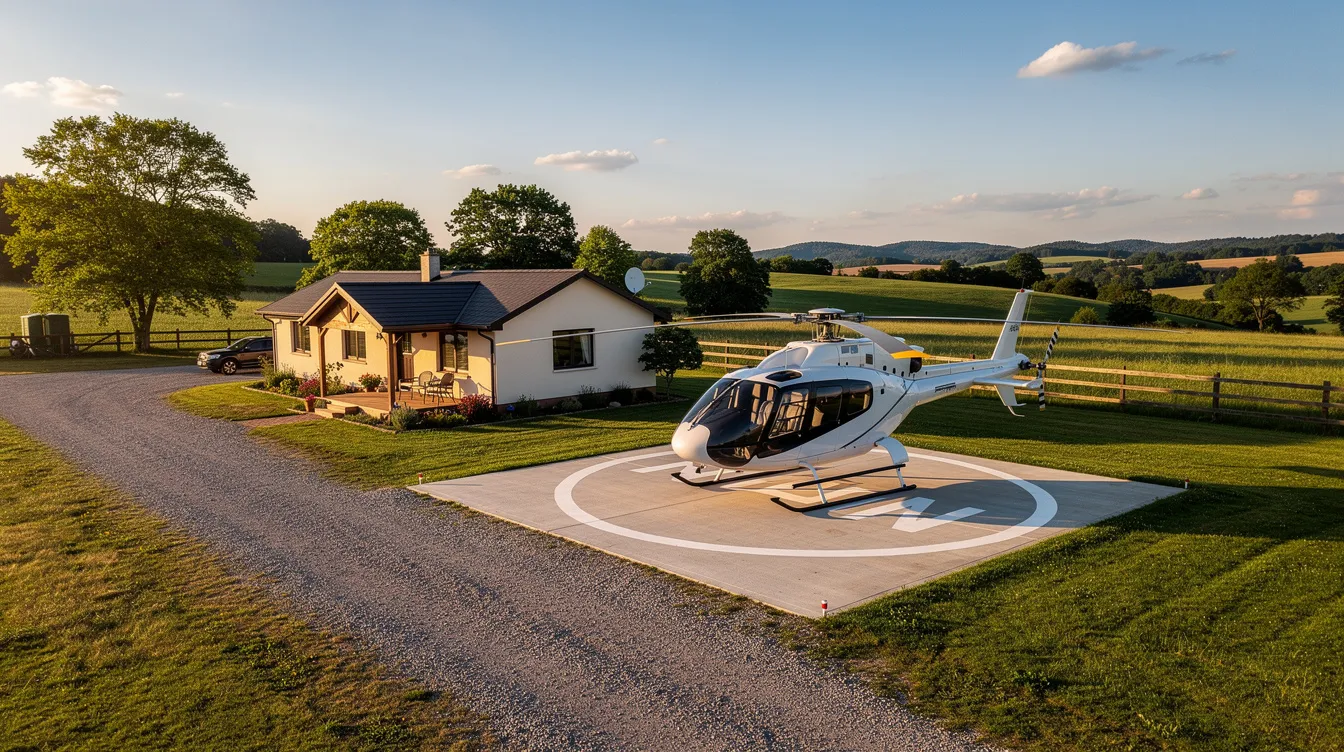
Helicopter flight is demanding in any machine. A single-seat cockpit removes the safety margin of having a second pilot or instructor on board, making thorough training non-negotiable.
Aspiring owners should complete at least a private pilot rotorcraft-helicopter license (40 or more flight hours in the U.S., often closer to 60 in practice) in certified two-seat trainers with qualified flight instruction before transitioning to a single-seat machine.
Density altitude, wind conditions, and turbulence affect small, light rotorcraft more than heavier utility helicopters.
Respecting weight-and-balance limits is critical when the payload margin is already limited.
According to the Experimental Aircraft Association, fatal accidents in the experimental category dropped to 37 for the 12-month period ending September 2024—a historic low.
Pilot decision-making, maintenance quality, and currency remain the dominant safety factors.
Modern single-person helicopters can feature safety mechanisms like ballistic parachute systems, adding a last-resort recovery option.
High inertia rotor systems for autorotation improve survivability during emergencies.
Chartering helicopters via Jettly places safety responsibility on certified operators using commercial pilots, comprehensive maintenance programs, and regulated operation, similar to the best private jet charter companies that emphasize safety and fleet quality.
Learning from professional crews during charter flights can also build aviation knowledge before committing to personal ownership.
The core trade-off is straightforward: single-person helicopters offer an exhilarating solo flight experience with ultimate personal control, while chartered aircraft provide multi-passenger capability, longer range, and professional crews, typically operated by established charter airlines and private aviation providers.
A property owner flying solo from a rural home to a nearby town might benefit from a single-seat ultralight.
A business group flying from New York to Boston, or Los Angeles to Las Vegas, would use a charter helicopter or light jet booked through Jettly.
International travelers might instead choose long-range private jets configured for overseas routes.
|
Factor |
Single Person Helicopter Ownership |
Chartered Helicopter/Jet |
|---|---|---|
|
Maintenance |
Owner responsible |
Operator responsible |
|
Storage |
Garage or hangar needed |
None required |
|
Regulatory Compliance |
Owner must comply |
Operator handles compliance |
|
Cost Efficiency |
Best for frequent solo use |
Best for occasional/multi-passenger use |
|
Booking Flexibility |
Immediate (if owned) |
On-demand, digital booking |
Many aviation enthusiasts own small personal aircraft for local flying and still charter larger helicopters or jets for family travel, international trips, or longer routes where a fixed-wing aircraft makes more sense.
The two approaches complement each other.
The sky above the personal rotorcraft market is changing. Electric vertical takeoff and landing vehicles and advanced materials are reshaping what a single-person helicopter could look like by the mid-2030s.
Multicopter-style craft such as the Jetson ONE deliver helicopter-like vertical flight using multiple electric props and fly-by-wire controls, targeting short-range recreational missions with simplified piloting.
Traditional ultralight helicopter manufacturers are experimenting with hybrid or electric powerplants, lighter composite materials, and tablet-based glass cockpit solutions to reduce noise, emissions, and maintenance effort.
Charter platforms such as Jettly are monitoring these developments.
Over time, electric or hybrid vertical aircraft fleets may enter charter service for short-haul or urban missions, complementing existing helicopter and jet options.
This could create new opportunities for more affordable private jet and helicopter trips through smart booking strategies.
Jettly is a digital private aviation marketplace—not an aircraft manufacturer. The platform gives travelers instant access to over 20,000 private charter aircraft worldwide, including helicopters, turboprops, and business jets.
Charter flights to reach remote airfields for training, attending fly-ins like the Composite FX Mosquito gatherings in Florida, or flying family members separately while the pilot travels in a personal aircraft.
Key features include:
Transparent, upfront pricing
On-demand booking via web or app
Jet card flight cost estimator for predictable hourly pricing
Integration of ground transport and in-flight catering on applicable routes
The commitment level is fundamentally different: buying or building a single-seat ultralight helicopter is a multi-year, high-involvement project, while arranging a helicopter sightseeing flight or airport transfer through Jettly can happen on short notice with no long-term contracts, often at rates comparable to other affordable private jet charter options when booked strategically.
Ready to experience private travel on your terms? Explore flight options or request a quote at jettly.com.
These FAQs address common questions that extend beyond the main guide, covering practical concerns about where you can fly, storage, safety for beginners, cross-country capability, and how charter fits alongside ownership.
No. Under U.S. FAR Part 103, ultralight helicopters must:
Avoid congested areas
Typically stay out of controlled airspace without prior authorization
Operate only in visual meteorological conditions during daylight
Local noise ordinances and land-use rules may further restrict where you can legally take off and land. Similar restrictions apply internationally under different regulatory names.
Many single-person helicopters fit in a large garage or small hangar thanks to folding rotor systems.
Safe operation requires a clear takeoff and landing area—typically 60 to 100 feet in diameter—free of obstacles, power lines, trees, and loose debris.
Think of it as needing both a parking spot and a small open field.
While Part 103 regulations do not mandate a license, no one should attempt to self-teach in any helicopter.
New pilots should complete structured instruction in certified two-seat trainers with experienced instructors before transitioning to solo single-seat machines.
Rotorcraft demand coordination of three controls simultaneously, and mistakes at low altitude are unforgiving.
Cross-country flights are technically possible but limited by fuel capacity, speed, comfort, and weather margins.
A machine carrying 5 gallons of fuel at 60 mph will need frequent stops.
Long trips require careful route planning and favorable weather windows, so many travelers prefer chartered helicopters or jets through platforms like Jettly for longer journeys.
Aircraft owners regularly use Jettly to charter helicopters or jets when flying with family or colleagues, traveling internationally, or covering routes that exceed the range, weather capability, or regulatory scope of their personal single-person helicopter.
It is a flexible complement to ownership rather than a replacement.
Single-person helicopters offer an exciting entry point to personal aviation with accessible costs, simplified controls, and the freedom of solo flight. However, ownership involves regulatory compliance, maintenance, storage, and training commitments that require careful consideration. For many, chartering helicopters through platforms like Jettly provides a practical alternative—delivering flexible, on-demand rotorcraft access without the burdens of ownership. As the personal rotorcraft market evolves with emerging eVTOL technologies and expanding charter options, travelers can choose the solution that best fits their lifestyle, budget, and mission. Learn more about Jettly’s charter options at https://www.jettly.com. Ready to experience private travel on your terms? Explore flight options or request a quote at https://jettly.com.
Share this post:
Jay Franco Serevilla
Jul 20, 2026
|
5
min read
Discover tips and trends in the industry.

5
min read
Havasu Falls Helicopter Price: Costs, Schedule, and How to Book in 2026
Planning a trip to Havasu Falls in 2026? The helicopter service offers a quick alternative to the challenging hike, costing approximately $300 one-way. Flights operate on select days and are first-come, first-served, so early arrival is essential. Remember, a valid permit is required for all visitors to access the falls.
Read More
5
min read
How Long Does It Take to Get a Helicopter License? Timeline, Training, and Costs
Becoming a helicopter pilot can take anywhere from 2 months to 2 years, depending on the type of license and training frequency. A private pilot license typically requires 40 flight hours, while a commercial license demands 150 hours. Factors such as training intensity, weather conditions, and flight school choice significantly influence the timeline and costs involved.
Read MoreStay updated with our latest insights and tips to elevate your journey with us.
MEMBERSHIPS AND ASSOCIATIONS



Disclaimer: Jettly operates as a charter broker, offering access to a global digital jet charter marketplace. Jettly is not a direct air carrier and does not own or operate aircraft. All advertised flights are conducted by third-party air carriers that are fully licensed and hold the appropriate Part 135 or Part 121 certifications issued by the Federal Aviation Administration (FAA) or equivalent regulatory authorities under U.S. or foreign law. Jettly complies fully with the U.S. Department of Transportation's Part 295 and Part 298 Charter Broker regulations. Jettly does not carry additional liability insurance. Passengers are covered by aircraft operator insurance. TICO: 50023770


