



Login
Get Instant Pricing On 23,000+ Aircraft

>
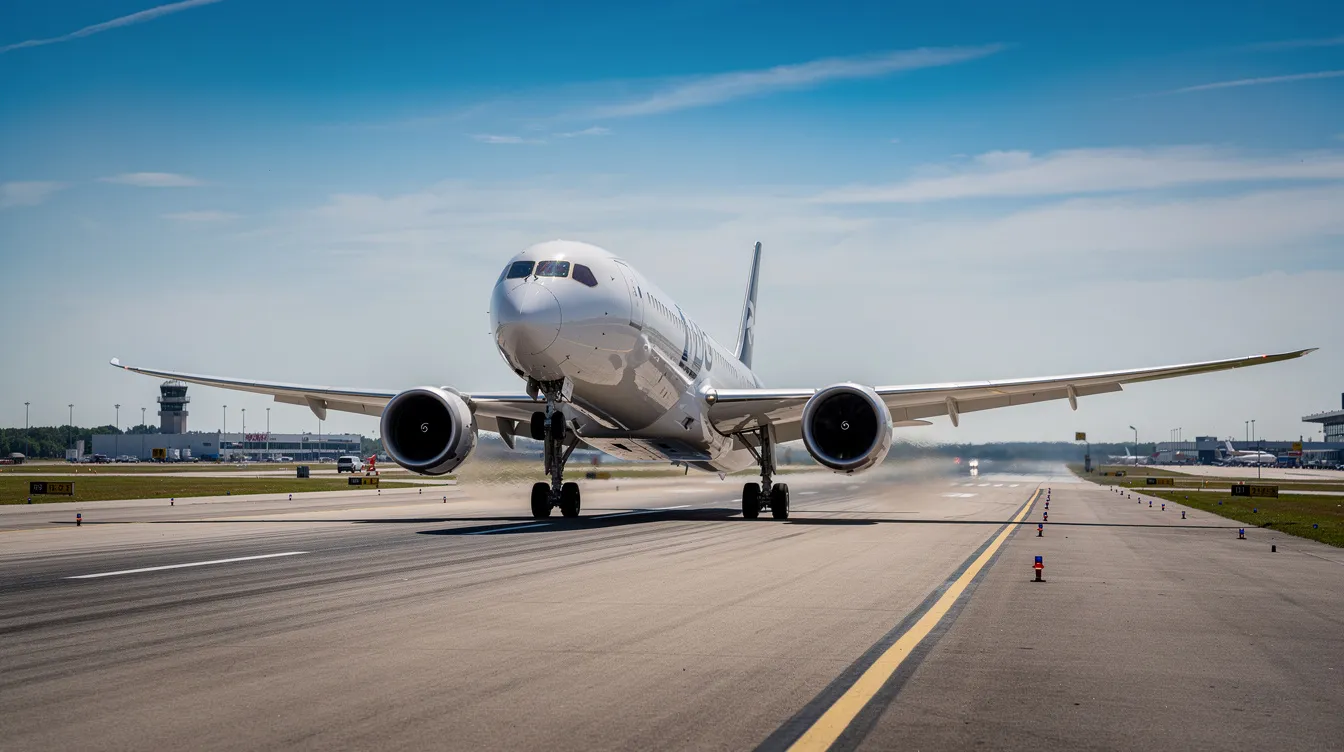
The takeoff speed of a Boeing 787 typically falls between about 140 and 170 knots indicated airspeed, but it is not a single fixed number. Instead, it is a set of carefully calculated V-speeds - V1, VR, and V2 - that determine how the aircraft will take off and leave the runway under changing conditions such as weight, temperature, runway length, flap setting, and wind. The Boeing 787 Dreamliner, one of the most fuel-efficient widebody jet airliners in service today, sits squarely in the performance range expected of a large commercial aircraft.
For frequent flyers, corporate executives, and families comparing airline cabins with private charter options, those numbers explain more than cockpit procedure. They shape runway requirements, airport access, schedule flexibility, and even the onboard experience. This article looks at 787 takeoff and landing speeds, the key V-speeds used for each departure, the operating factors that change them from flight to flight, and how that performance compares with private jets.
The takeoff speed of a commercial aircraft varies for every flight. No two departures are identical, even on the same route with the same plane, because fuel load, passenger count, cargo, altitude, and weather all shift from one operation to the next.
For comparison, smaller private jets - the kind frequently chartered through platforms like Jettly - often rotate at 110 to 140 knots and need far less runway. That difference in takeoff performance is one reason private charters can access hundreds of airports that a Boeing 787 simply cannot use, which matters if you are weighing comfort, time savings, and convenience against the reach and economics of commercial widebody travel.
Everything in this article draws on publicly available Boeing documentation, training references, and regulatory frameworks. The numbers here are indicative ranges for education and context, not operational guidance for flight crews.
The takeoff speed of the Boeing 787 Dreamliner typically falls between 140 and 170 knots indicated airspeed, depending on aircraft weight, flap configuration, and environmental conditions.
Three critical V-speeds define every 787 departure: V1 (decision speed), VR (rotation speed), and V2 (takeoff safety speed), all computed fresh for each flight by the crew and flight management systems.
Heavier takeoff weight, higher airport elevation, and hotter temperatures all push required takeoff speeds and runway length upward.
Landing speeds for the 787 generally sit in the 130–150 knot range on final approach, also varying by weight and flap setting.
While Jettly focuses on private jet charter, understanding large-airliner performance helps travelers compare aircraft types, runway needs, and airport flexibility when deciding how to fly.
Every Boeing 787 departure revolves around three speeds that the flight crew confirms before releasing the brakes. These are V1, VR, and V2 - the backbone of takeoff performance planning for any transport-category aircraft.
V1 (Decision Speed): V1 is the last moment the crew can safely reject the takeoff and bring the plane to a stop on the remaining runway. Beyond V1, the aircraft is committed to flying. For the Boeing 787-8, V1 speed is approximately 150 knots. V1 must meet or exceed the minimum control speed on the ground (known as VMCG) so the aircraft remains directionally controllable if an engine fails.
VR (Rotation Speed): VR is the speed at which the pilot flying pulls back on the control column to raise the nose and initiate liftoff. For the Boeing 787-8, VR speed is around 155 knots. This is the moment the plane transitions from rolling to lifting off.
V2 (Takeoff Safety Speed): V2 is the minimum speed that must be reached by the time the aircraft passes 35 feet above the runway surface. For the Boeing 787-8, V2 speed is approximately 160 knots. V2 guarantees adequate climb performance even with one engine inoperative.
The 787's flight management and cockpit display system interfaces compute these speeds automatically once the crew inputs weight, flap setting, runway data, and environmental conditions. Airlines supplement this with their own performance software - often tablet-based apps - that cross-reference Boeing's certified data with airline-specific procedures and operational limits.
The Boeing 787's rotation speed is generally around 140 to 180 knots, depending on the variant, weight, and conditions. For most routine commercial operations, the working range narrows to about 140–170 knots IAS.
A lightly loaded 787-8 operating a short-to-medium-haul route might rotate at the lower end, around 140–155 knots, especially with a higher flap setting that generates more lift at lower speed.
A heavy, long-haul 787-9 or 787-10 carrying full fuel and passengers will see VR values in the 160–172 knot range, with V2 reaching as high as 175–180 knots.
Typical takeoff speeds for large wide-body jets range from 150 to 180 mph (roughly 130–156 knots), placing the 787 at the higher end when loaded near maximum takeoff weight.
These are indicated airspeed readings, not groundspeed. Groundspeed at liftoff can be significantly higher or lower depending on headwind or tailwind.
Every one of these values is recalculated for every departure. There is no default "787 takeoff speed" that applies across the board - only ranges that reflect the physics of weight, lift, and drag under varying conditions.
Takeoff speed is influenced by the aircraft's weight and payload more than any other single variable. Heavier aircraft generally require higher speeds for takeoff because generating enough lift to leave the ground demands greater airflow over the wings.
Takeoff weight is the sum of the empty operating weight of the aircraft, fuel in the fuel tanks, passengers, baggage, and cargo. For a Boeing 787, this total can swing widely:
A 787-9 departing on a 14-hour transoceanic flight at near-maximum takeoff weight of roughly 560,000 lb will need rotation speeds in the upper 160s to low 170s (knots IAS), plus a long runway to accelerate through V1 and VR.
The same 787-9 on a short repositioning flight with minimal fuel and few passengers might weigh 350,000 lb or less, with VR dropping to the 140–150 knot zone.
The difference in speed translates directly into runway requirements. More weight means more distance to accelerate, more speed to generate lift, and tighter margins if something goes wrong during the roll.
Operators sometimes limit payload or fuel to stay within performance limits at challenging airports.
On a hot day at a high-altitude field with a short runway, an airline might reduce cargo or require a technical fuel stop rather than attempt a departure at maximum takeoff weight.
Higher ambient temperatures reduce engine thrust and wing lift during takeoff. Hot air is less dense, which means the engines produce fewer pounds of thrust per unit of fuel burned, and the wings need more speed to generate the same lift coefficient. On a 40°C day at a sea-level airport, a 787 will need noticeably more runway than on a cool morning at the same field.
Airports at high elevations require faster takeoff speeds due to thinner air. At Mexico City's Benito Juárez International Airport - sitting at roughly 7,400 feet above sea level - the air is significantly less dense than at a coastal hub like Miami. The indicated airspeed numbers may look similar, but the true airspeed is much higher, and the runway distance required grows substantially. A heavy 787 departure from Mexico City pushes V-speeds toward the upper end of the typical range and may require reducing payload.
Headwinds aid lift and reduce ground speed required for takeoff. A 20-knot headwind effectively gives the aircraft 20 knots of "free" airspeed before it even starts rolling. Conversely, tailwinds increase the necessary ground speed for achieving takeoff airspeed, meaning the aircraft must travel faster relative to the ground to hit VR.
Wet, contaminated, or snow-covered runways increase stopping distances and affect the balanced field length calculation. Pilots and performance software factor in runway slope, standing water, and braking action reports when computing safe V-speeds. A contaminated runway can drive V1 lower (giving more room to stop if needed) or force a reduction in takeoff weight.

The Boeing 787 Dreamliner family includes three main variants that share the same wing design but differ in fuselage length, structural weight, and maximum takeoff weight.
|
Variant |
Typical Seating (Two Class) |
Approximate MTOW |
Role |
|---|---|---|---|
|
787-8 |
~242 passengers |
~502,500 lb (228,000 kg) |
Long, thin routes |
|
787-9 |
~290 passengers |
~560,000 lb (254,000 kg) |
Workhorse long-haul |
|
787-10 |
~330 passengers |
~560,000 6571,500 lb |
Higher-capacity routes |
|
What this means for takeoff speed: |
The 787-8, with its lower maximum takeoff weight and shorter fuselage, typically sees slightly lower VR and V2 values at comparable loading fractions. Its lighter structure and smaller passenger count mean it rarely operates at the extreme upper end of the speed range.
The 787-9 and 787-10 can reach higher gross weights, which pushes their rotation and safety speeds upward on long-haul, heavy departures. The 787-10 also faces stricter runway length requirements on very long sectors because of its heavier airframe and nine-abreast seating capacity.
Boeing has recently certified increased MTOW variants for the 787-9 and 787-10, allowing airlines to carry more fuel or payload. These higher weights mean higher takeoff speeds under certain conditions.
The underlying aerodynamics - wing area, horizontal tail configuration, lift coefficient curves, and drag coefficient characteristics - are shared across the family, so the same V-speed principles apply to all three variants.
The Boeing 787 offers two engine families, and the choice of powerplant influences acceleration, fuel burn, and runway performance.
Rolls-Royce Trent 1000 / Trent 1000 TEN - the engine option selected by several launch customer airlines, including a prominent Japanese airline.
General Electric GEnx-1B - widely adopted across global operators, with some variants producing approximately 78,500 pounds of thrust.
Both engines power the 787 through its takeoff roll, but the thrust setting chosen by the crew affects how quickly the aircraft reaches V1, VR, and V2.
Full-rated thrust provides maximum acceleration, shortening the ground roll. Airlines use this on short runways or when takeoff performance is constrained by weight, altitude, or temperature.
Derated or "flex" thrust reduces the power output to a level still safe for the conditions, extending engine design life, reducing fuel consumption during the high-power takeoff phase, lowering noise, and cutting operating costs. The trade-off is a longer takeoff roll, which is fine when the runway length is generous.
Pilots work from the flight deck to select the right combination of thrust and flap settings. The goal is balancing engine health, noise, fuel efficiency, and the performance margins required by regulation - all within the certified safety envelope for the remaining engines in an engine-inoperative scenario.
Flap settings affect lift during takeoff and can alter rotation speed significantly. The Boeing 787 uses leading-edge slats and trailing-edge flaps to change the wing's aerodynamic profile during low-speed operations.
A higher flap setting (e.g., Flaps 15 or 20) increases the lift coefficient at a given speed, allowing the aircraft to rotate at a lower airspeed. This is useful on shorter runways or when weight is moderate.
A lower flap setting (e.g., Flaps 5) produces less drag, which improves climb performance and fuel efficiency after liftoff, but requires a higher rotation speed because the wing generates less lift at any given airspeed.
Common 787 flap configurations for takeoff include:
Flaps 5 - often used for long runways and heavy weights, prioritizing climb gradient and fuel efficiency.
Flaps 15 - a middle ground, balancing lower VR with acceptable climb performance.
Flaps 20 - used when the runway is shorter or weight-limited operations demand the lowest practical rotation speed.
Airlines follow detailed flap selection procedures built into their performance software. The choice depends on runway length, takeoff weight, obstacle clearance requirements after departure, and airport congestion factors like noise abatement profiles. Selecting flaps is not a matter of pilot preference - it is driven by data.
Takeoff speed and runway length are directly connected. The faster an aircraft needs to go before lifting off, the more pavement it needs to get there.
For the Boeing 787, Boeing's Airplane Characteristics for Airport Planning documents show that takeoff field length can range from roughly 5,000 feet for a lightly loaded 787-8 to well over 11,000 613,000 feet for a heavy 787-9 at high temperatures.
Key concepts:
Balanced field length is the regulatory standard. It ensures that if an engine fails at V1, the aircraft can either stop safely on the remaining runway or continue the takeoff, reach V2, and climb with an adequate gradient. Regulators require this calculation for every departure.
Long-haul 787 departures routinely use large international runways - 10,000 to 13,000 feet - giving ample margins for both accelerate-stop and accelerate-go scenarios.
The required distance increases with weight, temperature, altitude, tailwind, and uphill runway slope.
This is where the comparison with private aviation becomes stark. Many private jets can land at and depart from airports with runways as short as 3,000 to 6,000 feet. A Challenger 350, for example, needs far less pavement than a 787. That flexibility is a significant differentiator for travelers who value proximity and schedule control - one reason platforms like Jettly emphasize access to smaller airplanes and regional airports and provide an airport locator tool for identifying suitable fields worldwide.
Landing reference speed - commonly called Vref - is the target airspeed the crew aims to maintain on final approach, adjusted for wind and conditions. Like takeoff speeds, landing speeds are computed for every approach based on weight and flap configuration.
The landing speed for a Boeing 787-8 is typically around 140 knots under standard conditions at moderate landing weight with Flaps 30.
At heavier landing weights (around 500,000 lb), Vref can climb to 160 66 knots. At lighter weights (around 380,000 lb), it may drop to 142 6146 knots.
Higher flap settings (Flaps 25 or 30) allow lower approach speeds, which shortens the landing distance and provides more margin on shorter runways.
Factors influencing the final approach configuration include autobrake setting, runway condition, approach slope, and wind. Gusty conditions or a wet runway may prompt the crew to add a speed increment above Vref for additional safety margin.
From a passenger comfort perspective, slower landing speeds generally translate into smoother touchdowns and more controlled deceleration. The 787's advanced flight control systems help maintain a stable approach profile, contributing to a consistent passenger experience.
The Boeing 787 and a typical private jet model operate in different performance universes, even though they both fly through the same sky.
|
Category |
Typical VR (knots) |
Typical Runway Needed |
Airport Access |
|---|---|---|---|
|
Light private jet |
100 6120 |
3,000 64,500 ft |
Thousands of airports |
|
Midsize private jet |
115 6135 |
4,000 65,500 ft |
Hundreds of airports |
|
Heavy private jet |
125 6150 |
5,000 67,000 ft |
Major and mid-tier airports |
|
Boeing 787 |
140 6172 |
8,000 613,000 ft |
Large international airports only |
The lower takeoff and landing speeds of private jets - combined with shorter runway requirements - mean they can access airports much closer to final destinations. That translates into real time savings: skipping the drive to a distant international hub, avoiding long security lines, and departing on your own schedule.
Jettly's digital platform lets travelers compare different aircraft types, including their performance profiles, when planning trips. Whether the mission calls for a light jet to a mountain resort or a heavy jet for a transatlantic crossing, understanding how takeoff speed and runway needs shape airport options is a practical planning tool, especially when browsing private charter aircraft across multiple size categories.
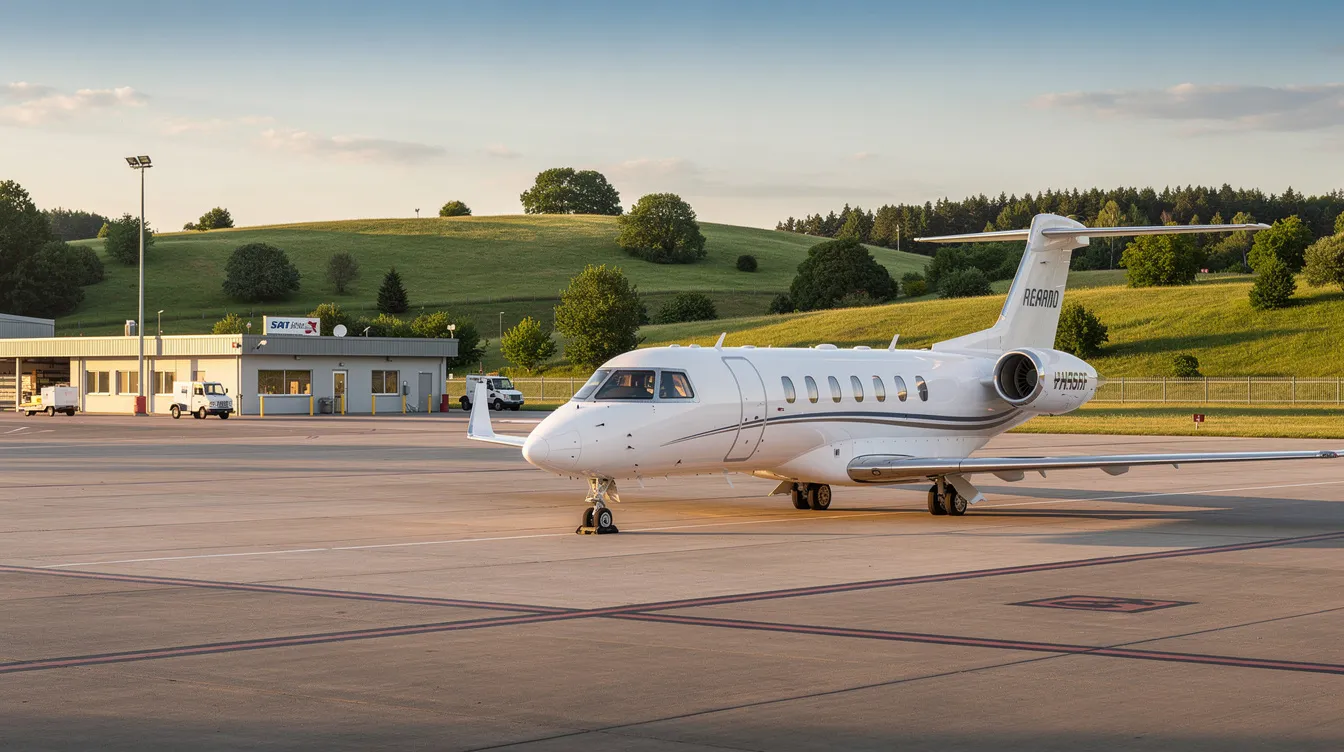
What does a 160-knot rotation actually feel like from seat 22A?
Passengers do not sense airspeed directly. What they perceive is the sequence of events: the building roar of the engines, the push-back-into-the-seat acceleration, a brief rumble of wheels on pavement, and then the smooth pitch-up as the nose lifts and the main landing gear breaks contact with the runway.
The acceleration phase typically lasts 30 to 50 seconds, depending on takeoff weight and thrust setting. During this time, the aircraft accelerates from a standstill to roughly 160 6170 knots.
At VR, the pilot initiates rotation at about 2 62.5 degrees per second of pitch change, reaching a liftoff attitude of 12 616 degrees nose-up over several seconds.
Passengers near the wing may feel less pitch motion than those seated near the tail section, where the lever-arm effect of rotation is more pronounced.
The 787's composite fuselage and advanced communication systems for noise reduction contribute to a noticeably quieter cabin during takeoff compared with older aluminum-skinned widebodies. The composite materials - including sections built with pure carbon fiber reinforced polymer and CFRP materials used across the composite fuselage, floor beams, and fuselage sections - dampen vibrations and reduce noise transmission.
Similar comfort-focused design choices show up in modern business jets, where cabin noise and vibration are priorities for manufacturers and charter customers alike.
All Boeing 787 takeoff and landing speeds are grounded in certified performance data developed through rigorous test programs. Boeing's first flight of the 787 occurred in December 2009, followed by extensive certification testing before the first commercial aircraft delivery.
Safety margins are baked into every V-speed calculation:
Aviation authorities like the FAA and EASA require the aircraft to demonstrate safe performance with one engine inoperative. V2 must guarantee a minimum climb gradient on one engine - enough to clear obstacles and continue to a safe altitude.
The minimum unstick speed - the absolute lowest speed at which the aircraft can become airborne - provides an additional buffer below VR, ensuring that even with slight deviations in rotation technique, the aircraft will still fly.
Wind margins, runway contamination factors, and obstacle clearance requirements all add layers of conservatism.
Pilots cannot simply choose a speed they like. Every V1, VR, and V2 is a computed value that must align with airline standard operating procedures, Boeing's certified data, and regulatory requirements. The same disciplined approach applies to business jet operations, where charter operators use comparable performance tools to keep private flights safe.
The Boeing 787's current form is not the same aircraft that entered service with its first airliner delivery in 2011. Boeing has implemented multiple performance enhancements since then.
MTOW increases: Boeing has certified higher maximum takeoff weights for the 787-9 and 787-10, with approvals continuing into the mid-2020s. These increases let airlines carry more fuel or payload on the same airframe, extending range or boosting revenue potential.
Engine performance packages: both GE and Rolls-Royce have released incremental thrust and efficiency improvements, prompting Boeing and operators to update performance charts.
Software and aerodynamic refinements: minor changes to flight control logic, drag reduction features, and performance calculation algorithms have subtly shifted V-speed calculations over time.
Boeing stated that all 787-9 and 787-10 aircraft now coming off the final assembly line in North Charleston and Everett are structurally certified for the increased gross weight variants.
Airlines continuously update their operational data, flight-planning tools, and crew training materials to reflect the latest certified performance values. What a 787 crew saw on their glass cockpit displays in 2012 may differ slightly from today's numbers, even for the same runway and weight.
Abstract numbers become meaningful when attached to real routes. Here are three scenarios that illustrate how 787 takeoff performance plays out in practice.
A fully loaded 787-9 carrying 290 passengers and fuel for a roughly 3,500-nautical-mile westbound crossing departs near maximum takeoff weight. Heathrow's runways are generous (around 12,000 feet), and the maritime climate keeps temperatures moderate. Expected VR: mid-160s knots. V2 around 170 6175 knots. The departure is comfortable from a performance standpoint, with ample runway margin.
All Nippon Airways - a first-generation 787 operator and launch customer - routinely flies this transpacific route. The 787-8, lighter than the -9, departs at high but not maximum weight. Narita's runways exceed 13,000 feet. VR likely sits around 155 6165 knots depending on season and load. A Japanese airline like ANA benefits from the 787-8's range efficiency on long, thin Pacific routes.
One of the longer 787 routes in existence, this flight pushes the aircraft close to MTOW to carry enough fuel for the 7,000+ nautical mile journey. VR will be near the top of the range - possibly 168 6172 knots - and every foot of runway counts. Doha's modern airport offers long runways, but temperatures in summer can exceed 45°C, which further degrades takeoff performance and may force payload reductions.
For travelers on these and similar city pairs who want more control over timing and routing, private jet charter offers an alternative approach - potentially with different airport pairs, fewer stops, and schedules tailored to the individual, not the airline.
Since entering service in 2011, the Boeing 787 Dreamliner has accumulated millions of flight hours across dozens of airlines worldwide. The aircraft sales tally exceeds 1,700 firm order commitments, and Boeing lists the 787 among its most commercially successful widebody programs.
The 787 was the first airliner to use composite materials for the airframe majority - roughly 50% by weight, including the composite fuselage, wing structures, and most other main components. This contributes significantly to the aircraft's lower fuel burn compared with other airliners of similar size, making it a popular choice for ultra-long-haul flights where precise takeoff performance planning is especially critical.
The operational record shows steadily improving dispatch reliability as early production slowdown issues were resolved. Today, the 787 is a mature platform with a well-understood performance envelope, giving operators and passengers confidence in the numbers discussed throughout this article.
The 787 experienced some well-publicized issues early in its service life, most notably lithium-ion battery thermal events in 2013 that prompted a temporary fleet grounding, and some scenarios raised concern about a possible emergency landing even though the issues were not tied to takeoff speed calculations. These significant quality control issues were systems-related, not connected to takeoff speed calculations or aerodynamic performance.
The battery events led to a revised battery design incorporating containment and improved monitoring. The FAA required corrective action before the fleet returned to service.
Separate from battery issues, the program faced production challenges - sometimes described as the "terrible teens" of early serial numbers - where manufacturing quality control needed refinement at final assembly facilities in North Charleston and Everett.
Boeing has also addressed other concerns over the years, including issues with fuselage sections joining, landing gear components, and electrically driven pumps, each time reinforcing quality processes.
None of these incidents suggested that the standard performance data or V-speed calculations were unsafe. The takeoff performance envelope, certified through exhaustive flight testing, remained intact throughout. Investigations and corrective actions reinforced safety cultures, operational discipline, and system redundancy across the 787 fleet.
The workflow pilots follow before every 787 departure is methodical and cross-checked at every step.
Weight and balance: The airline's load control center provides the final aircraft weight, center of gravity, and distribution data to the flight deck.
Data entry: The crew enters weight, flap setting, runway identifier, temperature, pressure altitude, and wind into the aircraft's flight management system or their airline's performance application (often a tablet-based tool).
Speed computation: The system returns V1, VR, and V2, along with thrust setting, takeoff configuration, and required runway length.
Cross-check: Both the captain and first officer independently verify the computed values against standard tables and airline procedures. This guards against data-entry errors - a critical step.
Briefing: The crew briefs the departure, confirming the speeds that will appear on the cockpit display system interfaces during the takeoff roll.
This process is remarkably similar to what happens in business jet operations. Charter operators use comparable performance tools to compute V-speeds, determine weight limits, and ensure safe operations on every private flight. The math is the same - the scale is just different.
Most passengers never think about V-speeds. But understanding the basics of takeoff and landing performance reveals practical information about why flights work the way they do.
Knowing that a 787 needs 10,000+ feet of runway explains why certain routes only operate from major hub airports, not smaller regional fields closer to your home or office.
Understanding how weight affects speed and distance clarifies why airlines sometimes restrict baggage, cargo, or fuel on hot days at challenging airports, which can lead to delays or route changes.
Comparing 787 performance with private jet performance shows why charter travelers gain access to hundreds more airports and can often depart from less space-constrained, less congested facilities.
For Jettly's audience - executives and families comparing time savings, airport access, and comfort - this knowledge is a practical decision-making tool. When evaluating whether a commercial flight or private charter better matches a schedule, the performance characteristics of each aircraft type matter, as do options such as private jet memberships that unlock wholesale charter pricing.
Commercial operations on a large plane like the Boeing 787 Dreamliner are built for efficiency at scale: hundreds of passengers, fixed schedules, major hubs. Private jet charter, on the other hand, is built around flexibility and personalization.
|
Factor |
Boeing 787 (Commercial) |
Private Jet via Jettly |
|---|---|---|
|
Departure flexibility |
Fixed airline schedule |
Fly when you want |
|
Airport options |
Large international hubs only |
5,000+ airports globally |
|
Boarding process |
Security lines, gates, boarding groups |
Drive to the plane, depart in minutes |
|
Runway requirements |
8,000–13,000 ft |
Often 3,000–6,000 ft |
|
Aircraft selection |
Airline's choice |
Choose your aircraft class |
|
Cruise speed |
Mach 0.85 (~490 kt TAS) |
Varies by category; how fast can jets go? |
While a 787 may require long runways and large hubs, many jets available through Jettly can depart from regional airports with far less airport congestion, shorter ground time, and lower takeoff speeds. The operating cost per seat is higher on a private jet, but the value equation changes when factoring in time savings, privacy, and routing flexibility.
Curious about the options? Learn more about aircraft availability, transparent pricing, and instant booking at Jettly, or explore how affordable private jet charter pricing is structured in practice.
The Boeing 787 was designed from the outset for lower fuel burn and reduced emissions compared with the other jet airliner models it was built to replace. Its composite structure - with pure carbon fiber and CFRP materials making up much of the fuselage, wings, and tail section - reduces weight and therefore fuel consumption on every flight.
Beyond the airframe, operational practices contribute to efficiency:
Optimizing takeoff thrust settings (using derate or flex when safe) reduces both fuel consumption and noise exposure for communities near airports.
Efficient climb profiles, where the aircraft accelerates to cruise speed promptly after departure, save fuel across the entire flight.
The 787's electrically driven pumps and systems - replacing traditional bleed-air-powered pneumatics on other airliners - further reduce the load on the engines and improve overall efficiency.
For travelers mindful of environmental impact, aircraft type matters. But so does routing efficiency, load factor, and whether carbon offsetting programs are available. Both commercial airlines operating the 787 and private jet operators through platforms like Jettly increasingly offer sustainability options for environmentally conscious travelers. The list price of environmentally responsible travel is coming down as both sectors invest in efficiency.
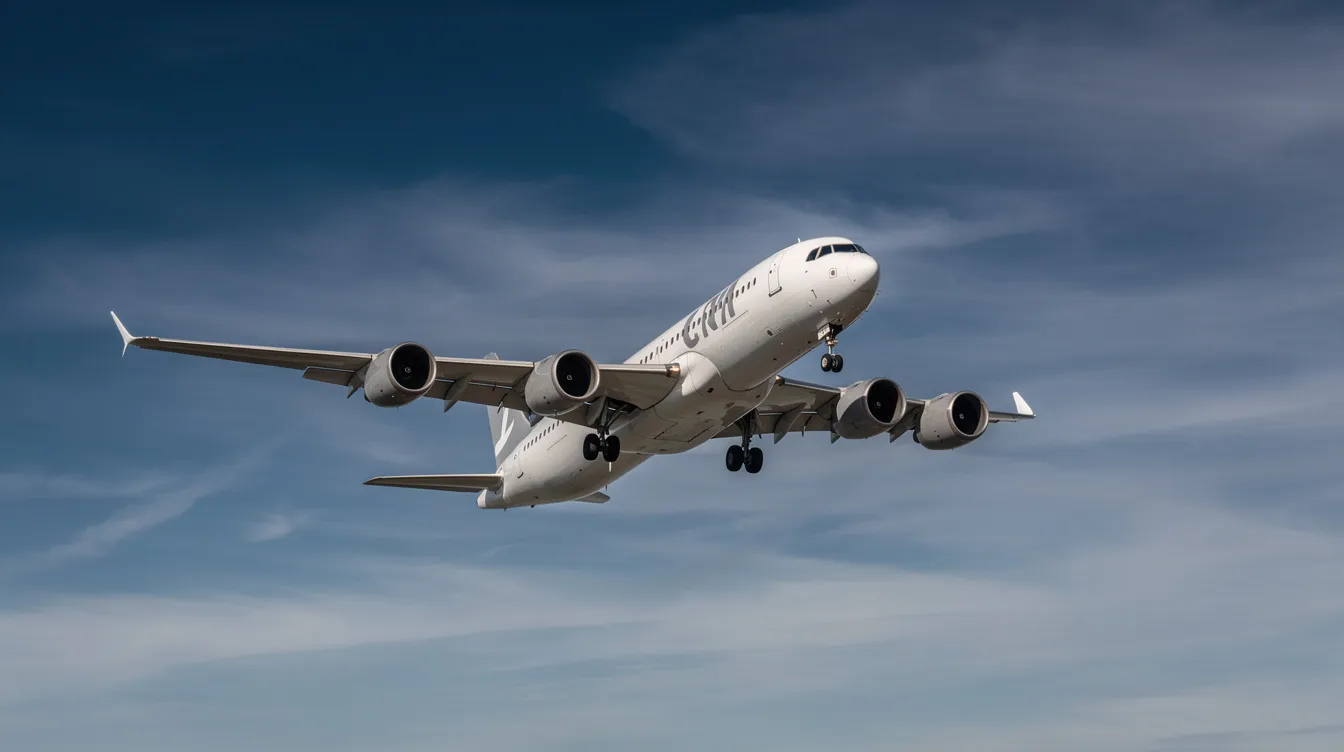
The Boeing 787's takeoff speed typically falls in the 140 6170 knot IAS range for rotation, with V2 (takeoff safety speed) reaching up to 180 knots under heavy conditions. Landing speeds generally sit around 130 6150 knots on approach.
Weight, temperature, airport elevation, runway length, and runway conditions all shape these values. No two departures use identical V-speeds.
Sophisticated performance tools - from Boeing's certified data to airline-specific software - help pilots stay within regulatory safety margins on every departure and arrival.
Understanding 787 performance helps travelers compare commercial widebody operations with private jet options for similar routes. Lower takeoff speeds and shorter runway needs give private jets access to airports a 787 could never use.
Travelers considering whether to fly commercial or charter can explore aircraft options, instant pricing, and route flexibility through Jettly's platform.
Ready to experience private travel on your terms? Explore flight options or request a quote at https://www.jettly.com.
Most Boeing 787 departures use a rotation speed (VR) roughly between 140 and 170 knots indicated airspeed. The exact value depends on the variant (787-8, -9, or -10), takeoff weight, flap setting, runway conditions, and weather. Pilots always rely on aircraft-specific performance calculations computed for each individual flight rather than generic numbers - these are indicated airspeed readings, not groundspeed.
Every flight has a different combination of weight, fuel load, passenger count, cargo, runway elevation, temperature, and wind. Regulatory rules require takeoff performance to be recalculated for each departure to maintain safe margins across all operating conditions. Even the same aircraft on the same route can have meaningfully different V-speeds from one day to the next if conditions change.
Yes, generally. The 787's takeoff speeds are higher than those of most light and midsize private jets because the widebody is far larger and heavier, with higher wing loading. Many private jets rotate at 100 6140 knots and can use runways as short as 3,000 65,000 feet, which is one reason private charter can access far more airports than big airliners. For a comparison of aircraft types and their performance profiles, platforms like Jettly offer useful tools for travelers weighing their options, alongside educational resources such as a guide to affordable airplane rental costs and options.
Seat location does not change the actual takeoff speed, but passengers near the tail section may feel slightly more pitch motion during rotation, while those near the wing often experience less movement and a bit more engine noise. Passengers who are sensitive to motion during takeoff and landing often prefer seats over the wing, where the rotational pivot point keeps movements more muted. The 787's composite structure and noise-dampening design generally make the experience quieter regardless of seating position compared with other airliners.
Understanding takeoff speed and runway needs helps travelers see why large airliners like the 787 must operate from major hub airports with long runways, while private jets have the flexibility to use smaller, closer airports. When evaluating options, consider airport access, schedule control, comfort, and overall travel time - not just the ticket or charter price. Travelers can compare commercial 787 flights with private charter options, explore a new account for instant quotes, and review aircraft specs needed for their mission at https://www.jettly.com, using tools like Jettly's private jet charter cost estimator to understand how route length and aircraft choice affect pricing.
The takeoff speed of the Boeing 787 Dreamliner is a dynamic figure influenced by weight, environmental conditions, flap settings, and runway characteristics. Understanding the V-speeds—V1, VR, and V2—provides insight into the precision and safety built into every departure. While the 787 requires longer runways and higher speeds compared to smaller private jets, it excels in fuel efficiency and long-haul capability.
For travelers and corporate clients weighing commercial flights against private charter options, these performance differences translate into practical considerations about airport access, scheduling flexibility, and overall travel experience. Platforms like Jettly offer a seamless way to explore private jet charters that provide access to thousands of airports worldwide, often with shorter runways and lower takeoff speeds, opening up new possibilities for time-saving and convenience.
Explore the full range of private jet options, instant pricing, and booking capabilities at Jettly to experience private travel on your terms.
Ready to experience private travel on your terms? Explore flight options or request a quote at https://www.jettly.com.
Share this post:
Jay Franco Serevilla
Sep 6, 2026
|
5
min read
Discover tips and trends in the industry.

5
min read
Fly AAA: Guide to Seamless Private and Commercial Air Travel
This guide explores the benefits of flying AAA-style, whether through American Airlines or private jet charters via Jettly. It highlights the convenience, flexibility, and cost-saving opportunities available for travelers, including instant access to over 20,000 aircraft and tips for optimizing airport experiences. Discover how to choose the best travel option for your needs.
Read More
5
min read
Aircraft Time: How Flight Time Is Calculated, Planned, and Used in Private Aviation
Understanding aircraft time is essential in private aviation, influencing trip planning, pricing, and safety compliance. Flight time varies by region and is calculated differently, affecting everything from crew scheduling to fuel needs. Platforms like Jettly provide tools to accurately estimate flight time and costs, ensuring a seamless booking experience.
Read MoreStay updated with our latest insights and tips to elevate your journey with us.
MEMBERSHIPS AND ASSOCIATIONS



Disclaimer: Jettly operates as a charter broker, offering access to a global digital jet charter marketplace. Jettly is not a direct air carrier and does not own or operate aircraft. All advertised flights are conducted by third-party air carriers that are fully licensed and hold the appropriate Part 135 or Part 121 certifications issued by the Federal Aviation Administration (FAA) or equivalent regulatory authorities under U.S. or foreign law. Jettly complies fully with the U.S. Department of Transportation's Part 295 and Part 298 Charter Broker regulations. Jettly does not carry additional liability insurance. Passengers are covered by aircraft operator insurance. TICO: 50023770


