



Login
Get Instant Pricing On 23,000+ Aircraft

>

The Tupolev Tu-204 is one of Russia's most versatile narrowbody airliners, serving passenger, freight, and government roles across a single adaptable platform. This guide is intended for aviation enthusiasts, charter planners, and organizations considering large-group air travel options. Understanding the Tu-204's capabilities helps operators and travelers make informed decisions about chartering or comparing aircraft in this class. This guide breaks down the Tu 204 family's variants, performance figures, recognition features, and real-world charter applications.
The tupolev tu 204 is a twin-engine, medium-range russian aircraft developed in the late 1980s to replace the Tu-154 trijet. It covers passenger, cargo, and VIP mission profiles with a typical maximum range between roughly 2,600 and 3,600 nautical miles depending on the variant.
Core passenger versions include the Tu-204-100 (PS-90A powered), the Tu-204-120 fitted with Rolls Royce RB211 engines, the shortened Tu-204-300 with longer range, and the modernized Tu-204SM. The related Tu-214 family adds higher gross weight airframes and special mission derivatives like the Tu-214ON (Open Skies observation) and Tu-214PU (airborne command post).
Aircraft of this class can be chartered through platforms like Jettly for large groups, sports teams, government delegations, or corporate shuttles where moving 80–200 people on a single airframe makes financial sense.
Later sections compare the Tu-204 to Western airliners such as the Boeing 757, outline recognition features including doors on the left side and engine nacelle shapes, and provide an FAQ for enthusiasts and charter planners.
The Tupolev Tu-204 is a russian twin-engine, medium-range narrowbody airliner developed by the Tupolev Design Bureau to replace the aging Tu-154, with variants used for passenger, cargo, VIP, and government transport. For aviation enthusiasts, charter planners, corporate and government operators, and large-group travelers evaluating high-capacity aircraft through platforms like Jettly, it is a useful type to understand because it combines narrowbody airline seating with mission flexibility that can compete in some markets with Western alternatives. Its first flight took place on 2 January 1989, with entry into commercial service following in the mid-1990s after certification under russian standards.
The basic configuration features two high-bypass turbofans mounted under a low wing, a conventional tail, and a single-aisle fuselage seating roughly 160–210 passengers depending on cabin class layout. Its primary mission profile covers domestic and regional international routes across Russia, the CIS, the Middle East, and parts of Europe and Asia, while some airframes now operate as cargo aircraft, VIP transports, or state and institutional aircraft in countries such as North Korea and Cuba. This overview looks at the Tu-204 family’s variants, design, performance, recognition features, special-mission and VIP uses, how it compares with Western airliners, and what to know about charter availability and safety considerations for clients browsing broader private charter aircraft options.
Typical performance figures include a cruise speed of about Mach 0.79–0.80, a service ceiling near 39,000 ft, and a maximum range that varies by sub-model. The Tu-204 has a maximum take-off weight of 103 tonnes for standard versions. Fewer than 100 Tu-204 aircraft have been delivered since 1989, produced at two main sites: Aviastar-SP in Ulyanovsk for the Tu-204 line and the Kazan Aircraft Production Association for the Tu-214 series. That modest output, built at a different factory for each sub-family, makes the type relatively rare compared with Boeing or Airbus competitors.
Concept work began in the early 1980s, with the first prototype roll-out and maiden flight in 1989. The aircraft received its first certificate under Russian AP-25 regulations, and introduction into commercial service followed in the mid-1990s as a more efficient successor to older generation Soviet-era jets.
Key aerodynamic features include supercritical wings with winglets for efficiency, improving cruise performance over earlier Soviet designs. The Tu-204 features fly-by-wire control systems (an electronic interface replacing traditional manual flight controls) and a glass cockpit (digital electronic displays replacing analog dials), both significant steps forward from the analog instrumentation found in the Tu-154. The wings and tail surfaces are designed to resist ice build-up, allowing the aircraft to operate safely without traditional wing anti-icing systems, a unique feature among modern airliners.
The platform was designed from the outset to accept two engine families: russian Aviadvigatel PS-90A series turbofans and Western Rolls Royce RB211 engines, allowing different market positioning. The Tu-204 is powered by two Aviadvigatel PS-90 engines in its standard configuration.
Cockpit philosophy evolved over the family's life. Early versions required three crew members, but the Tu-204SM features a two-pilot cockpit design with updated multi-function displays and optional Western navigation suites. The Tu-204-120 variant complies with Chapter 3 noise regulations, and later PS-90A2 variants improved fuel burn and reliability to meet current european emission expectations and ICAO requirements.
Production challenges included limited funding after the Soviet collapse and small batch manufacturing in limited numbers, which constrained fleet size but drove incremental improvements rather than costly full-scale redesigns.
The designation "Tu-204" often refers to a family of closely related models. Here are the most important passenger versions in practical terms, presented for quick comparison:
Tu-204-100: The baseline version powered by PS 90A engines. Typical seating ranges from 164 to 210 passengers. The Tu-204-100 has a maximum takeoff weight of 103 tonnes, with range around 2,600–3,000 nm. It has been successfully operated by several airlines on medium-haul routes across Russia and the CIS, earning issued certificates under Russian AP-25 standards.
Tu-204-120: Powered by Rolls-Royce RB211 engines and equipped with mostly foreign avionics, aimed at export markets. Cairo Aviation in Egypt was an early operator. This variant achieved limited certification in Europe for its freighter version, with English-language cockpit labeling as a key selling point for international crews. The main difference from the Tu-204-100 is the powerplant and avionics suite—russian or foreign avionics could be fitted depending on customer preference.
Tu-204-300 (Tu-234): A shortened-fuselage derivative offering longer range thanks to increased fuel capacity. The Tu-204-300 has a range of 9,300 kilometres (roughly 5,000 nm), making it suitable for transcontinental missions within Eurasia. It carries fewer passengers—around 142–157—but delivers competitive performance on routes where range matters more than capacity, with only a slightly lower range than some widebody alternatives on similar legs.
Tu-204SM: A major modernization program featuring PS-90A2 engines, a two-pilot cockpit, updated avionics, and improved cabin design targeting lower operating costs. Development was paused due to sanctions and financing issues, and no serial deliveries had occurred as of the last public reporting. The Tu 204SM represents the most ambitious version of the tu 204 family, though its future remains uncertain.
Each variant's maximum take off weight figures influence payload and route planning for airlines or large-group charter customers directly.
The Tu-204S series includes purpose-built and converted cargo versions of the Tu-204/204-100/204-120 family. These cargo variants have played a role in regional freight networks since the late 1990s.
The main structural change is the installation of a large main-deck cargo door on the forward left side of the fuselage, along with a reinforced floor and cargo handling systems compatible with standard pallets and containers. Key designations include:
Tu-204-100C (PS-90A powered freighter)
Tu-204-120C / 120CE (Rolls-Royce powered cargo versions)
Tu-204-200S and Tu-204-220S (higher weight options)
The Tu-204 can transport a payload of 27,000 kg. Palletised freight is loaded using high-loaders, and lower holds remain available for additional containers or bulk freight. The cargo variant offers roughly 164 cubic metres of main-deck volume.
Some operators adopted the Tu-204 freighter version for its combination of range, payload, and compliance with international noise regulations-particularly valuable for night-time charter air freight operations to and from secondary fields that clients can locate using an airport locator tool. Real-world use cases include ad-hoc cargo charters for automotive parts, e-commerce surges, and humanitarian relief missions where a mid-size freighter with medium to long maximum range is practical.
The Tu-214 is a higher gross weight variant of the Tu-204, built by the Kazan Aircraft Production Association. It features a reinforced structure and a different door layout-typically three full-size doors on the left side-and serves as both a passenger and multi-role platform. The Tu-214 is often selected by the russian government and military operators as a basis for special mission aircraft rather than mass-market commercial fleets.
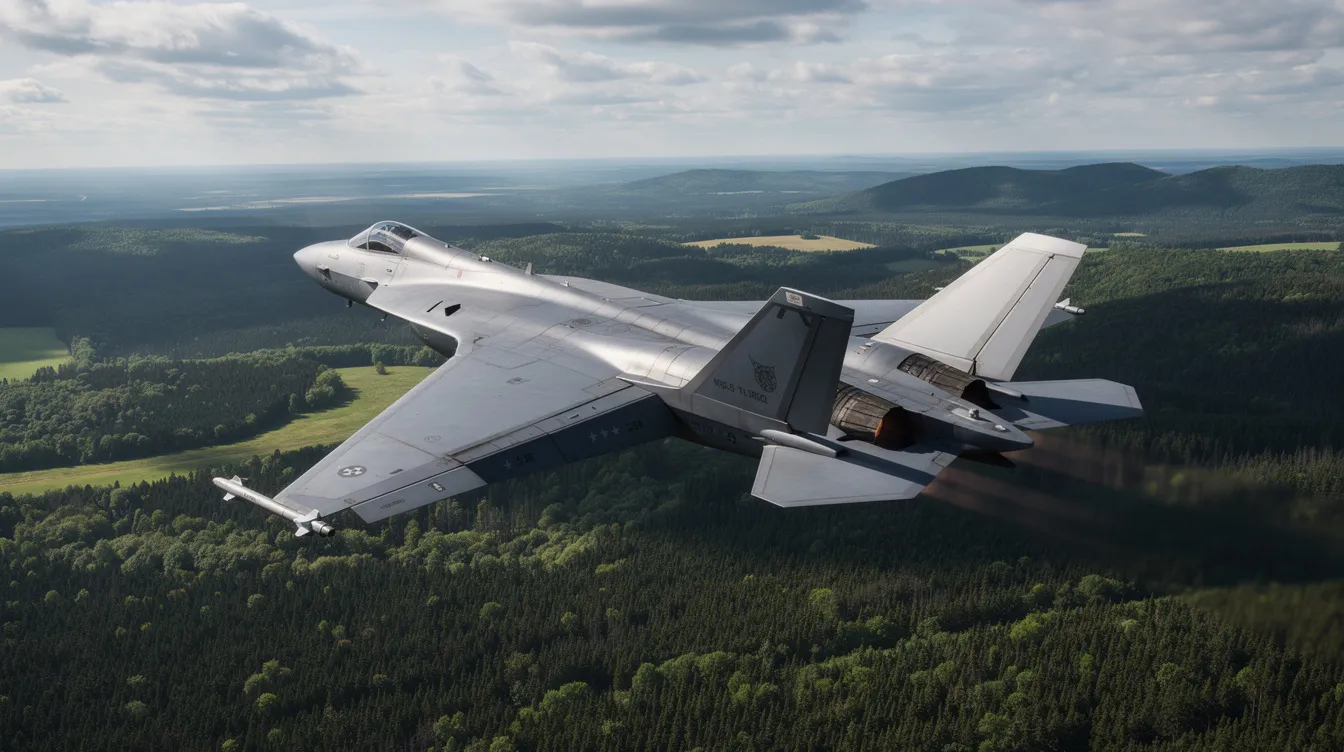
Tu-214ON. The Open Skies observation aircraft carries cameras and sensors in a ventral fuselage bulge. It was developed for treaty-related aerial reconnaissance and verification flights, with two airframes produced and delivered. The aircraft has served organisations in countries like North Korea and Cuba.
Tu-214PU and Tu-214PU-SBUS. These are the airborne command post version variants, identifiable by a canoe-shaped dorsal fairing. They host secure communications and command-and-control systems for government use, filling a comparable role to Western airborne command aircraft.
Tu-214R, Tu-214SR, and Tu-214SUS. These specialised intelligence and communications relay platforms carry multiple external bulges and antennas. They are not used in commercial or private charter but demonstrate the family's adaptability.
From a spotting perspective, Tu-214s can be distinguished from standard Tu-204 aircraft by door count and placement, higher operating weights, and sometimes different window layouts. These special mission variants are not part of Jettly's civilian charter inventory, but they illustrate how the basic Tu-204 design has been stretched into complex roles under extended estimated operational conditions that go well beyond standard airline service.
Core performance metrics for the Tu-204 family: cruise speed of the Tu-204 is 810 kph (roughly 437 knots), the Tu-204 has a service ceiling of 39,698 feet, and fuel consumption falls in line with mid-generation narrowbodies.
In practical terms, its range with maximum payload is 4,400 kilometres for standard Tu-204-100/120 configurations-enough for non-stop flights such as Moscow–Dubai or Cairo–Stockholm. The Tu-204-300 extends maximum range to roughly 9,300 km for longer transcontinental legs. Changes in MTOW between the Tu-204-120 and Tu-204-220 affect fuel load and payload; higher-weight versions can carry more cargo or fly further but may require longer runways.
Compared with broadly equivalent aircraft like the Boeing 757-200 and Airbus A321, the Tu-204 aimed to match their fuel efficiency and range, but its smaller production run means maintenance and parts availability carry a cost premium outside Russia and the CIS.
For charter clients, a key consideration: larger aircraft incorporating passenger capacity of 150+ can be cost-effective per seat for big groups (sports teams, music tours), but hourly charter rates are higher than for midsize or super-midsize jets, and tools like a private jet charter cost estimator help quantify those differences. Some VIP-configured Tu-204s trade total seats for enhanced cabin space, retaining similar speed and range.
The standard Tu-204 cabin is a single-aisle layout with six-abreast seating in economy (3+3) and optional dual-class configurations using 2+2 business class forward. The fuselage diameter of approximately 3.8 metres supports a cabin width typical of narrowbody airliners.
VIP and government operators have converted Tu-204 and Tu-214 airframes into spacious executive airliners. These conversions feature lounge seating, conference tables, private offices or bedrooms, and upgraded galleys suitable for long-duration flights, often paired with dedicated services such as in-flight catering for private jets. Customizable comfort features include modern seats, satellite connectivity, upgraded sound insulation, and refined lighting.
From a charter brokerage perspective, a VIP Tu-204 positions well as a cost-effective alternative to widebody airliners for groups of 70–100 travelling in high comfort, especially when paired with crowdsourced private jet flights and shared empty seats that spread costs across multiple travellers. A practical example: a corporate roadshow across European or Asian capitals where the entire delegation, media team, and equipment travel together in one airliner-eliminating the coordination headaches of splitting across multiple smaller jets.
Spotters sometimes confuse the Tu-204/Tu-214 with the Boeing 757, Airbus A321, or even the smaller Boeing 767 due to broadly similar proportions. Here are the key identifiers.
Tu-204/214 features:
Cockpit window shape differs from both Boeing and Airbus designs
Four-wheel main landing gear bogies per leg, while the Airbus A321 has two wheels per main landing gear leg
Doors on the left side: four full-size on standard Tu-204, three large on Tu-214
Wings with winglets on most variants
Engine nacelle differences:
PS-90A engines have slender, evenly tapered nacelles
Rolls Royce RB211 nacelles appear bulkier with more visible bare metal toward the rear
Quick change variants and cargo versions are identifiable by the prominent main-deck cargo door on the left forward fuselage, sometimes with cabin windows remaining from passenger origins. The Tu-204-300 can be recognized by its shorter fuselage but retention of four doors per side.
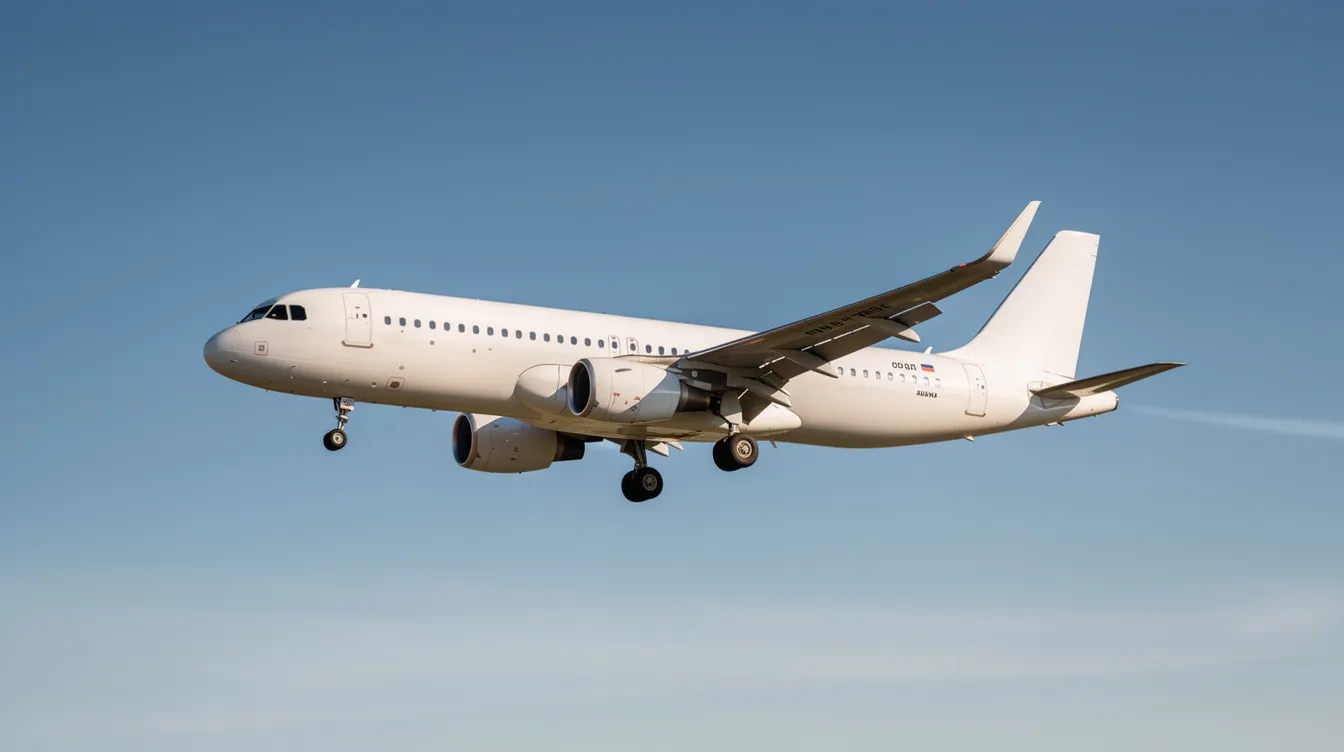
While the Tu-204 family is not common in Western charter fleets, it appears in select markets as a VIP airliner or high-capacity charter option for governments, corporations, and sports organisations. Typical mission profiles include long-range delegations, diplomatic travel, and touring entertainment productions.
Jettly is a private jet charter platform offering on-demand access to private flights globally, connecting travellers with a network of aircraft for business and leisure trips. The platform simplifies private aviation with transparent pricing, instant booking, membership options, and access to a wide range of aircraft. This makes it easier for clients to evaluate options like the Tu-204 class for large group travel or VIP missions, balancing convenience, flexibility, and cost.
Charter pricing for VIP configurations historically falls in the range of $12,000–$18,000 per flight hour, influenced by airframe age, interior specification, crew costs, and regional conditions, similar to the ranges outlined in a complete guide to private jet rental costs. A digital marketplace like Jettly helps clients compare a large narrowbody like the Tu-204 with other options—such as multiple smaller jets or Western VIP airliners—using instant pricing tools.
Key decision factors for customers include required passenger count, route length versus maximum range, desired cabin style, airport runway length, and overall budget per seat. Users can explore different aircraft classes through Jettly's private jet memberships, with dedicated support to identify whether a Tu-204-class aircraft suits a given trip.
The Tu-204 is often compared to the Boeing 757—both are medium-range, single-aisle aircraft designed for 180–220 passengers in a comparable role. The Airbus A321 also fills similar capacity requirements.
Key comparison points:
Maximum range: Tu-204-100 covers roughly 4,400 km with max payload; the 757-200 reaches about 7,200 km; the A321neo extends to approximately 7,400 km
Passenger capacity: All three types seat 180–220 in high-density layouts
MTOW: The Tu-204 has a maximum take-off weight of 103 tonnes; the 757-200 sits around 115 tonnes; A321neo variants range from 93–97 tonnes
Operational differences matter for operators: global support networks, spare parts availability, and type ratings for crews all favour Western jets outside Russia. However, VIP conversions of the Tu-204 and Tu-214 can deliver bespoke, government-grade interiors comparable to specially outfitted 757s or A321S.
On Jettly's platform, customers are more likely to encounter Boeing and Airbus airliners for VIP or high-density charter, but the performance concepts are closely aligned, echoing the broader trends described in an ultimate list of charter airlines. Enthusiasts still call the Tu-204 the "Russian 757"—a label that captures the spirit, if not every engineering detail.
These questions address common topics not fully covered above, from safety records to practical planning and how the Tu-204 family fits alongside the best private jet charter companies serving global travelers.
As of the mid-2020s, a reduced but active fleet of Tu-204 and Tu-214 aircraft continues to fly. Most operate with Russian, CIS, and a handful of foreign airlines in passenger, cargo, and government roles. Some older airframes have been stored or retired, but the freighter version and special mission variants remain important within certain fleets. Fleet activity can fluctuate due to geopolitical factors, sanctions, and airline fleet renewal decisions—though the type has never fully left service since its introduction.
Availability depends heavily on region and operator. Tu-204 and Tu-214 airframes are concentrated in specific markets, and many are dedicated to government or scheduled airline use. Jettly's marketplace focuses on a broad range of aircraft—light jets, midsize jets, long-range business jets, and some VIP airliners—and clients interested in Tu-204-class capacity can request options that deliver similar seating and range, even if the exact type is not listed, browsing detailed private charter aircraft profiles to compare choices. Learn more about Jettly’s charter options at https://www.jettly.com.
The Tu-204 family has experienced a limited number of accidents and incidents over several decades—fewer in absolute terms than high-volume Western types, but also reflecting its much smaller fleet size and total flight hours. Safety outcomes depend as much on operator standards, maintenance quality, and regulatory oversight as on airframe design. The Tu-204 does incorporate modern systems like fly-by-wire controls and a glass cockpit. Charter flights arranged via reputable platforms use operators that meet local and international safety regulations, and Jettly prioritises certified operators.
The Tu-204 is the baseline passenger and cargo narrowbody platform used for commercial and some VIP missions. The Tu-214 is a structurally enhanced derivative with a different door layout and higher gross weight, often used as a basis for special mission aircraft. The Tu-214PU is an airborne command post version outfitted with advanced communications equipment, recognisable by dorsal fairings. The Tu-214ON is an Open Skies observation platform carrying specialised cameras in a belly fairing. These special mission types are not available for civilian charter but are tracked by defence and aviation enthusiasts studying the broader Tu-204/214 family.
Groups of 80–150 people may find an airliner like the Tu-204, Boeing 737, or Airbus A321 more efficient per seat than chartering multiple small jets, especially on medium-range routes, and some travellers may instead look to buy a seat on a private jet through shared-flight options. Key decision points include total passenger count, luggage volume, desired onboard service level, route length compared with the aircraft's maximum range, and airport infrastructure such as runway length. Smaller executive jets are often better for flexible itineraries with many stops, while a Tu-204-class aircraft excels when the goal is to move a large group on a few high-capacity legs. Compare scenarios and pricing using Jettly's instant quote tools at https://www.jettly.com.
Ready to experience private travel on your terms? You can explore flexible funding via a jet card flight cost estimator, compare world class corporate jet card programs, review NetJets as an industry leader or a Jettly alternative to NetJets, and understand whether private jets can fly internationally. For budgeting, dive into how much a private jet costs and how much it costs to rent a private jet, or learn how to get a seat on a private jet easily. Destination-specific guides such as private jet charter in Chennai and private jet charter in Kolkata illustrate how these concepts apply on real routes. Explore flight options or request a quote at https://www.jettly.com.
The Tupolev Tu-204 remains a noteworthy example of Russian aerospace engineering, offering versatile capabilities across passenger, cargo, and special mission roles. Its design incorporates advanced technologies such as fly-by-wire controls and efficient aerodynamics, positioning it competitively alongside Western narrowbody aircraft like the Boeing 757. While limited production and geopolitical factors have constrained its global presence, the Tu-204 family continues to serve important roles in select markets.
For travellers and organisations seeking large-group charter options, aircraft of the Tu-204 class provide a balance of capacity, range, and operational flexibility. Platforms like Jettly help simplify access to such aircraft, offering transparent pricing and streamlined booking for diverse mission profiles. Understanding the Tu-204’s features, variants, and performance helps charter clients make informed decisions when considering medium-range private jet travel options.
Ready to enjoy private travel tailored to your needs? Discover available flights or get a personalized quote at https://www.jettly.com.
Share this post:
Jay Franco Serevilla
Jul 21, 2026
|
5
min read
Discover tips and trends in the industry.

5
min read
Delta Boarding Zones: How Delta Air Lines Boarding Works (and What It Means for Private Flyers)
Delta Air Lines utilizes a structured boarding system with eight numbered zones plus pre-boarding, determining the order in which passengers board based on cabin class, fare type, and loyalty status. Understanding this system is crucial for travelers considering commercial flights versus private jet charters, as it impacts overhead bin space and wait times. For those seeking a more streamlined experience, private jet options like Jettly eliminate the complexities of boarding zones altogether.
Read More
5
min read
Delta Basic Economy: What Changed, What It Includes, and When to Avoid It
Delta Air Lines has rebranded its Basic Economy fare to Delta Main Basic as of October 1, 2025, maintaining its core restrictions while altering the booking experience. This fare class is the most restrictive in Delta's lineup, making it suitable primarily for solo travelers on short flights who prioritize low prices over flexibility. For most travelers, considering higher fare options like Delta Main Classic or private jet charters may provide better value.
Read MoreStay updated with our latest insights and tips to elevate your journey with us.
MEMBERSHIPS AND ASSOCIATIONS



Disclaimer: Jettly operates as a charter broker, offering access to a global digital jet charter marketplace. Jettly is not a direct air carrier and does not own or operate aircraft. All advertised flights are conducted by third-party air carriers that are fully licensed and hold the appropriate Part 135 or Part 121 certifications issued by the Federal Aviation Administration (FAA) or equivalent regulatory authorities under U.S. or foreign law. Jettly complies fully with the U.S. Department of Transportation's Part 295 and Part 298 Charter Broker regulations. Jettly does not carry additional liability insurance. Passengers are covered by aircraft operator insurance. TICO: 50023770


