


Login
Get Instant Pricing On 23,000+ Aircraft

>
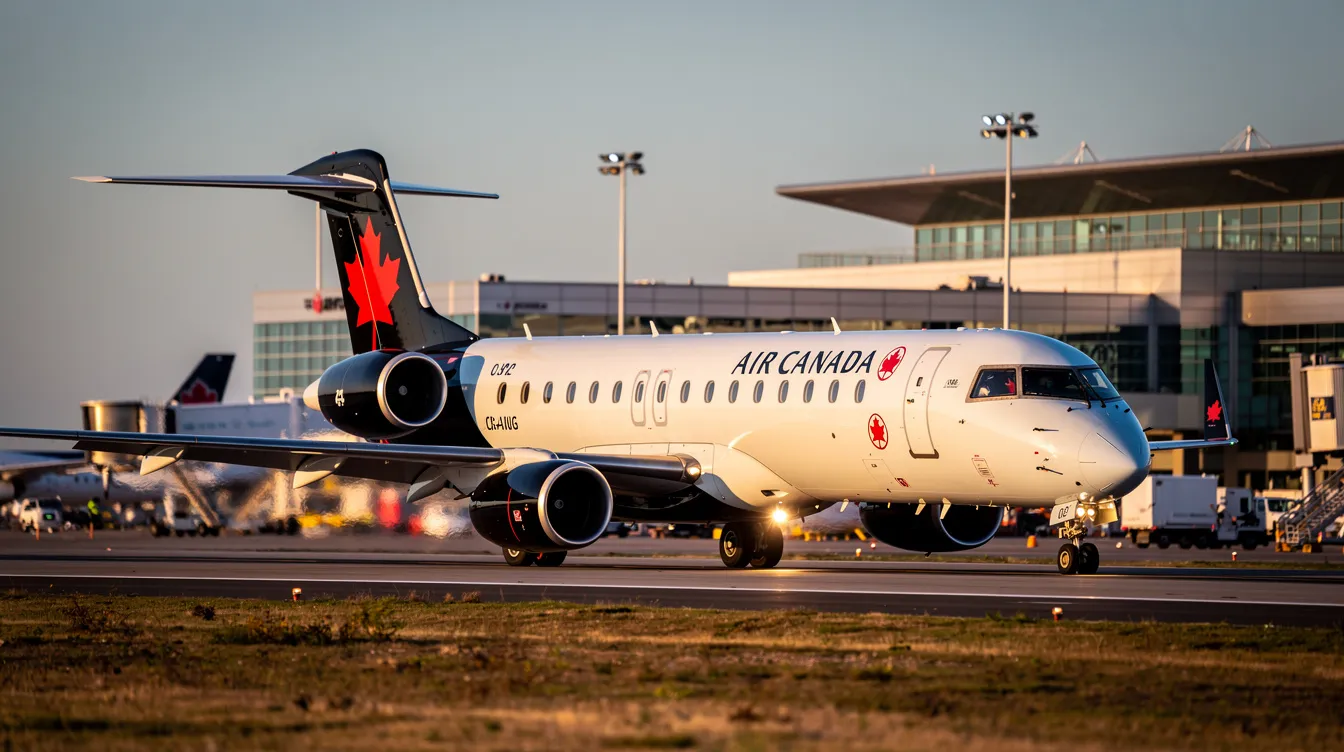
Air Canada Express operates the Bombardier CRJ 900 regional jet, commonly known as the Canada Air RJ900, on many of its short-haul routes across Canada and into the United States. This aircraft blends efficiency with comfort, offering both business and economy class seating tailored to regional travel needs. Passengers who recently flew on these jets appreciate the balance of speed, reliability, and service that the CRJ 900 provides. This guide explores the features, service offerings, and travel experience aboard the Air Canada Express CRJ 900, helping travelers understand what to expect and when to consider alternatives like private jet charter through platforms such as Jettly.
The Air Canada Express CRJ 900 (Bombardier CRJ900) typically features 12 business class seats in a 1-2 layout and 64 economy seats in a 2-2 layout, totaling 76 passengers.
Business class on the Canadair Regional Jet 900 includes priority check-in, Maple Leaf Lounge access on eligible fares, and hot meal service on flights of about two hours and thirty minutes or more.
Overhead bin space is tight—especially on the single-seat side—so smaller carry-ons or early boarding are recommended.
The CRJ 900 is designed for short-haul flights of roughly 1.5 to 3 hours, connecting regional cities across Canada and into the US.
Travelers who value more privacy and flexibility sometimes compare these regional flights with chartering a private jet through platforms like Jettly.
The Bombardier CRJ 900 is a stretched regional jet whose design is considered an extension of an older, smaller design—the CRJ-200 and CRJ-700 family. It made its first flight in February 2001 and entered airline service in 2003. Air Canada Express, operated mainly by Jazz Aviation, uses the CRJ 900 on busy regional routes where full widebody or even larger narrowbody aircraft would not be economical.
The Bombardier CRJ-900 typically seats 76 to 90 passengers, depending on the airline. Air Canada operates the CRJ-900 on various domestic routes as well as cross-border services, with its configuration holding 76 passengers in a dual-class layout: 12 business and 64 economy. For more technical depth, check out Jettly's full CRJ 900 Guide, and if you're curious about its smaller sibling, review the Canadair CRJ-200 specs and charter profile.
Air Canada Express is a regional brand. Flights are scheduled and sold under the Air Canada banner, meaning Aeroplan points, service standards, and booking systems are fully integrated—but the aircraft are smaller and operated by partner carriers like Jazz Aviation. As of early 2026, roughly 31 CRJ-900s are in the Jazz fleet, with cabin retrofits planned through 2027.
Engines: Two General Electric CF34-8C5 turbofan engines, featuring noise reduction technology for quieter operations at airports
Cruising speed: 515 mph (Mach 0.78)
Maximum range: Approximately 1,550 to 1,784 nautical miles
Service ceiling: 41,000 feet
Maximum takeoff weight: 84,500 lbs
The CRJ 900 can efficiently operate from airports with shorter runways, making it highly valued for its efficiency in regional hub-and-spoke networks. Its performance includes good climb rates and reliable operation in various conditions, and the aircraft is generally favored for its speed and efficiency compared with regional fleets used by airlines such as Delta in the same category. Travelers using private aviation can benefit from an airport locator tool for private jet charter to identify smaller fields closer to their final destination.
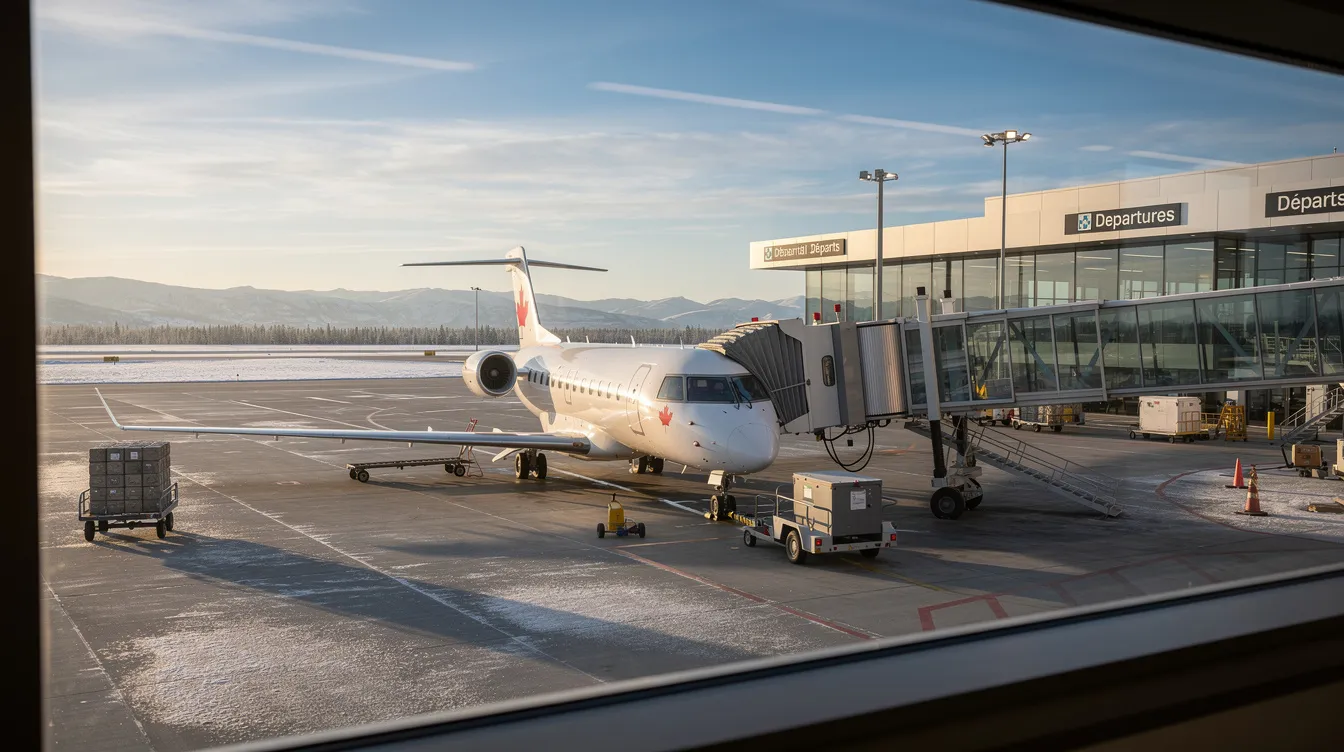
The CRJ 900 cabin splits into two distinct sections: business class at the front and economy class behind, similar to other airlines operating regional jets of this size. The cabin features only four rows of business class seating before transitioning into the economy cabin.
Business class layout:
1-2 seating configuration (single seat on the left, two seats on the right-hand side)
12 seats total across 4 rows
Seat pitch of 37 inches, seat width of 21 inches
More recline and larger armrests than economy
Economy class layout:
2-2 across the cabin—no middle seat in any row
64 economy seats total
Seat pitch around 31 inches with modest recline
Slimline seats suitable for flights up to about 3 hours
Class service levels differ meaningfully. Business class includes complimentary hot meals on longer flights, priority boarding, and more attentive service from the flight attendant team. Economy class focuses on snacks or light meals depending on the route and time of day. In-flight entertainment includes seatback screens for all passengers on many aircraft, though some older CRJ 900s rely on streaming to personal devices. Modern CRJ900 models may feature updated cabins with larger overhead bins and mood lighting, depending on retrofit status.
Passengers often criticize the CRJ900 for its narrow fuselage and limited overhead storage, and complaints about cabin comfort include the tight space and low aisle height. This is worth noting for taller travelers.
Air Canada business class on the CRJ 900 is best understood as a North American regional first class product rather than a lie-flat long-haul cabin. The seats are comfortable for flights under three hours but won't rival what you'd find on a wide-body plane flying to Europe.
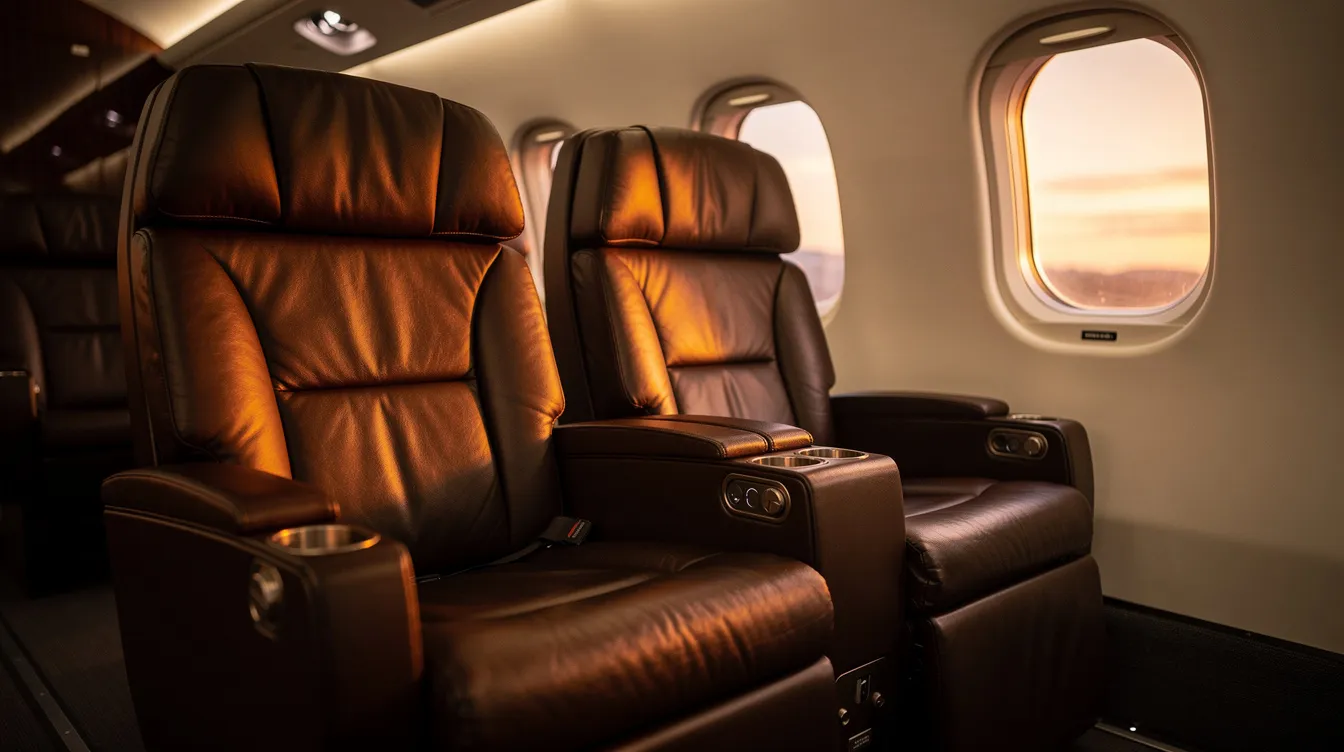
Business class seats use the 1-2 seating configuration, with the solo seat on the left side of the aircraft. Each seat is 21 inches wide with a 37-inch pitch—notably roomier than economy. Armrests are oversized with built-in tray tables, and adjustable headrests help on longer segments. The finishes are often vinyl rather than fabric, which some travelers find cooler to the touch. Small storage cubbies, literature pockets, individual reading lights, and personal air vents sit above each seat.
The in-flight entertainment setup features seatback screens with movies, TV shows, and a moving map display. The interface can feel dated compared with newer mainline Air Canada aircraft, but it gets the job done on a two-hour flight. Power options include a USB port and 110V AC outlets at most business-class seats—enough to keep a laptop and phone charged.
One persistent issue: overhead bin space is especially tight on the single-row side of the aisle. Passengers may need to gate-check standard-sized roller bags due to limited overhead storage. Boarding early or packing a smaller bag helps.
Air Canada's business class service on the CRJ 900 aims to mirror the mainline experience within regional aircraft limits. Business class offers a pre-departure beverage service before the plane even pushes back—a nice touch that sets the tone.
On a typical 2.5-hour daytime flight, the service sequence goes roughly like this:
Warm towel and welcome beverage
Nuts or a small snack
Full meal served about 30–45 minutes after takeoff
Dessert, coffee, or tea
Air Canada serves full meals on flights over 2.5 hours. Business class meals include options like chicken parmigiana with pesto rotini, ginger chicken with rice, or vegetarian risotto, plus salad, dessert (such as cheesecake), and a warm bread roll. The beverage service covers soft drinks, juices, coffee, tea, Canadian and international beers, a few wine choices, and standard spirits. While not quite an open bar in the traditional sense, all drinks are included in the business class ticket price.
On lightly loaded flights with only a few business passengers, the crew delivers more personalized service—refills arrive faster, and there's room to spread out.
Many Air Canada business class tickets on CRJ 900 routes include access to Air Canada Maple Leaf Lounges before departure. Business class passengers can check in at priority lines, and Air Canada offers a 2-bag limit at 70 lbs each for business class fares.
At Vancouver International Airport, the experience includes priority check-in counters, access to NEXUS or priority security lanes where available, and entry to the YVR Maple Leaf Lounge with hot meals, snacks, and drinks. The Maple Leaf Lounge at SFO features an outdoor terrace—worth noting for travelers on transborder routes. Smaller regional lounges such as Regina's offer fewer amenities but provide quiet seating, Wi-Fi, and light snacks.
Boarding benefits matter on this plane. Business class usually boards in Zone 1, after passengers needing extra assistance and families. This is helpful for securing overhead bins on the CRJ 900 before bin space fills up. On transborder routes like Vancouver to San Diego, passengers depart from US preclearance areas where security and border checks are front-loaded, so plan accordingly.
The majority of passengers on the CRJ 900 travel in economy class, configured 2-2 across the cabin. There is no middle seat in any row, which makes the economy experience feel less cramped than narrowbody aircraft with 3-3 layouts—even if the overall cabin is smaller.
Economy seating offers about a 31-inch seat pitch with limited recline. The seats are standard slimline designs suitable for up to roughly three hours of flying. Overhead bins are sized for smaller rolling bags and backpacks; larger carry-ons may not fit.
In-flight service in economy depends on duration:
Under two hours: Complimentary soft drinks and a small snack
Over two hours: Buy-on-board food or light meals via Air Canada Bistro, plus complimentary drink service
Some CRJ 900 aircraft include the same seatback entertainment screens in economy as in business, while others rely on streaming entertainment to personal devices. Bring headphones and a charged device just in case.
For seat selection in economy, forward rows offer quicker deplaning, while exit rows (when available) provide more legroom—sometimes at extra cost under Air Canada's seat fee policies.
The ground experience influences whether business class on the CRJ 900 feels worthwhile versus economy. Air Canada allows check-in starting 24 hours before departure, with mobile and online options available. At the airport, self-service kiosks handle most tasks, though staffed counters with separate lines for business class and elite status passengers speed things up.
Check in early if carrying large hand luggage—overhead bin volume is limited. Consider checking a bag even on short trips to avoid gate-check stress at the next gate. Budget extra time for connections when possible, especially at smaller stations.
The boarding process follows standard zone procedures. Business class and eligible elite members board in early groups, followed by rear-cabin economy passengers. People waiting in line at the gate will notice that regional operations sometimes face delays—waiting for ground staff at smaller stations, a mechanical issue requiring an aircraft swap, or simply tighter turnaround times.
Practical tips for CRJ 900 travelers:
Check in early if carrying large hand luggage—overhead bin volume is limited
Consider checking a bag even on short trips to avoid gate-check stress at the next gate
Budget extra time for connections when possible, especially at smaller stations
For travelers who find themselves standing in boarding queues and security lines on a Friday night after a long week, the streamlined private-terminal experience common in private jet charter starts to look appealing by comparison, especially when booking through a global private charter aircraft platform.

Value in Air Canada Express CRJ 900 business class depends heavily on route length, schedule, and the fare difference versus economy class.
Example routes typically served by CRJ 900s:
Domestic: Vancouver–Yellowknife, Calgary–Yellowknife, Edmonton–Vancouver (~1.5 hours)
Cross-border: Vancouver–San Diego (~3 hours), Vancouver–Denver (routes may change seasonally)
On flights around 2.5 hours or longer, business class delivers more value. That's when full meal service kicks in, lounge access is actually useful before a longer journey, and the extra room matters for getting work done or resting.
On shorter sub-90-minute flights, the time available for service is limited. Passengers may see only a light snack and a drink, making upgrades less compelling unless priced close to economy.
Worth considering: Aeroplan redemptions. On some date options, business class reward seats on CRJ 900 flights cost fewer points than economy, offering strong value for points collectors. Always check the details before booking.
For groups or executives flying between smaller Canadian cities, private jet charter is an alternative worth exploring. Jettly can connect travelers to light jets or turboprops when Air Canada serves routes on inconvenient schedules. Travelers comparing options can benefit from a guide to affordable airplane rental costs and options alongside resources on how to book a private jet.
Flying on an Air Canada Express CRJ 900 in business or economy and chartering a private aircraft through a digital broker like Jettly are fundamentally different experiences.
Commercial CRJ 900 flights operate on fixed schedules from major airports. Jettly gives access to on-demand private flights from a wider range of airports—including smaller fields closer to a traveler's home or final destination.
|
Factor |
CRJ 900 Business Class |
Private Jet via Jettly |
|---|---|---|
|
Schedule |
Fixed, airline-determined |
On-demand, traveler-set |
|
Cabin |
Shared, 12 business class seats |
Fully private |
|
Catering |
Standard airline meal |
Custom-tailored |
|
Airport access |
Major terminals |
5,000+ airports |
|
Per-seat cost |
Lower for solo travelers |
Competitive for groups |
A business class ticket on the CRJ 900 is usually cheaper per seat. But for small groups of executives or families on time-sensitive trips, chartering a light jet or turboprop can be competitive when factoring in total journey time and flexibility. Jettly offers instant online pricing, access to over 20,000 aircraft worldwide, and options for empty-leg flights on certain routes as well as crowdsourced private jet flights and shared empty seats—no long-term jet cards or fractional ownership required.
Use cases where private charter makes sense include business teams shuttling between cities like Toronto and smaller regional centers, last-minute trips where Air Canada flights on the CRJ 900 are sold out or poorly timed, or travelers seeking to avoid connections through major hubs.
There is no single "best" option. The choice depends on budget, schedule, privacy needs, and group size.
CRJ 900 business class is likely the better fit when:
Traveling solo on a predictable schedule
Seeking good value with lounge access and meals on 2–3-hour flights
Using Aeroplan points for low-cost redemptions
Private jet charter through Jettly may be preferable when travelers understand how to buy a seat on a private jet and compare those options with regional business class.
Making multi-city day trips or urgent meeting runs
Flying to airports not served by Air Canada—or by other airlines on that route
Traveling with sensitive equipment or high-profile individuals
A group of 4+ makes the per-person cost more reasonable
Interested in comparing costs? Use Jettly's Private Jet Cost Calculator or the dedicated jet card flight cost estimator to get an instant estimate for your route.
The standard Air Canada Express Bombardier CRJ900 configuration includes a dedicated business class cabin. However, availability can vary by route and season based on scheduling decisions. Some flights may be scheduled with a different aircraft type entirely. Always verify the seat map during booking to confirm that your specific flight shows the 1-2 business cabin at the front of the aircraft.
Air Canada's Bombardier CRJ 900 typically has 76 seats: 12 business class seats in a 1-2 layout and 64 economy class seats in a 2-2 layout. Two seats sit side by side on each side in economy, with no middle seat anywhere on the plane. This configuration may differ on aircraft operated for other airlines, so travelers connecting from non–Air Canada flights should check those carriers' seat maps for details.
Many Air Canada CRJ 900 aircraft offer paid Wi-Fi, with packages available for the duration of the flight, though coverage may vary by route. Business class generally includes USB ports and AC power outlets at the seat. Availability in economy can vary by aircraft—some have outlets, some don't. Check the flight details before travel and bring a portable charger as a backup.
Air Canada is the mainline carrier operating larger aircraft on domestic, transborder, and long-haul international routes. Air Canada Express is a brand used for regional flights operated by partner airlines such as Jazz Aviation. Tickets, frequent-flyer benefits, and inflight standards are integrated. Passengers still earn Aeroplan points and enjoy similar class service levels on both English- and French-language services, but aircraft types and cabin sizes differ. The review of any Air Canada Express flight should note this distinction.
Private jets are most attractive when travelers need maximum schedule flexibility, direct flights to smaller airports, or a private cabin for confidential work or family time. Compare the total journey time—including airport transfers, layovers, and the wait at the gate—as well as group size and budget. For a sit-down comparison of charter costs, explore instant pricing and aircraft options through Jettly at https://www.jettly.com. You can also learn how much it costs to rent a private jet or dive deeper into overall private jet ownership and usage costs for common regional routes.
Ready to experience private travel on your terms? Whether you're exploring private jet membership programs with flexible pricing, comparing the best private jet charter companies and providers, researching the best private planes for family travel, evaluating the cheapest private aircraft options by category, learning how to get a seat on a private jet easily, reviewing a comprehensive list of charter airlines and private operators, considering a NetJets alternative for flying private with Jettly, understanding private jet lease costs and contract types, studying top private plane manufacturers for every budget, seeking affordable private jet charter pricing and tips, or booking private jet charter in Kolkata, West Bengal, you can explore flight options or request a quote at https://www.jettly.com.
The Air Canada Express CRJ 900 offers a reliable and efficient option for regional travel across Canada and into the United States, with business class providing added comfort, priority services, and meal offerings on longer flights. While the CRJ 900 serves well for many travelers, those seeking greater flexibility, privacy, and access to a broader range of airports may find private jet charter through platforms like Jettly to be an appealing alternative. Jettly’s digital marketplace connects travelers with thousands of aircraft worldwide, offering instant pricing, on-demand booking, and options tailored to both business and leisure needs. Whether flying solo or in a group, exploring private jet options via Jettly can enhance travel convenience and save valuable time.
Ready to experience private travel on your terms? Explore flight options or request a quote at https://www.jettly.com.
Share this post:
Jay Franco Serevilla
Jul 1, 2026
|
5
min read
Discover tips and trends in the industry.

5
min read
Jettly Launches Special Missions, Expanding On-Demand Access to Helicopters, Group Charter, Cargo, Medevac and VIP Airliners
Jettly has launched "Special Missions," integrating complex charter categories—including helicopters, group charter (18–200 seats), cargo freighters, medevac flights, and VIP airliners—into its instant-pricing digital marketplace. Supported by a network of over 23,000 aircraft and 24/7 flight operations, the feature replaces slow, offline sourcing with transparent digital access for high-stakes, specialized flying.
Read More
5
min read
Tom Brady's Aviation Habits After His Retirement From Pro Football
Tom Brady’s post-NFL career has transformed his travel needs from those of a professional athlete into those of a broadcaster, investor, and business executive. While he has long been associated with the Gulfstream G550, the economics of private aviation suggest that flexible access can be more efficient than whole-aircraft ownership for travelers flying fewer than several hundred hours per year. His evolving schedule illustrates why depreciation, fixed operating costs, productivity, and fleet flexibility increasingly shape how ultra-high-net-worth travelers approach private aviation.
Read MoreStay updated with our latest insights and tips to elevate your journey with us.
MEMBERSHIPS AND ASSOCIATIONS



Disclaimer: Jettly operates as a charter broker, offering access to a global digital jet charter marketplace. Jettly is not a direct air carrier and does not own or operate aircraft. All advertised flights are conducted by third-party air carriers that are fully licensed and hold the appropriate Part 135 or Part 121 certifications issued by the Federal Aviation Administration (FAA) or equivalent regulatory authorities under U.S. or foreign law. Jettly complies fully with the U.S. Department of Transportation's Part 295 and Part 298 Charter Broker regulations. Jettly does not carry additional liability insurance. Passengers are covered by aircraft operator insurance. TICO: 50023770


