


Login
Get Instant Pricing On 23,000+ Aircraft

>
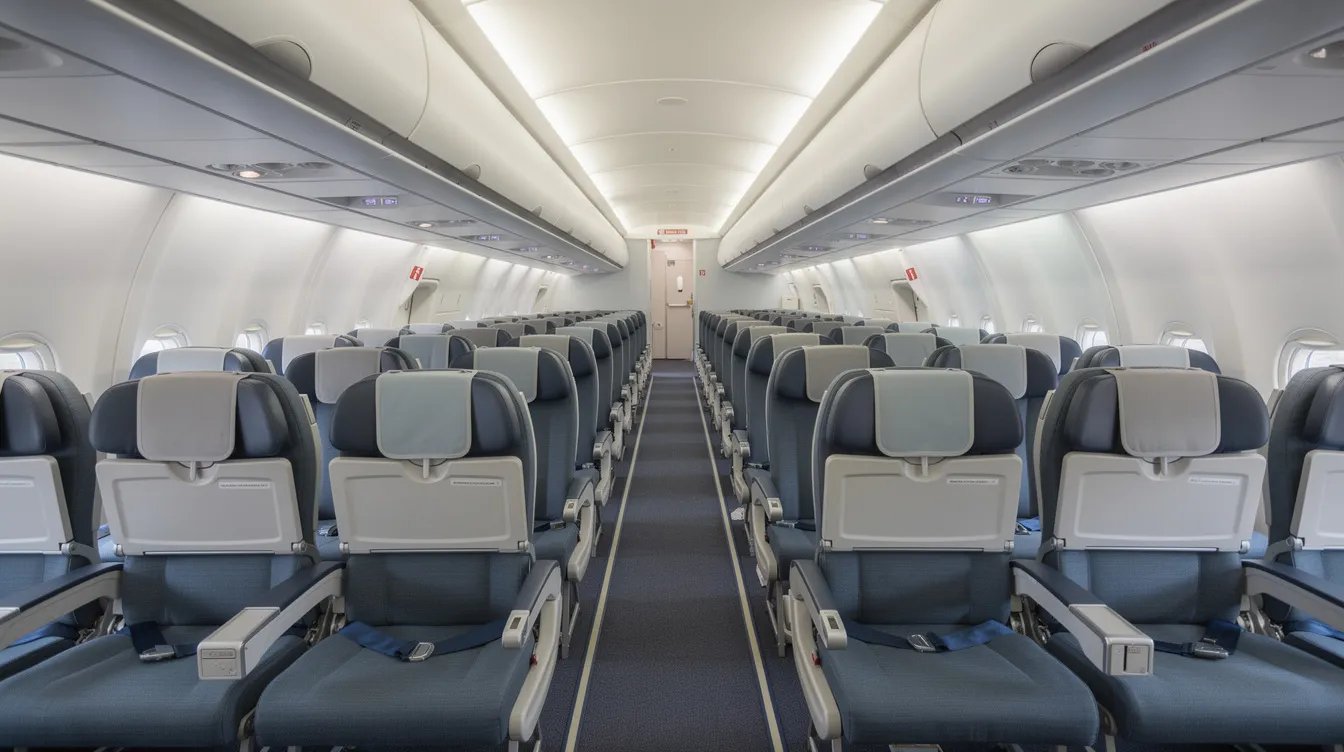
If you've ever wondered how many seats on an airplane there really are, the answer is: it depends. Aircraft type, airline layout, cabin class, and even the specific route all play a role. A small aircraft used for regional hops might carry fewer than 20 passengers, while the largest commercial plane ever built can hold over 850. This guide is for travelers, aviation enthusiasts, and anyone curious about how airlines and private operators determine seat counts on different types of aircraft. This guide breaks down seat counts across every category of airplane - from private jets to double-decker airliners - so you know exactly what to expect before you board.
How many seats an airplane has is shaped by aircraft type, airline layout choices, and the mix of cabin classes like economy class, premium economy, business class, and first class. No two carriers configure the same plane identically.
A standard commercial airplane typically seats between 100 and 400 passengers. Giants like the Airbus A380 can seat 500–615 in real-world layouts, and up to 853 passengers in an all-economy certification.
Private jets typically seat between 4 and 19 passengers, while VIP airliners can accommodate 20 to 75+ passengers. Private aviation prioritizes comfort over maximum passenger capacity.
Aviation authorities cap how many passengers can be carried based on passenger safety rules, emergency exit counts, and evacuation tests - not just the physical cabin space available.
Jettly is a digital private jet charter platform that helps travelers match aircraft size and seat count to their group and mission. Explore options at Jettly.com.
The short answer: anywhere from a handful to over 800, depending on the plane. A standard commercial airplane typically seats between 100 and 400 passengers. Regional aircraft typically hold 6 to 19 seats for short local hops, while narrow-body aircraft typically hold 100 to 240 seats for domestic and short-haul routes. Wide-body aircraft typically hold 200 to 400 seats for long-distance international routes, and jumbo aircraft can hold 400 to over 850 passengers depending on configuration.
Most airlines balance how many passengers they can fit in this form of transportation with passenger comfort, legroom, and revenue from premium cabins. Packing in rows running wall-to-wall in economy class seats maximizes revenue on paper, but carriers also need to keep travelers coming back.
Private aircraft accessed through platforms like Jettly commonly range from 4 to 19 seats and are sized around comfort, luggage capacity, and range rather than squeezing in extra rows. Travelers can browse Jettly's catalog of private charter aircraft to compare layouts and capacities, and for a closer look at private capacity, see Jettly's guide on how many passengers a private jet can carry.
Seat maps published by airlines may differ even for the same aircraft model, because each carrier chooses its own cabin layouts and mix of economy class, premium economy, business class, and first class.
Aircraft are grouped into turboprops, regional jets, narrowbody aircraft, widebody aircraft, and very large aircraft. Each category has common seat ranges driven by fuselage size, number of exits, and intended route length. Here is a comparison across popular models - for a deeper dive, check out Jettly's overview of size of planes:
|
Aircraft Model |
Typical 2- or 3-Class Seats |
High-Density / Max Certified |
|---|---|---|
|
Embraer ERJ-145 (regional jet) |
~50 |
- |
|
Airbus A320neo (narrow-body) |
150–180 |
|
|
Boeing 737-800 (narrow-body) |
160–189 |
~189 |
|
Boeing 787-9 (wide-body) |
250–296 |
~350 |
|
Airbus A350-1000 (wide-body) |
350–410 |
Up to ~440 |
|
Airbus A380-800 (very large) |
500–615 |
~853 certified |
Low-cost carriers often push toward the high end of those ranges by tightening seat pitch and using a high-density layout. Full-service airlines keep fewer seats to add a premium cabin and more generous spacing.
Corporate or VIP versions of these airplanes may trade hundreds of standard seats for 20–75+ lounge-style seats, conference tables, and lie-flat zones.
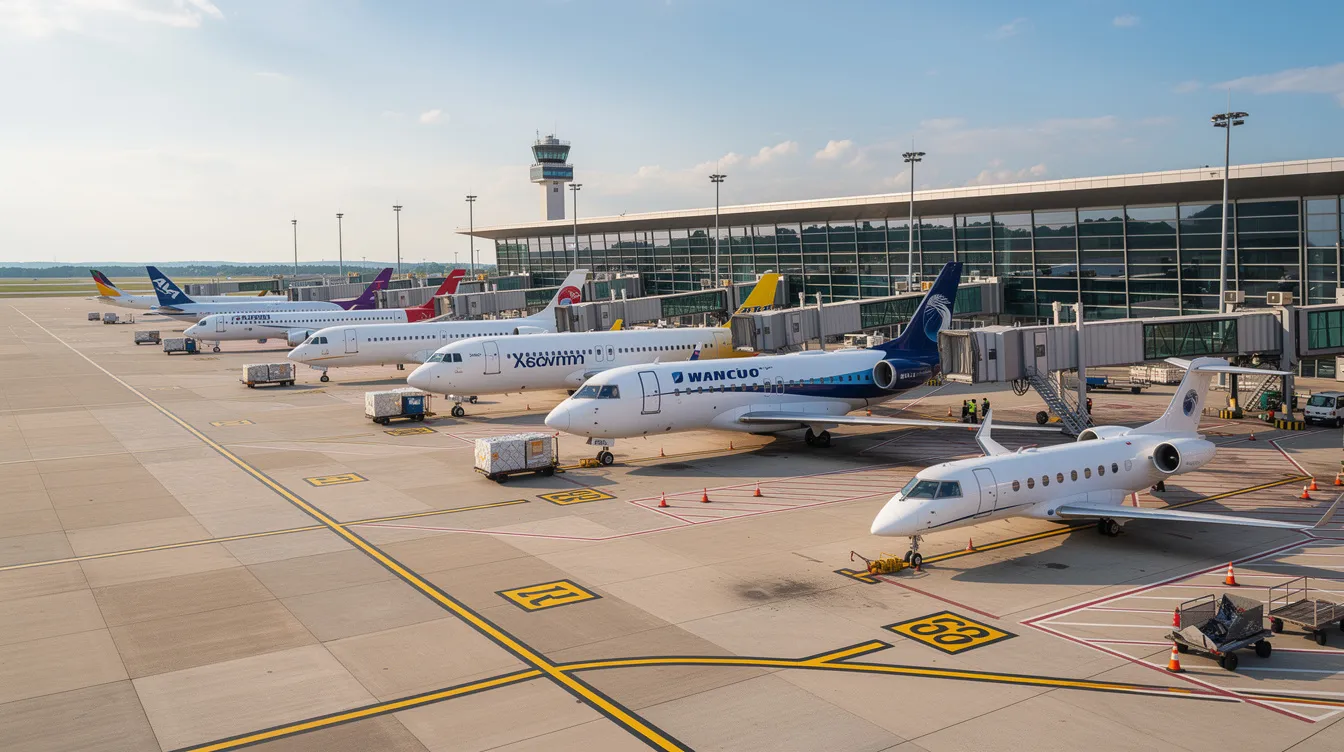
Airplanes typically have four seat classes: economy, premium economy, business, and first. The mix of these cabins has a major impact on how many passengers fit on the same airframe. Aircraft seating capacity is affected by cabin layout, safety regulations, and business models; cabin layout and class configuration significantly affect seating capacity.
Economy class is the densest layout, designed to maximize how many seats can be sold on each flight.
Premium economy uses wider seats and extra pitch, reducing total capacity but improving passenger comfort.
Business class seats and first class seats take up dramatically more space, especially on long-haul flights where lie-flat beds, direct-aisle access, and advanced amenities are standard.
To illustrate: most airlines configure the Airbus A380 with 500–615 seats in a multi-class layout, but the same plane could theoretically hold 853 in an all-economy configuration. The same point applies across most widebody aircraft - the fewer premium cabins, the more total seats.
Economy class is the baseline product on most airlines, and the majority of seats on an airplane are found here. Seating configurations vary by aircraft size:
Most narrowbody aircraft (Boeing 737, Airbus A320) use a 3–3 layout with an aisle down the center.
Most long-haul aircraft like the Boeing 777 use 3–3–3 or 3–4–3 configurations, while many Airbus A330s and A350s use 2–4–2 or 3–3–3.
Economy class seats usually have a pitch of 29 to 32 inches. Average seat width decreased from 18.5 to 17 inches between 2000 and 2018, reflecting pressure to fit more seats per row. Airlines often use slimline seats to increase capacity without much comfort loss - thinner seat backs create a few extra inches of perceived legroom.
Common basic amenities include fold-down trays, seat pockets, and limited power ports. On many long-haul flights, personal screens offer audio entertainment. Window seats and aisle seats are typically booked first by most travelers, leaving middle seats as the last to fill.
Ultra-low-cost carriers often choose the tightest pitch and simple fixed seats to answer "how many seats can we add?" rather than "how comfortable can each class's seats be?"
Premium economy sits between standard economy and business class, mainly on long-haul wide-body aircraft flown by many airlines based in North America, Europe, and Asia. Several airlines, including American Airlines, Delta Air Lines, Singapore Airlines, Qatar Airways, and Air India, now offer this cabin on their flagship long-haul aircraft.
Typical layouts feature 2–3–2 or 2–4–2 seating on widebody aircraft, with larger seats, extra legroom, footrests, and improved meals. Premium economy class offers more legroom than standard economy class, giving passengers more space without the cost of a full business class ticket.
Adding a premium economy cabin on Boeing 777 or 787 aircraft slightly reduces overall seat count but raises average revenue per passenger. For travelers wanting comfort without business class pricing, premium economy can be a smart compromise - a whole row of premium economy takes up roughly the same space as 1.3–1.5 rows of standard economy, and many private jet charter companies now emphasize similar trade-offs between comfort and capacity in their fleets.
Business class is now the primary premium cabin on most airlines. International first class is limited to a handful of carriers and flagship routes. For a breakdown of how these cabins differ, explore Jettly's guide to business class categories.
Long-haul business class often features lie-flat pods in 1–2–1 or 1–2–2 layouts, which drastically cut the number of seats versus economy but deliver much higher passenger comfort and yield per passenger. Business class often features lie-flat seats for comfort on long flights, and each seat may occupy the floor space of three or four economy class seats.
First class is even more spacious. Some carriers offer enclosed suites, separate beds, and advanced amenities like onboard showers on certain A380 operators - see Jettly's look at luxury first class flights for examples.
Domestic "first class" in the U.S. or short-haul "business class" in Europe can be far less elaborate - wider recliners or blocked middle seats rather than lie-flat suites. These simpler configurations have a smaller impact on how many seats fit on the aircraft than the long-haul versions.
When people ask "how many passengers can an airplane carry," they often think of the double-decker Airbus A380 or the iconic Boeing 747.
Airbus A380-800: The Airbus A380 can be configured to hold up to 853 passengers in an all-economy certification layout. In practice, most airlines configure the A380 with 500–615 seats across first, business, premium economy, and economy. Emirates has flown two-class A380s with roughly 615 seats.
Boeing 747-400 / 747-8: The Boeing 747-8 accommodates up to 605 passengers in a two-class layout. In three-class service, the 747-400 and 747-8 typically seated around 350–450 before production ended in the early 2020s.
Boeing 777-300ER: The Boeing 777-300ER usually carries about 550 passengers in a dense configuration, though most airlines seat it around 350–400 in three classes.
Airbus A350-1000: The Airbus A350-1000 can hold up to 440 passengers in a high-density layout, though typical three-class configurations seat 350–410.
Newer twin-engine wide-bodies are replacing the very large four-engine jets, offering more efficient operations with slightly fewer seats per flight. These trends are mirrored in the private sector as well, where a growing range of charter airlines and private operators offer aircraft that balance seat count, range, and efficiency.
Most travelers fly on single-aisle aircraft like the Boeing 737 and Airbus A320 families. These form the backbone of domestic and regional networks worldwide.
Capacity ranges by model:
|
Model |
Typical Seat Range |
|---|---|
|
Boeing 737-700 |
120–149 |
|
Boeing 737-800 / MAX 8 |
160–189 |
|
Airbus A320neo |
150–186 |
|
Airbus A321neo / A321XLR |
185–244 (high-density layout) |
Airlines such as American Airlines and Delta Air Lines may use different cabin layouts even on the same model. Some configurations focus on extra-legroom rows and a small first-class cabin, while others pack in tightly spaced all-economy seating. Narrow-body aircraft typically hold 100 to 240 seats for domestic and short-haul routes.
These jets often offer only economy class and a small domestic first or business cabin, making them clear examples of how seat count is driven by route length and fare strategy. For travelers considering alternatives, understanding affordable aeroplane rental costs and options can help compare commercial fares with charter pricing on smaller aircraft.
Private aviation is a different world. Seat count is much lower - private jets typically seat between 4 and 19 passengers - but comfort, productivity, and schedule control are far higher than on commercial aircraft, especially when you understand how private jet charter pricing works and which aircraft sizes fit your budget.
Here is how categories break down:
|
Category |
Typical Seats |
Best For |
|---|---|---|
|
Very light jets |
2–4 |
Short hops, 1–2 hours |
|
Light jets |
4–8 |
Regional trips, small groups |
|
Midsize / super midsize |
7–12 |
Cross-country, short transatlantic |
|
Large-cabin / ultra-long-range |
10–19 |
Intercontinental, maximum comfort |
Light jets usually carry 4 to 8 passengers, making them ideal for a family or small team. Large-cabin jets can seat 10 to 19 passengers for longer missions. Very light jets can be configured for 2 to 4 passengers on quick regional flights. Many feature leather seats, generous legroom, and a level of space that no commercial flight attendant would recognize as "economy." For detailed specs, see Jettly's private jet model guide.
VIP airliners and corporate shuttles - often chartered for sports teams, government delegations, or corporate roadshows - may offer 20 to 75+ seats in spacious, lounge-style seating configurations, and platforms that crowdsource private jet flights and share empty seats can help offset the cost of those larger-capacity charters.
Jettly's digital marketplace connects travelers to more than 20,000 aircraft worldwide across these categories, allowing customers to choose an aircraft that matches group size, range, and desired cabin features.

Regulators - not airlines alone - decide the upper limit of how many passengers may fly on a given aircraft type. The maximum number of seats is limited by the number, size, and location of emergency exits.
Authorities like the Federal Aviation Administration and EASA certify maximum seating based on emergency evacuation tests. Seating capacity must allow evacuation in 90 seconds or less per safety regulations, using only half the available exits in simulated emergency conditions. Aviation consumer protection rules also ensure that airlines can't simply cram passengers in without regard for safety.
Beyond exits, maximum takeoff weight, required fuel for long routes, and baggage load can force airlines to cap passengers below the theoretical maximum - particularly on very long-haul flights, which is just as relevant when planning international private jet flights that must account for range, fuel reserves, and overflight permissions.
When airlines install larger galleys, extra lavatories, or more business class and first class seats, they reduce seat count intentionally. Airlines must balance seating density with passenger comfort and operational costs. These are deliberate trade-offs, not oversights.
Seat design choices - from adjustable headrests to recline limits - determine both comfort and how tightly rows can be spaced.
Standard seats are mounted to rails underneath the cabin floor, allowing rows to be repositioned or reconfigured. Integrated seatbelts and reclining mechanisms (mechanical or electric depending on class) are built into the frame. Seats must be fire-resistant to meet certification standards, and even small electrical appliances embedded in seat backs undergo safety testing.
Common basic amenities in economy include tray tables, storage pockets, reading lights, and - on many long-haul flights - power ports and personal entertainment screens for each passenger.
In premium cabins, seats offer advanced amenities: lie-flat beds, privacy doors, personal wardrobes, and upgraded cushioning. These features require more space and naturally reduce the number of seats. Specialized services such as in-flight catering for private jets further enhance the premium experience but also influence how cabin space is allocated. A co-founder of any airline startup would tell you that deciding between one seat of business class and three economy class seats is fundamentally a revenue optimization problem.
Travelers should think less about the absolute maximum "how many seats" on an airplane and more about how many passengers should fly together for a specific trip.
Large commercial jets are efficient for moving hundreds of people between major hubs. But they involve longer check-in, security, boarding, and baggage times - especially when flights are full and other passengers crowd the gate.
Private jet charter through platforms like Jettly flips this equation. Groups of 2–12 passengers can fly on tailor-suited small aircraft, depart from smaller airports, and typically arrive only 20–30 minutes before departure. Travelers exploring membership options can also use Jettly's jet card flight cost estimator alongside the standard charter cost estimator to compare options.
A few real-world use cases:
Executive team: A group of 10 books a super midsize jet for a same-day multi-city roadshow, avoiding commercial connections entirely.
Family vacation: A family of 4 chooses an 8-seater plane for a holiday route with no nonstop commercial service.
Sports team: A roster of 30 charters a VIP airliner with lounge seating and extra cargo space for equipment.
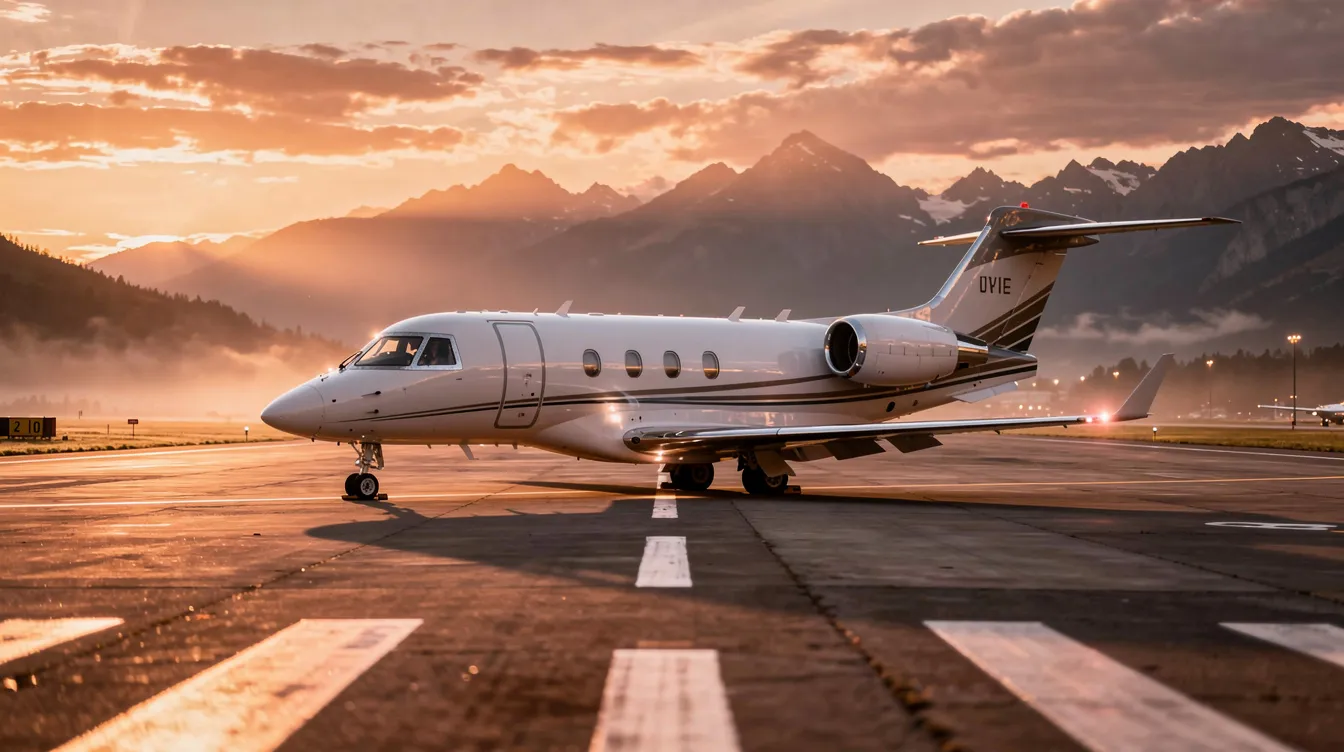
Jettly is a digital private aviation platform that lets travelers view instant pricing and seat layouts for thousands of private aircraft worldwide. There is no need to call brokers or wait for quotes.
The platform allows users to filter by number of passengers, route distance, and desired cabin category to quickly find aircraft with the right seat count and range for their itinerary. Whether a traveler needs to fly 4 people or 40, the inventory spans very light jets through VIP airliners.
Jettly offers both on-demand charter and membership options, including structured jet card programs, helping frequent flyers choose between flexible one-off trips and more structured access with predictable pricing.
Learn more about Jettly's charter options at https://www.jettly.com - and right-size your aircraft without the long-term commitments of ownership.
These questions cover practical details not fully addressed above, from typical seat counts by route to how seat maps work in practice.
Most mainline domestic flights use Boeing 737 or Airbus A320 family aircraft with roughly 150–189 seats. Regional jets may carry 50–76 passengers depending on the model. Airlines like American Airlines, Delta Air Lines, and United use multiple interior configurations, so exact seat counts vary even for the same aircraft type. Checking the airline's seat maps before booking is the easiest way to confirm capacity.
Each airline designs its own cabin layout, choosing how many rows of economy class to install, whether to add premium economy, and how large business class or first class cabins will be. Decisions about seat width, galley size, lavatories, and legroom all affect how many seats can fit. Capacity is as much a business choice as a technical limit.
Check the airline's seat maps during booking or in the "manage booking" section. You can usually see total rows running down the cabin and seats per row. Third-party seat map websites also display seating configurations for many airlines, but actual loads change as tickets are sold. The map shows potential capacity, not the final passenger count.
Traditional business jets are certified for up to about 19 passengers and are rarely configured in dense layouts. Private travelers prioritize space, comfort, and productivity. When larger groups need more seats, operators generally use converted airliners or corporate shuttles with 20–75+ seats. Travelers comparing options can explore different ways to get a seat on a private jet easily depending on group size and budget. For more on small aircraft options, see Jettly's small aircraft guide.
Large commercial airliners are usually more fuel-efficient on a per-seat basis when mostly full. Private jets are more efficient in terms of time saved, schedule flexibility, and door-to-door productivity for smaller groups. Travelers should consider both total cost and the value of their time when deciding between a seat on a big airliner and chartering a right-sized private aircraft through a platform like Jettly.
Ready to experience private travel on your terms? Explore flight options or request a quote at https://www.jettly.com. Travelers who want to browse specific aircraft can review Jettly's global private charter aircraft inventory, while those focused on saving money per seat might learn how to buy a seat on a private jet or use the airport locator tool to find convenient departure points. Frequent flyers evaluating providers can compare Jettly as a NetJets alternative, or look into destination-specific services such as private jet charter in Chennai, Tamil Nadu, Kolkata, West Bengal, and New Delhi, Delhi. Corporate travelers may prefer working directly with vetted operators like DEXTER AIR TAXI or ZENFLIGHT, and those with an audience can join Jettly's ULTRA High Ticket affiliate program to earn commissions.
Knowing how many seats an airplane has—and why that number varies—empowers travelers to make informed choices. Commercial aircraft seat counts range from about 100 to over 800 passengers, shaped by aircraft design, airline layout preferences, and cabin class mixes. Private jets prioritize fewer seats for greater comfort and flexibility, typically seating 4 to 19 passengers, with VIP airliners accommodating larger groups in lounge-style settings.
Safety regulations, emergency exit requirements, and operational needs ultimately limit seat counts beyond physical cabin size. Airlines balance maximizing revenue with passenger comfort, while private aviation focuses on personalized travel experiences.
Jettly’s platform simplifies finding the right aircraft size and seat count for your trip, whether a small executive team or a large family vacation. Understanding these factors helps you select the best travel option, saving time and enhancing comfort.
Ready to experience private travel on your terms? Explore flight options or request a quote at https://www.jettly.com.
Share this post:
Jay Franco Serevilla
Sep 12, 2026
|
5
min read
Discover tips and trends in the industry.
5
min read
WN Airline: Why Southwest Airlines Uses the WN Code (and What It Means for Travelers)
The WN code is the official IATA designation for Southwest Airlines, crucial for travelers to understand for booking and tracking flights. This guide explains the significance of the WN code, its history, and how it impacts travel planning and loyalty programs like Rapid Rewards. Knowing the WN code helps avoid confusion and enhances the travel experience with Southwest Airlines.
Read More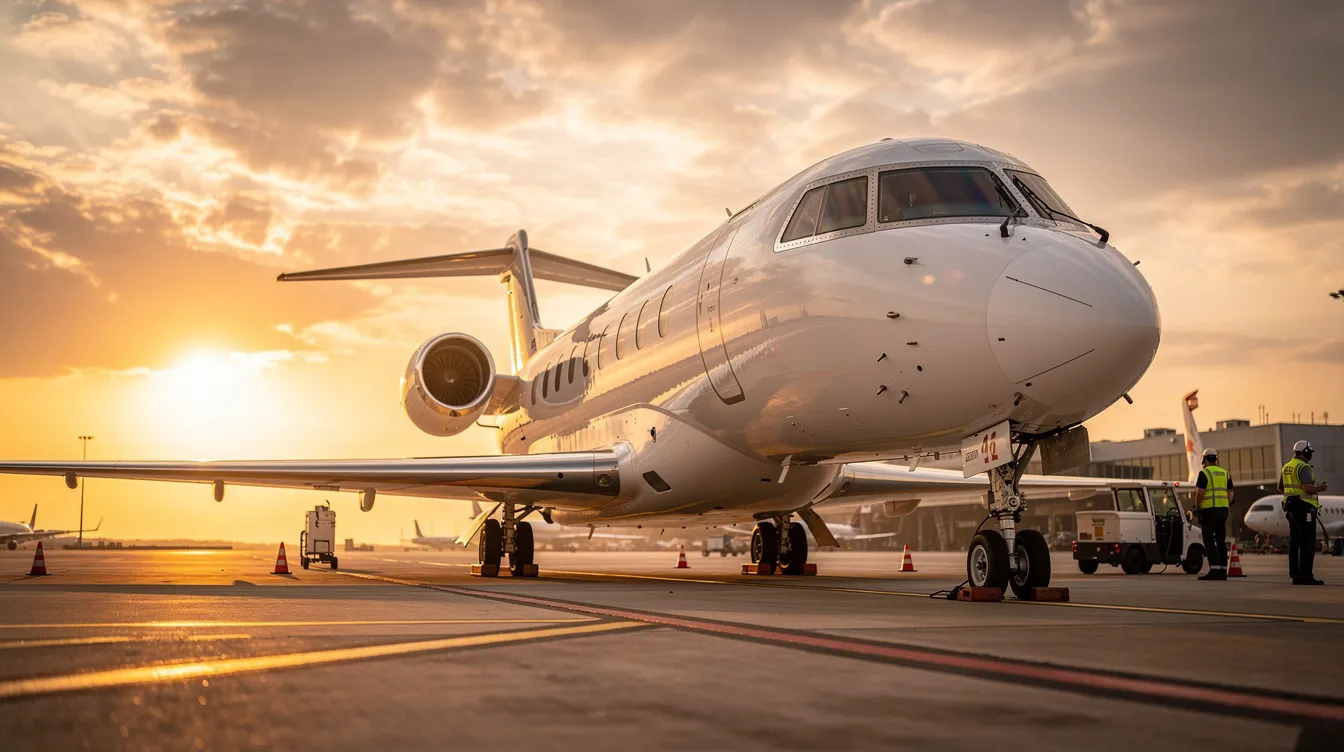
5
min read
Shared Aircraft Ownership: Fractional Ownership, Co‑Ownership, and Flexible Alternatives
Shared aircraft ownership offers flexible options like fractional ownership and co-ownership, making private aviation accessible for those flying 50 to 400 hours annually. These models reduce costs and operational burdens while providing access to a range of aircraft. On-demand charter services like Jettly complement these ownership structures, offering flexibility without long-term commitments.
Read MoreStay updated with our latest insights and tips to elevate your journey with us.
MEMBERSHIPS AND ASSOCIATIONS



Disclaimer: Jettly operates as a charter broker, offering access to a global digital jet charter marketplace. Jettly is not a direct air carrier and does not own or operate aircraft. All advertised flights are conducted by third-party air carriers that are fully licensed and hold the appropriate Part 135 or Part 121 certifications issued by the Federal Aviation Administration (FAA) or equivalent regulatory authorities under U.S. or foreign law. Jettly complies fully with the U.S. Department of Transportation's Part 295 and Part 298 Charter Broker regulations. Jettly does not carry additional liability insurance. Passengers are covered by aircraft operator insurance. TICO: 50023770


