



Login
Get Instant Pricing On 23,000+ Aircraft

>
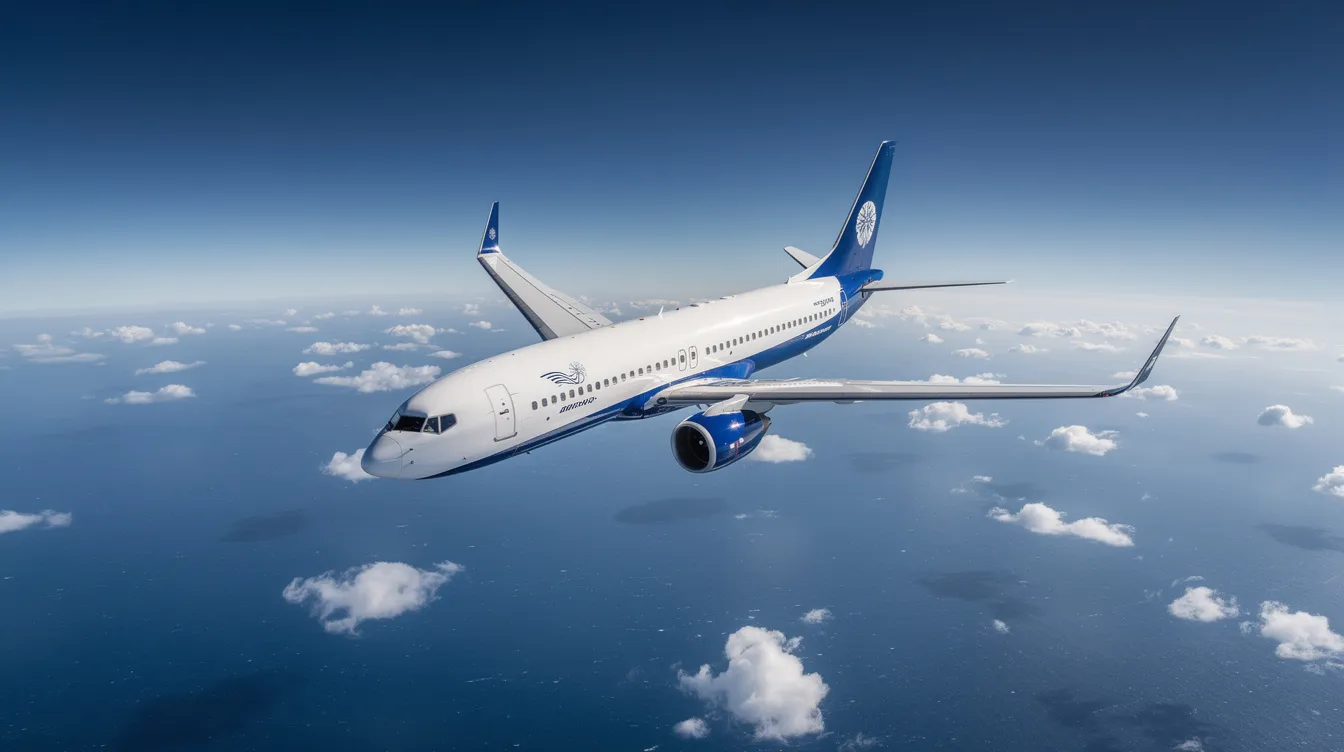
The Boeing 737-800 is one of the most widely flown single-aisle aircraft in the world. Its maximum range of 3,377 nautical miles (6,255 km) makes it a workhorse for coast-to-coast flights, regional routes, and medium-haul sectors connecting cities across continents. But the range of the Boeing 737-800 is not a fixed number. Payload, wind, temperature, fuel reserves, and airline configuration all push or pull that figure by hundreds of nautical miles. This article breaks down how far the 737-800 can actually fly, what shifts its range in practice, and how charter customers can use that information when planning large-group or VIP trips. This guide is designed for travelers, charter customers, and aviation enthusiasts who want to understand the real-world range of the Boeing 737-800 and how it impacts flight planning and travel options.
The Boeing 737-800 has a maximum range of 3,377 nautical miles (6,255 km). In normal commercial or charter service with a full passenger load, most operators plan for a more realistic 2,800 to 3,100 nm window depending on load and conditions.
"Range" varies with several factors: payload weight, seasonal winds, ambient temperature, mandatory fuel reserves, and cabin layout. A 162-seat typical two-class layout weighs less than a 189-seat single-class configuration, and that weight difference alone can shift range by a few hundred nautical miles.
Routes that fit comfortably within the 737-800's envelope include London to Cairo (~1,350 nm), New York to Los Angeles (~2,150 nm), and Toronto to Vancouver (~1,900 nm). Routes approaching 3,000 nm or more, such as Buenos Aires to Bogotá, require careful payload planning, and a fuel stop may be necessary on high-headwind days.
The 737 next generation series improved total fuel capacity and fuel efficiency over earlier 737s, while the 737 MAX family extends range further still, with the MAX 8 reaching roughly 3,500 nm.
Boeing Business Jet variants based on the 737 fuselage can more than double effective range using auxiliary belly fuel tanks, reaching 5,000 to 6,000+ nm. Charter platforms like Jetfly use these long-range capabilities for large-group and VIP aircraft missions where nonstop intercontinental travel is required.
The Boeing 737-800, part of the Boeing 737 Next Generation family, has a published maximum range of around 3,377 nautical miles (6,255 km). That figure assumes minimal payload, ideal weather conditions, and optimized fuel reserves. The aircraft competes in the single-aisle market against aircraft like the Airbus A320 and Boeing 737 MAX 8.
Here is how the published figure breaks down in practice:
Maximum advertised range: ~3,377 nm with minimal payload, standard reserves, and no adverse winds.
Typical airline range with passengers, baggage, and cargo: roughly 2,800 to 3,100 nm.
Ferry range (crew only, no payload): around 3,760 nm, as documented by PlaneRange.
To put those numbers in real-world terms:
New York to Los Angeles (~2,150 nm, well within range).
London to Moscow (~1,300 nm, easily within range).
Dubai to Istanbul (~1,600 nm).
London to Dubai (~3,400 nm, pushing or exceeding standard 737-800 limits and generally better suited to long-range aircraft or a 737 MAX with favorable conditions).
Fuel efficiency, winglets, passenger load, and cargo all shift the practical limit. A fully loaded 189-seat aircraft on a hot day with headwinds has a shorter reach than a half-full charter on a cool, calm evening.
Travelers booking a large-group charter through Jettly can have operations teams evaluate whether a 737-800 can fly their route nonstop or whether a fuel stop or different airframe is the better call, referencing detailed Boeing 737-800 specs, range, and charter rates to align expectations with real-world performance.
Aircraft range is the maximum distance a plane can fly from takeoff to landing with required fuel reserves intact. It is not a single fixed number.
Manufacturer range figures rest on a set of standard assumptions:
International Standard Atmosphere (ISA) conditions (15°C at sea level, standard pressure lapse rate).
No strong headwinds or tailwinds.
Optimum cruise altitude (typically 35,000 to 41,000 ft for the 737-800).
Standard fuel reserves for diversion and holding. Commercial flights must carry enough fuel to reach a diversion airport and for extra designated buffer time.
A specific payload scenario, often a typical two-class layout with average passenger weight.
"Ferry range" refers to flying the Boeing 737-800 with crew only and minimal payload. In this configuration, the aircraft can exceed its published commercial range by 500+ nm, reaching roughly 3,760 nm according to PlaneRange data.
Three different range concepts matter in operations:
Maximum structural range: what fuel capacity and engines physically allow.
Economic range: what makes financial sense for airlines in normal operations.
Regulatory range: what is permitted once fuel reserve requirements, diversion airports, and ETOPS rules are factored in.
The operational range of the Boeing 737-800 varies based on payload and fuel configuration. Private charters sometimes trade seats for extra fuel margin, meaning a chartered 737-800 carrying fewer passengers may fly farther than a high-density scheduled configuration on the same route.
The Boeing 737-800 sits in the middle of the 737 Next Generation series, which includes the 737-600, 737-700, 737-800, and 737-900/900ER. Boeing launched the NG family in the mid-1990s to replace the Classic 737 generation series (-300/-400/-500), with the first delivery arriving in 1998.
The NG family improved on the Classic 737s in several concrete ways: a redesigned wing with higher span, increased total fuel capacity, higher maximum takeoff weight, and more fuel-efficient CFM International CFM56-7B engines. These aerodynamic improvements and the advanced technology engine package together reduced fuel burn by roughly 7 to 10% compared to the Classic series.
Typical ranges across the NG variants:
737-600: roughly 2,900 nm.
737-700: about 3,365 nm.
737-800: up to about 3,377 nm.
737-900ER: a little over 3,100 nm when equipped with auxiliary fuel tanks. The 737-900ER variant offers higher seating capacity than the 737-800 but trades some range for the extended fuselage.
The 737-800 became the best-selling variant of the NG family because it strikes a balance between how many passengers it can carry and how far it can fly on common short- and medium-haul networks. The Boeing 737-800 serves short- and medium-haul routes in commercial aviation, and many airlines in over 100 countries operate the type on everything from regional routes to coast-to-coast sectors.
For charter users, the 737-800's combination of range and cabin space makes it a frequent choice for sports teams, touring artists, and corporate roadshows booking through platforms like Jettly, which also provides access to a wide range of private charter aircraft for missions where different capacities or ranges are required.
Key performance parameters directly influence the Boeing 737-800's operational range: maximum takeoff weight, fuel capacity, fuselage length, and engines.
Here is a spec snapshot:
Maximum takeoff weight: around 79,000 kg (174,200 lb).
Typical operating empty weight: about 41,000–41,500 kg (90,000+ lb).
Fuselage length: approximately 39.5 m (129 ft 6 in), making it a stretched version of the 737-700.
Wingspan: about 35.8 m (117 ft 5 in) with blended winglets that reduce drag.
The standard fuel capacity fits roughly 6,875 US gallons (about 26,020 liters) across wing and center tanks. Some configurations push total fuel capacity slightly higher depending on tank options.
The 737-800 is powered by two CFM56-7B turbofan engines from CFM International. Cruising speed is approximately 453 knots at a service ceiling of 41,000 feet. Efficient cruise at these altitudes is central to the aircraft's range capability; thinner air means lower drag, which translates to better fuel burn per nautical mile.
Modest design choices help the aircraft balance short-field landing performance and fuel efficiency. The landing gear is built for operations on runways from 7,000 ft upward at typical weights, while the wing profile with improved aerodynamics provides lift characteristics suited to both short regional hops and longer sectors near maximum range.
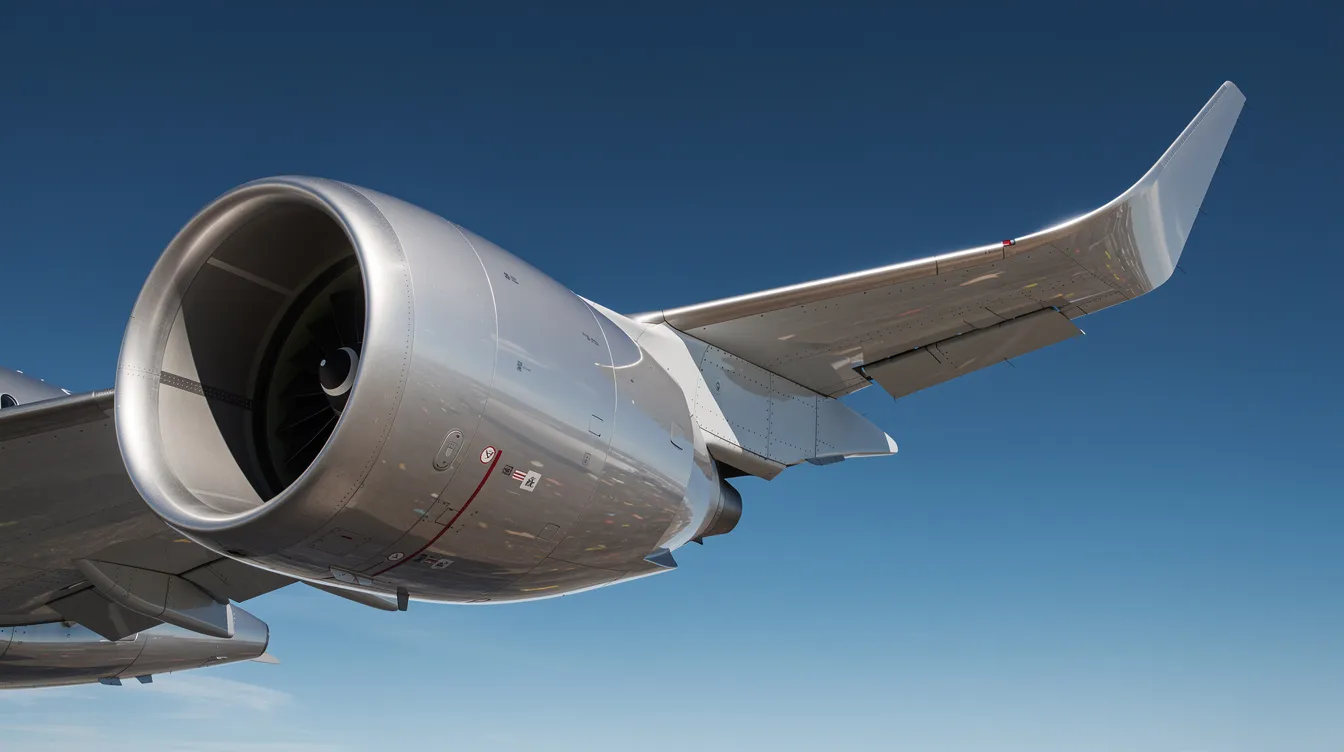
Fuel capacity directly determines how far the 737-800 can fly. More usable fuel generally equates to more range, but each additional gallon raises takeoff weight, which in turn increases fuel consumption during climb and cruise.
The Boeing 737-800 carries approximately 6,875 US gallons (~26,020 liters) of usable fuel across its tank system. At typical cruise fuel burn rates of 850 to 1,200 gallons per hour (depending on weight and altitude profile), this translates to an estimated maximum endurance of roughly 6 to 7+ hours in ideal conditions. Typical flight duration for the Boeing 737-800 is around 6 to 8 hours without refueling.
The tank layout consists of two wing tanks and a center tank. Airlines can optionally use center-tank capacity to extend operational flexibility on longer routes; on shorter legs, center tanks are often left partially empty to save weight.
High-altitude or hot-and-high airports create a direct trade-off. At fields like Denver (5,431 ft elevation) or Johannesburg (5,558 ft), reduced air density forces operators to either carry less fuel or reduce payload to stay within safe takeoff weight limits. The maximum range of the Boeing 737-800 can be reduced when carrying maximum passengers and cargo at such airports.
For charter flights arranged through Jettly, dispatchers evaluate tankering strategies, which involve carrying extra fuel from cheaper or lower-elevation locations, against maximum range and weight limits for each sector, often coordinating with top private jet charter companies across different regions to secure suitable aircraft.
The 737-800 is recognized as one of the more fuel-efficient narrow-body airliners of its era, particularly at high load factors where the per-seat cost of fuel drops.
Estimated fuel burn runs roughly 850 to 1,200 gallons per hour depending on weight and flight profile. In a high-density 189-seat layout, that works out to approximately 4.5 to 5 gallons per seat per hour, a figure that made the aircraft competitive in fuel consumption against the Airbus A320 for decades. The 737-800 competes closely with the Airbus A320 in performance on most medium-haul stage lengths.
Advanced blended winglets on the next-generation wing design reduce drag by roughly 4 to 5%, extending practical range on longer legs and cutting annual fuel costs per aircraft. Some operators have retrofitted Split Tip Winglets for additional gains.
Compared to the 737 Classic, the 737-800 delivers roughly 7 to 10% better fuel burn thanks to the CFM56-7B engine's higher bypass ratio and the NG wing's ability to cruise efficiently at higher altitudes.
On sustainability: improved fuel efficiency translates directly into lower CO₂ per passenger-kilometer compared with older 737 models. Operators can further reduce environmental impact by using sustainable aviation fuel (SAF) when available, which cuts lifecycle emissions without changing the aircraft's fundamental range or performance characteristics.
Fuselage length determines how many passengers an aircraft can carry. Additional seats, passengers, and bags add weight, and that weight measurably affects range.
The 737-800 fuselage length of approximately 129 ft 6 in (39.5 m) supports two standard cabin configurations:
About 162 passengers in a typical two-class layout with six-abreast seating.
Up to 189 passengers in a single-class economy layout. The Boeing 737-800 seats up to 189 passengers.
High-density layouts increase revenue potential but raise takeoff weight. Adding 27 extra passengers (plus their 20+ kg bags each) means roughly 2,700 kg more weight, which can reduce range by several hundred nautical miles on longer sectors.
The cabin features include larger overhead bins, advanced in-flight entertainment systems, Boeing Sky Interior options on newer delivered aircraft, oversized windows for a bright cabin atmosphere, and multiple lavatories for passenger comfort and convenience.
Shorter variants like the 737-700 can sometimes fly longer thin routes than a heavily loaded 737-800 on the same fuel load because of reduced structural and empty weight.
VIP or corporate charters using an airliner-style cabin for fewer passengers gain extra range margin. A partially filled 737-800 carrying 80 passengers instead of 189 is several thousand kilograms lighter, translating into hundreds of additional nautical miles of range. VIP configurations on such aircraft sometimes feature plush leather seats and generous legroom, further reducing passenger count and weight, and some travelers explore these layouts by getting a seat on a private jet easily through modern booking platforms.
Operational flexibility describes an airline's or charter operator's ability to serve a wide variety of city pairs nonstop using the 737-800. The aircraft can connect major cities without a fuel stop on most routes under 2,800 nm.
Example route types within typical 737-800 range:
North American transcontinental flights (New York to Los Angeles, Toronto to Vancouver).
Intra-European routes (London to Athens, Paris to Cairo).
Regional Asia routes (Singapore to Tokyo via shorter sectors, Dubai to Delhi).
Several airlines push the aircraft near the edge of its range envelope. United Airlines operates routes like RDU (Raleigh-Durham) to SFO (San Francisco) at roughly 2,090 nm. Alaska Airlines and Southwest Airlines both use the 737-800 across their domestic networks, with certain Middle East to Europe sectors flown by other carriers approaching 3,000 nm with careful planning. West Coast US to Hawaiian Islands services run around 2,400 to 2,700 nm.
Airport factors can force payload restrictions or intermediate fuel stops even on routes within advertised range. A hot afternoon departure from a high-elevation airport may require reducing passenger headcount or cargo weight to maintain safe takeoff margins and adequate fuel reserves.
Jettly's mission planning tools and partner operators evaluate these constraints when offering nonstop vs one-stop options for large-group charters on the 737-800, including opportunities to crowdsource private jet flights and share empty seats when flexibility and cost-sharing make sense.
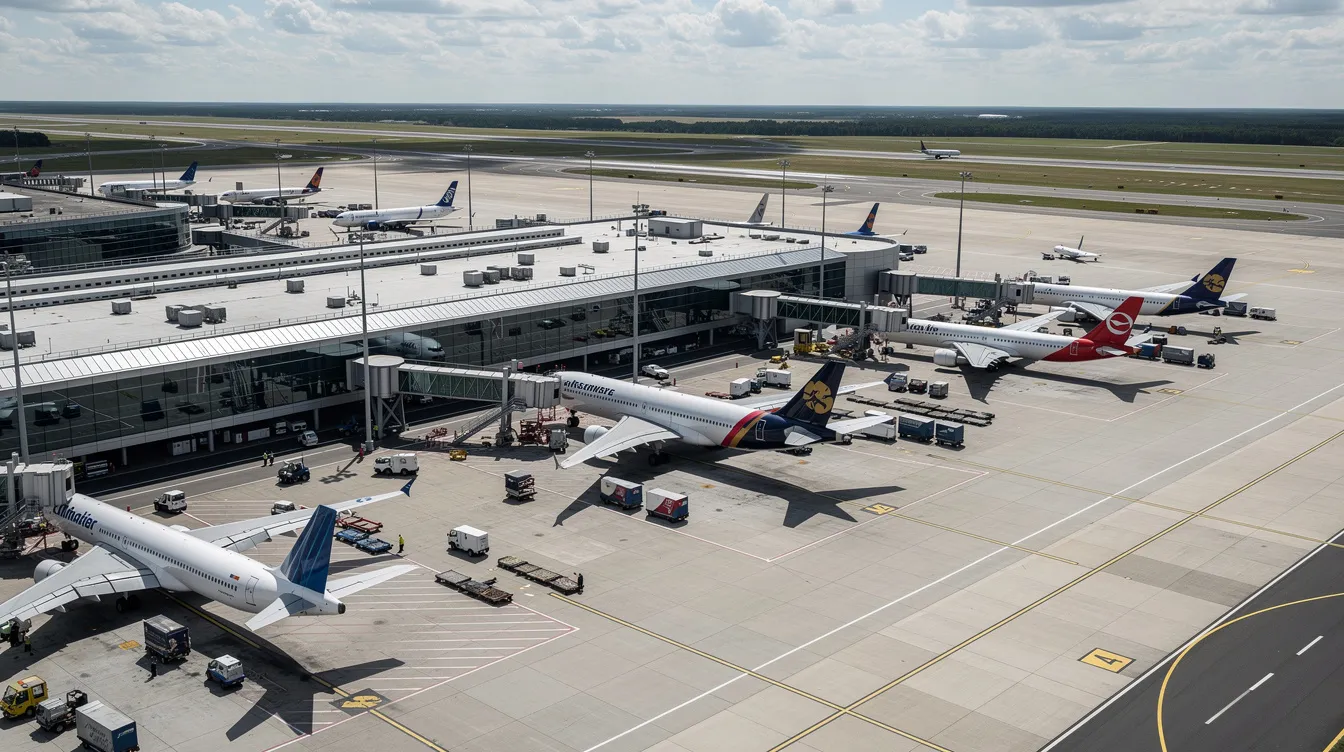
The 737 MAX family is the 737 Next Generation's successor, designed to extend range and improve fuel efficiency with new LEAP-1B engines, aerodynamic improvements, and advanced technology winglets.
Range comparisons:
737-800 NG: up to ~3,377 nm under optimal conditions.
737 MAX 8: around 3,500 nm. The 737 MAX 8 has a slightly longer range than the 737-800.
737 MAX 7: up to about 3,800 to 3,850 nm, the longest in the Boeing 737 family.
737-900ER NG: just over 3,100 nm with auxiliary fuel tanks.
LEAP-1B engines on the 737 MAX series deliver approximately 14 to 20% better fuel efficiency than 737 NG aircraft. That translates into extra range on the same fuel load or improved economics on identical stage lengths. The MAX's maiden flight took place in January 2016, and the launch customer (Malindo Air) received its first aircraft delivered in May 2017, with FAA certification following the type's widespread adoption.
The 737-800 still serves as a medium-range workhorse even alongside newer MAX aircraft. Many airlines in regions where fleets have not fully transitioned continue to rely on it. Its proven track record across thousands of aircraft delivered since 1998 keeps it relevant.
For charter customers, Jettly can source both 737 NG and 737 MAX aircraft (where available and certified) for long medium-haul missions, matching range and seating capacity to each trip's requirements.
While the 737-800 is optimized for 1 to 4 hour flights, airlines have pushed its range on thinner long sectors where wide-body aircraft are not economical.
Representative long routes operated by 737-800s:
Buenos Aires (AEP) to Bogotá (BOG): approximately 2,520 nm, one of the longest scheduled 737-800 routes tracked by ClassFlyer.
US West Coast to Hawaii services at around 2,400 to 2,700 nm.
Long intra-Asia or Middle East to Europe sectors around 2,800 to 3,000 nm.
Extended regional flights in Africa or South America where alternatives are limited.
These flights require careful payload planning, specific seasonal scheduling to avoid strong headwinds, and flight-planning techniques that optimize cruise altitude and step climbs. Pilots typically fly at long-range cruise speed (Mach 0.78 to 0.79) rather than maximum cruise speed to preserve fuel and maximize distance.
On the roughest days, strong jetstream headwinds or high temperatures can force operators to add a refueling stop, even if the same route is normally flown nonstop. Headwinds increase fuel burn relative to ground covered and shorten the effective distance of the Boeing 737-800.
For charter operations, similar planning applies. Jettly's partner operators use performance data to confirm whether a proposed nonstop is viable with the requested passenger count, cargo, and in-flight catering weight.
Weather is one of the largest real-world factors moving range figures up or down for the Boeing 737-800. Range is affected by passenger load and weather conditions on every flight.
Wind effects:
Strong headwinds on westbound transcontinental flights can reduce effective range by hundreds of nautical miles. A 50-knot headwind sustained over a 5-hour flight adds roughly 250 nm of "extra" distance the engines must cover.
Tailwinds on eastbound legs sometimes allow reduced fuel loads or extra reserves, and can turn a marginal nonstop sector into a comfortable one.
Temperature and altitude effects:
High temperatures ("hot and high") reduce air density and lift, forcing longer takeoff rolls and reducing climb performance.
Airports located at higher elevations (e.g., Denver, Johannesburg) can require reduced payload to ensure safe takeoff, cutting into practical range even if fuel capacity exists.
Flight-planning systems model winds aloft and temperature at each altitude to calculate the fuel required for each Boeing 737-800 flight, adding mandated fuel reserves for diversions and holding patterns.
Private jet and airliner charters arranged through Jettly benefit from dynamic routing and departure-time flexibility. Shifting a departure by a few hours or selecting a different altitude can sometimes avoid the worst wind patterns or storm systems that penalize range.
The Boeing 737-800's range is tied not just to fuel and engines but also to which airports it can use. Runway length, slope, and surface condition affect landing performance and takeoff weight limits.
A fully loaded 737-800 typically requires runway lengths in the 7,000 ft (2,100+ m) range for comfortable margins on long-range departures. Shorter distances are possible on lighter, shorter flights with steel brakes or carbon brakes providing the stopping power.
Short regional or executive airports often have runways below this threshold, limiting direct Boeing 737 access and sometimes forcing passengers to connect via larger hubs. Long-range private jets can use shorter runways (roughly 5,000 ft or less), allowing closer access to final destinations even if their per-flight-seat count is lower.
Travelers can pair high-capacity 737 segments into major hubs with onward private jet sectors to smaller airfields, optimizing both range and airport access for complex itineraries, often starting by using an airport locator tool for private flights to identify suitable departure and arrival points. Jettly's platform supports this kind of multi-leg planning.
Boeing Business Jet models adapt standard Boeing 737 airframes into ultra-long-range corporate and head-of-state transports. These VIP aircraft are configured with luxury interiors and carry far fewer passengers than airline versions.
The BBJ1 is based primarily on the 737-700 but strengthened with 737-800 wings and landing gear. It achieves ranges over 6,000 nautical miles by using multiple auxiliary belly fuel tanks and carrying just a handful of passengers.
The BBJ2 uses the 737-800 fuselage length, adding about 25% more cabin space and double the baggage volume of the BBJ1. Range sits around 5,000 to 6,000 nautical miles depending on tank configuration and interior layout. QuantumJets documents BBJ2 ranges of approximately 5,400 to 5,800 nm, while JetAviation lists a 14 to 17 passenger configuration at about 5,100 nm.
The BBJ3, based on the 737-900ER, offers an even longer fuselage and roughly 4,700+ nm of range with auxiliary fuel tanks, trading some range for expanded interior space. The US Navy has also operated militarized versions of the 737 platform for transport and surveillance roles.
Such Boeing Business Jet aircraft are sometimes available on the charter market and can be accessed through platforms like Jettly, offering intercontinental nonstop capability. A BBJ2 can connect cities like New York to London or Dubai to London with customized VIP interiors for up to 30 passengers.
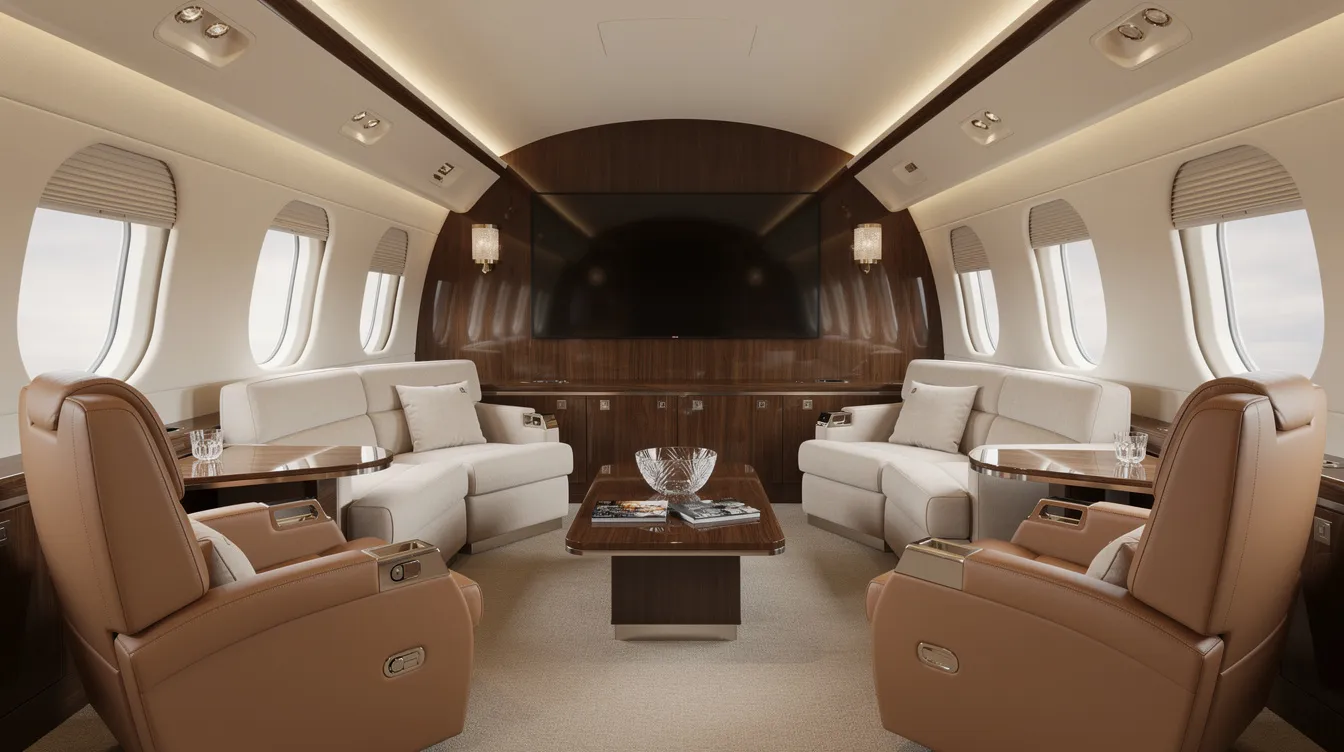
While the Boeing 737-800 carries far more passengers than most private jets, its range is shorter than modern long-range business jets and dedicated ultra-long-haul airliners like the Boeing 777-200 LR with its extreme range capability.
Approximate range comparisons:
737-800 NG: up to about 3,377 nm.
Large-cabin private jets such as Gulfstream G650 or Bombardier Global models: often 6,000 to 7,500+ nm nonstop.
BBJ variants: around 5,000 to 6,600 nm depending on type and configuration.
Private jets are optimized for smaller groups (8 to 19 passengers), allowing designers to prioritize large fuel tanks and higher cruising altitudes for very long sectors. A Gulfstream G650 cruises above 45,000 ft, well above most commercial traffic, reducing drag and improving range.
Per-seat fuel efficiency favors a full 737-800. But travel time savings, direct routing to smaller airports, and overnight intercontinental legs often favor a long-range private jet for corporate or family travel.
Real-world use cases illustrate the difference:
Chartering a 737-800 via Jettly for 80+ passengers on a 3-hour regional hop.
Choosing a long-range business jet on the same platform for 8 to 12 executives flying 6,000+ nm nonstop between continents, especially on missions where understanding how private jets fly internationally over oceans is critical.
Group charter planners evaluating a Boeing 737-800 through Jettly should weigh range against passenger count, route distance, and operational constraints.
Typical charter profiles for a 737-800:
Corporate events and product launches between major business hubs.
Sports teams traveling between league cities in South Korea, the Middle East, or across North America.
Incentives or conference groups flying to resort destinations within 3,000 nm.
Charter costs for a Boeing 737-800 range from $11,000 to $18,000 per hour. Pricing depends on route, season, and repositioning time. Peak travel periods increase charter costs for the 737-800, and most quotes include occupied flight hours and additional fees for crew, handling, and catering. Empty-leg flights can reduce charter costs when operators need to reposition aircraft, and tools like a private jet charter cost estimator help benchmark these expenses against other aircraft types.
For near-range-limit routes, charter brokers and operators may propose:
Reduced passenger headcount to maintain safe fuel reserves.
Strategic tech stops for refueling.
Or alternative aircraft types with greater range if nonstop is essential.
Operational flexibility considerations, including slot availability, airport opening hours, and ground handling quality, can sometimes drive aircraft choice as much as pure range numbers, leading some planners to compare 737-800 options with the broader universe of private charter aircraft available for complex trips.
Readers can use Jettly's digital booking and instant pricing tools to compare 737-800 options with other airliners and large-cabin jets, with the platform displaying aircraft category, approximate range, and indicative pricing side by side, while practical advice on booking the cheapest private jet flights helps keep total trip costs in check.
Range and fuel efficiency are closely linked to environmental impact for aircraft like the Boeing 737-800, which completes thousands of flights daily across many airlines worldwide.
The 737-800's CFM56-7B engines and wing design deliver lower CO₂ emissions per passenger-kilometer than earlier 737 generations when operated at high load factors. A fully loaded 189-seat flight burning 850 gallons per hour produces less carbon per passenger than the same route flown half-empty.
Blended winglets and, in some fleets, further winglet upgrades trim fuel burn by several percent across long sectors, indirectly extending operational range and reducing emissions on each flight.
Some operators experiment with sustainable aviation fuel (SAF) blends on 737 NG flights. SAF can cut lifecycle emissions by up to 80% compared to conventional jet fuel, without changing the aircraft's fundamental range characteristics or requiring engine modifications.
Jettly customers can inquire about operators offering carbon offset programs or SAF usage on chartered Boeing 737-800 and private jet flights, aligning long-distance travel with sustainability goals.
Despite its solid range, there are scenarios where a Boeing 737-800 is not the best aircraft for a mission.
Situations where the 737-800 may be range-limited:
Intercontinental routes beyond ~3,000 nm with strong prevailing headwinds.
Hot-and-high departures where reduced climb performance forces weight limits.
Long overwater segments where diversion and reserve fuel requirements cut usable range below what the route demands.
Adding auxiliary fuel tanks to a standard 737-800 is not common in regular airline operations. Instead, airlines and charter customers pivot to wide-body aircraft or long-range business jets for routes that exceed the type's practical envelope.
Concrete examples: New York to London (~3,000 to 3,100 nm depending on routing) sits at the theoretical edge of a lightly loaded 737-800 but is not flown in regular revenue service on the type. Dubai to London (~2,900 to 3,000 nm) faces similar constraints. Both routes are better served by wide-bodies or BBJ-class aircraft.
Jettly's platform and support team help customers quickly identify when a 737-800 is ideal and when a different aircraft type will better meet nonstop and passenger comfort requirements, often positioning Jettly as a flexible NetJets alternative for flying private without long-term ownership commitments.
This section offers simple guidance for non-technical readers comparing aircraft options and trying to understand whether a Boeing 737-800 can handle their trip.
Rules of thumb:
For flights under 2,500 nm, range is rarely a concern for a 737-800 unless airports are especially challenging.
Between 2,500 and 3,100 nm, ask about seasonal winds and payload limits.
Above 3,100 nm, consider other aircraft or be prepared for a fuel stop.
Share full trip details when requesting a quote: number of passengers, baggage (especially heavy sports or tour equipment), and desired departure times. All of these affect whether the 737-800 can fly nonstop.
Corporate travel planners should consider "mission mix." If most trips are 1 to 3 hours but one or two per year exceed 3,000 nm, they may combine 737-800 charters with long-range private jets across their annual travel program, drawing on industry overviews like the ultimate list of charter airlines and private operators to understand available options.
Ready to explore your options? Visit Jettly's global aircraft inventory and request quotes for specific routes at https://www.jettly.com, with transparent pricing and digital booking, and consider reading practical guidance on finding the cheapest private jet flights to make the most of your budget.
Under ideal conditions, a Boeing 737-800 can fly up to around 3,377 nautical miles. In normal commercial or charter service with a full passenger load, most operators treat 2,800 to 3,100 nm as a more realistic planning range. Actual nonstop capability on a given day depends on route winds, airport elevation and temperature, payload, and mandatory fuel reserves for diversions and holding.
Standard 737-800 aircraft are optimized for medium-haul routes rather than routine transatlantic operations. Most scheduled transatlantic services use wide-body jets or longer-range 737 MAX variants and BBJs instead. While a lightly loaded 737-800 might technically complete some shorter North Atlantic crossings under very specific conditions, it is not the common or preferred choice for regular oceanic routes. The Airbus A320 family faces similar limitations.
The aircraft can seat up to 189 passengers in a single-class layout, but airlines and charter operators often choose 160 to 170 seats to improve passenger comfort and preserve extra range margin on longer legs. Removing just a few rows of seats or flying with a partially filled cabin reduces weight, improving both climb performance and range, especially from hot-and-high or shorter runways. The 737's seat capacity options are detailed in Jettly's aircraft guides.
The 737-800 benefits from CFM56-7B engines, a redesigned next-generation wing, and modern winglets, all of which reduce specific fuel consumption compared with older JT8D or early CFM56 engines on previous generations. These improvements allow airlines to fly farther on the same fuel or to maintain similar ranges with lower operating costs and emissions per passenger. The first flight of the 737 NG program in 1997 marked a step change in single-aisle fuel efficiency.
Airliner-class aircraft such as the Boeing 737-800, as well as select Boeing Business Jet variants, are available on the charter market and can often be sourced through Jettly's global operator network. Travelers looking to move large groups or to fly long-range VIP missions can visit https://www.jettly.com to explore available aircraft, check indicative range and pricing, and submit trip details for a tailored quote.
The Boeing 737-800 remains a versatile and reliable aircraft for medium-haul travel, offering a maximum range of approximately 3,377 nautical miles under ideal conditions. Its balance of passenger capacity, fuel efficiency, and operational flexibility makes it a popular choice for airlines and charter customers alike. However, real-world factors such as payload, weather, and airport constraints influence its effective range, making careful planning essential for nonstop flights near its limits. For travelers seeking large-group charters or VIP missions, Jettly provides access to 737-800 aircraft and extended-range Boeing Business Jets, ensuring tailored solutions for diverse travel needs.
Whether connecting major cities or specialized routes, understanding the 737-800's range capabilities helps optimize travel efficiency and comfort.
Ready to experience private travel on your terms? Explore flight options or request a quote at https://www.jettly.com.
Share this post:
Jay Franco Serevilla
Oct 17, 2026
|
5
min read
Discover tips and trends in the industry.
5
min read
How Many Passengers on a 737? Boeing 737 Seat Capacity Explained
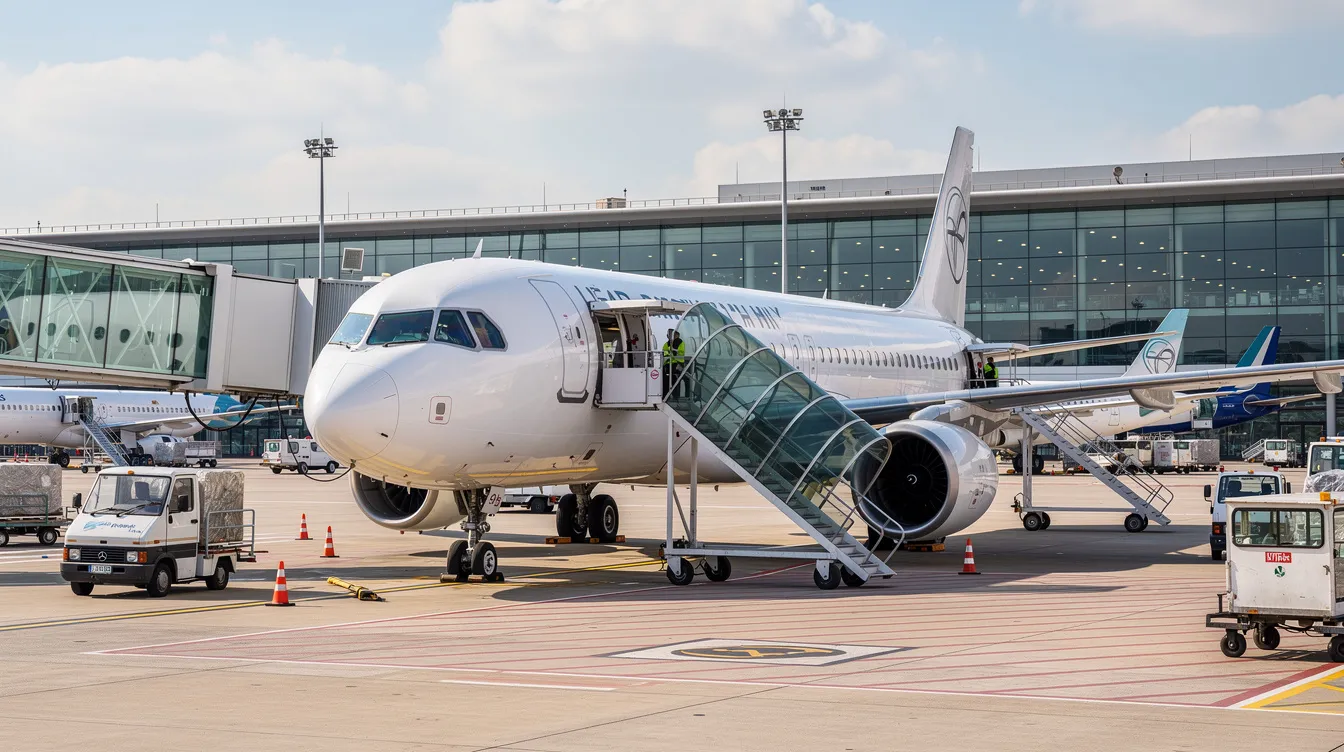
The Boeing 737 is a versatile aircraft with a passenger capacity ranging from 85 to 230, depending on the variant and layout. Most commonly, the 737-800 and 737 MAX models accommodate between 162 and 200 passengers. This guide details the seating capacities across different generations and compares them to private jet options for tailored travel experiences.
Read More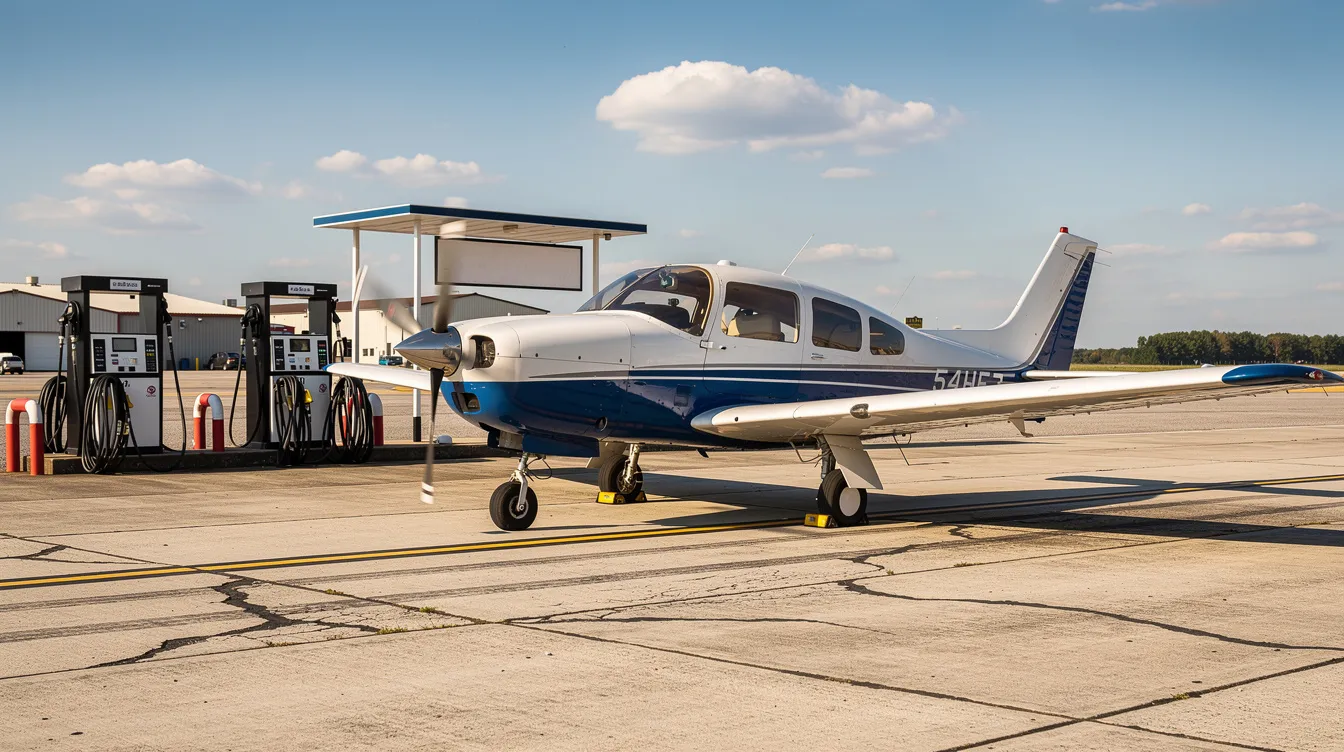
5
min read
How Much Does It Cost to Fuel a Small Plane in 2026?
In 2026, fuel costs for small planes vary significantly based on aircraft type and fuel consumption rates. Single-engine pistons typically incur costs of $60–$80 per hour, while turboprops can reach $500–$600 per hour. Understanding these expenses is crucial for budgeting and flight planning for private pilots and aircraft owners.
Read MoreStay updated with our latest insights and tips to elevate your journey with us.
MEMBERSHIPS AND ASSOCIATIONS



Disclaimer: Jettly operates as a charter broker, offering access to a global digital jet charter marketplace. Jettly is not a direct air carrier and does not own or operate aircraft. All advertised flights are conducted by third-party air carriers that are fully licensed and hold the appropriate Part 135 or Part 121 certifications issued by the Federal Aviation Administration (FAA) or equivalent regulatory authorities under U.S. or foreign law. Jettly complies fully with the U.S. Department of Transportation's Part 295 and Part 298 Charter Broker regulations. Jettly does not carry additional liability insurance. Passengers are covered by aircraft operator insurance. TICO: 50023770


