


Login
Get Instant Pricing On 23,000+ Aircraft

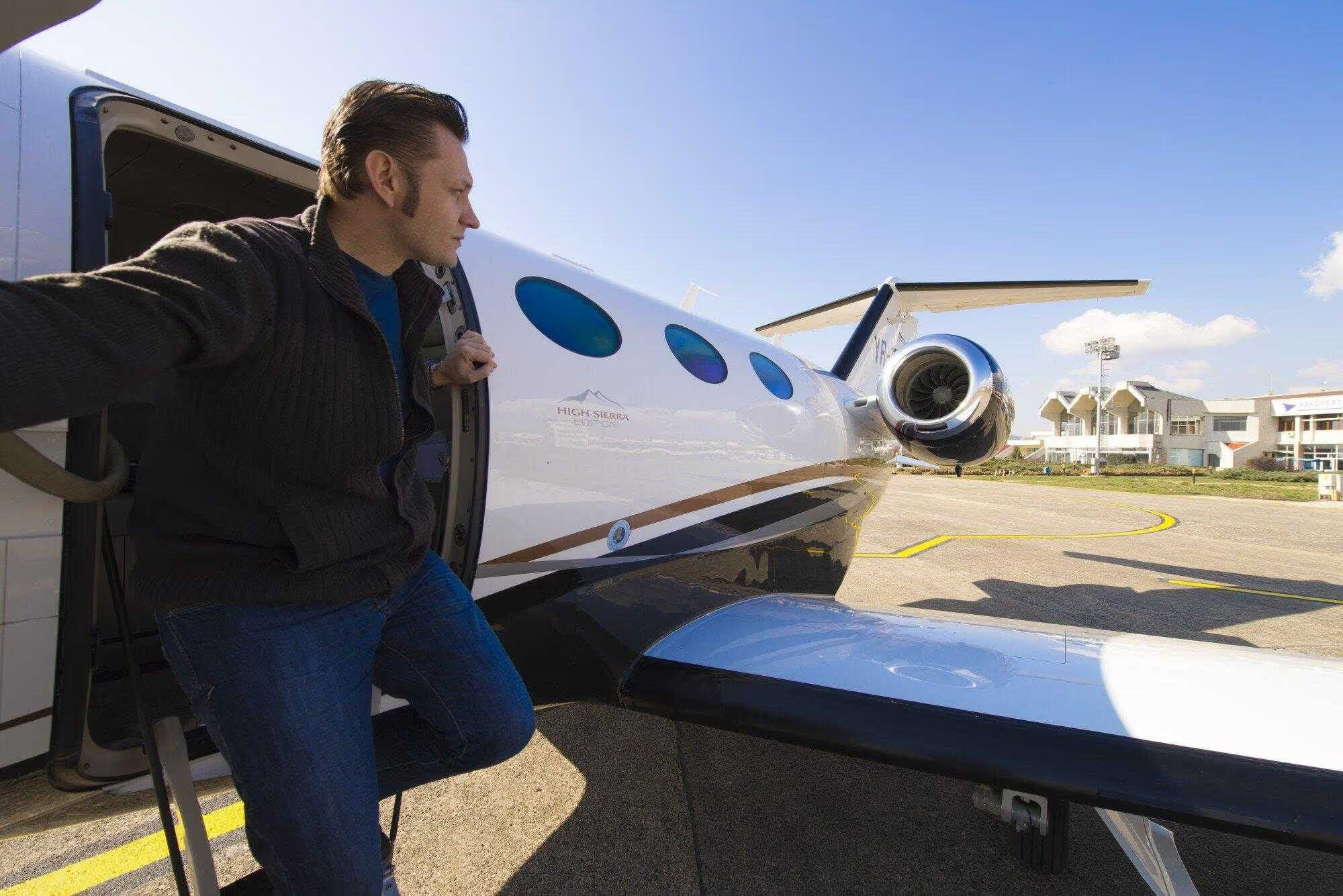
Fueling a private jet is a complex and costly process, with Jet-A fuel in 2024 averaging $6.20 per gallon in the U.S., and prices often reaching $8.00 in high-demand areas. Factors influencing these costs include the type of jet fuel, regional fuel logistics, geopolitics, and airport-specific fees. Travelers can manage these expenses by choosing efficient aircraft, planning refueling stops at cost-effective airports, and using tools like Jettly’s app for real-time fuel price comparisons. With careful planning, private jet fuel costs can become manageable for frequent flyers and corporate travelers.
Justin Crabbe
May 6, 2025
|
5 minutes
min read



View all
Empty leg flights for dogs offer a cost-effective alternative to traditional air travel, allowing pets to travel in the cabin alongside their owners while avoiding the stress and risks associated with commercial airline cargo holds. These discounted private flights can save pet owners 25-75% compared to full private jet charters, providing a luxurious experience with personalized service and no additional pet fees. The convenience of flexible scheduling, direct routing, and tailored amenities makes empty leg flights an appealing option for relocations, vacations, or emergency transport. Platforms like Jettly facilitate easy access to these flights, enabling pet owners to monitor availability and book suitable options for their furry companions.
Jay Franco Serevilla
Aug 21, 2025
|
5
min read
View all
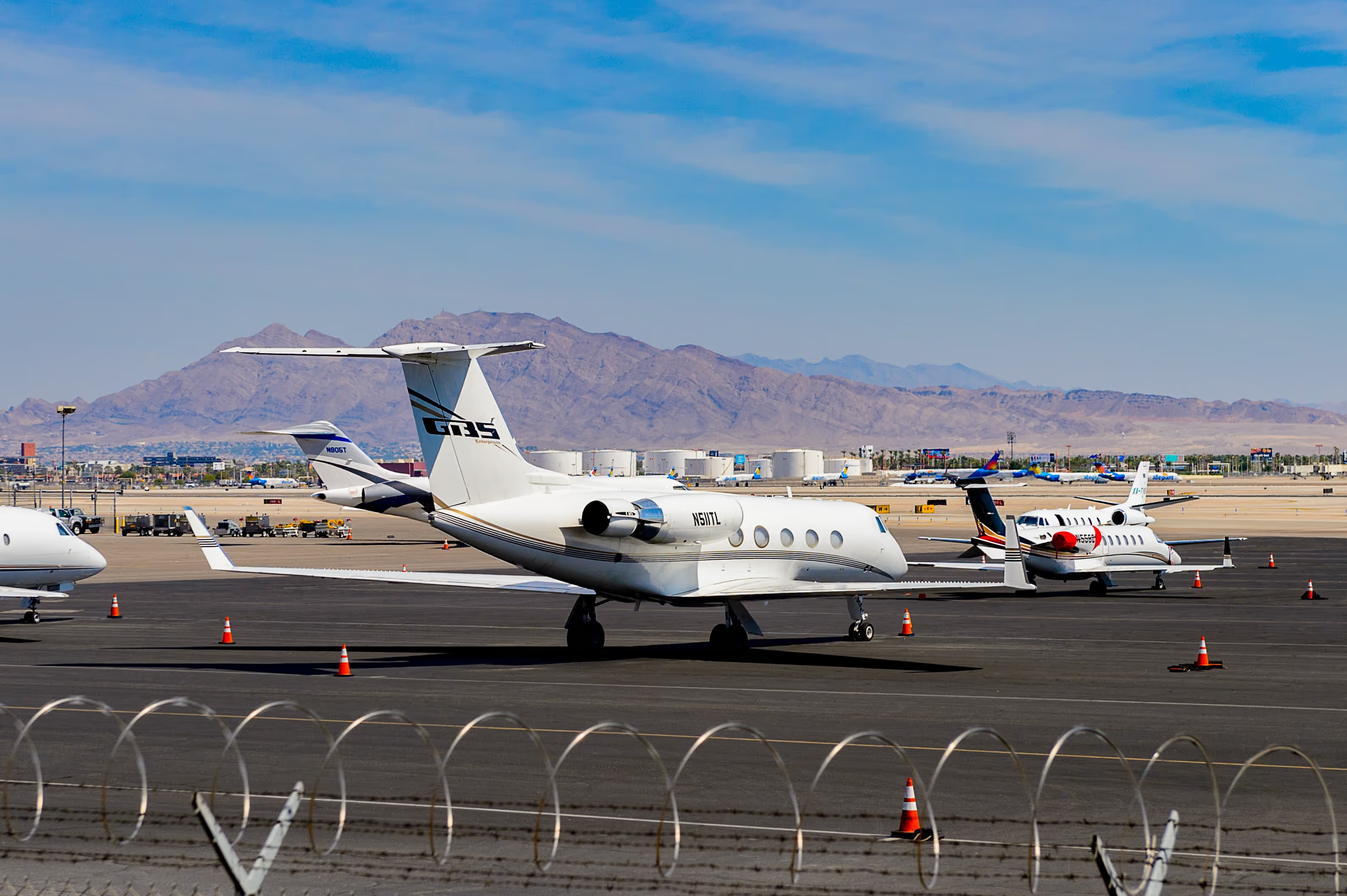
Personal aviation offers unparalleled freedom and flexibility compared to commercial airlines, catering to both recreational pilots and business travelers. The market features a wide range of personal aircraft, from affordable single-engine planes to luxury private jets, allowing buyers to find options that fit their lifestyle and budget. Key considerations for selecting an aircraft include passenger capacity, cruising speed, fuel efficiency, and safety features, with modern innovations enhancing accessibility and safety for new pilots. Ultimately, owning a personal aircraft provides significant benefits, including tailored travel experiences and the ability to reach remote destinations.
Jay Franco Serevilla
Aug 21, 2025
|
5
min read
View all
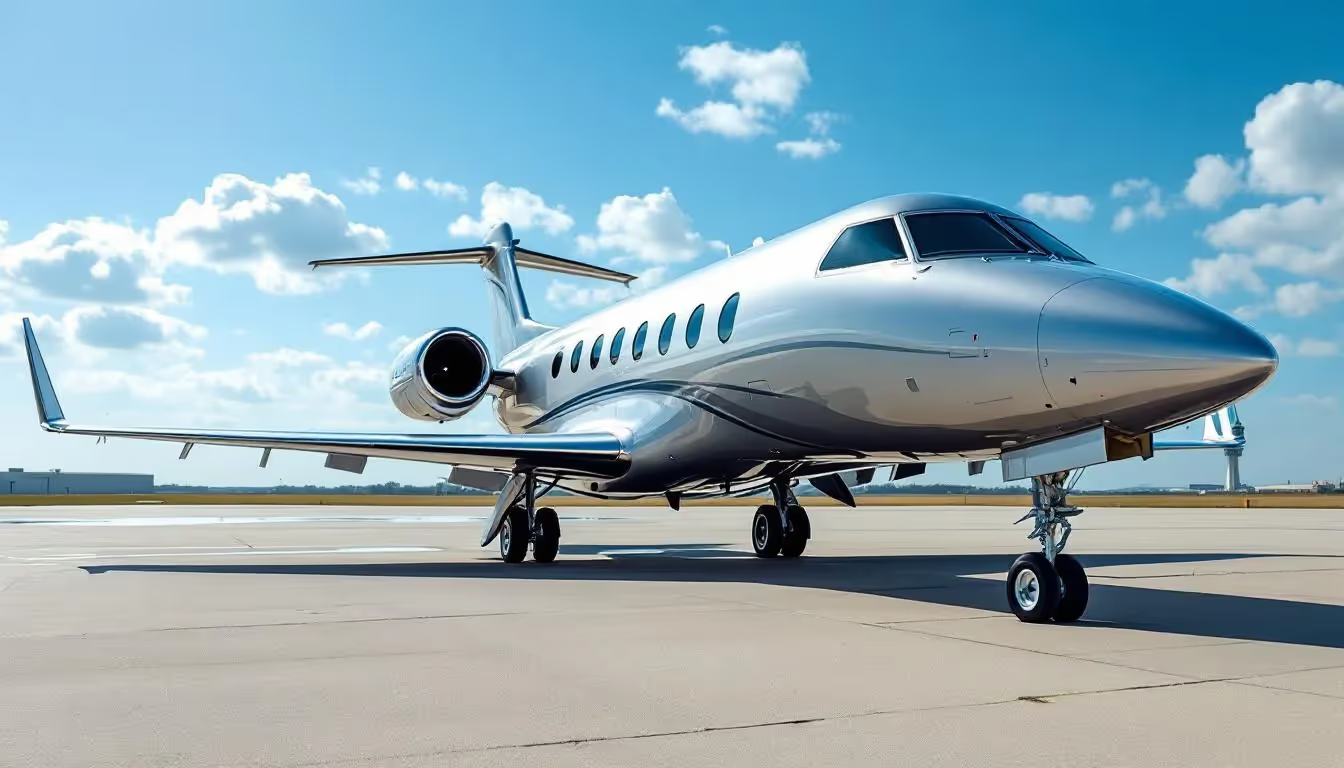
The business jet industry has grown to encompass over 22,000 aircraft, providing executives and high-net-worth individuals with unmatched flexibility, privacy, and efficiency compared to commercial airlines. This comprehensive guide covers various aspects of private aviation, including aircraft categories, ownership options, and associated costs, ranging from light jets starting at $3 million to ultra-long-range jets exceeding $90 million. Key manufacturers like Gulfstream, Bombardier, and Dassault lead the market, each offering unique features and technologies that enhance safety and passenger experience. As the industry evolves, sustainability initiatives and technological advancements are shaping the future of business aviation, emphasizing efficiency and environmental responsibility.
Jay Franco Serevilla
Aug 21, 2025
|
5
min read
View all
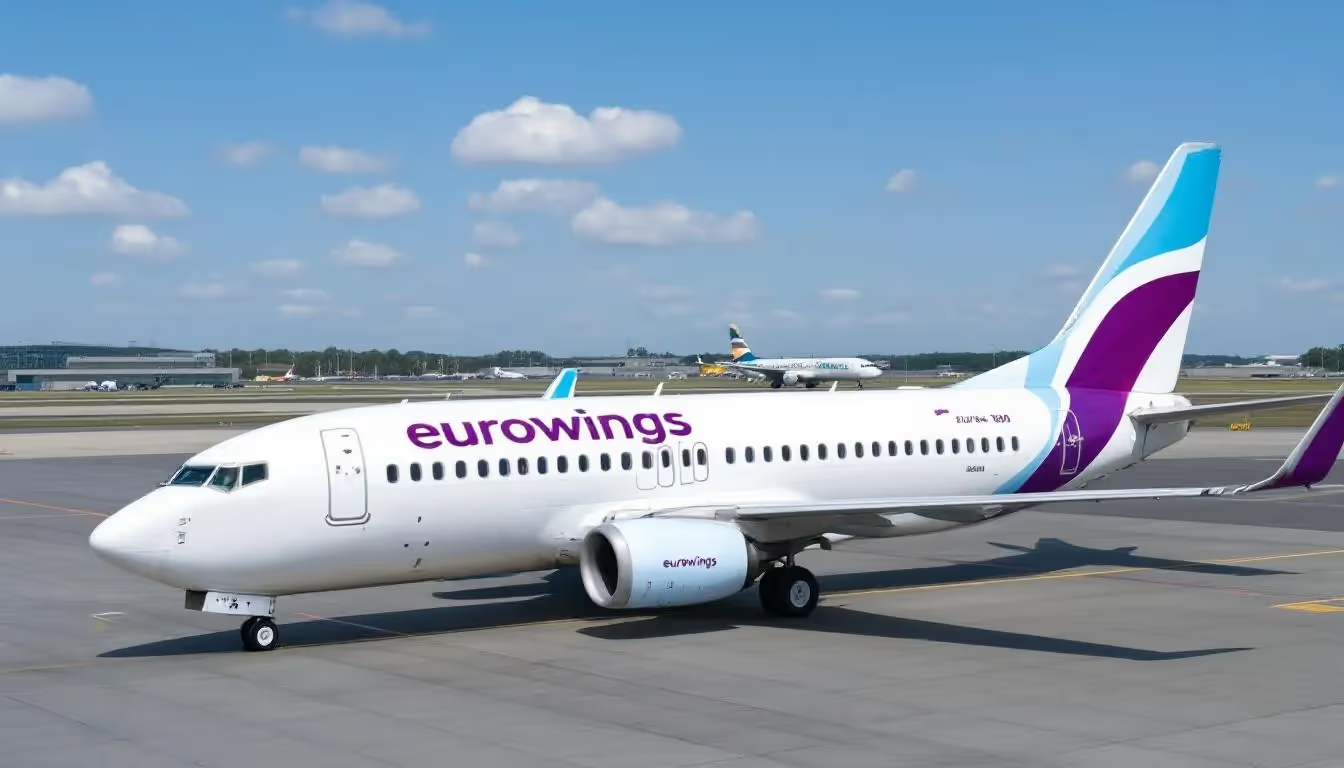
Eurowings is Germany's largest low-cost airline, operating under the Lufthansa Group and serving 155 destinations across Europe. The airline has shifted its focus to short-haul flights since 2019, discontinuing long-haul services to streamline operations and enhance profitability. With a modern fleet primarily consisting of Airbus A320 aircraft and an upcoming order of Boeing 737 MAX 8s, Eurowings emphasizes operational efficiency and customer convenience through its innovative mobile app. This app facilitates easy booking, real-time flight updates, and seamless travel management, making it a valuable tool for both business and leisure travelers.
Jay Franco Serevilla
Aug 21, 2025
|
5
min read

View all
Smoking on private jets is generally allowed, depending on the aircraft owner's or operator's policies, unlike the strict no-smoking rules on commercial flights. The Federal Aviation Administration (FAA) does not prohibit smoking on private aircraft, but safety considerations, such as fire risks and air quality, remain paramount, with pilots having the authority to ban smoking during critical flight phases. Passengers should be aware of potential additional costs, including cleaning fees and damage charges, and must verify smoking policies with operators, especially for international flights where regulations may vary significantly. Overall, successful accommodation of smoking on private jets requires clear communication and advance planning.
Jay Franco Serevilla
Aug 21, 2025
|
5
min read
View all
Private jet travel to Las Vegas offers luxury, privacy, and efficiency, with costs starting around $4,900 for very light jets on short routes, while heavy jets can exceed $30,000 for longer flights. The price varies significantly based on aircraft type, route, passenger count, and additional services, with average costs for light jets around $6,400. Key factors influencing pricing include peak travel times, aircraft selection, and optional services, while strategic planning can help reduce costs through options like empty leg flights and alternative airports. For the best experience, travelers should consult charter brokers for real-time quotes and tailored options.
Jay Franco Serevilla
Aug 21, 2025
|
5
min read
Explore our latest articles and updates.
5
min read
Jet Card vs Fractional Share Costs in 2026 (Upfront Funds, Monthly Fees, Hourly Rates, and Terms)
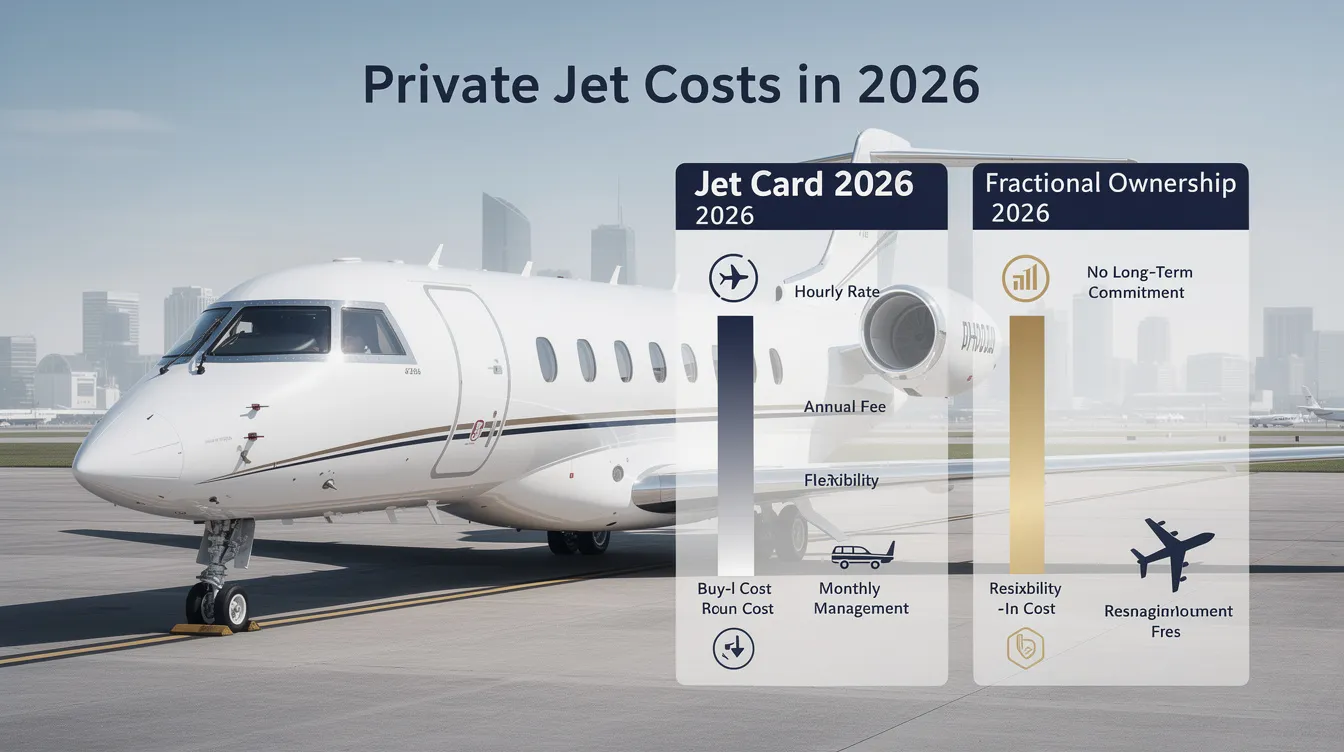
In 2026, private jet access options include jet cards and fractional shares, each with distinct cost structures. Jet cards offer prepaid flight access without ownership, typically involving lower upfront costs and no monthly fees, while fractional shares require significant upfront capital, monthly management fees, and hourly operating charges tied to a multi-year contract. Cost comparisons should consider four key buckets: upfront funds, recurring fees, hourly charges, and contract terms, as well as factors like peak-day surcharges and minimum billing rules. Ultimately, the choice between these options depends on individual flying frequency, budget, and desired flexibility, with Jettly providing a platform for transparent comparisons and bookings.
Read More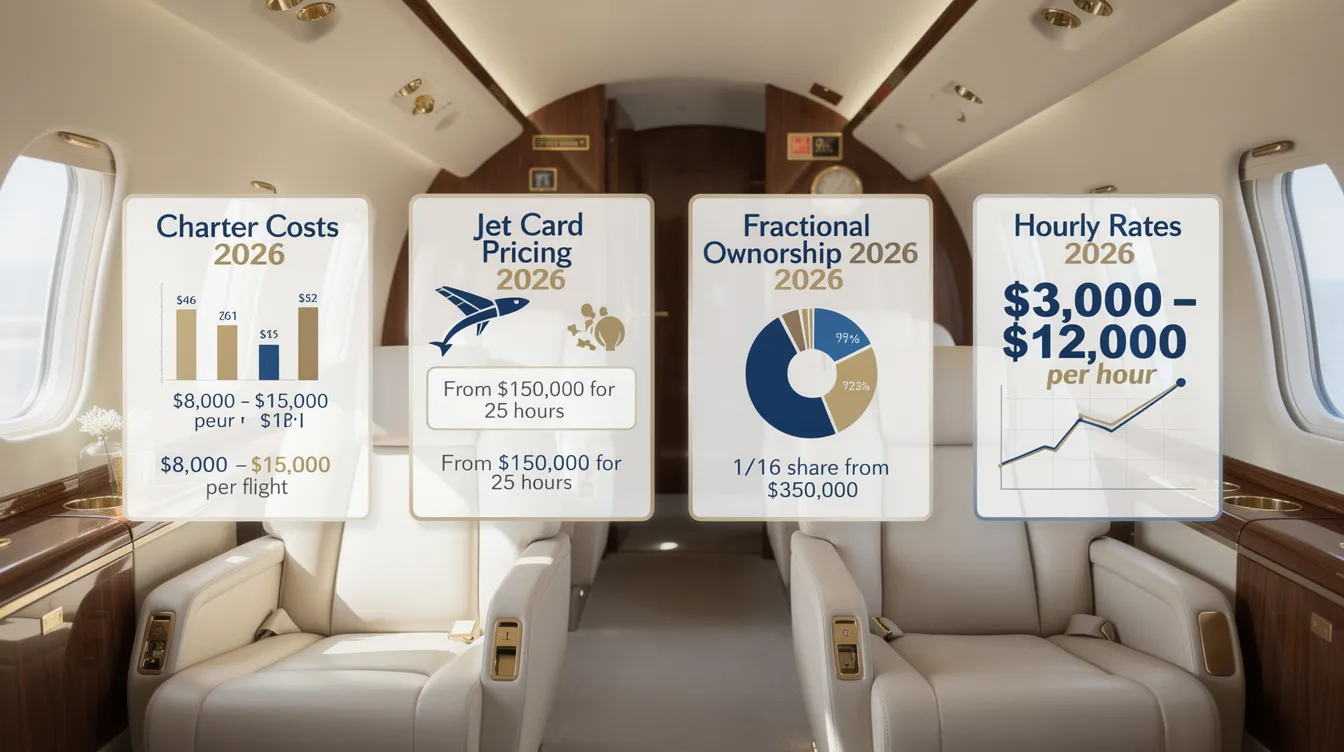
5
min read
Private Jet Costs and Pricing in 2026 (Complete Breakdown With Jettly Program Math)
In 2026, private jet costs are categorized into fixed access fees and variable trip costs, with Jettly providing a detailed breakdown of pricing structures. On-demand charters range from $1,800 to over $15,000 per hour based on aircraft type, while Jettly's 25-hour Jet Card costs $50,000 plus a $12,997 enrollment fee, with hourly rates starting at $3,528. Fractional-style access through Jettly Cloud requires a license fee, monthly management fee, and hourly charges, with costs varying significantly based on usage patterns. To effectively compare quotes, it’s crucial to normalize costs by considering all fees, billing methods, and potential add-ons, ensuring transparency and informed decision-making.
Read MoreJoin our community and receive the latest blog updates directly in your inbox.
MEMBERSHIPS AND ASSOCIATIONS



Disclaimer: Jettly operates as a charter broker, offering access to a global digital jet charter marketplace. Jettly is not a direct air carrier and does not own or operate aircraft. All advertised flights are conducted by third-party air carriers that are fully licensed and hold the appropriate Part 135 or Part 121 certifications issued by the Federal Aviation Administration (FAA) or equivalent regulatory authorities under U.S. or foreign law. Jettly complies fully with the U.S. Department of Transportation's Part 295 and Part 298 Charter Broker regulations. Jettly does not carry additional liability insurance. Passengers are covered by aircraft operator insurance. TICO: 50023770


