


Login
Get Instant Pricing On 23,000+ Aircraft


Choosing the right billing model for private jet travel can save you thousands. For approximately 60 hours of flying annually, hours-based or occupied-hour billing typically offers the best value, providing predictable costs without the burden of fixed fees. This guide breaks down the differences between days-based, hours-based, and occupied-hour billing to help you make an informed decision.
Jeff Ryan Serevilla
Sep 17, 2026
|
5
min read



View all
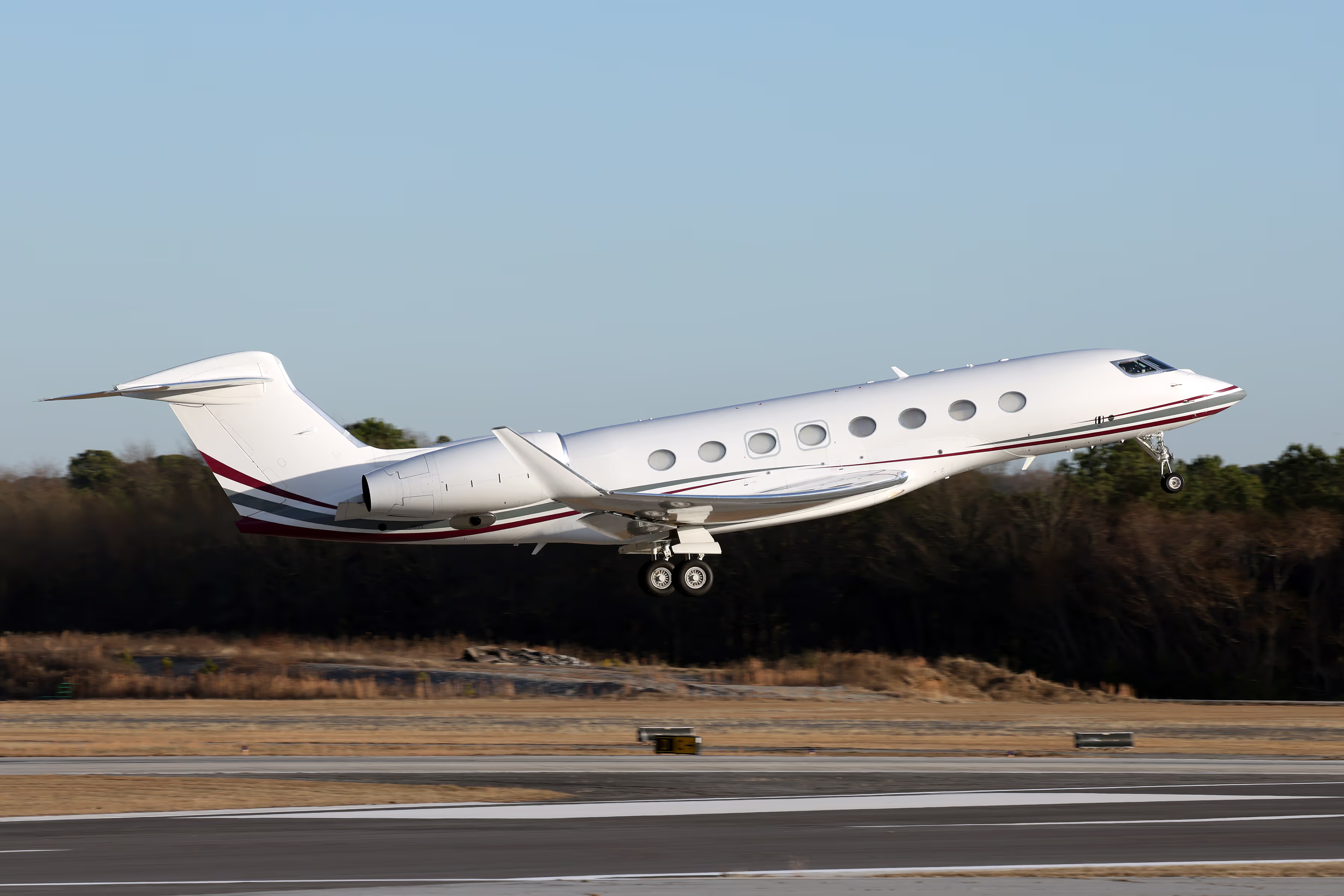
The U.S. private aviation industry predates Air Force One, evolving from a practical business tool into the world’s largest and fastest-growing aviation market. Over time, presidential aircraft transformed from basic transports into airborne command centers, setting new standards for safety, range, and onboard capability. Air Force One and private aviation have influenced each other in a feedback loop, with government innovation driving advances later adopted by private jets. Today’s long-range, connected business aircraft reflect decades of shared technological evolution.
Jay Franco Serevilla
Dec 27, 2025
|
5
min read
View all
Major events like the Super Bowl cause dramatic spikes in private jet travel, with arrivals and departures increasing up to 9× normal weekend traffic. Celebrities, executives, and brands rely on large private jets, driving sharp price increases and massive revenue gains for operators, airports, and FBOs. Similar surges occur around global events like Cannes, Monaco, Davos, and the Met Gala. These demand shocks are accelerating investment in regional airports and pushing travelers away from full ownership toward fractional and on-demand private aviation.
Jay Franco Serevilla
Feb 22, 2026
|
5
min read

View all
Many travelers switch to Jettly for faster booking, clearer pricing, and consistent support. This page highlights what members value most over time.
Jay Franco
Dec 22, 2025
|
5
min read

View all
Certain routes and scenarios are ideal for private aviation. See how business, leisure, and last-minute travel benefit from private jets.
Jay Franco
Dec 12, 2025
|
5
min read
View all
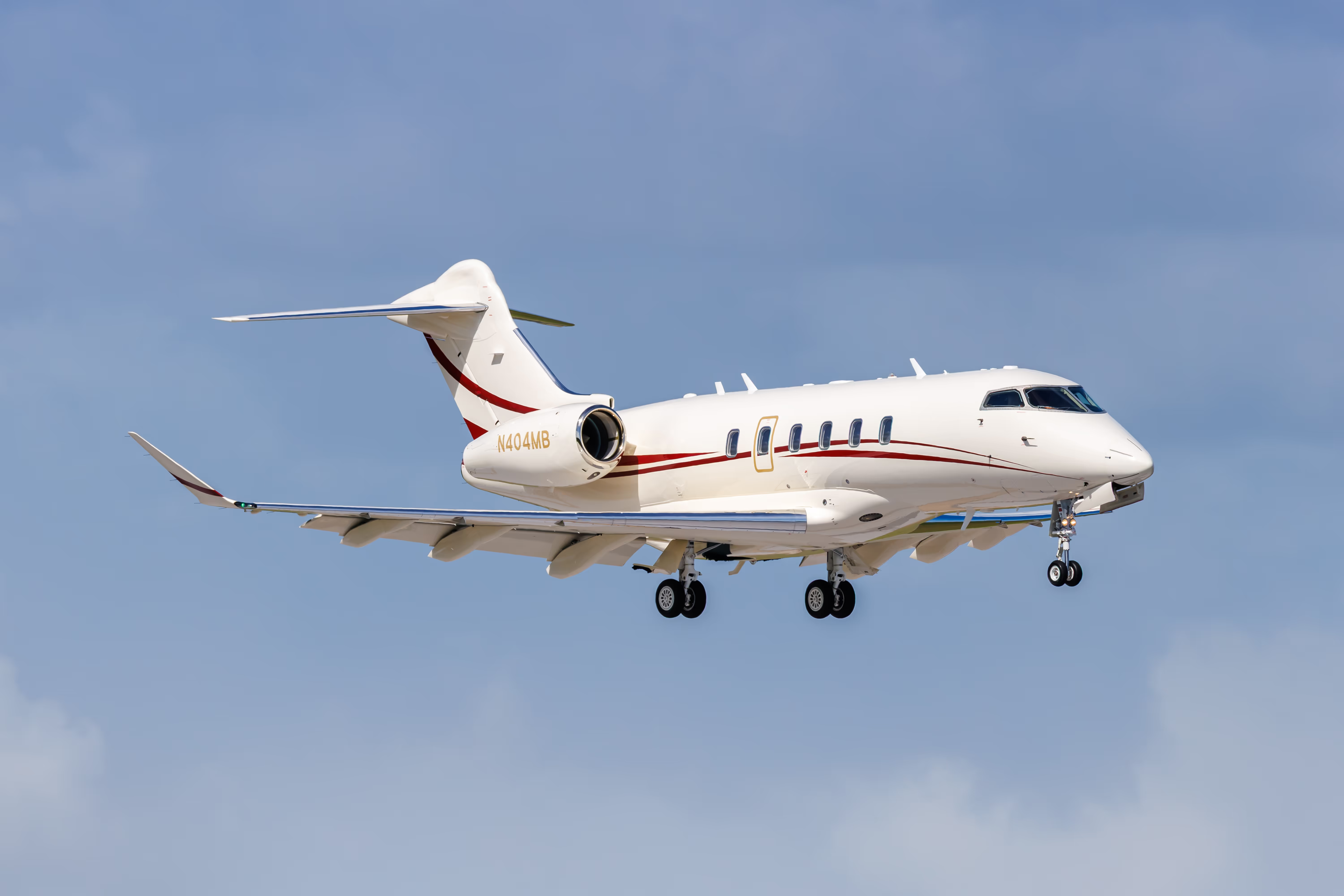
Private aviation isn’t for every trip. Learn when it provides meaningful benefits and when commercial flying may still be the better choice.
Jay Franco
Dec 12, 2025
|
5
min read

View all
Private aviation safety depends on certified operators, trained pilots, and rigorous maintenance standards. This page explains how flights are vetted before approval.
Jay Franco
Dec 12, 2025
|
5
min read
Explore our latest articles and updates.

5
min read
How High Does a Private Jet Fly? Exploring Optimal Cruising Altitudes
Private jets typically cruise at altitudes between 41,000 and 51,000 feet, significantly higher than commercial airliners, which usually fly at 30,000 to 38,000 feet. This higher altitude allows private jets to avoid congested air traffic, experience less turbulence, and achieve better fuel efficiency. The engineering of private jets, including optimized engines and lightweight designs, enables them to climb faster and maintain these altitudes effectively. Overall, flying at higher altitudes enhances the comfort, efficiency, and flexibility of private jet travel compared to commercial flights.
Read More
5
min read
The Best Private Plane Manufacturers for Every Budget and Need
The private aviation industry has evolved significantly since the introduction of the Learjet in 1963, catering to a diverse clientele including corporate executives and high-net-worth individuals. Key manufacturers such as Dassault Aviation, Bombardier, Gulfstream Aerospace, Textron Aviation, and Honda Aircraft Company offer a range of aircraft tailored to various budgets and travel needs, from entry-level jets to ultra-long-range luxury options. Each manufacturer is recognized for unique strengths, such as Gulfstream's high-end luxury and Bombardier's focus on business aviation. For travelers seeking flexibility, privacy, and efficiency, private jets provide advantages over commercial airlines, making them an attractive option for time-sensitive journeys.
Read MoreJoin our community and receive the latest blog updates directly in your inbox.
MEMBERSHIPS AND ASSOCIATIONS



Disclaimer: Jettly operates as a charter broker, offering access to a global digital jet charter marketplace. Jettly is not a direct air carrier and does not own or operate aircraft. All advertised flights are conducted by third-party air carriers that are fully licensed and hold the appropriate Part 135 or Part 121 certifications issued by the Federal Aviation Administration (FAA) or equivalent regulatory authorities under U.S. or foreign law. Jettly complies fully with the U.S. Department of Transportation's Part 295 and Part 298 Charter Broker regulations. Jettly does not carry additional liability insurance. Passengers are covered by aircraft operator insurance. TICO: 50023770


