


Login
Get Instant Pricing On 23,000+ Aircraft


This comprehensive guide explores the world of ultralight aircraft, highlighting the best models, essential rules, and their role in a private aviation lifestyle. Ideal for aspiring pilots and aviation enthusiasts, it covers everything from FAA regulations to the unique flying experiences ultralights offer. Discover how ultralight flying complements private jet charter for varied travel needs.
Jay Franco Serevilla
Sep 21, 2026
|
5
min read


View all
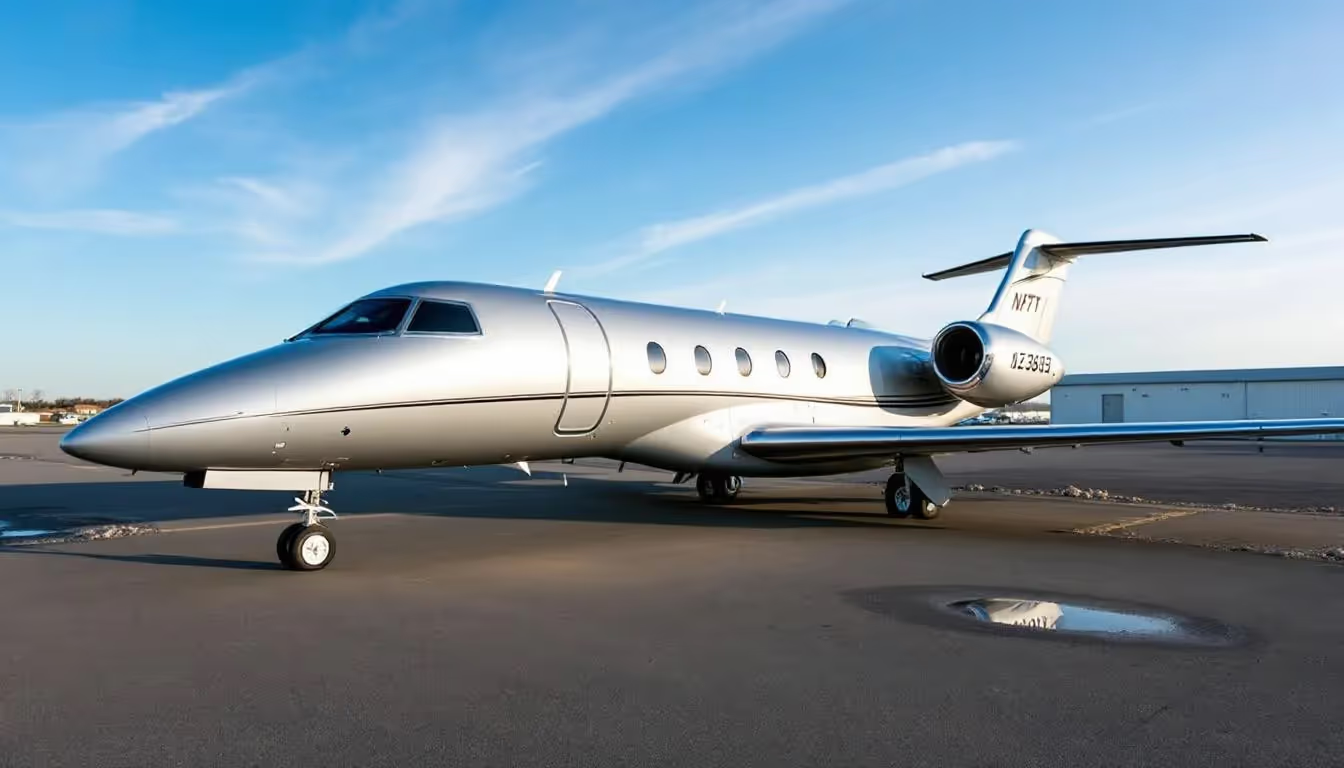
Private aircraft travel offers luxury and convenience but comes with significant costs that vary widely based on factors such as aircraft type, flight duration, and additional fees. Chartering a jet typically ranges from $2,000 to $14,000 per flight hour, making it a more accessible option compared to purchasing a private jet, which can cost between $2 million and $100 million. Key cost considerations include fuel surcharges, landing fees, crew expenses, and potential hidden charges, all of which can substantially impact the total price. For frequent travelers, options like jet cards or fractional ownership may provide better value, while being flexible with booking times can lead to significant savings.
Jay Franco Serevilla
Aug 21, 2025
|
5
min read

View all
Obtaining a private pilot license (PPL) is a significant investment, typically costing between $15,000 and $20,000 in the U.S., which includes ground school, flight training, and various fees. The process requires a minimum of 40 flight hours, though many students average 60-75 hours to gain confidence and pass the FAA practical exam. Aspiring pilots should consider factors such as flight school type, location, and aircraft rental rates to manage costs effectively. For those less interested in becoming pilots, platforms like Jettly provide convenient access to private air travel without the need for training.
Jay Franco Serevilla
Aug 21, 2025
|
5
min read
View all
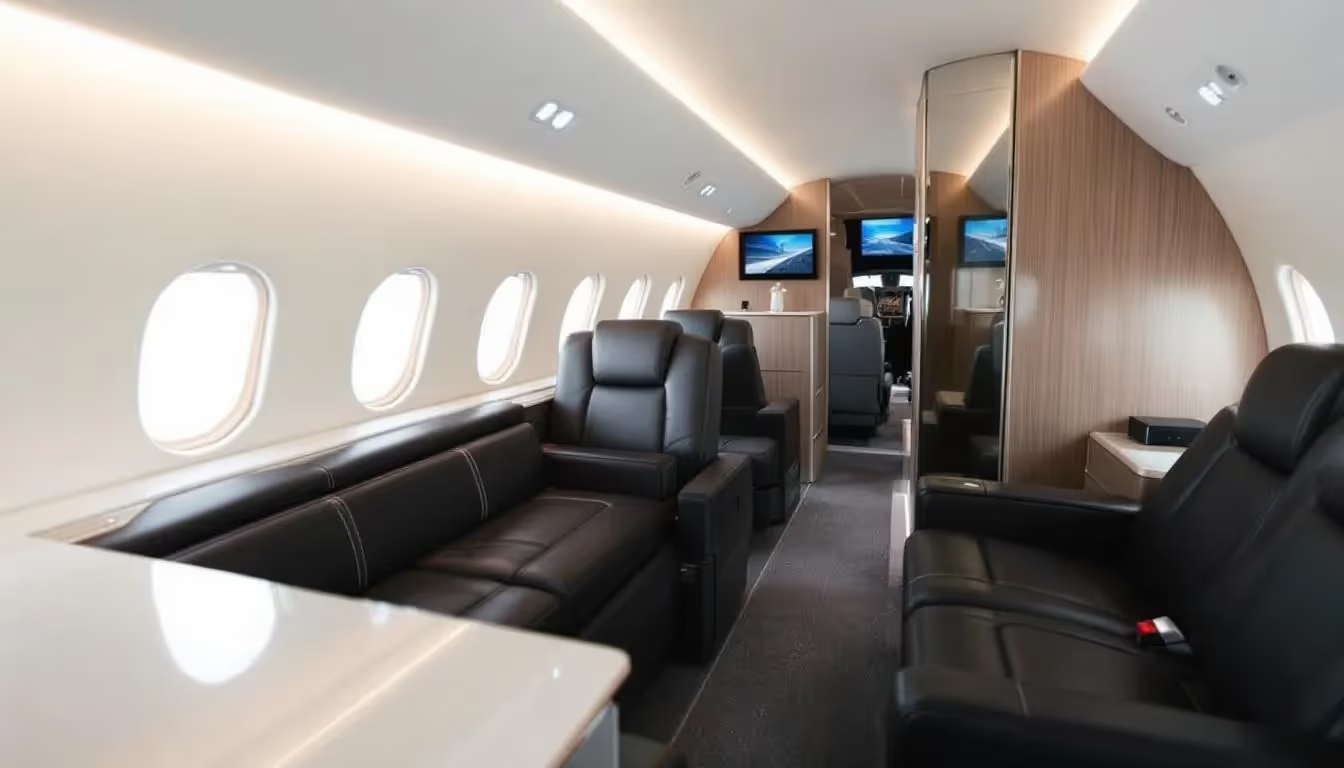
Private plane interiors are designed to transform air travel into a luxurious experience, offering complete control over the in-flight environment, including seating, materials, and technology. These interiors prioritize comfort and personalization, allowing owners to tailor layouts and features to their specific needs, whether for business or leisure. High-quality materials and expert craftsmanship are essential, creating spaces that are both functional and aesthetically pleasing. As trends evolve, sustainability and advanced technology are becoming increasingly important, ensuring that private aircraft interiors remain stylish, efficient, and aligned with modern expectations.
Jay Franco Serevilla
Aug 21, 2025
|
5
min read
View all
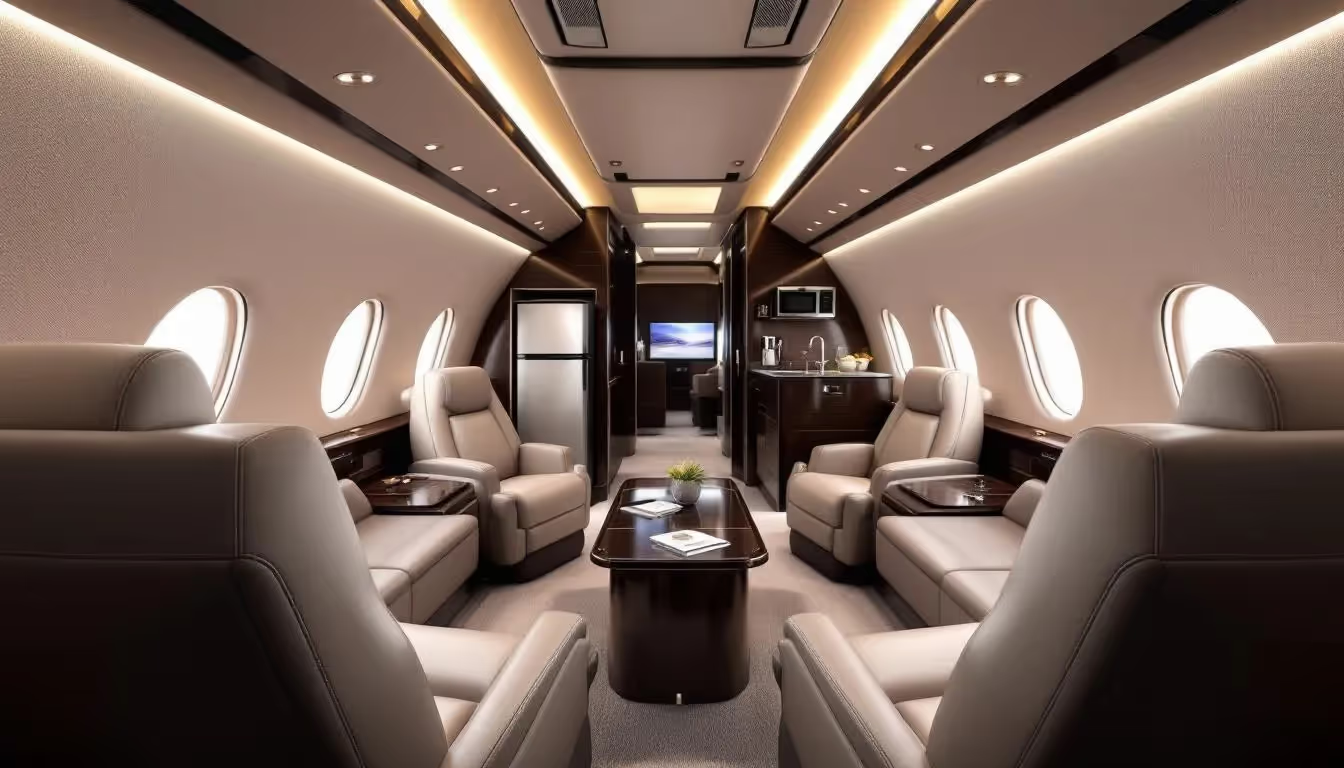
Private jets offer unparalleled convenience, privacy, and customization, making them ideal for both business and leisure travelers. Their spacious interiors are designed for comfort and functionality, featuring flexible layouts that can accommodate workspaces, lounges, and sleeping areas, all enhanced by luxury amenities and advanced technology. With a focus on personalized experiences, private jets allow for bespoke designs that reflect individual tastes, including high-quality materials and sophisticated entertainment systems. As the demand for private aviation grows, manufacturers are increasingly prioritizing sustainability in both design and operation, ensuring a responsible luxury travel experience.
Jay Franco Serevilla
Aug 21, 2025
|
5
min read

View all
Private jets typically cruise at altitudes between 41,000 and 51,000 feet, significantly higher than commercial airliners, which usually fly at 30,000 to 38,000 feet. This higher altitude allows private jets to avoid congested air traffic, experience less turbulence, and achieve better fuel efficiency. The engineering of private jets, including optimized engines and lightweight designs, enables them to climb faster and maintain these altitudes effectively. Overall, flying at higher altitudes enhances the comfort, efficiency, and flexibility of private jet travel compared to commercial flights.
Jay Franco Serevilla
Aug 21, 2025
|
5
min read

View all
The private aviation industry has evolved significantly since the introduction of the Learjet in 1963, catering to a diverse clientele including corporate executives and high-net-worth individuals. Key manufacturers such as Dassault Aviation, Bombardier, Gulfstream Aerospace, Textron Aviation, and Honda Aircraft Company offer a range of aircraft tailored to various budgets and travel needs, from entry-level jets to ultra-long-range luxury options. Each manufacturer is recognized for unique strengths, such as Gulfstream's high-end luxury and Bombardier's focus on business aviation. For travelers seeking flexibility, privacy, and efficiency, private jets provide advantages over commercial airlines, making them an attractive option for time-sensitive journeys.
Jay Franco Serevilla
Aug 21, 2025
|
5
min read
Explore our latest articles and updates.

5 minutes
min read
What is Fractional Jet Ownership: Costs, Benefits & More
This blog explores the advantages of fractional jet ownership for high-net-worth individuals and business executives, highlighting its cost-effectiveness, flexibility, and convenience compared to sole ownership. It explains how management companies maintain the aircraft and employ trained professionals to ensure safety and quality. The conclusion offers a comparative analysis of fractional ownership with other travel options and emphasizes consulting with a provider to make an informed decision. In essence, fractional jet ownership provides a streamlined, luxurious travel experience without the burden of full ownership.
Read More5 minutes
min read
Top 7 Safest Private Jets: Safety Features, Models & More
Private jet safety is achieved through strict regulations, advanced technologies, thorough pilot training, and meticulous maintenance. The most reliable aircraft, like the Cessna Citation Latitude, Bombardier Challenger 350, and Gulfstream G650, have excellent safety records and state-of-the-art features. Prospective private jet passengers should conduct thorough research and work with reputable brokers to ensure a safety-first operator. As private aviation advances, we can expect even greater innovations in safety technologies and practices.
Read MoreJoin our community and receive the latest blog updates directly in your inbox.
MEMBERSHIPS AND ASSOCIATIONS



Disclaimer: Jettly operates as a charter broker, offering access to a global digital jet charter marketplace. Jettly is not a direct air carrier and does not own or operate aircraft. All advertised flights are conducted by third-party air carriers that are fully licensed and hold the appropriate Part 135 or Part 121 certifications issued by the Federal Aviation Administration (FAA) or equivalent regulatory authorities under U.S. or foreign law. Jettly complies fully with the U.S. Department of Transportation's Part 295 and Part 298 Charter Broker regulations. Jettly does not carry additional liability insurance. Passengers are covered by aircraft operator insurance. TICO: 50023770


