


Login
Get Instant Pricing On 23,000+ Aircraft


This article compares the costs of light jets and heavy jets for private travel, highlighting key factors such as hourly rates, passenger capacity, and trip efficiency. Light jets are more cost-effective for shorter domestic flights with smaller groups, while heavy jets excel in long-range travel and larger passenger capacities. Understanding these differences can help travelers make informed decisions based on their specific needs and budgets.
Jeff Ryan Serevilla
Sep 8, 2026
|
5
min read


View all
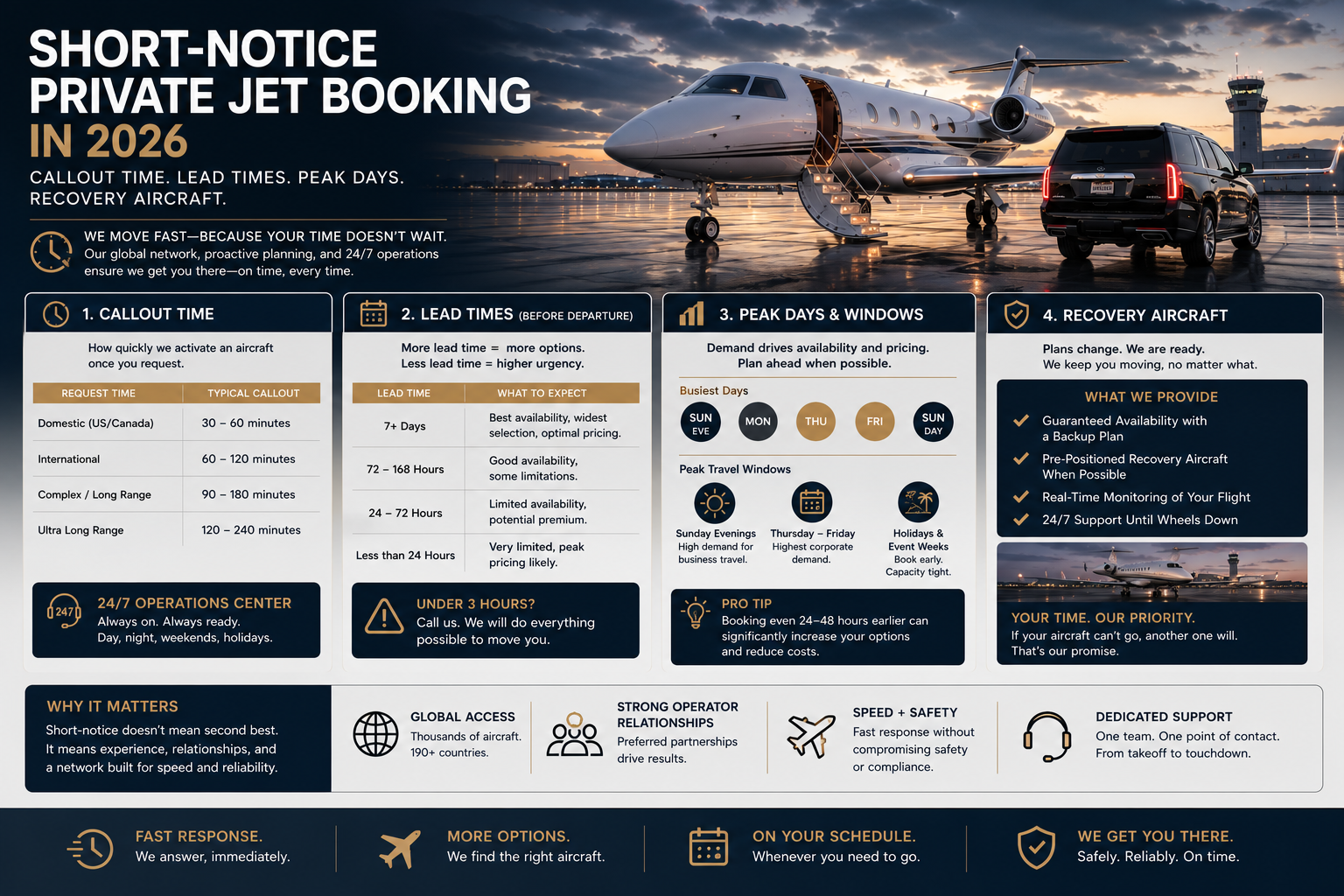
Short-notice private jet booking requires understanding key factors like callout time, lead times, and peak-day rules. While ordinary days may allow flights within hours, peak travel days necessitate longer planning and flexibility. This guide helps you navigate the complexities of private aviation to ensure a smooth booking experience.
Jay Franco Serevilla
Jul 25, 2026
|
5
min read
View all
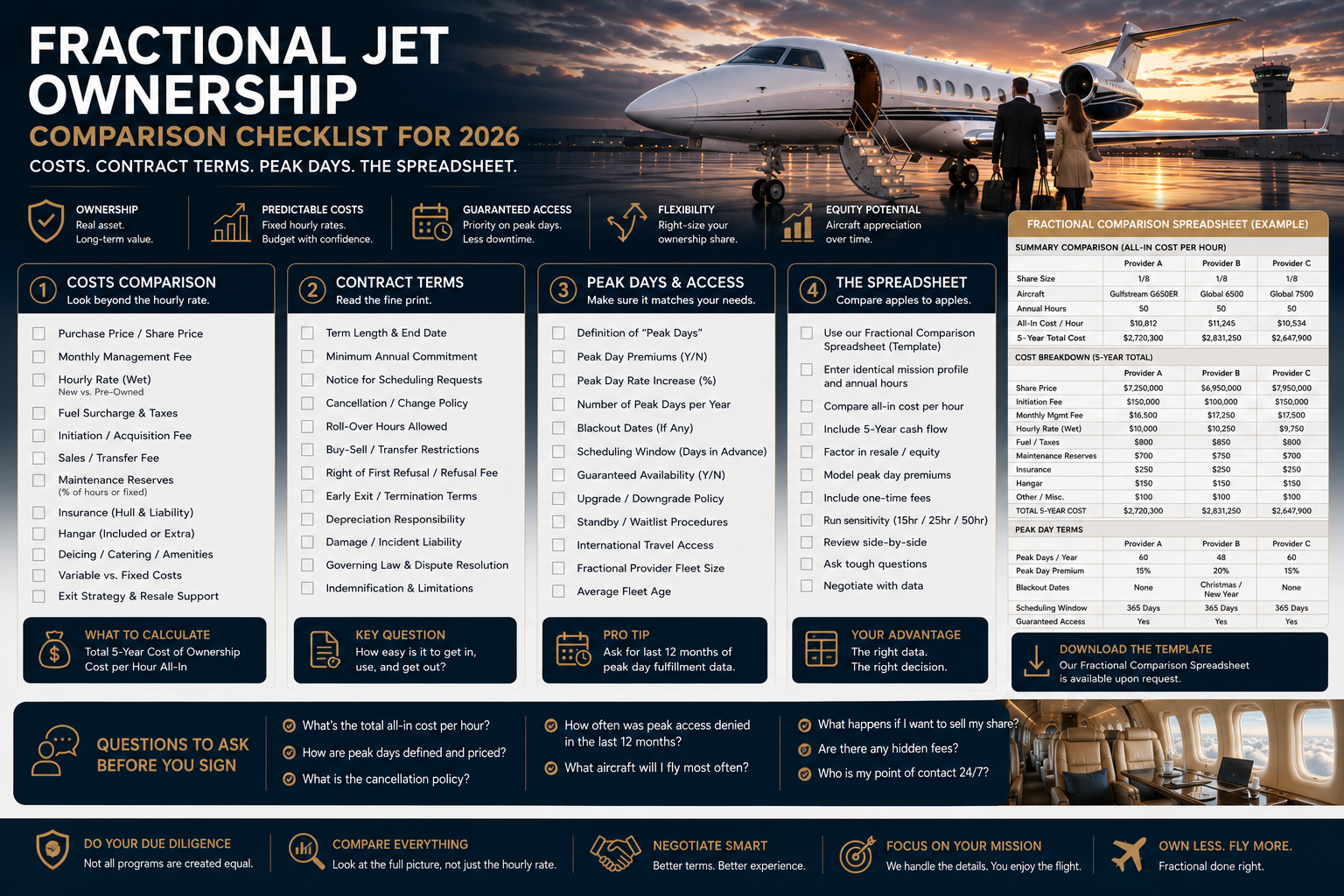
The 2026 Fractional Jet Ownership Comparison Checklist is essential for buyers to evaluate proposals effectively. It standardizes quotes into an effective cost per occupied hour, ensuring transparency in costs and contract terms. This comprehensive guide also addresses peak-day reliability, helping buyers make informed decisions in fractional jet ownership.
Jay Franco Serevilla
Jul 25, 2026
|
5
min read
View all
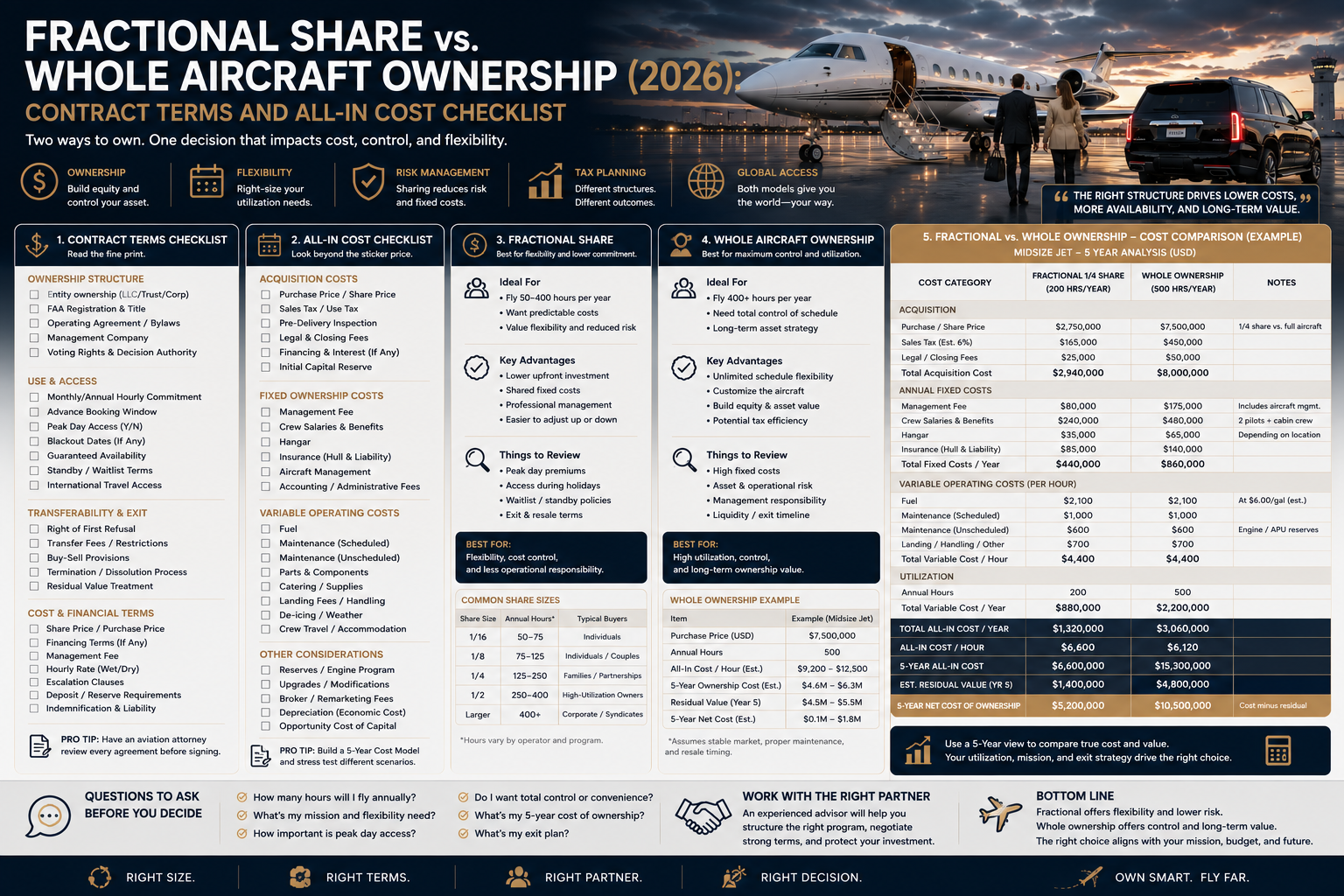
In 2026, buyers of private aviation must weigh fractional share ownership against whole aircraft ownership based on their flying needs, capital commitment, and operational flexibility. This guide provides a comprehensive checklist to evaluate contract terms and all-in costs, emphasizing the importance of understanding effective cost per occupied hour and peak-day reliability. By aligning ownership structures with flight patterns and financial goals, buyers can make informed decisions that suit their unique aviation requirements.
Jay Franco Serevilla
Jul 25, 2026
|
5
min read
View all
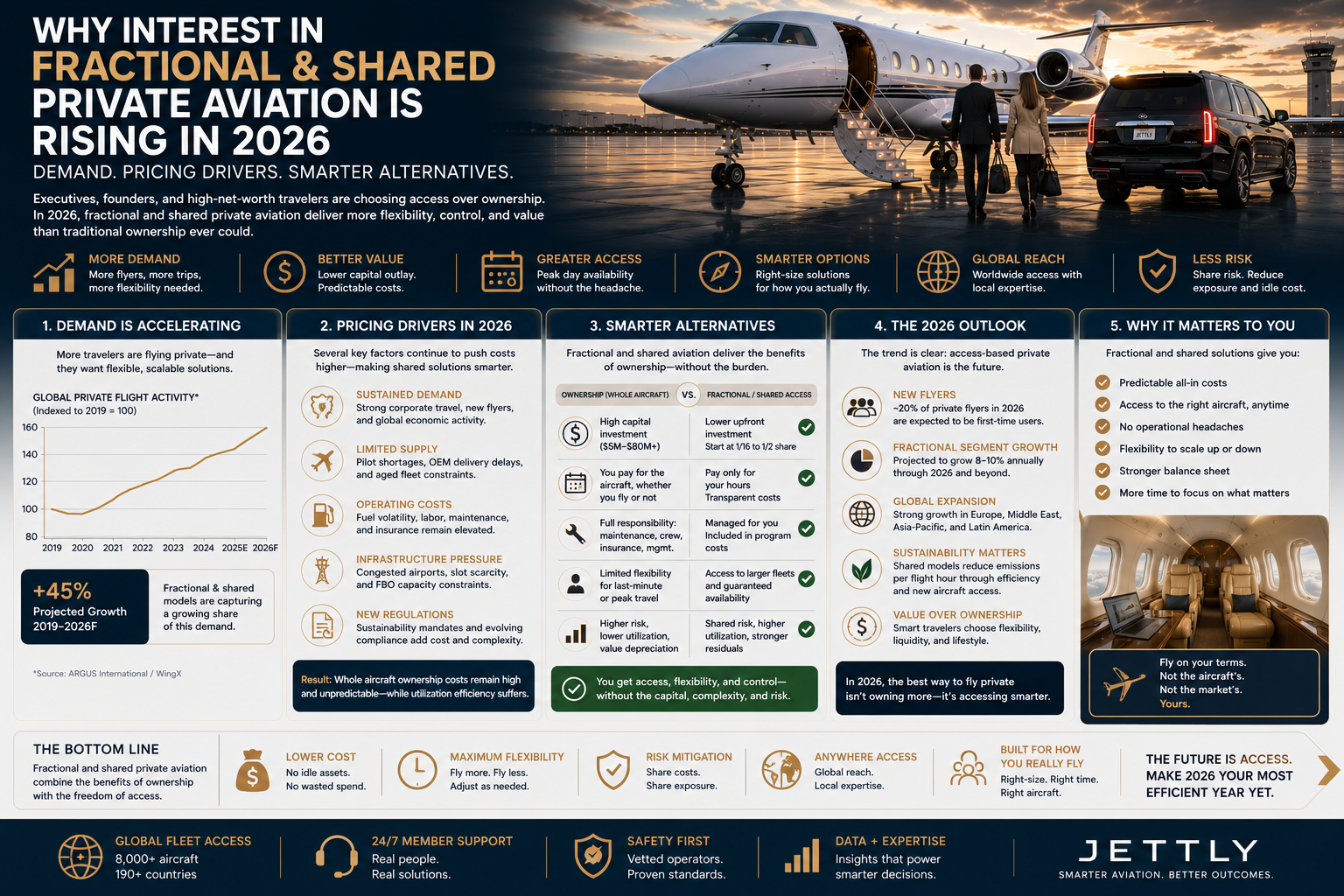
Interest in fractional and shared private aviation is surging in 2026 due to increased demand and tight availability. Travelers are seeking predictable access and transparent pricing, making fractional ownership and shared flights more appealing alternatives to traditional charter services.
Jay Franco Serevilla
Jul 25, 2026
|
5
min read
View all
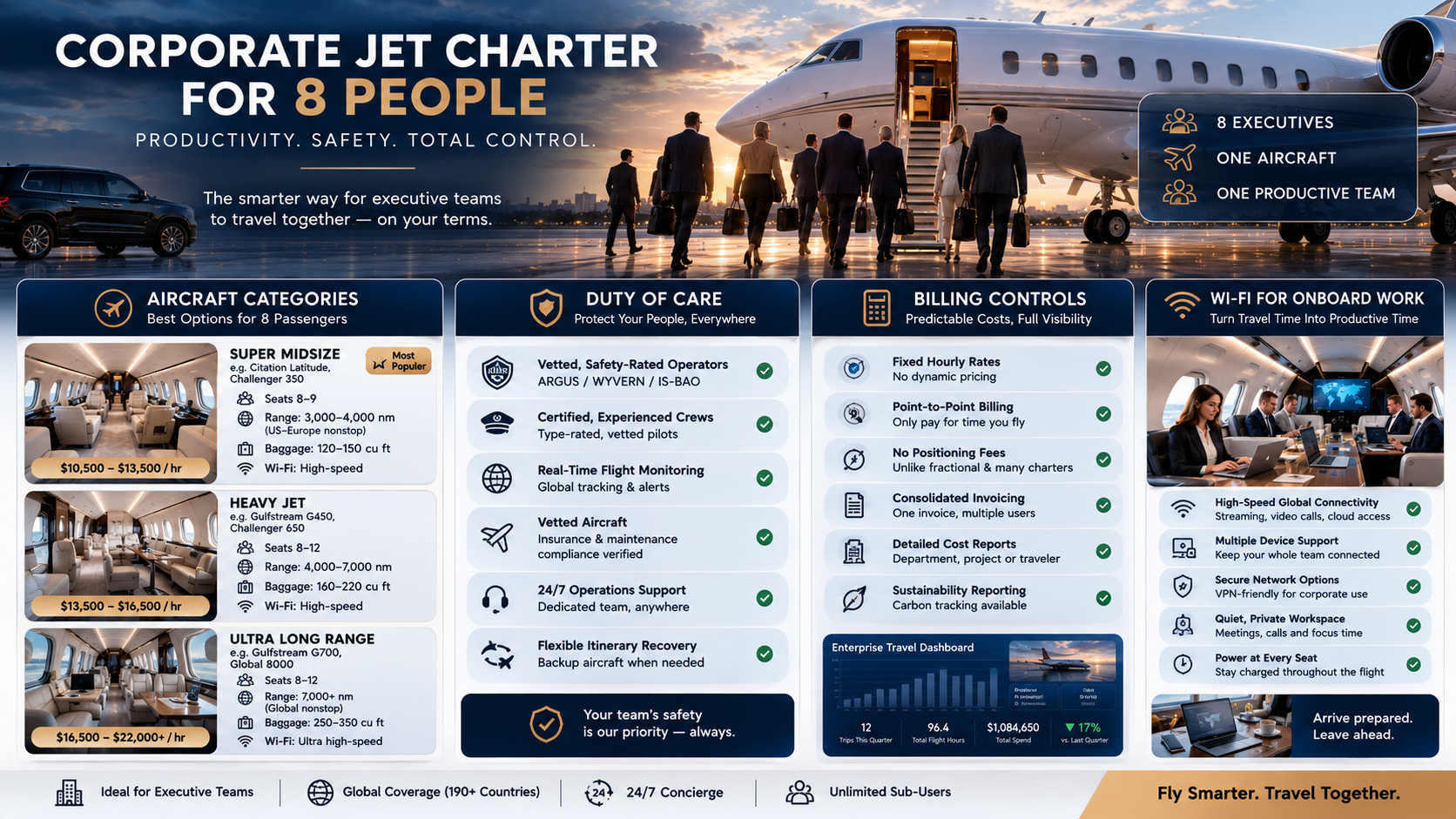
This comprehensive guide outlines the essentials for corporate jet charters accommodating teams of eight, focusing on aircraft categories, duty of care, billing controls, and onboard connectivity. It emphasizes the importance of selecting the right jet type, ensuring reliable Wi-Fi for work, and implementing effective billing practices to manage costs. By understanding these factors, organizations can enhance their private aviation experience and ensure smooth travel for their leadership teams.
Jay Franco Serevilla
Jul 25, 2026
|
5
min read
View all
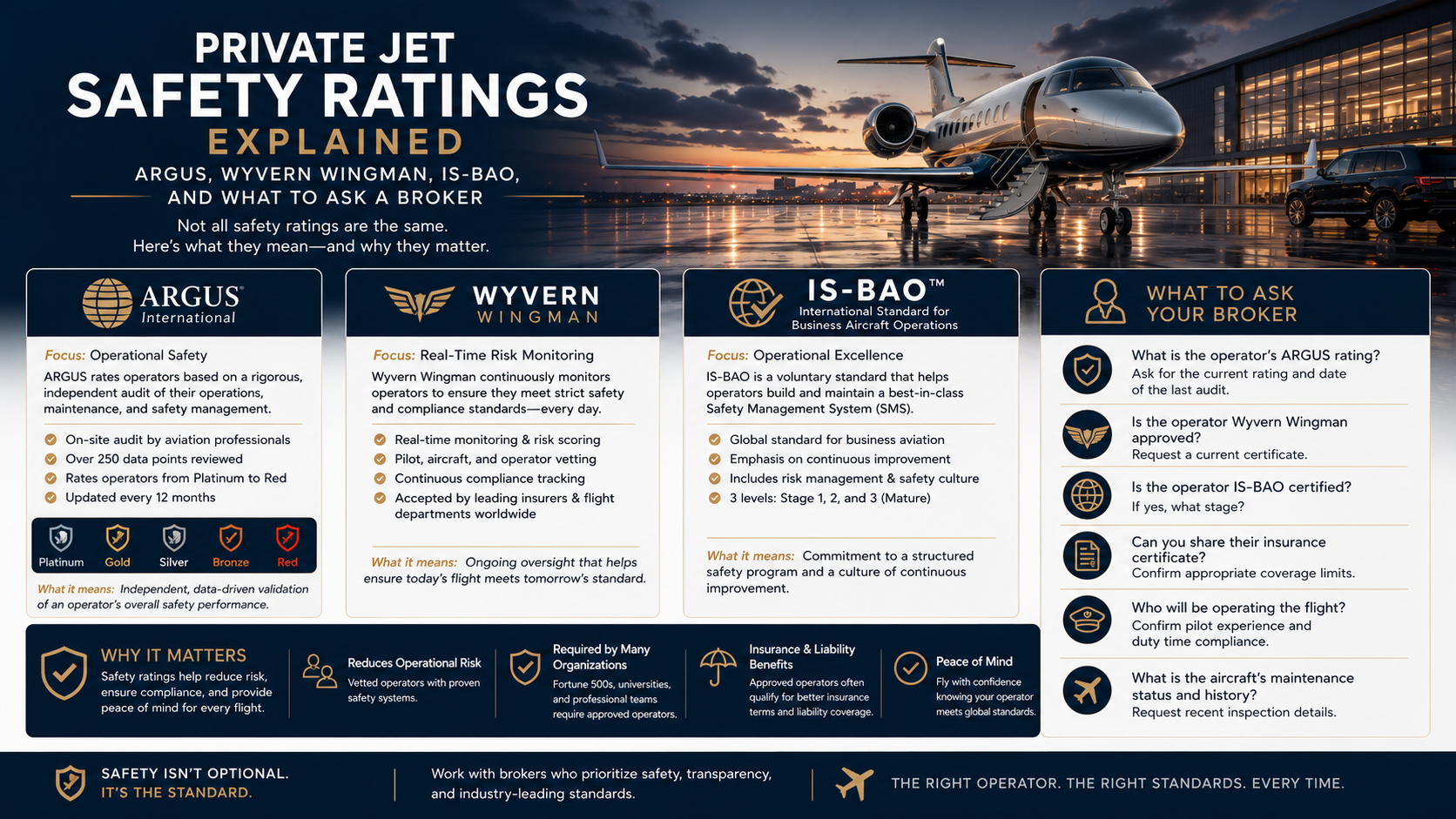
Private jet safety ratings, such as ARGUS, WYVERN, and IS-BAO, are essential tools for evaluating charter operators. These ratings assess how well operators train crews, maintain aircraft, and manage risks, providing an extra layer of safety assurance. Understanding these ratings and verifying the operator's credentials can significantly enhance your travel safety.
Jay Franco Serevilla
Jul 25, 2026
|
5
min read
Explore our latest articles and updates.

5
min read
How High Can Cessna 172 Fly? Ceiling, Cruise Altitude, and Real-World Limits
The Cessna 172 Skyhawk, a staple in aviation, has a service ceiling of 13,500 to 14,000 feet, with some variants reaching up to 15,000 feet. While it excels in flight training and short trips, factors like weight and weather can limit its altitude performance. For higher, faster travel, private jets are a more suitable option.
Read More
5
min read
Cessna Single Engine Aircraft: Guide for Training, Ownership, and Private Charter
Cessna single-engine aircraft, particularly the Cessna 172 Skyhawk, are essential in pilot training and personal flying due to their affordability and stability. This guide explores their history, key models, ownership costs, and how they integrate with private charter services like Jettly for longer trips. Understanding these aircraft helps pilots and enthusiasts make informed decisions about training and travel.
Read MoreJoin our community and receive the latest blog updates directly in your inbox.
MEMBERSHIPS AND ASSOCIATIONS



Disclaimer: Jettly operates as a charter broker, offering access to a global digital jet charter marketplace. Jettly is not a direct air carrier and does not own or operate aircraft. All advertised flights are conducted by third-party air carriers that are fully licensed and hold the appropriate Part 135 or Part 121 certifications issued by the Federal Aviation Administration (FAA) or equivalent regulatory authorities under U.S. or foreign law. Jettly complies fully with the U.S. Department of Transportation's Part 295 and Part 298 Charter Broker regulations. Jettly does not carry additional liability insurance. Passengers are covered by aircraft operator insurance. TICO: 50023770


