


Login
Get Instant Pricing On 23,000+ Aircraft

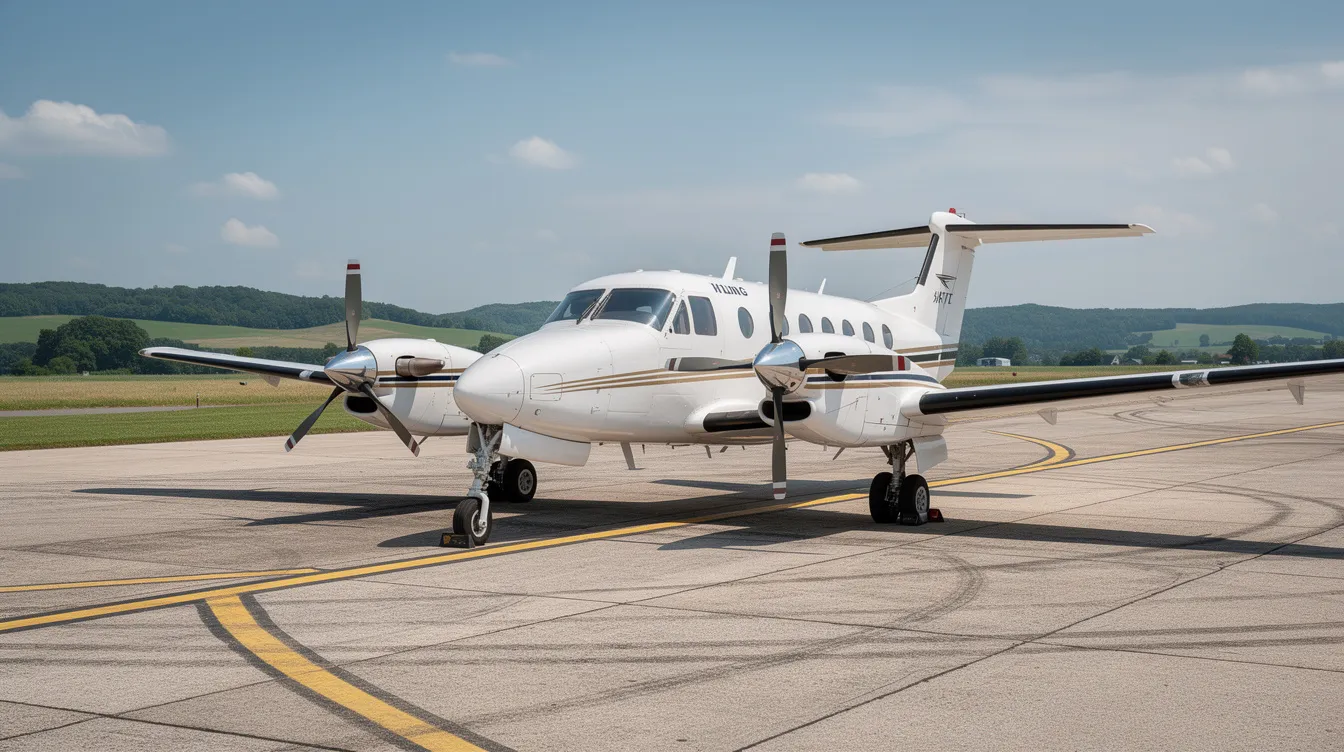
The Beechcraft King Air E90, a versatile turboprop aircraft, has annual operating costs that can exceed $1.1 million for high-utilization owners flying around 450 hours per year, with costs averaging approximately $2,577 per hour. Key cost drivers include fuel, maintenance, crew salaries, insurance, and hangar fees, with fuel being the largest variable expense. For those flying fewer than 200 hours annually, chartering through platforms like Jettly may be more cost-effective, as it avoids the high fixed costs associated with ownership. Ultimately, the decision between ownership and chartering hinges on expected flight hours and the value placed on aircraft availability and customization.
Jay Franco Serevilla
Jul 3, 2026
|
5
min read


View all
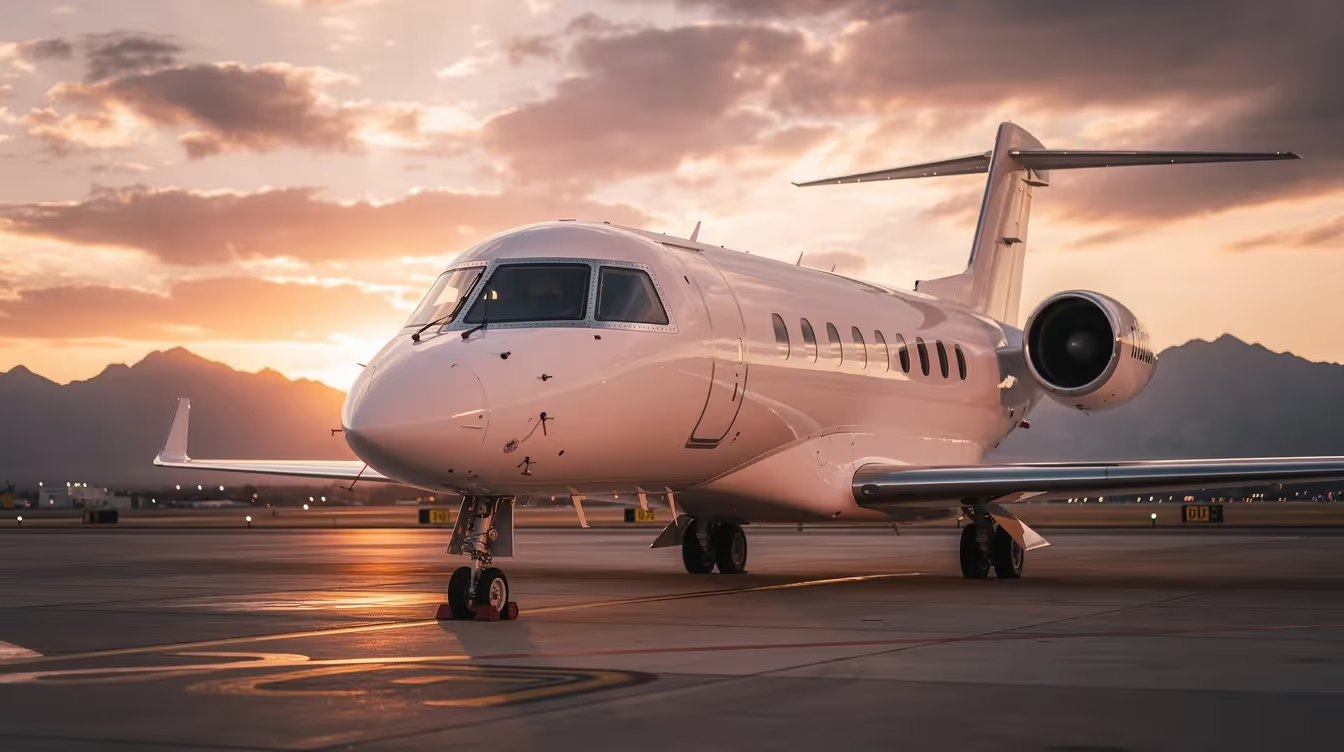
The Dassault Falcon 2000EX is a super-midsize business jet known for its long-range capabilities and comfort, accommodating 8-12 passengers in a spacious cabin. Introduced in 2003, it features upgraded PW308C engines for improved performance and lower operating costs, making it a popular choice for transcontinental and select transatlantic flights via Jettly's charter platform. With a range of approximately 3,800-4,000 nautical miles, the Falcon 2000EX excels in efficiency and cabin comfort, competing effectively against similar jets like the Gulfstream G200 and Bombardier Challenger 300. Charter options through Jettly include modern amenities and transparent pricing, catering to both business and leisure travelers.
Jay Franco Serevilla
Apr 18, 2026
|
5
min read
View all
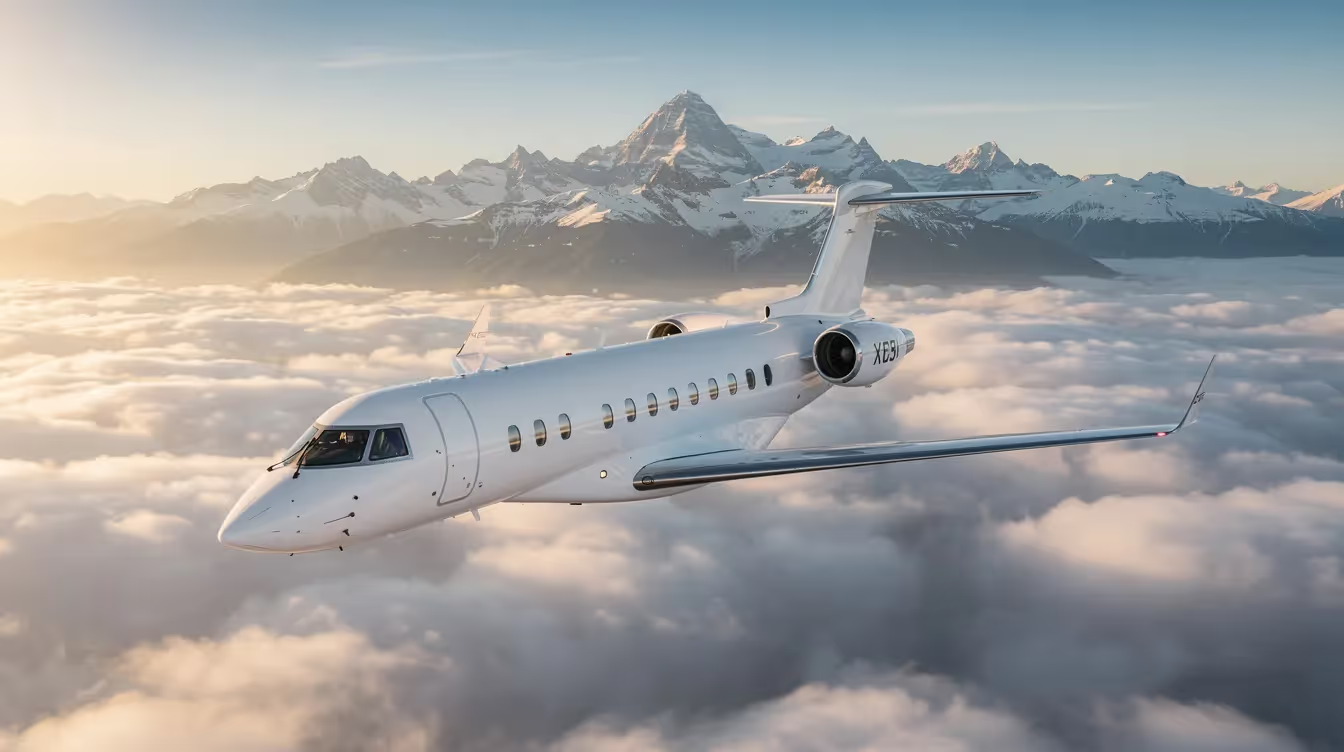
Dassault Aviation Falcon jets are renowned for their combination of advanced technology, performance, and comfort, making them a leading choice in business aviation. The Falcon family includes models like the Falcon 6X, 8X, and the upcoming 10X, catering to various mission profiles with impressive ranges and operational flexibility. These jets benefit from Dassault's military aviation heritage, featuring innovations such as fly-by-wire systems and efficient designs that enhance safety and reduce environmental impact. Travelers can easily charter Falcon jets through platforms like Jettly, which offers transparent pricing and a seamless booking experience.
Jay Franco Serevilla
Apr 18, 2026
|
5
min read

View all
The Epstein Files Transparency Act (2025) reshaped aviation privacy by allowing private flight records to be disclosed when tied to public interest, especially criminal investigations. The release of millions of documents set a precedent that transparency can override the long-standing confidentiality of private jet travel, even extending to sensitive locations like military bases. However, this level of disclosure is largely tied to exceptional cases like Epstein’s and does not fully eliminate privacy protections for typical users. In response, new regulations like the FAA’s Section 803 have strengthened everyday privacy, creating a dual system where privacy holds unless overridden by major legal investigations.
Jay Franco Serevilla
Apr 17, 2026
|
5
min read
View all
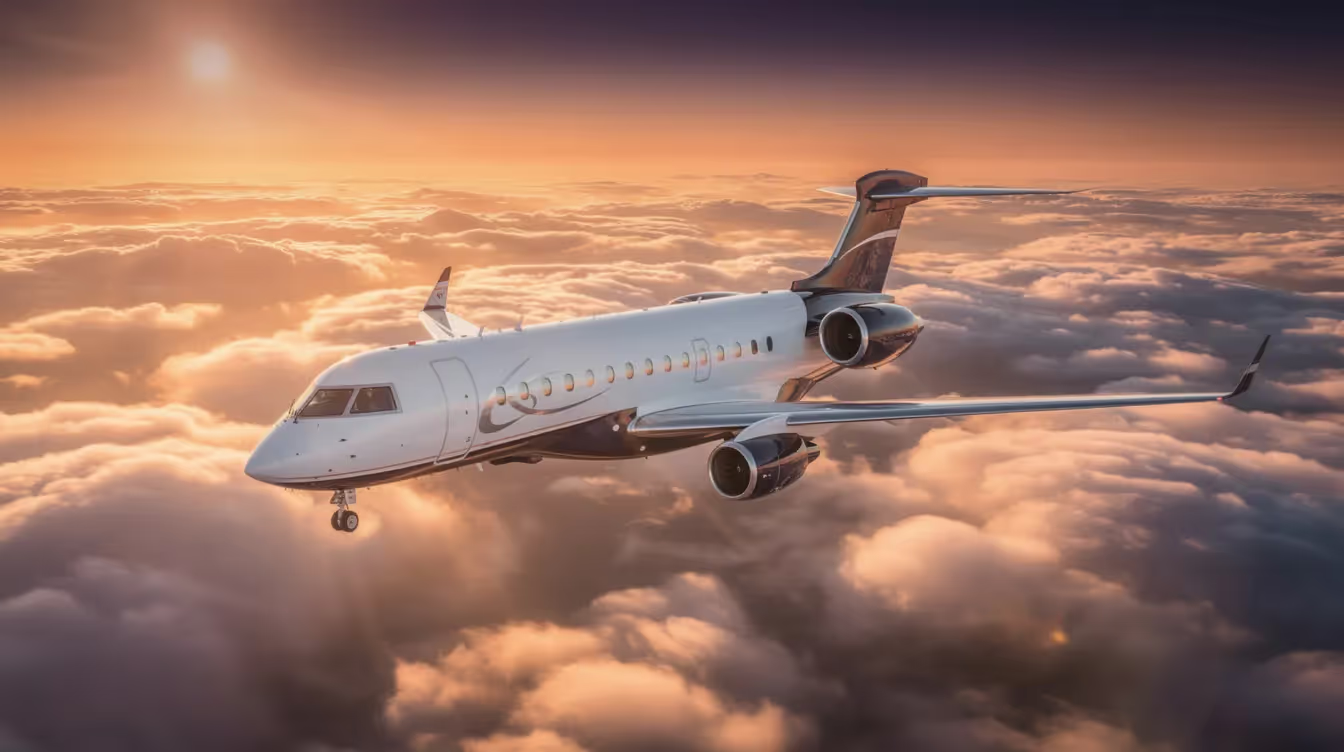
In 2026, pre-owned Gulfstream IV aircraft prices range from approximately US$1.8M to US$5.7M, influenced by factors like age, maintenance status, and avionics upgrades. Charter rates through platforms like Jettly typically cost between US$7,000 and US$10,000+ per flight hour, making chartering more economical than ownership for those flying under 200-250 hours annually. Total annual ownership costs can exceed US$1.5M for operators flying over 200 hours, highlighting the importance of evaluating both acquisition and operational expenses. Jettly offers flexible charter options, allowing users to access Gulfstream IV capabilities without the financial commitment of ownership.
Jay Franco Serevilla
Apr 16, 2026
|
5
min read
View all
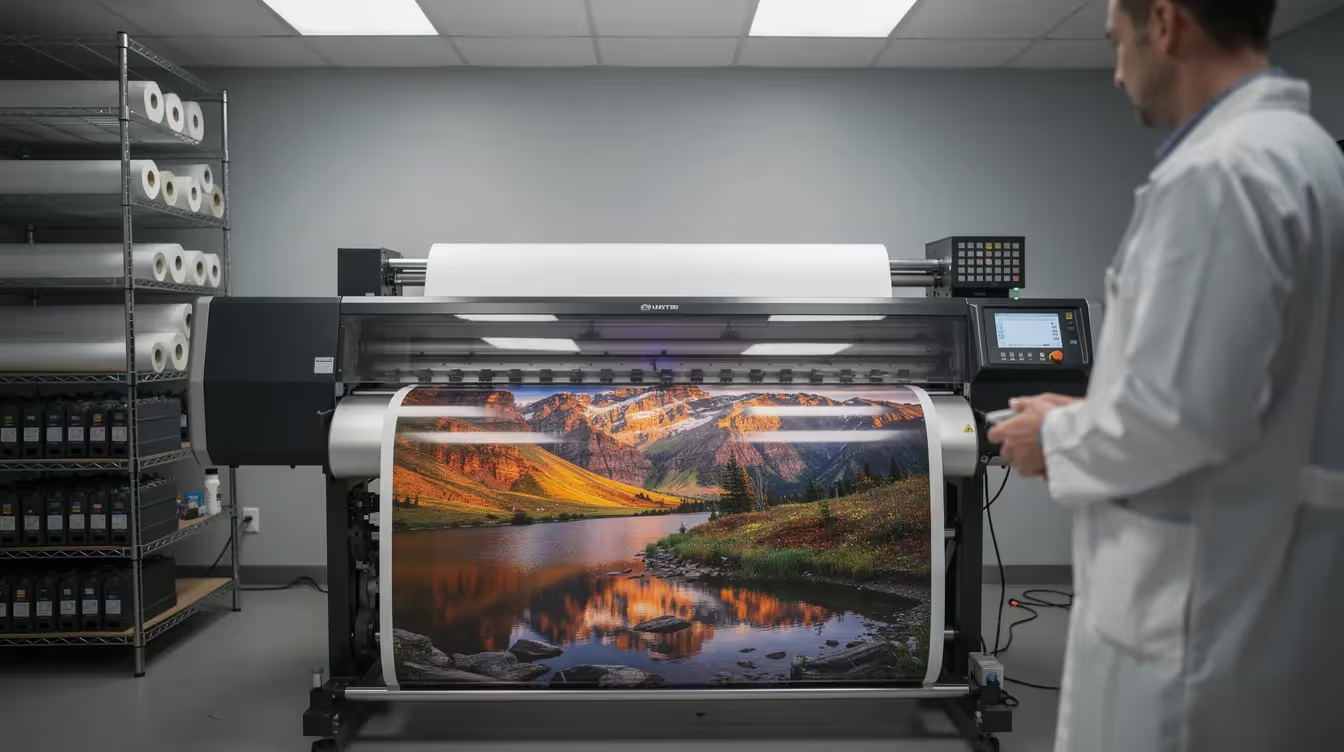
Lightjet printing is a laser-based photographic process that produces high-quality, continuous-tone images on traditional photographic paper using red, green, and blue lasers. While it offers superior color and detail, making it a gold standard for fine art and archival prints, it has largely been replaced by more environmentally friendly digital printing methods like dry lab dye sublimation. Lightjet prints are valued for their longevity and classic photographic appearance, but economic and environmental factors have led to a decline in its use. The article also clarifies the distinction between Lightjet printing and light jets in aviation, emphasizing that they are unrelated fields.
Jay Franco Serevilla
Apr 16, 2026
|
5
min read
View all
The text appears to be a corrupted or improperly formatted binary data, possibly from an image or other file type, rather than coherent text. It contains a mix of characters and symbols that do not convey a clear message or information suitable for summarization. If you have a specific topic or content you would like summarized, please provide that text for a more accurate response.
Jay Franco Serevilla
Apr 16, 2026
|
5
min read
Explore our latest articles and updates.
5
min read
US Top Fighter Jet: How the F-22, F-35 and F-15 Define American Air Power
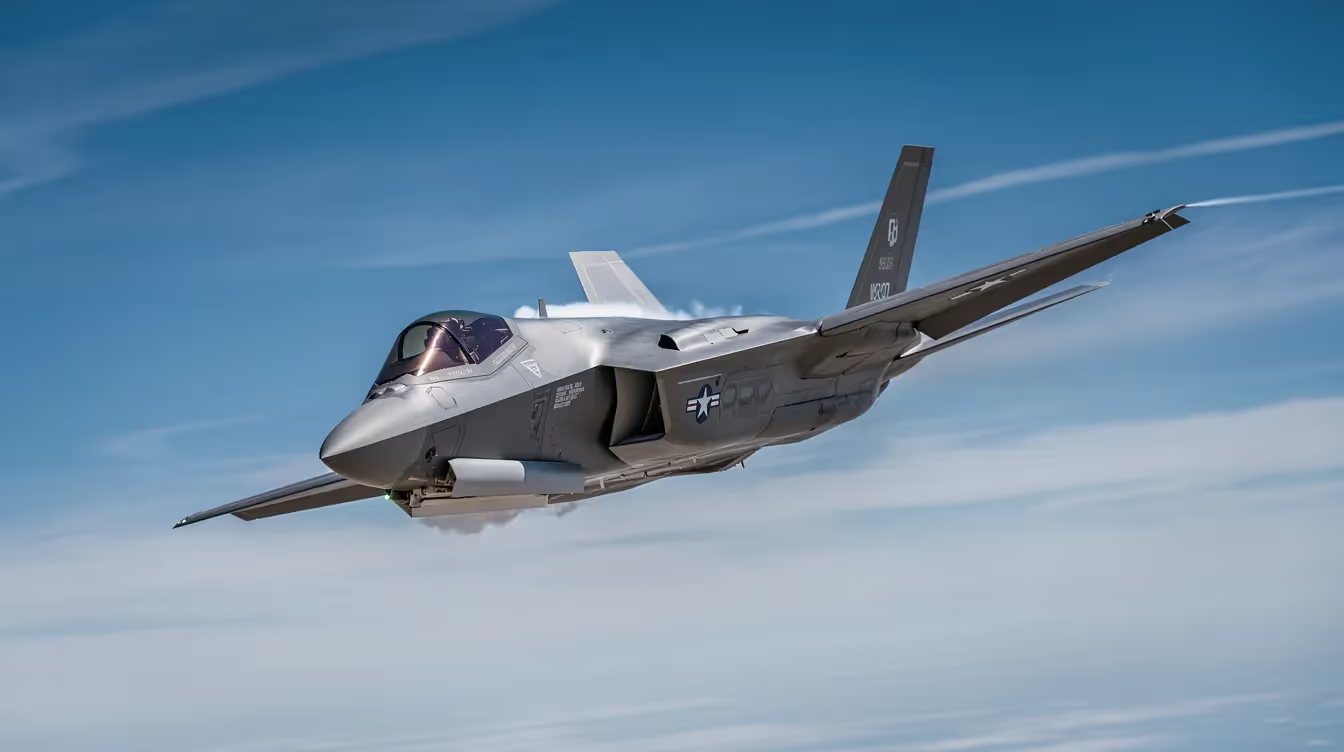
The debate over the U.S. top fighter jet centers on the F-22 Raptor, F-35 Lightning II, and F-15 Eagle, each excelling in different mission profiles. The F-22 is recognized for air superiority with unmatched stealth and agility, while the F-35 offers multirole versatility and extensive production, and the F-15 is the fastest with significant payload capacity. As the U.S. military prepares for next-generation fighters like the NGAD and F-47, these aircraft will continue to play vital roles through the 2030s. Meanwhile, private aviation platforms like Jettly leverage advancements from military technology to provide flexible and accessible travel options for civilians.
Read More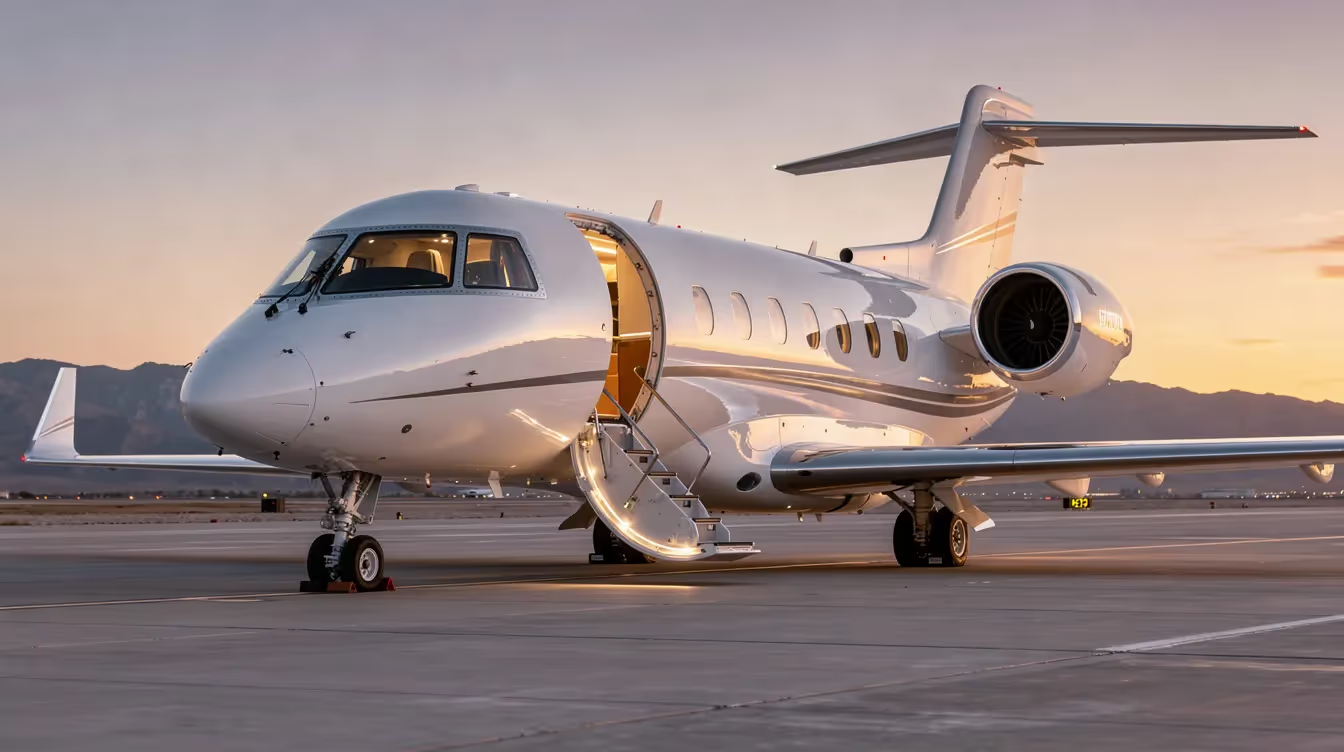
5
min read
Plane and Jet: What They Are, How They Differ, and When to Fly Each
Understanding the difference between planes and jets is crucial for travelers in private aviation, as jets are specifically powered by jet engines and designed for higher speeds and longer distances compared to propeller planes. Jets excel in long-haul travel, typically cruising at 400–600+ mph and accessing a wider range of airports, while turboprops are more efficient for short regional flights. Platforms like Jettly offer access to over 20,000 aircraft, allowing travelers to easily compare options based on their specific needs, such as distance, budget, and airport access. Ultimately, choosing the right aircraft depends on factors like trip duration, passenger count, and desired flexibility.
Read MoreJoin our community and receive the latest blog updates directly in your inbox.
MEMBERSHIPS AND ASSOCIATIONS



Disclaimer: Jettly operates as a charter broker, offering access to a global digital jet charter marketplace. Jettly is not a direct air carrier and does not own or operate aircraft. All advertised flights are conducted by third-party air carriers that are fully licensed and hold the appropriate Part 135 or Part 121 certifications issued by the Federal Aviation Administration (FAA) or equivalent regulatory authorities under U.S. or foreign law. Jettly complies fully with the U.S. Department of Transportation's Part 295 and Part 298 Charter Broker regulations. Jettly does not carry additional liability insurance. Passengers are covered by aircraft operator insurance. TICO: 50023770


