


Login
Get Instant Pricing On 23,000+ Aircraft


The private jet industry features various manufacturers, each with unique aircraft designed for specific missions. This guide provides insights into key brands, jet categories, and practical tips for selecting the right aircraft for your travel needs. Understanding these factors can enhance your private flying experience, whether for business or leisure.
Jeff Ryan Serevilla
Sep 22, 2026
|
5
min read


View all
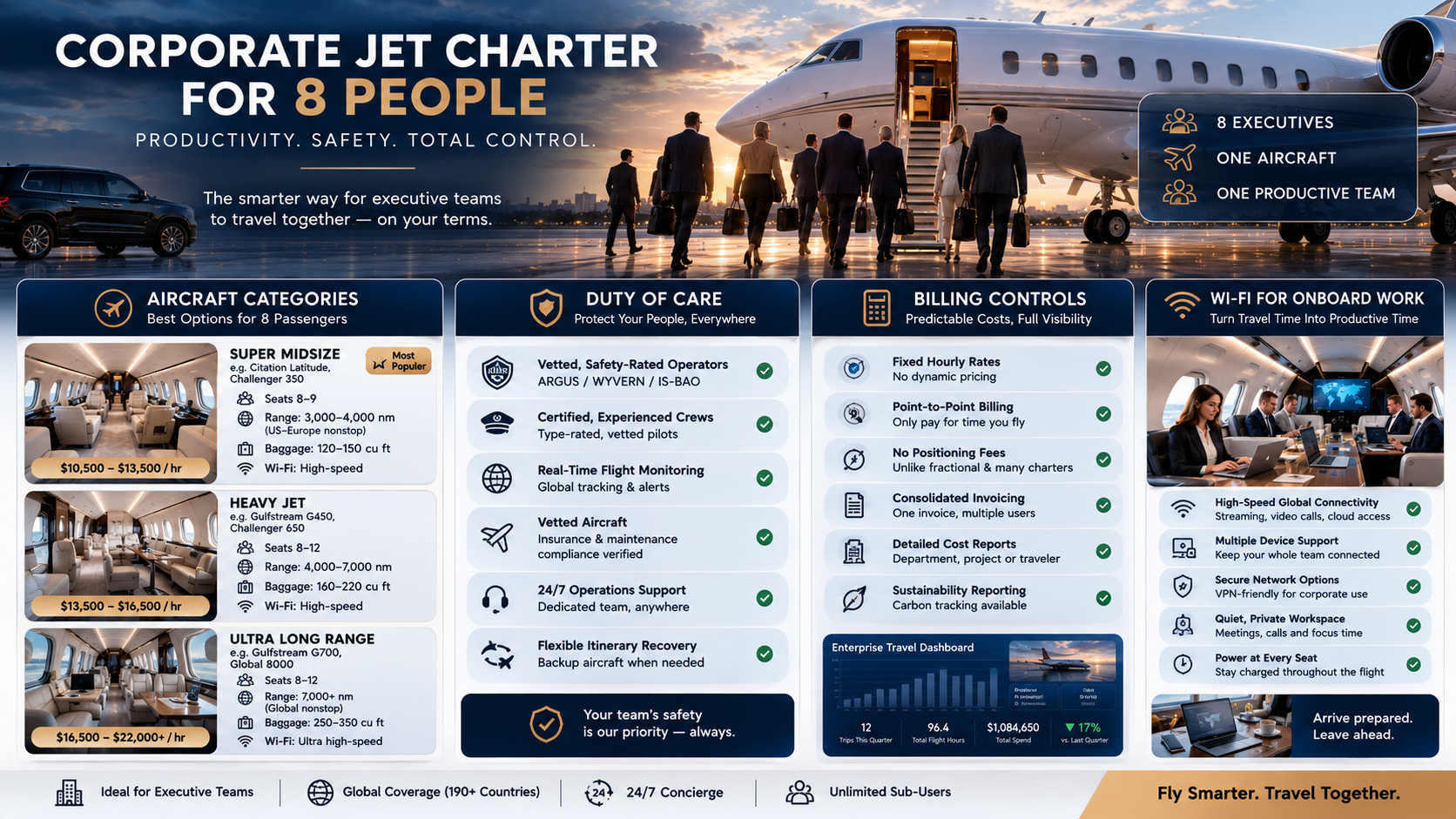
This comprehensive guide outlines the essentials for corporate jet charters accommodating teams of eight, focusing on aircraft categories, duty of care, billing controls, and onboard connectivity. It emphasizes the importance of selecting the right jet type, ensuring reliable Wi-Fi for work, and implementing effective billing practices to manage costs. By understanding these factors, organizations can enhance their private aviation experience and ensure smooth travel for their leadership teams.
Jay Franco Serevilla
Jul 25, 2026
|
5
min read
View all
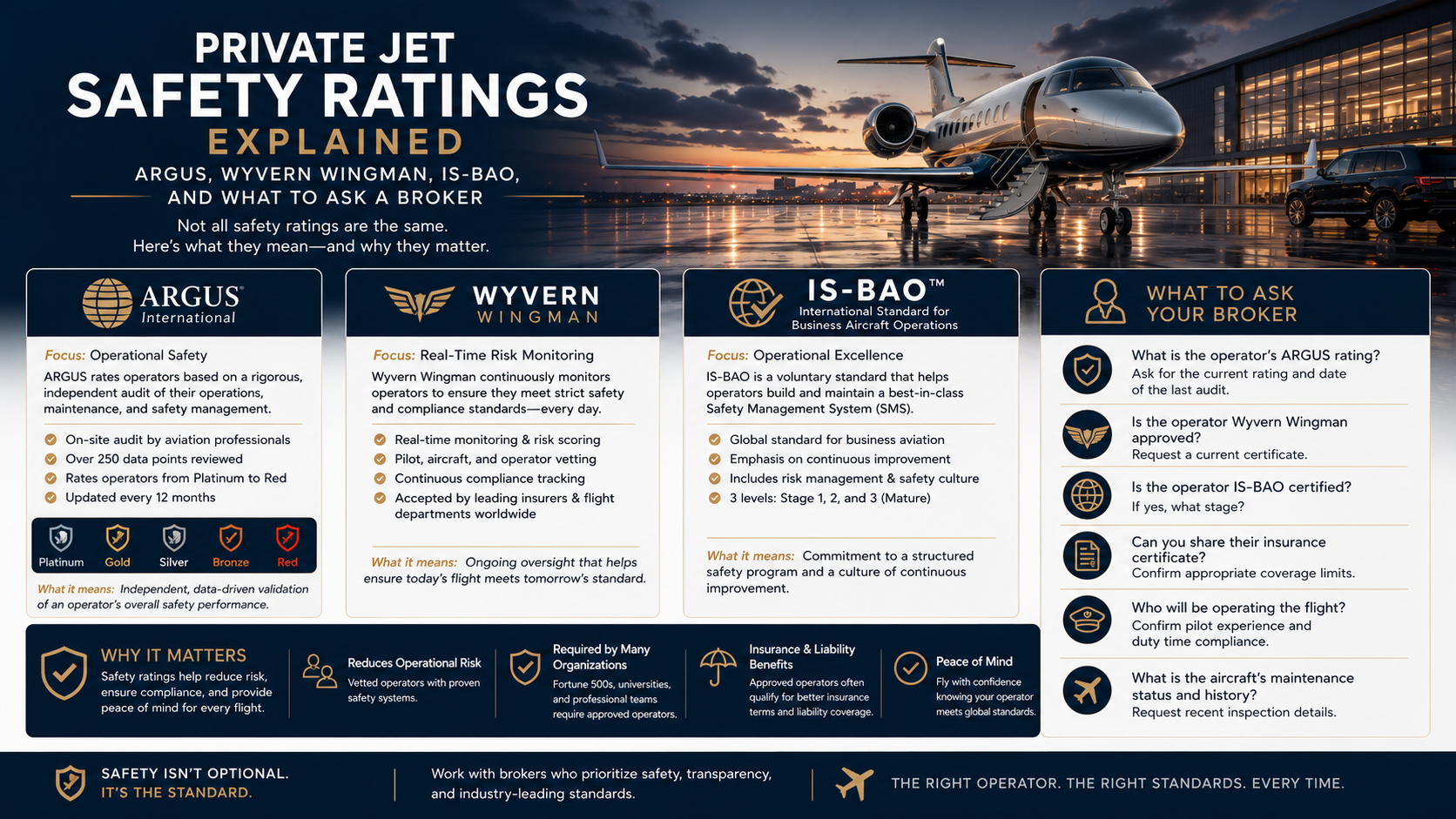
Private jet safety ratings, such as ARGUS, WYVERN, and IS-BAO, are essential tools for evaluating charter operators. These ratings assess how well operators train crews, maintain aircraft, and manage risks, providing an extra layer of safety assurance. Understanding these ratings and verifying the operator's credentials can significantly enhance your travel safety.
Jay Franco Serevilla
Jul 25, 2026
|
5
min read
View all
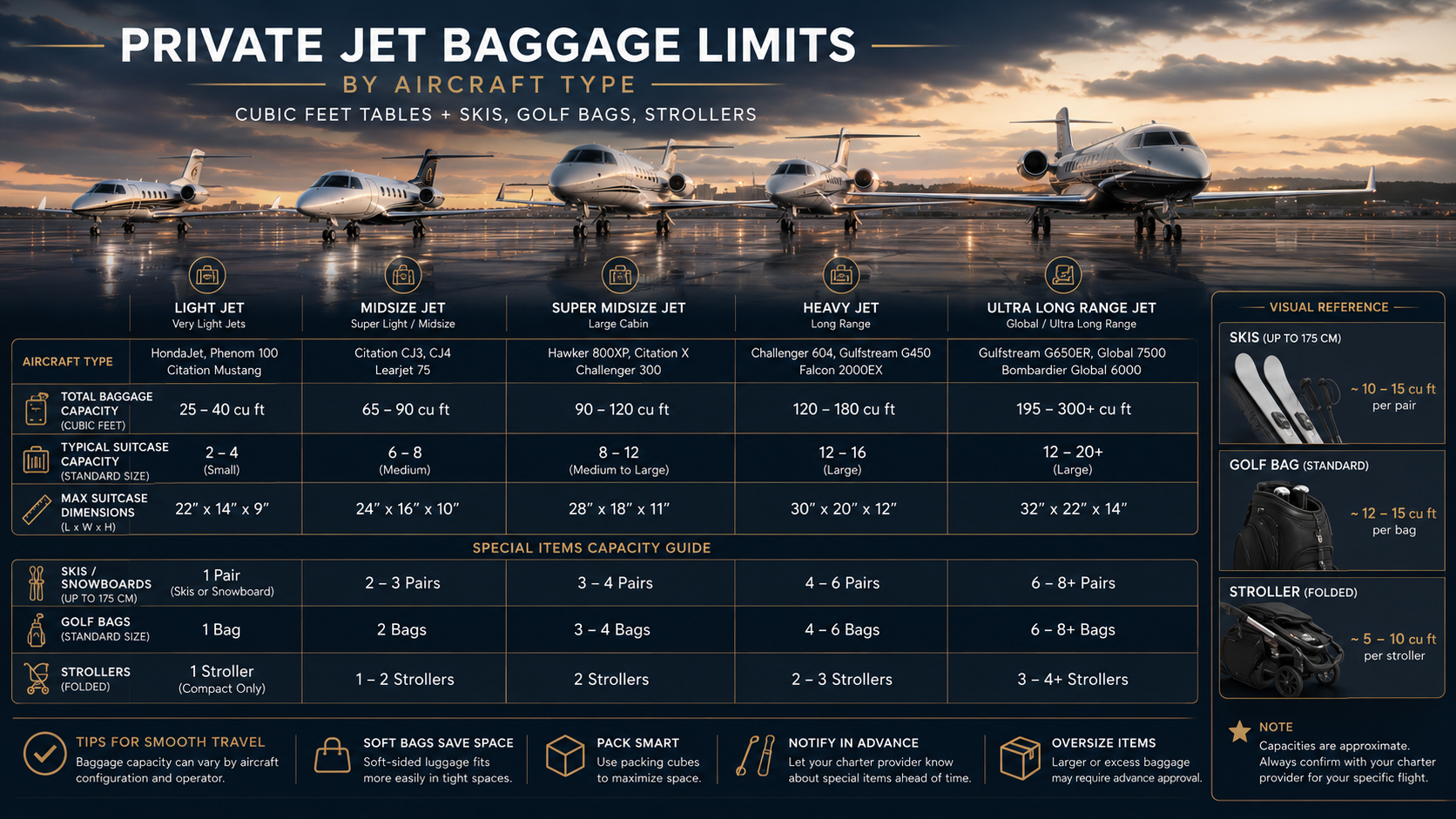
Understanding private jet baggage limits is crucial for travelers. Unlike commercial airlines, private jets have unique restrictions based on aircraft type, baggage volume, and door geometry. This guide provides essential insights into luggage capacity, especially for bulky items like skis and golf bags, ensuring a smooth travel experience.
Jay Franco Serevilla
Jul 25, 2026
|
5
min read
View all
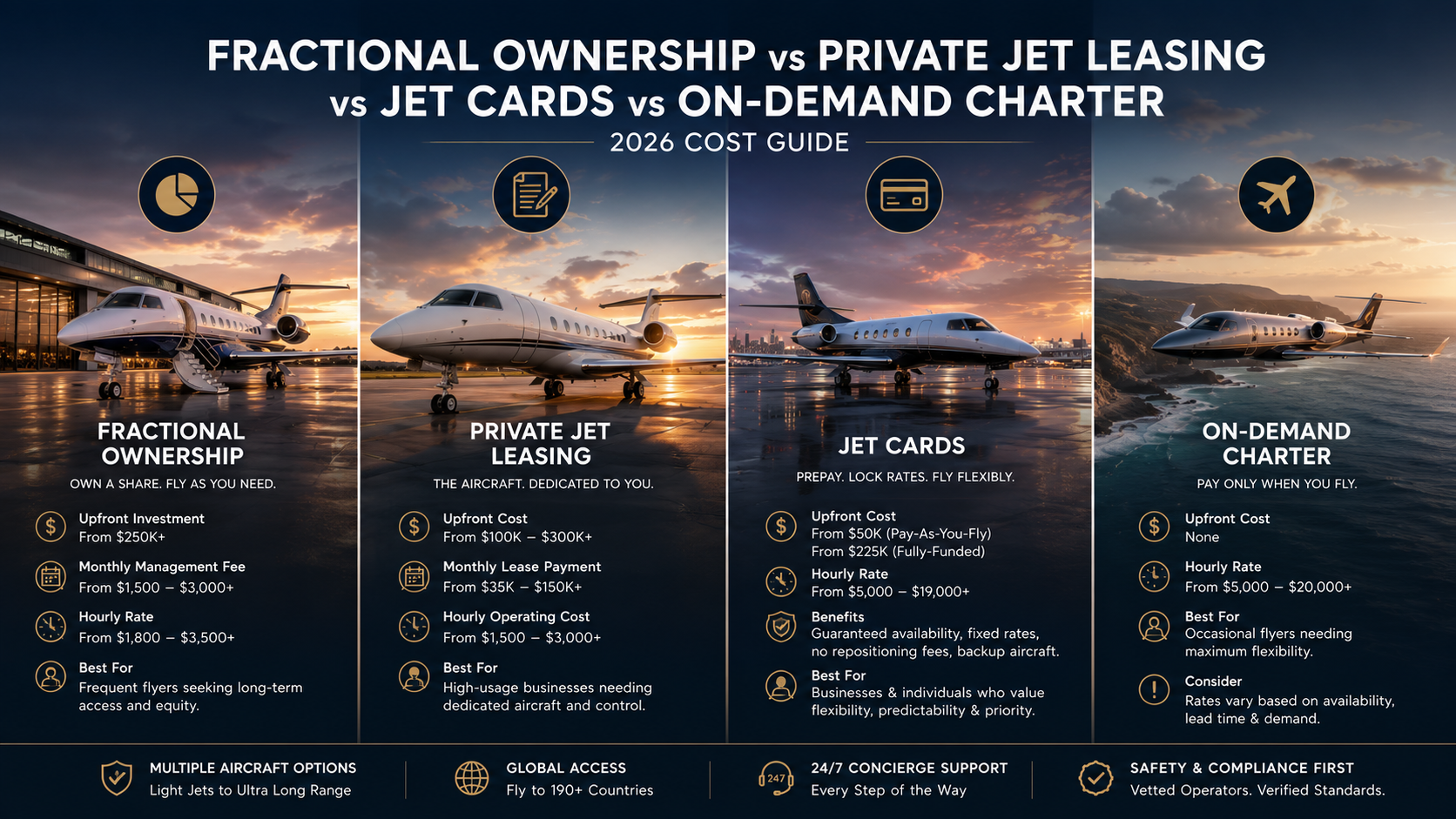
Navigating private jet access models can be complex, with options like fractional ownership, leasing, jet cards, and on-demand charter each offering unique pricing structures. Understanding these models is crucial for making informed decisions based on your flying habits and financial commitments. This guide breaks down the costs and benefits of each option, helping you choose the best fit for your travel needs.
Jay Franco Serevilla
Jul 25, 2026
|
5
min read
View all
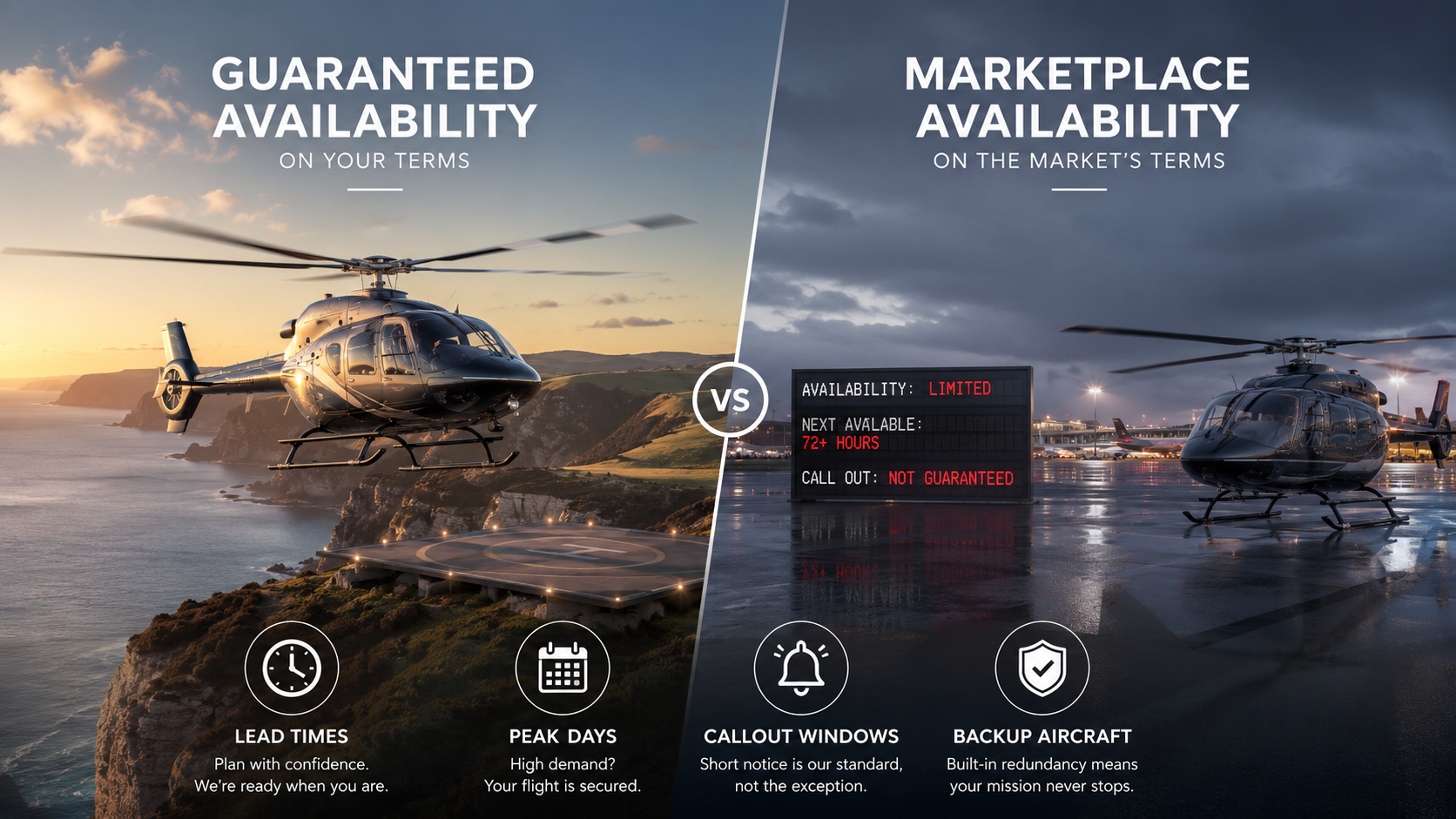
In private aviation, guaranteed availability offers a contract-backed promise for aircraft access, while marketplace availability provides real-time access to a larger fleet based on supply and demand. Understanding the differences in lead times, peak days, and backup aircraft options is crucial for making informed decisions. This guide breaks down the nuances of both models to help you choose the best fit for your flying needs.
Jay Franco Serevilla
Jul 25, 2026
|
5
min read

View all
Helicopter passenger capacity varies significantly based on the model, typically accommodating 2 to 8 passengers plus a pilot. Larger helicopters can carry 15 or more, but real-world factors like weight, baggage, and safety regulations often limit the actual number of passengers. Jettly's platform simplifies the process of selecting the right helicopter for your travel needs.
Jay Franco Serevilla
Jul 25, 2026
|
5
min read
Explore our latest articles and updates.

5
min read
US Fighter Jets: From Air Superiority Icons to the F-35 Era
US fighter jets have been pivotal in maintaining American air superiority for over 70 years, evolving from Cold War icons to advanced 5th-generation platforms like the F-22 and F-35, which emphasize stealth, sensor fusion, and multirole capabilities. Legacy fighters such as the F-15, F-16, and F/A-18 remain essential, continuously upgraded to meet modern combat demands. The future of US air power lies in the development of 6th-generation fighters through programs like NGAD, focusing on advanced networking and human-machine collaboration. Additionally, the principles of safety and efficiency in military aviation are mirrored in the private sector, as seen in platforms like Jettly, which offers flexible private jet charter services.
Read More
5
min read
Light Fighter: Concept, History, and Modern Applications
A light fighter is a small, agile combat aircraft designed for air-to-air combat and light attack missions, offering advantages in maneuverability and cost-effectiveness compared to larger multirole fighters. The concept has evolved since the 1960s, significantly influencing air combat doctrine and leading to the development of notable aircraft like the F-16 and F/A-18. Modern light fighters integrate advanced technologies such as digital engineering and open-architecture avionics, making them adaptable for various missions while maintaining lower operational costs. This design philosophy parallels trends in civilian aviation, where similar trade-offs in performance and cost are considered when selecting aircraft for private travel.
Read MoreJoin our community and receive the latest blog updates directly in your inbox.
MEMBERSHIPS AND ASSOCIATIONS



Disclaimer: Jettly operates as a charter broker, offering access to a global digital jet charter marketplace. Jettly is not a direct air carrier and does not own or operate aircraft. All advertised flights are conducted by third-party air carriers that are fully licensed and hold the appropriate Part 135 or Part 121 certifications issued by the Federal Aviation Administration (FAA) or equivalent regulatory authorities under U.S. or foreign law. Jettly complies fully with the U.S. Department of Transportation's Part 295 and Part 298 Charter Broker regulations. Jettly does not carry additional liability insurance. Passengers are covered by aircraft operator insurance. TICO: 50023770


