


Login
Get Instant Pricing On 23,000+ Aircraft

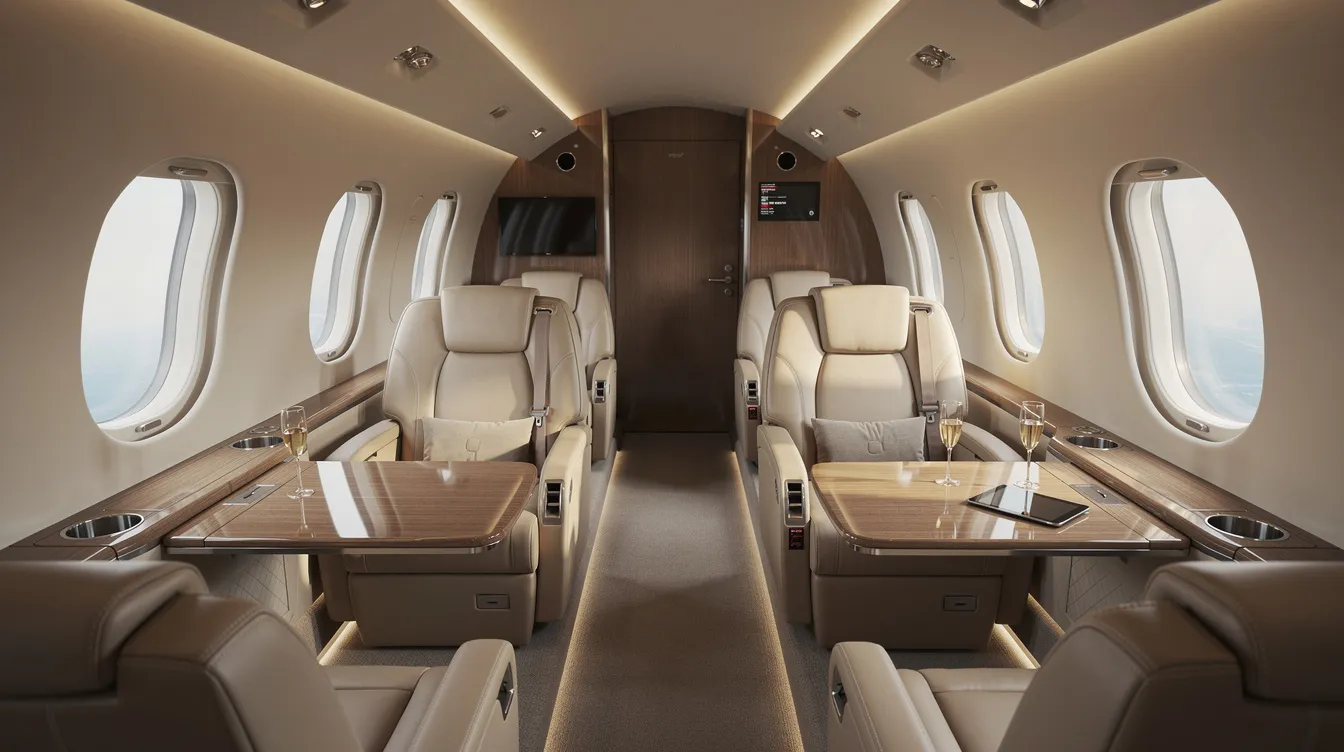
In 2026, luxurious private jets offer unparalleled travel experiences with advanced technology, wellness-focused designs, and intercontinental capabilities. This guide explores various aircraft categories, from light jets to ultra-long-range flagships, and highlights how digital platforms like Jettly make chartering more accessible than ever.
Jay Franco Serevilla
Sep 15, 2026
|
5
min read



View all
Choosing the right billing model for private jet travel can save you thousands. For approximately 60 hours of flying annually, hours-based or occupied-hour billing typically offers the best value, providing predictable costs without the burden of fixed fees. This guide breaks down the differences between days-based, hours-based, and occupied-hour billing to help you make an informed decision.
Jeff Ryan Serevilla
Sep 17, 2026
|
5
min read

View all
Choosing the best private jet for business travel in 2025 and 2026 depends on specific mission profiles, passenger needs, and budget considerations. Top contenders include the Bombardier Global 7500 and Gulfstream G700 for ultra-long-range travel, while the Embraer Phenom 300E excels for regional trips. This guide helps decision-makers evaluate jets based on range, cabin productivity, and operating economics to find the ideal fit for their travel requirements.
Jeff Ryan Serevilla
Sep 17, 2026
|
5
min read

View all
Understanding private jet baggage limits is crucial for a smooth travel experience, especially for first-time charter travelers. Unlike commercial airlines, private jet luggage policies vary by aircraft class and operator, focusing on baggage volume, weight, and fit through the baggage door. This guide provides insights into luggage allowances by aircraft class for 2026, helping travelers plan effectively.
Jeff Ryan Serevilla
Sep 17, 2026
|
5
min read

View all
Introducing Smart Match™, an AI-driven workflow that matches private jet charter clients with vetted operators and aircraft in under 24 hours globally. By evaluating positioning costs, routing, safety ratings, and price, it replaces traditional multi-day broker searches with a curated shortlist of confirmed options.
Therese E.
Sep 17, 2026
|
5
min read

View all
Executive aviation revolutionizes travel by offering private flights tailored to individual schedules and preferences, bypassing the limitations of commercial airlines. With options like on-demand charters and memberships, travelers can enjoy significant time savings, enhanced comfort, and privacy, making it ideal for both business and leisure trips.
Jay Franco Serevilla
Sep 16, 2026
|
5
min read

View all
Executive Air Transport, Inc. has been a staple in private aviation since 1959, offering on-demand charter and cargo services from Muskegon County Airport. As the industry evolves, digital platforms like Jettly provide travelers with instant access to a vast array of aircraft and transparent pricing, presenting a modern alternative to traditional operators. This article compares the offerings of Executive Air Transport with digital marketplaces to help travelers choose the best option for their needs.
Jay Franco Serevilla
Sep 16, 2026
|
5
min read
Explore our latest articles and updates.

5
min read
Best Day to Buy Last-Minute Flights (and When to Charter a Private Jet Instead)
To find the best last-minute flight deals, focus on booking 2–3 days before departure rather than a specific weekday, as timing and flexibility are key. Midweek flights and traveling on holidays like Christmas Day can yield significant savings. For urgent business trips or group travel, consider private jet charters, which can be more cost-effective and time-efficient than last-minute commercial fares. Tools like price alerts and flexible-date calendars are essential for tracking fare drops in the final days before travel.
Read More
5
min read
When to Purchase Flight Tickets: Timing Tips for Cheap Flights and Private Jet Travel
Timing your flight ticket purchases can significantly affect travel costs, with optimal booking windows varying for commercial and private flights. For U.S. domestic flights, the best time to book is typically 1–3 months in advance, while international flights should be booked 3–6 months ahead. Private jet charters are best booked 2–4 weeks before short-haul trips and 4–8 weeks for long-haul flights, with Jettly offering tools for transparent pricing and aircraft comparisons. Monitoring prices and flying on off-peak days can further enhance savings for both commercial and private travel.
Read MoreJoin our community and receive the latest blog updates directly in your inbox.
MEMBERSHIPS AND ASSOCIATIONS



Disclaimer: Jettly operates as a charter broker, offering access to a global digital jet charter marketplace. Jettly is not a direct air carrier and does not own or operate aircraft. All advertised flights are conducted by third-party air carriers that are fully licensed and hold the appropriate Part 135 or Part 121 certifications issued by the Federal Aviation Administration (FAA) or equivalent regulatory authorities under U.S. or foreign law. Jettly complies fully with the U.S. Department of Transportation's Part 295 and Part 298 Charter Broker regulations. Jettly does not carry additional liability insurance. Passengers are covered by aircraft operator insurance. TICO: 50023770


