


Login
Get Instant Pricing On 23,000+ Aircraft


The C-21 plane, a military variant of the Learjet 35A, has been a reliable light transport aircraft for the USAF since 1984, serving various missions including passenger airlift and aeromedical evacuation. With impressive speed and range, it continues to play a vital role in military logistics, while civilians can access similar performance through private jet charters like the Learjet 35A.
Jeff Ryan Serevilla
Sep 20, 2026
|
5
min read



View all
The Wheels Up private jet center FBO at Cincinnati/Northern Kentucky International Airport has transitioned to PremierFBO, operated by Premier Private Jets since April 2025. This guide details the changes, current services, and booking processes for private aviation travelers using this key facility.
Jeff Ryan Serevilla
Sep 22, 2026
|
5
min read

View all
Helicopter rides typically last between 10 minutes and 2 hours, depending on the purpose and distance. Sightseeing flights usually range from 10 to 45 minutes, while point-to-point transfers can take longer. Understanding these timeframes helps travelers plan their itineraries effectively.
Jeff Ryan Serevilla
Sep 22, 2026
|
5
min read

View all
The N224LD Embraer Legacy 600 is a 2006 business jet known for its spacious three-zone cabin and long-range capabilities. Operated by Cloud Enterprise Holdings LLC, it offers luxury private charters from Teterboro, NJ. With a maximum range of 3,250 nautical miles, this aircraft is ideal for corporate and family travel, providing comfort and productivity in the air.
Jeff Ryan Serevilla
Sep 22, 2026
|
5
min read

View all
The emergence of flying chefs is transforming private jet travel by offering personalized, high-quality dining experiences at cruising altitude. These culinary professionals elevate in-flight meals, adapting menus to passenger preferences and ensuring gourmet quality. As luxury travel evolves, flying chefs are becoming essential for discerning travelers seeking exceptional onboard dining.
Jeff Ryan Serevilla
Sep 22, 2026
|
5
min read

View all
The Gulfstream G550 N550EW is an ultra-long-range private jet ideal for both business and leisure travel. With a range of over 6,700 nautical miles and luxurious amenities, it offers exceptional comfort and operational flexibility. This guide covers the aircraft's features, booking process, and pricing, making it a valuable resource for potential travelers.
Jeff Ryan Serevilla
Sep 22, 2026
|
5
min read

View all
Chartering a private jet to Bora Bora offers luxury travelers a seamless and flexible travel experience, bypassing the hassles of commercial flights. With Jettly, you can choose from a wide range of aircraft and enjoy competitive pricing, ensuring a comfortable journey to this stunning destination. This guide covers routes, pricing, and how to book your private jet charter effortlessly.
Jeff Ryan Serevilla
Sep 22, 2026
|
5
min read
Explore our latest articles and updates.

5
min read
Jet Taylor Swift: Inside Her Dassault Falcon 7X, Costs, Controversy, and Charter Alternatives
Taylor Swift owns a Dassault Falcon 7X, a long-range business jet valued between $40 million and $58 million, with annual operating costs exceeding $3 million. The jet has attracted significant attention due to its environmental impact, as it was reported to have emitted 1,200 tonnes of CO2 in 2023, leading to public criticism and discussions about celebrity jet usage and climate responsibility. Swift's extensive touring schedule necessitates private air travel, and while ownership offers benefits like customization and privacy, platforms like Jettly provide flexible charter options that can be more cost-effective for occasional travelers. The article explores the jet's specifications, costs, and the ongoing debate surrounding private aviation's environmental footprint.
Read More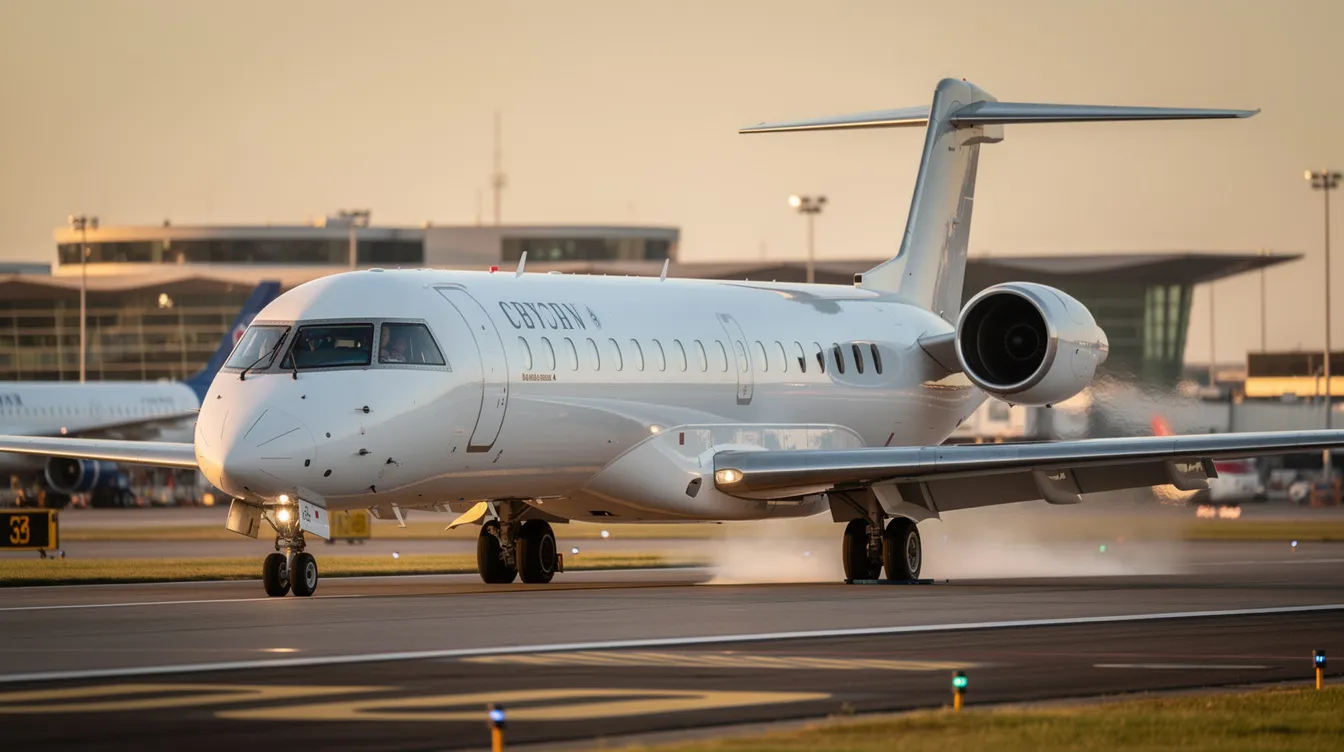
5
min read
Bombardier CRJ 900: Key Facts, Performance & Private Charter Use
The Bombardier CRJ 900 is a regional jet designed for short-to-medium-haul flights, accommodating 76 to 90 passengers and offering a range of approximately 1,784 miles. Since its introduction in 2001, it has become a key player in regional aviation, effectively linking smaller cities to major hubs across North America and Europe. The aircraft is popular for private charters, particularly for groups such as corporate teams and sports organizations, thanks to its efficient operational costs and flexibility in scheduling. Platforms like Jettly facilitate easy booking and tailored services for CRJ 900 charters, enhancing the travel experience for larger groups.
Read MoreJoin our community and receive the latest blog updates directly in your inbox.
MEMBERSHIPS AND ASSOCIATIONS



Disclaimer: Jettly operates as a charter broker, offering access to a global digital jet charter marketplace. Jettly is not a direct air carrier and does not own or operate aircraft. All advertised flights are conducted by third-party air carriers that are fully licensed and hold the appropriate Part 135 or Part 121 certifications issued by the Federal Aviation Administration (FAA) or equivalent regulatory authorities under U.S. or foreign law. Jettly complies fully with the U.S. Department of Transportation's Part 295 and Part 298 Charter Broker regulations. Jettly does not carry additional liability insurance. Passengers are covered by aircraft operator insurance. TICO: 50023770


