


Login
Get Instant Pricing On 23,000+ Aircraft

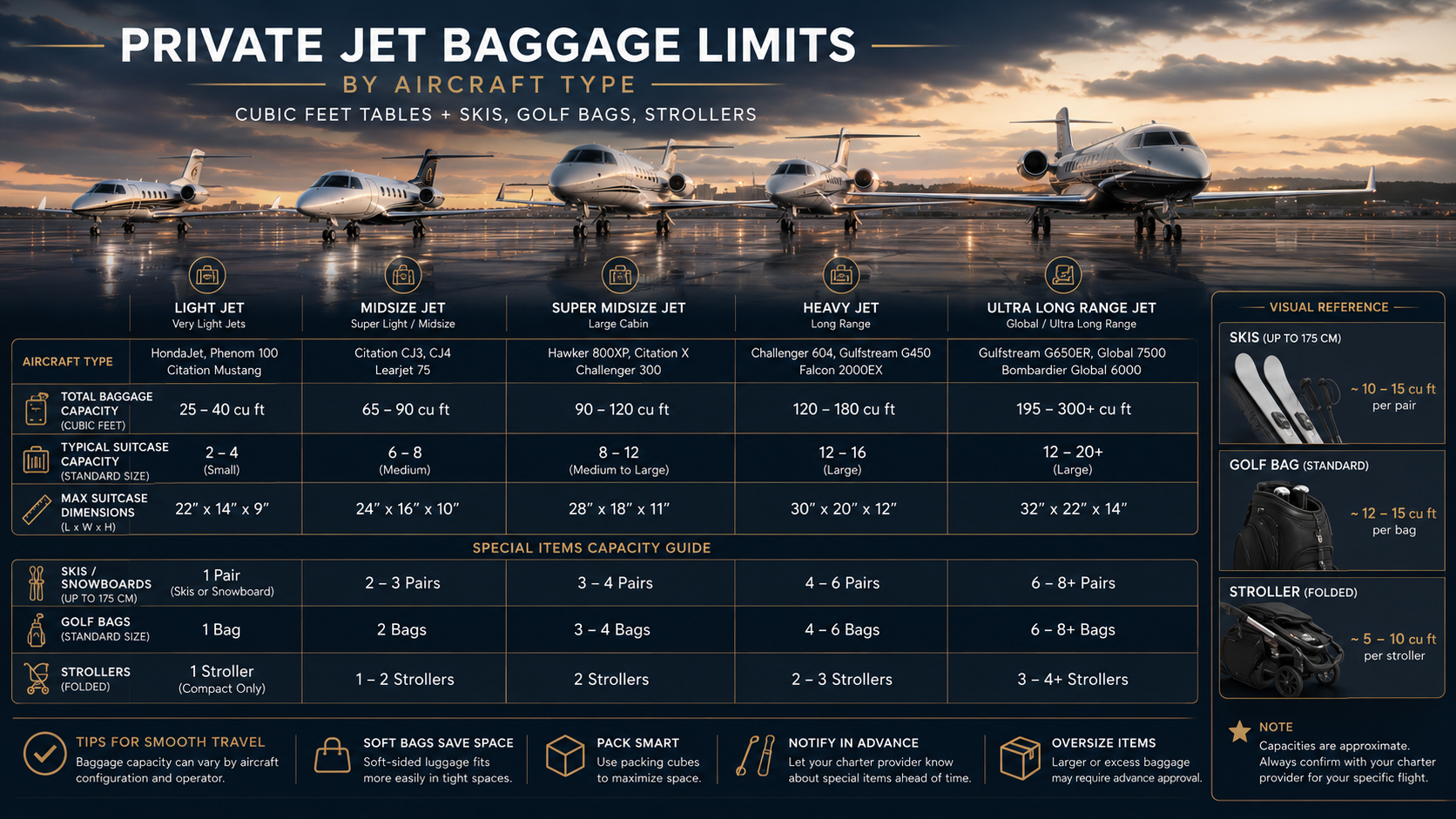
Understanding private jet baggage limits is crucial for travelers. Unlike commercial airlines, private jets have unique restrictions based on aircraft type, baggage volume, and door geometry. This guide provides essential insights into luggage capacity, especially for bulky items like skis and golf bags, ensuring a smooth travel experience.
Jay Franco Serevilla
Jul 25, 2026
|
5
min read



View all
Boarding a private jet for the first time can be a seamless experience with Jettly. This step-by-step guide outlines the simplified boarding process, from arriving at the FBO to taking off, highlighting the efficiency and personalized service that private aviation offers compared to commercial flights.
Jeff Ryan Serevilla
Sep 20, 2026
|
5
min read

View all
Building an airplane hangar can cost between $25 and $600+ per square foot, influenced by size, materials, and location. This guide outlines key cost factors, including hangar size, structure type, and necessary utilities, helping aircraft owners budget effectively for their hangar construction.
Jeff Ryan Serevilla
Sep 20, 2026
|
5
min read

View all
This comprehensive guide details private flight costs in 2026, highlighting factors that influence pricing for various travelers. From hourly rates to hidden fees, it provides insights into budgeting for private jet travel, making it easier to compare quotes and understand total expenses.
Jeff Ryan Serevilla
Sep 20, 2026
|
5
min read

View all
Norman's Cay Airport (MYEN) in the Bahamas is a small, unattended airport catering primarily to private jet travelers and charter flights. With its single paved runway and limited infrastructure, MYEN offers a direct and private access point to the beautiful Exuma Islands, making it ideal for travelers seeking a seamless arrival experience. This guide provides essential information on operations, safety considerations, and how to charter the right aircraft through Jettly.
Jeff Ryan Serevilla
Sep 20, 2026
|
5
min read

View all
The Gulfstream GV is an ultra long range business jet designed for nonstop intercontinental travel, featuring a spacious cabin for up to 18 passengers. With a maximum range of 6,500 nautical miles and advanced avionics, it offers unparalleled comfort and efficiency for corporate executives and families alike. Chartering through Jettly provides a flexible, cost-effective alternative to ownership.
Jeff Ryan Serevilla
Sep 20, 2026
|
5
min read

View all
Corporate flight attendant jobs offer a unique blend of safety and luxury service aboard private jets. This career path is ideal for those with hospitality backgrounds seeking flexible schedules and high-end travel experiences. With growing demand in private aviation, aspiring attendants can find rewarding opportunities in this expanding field.
Jeff Ryan Serevilla
Sep 20, 2026
|
5
min read
Explore our latest articles and updates.

5
min read
N177BB – Gulfstream G-IVSP Private Jet Charter Guide
The Gulfstream G-IVSP N177BB is a heavy private jet capable of cruising at 488 mph and operating at altitudes up to 45,000 feet, with a range of approximately 4,200 nautical miles. It accommodates 13-14 passengers in a luxurious cabin featuring club seating, a conference area, and lie-flat beds, making it ideal for business or leisure travel. Jettly offers a streamlined booking process for N177BB and similar aircraft, emphasizing transparent pricing and access to smaller airports. For those seeking flexible private flying options, Jettly provides various charter services and jet card programs.
Read More
5
min read
Hawker XP 400: Light Jet Guide for Charter Travelers
The Hawker XP 400, encompassing the 400XP and upgraded 400XPR models, is a well-established light business jet known for its spacious cabin and efficient performance, ideal for regional travel. With a seating capacity of six to seven passengers and a maximum range of approximately 1,400 to 1,950 nautical miles, it competes effectively with other light jets like the Cessna Citation and Learjet. The aircraft features a flat floor design, modern amenities, and access to smaller airports, enhancing convenience for charter travelers. Jettly provides a user-friendly platform for booking these jets, offering transparent pricing and the ability to filter for specific amenities.
Read MoreJoin our community and receive the latest blog updates directly in your inbox.
MEMBERSHIPS AND ASSOCIATIONS



Disclaimer: Jettly operates as a charter broker, offering access to a global digital jet charter marketplace. Jettly is not a direct air carrier and does not own or operate aircraft. All advertised flights are conducted by third-party air carriers that are fully licensed and hold the appropriate Part 135 or Part 121 certifications issued by the Federal Aviation Administration (FAA) or equivalent regulatory authorities under U.S. or foreign law. Jettly complies fully with the U.S. Department of Transportation's Part 295 and Part 298 Charter Broker regulations. Jettly does not carry additional liability insurance. Passengers are covered by aircraft operator insurance. TICO: 50023770


