


Login
Get Instant Pricing On 23,000+ Aircraft

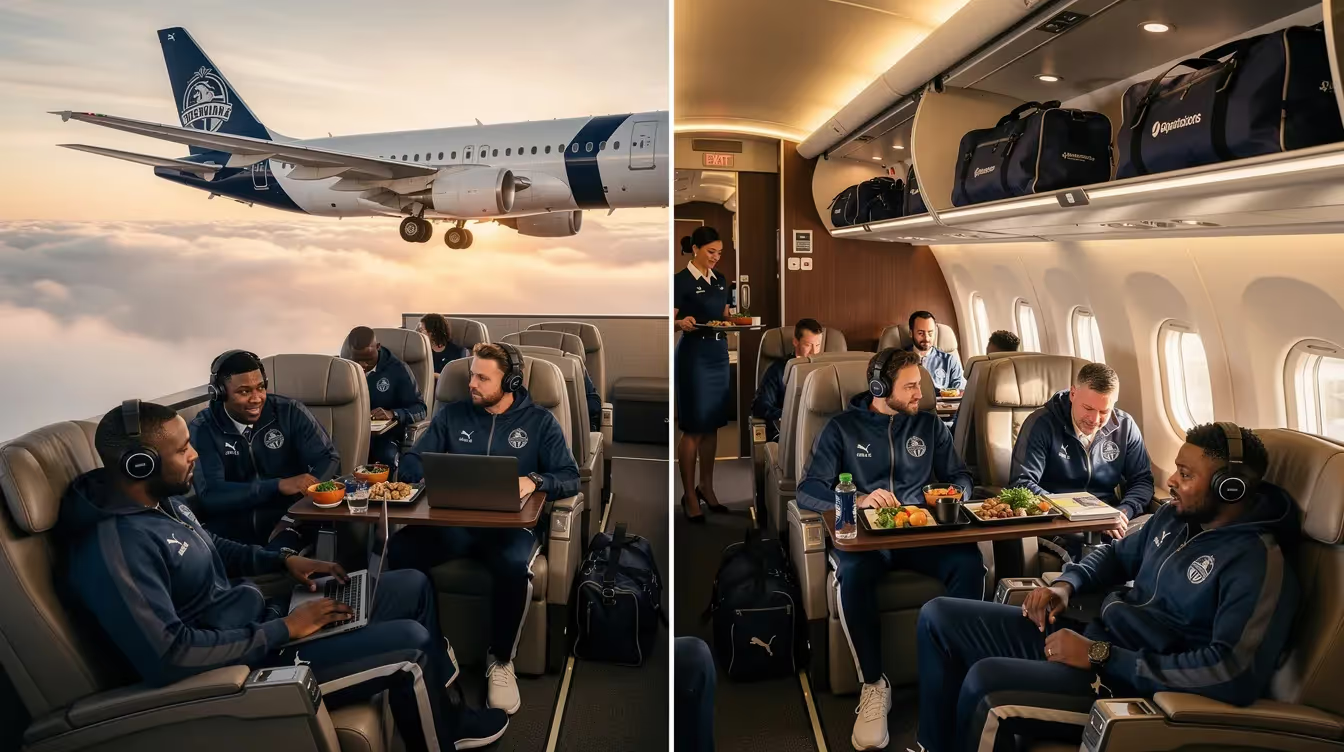
Sports team charter flights provide a tailored and efficient travel solution for teams, allowing them to control schedules, reduce transit times, and enjoy customized amenities. By bypassing commercial delays and using private terminals, teams can focus on recovery and preparation, enhancing performance on game day. Jettly simplifies the booking process with access to over 20,000 aircraft, offering instant quotes and tailored travel solutions for various team needs. This guide outlines the benefits of charter flights, aircraft options, and how Jettly supports seamless travel for sports organizations.
Jay Franco Serevilla
Apr 22, 2026
|
5
min read


View all
Fighter jets are advanced military aircraft designed for air superiority and ground attack missions, playing a crucial role in global security. They have evolved significantly from early biplanes to modern stealth fighters, integrating cutting-edge technology for enhanced performance. Civilian experiences in demilitarized trainers offer a glimpse into the thrilling world of high-performance aviation.
Jay Franco Serevilla
Jul 26, 2026
|
5
min read

View all
The F-35 Lightning II is a revolutionary fifth-generation stealth fighter jet that combines advanced technology, multi-role capabilities, and global partnerships. Serving as a backbone for the U.S. and allied air forces, it enhances air power through its stealth, sensor fusion, and networked warfare capabilities. This guide explores its design, variants, operational history, and impact on global security.
Jay Franco Serevilla
Jul 26, 2026
|
5
min read

View all
Jettly offers leading-edge helicopter experiences that combine advanced rotorcraft, skilled pilots, and a seamless booking process. Ideal for both business and leisure travelers, Jettly connects users to a variety of helicopter tours and charter flights worldwide, ensuring safety and transparency in costs.
Jay Franco Serevilla
Jul 26, 2026
|
5
min read
View all
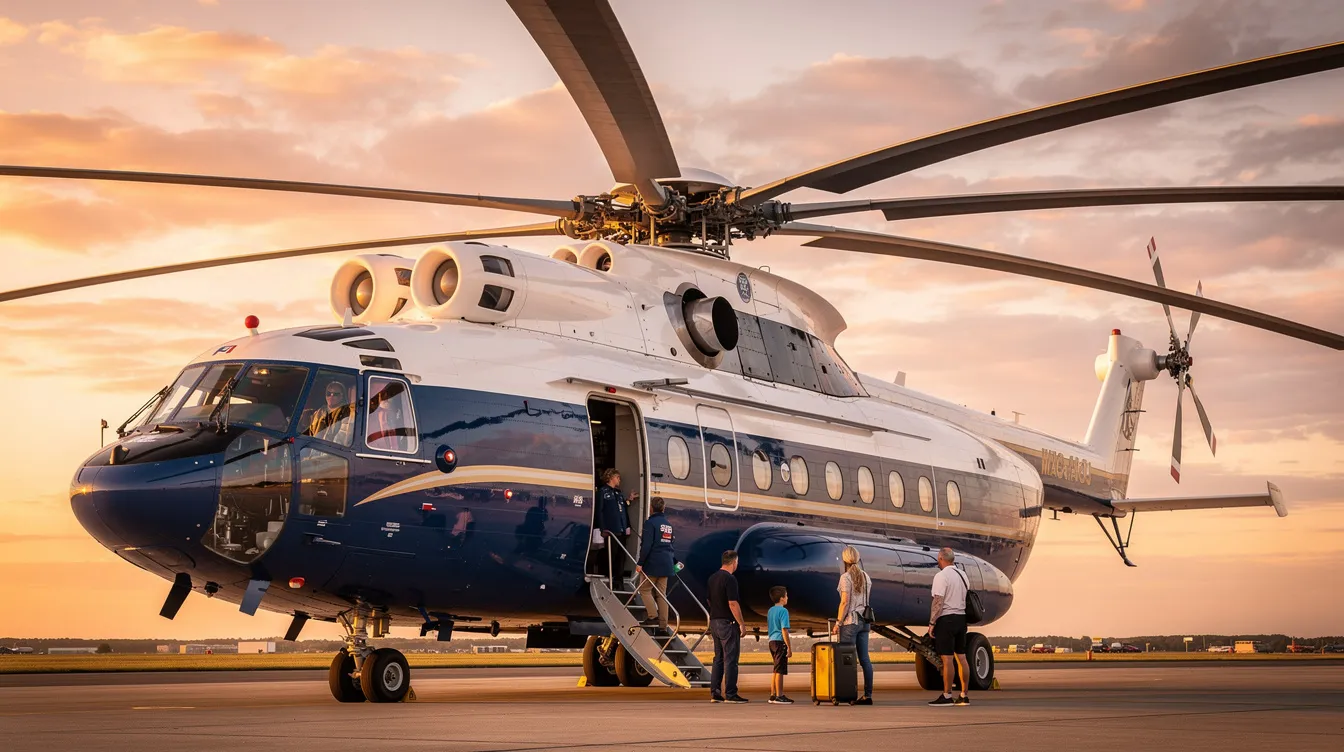
The Mil Mi-26 is the largest passenger helicopter, accommodating up to 83 people, while the Sikorsky S-92 is the leading choice for civil aviation with a capacity of 19 passengers. These helicopters play vital roles in offshore transport, search and rescue, and VIP services. Charter options are available through platforms like Jettly, which facilitate access to helicopters for specialized missions.
Jay Franco Serevilla
Jul 26, 2026
|
5
min read

View all
Helicopters typically produce noise levels ranging from 83 to over 100 decibels, depending on the aircraft type and flight phase. Understanding these noise levels is crucial for passenger comfort and community impact, especially for those considering private helicopter travel. Modern advancements in helicopter design and noise-reduction technologies are helping to mitigate these sound levels.
Jay Franco Serevilla
Jul 26, 2026
|
5
min read
View all
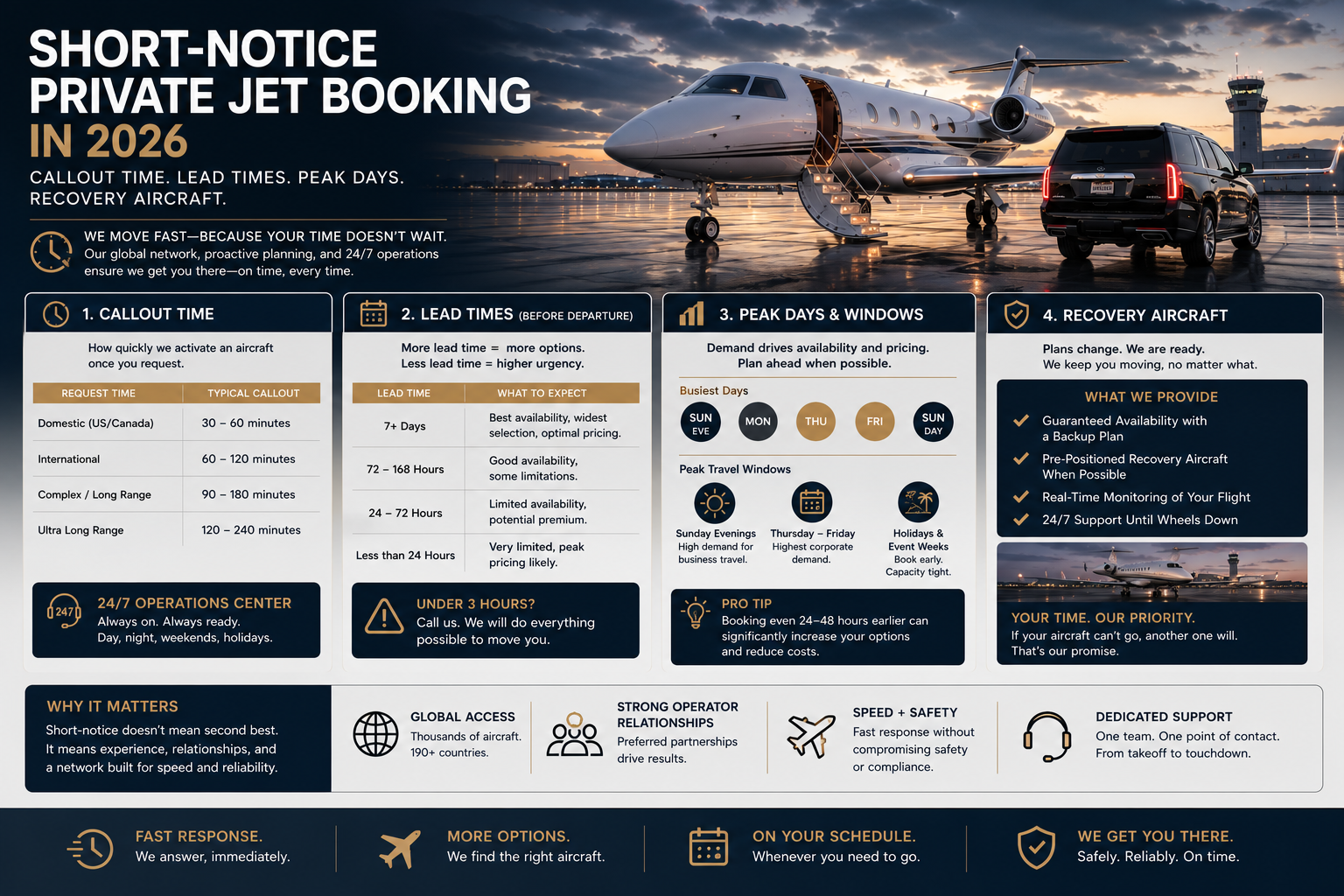
Short-notice private jet booking requires understanding key factors like callout time, lead times, and peak-day rules. While ordinary days may allow flights within hours, peak travel days necessitate longer planning and flexibility. This guide helps you navigate the complexities of private aviation to ensure a smooth booking experience.
Jay Franco Serevilla
Jul 25, 2026
|
5
min read
Explore our latest articles and updates.
.avif)
5 minutes
min read
Dynamic Pricing in Air Travel: What Passengers Really Think
Dynamic pricing has reshaped air travel, with nearly 90% of Americans encountering fluctuating fares and 41% switching airlines or dates to avoid hikes. Travelers feel frustrated, with 3 in 5 believing they've been tricked by sudden price increases. Transparency matters: 96% want airlines to display total costs upfront, and 1 in 2 would stay loyal to airlines offering all-inclusive fares. Airlines like Delta, Southwest, and American earn the most trust, while 70% of passengers would pay extra for bundled pricing that includes seats, luggage, and meals, valuing simplicity and fairness over unpredictability.
Read More.avif)
5 minutes
min read
Step Inside a Private Jet: The Luxurious Airborne Experience
Private jet travel offers unparalleled luxury, comfort, and convenience that surpasses commercial flying, with benefits like personalized service, flexible schedules, and exclusive amenities. Passengers enjoy spacious, customized interiors, gourmet dining, and quiet, private spaces to work or relax, avoiding the usual airport hassles. Jettly simplifies access to this experience with a platform that provides instant pricing and access to over 23,000 aircraft worldwide. Additionally, Jettly prioritizes safety and offers tailored services for any travel needs, making luxury air travel accessible and stress-free.
Read MoreJoin our community and receive the latest blog updates directly in your inbox.
MEMBERSHIPS AND ASSOCIATIONS



Disclaimer: Jettly operates as a charter broker, offering access to a global digital jet charter marketplace. Jettly is not a direct air carrier and does not own or operate aircraft. All advertised flights are conducted by third-party air carriers that are fully licensed and hold the appropriate Part 135 or Part 121 certifications issued by the Federal Aviation Administration (FAA) or equivalent regulatory authorities under U.S. or foreign law. Jettly complies fully with the U.S. Department of Transportation's Part 295 and Part 298 Charter Broker regulations. Jettly does not carry additional liability insurance. Passengers are covered by aircraft operator insurance. TICO: 50023770


