


Login
Get Instant Pricing On 23,000+ Aircraft


The global shift toward private flying is fueling strong growth in the business jet market, with fractional ownership emerging as a cost-effective alternative to full ownership. This model allows individuals and businesses to purchase a share of an aircraft, gaining equity and guaranteed access without the full financial and operational responsibilities. Benefits include predictable budgeting, tax advantages, and reduced administrative hassle—ideal for those flying 50 to 400 hours annually. Jettly offers modern, tech-enabled fractional ownership solutions tailored to evolving private aviation needs.
Justin Crabbe
Jul 7, 2025
|
5
min read



View all
The "Fractional vs Lease vs Jet Card Comparison Checklist 2026" provides a comprehensive framework for evaluating private aviation options, including fractional ownership, leasing, and jet cards, through a 50-question checklist and a downloadable comparison spreadsheet. It emphasizes the importance of calculating the effective cost per occupied hour to make informed decisions, as pricing structures can vary significantly among providers. The guide also clarifies key terms like guaranteed availability and outlines the trade-offs associated with different usage levels, helping users identify the best model based on their flying needs. Jettly, a charter broker, offers this resource to assist clients in navigating the complexities of private aviation contracts and costs.
Jay Franco Serevilla
Jul 10, 2026
|
5
min read

View all
Cloud Fraction is Jettly's 36-month aircraft-class licensing program that provides access to an entire aircraft category without ownership, featuring a one-time license fee, a fixed monthly management fee, and a fixed hourly rate. The program offers three tiers—Light, Midsize, and Super-Mid—each including 50 flight hours per year, with total costs over the term ranging from $1,544,500 to $2,852,000, excluding taxes and fees. This model allows for flexibility in aircraft selection while avoiding the complexities and depreciation risks associated with traditional fractional ownership. Jettly's point-to-point billing and absence of positioning fees further distinguish Cloud Fraction from other private aviation options.
Jay Franco Serevilla
Jul 10, 2026
|
5
min read

View all
The Jettly Jet Card is a membership-based private jet program that offers fixed occupied-hour billing with no expiration on flight hours. Membership tiers include 50, 100, 200, and Unlimited flight hours, each with a one-time enrollment fee of $12,997, and no additional fuel or positioning fees apply. Flights are billed from takeoff to landing, and members can book with a minimum 10-hour notice, with same-day options available in certain circumstances. Jettly operates as a charter broker, arranging flights through certified third-party carriers, ensuring transparency and flexibility for users.
Jay Franco Serevilla
Jul 10, 2026
|
5
min read

View all
The Jettly guide outlines four primary models for accessing private aviation: on-demand charter, monthly membership, jet card, and Cloud Fraction, each varying in cost, booking speed, and flexibility. On-demand charter is ideal for occasional flyers with varying routes, while monthly memberships suit those seeking low commitment and easy repeat bookings. Jet cards provide predictable pricing for frequent travelers, and Cloud Fraction offers fractional-style access without ownership. Ultimately, the best choice depends on individual travel patterns, budget, and the need for availability guarantees, emphasizing that understanding the terms behind pricing is crucial for making an informed decision.
Jay Franco Serevilla
Jul 10, 2026
|
5
min read
View all
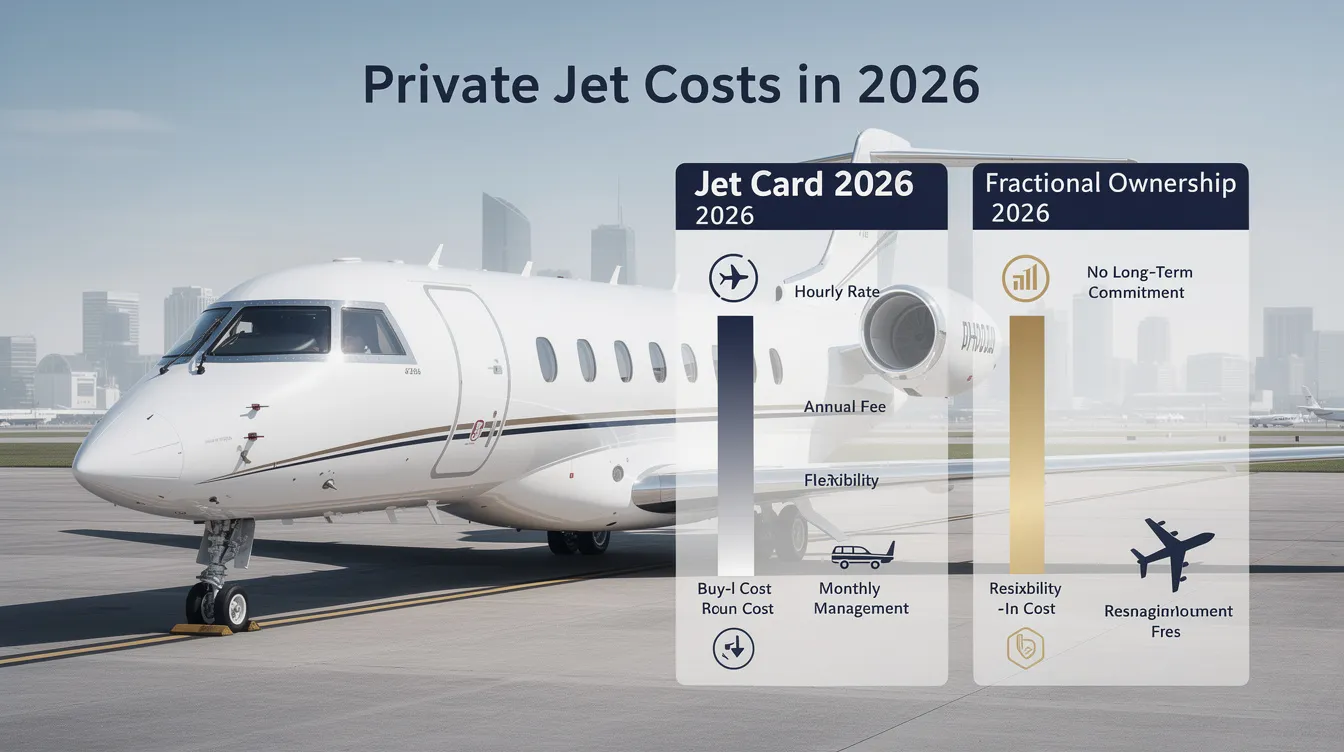
In 2026, private jet access options include jet cards and fractional shares, each with distinct cost structures. Jet cards offer prepaid flight access without ownership, typically involving lower upfront costs and no monthly fees, while fractional shares require significant upfront capital, monthly management fees, and hourly operating charges tied to a multi-year contract. Cost comparisons should consider four key buckets: upfront funds, recurring fees, hourly charges, and contract terms, as well as factors like peak-day surcharges and minimum billing rules. Ultimately, the choice between these options depends on individual flying frequency, budget, and desired flexibility, with Jettly providing a platform for transparent comparisons and bookings.
Jay Franco Serevilla
Jul 9, 2026
|
5
min read
View all
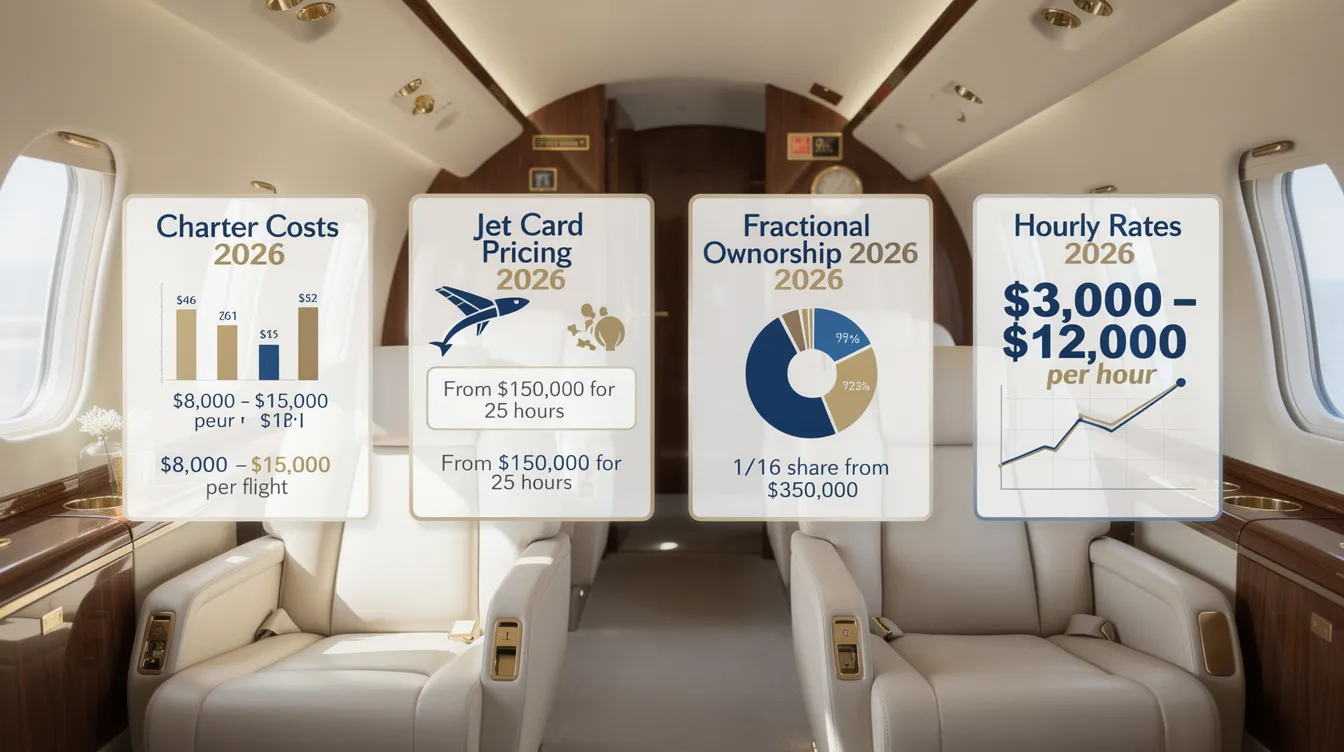
In 2026, private jet costs are categorized into fixed access fees and variable trip costs, with Jettly providing a detailed breakdown of pricing structures. On-demand charters range from $1,800 to over $15,000 per hour based on aircraft type, while Jettly's 25-hour Jet Card costs $50,000 plus a $12,997 enrollment fee, with hourly rates starting at $3,528. Fractional-style access through Jettly Cloud requires a license fee, monthly management fee, and hourly charges, with costs varying significantly based on usage patterns. To effectively compare quotes, it’s crucial to normalize costs by considering all fees, billing methods, and potential add-ons, ensuring transparency and informed decision-making.
Jay Franco Serevilla
Jul 9, 2026
|
5
min read
Explore our latest articles and updates.
5
min read
The "Super Bowl effect": How major events cause a spike in travel by private jet
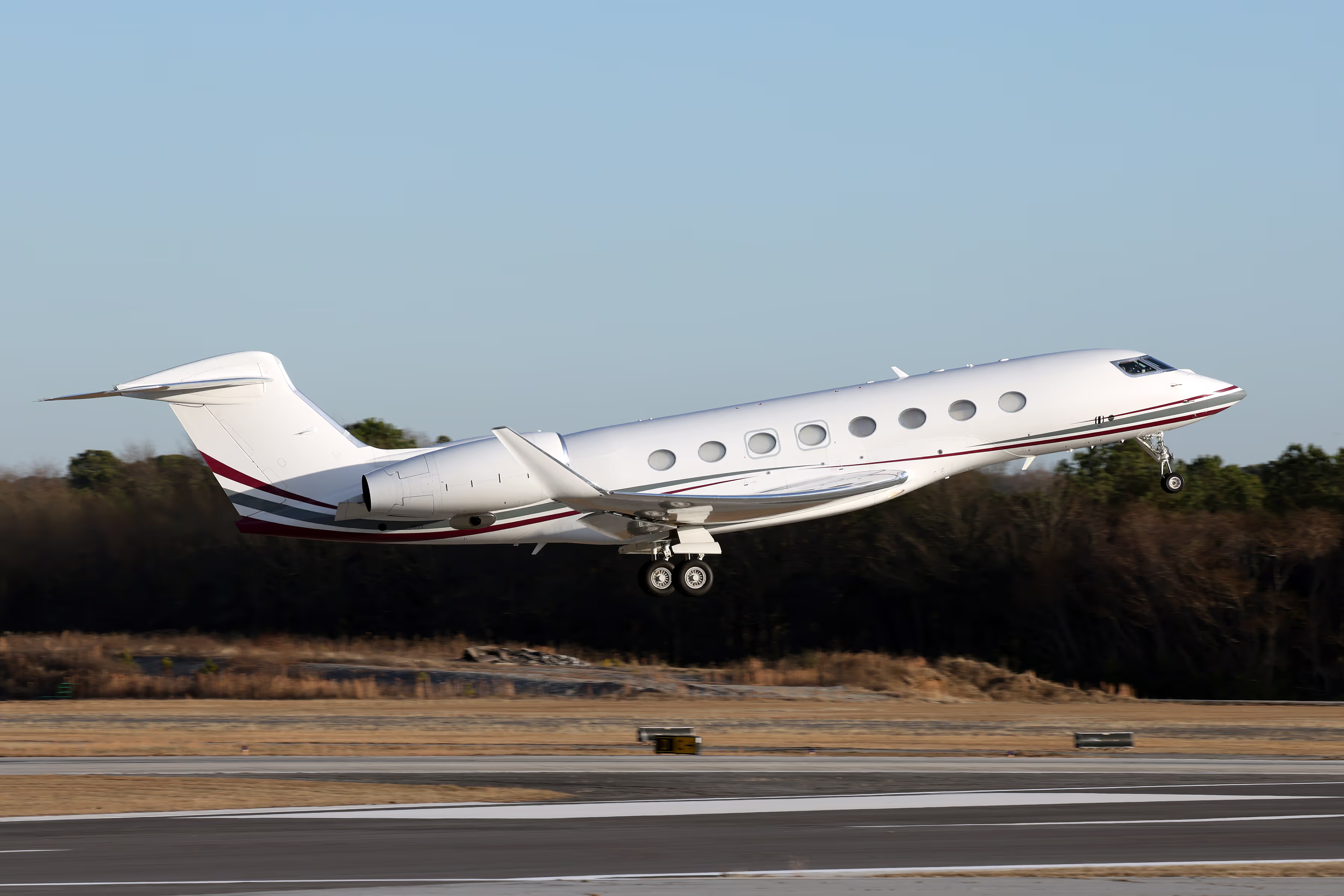
Major events like the Super Bowl cause dramatic spikes in private jet travel, with arrivals and departures increasing up to 9× normal weekend traffic. Celebrities, executives, and brands rely on large private jets, driving sharp price increases and massive revenue gains for operators, airports, and FBOs. Similar surges occur around global events like Cannes, Monaco, Davos, and the Met Gala. These demand shocks are accelerating investment in regional airports and pushing travelers away from full ownership toward fractional and on-demand private aviation.
Read More
5
min read
The Best Tools for Tracking Private Jets Efficiently and Accurately
Private jet tracking has become essential for ensuring efficiency and transparency in private aviation, which is increasingly popular among high-net-worth individuals despite its significant carbon emissions. Advanced tracking tools like FlightAware, Flightradar24, and ADS-B Exchange utilize technologies such as ADS-B and satellite surveillance to provide real-time data on private flights, catering to operators and aviation enthusiasts alike. However, privacy concerns have led some owners to block public tracking of their aircraft, complicating the landscape of flight monitoring. As demand for accurate tracking grows, innovations in technology will likely enhance the capabilities of these platforms, promoting safer and more sustainable private air travel.
Read MoreJoin our community and receive the latest blog updates directly in your inbox.
MEMBERSHIPS AND ASSOCIATIONS



Disclaimer: Jettly operates as a charter broker, offering access to a global digital jet charter marketplace. Jettly is not a direct air carrier and does not own or operate aircraft. All advertised flights are conducted by third-party air carriers that are fully licensed and hold the appropriate Part 135 or Part 121 certifications issued by the Federal Aviation Administration (FAA) or equivalent regulatory authorities under U.S. or foreign law. Jettly complies fully with the U.S. Department of Transportation's Part 295 and Part 298 Charter Broker regulations. Jettly does not carry additional liability insurance. Passengers are covered by aircraft operator insurance. TICO: 50023770


