


Login
Get Instant Pricing On 23,000+ Aircraft

.avif)
Private jets provide a safe, luxurious travel experience, often surpassing commercial aviation in pilot training, operational safety, and personalized security measures. Private jet pilots undergo advanced training and regular re-certification, while operators enforce strict maintenance and safety protocols, ensuring reliability and readiness for emergencies. With access to multiple airport options, private terminals, and the latest technology, private jets can offer enhanced safety, flexibility, and privacy. Jettly, a trusted private jet charter company, provides access to a wide network of aircraft, ensuring clients enjoy peace of mind and top-notch service on every flight.
Justin Crabbe
May 7, 2025
|
5 minutes
min read



View all
Buying a jet card online through Jettly streamlines access to private aviation by allowing users to manage their accounts and bookings via an app, eliminating the need for lengthy sales calls. The process involves creating an account, selecting a jet card tier, reviewing contract terms, funding an escrow account, and signing a charter agreement for each flight. Jettly emphasizes the importance of understanding contract details, such as availability guarantees and deposit protection, before making a purchase. Overall, Jettly's model offers flexibility, transparency, and convenience for travelers seeking private jet services.
Jay Franco Serevilla
Jul 10, 2026
|
5
min read

View all
The "Fractional vs Lease vs Jet Card Comparison Checklist 2026" provides a comprehensive framework for evaluating private aviation options, including fractional ownership, leasing, and jet cards, through a 50-question checklist and a downloadable comparison spreadsheet. It emphasizes the importance of calculating the effective cost per occupied hour to make informed decisions, as pricing structures can vary significantly among providers. The guide also clarifies key terms like guaranteed availability and outlines the trade-offs associated with different usage levels, helping users identify the best model based on their flying needs. Jettly, a charter broker, offers this resource to assist clients in navigating the complexities of private aviation contracts and costs.
Jay Franco Serevilla
Jul 10, 2026
|
5
min read

View all
Cloud Fraction is Jettly's 36-month aircraft-class licensing program that provides access to an entire aircraft category without ownership, featuring a one-time license fee, a fixed monthly management fee, and a fixed hourly rate. The program offers three tiers—Light, Midsize, and Super-Mid—each including 50 flight hours per year, with total costs over the term ranging from $1,544,500 to $2,852,000, excluding taxes and fees. This model allows for flexibility in aircraft selection while avoiding the complexities and depreciation risks associated with traditional fractional ownership. Jettly's point-to-point billing and absence of positioning fees further distinguish Cloud Fraction from other private aviation options.
Jay Franco Serevilla
Jul 10, 2026
|
5
min read

View all
The Jettly Jet Card is a membership-based private jet program that offers fixed occupied-hour billing with no expiration on flight hours. Membership tiers include 50, 100, 200, and Unlimited flight hours, each with a one-time enrollment fee of $12,997, and no additional fuel or positioning fees apply. Flights are billed from takeoff to landing, and members can book with a minimum 10-hour notice, with same-day options available in certain circumstances. Jettly operates as a charter broker, arranging flights through certified third-party carriers, ensuring transparency and flexibility for users.
Jay Franco Serevilla
Jul 10, 2026
|
5
min read

View all
The Jettly guide outlines four primary models for accessing private aviation: on-demand charter, monthly membership, jet card, and Cloud Fraction, each varying in cost, booking speed, and flexibility. On-demand charter is ideal for occasional flyers with varying routes, while monthly memberships suit those seeking low commitment and easy repeat bookings. Jet cards provide predictable pricing for frequent travelers, and Cloud Fraction offers fractional-style access without ownership. Ultimately, the best choice depends on individual travel patterns, budget, and the need for availability guarantees, emphasizing that understanding the terms behind pricing is crucial for making an informed decision.
Jay Franco Serevilla
Jul 10, 2026
|
5
min read
View all
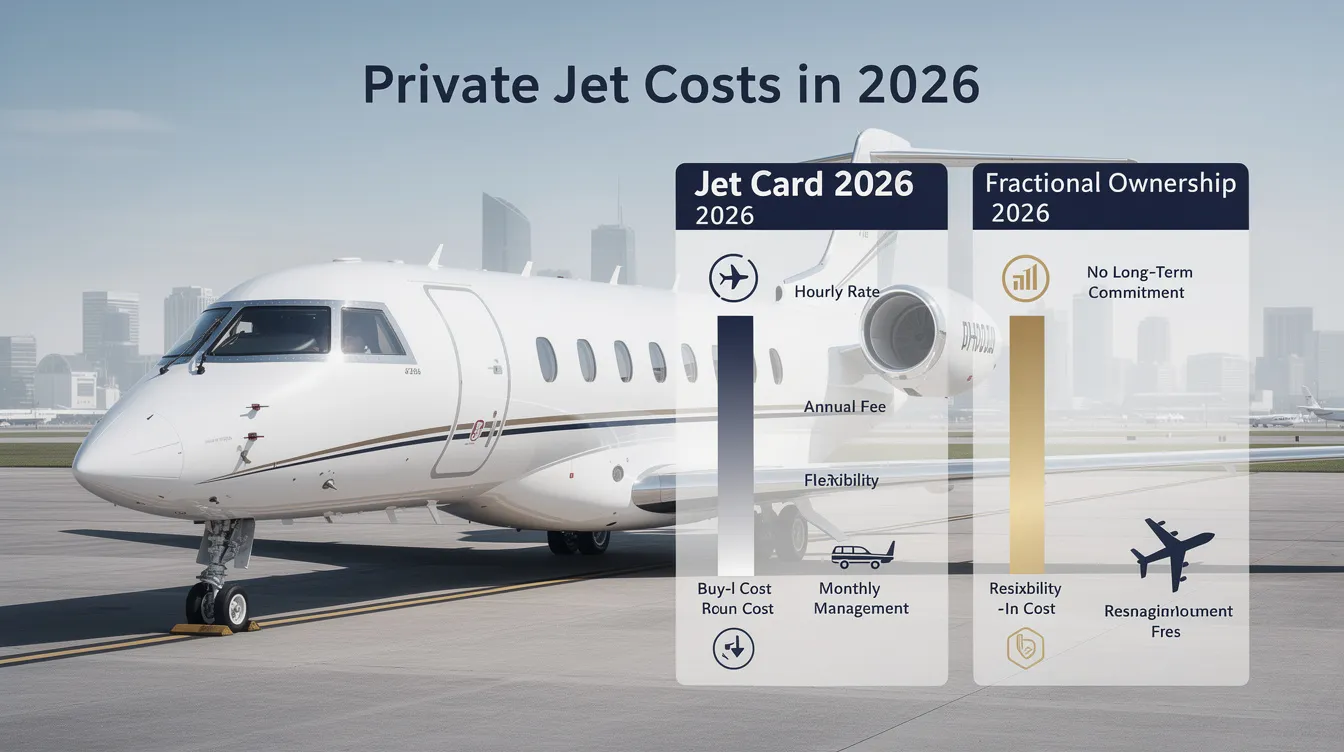
In 2026, private jet access options include jet cards and fractional shares, each with distinct cost structures. Jet cards offer prepaid flight access without ownership, typically involving lower upfront costs and no monthly fees, while fractional shares require significant upfront capital, monthly management fees, and hourly operating charges tied to a multi-year contract. Cost comparisons should consider four key buckets: upfront funds, recurring fees, hourly charges, and contract terms, as well as factors like peak-day surcharges and minimum billing rules. Ultimately, the choice between these options depends on individual flying frequency, budget, and desired flexibility, with Jettly providing a platform for transparent comparisons and bookings.
Jay Franco Serevilla
Jul 9, 2026
|
5
min read
Explore our latest articles and updates.

5
min read
Private Jets for Sale: 2026 Buyer’s Guide, Prices, and Smarter Alternatives
The 2026 private jet market offers a range of options for buyers, from light jets priced between $3M–$12M to large-cabin jets exceeding $40M. While full ownership may be beneficial for those flying over 200-250 hours annually, many individuals and businesses find on-demand charter services, like Jettly, to be more cost-effective for lower flight hours. Buyers should consider both acquisition and ongoing operational costs, which can range from $500,000 to over $1 million annually, and work with accredited brokers to navigate the complexities of the purchase process. Ultimately, evaluating personal travel needs and comparing ownership versus charter options will guide prospective buyers in making informed decisions.
Read More
5
min read
Private Travel: A Modern Guide to Flying Private with Jettly
Private travel, particularly through platforms like Jettly, provides a flexible and convenient alternative to commercial flying, allowing travelers to bypass crowded terminals and rigid schedules. With access to over 20,000 aircraft globally, Jettly offers on-demand private jet charters that prioritize time savings, privacy, and personalized comfort, making it a strategic choice for both business and leisure travelers. The booking process is streamlined, enabling quick comparisons of aircraft options and instant pricing without long-term commitments. Overall, private travel enhances the travel experience by offering tailored itineraries and exclusive services that cater to individual preferences.
Read MoreJoin our community and receive the latest blog updates directly in your inbox.
MEMBERSHIPS AND ASSOCIATIONS



Disclaimer: Jettly operates as a charter broker, offering access to a global digital jet charter marketplace. Jettly is not a direct air carrier and does not own or operate aircraft. All advertised flights are conducted by third-party air carriers that are fully licensed and hold the appropriate Part 135 or Part 121 certifications issued by the Federal Aviation Administration (FAA) or equivalent regulatory authorities under U.S. or foreign law. Jettly complies fully with the U.S. Department of Transportation's Part 295 and Part 298 Charter Broker regulations. Jettly does not carry additional liability insurance. Passengers are covered by aircraft operator insurance. TICO: 50023770


