


Login
Get Instant Pricing On 23,000+ Aircraft

>

The Bell 407 Jet Ranger is a single-engine light helicopter built as the direct successor to the Bell 206, with seating for up to six passengers plus the pilot, a wider cabin, a four-blade composite main rotor, and stronger overall performance. This guide is intended for private travelers, business executives, and aviation enthusiasts considering helicopter charter options. For private travelers, business executives, VIPs, and frequent flyers who need efficient short-range charter flights, sightseeing trips, or city transfers, it remains one of the most versatile and cost-effective aircraft in the helicopter charter market.
This guide looks at why the Bell 407 continues to be a popular choice, from its development and variants to its technical specifications, cabin comfort, cockpit and safety features, performance and range, real-world charter use cases, and how it compares with the Bell 206 Jet Ranger. If you are deciding whether a Bell 407 fits your next transfer, resort connection, executive trip, or other private aviation mission, understanding its capabilities helps explain why it is still such a reliable option.
The Bell 407 is a light, single-engine helicopter that evolved from the Bell 206 JetRanger and LongRanger line. The Bell 407 is part of the JetRanger family developed by Bell. It is part of the JetRanger family developed by Bell, but delivers substantial upgrades in power, comfort, and maximum takeoff weight over its predecessors. On Jettly, the Bell 407 and Bell 407GXi are popular choices for short-range transfers, sightseeing tours, and point-to-point city hops.
Key advantages for charter customers:
Standard seating accommodates one pilot and six passengers, making it ideal for small groups or executive travel.
The four-blade main rotor delivers a smoother ride and lower vibration than older two-blade helicopters.
The Bell 407's cabin is wider than its predecessors, allowing for improved passenger comfort and 35% larger windows for better views.
It excels in hot and high-altitude environments, managing performance effectively where older models struggle.
Efficient operating costs versus larger, twin-engine helicopters make it a practical choice across a broad range of missions.
The Bell 407 is widely utilized across commercial, medical, and public safety sectors, which speaks to its reliability and places it among Jettly's broader range of private charter aircraft.
Bell Helicopter, now part of Textron and based in Fort Worth, Texas, launched the "New Light Aircraft" program in 1993 to replace the aging Bell 206 series. Engineers used a modified LongRanger as a demonstrator, testing a wider fuselage and the four-blade main rotor design derived from the military OH-58D Kiowa Warrior; it helped represent the dimensions and layout Bell wanted to validate before certification. Two prototypes flew in the summer of 1995, with first flights in June and July. Full production began in 1996.
The Bell 407 received certification from Transport Canada on February 9, 1996, followed by FAA certification on February 23, 1996. The first production model of the Bell 407 was delivered in February 1996. The first production Bell 407 was delivered in February 1996.
Key engineering improvements over the Bell 206:
Four-blade composite main rotor for improved safety, reduced vibration, and better lift.
Wider fuselage (roughly 8 inches), larger cabin doors, and bigger windows.
Rolls-Royce 250-C47 engine providing 862 shp of power, enabling higher climb rates and a maximum gross weight of 5,000 lbs.
The 1,000th Bell 407 was delivered on June 15, 2010, and more than 1,400 helicopters had been produced by December 2017; the model is in service in 57 countries worldwide.
Colin Bodill and Jennifer Murray flew around the world in a Bell 407, underscoring the aircraft's range and reliability.
Iraq ordered 24 Bell 407 helicopters in 2009 for military use under a military procurement contract, alongside its broad civilian and army applications.
The Bell 407 has gone through three major upgrades since its original form:
2011 - Bell 407GX: Introduced the Garmin G1000H glass cockpit, replacing analog instruments. The Bell 407GX was introduced in 2011 with upgraded avionics that improved pilot situational awareness.
2015 - Bell 407GXP: The Bell 407GXP was launched in 2015 with a new engine variant, increasing max takeoff weight for better hot-and-high operations.
2018 - Bell 407GXi: The Bell 407GXi model was introduced in 2018 with enhanced avionics (Garmin G1000H NXi), dual-channel FADEC (full authority digital engine control) for automatic engine management, and the Rolls-Royce 250-C47E/4 turboshaft, a Rolls-Royce engine used in these upgraded variants.
Approximately 40 Bell 407s have been upgraded to Honeywell HTS900 engines for specialized utility missions. Many Bell 407s available through Jettly are GX or GXi variants, preferred by operators for corporate and VIP missions because of their reliability and modern systems.
The Bell 407's cabin volume is 85 cubic feet, configured with club-style seating for the pilot plus five to six passengers depending on weight limits. The cabin can rapidly reconfigure to accommodate different passenger needs, from VIP leather interiors to utility layouts.
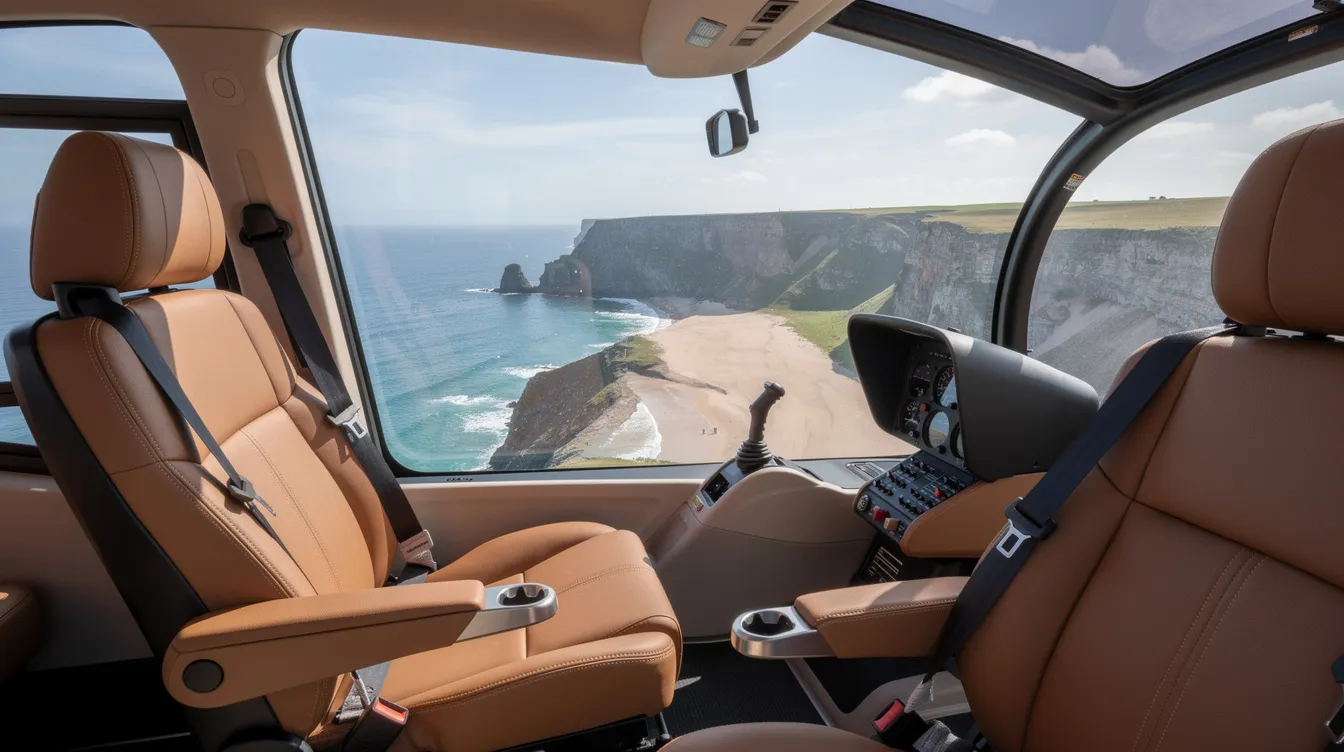
What passengers can expect on a typical Bell 407 charter flight:
Large tinted windows designed for sightseeing and aerial photography.
Low vibration from the four-blade rotor, which produces a noticeably smoother ride than older light helicopters. The Bell 407 is recognized for its exceptional ride quality compared to older light helicopters.
Wide sliding doors that simplify boarding, even at tight heliport locations.
An aft baggage compartment of about 16 cubic feet, suitable for soft bags and small suitcases.
Noise-canceling headsets are provided for all passengers; cabin soundproofing varies by operator and interior spec, and premium charters often pair this with tailored in-flight catering for private jets.
The Bell 407 operates frequently for corporate and VIP transport due to its comfort, drawing customers across leisure and business travel.
Modern Bell 407GXi aircraft carry a Garmin G1000H NXi flight deck with dual 10.4-inch high-definition displays, offering the pilot synthetic vision, terrain awareness, and a complete glass cockpit experience. The Bell 407 offers modern avionics enhancing pilot situational awareness and efficiency across all operations.
The Bell 407 is equipped with dual-channel FADEC for engine control, reducing pilot workload and enabling automatic relight in the event of a flameout, aligning it with the advanced technology found across many leading private and charter airlines.
A radar altimeter, ADS-B Out, and optional IFR capability round out the safety systems.
Health and usage monitoring systems (HUMS) and wire-strike avoidance overlays are available on equipped aircraft.
The NTSB found installation errors in two Bell 407 accidents in 2022, highlighting the importance of certified maintenance - Jettly only lists flights operated by certified, regulated air carriers that maintain aircraft to strict standards.
The Bell 407 has a maximum cruise speed of 133 knots (about 153 mph). It features the Rolls-Royce 250-C47E/4 turboshaft engine and can cover approximately 337 nautical miles under very long range cruise conditions. The helicopter has a maximum gross weight of 5,000 lbs, with a useful load around 2,300 lbs in standard configuration. Its hover ceiling is 13,550 feet IGE, and the service ceiling exceeds 13,000 feet — strong specifications for a single-engine helicopter, backed by substantial flight hours in service that support its reliability.
Real-world charter range examples:
Los Angeles to Las Vegas (~236 nm): well within range with full passengers and baggage.
Toronto to Muskoka (~165 nm): a comfortable hop with fuel to spare.
New York City to the Hamptons (~80–100 nm): roughly 45–60 minutes of flight time.
For longer routes, light jets are a better fit. The Bell 407 is ideal for short sectors and off-airport landings where fixed-wing aircraft cannot operate. Learn more about helicopter range and factors that affect it.
Executive city-to-city transfers avoiding ground traffic, especially in congested metro areas like Dallas or New York.
Resort or yacht access where the destination lacks a runway — the Bell 407 can land on helipads, open fields, or rooftops.
Ski lodge and mountain transfers, where hot-and-high performance keeps margins safe at elevation.
The Bell 407 is extensively used as an air ambulance for Emergency Medical Services (EMS), reinforcing its operational track record and illustrating one of many affordable aircraft rental options available beyond traditional fixed-wing charters.
Police departments utilize the Bell 407 for surveillance and tactical support, and some military variants can be configured to carry weapons for armed missions. Helicopters like the Bell 407 are often equipped for electronic news gathering and surveillance missions as well, serving law enforcement and media teams worldwide.
The Bell 407 can carry significant external loads for utility and industrial applications using a cargo hook; it is used in utility operations such as powerline patrol and aerial firefighting.
The Bell 407 maintains a strong worldwide resale market due to its popularity and versatility, with examples regularly appearing for sale on the secondary market. Well-kept aircraft can also attract buyers seeking an immediate sale, supporting its reputation for strong operational support and marketplace value.
Concrete examples: New York to the Hamptons (under 1 hour), Vancouver to Whistler (~45 minutes of flying over scenic terrain), or a helicopter ride in Dallas for a corporate event.
Limitations: the cabin is smaller than medium or heavy helicopters, luggage space is limited, and VFR-only aircraft are subject to weather constraints, which may prompt some travelers to explore other ways to get a seat on a private jet for longer or weather-sensitive trips.
|
Feature |
Bell 407 |
Bell 206 Jet Ranger |
|---|---|---|
|
Main rotor |
Four-blade composite |
Two-blade |
|
Max takeoff weight |
~5,000 lb |
~3,200 lb |
|
Passengers |
5–6 |
3–4 |
|
Cruise speed |
~133 knots |
~110–120 knots |
|
Cabin width |
Wider (8 in. more) |
Narrower |
|
Avionics (modern) |
Glass cockpit (GXi) |
Mostly analog |
In practice, the Bell 407 delivers better performance in hot and high environments, carries more passengers or fuel, and provides a noticeably more comfortable flight. Some routes on Jettly may still list Bell 206 aircraft, but many operators have transitioned to the 407 for premium charter work. For a broader look at helicopter seat configurations, Jettly's guide covers multiple models.
Booking a Bell 407 through Jettly is straightforward. Here is how the process works:
Enter your route and dates on Jettly's helicopter charter page, filter by helicopter, and compare available aircraft including the Bell 407 and Bell 407GXi, or let Jettly's team help match you with available Bell 407 or Bell 407GXi aircraft.
View instant pricing where available, or use Jettly's private jet charter cost estimator for fixed-wing routes. For a deeper look at what drives costs, see Jettly's helicopter rental cost guide.
Pricing depends on flight time, heliport or airport fees, repositioning distance, aircraft age (a newer Bell 407GXi commands higher rates), and demand on your travel dates, with the right aircraft and itinerary options selected to serve your route, schedule, and budget; many of the same variables apply when Jettly offers affordable private jet charter.
Frequent flyers can use Jettly private jet memberships for lower per-hour costs and priority access — no jet cards or ownership contracts required.
Jettly partners only with licensed operators that meet FAA, Transport Canada, EASA, and equivalent regulatory standards, whether you are booking a Bell 407 or a partner such as Dexter Air Taxi.
How many passengers can fly? Standard seating is 5–6 passengers plus the pilot. Actual capacity depends on weight, fuel, and baggage for the specific flight.
What are the luggage limits? The aft baggage compartment holds about 16 cubic feet. Soft bags and small suitcases are best; heavy or oversized items may reduce passenger count.
Are pets allowed? Generally yes for small pets, subject to operator policies. Carriers or crates are typically required, and some partners like Zenflight private jet operator have additional guidelines for animal travel.
What weather affects flights? VFR conditions are needed unless the aircraft and crew hold IFR certification. Low ceilings, poor visibility, and thunderstorms can delay or cancel flights. Hot or high-density altitude reduces payload or range, and Jettly's airport locator tool can help you identify alternates or nearby airfields when routing around weather.
How far in advance should I book? During peak seasons — ski weekends, summer holidays, major events, or in March, August, and September — booking at least a week or two ahead helps secure a GXi model at favorable pricing, or to arrange crowdsourced private jet flights and shared seats if you are flexible.
Are headsets provided? Yes. All passengers receive noise-canceling headsets as standard on charter flights, and travel creators can even earn referral income through Jettly's ULTRA High Ticket affiliate program when sending clients to book.
The Bell 407 Jet Ranger successor combines a proven single-engine design with modern avionics, a comfortable 5–6 seat cabin, and the power to handle everything from sea-level city transfers to mountain resort hops. It represents a strong middle ground between smaller commercial helicopters and costlier twin-engine models — ready for the world's most demanding short-range missions while keeping costs practical.
Whether the search is for a scenic aerial tour, an executive transfer, or rapid access to a location no plane can reach, the Bell 407 and Bell 407GXi deliver on performance, comfort, and safety, and they also integrate seamlessly with broader private aviation solutions for those comparing NetJets alternatives like Jettly.
Ready to experience private travel on your terms? Explore Bell 407 charter options or request a quote at https://www.jettly.com.
Share this post:
Jeff Ryan Serevilla
Sep 21, 2026
|
5
min read
Discover tips and trends in the industry.

5
min read
Jettly launches Smart Match™: AI-powered private jet charter matching in 24 hours
Introducing Smart Match™, an AI-driven workflow that matches private jet charter clients with vetted operators and aircraft in under 24 hours globally. By evaluating positioning costs, routing, safety ratings, and price, it replaces traditional multi-day broker searches with a curated shortlist of confirmed options.
Read More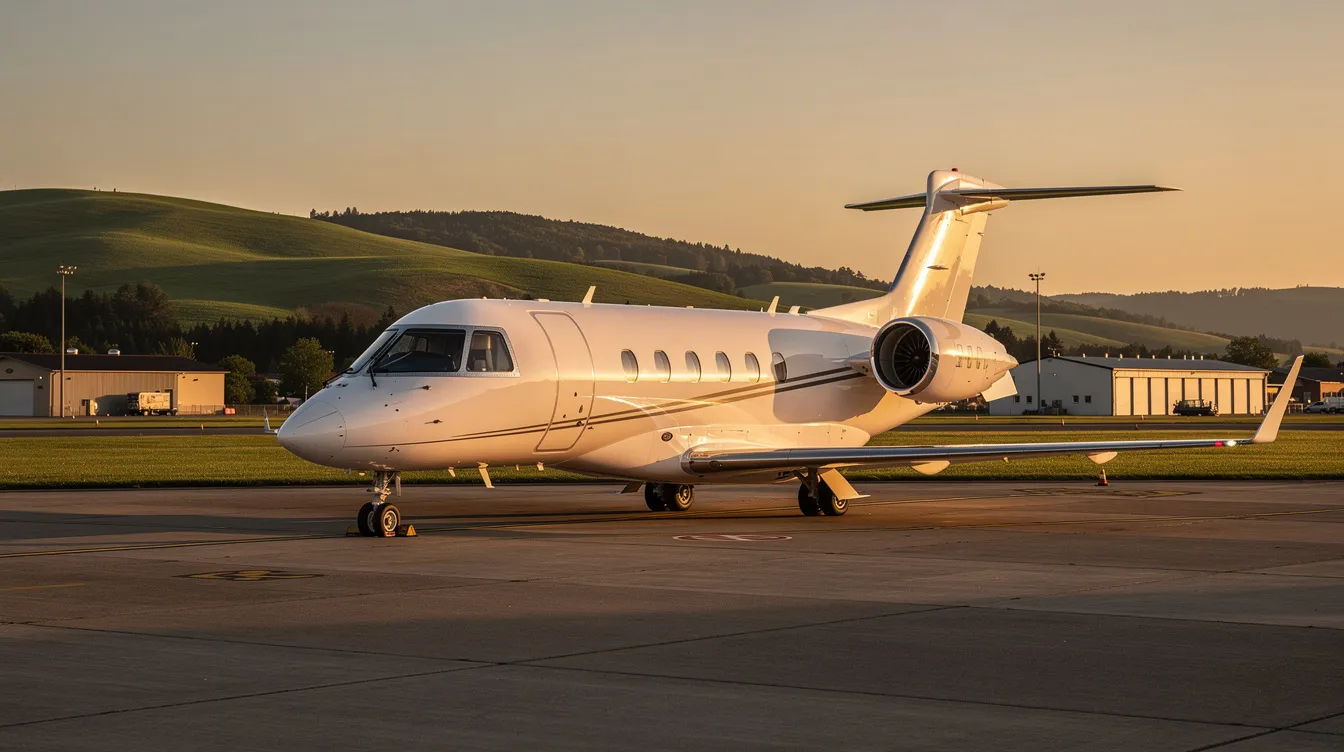
5
min read
Executive Aviation: How Modern Private Flights Work for Business and Leisure
Executive aviation revolutionizes travel by offering private flights tailored to individual schedules and preferences, bypassing the limitations of commercial airlines. With options like on-demand charters and memberships, travelers can enjoy significant time savings, enhanced comfort, and privacy, making it ideal for both business and leisure trips.
Read MoreStay updated with our latest insights and tips to elevate your journey with us.
MEMBERSHIPS AND ASSOCIATIONS



Disclaimer: Jettly operates as a charter broker, offering access to a global digital jet charter marketplace. Jettly is not a direct air carrier and does not own or operate aircraft. All advertised flights are conducted by third-party air carriers that are fully licensed and hold the appropriate Part 135 or Part 121 certifications issued by the Federal Aviation Administration (FAA) or equivalent regulatory authorities under U.S. or foreign law. Jettly complies fully with the U.S. Department of Transportation's Part 295 and Part 298 Charter Broker regulations. Jettly does not carry additional liability insurance. Passengers are covered by aircraft operator insurance. TICO: 50023770


