


Login
Get Instant Pricing On 23,000+ Aircraft

>
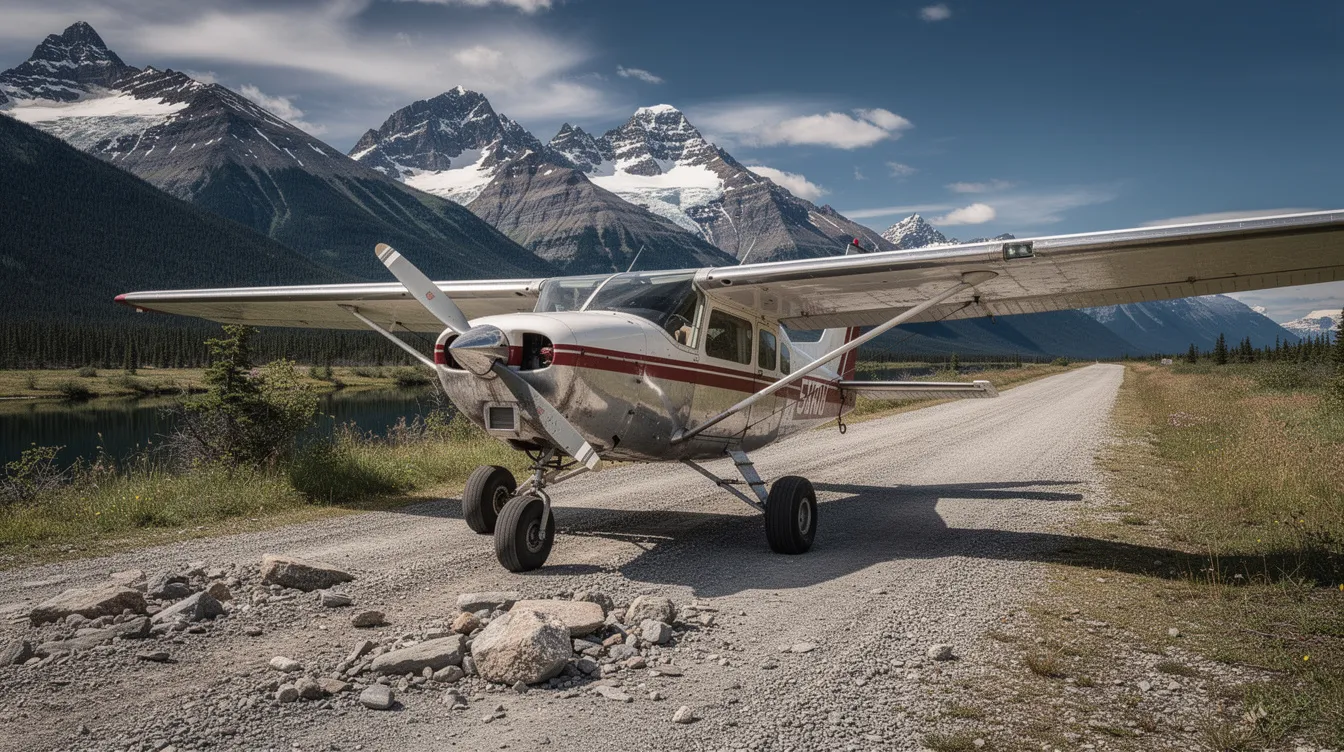
A typical Cessna 185 Skywagon can achieve a ground roll (the distance from brake release until liftoff) of roughly 725 to 825 feet and clear a 50-foot obstacle in approximately 1,000–1,430 feet under sea level, standard-day conditions at mid to max weight.
Density altitude, aircraft weight, runway surface, wind, and pilot technique can easily double that takeoff distance in hot, high, or short-field conditions.
Correct engine start procedures, full-power run-up checks, and proper flap settings are essential to achieving book takeoff performance on every departure.
Real-world operators routinely add a 50–100% safety margin to calculated distances, especially on unimproved strips.
For charter clients considering backcountry access through platforms like Jettly, understanding Cessna 185 takeoff distance helps clarify which remote airstrips and conditions are genuinely practical for safe operations.
The Cessna 185 takeoff distance is one of the most important performance figures for any pilot, owner, or charter client evaluating this legendary backcountry workhorse. First flown in July 1960, the Cessna 185 Skywagon quickly earned a reputation as a rugged, versatile aircraft capable of hauling heavy loads into and out of places most planes simply cannot reach. Over 4,400 Cessna 185s were built before production ceased in 1985, and a large number remain in active service today.
Understanding realistic takeoff and landing distances helps determine which airstrips are safe, which conditions are acceptable, and when a pilot should decline the departure. This matters whether the mission is a fly-in fishing lodge, a remote work site resupply, or a medical evacuation from a gravel strip in the mountains. The aircraft saw service under a military assistance program that supplied the U.S. Air Force with the Skywagon under a military contract, further validating its utility credentials. Cessna aircraft of this class remain central to bush flying worldwide.
Jettly often works with operators using similar high-performance private charter aircraft for short and unimproved runways, making takeoff performance data directly relevant to the charter experience.
The starting point for any performance discussion is the manufacturer's published data. For a late-model A185F landplane powered by a 300 hp Continental IO-520-D engine, the numbers under ideal conditions look like this:
Ground roll: approximately 825 feet (the distance from brake release until liftoff)
Total distance to clear a 50-foot obstacle: approximately 1,430 feet
Conditions assumed: sea level, standard atmosphere (15°C), dry paved runway, no wind, maximum-performance technique, properly maintained engine
The Cessna 185 Skywagon can require between 725 and 825 feet for the ground roll depending on weight and variant. Early models and lighter configurations have posted shorter distances.
A 1962 flight evaluation recorded a takeoff distance over a 50-foot obstacle of about 1,115 feet at reduced test weights, illustrating how much published numbers vary with load and model year.
The first production model featured the powerful engine and generous wing area that define the type. Later models gained refinements like a larger dorsal fin, bubble side windows, and updated IFR avionics.
With a wingspan of 35 feet 10 inches and a cruise speed of 147 knots at 7,000 feet, the Cessna 185 remains competitive among high-utility piston singles.
For context, the takeoff run and landing roll numbers published in the POH assume a skilled pilot using the correct technique on a clean runway. Real-world operators typically add a safety factor of 50–100% to those figures, because conditions in the field rarely match the laboratory-perfect assumptions behind book values.
Compared to similar piston singles like the Cessna 206, the 185's combination of raw power and moderate weight gives it an edge on short runways. The Cessna 206 carries more but generally needs a bit more pavement.
The Skywagon's strong payload capability is a double-edged sword. With an empty weight of 1,688 lb and a maximum gross weight of 3,350 lb, the useful load often reaches 1,400–1,500 lb or more depending on installed equipment. That is a remarkable figure for a single-engine aircraft and one of the reasons the 185 ranks among the best useful-load single-engine planes ever built.
However, the takeoff performance of an aircraft is directly influenced by weight, environmental conditions, and configuration. Takeoff performance may vary based on the aircraft's gross weight. A 5% overload alone can increase takeoff distance by roughly 15%, a steep penalty that catches some operators off guard.
Here is a simplified example:
|
Load Condition |
Approx. Weight |
Estimated Ground Roll |
Distance Over 50 ft Obstacle |
|---|---|---|---|
|
Lightly loaded (2 pax, partial fuel) |
~2,800 lb |
~550–600 ft |
~1,000–1,100 ft |
|
Near max gross (full fuel, 4 pax, gear) |
~3,350 lb |
~825 ft |
~1,400–1,430 ft |
When an aircraft is lightly loaded, it accelerates faster and lifts off sooner. At increased gross weight, the pilot needs more speed to rotate, more runway to build that speed, and more distance to climb over obstacles.
Center of gravity also plays a role. An aft CG makes rotation easier but can reduce pitch control authority. A very forward CG increases tail wheel drag during the roll and requires higher liftoff speed.
In practice, total weight matters far more than CG position for distance calculations.
Careful loading is standard procedure for professional operators. Using the baggage door and rear seat areas efficiently, managing cargo pod weight, and staying within the envelope are non-negotiable steps. A heavy load in the back seat or baggage area that shifts during the takeoff roll can create serious control problems, which is why weight-and-balance planning is taken seriously on every flight with a full fuel load.
Density altitude is the invisible factor that turns a manageable strip into a trap. In simple terms, density altitude is the altitude the air "feels like" to the aircraft, accounting for temperature and pressure. Density altitude affects engine power and lift performance. A 30°C summer afternoon at a 5,000-foot field can push the effective density altitude above 8,000 feet.
Higher density altitude increases takeoff distance. Here is why:
The engine produces less power because thinner air delivers less oxygen to the cylinders. A normally aspirated engine like the IO-520-D loses roughly 3.5% of rated power for every 1,000 feet of density altitude.
The propeller generates less thrust for the same RPM.
The wing produces less lift at a given indicated airspeed, meaning the aircraft needs a higher true airspeed (and therefore longer ground roll) to get airborne.
Stall speed in indicated terms stays the same, but the aircraft will lose speed margin more quickly in thin air if the pilot pulls back too aggressively.
Density altitude affects engine power and lift performance simultaneously, compounding the problem.
Concrete scenario: Consider a gravel strip at 4,000 feet in Colorado on a July afternoon at 30°C. The density altitude could reach 7,000 feet or higher. A Cessna 185 that needs about 1,000 feet to clear a 50-foot obstacle at sea level might now require 1,600–1,800 feet or more. On a strip with trees at the departure end, that margin shrinks fast.
Takeoff distance increases with aircraft weight and altitude, and the combination of both creates the most demanding departures. Experienced operators consult the exact model's POH charts and add conservative margins, a practice especially important for charter flights headed into mountain lodges or remote mining sites.
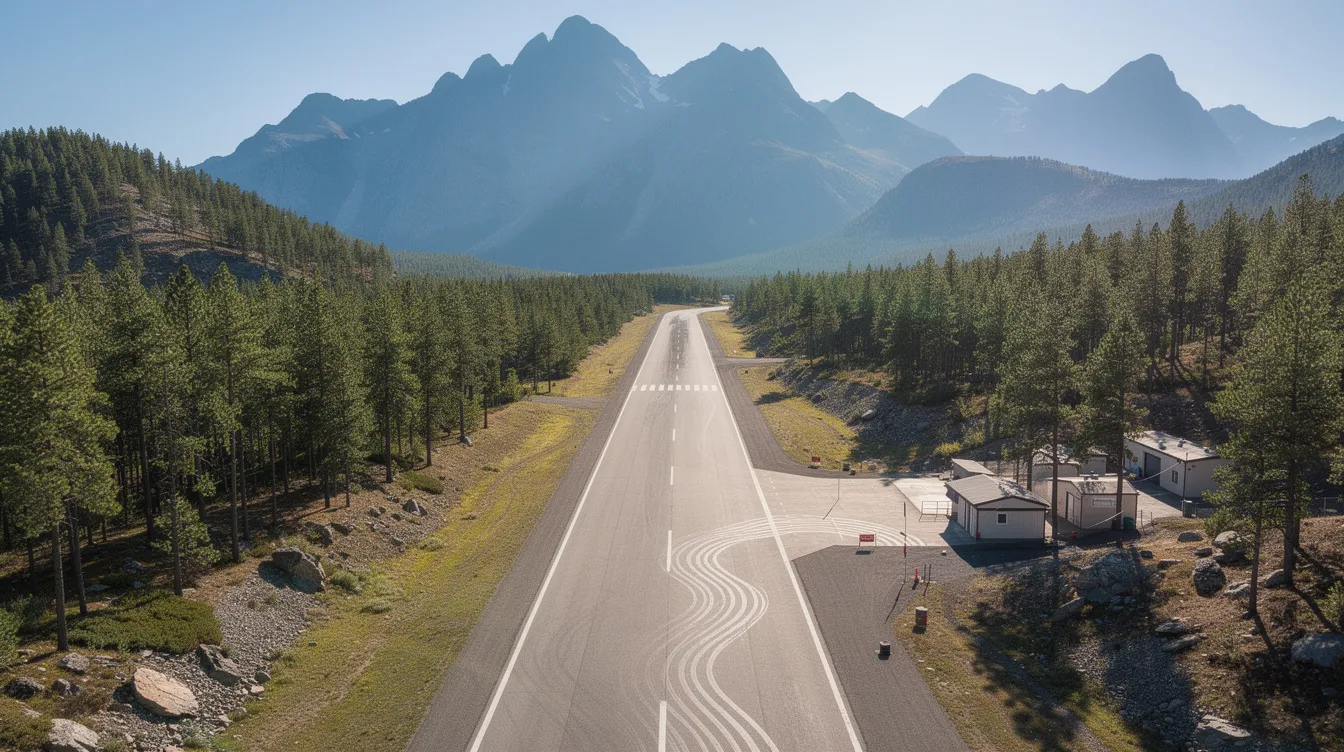
The Cessna 185 was built to handle unimproved surfaces, but rough fields still exact a penalty. Runway surface conditions significantly impact acceleration and takeoff distance because soft or uneven ground increases rolling resistance, forcing the aircraft to spend more time and distance building speed.
Here is how different surfaces compare to dry asphalt as a rough baseline:
|
Surface |
Approximate Distance Increase |
|---|---|
|
Dry, short grass |
+10–15% |
|
Tall or wet grass |
+20–30% |
|
Gravel (firm) |
+10–20% |
|
Soft sand or mud |
+30% or more |
These are approximate figures. Actual conditions vary widely, and a short strip with soft spots in the middle can be worse than the averages suggest.
Uphill runways increase takeoff distance due to resisting gravity. Even a modest 2% upslope adds meaningful distance because the aircraft must overcome a gravitational component during the entire takeoff run. Downhill slopes can reduce the ground roll but introduce risks: a longer descent path to obstacles, difficulty aborting, and sometimes a tailwind component if the wind favors the uphill direction.
Example: A book takeoff distance of 1,000 feet on dry pavement can become 1,500–1,800 feet on a slightly uphill grass strip with soft areas. Professional bush pilots use conservative field-length rules and will often decline operations into strips that leave little or no margin, especially when the landing distance on arrival also needs to work in reverse for the departure.
Short runways demand respect regardless of the aircraft's reputation.
Wind and temperature are the two weather factors that most directly change the distance a Cessna 185 needs to get airborne.
Headwind and tailwind:
Headwinds reduce ground roll and improve takeoff performance. A steady 10-knot headwind can cut ground roll by roughly 10–15%, depending on the aircraft's weight and configuration.
Tailwinds increase ground roll and takeoff distance. Even a 5-knot tailwind can add a surprising amount of distance because the aircraft must accelerate to a higher ground speed to reach the same indicated airspeed.
Temperature:
High ambient temperature raises density altitude and reduces engine output during the takeoff roll. Each 10–15°C above standard can add 10–20% to takeoff distance, a penalty that stacks on top of field elevation effects.
Crosswinds:
Crosswind landings and crosswind takeoffs do not dramatically change the required distance in most cases, but strong crosswinds may limit usable runway directions. If the only option is a runway aligned with a tailwind, the pilot faces a harder departure than the book numbers suggest.
Many bush and charter pilots decline departures with even a modest tailwind on a short strip. The math does not lie, and on more than one occasion, a pilot who ignored a light tailwind has found the trees at the end of the strip uncomfortably close.
Conservative decision-making about wind is one of the clearest markers of professional airmanship.
A correct engine start and thorough run-up are the foundation of a safe short-field takeoff. The Cessna 185's 300 hp Continental IO-520-D engine needs to be producing its full rated power when the brakes release, and confirming that requires a disciplined pre-takeoff sequence.
Key steps include:
Priming and starting: Proper priming avoids both flooding and lean starts. Hot starts in the Cessna 185 can be tricky. A hot engine that has been shut down for only a few minutes may vapor-lock or flood, leading to rough running or reduced power at the start of the takeoff roll. Hot engine start procedures vary by operator, but the general approach involves a specific mixture and throttle position to clear excess fuel.
Run-up checks: Before every takeoff, the pilot should verify magneto operation, cycle the propeller through its pitch range, and check fuel flow, manifold pressure, and static RPM against POH values. The fuel system should be confirmed on the correct tank via the fuel selector.
Cowl flaps: Setting cowl flaps appropriately for takeoff ensures adequate engine cooling during the high-power, low-airspeed phase of the departure.
If anything feels wrong during the run-up, such as partial power readings, rough magnetos, or abnormal fuel flow, professional operators treat it as a reason to return to the ramp rather than attempt a marginal departure. A "weak engine" on the roll is a clear signal to abort early.
Using the manufacturer-recommended flap setting optimizes takeoff performance. In the Cessna 185, typical recommendations are:
Normal takeoff: 0° flaps (clean wing). This minimizes drag and provides good acceleration.
Short takeoff from a short strip: 10–20° flaps, depending on the specific POH and any installed STOL kit. Flaps reduce stall speed and allow liftoff at a lower airspeed, shortening the ground roll.
Full flaps are generally not used for takeoff. They create excessive drag and flatten the climb gradient, making obstacle clearance worse even though the aircraft may leave the ground sooner.
The short-field technique follows a specific profile:
Hold brakes and apply full power.
Confirm full static RPM and manifold pressure.
Release brakes and accelerate.
Lift the tail wheel early to reduce drag and build speed, keeping the main gear on the runway.
Rotate at the target airspeed and climb at best angle-of-climb speed (Vx) to clear obstacles.
Improper flap use is a common error. Pilots who depart with too much flap may get airborne quickly but then struggle to climb, hovering in ground effect without gaining altitude. Full flap go arounds can also be demanding if the aircraft cannot accelerate and clean up the configuration fast enough.
The manual tailwheel lock should be engaged during the takeoff roll on paved surfaces to maintain directional control until the rudder becomes effective.
Pilot technique influences the actual distance required for takeoff. The Cessna 185 is forgiving in cruise but will punish poor technique during short-field and one-way strip departures.
Key areas where technique matters:
Power application: Smooth, deliberate throttle advancement prevents propeller torque from swinging the nose off-center.
Tail wheel control: Keeping the aircraft straight during the initial roll, especially on gravel or grass, requires active rudder and differential braking.
Rotation discipline: Pulling back too early means the aircraft staggers into the air below optimal speed, unable to climb. Waiting too long wastes runway. The correct indicated airspeed for rotation is in the POH and should be committed to memory.
Three-point landings and short-field arrivals are the other half of operating into tight strips, and the same precision applies in reverse.
New Cessna 185 pilots often use more runway than book values until they develop familiarity with the aircraft's sight picture and acceleration profile. Bush pilots who fly the type daily can consistently hit near-book numbers because they have internalized the sight, sound, and feel of a correct departure.
Specialized training for mountain and bush flying, including scenario-based practice on density altitude effects, soft-field technique, and early abort decisions, is invaluable. Professional charter operators use standardized procedures and recurrent training to ensure consistent, conservative performance.
Takeoff distance can vary from roughly 250 meters to 1,000 meters (about 820 to 3,280 feet) based on conditions. Here are three scenarios that illustrate the range.
Scenario 1: Sea-level paved runway, moderate load, standard day
Weight: approximately 2,800 lb
Conditions: dry pavement, 15°C, no wind
Estimated distance over 50-foot obstacle: roughly 1,000–1,100 feet
With a 50% safety margin, the pilot plans for a minimum of 1,500 feet of usable runway
This is the "easy" departure. Book numbers are achievable with good technique, and runway length is rarely a concern.
Scenario 2: 3,500-foot gravel strip, warm day, near gross weight
Weight: approximately 3,300 lb
Conditions: 4,000-foot field elevation, 28°C, firm gravel, light upslope
Density altitude: roughly 6,500 feet
Estimated distance over 50-foot obstacle: approximately 1,800–2,000 feet
The 3,500-foot strip provides margin, but it is noticeably tighter than Scenario 1
The pilot checks the service ceiling data to confirm adequate climb performance after departure and monitors temperature trends throughout the day.
Scenario 3: Short backcountry grass strip, 1,200 feet usable, trees on departure end
Weight: near gross with full fuel and passengers
Conditions: 3,000-foot elevation, 32°C afternoon
Estimated distance over 50-foot obstacle: exceeds 1,200 feet usable
This departure is marginal or unsuitable. An experienced operator might reduce weight by carrying less fuel, delay to a cooler hour, or decline the departure entirely. Attempting to force a loaded Cessna 185 out of a strip that barely fits the calculated distance is not professional flying.
Experienced operators combine POH charts, local knowledge, and conservative judgment rather than relying on a single number.
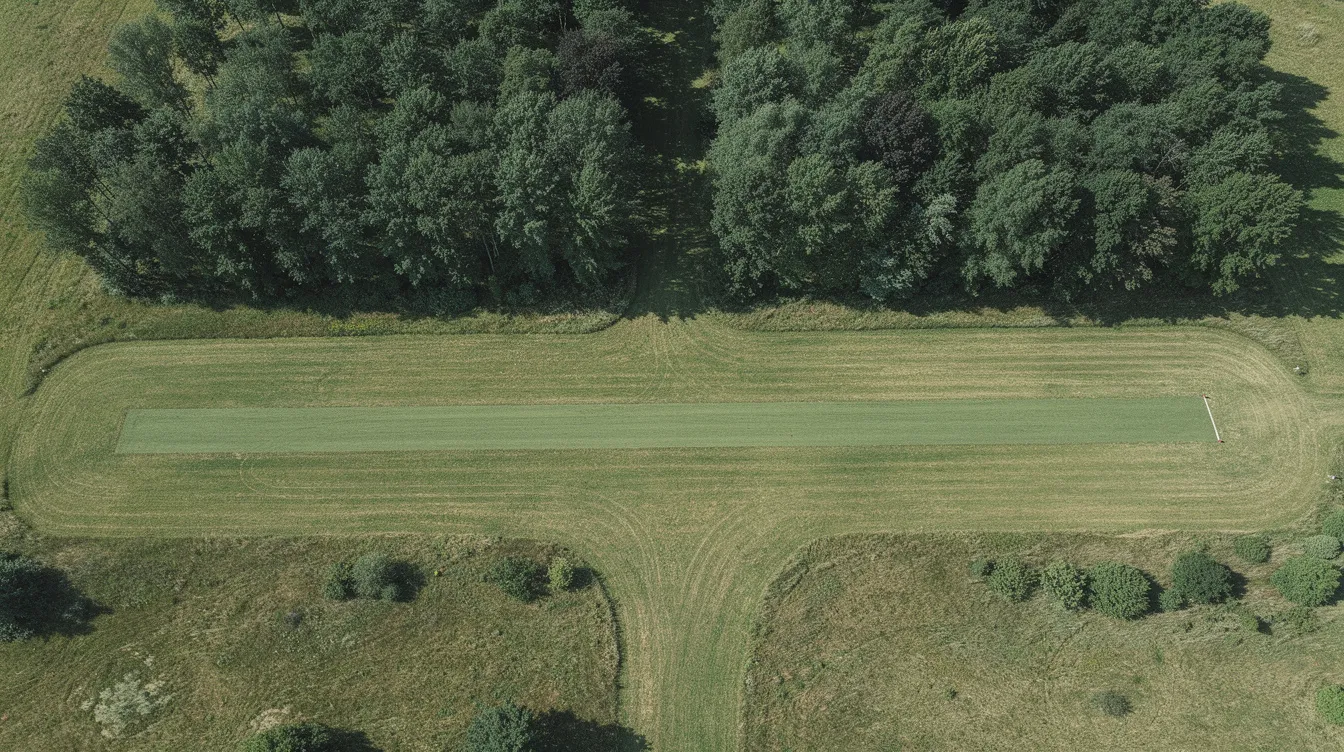
The aircraft can be fitted with floats or skis for versatility, and many Cessna 185 Skywagons operate in these configurations year-round. Each modification materially changes takeoff distance.
Floatplanes:
Water takeoffs require substantially more distance than wheeled departures. The A185F on floats needs approximately 1,200–1,600 feet to clear a 50-foot obstacle, depending on weight and water conditions.
Glassy water creates more drag than choppy water during the transition to "on step," making calm-day departures longer.
Amphibious floats add even more weight and drag than straight floats, further increasing distances.
Skis:
On firm, packed snow or ice, friction is low and the takeoff roll can be similar to a paved runway.
Deep, wet snow dramatically increases resistance, behaving worse than soft turf.
Tundra tires and cargo pods:
Large tundra tires improve off-airport capability but add drag and weight. A cargo pod mounted under the fuselage does the same.
Both modifications can increase the takeoff run and reduce climb gradient, trading speed for utility.
For any modified configuration, only the specific performance supplement data and the operator's firsthand experience should guide field-length decisions. The Cessna A185F buyer's guide covers many of these variants in more detail.
Placing the 185's numbers alongside other popular models helps illustrate where it sits in the utility aircraft landscape.
Cessna 180: The Cessna 185 is a development of the Cessna 180, sharing the same basic airframe but with a bigger engine. The 180's 230–260 hp (depending on model) means it generally needs more runway than the 185 at similar weights, particularly when heavily loaded, and some travelers will instead opt for cabin-class twins like the Cessna 340 for higher-speed business travel.
Cessna 206: As a high-winged aircraft with six seats and a wider cabin, the 206 carries more but requires a longer takeoff run under comparable conditions. Among Cessna singles, the 185 wins on short runways while the 206 wins on payload volume, while the related Cessna 207 adds even more seating and utility.
de Havilland Beaver: Similar mission profile and legendary status. The Beaver's radial engine and larger wing area give it strong low-speed characteristics, but the 185 is faster in cruise and lighter on maintenance, while larger groups may instead charter airliners such as the Boeing 737-800 for higher-capacity routes.
Single-engine turboprops (e.g., Cessna Caravan, Kodiak): These can sometimes outperform the 185 in hot/high conditions because turboprop engines retain more power at altitude. However, they cost substantially more to operate, which is why some travelers evaluate the best cross-country plane options before deciding between charter and ownership.
The landing distance comparison follows a similar pattern. The 185's landing roll is competitive with most piston singles in its class, especially when the pilot uses the correct three-point technique on short strips.
Jettly's platform helps clients pick suitable aircraft types for routes involving short or unimproved runways, drawing on a deep understanding of where private aircraft can land and operate safely. For a deeper look at how different aircraft compare, the best small airplanes guide covers a range of options.
Takeoff distance is just one piece of a full operational planning picture that includes obstacles, emergencies, and abort options.
Safety margins in practice:
Commercial and Part 135-style operations commonly require runway length to be at least 1.5–2 times the calculated takeoff distance over obstacles.
This margin accounts for engine degradation, surface surprises, unexpected wind shifts, and the simple reality that book numbers represent best-case performance.
Abort planning:
Before every departure, the pilot should identify an "abort point" on the runway. If the Cessna 185 has not reached a target indicated airspeed by that landmark, the pilot must reject the takeoff immediately.
On a 2,000-foot strip, the abort point might be the halfway mark. If the aircraft is still well below rotation speed at 1,000 feet, continuing is not an option.
Adjusting the plan:
Depart earlier in the morning when temperatures are cooler and density altitude is lower.
Reduce load. Carry less fuel and plan a fuel stop en route.
If margins are still slim, decline the operation.
Go/no-go decisions for short strips should always be made conservatively, especially when flights are conducted for paying passengers or critical freight.
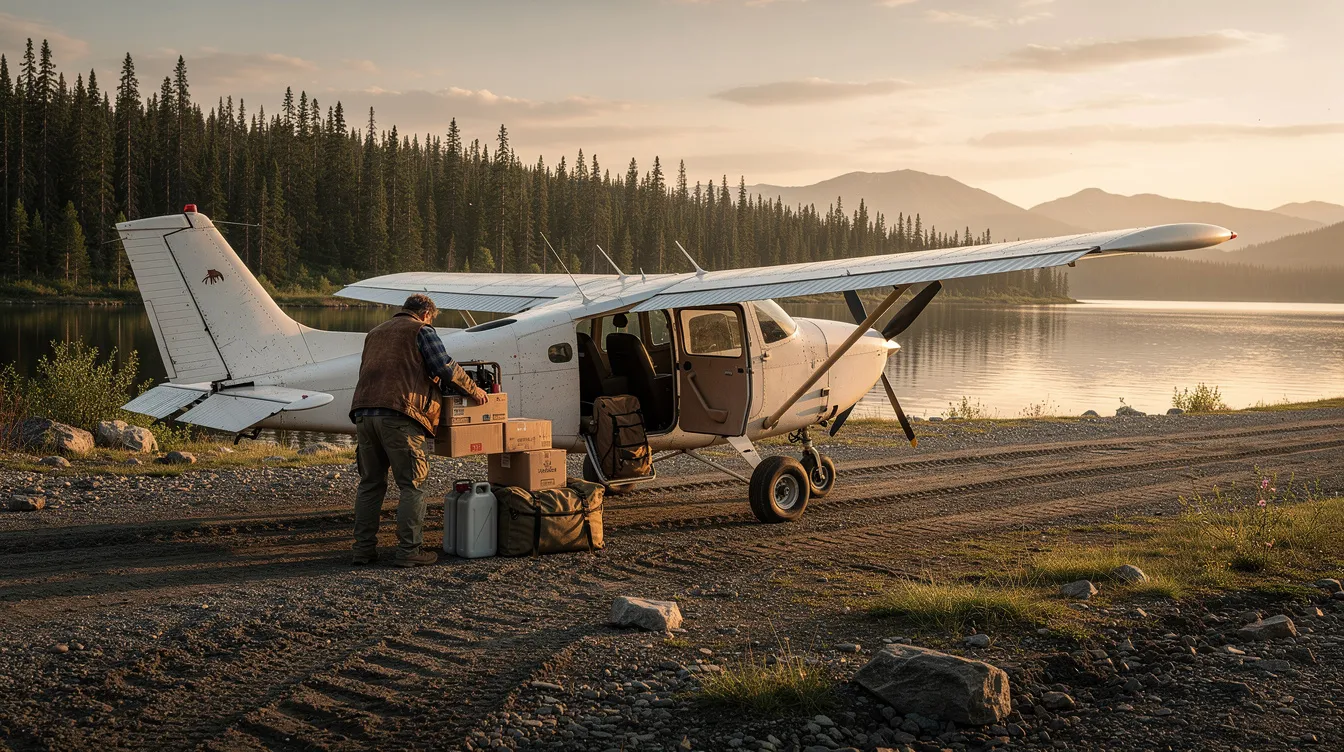
The Cessna 185 is widely used in bush flying, and its charter missions reflect that heritage. The Cessna 185 is popular for cargo transport in remote areas, carrying everything from building supplies to specialized cargo like perishables and emergency items.
Typical missions include (often supported with bespoke in-flight catering for private charters):
Fly-in fishing and hunting lodges: Multiple hops between 1,500–3,000 foot gravel strips in Alaska or northern Canada, with weather and weight changes affecting takeoff decisions on each leg.
Remote cabin resupply: Delivering fuel, food, and equipment to locations unreachable by road.
Survey and inspection flights: Accessing remote airstrips near pipelines, power lines, or mining sites.
Medical support: Emergency transport from bush communities to regional hospitals.
Adventure flyers and back seat passengers alike appreciate the Cessna 185's ability to reach places that would otherwise require days of overland travel. Some aircraft in this role have been equipped with removable spray booms for agricultural work or windshield wire cutters for operations in areas with overhead hazards.
Operators in Jettly's network use similar utility aircraft for charter in regions where infrastructure is limited. For many business travellers, a Cessna 185 is a niche option compared to light jets and turboprops, but it is unmatched for certain backcountry routes through remote areas, and can complement ownership of more affordable personal aircraft choices used for day-to-day flying.
Jettly's platform offers access to a wide range of aircraft, from light pistons to long-range jets, depending on route and mission. Understanding what air charter involves helps travelers see where the Cessna 185 fits, and those sharing Jettly with others can participate in its high-ticket affiliate program.
While the Cessna 185 itself may be less common as a pure passenger charter aircraft, similar high-performance piston and turboprops are widely used in local charter networks that Jettly connects with. Use cases where short-field capability is essential include:
Access to regional strips near ski resorts
Remote lodges only reachable by air
Industrial sites not served by scheduled airlines
Jettly's airport locator and trip-planning tools and support team can help match each trip's runway requirements and passenger load with an appropriate aircraft category. Whether the mission calls for a rugged utility plane or a pressurized turboprop, the platform simplifies the search, and frequent flyers can explore Jettly's jet card programs for predictable hourly rates.
Learn more about Jettly's charter options and use the private jet charter cost estimator at jettly.com.
Piston singles like the Cessna 185 typically burn around 14–16 gallons per hour in cruise, making them economical compared to turboprops or jets. Direct operating costs are lower, but so are speed, range, and passenger comfort.
A 185-type aircraft makes the most sense when:
The mission involves short legs under 300–400 nautical miles
Only one to three passengers are traveling
The destination requires unimproved strips, lakes, or ski-equipped operations
Cost per flight hour is a primary concern
For city-pair business routes like Toronto–New York or Los Angeles–Las Vegas on paved runways, a light jet or turboprop available through Jettly is faster, more comfortable, and better suited. A detailed overview of private jet charter pricing and cost factors alongside the aircraft charter guide helps travelers compare options.
Cessna re introduced various improvements throughout the 185's production run, but the basic formula - strong engine, light airframe, big payload - has always favored utility over luxury.
The mechanical condition of an older airframe like the Cessna 185 directly influences real-world takeoff performance. Engine health - compression, fuel system cleanliness, ignition timing, propeller governor function - determines whether the aircraft can actually deliver 300 hp at the start of the roll.
Common modifications and their effects:
|
Modification |
Takeoff Distance Impact |
Trade-Off |
|---|---|---|
|
Cargo pod (belly-mounted) |
Increases drag, adds weight |
More cargo volume |
|
Vortex generators (leading edge) |
May reduce stall speed slightly, shorter roll |
Minor cruise speed reduction |
|
Three-blade propeller |
Can improve acceleration at expense of cruise |
Smoother operation, less vibration |
|
Large tundra tires |
Increases drag and weight |
Off-airport capability |
|
Landing gear upgrades |
Minimal distance change |
Better durability |
Operators in regulated charter environments maintain aircraft to strict standards, which helps ensure that POH performance numbers remain realistic. Travelers who fly frequently on such operations often benefit from private jet membership programs. Any specific modification requires consulting the updated performance supplement, not just the original handbook tables.
The human and procedural safeguards around Cessna 185 operations are just as important as the performance charts.
Recurrent training: Check rides and proficiency checks reinforce disciplined performance planning and abort criteria.
Type-specific mentoring: Pilots flying 185s into mountain or bush strips benefit from experienced mentors who know the local terrain, weather patterns, and strip conditions. Training in one-way canyon strips and high density altitude departures is particularly valuable.
Standard operating procedures: Professional operators establish maximum density altitude limits, minimum runway lengths, and mandatory abort points for each strip they serve.
Commercial and charter pilots operating similar aircraft within Jettly's ecosystem are typically held to higher proficiency and oversight standards than private owners flying infrequently. A safety-first mindset means that just because a chart says the Cessna 185 can technically depart a given strip does not mean it is a wise or professional choice in marginal conditions.
A Cessna 185 takeoff distance over a 50-foot obstacle is roughly 1,000–1,430 feet under ideal, sea level conditions, depending on weight and variant. That number is a starting point, not a guarantee.
The key factors that change the real number on any given day:
Weight: Heavier aircraft need more runway. Every time.
Density altitude: Hot and high conditions can double the required distance.
Runway surface and slope: Grass, gravel, and uphill grades add 10–30% or more.
Wind: Headwinds help. Tailwinds hurt. A lot.
Configuration: Floats, skis, tundra tires, and cargo pods all increase distance.
Engine health: A tired engine that cannot make full power extends the roll.
Pilot technique: Smooth, disciplined execution matches book numbers. Sloppy technique does not.
Thoughtful pre-flight planning and conservative safety margins are essential for safe takeoffs, especially in remote or short-field environments. Jettly's platform helps travelers select appropriate aircraft and operators for routes where runway length and performance are primary constraints, positioning itself as a flexible alternative to traditional fractional ownership programs.
Ready to experience private travel on your terms? You can even crowdsource or share private jet flights to reduce costs. Explore flight options or request a quote at jettly.com.
Below are answers to common questions that expand on the topics covered in this article.
While book figures suggest around 1,000–1,100 feet to clear a 50-foot obstacle in ideal conditions at moderate weight, many experienced pilots regard 1,500–2,000 feet of usable, obstacle-free runway as a more comfortable minimum for routine operations. This built-in margin accounts for surface imperfections, slight wind shifts, and the reality that few departures are truly textbook.
On a hot day at a 5,000-foot field, density altitude can exceed 8,000 feet, potentially increasing takeoff distance by 50–100% or more compared to sea level performance. This can make some short strips usable only during cool morning conditions or at significantly reduced weight. Pilots should always calculate density altitude before committing to a departure from any elevated or warm-weather field.
In most cases, yes. Cargo pods and large tundra tires add both weight and aerodynamic drag, which lengthen the ground roll and reduce the climb gradient after liftoff. However, they may improve soft-field capability, which is the reason operators install them in the first place. Each modification is a trade-off that must be reflected in updated performance planning using the correct supplemental data.
The Cessna 185 is widely used in bush and specialty charter - think fishing lodges, remote camps, and backcountry resupply. However, most passenger charter customers on platforms like Jettly tend to choose larger pistons, turboprops, or jets for greater comfort, speed, and baggage capacity, especially on popular city pairs such as private jet routes to and from Houston, Texas. The 185 excels in a specific niche where access to short, unimproved strips is the defining requirement.
Reputable operators use performance charts, conservative safety margins, and standardized procedures to plan every departure. Travelers using a platform such as Jettly can rely on vetted, regulated operators who are required to meet strict proficiency and maintenance standards, whether booking directly or through branded partners like Dexter Air Taxi’s private charter service. Asking the operator how runway length and current conditions were factored into the flight plan is always appropriate and encouraged.
The Cessna 185 remains a legendary aircraft for backcountry and utility operations, prized for its powerful engine, rugged design, and impressive payload capacity. However, its takeoff distance is influenced by many factors beyond the book values, including weight, density altitude, runway conditions, wind, and pilot technique. Understanding these variables is essential for safe, efficient departures, especially in challenging environments.
For travelers and charter clients using platforms like Jettly, knowing the realistic takeoff distances helps set expectations about which remote destinations are accessible and under what conditions. Professional operators combine detailed performance planning with conservative safety margins and recurrent training to ensure every takeoff meets the highest standards. Learn more about Jettly’s charter options.
Ultimately, the Cessna 185’s takeoff distance figures are a starting point — safe operations depend on thoughtful pre-flight planning, respect for environmental conditions, and disciplined pilot execution. Whether flying a cargo mission to a remote lodge or a quick hop between gravel strips, the aircraft’s versatility shines when matched with careful operational decisions.
Ready to experience private travel on your terms? Explore flight options or request a quote at https://www.jettly.com.
Share this post:
Jay Franco Serevilla
Sep 23, 2026
|
5
min read
Discover tips and trends in the industry.
5
min read
Salary of a Commercial Pilot in 2026: Complete Guide to Airline and Commercial Pilot Pay
In 2026, the salary of commercial pilots continues to rise due to strong demand and expanding aviation opportunities. Airline pilots earn a median annual wage of $226,600, while commercial pilots in non-airline roles earn around $122,670. This guide explores pay structures, career paths, and the factors influencing pilot salaries, highlighting the lucrative potential of a pilot career.
Read More5
min read
Cessna 185 Takeoff Distance: Performance, Variables, and Real-World Planning
The Cessna 185 Skywagon is a versatile aircraft known for its impressive takeoff capabilities, requiring approximately 1,000 to 1,430 feet to clear a 50-foot obstacle under ideal conditions. Factors such as weight, density altitude, and runway surface can significantly affect these distances, making careful planning essential for safe operations. Understanding these variables is crucial for pilots and charter clients navigating remote airstrips.
Read MoreStay updated with our latest insights and tips to elevate your journey with us.
MEMBERSHIPS AND ASSOCIATIONS



Disclaimer: Jettly operates as a charter broker, offering access to a global digital jet charter marketplace. Jettly is not a direct air carrier and does not own or operate aircraft. All advertised flights are conducted by third-party air carriers that are fully licensed and hold the appropriate Part 135 or Part 121 certifications issued by the Federal Aviation Administration (FAA) or equivalent regulatory authorities under U.S. or foreign law. Jettly complies fully with the U.S. Department of Transportation's Part 295 and Part 298 Charter Broker regulations. Jettly does not carry additional liability insurance. Passengers are covered by aircraft operator insurance. TICO: 50023770


